
Scott Ashley
This transcript was generated by AI and may contain errors. It is provided to assist those who may not be able to listen to the message.
Thank you very much, Sarah. Also, I want to welcome back those from Florida who have come back to us to endure the springtime and the summer before they leave again in the late fall and winter. Nice to see you back. Hello. Sherry is here. Sherry Achelo. Nice to see her back. Her first Sabbath, right? Nice to have you back. Welcome back here. And say welcome to any of our guests who are here today. If you were a firstborn in the land of Egypt prior to the Exodus, you would have not been too comfortable on the evening of the 14th of Nisan. You would have made sure to have followed all of God's instructions implicitly. The blood would have been over the door and upon the side posts, and you would have had your portion of the lamb, and you would have been in your house with the door shut. You would have been very careful to attend to the details, because it was a matter of life and death. What about the observance of the New Testament Passover? Jesus Christ changed the symbolism on the evening prior to His death on the 14th. He did this for us to remember Him and His sacrifice on our behalf. How should we then approach the New Testament Passover service? Perhaps this is your first Passover, and you have not experienced this meaningful observance. Or, if you have kept the Passover previously, perhaps you tend to treat it as not such a special event. Whatever your status, I want to share with you seven approaches that we need to take a meaningful Passover. Seven approaches that we need to have as we approach the New Testament Passover. Number one, when you come to Passover services, you need to come meditatively. Meditatively. That means to think on what He went through for us. Think of what Jesus Christ endured on our behalf. Take a few scriptures. For instance, Mark 14. Undoubtedly, you'll have your Bible with you, and undoubtedly you'll be reading some of these scriptures while you're waiting for the service to take place, and while in between the foot washing and the preparation for the bread and the wine, and in between areas where you need to just be meditating and thinking on the death of Jesus Christ. Remember, the focus of Passover is not about us. It's about Jesus Christ. It's about our relationship to Jesus Christ, but it's about Jesus Christ. We're there to honor Him. Mark 14. Mark 14, verse 36. And He said, Abba, Father, all things are possible to You. Take away this cup from Me. I have read what they're going to do to Me. I inspired that scripture, Isaiah 52 and 53. I know when it says, all His bones are out of joint. I know that that means Me. I know when they all forsook Me. I know what's going to happen to Me. I'm going to be lifted up. The most excruciatingly painful death that they could devise, usually done to rebels, usually done to the lowest slaves, not usually done to just normal Jews. In fact, Jews who underwent that was because the Romans would require it. So He says, Nevertheless, not what I will, but what You will. He knew that He was going to have to go through. Verse 44. He says, And He that betrayed Him had given them a token, saying, Whomsoever I shall kiss, the same as He, take Him and lead Him away. So Judas, one of His beloved disciples, comes and kisses Jesus Christ to give Him away. So they apprehend Him. Verse 46. They laid their hands on Him and took Him.
Verse 55. Mark 14. And the chief priests and all the counsels sought for a witness against Jesus to put Him to death and found none. They were duty-bound to put Jesus Christ to death. They were going to get this man one way or another. Verses 64 and 65. And when Jesus Christ, they asked Him, Are you the Son of God?
He said, You said it. I am. Verse 64. You've heard the blasphemy, they said. What do you think? And they all condemned Him to be guilty of death. And verse 65. And some began to spit on Him. Nobody's ever spit on Me. I don't know what my reaction would be. I would hope it would be Christian, but I couldn't guarantee it. Somebody spits on you.
It's not a very nice thing, is it? It wouldn't feel very good. They spit on Him. They covered His face. And they hit Him in the face and said, Who do you think did that? Tell me who did it. Prophesy and the servants did strike Him with the palms of their hands. Who hit you? Tell me. Mr. Prophet slapped Him. Why were they doing this? To a man who healed all types of diseases, who fed thousands of people, who did good, who preached righteousness and goodness, who wouldn't even hurt a flea.
This same man they were beating up on. Why were they doing this? Chapter 15, verse 1. Straightway in the morning, the chief priests held a consultation. The elders and scribes and the whole council and bound Jesus, carried Him and delivered Him to Pilate. Verses 9-11. Pilate answered, saying, Will I release to you the King of the Jews? For he knew that the chief priests had delivered Him for envy.
Pilate was complicit with this. He knew Jesus was innocent, and He was in His power to release Him, but He wouldn't. Because they said, If you release Him, you are no friend of Caesar. He's claimed to be a king. And we know only Caesar is the king. You're no friend of Caesar. So now His job was on the line. Verse 11. But the chief priests moved the people that He should rather release Barabbas to them.
Barabbas, who is known to be a murderer, on an insurrection, it was causing rebellion, and He was able to release Him. Verse 15. So Pilate, willing to content the people, released Barabbas to them, and delivered Jesus when He had scourged Him to be crucified. And that real quickly passed over.
He scourged Him. When the Romans scourged a man, they left him halfway dead. In fact, they called it the halfway death. See, Jewish scourging was quite different. 13 stripes on each shoulder and 13 on your behind. 39. Let them make sure they didn't overdo 40. And while that did not leave a person near death, it left him with a lot of welts, a lot of scars, and a lot of humiliation.
But the Romans scourging took about three minutes, and the man was nearly dead. A flagellum, like a baton-like instrument with long straps on it, leather straps, at the end of each leather strap, was sewn in bone and chunks of chain, pieces of metal chain.
And that man stood only six feet from Jesus, and Jesus was completely stripped, tied by His wrists, bent over a column, and that lyctor would take that flagellum and beat on Jesus, beat on that man, beat on him, and he could hit him anywhere. Face, neck, groin, legs, chest, anywhere. And the only way they stopped it was when they saw the breathing become so shallow that they thought the man might die. And, in fact, he had a crucifixion yet to go to after that.
It took about three minutes to bring Jesus Christ in near death and cause His whole body to go into shock. Now, the reason I describe some of these things to us, brethren, is we need to meditate on what our Lord and Savior did for us. As you sit at Passover, come meditatively. Think about what Jesus Christ did for you. And when I read these scriptures, I say, He did that for me. Yes, He did it for the whole world, but when I was baptized, He did it for me.
Think on what He went through for you. You could read Mark, you could read Matthew's account, Matthew 26, 27, of what He went through. So when you come to Passover, come and think, what did He do for me? Secondly, when you come, come reflectively, reflectively, what His sacrifice meant to each of us. If you are a baptized member, Romans 6, verse 3, Romans 6, verse 3, what did this sacrifice mean to you and me? And by the way, I remember my first Passover.
I remember being so scared that I was going to do the wrong thing, because it says, if you take it unworthily, you could die! No, I don't want to die! I don't want to die here! And I didn't know what to expect. I'd never washed another adult's foot before. I had washed baby's feet. I had younger brother and sister help my mom give them baths and so on. So I washed their baby feet and I dry their baby feet.
But I'd never washed an adult's foot before. What's this going to be like? And I wondered what it would be like. And I came there with my Bible and I came there a little fearful, not knowing what's going to happen. But it's good for us to examine ourselves and then determine. And if you examine yourself before, as Mr. McLean was bringing out, and you find yourself wanting, repent! Say, I'm sorry, God! I see these in my life and I don't want them there! I want them out! Forgive me for them and I want to root them out! Give me the strength to do so!
That's examination and determination. Because the Bible says, let a man examine himself and so let him take! You don't examine yourself to fail. You examine yourself to pass. And the way you pass is to repent if there's something impeding you. So in chapter 6 and verse 3 he says, don't you know, reflectively now, don't you know that so many of us were baptized in that Jesus Christ were baptized into his death?
Don't you know that when you go into that water, you're typifying the death, burial and resurrection of Jesus Christ? So the Jesus Christ death is applied for you when you go into that water? It becomes like your death place, your burial place?
Reflect on what he did for you. Reflect on how he helped get rid of the old self, at least put him to death and give us a new life. It goes on to say in verse 4, therefore we are buried with him by baptism into death, that like as Christ was raised up from the dead by the glory of the Father, even so we also should walk in newness of life. Verse 5, for if we've been planted together in the likeness of his death, that's baptism, we shall also be in the likeness of his resurrection. What a wonderful, joyful thing that is. And in verse 8, we read this, for if we be dead with Christ, we believe that we shall also live with him. That that Passover or that baptism, that the time we accept what happened at Passover on our behalf, that baptism covers our sins, covers our past, covers everything that we've done in the past, because you bury the old man, the old woman, and whatever came with them goes with them at baptism. Your whole past is forgiven, and you come up to walk in newness of life. Reflectively, when you come to Passover, think about, boy, he did this for me. His sacrifice, what does it mean? He took upon him my sins, and he still does. At baptism, and he gives me new life. Galatians 2.20, in this same regard, Galatians 2.20, the same point. How can you do it? How can you live a good life now? How can you not be frustrated, as the Apostle Paul said? I thank God through Jesus Christ. Galatians 2.20. Paul wrote this, I am crucified with Christ. Nevertheless, I live. I've been killed. I've been put to death. But I'm still alive, yet not I. But Christ lives in me. And the life I now live in the flesh, I live by the faith of the Son of God, who loved me and gave himself for me. The life I now live in the flesh is not me anymore, because the old me is dead. At least I want him to be dead. He'll still follow you the rest of his life, that old person. But what makes a difference is Christ in you. You're living as Christ lived. Because you could have the mind of Christ, you could have the strength of Christ, you could have the Spirit of Christ dwelling within you to give you the strength to do it. So when you come to Passover, think about his sacrifice, what he went through for you, and what it meant to you. And boy, I remember. Do you remember your baptism? Do you remember how you felt when you came up out of that water all dripping? I was baptized in a little... I was in a pool. It looked like a little section there where they had water in the lower gardens in Pasadena. And Mr. Meredith was there to do it, but Bill McDowell was the one who was a student helping Mr. Meredith. He actually did put me under. And Mr. Meredith was there to oversee the baptism. And I remember coming up out of that saying, before I went under, I remember thinking, Goodbye, old Gare. That's it. Goodbye. When I went under and up, and then when I came up, I was dripping. I felt so clean. They said, All your sins are forgiven you. Probably you've never been cleaner since the day you were born, after baptism. And then, of course, you get proud and have another sin there, and you have to go on and think you're so good. And other things that happen to you as life goes on. It doesn't mean you'll never sin again. It means you'll never serve sin again. True Christians still slip and stumble. True Christians never serve sin.
So, reflect on that, and the new person, what he means to you. Number three, come to observe the Passover meaningfully. Meaningfully. That is, understanding what the symbolism represents. You'll come to Passover if you've never come before. You'll come in and everybody will be quiet. It is a solemn occasion. We don't come in joking and laughing and all exuberant like we might do on the Sabbath. If you're standing outside visiting, it's okay to say hi to people and visit with them. And then when you come in, you just come in reverently and you sit down. As you come in, meaningfully, I'll talk about reverently in a moment. As you come in, meaningfully, you want to understand what all the symbols represent. Why is he talking about foot washing? What does this have to do with it? Most of our feet are clean. Probably more people's feet are cleaner on that night than any other time. Probably I'll be like, I'm going to make sure my toes and elbows are clean, and my feet are cut, and my feet are clean. Because I don't want people to wash my dirty feet. Some people may leave their feet deliberately dirty so that when they come, they give you a trial. But normally, people don't. Normally, people's feet are pretty clean. But what lesson are we learning from this? This was a job done by the Lolais servant. It teaches you that you're willing to serve. And we talk about having a foot washing attitude all year long. Not just pass over time. When you do it, and it's kind of a symbol. It's saying, I want to be a servant. I hardly even look at the person that I'm doing it for. It was a movie out at the Mask of Zorro or something where the guy always kept his head down, because he said, servants, don't look at the people they're serving.
Sometimes afterwards, I'll shake hands with the person and say, thank you, and that's it. Many times, don't remember most of the people whose feet I've washed. Because I'm not doing it for them, I'm doing it as a sign, as a witness. And boy, I remember in England, Ron Dart, I was a senior student, and I was running all the set up for the Passover. So I stayed toward the end. And he was the A minister there, one of the younger ministers, and he was staying around and helping with everything. And when it came down to the end, who was left to wash feet? Him and me.
And I remember the example he sent me was one that I'll never forget. He whipped off his coat, hung it on the back of a chair, grabbed a towel, girded around his waist, and went to town washing my feet. And he wiped my feet. He dried them. Please dry people's feet. Don't leave them wet, stick in socks, put in shoes, and wait for all the athletic foot germs to begin working and enjoying that two-hour, hour-and-a-half-yet session. Dry their feet. Dry between the toes. Dry their feet. It's a treat, not a treatment. You're supposed to be serving them, not giving them a trial. That's what a servant does. Dry their feet. He did. He dried my feet. And he went at it hammer. And boy, I learned from him. I try to do that. I sometimes don't take off my coat. Many times I do. Put their foot on my knee. I don't care if my pant leg gets dirty or wet or whatever. I'm doing service to them. Now, we don't have to put people's socks back on. We let them put their own socks back on. Nobody knows how to put your sock on your foot but you. And no matter how hard they try, they'll never get it straightened. When they're done, you want to straighten it, don't you? So we don't normally put our socks for the men. For the ladies, most of the time, don't wear socks. So it's... I remember that. I remember his attitude. It was going at it like Jesus Christ washed his disciples' feet.
Then you go from foot washing and remember teaches us a lesson by love serve one another. By love serve one another, Galatians 5, 13. Then we have the bread, John 6, 35. John 6, verse 35.
We read what Jesus Christ said. He said this. And Jesus said to them, I am the bread of life. He that comes to me shall never hunger. He that believes on me shall never thirst. The bread pictures Jesus Christ in his broken body, broken on our behalf. So after Passover, after the foot washing, and by the way, I do wash my hands. And I will instruct Mr. McLean and Mr. Fentchel to please wash their hands because they foot washed people. You like a little bit of jam with that? No, we don't want to do that. You wash your hands. I always wash my hands before I break the bread to spread to you. But when that bread is being broken, you need to be listening because the microphone will be on and you'll hear it being cracked and broken. And while Jesus Christ didn't have any broken bones, his bones were out of joint. And when you hear that cracking, you picture the whipping, the beating, the sacrifice of Jesus Christ, the pain, the sorrow, the suffering that he took upon him on our behalf.
And then also it pictures the church, the oneness of the church. But the wine then also, when we come to take the wine, and by the way, when the bread is passed out, you take a piece and when it goes by, then you put it in your mouth. You don't try to analyze it. What kind of food is this? Is this whole wheat or is it... You don't try to do that. You just put it in your mouth and remember you're taking in what symbolizes the body of Jesus Christ. It isn't the body of Jesus Christ because the first Passover Jesus was there. He didn't give them his body. He didn't give him his blood. His blood was in him. It represents his body. It represents his blood. So remember that. But then the blood, the wine, is symbolic of Jesus Christ's shed blood. Shed on our behalf, 1 Peter 1, verses 19 and 20. 1 Peter 1, verses 19 and 20.
Just a little thimbleful of wine. Hardly much. Just in a little Passover as you take that. 1 Peter 1, verses 19 and 20. How are you redeemed? How are you bought back from death but with the precious blood of Christ as of a lamb without blemish and without spot?
Who verily was foreordained before the foundation of the world but was manifest in these last times for you. So as you'd come to Passover, come meaningfully. I understand what these symbols represent. I understand what's going on. I understand my part in this. I understand what this red wine, we always use red wine.
I don't use white wine. We always use red wine for Passover because it pictures the blood of Jesus Christ. Blood is red. Plasma is white but we're taking the blood of Christ. It's symbol. Symbol of the blood of Christ. So number three, come meaningfully, understanding what the symbols mean. Number four, come reverently. Come reverently. We are honoring the memory of Jesus Christ's death. How do you go to a death or a funeral?
I don't mean a celebration of life which some people have, which then they're just telling stories about this person, but I mean the death of someone. How do you go and attend the death of someone? You go with reverence. You go with respect. You go soberly. And that's how we need to come to Passover. Luke 20, verse 13. The parable of the vineyard, remember where the Lord of the vineyard sent several servants to try to reach these individuals saying, hey, I need to have something given back to me.
And they said, no way. And they killed them and beat them. And then finally he said, you know what? This isn't working sending my servants. They beat them. And he sent a third one. They wounded him, cast him out. Then the Lord, verse 13 of Luke 20. Then the Lord of the vineyard said, what will I do?
I know I'll send my beloved son. It may be, it may be that they will reverence him when they see him. But they didn't. You can. You can. By coming to Passover and recognizing the death of Jesus Christ, recognizing he died for you, recognizing he died for the world, recognizing that this evening, that evening, Passover evening is in honor of him. So come reverently. 1 Corinthians 11, verses 24 and 25 says, whatever you do, do this in remembrance of him.
Verse 23, 1 Corinthians 11. For I received of the Lord that which I also delivered to you, that the Lord Jesus, the same night in which he was betrayed, took bread. And when he had given thanks, he broke it and said, Take eat. This is my body. Remember, he kept to Passover at the beginning of the 14th with his disciples. After they left that, they went and had their prayer.
He had prayer told them, Stay awake. They didn't stay awake. He came back and then that's when Judas came with the gang of individuals to take him. Verse 24, When he had given thanks, and he broke it, and he said, Take eat. This is my body. Obviously, it wasn't his body. His body was with him. And it would be wrong to eat human beings. Human beings, don't chew the cud and don't have cloven feet. Which is broken for you, this do in remembrance of me.
This do in remembrance of me. Verse 25, same manner, he also took the cup when he had saying, This cup is the New Testament in my blood. This do as oft as you drink it. How oft should you drink it? Every day, every week, every month, every three times, every quarter. How often should you take the Passover? Once a year, on the 14th. That's how often you do it. But every time you do it, he said, As oft as you do it, do it in remembrance of me. So we come to Passover, we need to come reverently to honor Jesus Christ's death.
Number five, we need to come joyfully. Now that seems funny. Do you go to a funeral joyfully? Sometimes you do. Boy, I saw this person suffer so much. I saw this person suffer so much. And if God's not going to heal them in this life, I'm glad that they are dead, that they have died. Sometimes you are. But you see, most of those people who die have no promise for you.
Maybe inheritance or something, but nothing more. Jesus Christ has promise for you. You can come joyfully. Number one, his death meant freedom from sin. His death meant freedom from Satan. His death meant freedom from the world. His death meant freedom from yourself. Realize there's a Savior. We realize there's a Savior for our family and our friends. Remember that he died not just for us, though at baptism he's applied individually, personally for us. He died for the whole world. So as we come, come joyfully because my sins can be forgiven. Joyfully, there's hope. John 16, verse 20. John 16 and verse 20.
Verily, verily, I say to you that you shall weep and lament, but the world will rejoice. And you shall be sorrowful, but your sorrow shall be turned into joy. The world will be happy when I'm killed. You won't be. But after you've sorrowed, that sorrow will be turned into joy. Verse 22, he says it again, and you now therefore have sorrow, but I will see you again, and your heart shall rejoice. And your joy no man takes from you. We can have joy and we can be glad because we have a Savior. We have someone who can help us navigate the road to eternal life. 1 Peter 1, verse 8 amplifies this point. 1 Peter 1 and verse 8.
We read in this general epistle, speaking about Jesus Christ, whom, having not seen, you love, in whom though now you don't see Him, yet believing you rejoice with joy, unspeakable and full of glory. Because you know what He did for you. You know what He can do for the world. You can be joyful that you have a Savior. Number 6. Number 6. 6th approach we should take coming to Passover is gratefully. Do you know what taking the Passover is known as in some circles?
Eucharist. You know why they call it Eucharist? Because it means Thanksgiving. When He had taken bread and given thanks, when He had taken the wine and given thanks, they call it Eucharist. Thanksgiving. We take the Passover. We come. We should come gratefully, thankfully. Thankful for His example. Thankful for His forgiveness. Anytime, anywhere. God gives you a free out of jail card. Have you ever played Monopoly? You get one of those things and you say, Get out of jail free!
You keep it. I can't use this any time. I'm in trouble. God gives you a permanent get out of jail free credit card. That's why we can be grateful. There's no sin that God will not forgive if you repent. Unpardonable? You won't repent. You don't want to. There's no sin that God will not forgive if you repent. So, gratefully, 1 Timothy 1, verses 12 to 15.
Anytime, anywhere, He will forgive you. 1 Timothy 1, verses 12. And I thanked Christ Jesus, our Lord, who has enabled me, for that He counted me faithful, putting me into the ministry. When I lay hands on someone to ordain them, I ask God to ordain them. I put my hands on them, but I ask God to ordain them. Notice what Paul said. I thank Jesus Christ, for He's counted me faithful, putting me into the ministry.
I don't put people in the ministry. If I put them in the ministry, they're a minister of men. If God puts them in the ministry, they're a minister of God. Big difference. Verse 13, who was before a blasphemer, he said, I was before a blasphemer, a persecutor, injurious. I obtained mercy because I did it ignorantly in unbelief. And the grace of our Lord was exceeding abundant with faith and love, which is in Christ Jesus. Verse 15, this is a faithful saying worthy of all acceptation, that Christ Jesus came into the world to save sinners of whom I am chief.
We can be grateful that however we think about our past, however we feel that we've done wrong, that we can be grateful and thankful that he forgives us anytime, anywhere. Number seven. Number seven. We need to approach the Passover, hopefully, hopefully. You see, through Jesus Christ's sacrifice, we can live now. Remember what he said? I came not to like a thief, but I came to bring them life and life more abundantly. I want people to live. I don't want people just to exist. I want people to live. I want them to enjoy life. I want them to have life in abundance, that they may live, be hopeful that we may live now, and finally, eternally live with him.
First Peter 1 and verse 3. God gives us a lively hope. See, Jesus Christ didn't remain dead. We're there to honor his sacrifice and his death. But look beyond. He also is alive, and aren't we glad? We've got a high priest in heaven who can be touched with the feeling of our infirmities, who ever lives to make intercession for us. He says, you know what? That's what I'm here for, to help you. He ever lives to make intercession for us.
Hebrews 7, 25. But 1 Peter, chapter 1 and verse 3, notice, Blessed be the God and Father of our Lord Jesus Christ, which according to his abundant mercy has begotten us again to what? To a lively hope by the resurrection of Jesus Christ from the dead.
As we come to Passover, we need to come hopefully. Jesus did this for me. He's put me on the road to eternal life. He's at God's right hand in heaven now as my Lord and Savior. He can lead me out of any wrong issues that I'm in. He can strengthen me to help me overcome. He can comfort me when I need comfort. He can strengthen me when I need strength. We can live now and eternally live with him. We have a lively hope. Colossians 3, verses 2-4. And we have the future of the kingdom of God. We can come to him to Passover services, hopefully, because of what that death of Jesus Christ has meant to each one of us.
Colossians 3, verses 2-4. Colossians 3, verses 2-4. When ministers repeat it, it's because they haven't gotten there yet. They're trying to use up some time, rather than dead space. Colossians 3, verse 2.
You're dead, but it's hidden. When Christ, who is our life, He died for you, but also your life, shall appear. Then shall you also appear with him in glory. That's the hope that we can all have. The hope beyond his death, which wiped out our sins. The hope of eternal life. So, in conclusion, as we gather tomorrow evening, at 5-8, you're welcome to come in. The men will be here busily getting things set up for you. But as you come tomorrow evening, as we gather, let's remember these seven approaches to the New Testament Passover. Number one, meditatively. What he went through. Number two, reflectively. What that sacrifice meant to us personally. Number three, meaningfully. Comprehending the meaning of the symbolism of the evening. Number four, reverently. Honoring the memorial of his death. Number five, joyfully. That we've been freed from our sins, freed from Satan's grips, freed from our old self, freed from the world. Number six, gratefully. That we have a Savior who set us an example and is there to forgive us anytime, anywhere. And number seven, hopefully. That through his life, now, we may live the abundant life and forever live in the kingdom of God. Let's remember our Lord and Savior and bring recognition, praise, and honor to our great Savior, Jesus Christ. See you tomorrow evening at 8.20. Services will begin.
Here are seven approaches you need to take in order to participate in or observe a meaningful Passover.
1. Meditatively - Consider what Jesus Christ went through for you. Read Mark 14 and Mark 15. Read of His trials and passion at His trial and crucifixion.
2. Reflectively - Consider what Jesus Christ's sacrifice means to you. Read Romans 6:3-5, 8; Galatians 2:20; Ephesians 5:1-2
3. Meaningfully - Understand what the Passover emblems represent. The Footwashing: Matthew 25:34-40; Galatians 5:13 - Showing us the attitude and heart of a servant. The Bread: John 6:35; 1 Corinthians 10:11-17; 1 Peter 2:24 - Christ, Himself, His Sufferings and His Body. The Wine: Hebrews 10:4-5, 9-11; 1 Peter 1:19-20 - Christ's shed blood, His very life being poured our for each of us.
4. Reverently - Consider that we observe the Passover in honor of the death of Jesus Christ. We are to remember His death on your behalf. John 16:6, 20, 22; 1 Peter 1:10-16; Luke 20:13 enlighten us concerning the seriousness of His sacrifice.
5. Joyfully - Observing the Passover service brings to mind the freedom that you have received from the grips of sin. 1 Peter 1:8; Philippians 3:2-5; 1 Peter 4:13.
6. Gratefully - You should express thanks and feel grateful that you have a Savior who forgave you and ever lives to forgive your sins. Forgiveness is a wonderful blessing that you can never be too thankful for. Colossians 2:5-8; 1 Timothy 1:12-15; Romans 15:10-12.
7. Hopefully - Through Christ's death and life you may walk with Him now and forever. 1 Corinthians 15:19; Colossians 1:27; Colossians 3:2-4; 1 Peter 1:3, 21.
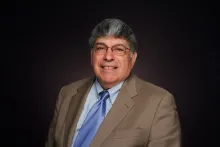
Gary Antion is a long-time minister, having served as a pastor in both the United States and Canada. He is also a certified counselor. Before his retirement in 2015, he was an instructor at Ambassador Bible College, where he had most recently also served as Coordinator.
