

Don Ward
This transcript was generated by AI and may contain errors. It is provided to assist those who may not be able to listen to the message.
The title today is, How Are the Dead Raised? We have observed the face of trumpets, in which the messages emphasize how the sound of the trumpet, the shofar in particular, is associated with the resurrection. How are the dead raised? The sound of the trumpet does not literally awaken the dead, but one Jewish tradition says it was called the trumpet that awakens the dead, a tremendous blast. However, as we shall see, it was and is designed to announce this great event. It signals a great event. Let's read, rehearse ourselves here. Refresh, rehearse in 1 Thessalonians 4 and verse 13. Verse 13. But I would not have you ignorant, brethren, concerning them which are asleep. And oftentimes sleep is equated with death in the Bible, those that are asleep that you sorrow, not even as others, which have no hope. For if we believe that Jesus died and rose again, even so, also those who sleep in Jesus will God bring with him. For this we say unto you by the word of the Lord, that we which are alive and remain unto the coming of the Lord shall not precede those that are asleep. For the Lord himself shall descend from heaven with a shout with the voice of the archangel with the trump of God, and the dead in Christ shall rise first. Of course, the angels blow the trump. You know you read from Revelation chapter 8 verse 1, and the seven angels prepare to sound. And you had the sounding of the trumpets, each one of the angels, the seven trumpets of the seventh seal there, as they sound. The Bible records several instances of dead people being resurrected to physical life. Let's review some of those. Elijah raised the widow of Zarephath's son, the widow of Zarephath's son from the dead. We read about that in Kings chapter 17. Elijah raised the humanite woman's son from the dead.
In both cases, Elijah and Elisha prayed. Of course, it was literally God who raised them from the dead. But Elijah, one of God's prophets, Elisha, remember that when Elisha was ordained, anointed, appointed to be the prophet in Elijah's stead, that he asked for a double portion of Elijah's blessings of his power. Elisha did more miracles than Elijah. In both cases of raising these two people from the dead, the son of the widow of Zarephath and the son of the Shunammite's son, the Shunammite woman's son, they both prayed. Of course, Elijah did this.
It was quite a ceremony with regard to the raising of that person. Jesus raised the widow's son in the town of Nain. If you would, let's go there to Luke chapter 7. In Luke chapter 7, you see that Jesus raised this woman's son, a widow of Nain.
In Luke chapter 7 and verse 11, Luke 7 verse 11, and it came to pass that day after that, he went into a city called Nain, and many of the disciples went with him. Now when he had come nigh to the gate of the city, behold, there was a dead man carried out, the only son of his mother, and she was a widow, and much people of the city was with her. When the Lord saw her, he had compassion on her and said unto her, Weep not. This is probably the only means of support for her. The only way that she could make ends meet, so to speak.
When Jesus saw it, he was so moved with it, he had compassion on her, and he came and touched the buyer, or beer, that bare him and stood still, and he said, Young man, I say unto you, arise. And he that was dead sat up and began to speak, and he delivered him to his mother. And there came a great fear on all, and they glorified God, saying that a great prophet is risen among us, and that God hath visited his people. So that is a resurrection of the physical sense.
Jesus raised Jairus's daughter. If you go to the next chapter, Luke chapter 8 and verse 52, these are resurrections to physical life. Elijah was used to raise the son of the widow of Zarephath. Elisha was used to raise the tunamite woman's son from the dead. Jesus raised the son of the widow of Nain. And here we have in Luke chapter 8 and verse 52. Luke 8 and verse 52.
And all wept and bewailed her, but he said, Weep not! She is not dead, but it sleeps. And they laughed him to scorn, knowing that she was dead. And he put them all out, and took her by the hand, and called, saying, Made arise! And her spirit, or her numa, breath came again. And she rose straightway, and he commanded to give her food. And her parents were astonished, and he charged them that they should tell no man what was done. Of course, he would be so overrun with people he couldn't do anything else. Of course, the word eventually went out throughout all Judea of the mighty signs and wonders that Jesus had performed. And the one that we usually hear so much about was the raising of Lazarus. And most everybody has heard the story of this, so we go to John chapter 11 and verse 39. John chapter 11 and verse 39. And John 11 and verse 39.
And Jesus, take you away the stone, talking about where Lazarus had been buried. You might call burial. They put him in a tomb and a stone over it. So take away the stone. Martha and the sister said of him that he was dead. Lord, by now he stinks. He's been dead four days. Generally the time that after three days you begin to stink. And Jesus said unto her, Said I not unto you that if you would believe you should see the glory of God. And what Jesus did in the flesh, he would give credit to his father, to God the Father. And in this case, we'll see that he prayed, or thanked God, for hearing his prayer, which is not necessarily audible. Then they took away the stone from the place where the dead was laid. And Jesus lifted up his eyes and said, Father, I thank you that you have heard me. So obviously he prayed and he asked the Father for this. And I know that you hear me always because of the people which stand by. I said that they may believe that you have sent me. And when he thus has spoken, he cried with the loud voice, Lazarus, come forth. And he that was dead came forth, bound head and foot with grave clothes, and his face was bound about with a napkin. Jesus said unto them, Loose him and let him go. Then many of the Jews which came to Mary and had seen the things which Jesus did believed on him. But some, and it's always the case as we see things that are happening in our nation today, no matter what some people might do or not do, they're always going to be critics and some who will criticize and who will attribute evil motives, and on and on it goes. But some of them went their ways to the Pharisees and told them things that Jesus had done, and then gathered the chief priests and the Pharisees a counsel and said, What do we do? In other words, what do we do based on this? For this man does many miracles. If we let him alone, all men will believe on him, and the Romans shall come and take away our place and our nation. And so they always try to come up with a good reason in their own minds, and one of them named Kiafas, being the high priest that same year, said unto them, You know nothing at all. Now consider that it is expedient for us that one should die for the people and that the whole nation perish not. You know, when the mock trial took place, they demanded the release of Barabbas, who was a murderer, and they sent Jesus to the Roman soldiers to be crucified. After Jesus died on the stake, 500 people were raised from the dead to physical life. Let's look at that quickly back in Matthew chapter 27, Matthew 27 verse 50, and Matthew 27 and verse 50.
And Jesus said unto him, that's 26, 27 in verse 50, and Jesus said unto him, that's 26, 27 in verse 50.
Jesus, when he had cried again with a loud voice, yielded up the spirit, the numa, the life, essence, his breath. And behold, the veil of the temple was rent and twain from the top to the bottom, and the earth that quake and the rocks rent split in two. And the graves were open, and many bodies of the saints which slept arose, and came out of the graves after his resurrection, and went into the holy city, and appeared unto many. Now, when the centurion, and they that were with him watching Jesus, saw the earthquake, and those things that were done, they feared greatly saying, truly, this was the Son of God. Now, in 1 Corinthians chapter 15, the resurrection chapter, we see the number of those that were resurrected, and what Paul said about those. These people were not raised to spiritual life. They were raised to physical life as a witness at that particular time. And so we pick it up in 1 Corinthians 15 and verse 3, For I delivered unto you, first of all, that which I received, how that Christ died for our sins according to the Scriptures. Of course, there are many scriptures, especially Isaiah 53 we talk, we think about, we think of Psalm 22, and many other places that prophesied that one would come and die for the sins of the world. And that he was buried, and he rose again the third day, according to the Scriptures, and that he was seen of Cephas and of the twelve, and after that he was seen of above five hundred brethren at once, of whom the greater part remain unto this present, but some are fallen asleep, or some have died. Of course, they were raised to physical life and lived out their years and died. Some are now dead. So we see these resurrections in the Bible to physical life. There's another one here. Let's turn to Acts chapter 20.
A lot of things could be said about this scenario in which Paul met with him on the first day of the week, which we shall talk about. And he preached till midnight. One of the guys was sitting in the window on the third floor, and he went to sleep and fell out of the window three floors down, and it killed him. So let's read about that here in Acts chapter 20, beginning in verse 7. Acts 20 and verse 7. And upon the first day of the week, and we're going to talk about that in a moment, because there are two or three places where the first day of the week is used, and they're having some kind of meeting with teaching, preaching, and then some of the commentators, virtually all of the commentators, take up on this and say, well, this shows that they made a change in the day of worship from the Sabbath to the Sunday, the first day of the week. Upon the first day of the week, when the disciples came together to break bread, and also a lot of the commentators will say, well, the breaking of bread here, they were keeping the communion, or the Eucharist, as they might call it, came together to break bread. Paul preached unto them ready to depart on the morrow, and continued his speech until midnight.
And there were many lights in the upper chamber where they were gathered together. Well, it wasn't because of darkness, apparently. Many lights were there. And there sat in a window a certain young man named Eutuchus, or Euticus, being fallen into a deep sleep. And as Paul was long preaching, he sunk down and went to sleep and fell down from the third loft and was taken up dead.
And Paul went down and fell on him, embracing him. And he said, trouble not yourselves, for his life is in him. When he therefore was come up again, and had broken bread and eaten, and talked a long while even till break of day, so he departed. So Paul had this urgent message he wanted to deliver unto them, so he spoke all night. And in the course of that, this one went to sleep, fell out of the loft, dead.
As I said, the majority of commentators try to prove that verse 7 shows that the Sabbath was changed to the first day of the week, which they called the Lord's Day. Now, on trumpets, I tell you about how that the Greek construction, and we'll, if you'll, maybe you want to hold your place there, look at 1 Thessalonians chapter 5. We'll look at this again with regard to the Greek construction of this expression, first day of this expression, the Lord's Day. In the scriptural reference that the commentators will give you with regard to this first day of the week is generally Revelation chapter 1 and verse 10, where it says that Paul, that John was in the spirit on the Lord's Day, which should have been, should be translated, the day of the Lord.
Hekuriyake Himariya is the Greek construction in 1 Thessalonians chapter 5 verse 2, and also the same construction in Revelation 1 and verse 10. There's no place in the Bible that said that you are to meet on the quote, the Lord's Day. When this construction is used as speaking of the day of the Lord as here in 1 Thessalonians 5.2, for yourselves know perfectly that the day of the Lord, Hekuriyake Himariya, so comes as a thief in the night. So we see very clearly that this should be translated as the day of the Lord, not the Lord's Day.
Now, we know from the Scripture with regard to the absurdity of trying to say that this proves that Paul and the church began to meet on Sunday and it replaced the Sabbath. So let's show a few scriptures here that shows clearly what Paul did. Look at Acts chapter 17. Acts 17 verse 1. And Acts 17 and verse 1.
Acts 17 verse 1, now, when he had passed through Amphibilis and Apollonia, they came to Thessalonica, where there was a synagogue of the Jews and Paul, as his manner was. His manner was, or his, you look at that word, manner, his custom, his practice. And Paul, as his manner was, went in unto them, and three Sabbath days reasoned with them out of the Scriptures, opening and alleging that Christ must of needs have suffered and risen again from the dead, and that this Jesus, whom I preach unto you, is Christ. Remember that Christ, the word is Christos, it means he is the anointed one. He is the anointed one that was prophesied in Psalm chapter 2 and verse 2.
And some of them believed and consorted with Paul and Silas, and of the devout Greeks a great multitude, and of the chief women several, not a few. So, and we look at chapter 18, chapter 18, just forward a page or two, verse 3. And when he was of the same craft that is a tent maker, he abode there and and wrought for by their occasion, they were their occupation, they were tent makers, and he reasoned in the synagogue every Sabbath and persuaded the Jews and the Greeks. The Greeks, of course, were the Gentiles. And some might argue, well, he still met with the Jews on the Sabbath, and then he would meet with the Greeks on a different day. The day of worship, if Paul had changed the day of worship, it would have been such a furor to take place among the Jews that it would be unbelievable. The two most important doctrines of the Jews focus on the ceremony of circumcision and the Sabbath. Circumcision was a sign that you were of the congregation of Israel, and the Sabbath was a sign between them and God. Now, circumcision was a physical act and not necessary for one to be spiritually circumcised. Listen to what I'm saying. The message today is spiritual circumcision of the heart. Physical circumcision not necessary. And even when it was announced that physical circumcision was not necessary, it created such a furor among the churches throughout the Mediterranean world that Peter and Paul came to Jerusalem for the famous Jerusalem conference, in which James pronounced that it was not necessary that they be circumcised in the flesh. Now, on the other hand, the Sabbath is a spiritual matter. God created it for spiritual purposes. It reveals God as a physical creator and a spiritual creator. Six days, he created the physical side of things and the restoration of the earth and the physical side of things. Then on the Sabbath day, he placed his presence in the Sabbath. He sanctified it and made it holy. Holy things have God's active presence in them. So one could only imagine what would have happened to Paul if he had taught that the Sabbath had been changed to the first day of the week. Now, with regard to the breaking of bread, some say, well, they came together to break bread in Acts 20. Let's look now at Acts chapter 2 and verse 42. There was one commentary, Jamison Fosse and Brown, that dogmatically stated that this had nothing to do with the Eucharist, but most of the commentators said, okay, this breaking of bread also was communion or what we would today call Passover. And we know from the Bible that the Passover was commanded to be observed on the 14th. In Acts chapter 2, verse 42, of course, Acts 2 deals with Peter's inspired sermon, the pouring out of the Holy Spirit on the day of Pentecost. Peter preached and the people responded to it. Three thousand souls were added that day and it's the beginning of the New Covenant Church of God in Acts 2 and verse 42. And they continued steadfastly in the apostles' doctrine and fellowship and in breaking of bread and in prayers. This expression, breaking of bread, was a common expression for having a meal. They were having joint meals and fear came upon every soul and many wonders and signs were done by the apostles and all that believed were together and had all things in common. And so their possessions and goods imparted them to all men and every man had need as they had need. They continued daily with one accord in the temple and breaking bread, having a meal together from house to house, did eat their meal or their food with gladness and singleness of heart, praising God and having favor with all the people. And the eternal added to the church daily such as should be saved. Now here's why James and Foset Brown writes about the breaking of bread.
They state, breaking of bread, not certainly in the Lord's Supper alone, but rather in frugal repass taken together with which the Lord's Supper was probably conjoined until abuses and persecution led to the discontinuance of the common meal. That's such jumbled sentence construction that you can hardly follow it. Now for in Acts 20 verse 11 where it talks about with the one who fell out of the window at Paul's preaching and after he was resurrected says that they broke bread and ate.
James and Foset Brown says, with what a mixture of awe and joy after such an occurrence and eaten, denoting a common repass as distinguished from the breaking of the Eucharist bread. So even they say it had nothing to do with the communion or Passover. However, James and Foset Brown asserts that the first day of the week had become the common practice for the day of worship that I showed you from Acts chapter 17, from Acts chapter 18, that Paul's practice continued to be the Sabbath day and also the fact that the two great issues were the Jews' circumcision, which was a physical act, and then the Sabbath, and the Sabbath is a spiritual matter.
There's something special about the Sabbath. God says, remember the Sabbath day to keep it holy, meaning he has sanctified it, he has set it apart, it is holy. Paul preached in his preaching the resurrection from the dead, and that preaching and the resurrection of the dead caused him to suffer much persecution along with many other factors. I would encourage you, if you want preparation reading for the Feast of Tabernacles with regard to what people go through and what Paul went through. Say you start in Acts 20, maybe a little earlier, and read the rest of the chapter.
Just read through it and see what Paul went through. Let's turn to Acts 23 with regard to this trial. See, Paul had come to Jerusalem, and out in Hinterland, the Jews were really upset because they said he was blaspheming the law of Moses, not keeping the law of Moses, preaching against it. And when he came to Jerusalem, James said, you need to go down, you're going to need to go to the temple and go through the rites of purification for seven days. And in the course of doing that, some of them from Asia Minor recognized him and said, hey, here's the one some of the Jews was preaching against the law of Moses.
And this, from this, ensued this long encounter that Paul had on his way finally winding up in Rome, and it was all a part of the plan of God so that he would be a witness not only to the Gentiles, but also to the Jews, Jews and Gentiles. So finally, they brought him before the council.
We're just picking up in the middle of this because of this question of the resurrection. How are the dead raised in Acts 23 verse 1? And Paul earnestly beholding the council, the Sanhedrin, brought before the Jewish court, men and brethren, I have lived in all good conscience before God until this day. You ought to really really read Paul's sermon in Acts 22 leading up to this. We're breaking in on it. And the high priest Ananias commanded them that stood by him to smite him on the mouth.
Then said Paul unto him, God shall smite you, you whited wall. For sit you to judge me after the law and commanded me to be smitten, contrary to the law. And they that stood by said, Reviolus, you God's high priest. Then said Paul, I didn't know, brethren, that he was a high priest, for it is written, you shall not speak evil of the ruler of your people. But when Paul perceived that one part were Sadducees and the other Pharisees, he cried out in the council, Men and brethren, I am a Pharisee, the son of Pharisees, of the hope and resurrection of the dead.
I am called in question. So he pitted the Sadducees against the Pharisees. Now how the Sadducees could claim to be believers in the God of the Bible and deny the resurrection, because if we shall see in a few moments that time after time in the Old Testament, the resurrection is prophesied and promised to come. But anyhow, the Sadducees did not believe in the resurrection or a resurrection, and the Pharisees did. Men and brethren, I am a Pharisee, the son of a Pharisee, of the hope and resurrection of the dead.
Verse 7, And when he had said that there arose a dissension between the Pharisees and the Sadducees, and the multitude was divided, for the Sadducees said that there is no resurrection, neither angel nor spirit, but the Pharisees confessed both. And there arose a great cry in the scribes that were of the Pharisees' part, and rose and strove, saying, We find no evil in this man, but if a spirit or an angel has spoken to him, let us not fight against God.
And when there was a great dissension, the chief captain, fearing lest Paul be stoned and pulled to pieces of them, commanded the soldiers to go down and to take him by force from the Jews, from among them, and to bring him into the castle. And the night following. And so, Paul had a special revelation there.
It turns out that Paul's sister's son, his nephew, heard the plot that they had against him, and his nephew went and told the authorities, and they were able to deliver Paul. But Paul says, for this hope of the resurrection from the dead, I'm called into account here today.
So, let's go now to 1 Corinthians 15 and verse 35.
The resurrection at the end of this present evil age is not the same as those resurrections in the Old Testament. So, 1 Corinthians 15 and verse 35. This very question, I said, was the title. How are the dead resurrected? And even though the Old Testament scriptures recorded instances of the resurrection of the dead, it was a very controversial topic with Jews and Gentiles. And Corinth, even some, were saying, apparently people who were attending church, that there was no resurrection from the dead. In 1 Corinthians 15 and verse 35, but some men will say, how are the dead raised up? And with what body do they come? You fool!
That which you sow is not made alive, except it die. This Old English expression, quicken, means to make alive. And that which you sow, you sow not the body that shall be, but bare grain, it may chance of wheat or of some other grain. But God gives it a body as it has pleased him to ever seed his own body. All flesh is not the same body. There's one kind of flesh of man, another kind of beast, another of fish, another of birds. There are celestial bodies, and bodies terrestrial, heavenly and earthly. But the glory of the celestial is one. The glory of the terrestrial of the earthly is another. There is one glory of the sun and another glory of the moon. Of course, the moon reflects the sun. And another glory of the stars, for one star differs from other stars in glory. So also is the resurrection of the dead. It is sown in corruption. It is subject to decay, to rot. It is raised in in corruption. It is sown in dishonor. It is raised in glory. It is sown in weakness. It is raised in power. It is sown a natural body. It is raised a spiritual body, and it has its identity. Back when this furore was taking place in worldwide in the 90s with regard to the nature of God, and one person writes and says, the spirit is indivisible. I wrote and said, I guess in resurrection, then, we'll just be bleeps on God's radar screen. There will be no identity. Yes, there is identity.
It is sown a natural body. It is raised a spiritual body. There is a natural body. There is a spiritual body. And so, as it is written, the first man, Adam, was made a living soul.
The last Adam was made a life-giving spirit, quickening spirit. Howbeit that was not which is spiritual, but that which is natural, and afterward that which is spiritual. You're first of all, of course, physical, then spiritual. The first man is of the earth, the earthly. The second man is the Lord from heaven. As the earthly, such are they that are earthy, and as the heavenly, such are they that are heavenly. And so, we have borne the image of the earthly, we shall also bear the image of the heavenly. Now I say this, brethren. So he goes to the resurrection of the dead.
I say this, brethren, and sometimes I think we forget this. Flesh and blood cannot inherit the kingdom of God. Those who are in the kingdom have been resurrected according to this. I say, brethren, that flesh and blood cannot inherit the kingdom of God. Neither does corruption inherit incorruption. But those who are in the kingdom of God rule over those who are potential members of the kingdom of God in the millennium, teaching them, showing them the path to eternal life. Behold, I show you a mystery. We shall not all sleep. In other words, we're not going to stay in the graves dead, but we shall all be changed in a moment in the twinkling of an eye. The trumpet shall sound, and the dead shall be raised incorruptible and shall be changed. This corruptible must put on immortality, or incorruption. Mortal must put on immortality, showing you don't have immortality now.
That great difference between what I was taught in the Baptist Church and all those days that I sat and listened to those hell-firing brimstone sermons of when you die, you either go to heaven or hell at that instant. We know that is one of Satan's most damnable, abominable lies. That man is mortal, subject to sin and death. The wages of sin is death, but the gift of God. The gift of God is eternal life through Jesus Christ our Lord. It is a gift from God. We are not created with inherent immortality abiding within us. And as I've said before, one of the greatest farses of all time is for someone to say, okay, you're created an immortal being, and we know you're going to sin as an immortal being. We know that you're going to sin, but we're going to send you a Savior to save you from sin when you already saved because you are immortal. What a farce that is to say that one who already has inherited eternal life in him can be saved through God having to give the sacrifice of his son to save him. For in a moment in the twinkling of him and I at the last trump, for the trumpet shall sound, the dead shall be raised, incorruptible shall be changed. Verse 54, so when this corruptible shall put on incorruption and this mortal shall put on immortality, have to put on immortality, then shall be brought to pass the saying that is written, Behold, death is swallowed up in victory. That will be one of the greatest victories that can ever be attained. The concept of resurrection to eternal life, as we see here, is introduced in the Old Testament. And let's review those passages quickly. Job 14. 14. Job right before the Psalms. And Job 14 and verse 14. Well, my finger's not working too well right now. Job 14 verse 14. If a man die, shall he live again?
If a man die, shall he live again? All the days of my appointed time, will I wait till my change come? We just read about that change in 1 Corinthians chapter 15. You shall call and I will answer. We will talk about that calling a little later. You shall call, you shall call, and I will answer you. You will have a desire to the work of your hands. So Job knew about the resurrection, knew about the change. Look at Psalm 17 and verse 15. Psalm 17 and verse 15. How are the dead raised? What are they raised to? They're not raised just to physical life. They're raised to spiritual life. You're planted a physical body. You're raised a spiritual body. In Psalm 17 and verse 15. As for me, I will behold your face in righteousness. I shall be satisfied when I wake with your likeness.
And perhaps one of the most relevantory is found in Daniel 12 and verse 1. I mean this one is so undeniable. In Daniel 12 and verse 1 with regard to teaching that there is coming a resurrection of the dead to everlasting life. How in the world could the Sadducees not believe in the resurrection? And at that time, Michael shall stand up. Daniel 12, 1. Michael shall stand up, the great prince, which stands for the children of the people. There shall be a time of trouble, such as never was, since there was a nation even to that same time, speaking of the great tribulation. At that time, the people shall be delivered. Everyone that it be found written in the book, and that book is the book of life. And many of them that sleep in the dust of the earth shall awake, some to everlasting life, and some to shame an everlasting contempt. Now look at Isaiah 52 verse 1. I think we read this on the day of trumpets as well. Isaiah 52 and verse 1. Isaiah 52 verse 1, remember Paul said, it is planted a spirit, it is planted a physical body, it is raised a spiritual body.
Isaiah 52, 1. Awake, awake! Put on your strength, though Zion, put on your beautiful garments, O Jerusalem, the holy city, and for henceforth there shall no more come unto you the uncircumcised in the spiritual sense and the unclean in the spiritual sense. The fact, in fact, this resurrection to spiritual life is equated with spiritual birth. This is so important here. Once again, this resurrection to spiritual life is equated with spiritual birth. Now people talk about John chapter 3 and the Protestants talk about, from presidents on down and up, and so on, about, are you born again? When we are baptized and receive God's Spirit, we do receive new life from above. Unless, as Jesus told the Nicodemus, unless you are begotten from above, then you will not see the kingdom of God. May he paraphrase. We receive the earnest of eternal life, and we have eternal life abiding within us because God's Spirit is eternal. God's Spirit is eternal. The same Spirit that is in God is in Christ is in us, as we know that God and Christ are eternal. They are co-eternal. They are uncreated without Father, without Mother, without descent, without the beginning or end of days, as in Hebrews 7 in verse 3.
Resurrection to spiritual life is equated with spiritual birth. Even that is in the Old Testament. Look at Psalm 2 in verse 7. I wonder, brethren, when we hear these things in sermons, if we just depend on sermons. If I or anybody else who attempts to teach the Word of God just depended on what somebody says in a sermon for my spiritual edification in life and be in sad condition, you may be in church and you never hear a scripture read from Obadiah. I haven't read from a scripture in service from Obadiah, and I don't know how long.
And probably you haven't heard a scripture from Habakkuk lately, but you have to study yourself. In Psalm 2 and verse 7, of course, this is a take-off on the first part of the chapter.
In chapter 2, the kings of the earth set themselves and the rulers take counsel together. This is verse 2, Psalm 2. The kings of the earth set themselves and the rulers take counsel together against the Lord, the Yahweh, and against his anointed, saved.
Of course, they want to rule and displace God. Now look at verse 7. I will declare the decree, The eternal said unto me, that is, unto the anointed one, You art my son. This day have I, Yalad in Hebrew, the equivalent of Gennao in Greek, this day have I begotten you. Gennao or Yalad, when used to the father, means to beget, to engender. When used to the mother, it means to bring forth. In the case of physical birth, we know that the male begets.
The father begets. The female, the mother, brings forth. Now in the case of spiritual beget, the father, does both, but as we shall see, Christ plays a role. Now we go to Acts 13.
What we've just read here in Psalms is the key scripture, the key concept that Paul uses in his sermon here in Acts 13. In Acts 13, I'm breaking in in the middle of this sermon. We'll start in chapter 29, and when they had fulfilled all that was written of him, they took him down from the tree and laid him in a sepulchre, but God raised him from the dead.
We'll talk about that in just a minute. See, how are the dead raised? But God raised him, that is Christ, from the dead. And he was seen many days of them which came up from Galilee to Jerusalem, who are his witnesses unto the people. See, he was seen many days of them which came up with him from Galilee to Jerusalem, who are his witnesses. I read that from 1 Corinthians 15, some 500-plus. And we declare unto you glad tidings, how that the promise which was made under the fathers, they knew this, the fathers from the Old Testament, God has fulfilled the same unto us their children, and that he has raised up Jesus again as it is written in the second psalm. What we just read, you art my son, this day have I Gnao you, I have brought you forth, and as concerning that he raised him from the dead. Now no more to return to corruption. He said unto him, I will give you the sure mercies of David. Of course, it was promised that one would always be there to sit on the throne of David. Now in Revelation 1.5, we see even more clearly how resurrection is equated with birth. Revelation 1 and verse 5. And from Jesus, who is the faithful witness and the firstborn, Prototichos, the firstborn of the dead and the prince of the kings of the earth, unto him that loved us and washed us from our sins and his own blood. So we see there resurrection equated with birth. Now, Romans chapter 1, even more here in Romans chapter 1.
In Romans chapter 1, verse 3, Concerning his son Jesus Christ our Lord, which was made of the seed of David according to the flesh, he was a human being in the flesh, and declared how to be the Son of God, declared to be the Son of God according to the Spirit of Holiness by the resurrection from the dead. And, brethren, we shall also experience the same thing. Isaiah describes in Isaiah 66. I thought I would be through by quarter after, but not the case. In Isaiah 66, to me this is important, exciting. In Isaiah 66 and verse 6, a voice of noise from the city, a voice from the temple, a voice of the eternal that renders recompense to his enemies. Before she travail, that is Zion, she brought forth. Before her pain came, she was delivered of a man-child. Who has heard of such a thing? Who has seen such a thing? Shall the earth be made to bring forth in one day, or shall a nation be born? This is this holy nation spoken of in 1 Peter 2.9. A nation be born for as soon as Zion travailed, she brought forth her children. Shall I bring to birth and not cause to bring forth this eternal? Shall I cause to bring forth and shut the womb, says God? Rejoice you with Jerusalem and be glad with all her that love her. Rejoice for joy with her and you that mourn for her.
Now in Psalm 87, in Psalm 87, the glorious things of thee are spoken. Some have said, well, I don't want to sing Psalm 87 because it is to the tune of Hitler's March song. I forget the name of it, but the words are what I'm focusing on. Glorious things of thee are spoken, Zion city of our God, straight out of the Bible, in Psalm 87. His foundation is in the holy mountains. The Lord loves the gates of Zion. Remember Hebrews 12, verses 22-23, you have come to Zion, the city of the living God, the general assembly of the church of the firstborn. The Lord loves the gates of Zion more than the dwellings of Jacob. Glorious things are spoken of you, O city of God. I will make mention of Rahab and Babylon to them that know me. Behold, Philistia and Tyre with Ethiopia. This man was born there. Where? In Zion. And of Zion it shall be said that this man was born in her. Of course, people have died all over the face of the earth. Some have been burned alive. Some are at sea. Some are on land.
This and that man was born in her, and the highest himself shall establish her. The Lord shall count when he writes up the people. This man was born there. Where? In Zion. As well as the instruments and the players on string, instruments, all my springs, springs are symbolic of God's Spirit. Out of my belly shall flow rivers of living water.
So we see very clearly here that it is resurrection to spiritual life and that resurrection symbolizes that resurrection is equated with spiritual birth.
We've already read that the Father raised Jesus from the dead. There are many scriptures that show that the Father raised Jesus from the dead. In the resurrection at the end of the Saint, at the end of this age, when the Saints are resurrected to spiritual life and born into the family of God, the Father and Son work in concert to raise the dead. Remember the title, How Are the Dead Raised? The Father and the Son have worked together from time and memorial. Before anything existed, they planned out the Great Plan of Salvation, as in 2 Timothy 1.8-9, as in Revelation 13.8, Jesus Christ slain from the foundation of the world. The Father created all things through Christ, as in Hebrews 1.2. The Father and the Word have worked together in planning the Great Plan of Salvation and carrying it out. Now, the Father is credited with bringing it to pass. However, Christ plays a vital role. Perhaps we have overlooked and some have segmented, saying, only the Father does this or only the Son does that, in some cases. But let's look at John 5 and verse 20.
We can refer to God the Father. We often say in our prayers, our Father who in heaven, Creator, and whatever else we may say about the Father, but He created through Jesus Christ. They have worked together and perfectly fulfilled their roles through history. Now we look at John 5 and verse 20. For the Father loves his Son, and shows him all things that himself does, and he will show him greater works than these that you may marvel. Of course, this is Jesus speaking. For as the Father raises up the dead and makes them alive, even so the Son makes alive whom he will. We have to stay with it. For the Father judges no man, but hath committed all judgment unto the Son, that all men should honor the Son even as they honor the Father. He that honors not the Son honors not the Father, which he has sent. Verily, verily, I say unto you, he that hears my word and believes on him that sent me has everlasting life, and shall not come into condemnation, but is passed from death unto life. Verily, verily, I say unto you, the hour is coming, and now he is when the dead shall hear the voice of the Son of God, and they that hear shall live. Of course, there were many people that were called and converted. For as the Father hath life in himself, so as he has given to the Son to have life in himself, and hath given him authority to execute judgment also because he is the Son of God. Marvel not at this, for the hour is coming in which all that are in the graves shall hear his voice, and they shall come forth, they that have done good in the resurrection of life, and they that have done evil unto the resurrection of Croesus. Now, this word Croesus is translated 20 times or so as judgment, only three times as damnation, and I'm sure what the King James translators were striving to do here because the world teaches that this is the only day of salvation. So, they translate this as if to say, okay, they have come forth, some have come forth unto eternal life, and others to damnation. That's it, they're going to hell. But the word more accurately here should be translated judgment because we know that the dead who never had an opportunity to hear the word of God will be raised to physical life and given an opportunity for eternal life. And so, a better translation would be unto judgment that they will eventually have their opportunity. So, the Father and the Son have worked together through the ages. Christ plays a role, as we see here. Understand this now. Christ plays a role.
The Father begets us and brings us to birth, but the Son is involved. If the Father did not begin us or bring us to birth, He wouldn't be the Father. But at the same time, if it weren't for the Son, this wouldn't happen, as we shall see here. In Romans 8 and verse 11, I started quoting in our doctoral meetings in Pasadena in the early 90s, Romans 8 and 11, quite often.
It shows the role of God the Father and of the Son in the resurrection. But here, I'm sorry, what we've just seen shows the role of both in the resurrection. Here, but if the Spirit of Him, this is Romans 8 and 11, but if the Spirit of Him that raised up Jesus from the dead dwell in you, the Spirit of Him that raised up Jesus from the dead dwell in you, He that raised up Christ from the dead shall also make a life quick in your mortal bodies, by His Spirit, that dwells in you. But as we have noted from John 5, we could also note verses from John 6 that Christ plays a role in it.
If Jesus had not played His role, we would not have ever been able to be begotten and brought to birth. Look at 1 Corinthians 4 and verse 15. See, Paul even says in 1 Corinthians 4 verse 15 that he fathered them in the gospel through Christ. In 1 Corinthians 4 and verse 15, for though we have a thousand instructors in Christ, yet we have not many fathers, for in Christ Jesus I have begotten you through the gospel. You have not many fathers, for in Christ Jesus have I begotten you in the gospel. Now turn quickly to verse Peter chapter 1 and verse 3. Verse Peter chapter 1 and verse 3. See, we see this reciprocal relationship in the creation of the universe, in the creation of all things. The Father is the Creator, and the Son creates through the Son. You could say that the Son is also the Creator.
This is 1 Peter 1 verse 3. Blessed be the God and Father of our Lord Jesus Christ, which according to His abundant mercy hath begotten us again unto a lively hope by the resurrection of Jesus Christ from the dead. If it were not for Christ reconciling us to the Father and then being resurrected, we could not receive the earnest of the Spirit from the Father. So hopefully what we've gone through here today will help us more completely understand the wonderful plan of God. That from time immemorial, God the Father and Jesus Christ have worked together to fulfill this great plan of salvation. The plan that was foreordained before the foundation of the world and is now being manifest through the Spirit and Word of God. So brethren, we should, not only at the feast but especially at the feast, we should rejoice with joy unspeakable and full of glory.
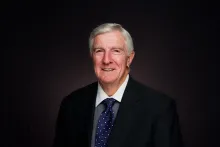
Before his retirement in 2021, Dr. Donald Ward pastored churches in Texas and Louisiana, and taught at Ambassador Bible College in Cincinnati, Ohio. He has also served as chairman of the Council of Elders of the United Church of God. He holds a BS degree; a BA in theology; a MS degree; a doctor’s degree in education from East Texas State University; and has completed 18 hours of graduate theology from SMU.
