

Steve Shafer
This transcript was generated by AI and may contain errors. It is provided to assist those who may not be able to listen to the message.
Well, thank you, Don and Bob both. Beautiful, special music, beautiful voice. Thank you so much for that. I always really, really enjoy special music and a very inspiring part of services. We're now two weeks into a new year, and we've looked. We had crystal ball, but we don't really know what this year will bring, but you wonder what the year will bring, what's going to happen before the year's out and throughout the year. You know, it's kind of things happened. A lot of things happened last year. It was sort of very surprising, very sudden, and we started this year off from kind of a bad foot in the sense that we had a major situation that occurred at the airport in Fort Lauderdale, Florida. Very beginning of this year, where an individual came out and just started firing at people, shot and killed five people, and I think wounded eight others. Many people around the world right now, as we sit here in the comfort of this building and warmth on this day, many people around the world are now facing various crisis situations. Some have been dealing with crisis situations for some time in some areas of the world, and so you have to wonder what kind of situation will we face here in the United States in the upcoming year. I mean, right now, I guess, and I don't know if they call this a crisis or not, but it's almost like some people who were so sure that Hillary Clinton was going to be president and were so much counting on that. They're almost in a crisis situation now because she didn't become president, and I suppose it would be that way on the other side too if it went the other way. But from time to time, all of us face crisis situations. Churches sometimes face a crisis. Christianity as a whole may be facing the crisis in the years ahead because of the way things are going, which seems to be going against Christianity in general in many areas, in many ways. Some churches of God find their congregations facing difficulties and crisis situations from time to time. Sometimes an entire church organization will face difficult times and may be a crisis or a turning point, as we did back in 1995 and as United did in 2010. Those are kind of crisis situations that occurred because of things that unfolded. And even now, some congregations even here in Michigan are facing difficult situations that they're dealing with. Knowing all the details, what happens, and not necessarily important, I think what we need to understand is why we have crisis in our lives. What do these things occur, as even talked about by Mr. Modilia and his Beyond Today daily. It can lead to depression and uncertainty and confusion and wonder what happened.
But how can we properly deal with a crisis? How do we get through a crisis, as he was talking about in Beyond Today as well, daily? So we come out stronger on the other side. How do we deal with these kind of things that happen so we actually get through them as he was talking about and as we nearly was talking about him and come out stronger. Because every single one of us, from time to time, will face things like that in our lives. We've all faced those things in the past and we can be sure of one thing there are going to be more crisis situations or trials, as he was saying there, in the years ahead. We don't know when they'll come or what forms they'll take. We know they're going to come. Does scriptures tell us stories of crisis?
Do we, how do we get through it when that occurs? And mainly, what lessons can we learn as we go through these situations? Did the patriarchs and the prophets in the Old Testament face crisis situations in their lives? What about the apostles of the New Testament? Did they face the crisis situations? What about Christ? Did he face the crisis situation? How did he handle it? What can we learn from it? Should a crisis be a stumbling block or should it be a door of opportunity? That's what I want to look at today. Today I want to look at what scripture tells us when it comes to crisis situations that we can all face as Christians. We'll look at what the definition of a crisis is so we can understand how it's defined. Did the patriarchs and prophets and apostles deal with that? We'll look at that. Also, we'll look at Christ, how he dealt with it.
And we'll look at the question, should a crisis be a stumbling block or should it really be a door of opportunity as we face those things? And then what lessons does God want us to learn? If you want a title for my sermon here this morning, my sermon title is, How to Deal with a Crisis. How to Deal with a Crisis. Now, I looked up in the Webster's Collegiate Dictionary, it's about 10 years old, I think, or 8 years old. But it gave three basic definitions of a crisis.
The first one has to do with it being a turning point of a disease. We're not going to deal with that today, so that really won't apply to what we're going to be talking about today. Second definition is a turning point in the case of anything. Another major turning point. A decisive or crucial time or event. That's the second definition. So we are going to be looking at that because we all have turning points. We all have crucial times and events we have to deal with. And then the third definition is a time of great danger or trouble. I can think we can look at the United States right now and some things are going on around the world and you see we are living in a time of danger and trouble that can cause a crisis that could affect everybody. And this is often a time of great danger, trouble, often one which threatens to result in unpleasant consequences.
So then you have that aftermath as well. Today we will touch primarily on the second and third definitions on a crisis being a turning point, on being a crucial time, and on some times resulting in unpleasant consequences that we will have to deal with. Back to Webster's, as far as a synonym goes, Webster's lists emergency as a synonym for the word crisis. First, a question I want to look at here is did the patriarchs and prophets and apostles have to deal with a crisis? First, let's look at the patriarchs. Let's go back to just look at a few of them because you can find these throughout the Bible. You could spend several hours in Bible study on this, but let's just go back and look at a few of them. I want to deal with just what the patriarchs now. Let's go back to Noah. Let's go back to Genesis 6. Genesis 6, beginning in verse 6. Here's what happened back then just before the flood, as we know. The Eternal was sorry that he had made man on the earth.
He was grieved in his heart. So the Lord said, I will destroy man whom I have created from the face of the earth, both man and beast, creeping things and birds of the air. For I am sorry that I have made them because of the way things were going, how they turned away from God in such way they had. So that was a crisis of unprecedented proportions. God was going to destroy all life from the face of the earth. Verse 8, and again this time it's right here what Mr. McNeil said too.
Then it says, but Noah found grace in the eyes of the Eternal.
The word grace literally means favor.
This then is a key for making it through a crisis, right here in verse 8.
There are some things that may turn the world upside down, and that are totally out of our control and beyond our control. But if we, as followers of Christ, find favor in God's eyes, we find grace or favor in the eyes of God, God will see us through that crisis as He did Noah and Noah's family. Which leads to another major point. It's very important and brings it out here. Our personal relationship with God. Not only important for us, but it's also so important for our family.
And we find favor with God. God can then also, that can impact our family and God can extend that favor to our family as well. Which God did here. He not only showed favor to Noah, but He then extended that favor to Noah's family. As we read in Genesis 7 verse 1. Then the Lord said to Noah, come into the ark, not just you, just because you found favor with me, but you and all your household. Because I have seen you are righteous before me in this generation. So God extended that favor to Noah's family. So our relationship with God can be a benefit to our entire family, even if they don't understand what we understand at this time.
Let's go to Genesis 12. Look at Abraham.
Now, this is a major turning point for Abraham. Now, this is a major turning point for Abraham. Now, this is a major turning point for Abraham. That's part of the definition of a crisis. Now, the Lord has said to Abram, get out of your country and get away from your family and from your father's house and go to a land that I'm going to show you. I'm not going to tell you exactly where you're going to go, but I'll show you as you go along the way. And I will make you a great nation.
And I will bless you, make your name great, and you should be a blessing. And I'll only bless you, but I will also bless you. And I'll curse those who curse you. And in you all the families of the earth shall be blessed.
Now, this is a major crisis, or in this case, a major turning point in the life of a bomb, or the name of the letter changed to Abraham. But what was the key for Abraham in making it through this crisis? Can you imagine if God asked us to do that? I've got something in mind for you. But I want you to be a great person. I've got something in mind for you. But I want you to leave your family.
I want you to leave your house. Leave your job. Leave the community you're living in. And I want you to just follow me, and I'm going to take you somewhere. I'm not going to tell you where right now, but I just want you to follow me. And I'll bless you if you do that. What was the key for Abraham making it through that crisis? Verse 4. Verse 4. So, Brom departed as the Lord had spoken to him. The key for Abraham was that he acted in faith, as Mr.
McNeely was talking about. He acted in faith. He believed God. He said, I don't understand this. It doesn't make sense. But I believe... He knew it was God. He said, I believe God. I'm going to have faith in God.
God knows what he's doing. Abraham had faith in God. He acted in faith, and he lived by faith. So, to make it through a crisis, we have to find favor with God, and we have to live by faith. That God knows what he's doing, and he'll see us through it. Now, there's a tremendous historical side point that we come up to what we just read.
Verse 3. Read that again. I will bless those who bless you. I will curse you, who curses you. And then he said, the latter part of verse 3, And in you all the families of the earth shall be blessed. I will relate a little bit of what's happened here just this year, and this entire last year, 2016, which will continue on this year. But in this past year alone, 2016, now, looking back in 2016, hundreds of thousands of people faced a major crisis in their lives.
And it kind of ties in here to Abraham having to leave his home. Nearly two million people fled their homes and families, greatly risking their lives in the process, and many actually did lose their lives in the process this past year. In 2016, there was an exodus of nearly two million people.
That's almost like the excess in the Bible. When God told Israel to leave Egypt, there were probably somewhere close to three million Israelites who left Egypt. They said they'd leave their homes, and they had to do it in a hurry, didn't they? They had to rush. They had to just grab whatever they could and flee. And that's what these people are doing. Where were they fleeing from? Now they're fleeing from countries like Syria, Afghanistan, maybe Iran, Iraq, Pakistan, other Middle East nations.
Why were they fleeing? They were fleeing in some cases because their homes had been destroyed. They didn't have a home. Like in Aleppo, their homes were destroyed because of war. Just nothing but rubble left. Their belongings had been destroyed. Their families had been decimated and destroyed. They'd lost their jobs. Their jobs would go on. They were fleeing because their lives were in danger, and some of the families already lost their lives. And they were literally fleeing for their lives. But the tens of thousands came with them, only what they could maybe get in the backpack and carry on their back. There are thousands of people in that boat right now facing that kind of a crisis.
They're fleeing by sea, fleeing by land, any way they could, trying to find freedom so they could live their lives in peace and security. And it's not an easy journey for some of them to finally get to where they wanted to go, where they could have freedom. There's maybe several months of journey, some nearly a year, often going without food or water, and at times living in tents or out in the open.
Sometimes for weeks at a time at a border cross, and they'd get to one country, trying to get across into Turkey, trying to get Turkey into some other country, and they'd have to wait at the border, and they'd get permission to go across the border. Sometimes they'd have to wait there at the border for weeks or even a month or more, with really not much food or water or anything, and just sleeping in the open.
Where were they heading? And it says, And it says, In you all nations of the earth will be blessed. Where were they fleeing to for the most part? Not entirely, but for the most part? They were trying to get to France or nations of Europe, or to the United Kingdom, and some even to the United States of America, which are all what? They're all, those nations are for the most part descendants of Abraham, who will be blessed. They have been blessed with freedom, with freedom of choice, with governments that allow them freedom. They're fleeing to descendants of Abraham, because those people have been blessed by God.
So they could be blessed. And it said, God made a promise to Abraham, and you, all the families of the earth, will be blessed. And there, the whole world can see that, and that's where they want to go. They want to go someplace will be blessed instead of cursed, because where they are, they're cursed by their own governments, some of those people. At this very moment, tens of thousands are still embarking on that journey, fleeing the Middle East, trying to get to the descendants of Abraham, Isaac, and Jacob, in many cases. Now, that's one side of the coin. There is another side of the coin, which is also causing a crisis. So it would not be fair just to cover that side. That's the Exodus side of the coin. In this case, there's also another side, the invasion side of the coin, because these Middle East immigrants are now invading Europe and Germany, the United Kingdom, some cases coming to the United States, and they are nearly 100% Muslims, or of Zlant-Lamak faith.
And they're not integrating into those nations that they're immigrating into. They're not immigrating into their culture and their way of life. They're bringing their way of life and their religion into those countries.
In addition to that, most of them do not speak the language of the nations they're coming into, making it difficult for them to communicate or find a job.
It's very difficult for them to support themselves, because they don't speak the language. They don't have what it takes.
So they have to be supported by the host nation to a large extent, which is causing a problem financially for the host nations.
Right now, Germany is coming to understand that, and they're trying to put a halt to it. It's because there's too many of them. They can't take care of them.
Because they have to be supported financially by the host nation, which is affecting that nation's economy.
There's also an additional risk that some of those may be planted terrorists.
So they don't know. A lot of risks involved there as well.
Even those who are innocent victims who say they are fleeing in order to obtain freedom, again, like I say, they have their own version of freedom. They want to be free to promote their own culture and their own religion, and eventually, in some cases, become the majority.
And that's causing a crisis around the world to all these nations where they're going into.
Now, this invasion from the south, which is now pushing at the north, would seem to maybe be the beginning fulfillment of Daniel 11.40. Let's just turn there. Daniel 11 is a long prophecy, but just look at verse 40.
Daniel 11.40 says, at the time of the end, except the king of the south, that would be all the subjects of those kings in there that are bringing this about, they're going to be attacking the king of the north.
The old King James has it, and the time of the end shall the king of the south push at the king of the north.
The new King James, the word attack, could also be rendered in vaid. That's what attack is, an invasion.
And Muslims and Arabs from the south are now pushing at and invading nations to the north in mass numbers, leading to a great end-time crisis that's now beginning to occur.
And trying to deal with that crisis is bringing on another crisis. As you know, nations are under a lot of pressure. How do we deal with this? And there are different versions of how you should deal with it as a nation. And that's causing some political crisis within those nations.
Interesting story here, this happened just recently, happened in the state of Vermont.
Who's the state of Vermont? Northeastern United States.
Recently, 100 Middle East refugees were settled into the city of Vermont, excuse me, the city of Rutland, Vermont, which only has a population of about 16,000. And they wouldn't think 100 refugees would eat that many, but this is a small little community.
And they were settled there by the government without anybody, any of the city council members or the mayor or the city of Rutland, knowing about it until it occurred. They just came in there, and there they were. They took them there and let them go. All of a sudden, now this little city of Rutland has to deal with it. And they had no advance planning or warning or notification.
All of a sudden, they're talking, it was on the news. They said, this has become a crisis because they don't have the means, they don't have the housing, they don't have the financial means to even take care of just these 100 refugees and their families.
Of course, besides that, you've got other situations involving other refugees as well. You've got sanctuary cities. That's becoming a major political crisis now in debate, in a political debate, I should say, and a crisis for some cities, these sanctuary cities.
And then we're not even talking about, what about the border between America and Mexico, and people from South America fleeing their governments?
You know how many refugees, if you want to call them that, or immigrants, how many illegal aliens crossed the border in the southern part of the United States?
Last year alone, over 400,000, just in 2016, came from South America across New Mexico and across the border in the United States.
Over 400,000.
So this is becoming a world economic crisis, which has now began to affect the United States of America.
Let's look at another crisis involving two more of the patriarchs.
Let's go back to the book of Exodus, Exodus 1. Exodus 1, another major crisis here.
It happened after Joseph died.
Exodus 8, verse 1, Now the rose a new king over Egypt who did not know Joseph.
Verse 13, So the Egyptians made the children of Israel then serve with rigor, and they made their lives bitter with hard bondage and mortar and brick and all manner of service in the field, and all their service in which they made them serve was with rigor, creating a crisis for the people of Israel in mass numbers.
Verse 13, or excuse me, verse 15, Then the king of Egypt spoke to the Hebrew midwives, of whom the name of one was Sheprah and the other, Pua, and he said, When you do the duties of a midwife of the Hebrew women and see them on the birth stools, it was the son and you shall kill him, murder him.
But if it's a daughter, she shall live.
This now became a personal crisis, a personal life or death crisis, for these two Hebrew midwives, for these two Hebrew women.
What was their key to surviving this crisis? What would you have done if you'd been in their shoes?
Verse 17, Exodus 1, But the midwives feared God, and they did not do as the king of Egypt commanded them, but they saved the male children of the wives. The king of Egypt, he was powerful, Pharaoh, he had absolute control over their life and over their death. He put them to death in an instant.
But here, then, is the third major key for surviving a crisis. Number one, we've already covered, we must find favor with God. Two, we must live by faith.
And here, three, we must fear God and not man. Don't fear what man can do. Fear God, as these two women did. They didn't do as the king said. They feared God more than the power this king had. They knew God was far more powerful than this Pharaoh of Egypt.
Let's move on. Did Moses face a crisis when leading Israel out of Egypt? Well, we all know the story. I'm not going to go through and read it.
He faced a crisis one after another from crossing the Red Sea to the bitter waters of Mara to Mount Sinai to 40 years of wandering the wilderness from viewing the Promised Land before he died. Moses faced one crisis situation after another almost through his entire life.
How did he do? I'm not going to go through the story. Sometimes he did great. Other times, you know, he didn't do so great. He had some situations that didn't work out so well for him.
Sometimes he had an anger problem, anger issues.
Sometimes he did great and sometimes not so great. But Moses learned as he went.
In the process of both success and failures, he grew as a leader, didn't he? So it could be used in God's Kingdom at the return of Christ. He grew because of what he learned. Sometimes from what he learned, doing it right, and sometimes learned from not having the faith to do it the way God would have had him to do it.
What about Joshua and Caleb?
You know, before Moses died, he sent 12 spies to spy out the land of Canaan. Let's go to Numbers 13, where it gives the story.
Numbers 13, beginning in verse 25, after these spies had spied out the land.
Then they returned from spying out the land after 40 days, verse 25.
Dropping down to verse 27, then they told him, and they said, "...went to the land where you sent us. Truly flows with milk and honey." And here's this fruit, fantastic fruit.
Nevertheless, verse 28, the people who dwell in this land are strong, the cities are fortified and very large.
Not only that, but we saw the descendants of Anak there.
And the Malachites dwell on the land of the south, and the Hittites and Jebusites and Amorites, and the mountains and the Canaanites by the sea, along the banks of Jordan. These are powerful people! They've got weapons! They're fortified. They've got great armies. We can't go there. We won't survive.
We can't move forward. There's too much opposition.
Verse 30, "...but then Caleb quieted the people before Moses, and said, Let us go up at once and take possession, for we are well able to overcome it." What? How could Caleb have that opinion? That assessment?
"...but the men who had gone up with him said, We are not able to go against this people, for they are so much stronger than we are." We can't defeat these people.
What was the difference between these two opposing perspectives?
The difference is this.
Caleb saw things from God's perspective. The others only saw things from their own human perspective.
Joshua also saw things from God's perspective.
To arrive then and properly handle a crisis, we need to see things from God's perspective. Try to look at things from God's perspective, not from our perspective. If we just look at things from our perspective, we'll get discouraged. We'll give up. We'll say, No, we can't do it. We can't move forward, just like these other spies did, the 10.
Numbers 14, verse 6.
Joshua also sided with Caleb. But Joshua, the son of Nun and Caleb, who were among those who had spied out the land, tore their clothes when they heard the other 10 say, No, we can't do it. The enemy is too strong. They tore their clothes. And they spoke to the congregation of the children of Israel, saying, The land we pass through to spy out an exceedingly good land, if the Lord delights in us, then He will bring us into this land and give it to us, if the Lord delights in us.
In other words, just like Ms. Mendelius was saying, if our hearts are right, if we're relying on God, as Joshua and Caleb did, if we're doing those things, God will delight in us. If we're putting our trust in our lives, then God says, He will delight in us. Verse 8, If the Lord delights in us, then He will bring us into this land and give it to us, a land which flows with milk and hum. They only do not rebel against the Lord nor fear the people of the land, for they are our bread.
And here's the way they sought.
Their protection has departed from them, and the Lord is with us. So don't fear them. Don't fear man. So to properly handle a crisis, try to see things from God's perspective as Joshua and Caleb did. What about, now let's go from the Patriots, what about the prophets?
What about Isaiah, Jeremiah, Ezekiel, the twelve minor prophets, Elijah, Daniel?
Did they have to deal with crisis situations?
They had to face and deal with one crisis after another throughout their entire lives. Just about. And some of those crisis situations those prophets faced was on a national basis, or a national level, I should say, as they were sent to warn the leaders of Israel and Judah. They had to go before the leaders to tell them what would happen if they continued to lead their country away from God. Because they were leading people, because those leaders were leading people contrary to God, their nations, Israel and Judah, were facing crisis situations because they were leading the country in the wrong direction. Of course, eventually we know Israel then became threatened and eventually overthrown by Assyria. Judah later became threatened and overthrown by Babylon. Then, because of the warning messages they were giving, these prophets that went before these leaders, they had to deal with a personal crisis. Their lives were threatened, and some of them were killed. As even Mr. McNeely mentioned, Elijah had to flee for his life from Jezebel, the wife of King Ahab, I should say. Jeremiah was arrested. He was cast down into the bottom of a dungeon, lured into the mire of a cistern, remained a prisoner, until Jerusalem was finally captured by the Babylonians. You can read all that in Jeremiah 38 about Jeremiah's personal crisis that he faced because of being a prophet of God and going before the leadership. What about the prison? What about the real enemy of Canaan with their free private home? On next slide.
What were they doing? They were doing the work of God. They were just doing what God told them to do. That's all we're doing, isn't it? We're doing what God tells us to do. Will that someday lead to a crisis? Probably. How did they handle all their various crisis situations? What did they do? I'm looking out. Daniel and Chad, Raghmeeshak and Abednego. What did they do?
They put their lives in God's hands. And they did what God called them to do, in regards to the consequences. They didn't worry about it. You know, Chad, Raghmeeshak and Abednego, they said, He said, Look, O King! Throw us in that furnace! I don't care how hot you get it. We know that, you know, we're only flesh and blood, and we might burn up in an instant.
But we also know that our God is greater than any power you have. And we know our God can deliver us if He wants to. I don't know if He will or not. We don't know. That's up to God. If He wants to deliver us in it. It doesn't matter, King! It doesn't matter. Throw us in the furnace. If we die, we die. Because we know God's...God, our life will go beyond this life. We have a future. We believe in God. They stayed the course, and they stood in the gap.
We must do the same. You see, you think about standing in the gap. There's a huge gap between the ways of the world and the ways of God, isn't there? And we have all been called to stand in the middle of that gap and point people to the ways of God, regardless of what the consequences might be for us.
What about the apostles? Well, as far as we know, all the original apostles, we don't know all the stories. Their lives, but believe that all the apostles, except for one, except for John, were actually martyred, with the exception of John, who was imprisoned on the Isle of Patmos. So they faced major crisis situations, and most of them lost their lives.
What about the Apostle Paul? Let's go to 2 Corinthians 11. 2 Corinthians 11 must look first at verse 1, where Paul wrote to the Church of Corinth, "'O that you would bear with me a little folly, indeed, you do bear with me.'" Verse 18, "'See the many boasts according to flesh.' I'll also boast." I don't want to boast. You see all these other false ministers boasting, but okay, I'll do a little boasting. Paul then numerates the many crisis situation he faces.
You talk about crisis situation. Boy, Paul should have faced some. Verse 22, he says, "'O they Hebrews, so am I. Are the Israelites, so am I. Are they of the seat of Abraham, so am I. Are they ministers of Christ? I speak as a fool. I am more, and labors more abundant, and stripes above measure, in prisons more frequently, and deaths often. From the Jews five times are I see forty stripes minus one. Three times I was beaten with rods. Once I was stoned. Three times I was shipwrecked.
A night and a day I had been in the deep.' How would you like to face that kind of a crisis situation? In journeys often, in perils of waters, in perils of robbers, perils of my own countrymen, in perils of the Gentiles, in perils in the city, and in the wilderness, and in the sea, and among false brethren.
In wariness and toil, and sleeplessness often, and hunger and thirst, and fastings, and cold, and nakedness. Besides the other things, what comes upon me daily, my deep concern for all the churches, for which it gave Paul the possible sacrifices of his entire life, and gave his aha to care for the churches. So the Apostle Paul faced one horrendous crisis situation after another, throughout merely his entire ministry. The next chapter, Paul refers to another crisis. 2 Corinthians 12, verse 7.
He says, Unless I should be exalted above measure by the abundance of the revelation, the thorn in the flesh was given to me, and messenger of Satan to buffet me, lest I be exalted above measure. And concerning the saying, I pleaded with the Lord three times, that it might depart from me. Remove this crisis. Please remove this crisis from me. But God didn't remove it, did he?
God did not remove the crisis. Instead, he left it for Paul to deal with. How did Paul handle all of his crisis situations, and what did he learn? He dealt with him by continuing to forge ahead, not allowing anything to discourage him. To the point of giving up, he continued to remain positive, in spite of the overwhelming negative crisis situations he faced. He continued to remain positive. What did he learn? He learned a such an important lesson.
He learned that when he was weak, he was strong. He learned that facing and having to deal with these crisis situations forced him to go to God for God's strength. I can't do it. I don't have the strength. It's getting the best of me. But God, I know you do have the strength. If you just give me your strength, I know you can see me through this. It forced him to go to God for God's strength. Verse 8, concerning the saying, I pleaded with the Lord three times, that it might depart from me.
And he said, my grace, my favor that I've given to you, Paul. The wonderful calling I've given you, the opportunity I've given you to serve God's people, the eternal life you have ahead of you. He said, that great calling I've given to you, that's sufficient. Don't worry about other things. That's sufficient. My grace is sufficient for you.
And my strength is made perfect in your weakness, Paul. Do you want my strength? It's made perfect through your being, realizing how weak you are, because that forced you to go to me to get my strength. And I'll give it to you. Paul then, learning that lesson, said, therefore, most loudly, I rather boast of my infirmities, that the power of Christ may rest upon me.
Therefore, I take pleasure in infirmities, and reproaches, and needs, and persecutions, and distresses, for Christ's sake. For when I am weak, physically and humanly speaking, then I am strong. I am strong in Jesus Christ, and with the power of His might in me. That, then, is how the patriarchs, prophets, and the apostles dealt with their crisis situations. How about Christ? How did Christ deal with His crisis? You know, Christ had to stand in the ultimate gap, didn't He? He had to stand in the gap between eternal life and eternal death, which for Christ created the ultimate crisis, life and death situation, life and death crisis, and the crisis of having to suffer and die, and excruciating death on our behalf.
How did Christ deal with that crisis, and what can we learn from how He dealt with it? Two Scriptures tell us how Christ dealt with His life and death crisis. First thing takes place on the Mount of Olives, on the night He was betrayed. Let's go to Luke 22, Luke 22, beginning in verse 41. And He was drawn from them for about a stone's throw, and He knelt down and prayed that very night on the Mount of Olives before He was betrayed, that Passover night.
And He said, Father, if it is Your will, take this cup away from Me. Nevertheless, not My will, but Yours be done. So here, in these two verses, Christ did two things. Number one, it said He prayed. But not just that He prayed, He prayed in a certain way. He prayed that not My will, but Your will be done. So this first Scripture reference gives us two more ways on how we can deal with a crisis. Number one, we should take it to God in prayer.
And number two, even more important, we should not pray for all we want, or what might be best for us. From our perspective, we should pray as Christ did here, and hamming His crisis. God, not My will, Your will be done. Even though it was going to be extremely difficult for Christ to do, because of the consequences He would suffer, but Your will be done. We should always pray then for God's will to be done. Second Scripture, which shows how Christ dealt with His crisis, took place as He was dying on the stakes, dying on the cross. Luke 23.
Luke 23, verse 32. There were also two other criminals who were led with Him to be put to death. When they had come to the place called Calvary, there they crucified Him, and the criminals, one on the right hand and the other on the left. And then Jesus said, verse 34, that's how to deal with a crisis. He said, Father, forgive them, for they do not know what they do. You know, nearly every crisis situation we might face in our personal lives is going to involve more than one party.
And thus, just to involve us, involve at least two or more parties. And regardless of which party may or may not be at fault, each party needs to forgive the other party. And each party needs to also ask God to forgive them for any part they may have played in that crisis, even if they don't think they played a part. The only way to resolve and heal a crisis between two or more parties is for both parties to seek forgiveness for themselves, and also seek forgiveness toward the other party, to forgive the other party of any wrong they think they may or may not have committed.
If they don't think they may have committed any wrong, they need to ask forgiveness anyway for themselves and for the other party. What is God looking for in each and every one of us? What's the bottom line? Let's go to Old Testament. Let's go to Isaiah 66. It tells us what God is looking for. Isaiah 66, beginning in verse 1, Thus says the Lord, Heaven is my throne, Earth is my footstool, Where is the house you can build for me? I don't need a temple to live in, if anything is built by human hands.
I have the entire universe. Where is the place of my rest? He says, all these things that you see, He says, even the Earth and all the whole universe, all these things my hand is made. And all this exists. Everything you can see exists because of me. So what God is saying here is that He controls all things, that He is sovereign over all things. He doesn't need man's help. Man needs his help. What then is God looking for in each and every one of us?
The latter part of verse 2, On this one will I look, on him who is poor, and of a contrite spirit, and he trembles at my word. I will look on those who are humble, who really realize how desperately they need my help. I will look on those who seek forgiveness. I will look on those who extend forgiveness to others. Even maybe they don't think they need to, but they're going to do it anyway, because they realize forgiveness is the key to healing.
And it says, Those who tremble at my word. And what is one thing that Christ said, in God's word, that we should all tremble at? In Matthew 6, 15, Christ said, If you do not forgive men, they are trespasses. Neither will I, excuse me, neither will your Father forgive your trespasses. Boy, that's something to tremble at. Shows you how important forgiveness is. How we all need to forgive one another. So, three keys to surviving a crisis were favor, faith, and fear, and now we can add forgiveness to that.
Favor, faith, fear, and forgiveness. What's the other points we looked at as well? Let's quickly move on to two final overall points. Should a crisis be a stumbling block or a door of opportunity? What's our goal? What is the bottom line goal that God wants all of us to strive to achieve? Let's just turn to Scripture where the Apostle Paul answers that for us. Ephesians 4. Ephesians 4, verse 11, it says, He Christ gave some to be apostles, some prophets, some evangelists, some pastors and teachers, for the equipment of the saints, for the work of ministry, for the edifying of the body of Christ.
Verse 13, Do we all come to the unity of the faith and of the knowledge of the Son of God to a perfect man, to the measure of the stature of the fullness of Christ? What we're talking about here is talking about coming to spiritual maturity, isn't it? To a perfect man would be better rendered to a spiritually mature individual. When it comes to striving for spiritual maturity, what is our aim? What is our goal? Our goal is to strive to the measure of the stature of the fullness of Christ. We have to strive to try to maintain the type of maturity that Jesus Christ has.
To attain the maturity of Jesus Christ. That's our goal. That's a high goal. It's something we're probably never going to ever achieve perfectly. There's always something to strive for. To strive for the spiritual maturity of Jesus Christ to have His mind and to come to handle things, and deal with things as He did. Which means what? It means a crisis should be a door of opportunity. A door of opportunity to help us grow spiritually so we can become more like Jesus Christ, have more of His mind, and handle things as He did. So finally, then, what lessons does God want us to learn from all this? Well, we've already given many of them. I just want to end with one final lesson. Sometimes we can find ourselves in the middle of a crisis that we don't understand. In fact, probably that's often the case. We don't understand. Why did this come upon me? Why am I in this? What's happened? Why am I having to deal with this? In some cases, if it involves a group of people, some may understand and some may not. There could be a situation where those who do understand cannot explain it to the other side that doesn't understand. They can't explain the reason for the... Some will understand the reason for the crisis. Others will not, but those who do, sometimes can't explain it to the others, who do not understand. And there are two reasons for that. One could be because the others wouldn't believe it, if you told them, because they just don't see it that way. They don't have that perspective. And the second reason was because maybe trying to explain it would involve matters of confidentiality. There's a proverb which was easily pointed out to me that gives this important lesson. Let's go to this one last scripture here, Proverbs 18.
Very interesting proverb. Proverbs 18 verse 17. It says, The first one to plead his cause seems right, until his neighbor comes and examines him. Now why might the first one to plead his cause seem right? Because that may only be one side of the story, and may seem right. Those will hear it.
It may not, but it may not include the whole story. If he'll examine it, if all the facts were known, the first one to plead his cause may no longer seem right, because maybe we don't understand everything. But what if the rest of the facts need to be kept confidential? Then what do we do? We then need to apply all the points in this sermon and how to deal with a crisis and how to handle a crisis. Don't worry about it. Leave in God's hands. All you can do, all we can do is try to seek to find favor with God. Live by faith. Fear God and not man. Learn from each crisis we go through and try to see things from God's perspective, not just from our own perspective. Try to put our lives into God's hands. Ask God for his strength. Take it to God in prayer, asking for God's will to be done, not our will. Have a humble, contrite spirit, asking God to forgive us and asking God to help us forgive the other party, even if we don't understand why. Remember this proverb, the first one to plead his cause may seem right, until his neighbor comes along and examines him. Maybe you understood the whole situation. It would be different. I want to conclude by reading the first paragraph from Dr. Ward's letter from the chairman dated, first part of this year dated January 4, 2017. He writes this, very first paragraph, We are now entering a new secretary here in the midst of perhaps the most critical crucial period in human history. Do we realize that? It's a critical time in human history, and we're a part of it. The whole world is in some state of transition, and what is it? It's a crisis. A crisis is in a major state of transition and change. So we could say the whole world is now in some state of a crisis. In all of its institutions, we daily read, see, and hear of nearly every one of the pre-tribulation signs of Matthew 24 being fulfilled. Contrary to what any political leader might claim, the world is increasingly becoming a more and more dangerous place. We certainly see that on the news almost every week, don't we? And then he ends that first paragraph saying, Who knows where the next shoe will drop? Who knows when the next crisis will occur? I don't know, but we know it will come. And it could be a major crisis that might greatly impact all of our lives. But don't have to be afraid. Don't worry. Because everyone God has ever called and worked with have faced many crises in our lives. Building this up for a final crisis we may have to face gives us that faith and trust in God that we'll need to see us through. But apply these lessons and learn from these biblical examples on how to handle a crisis, and all of us will be prepared no matter what happens in the months and years ahead to be able to handle that crisis.
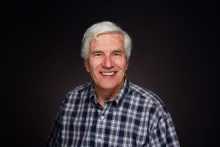
Steve Shafer was born and raised in Seattle. He graduated from Queen Anne High School in 1959 and later graduated from Ambassador College, Big Sandy, Texas in 1967, receiving a degree in Theology. He has been an ordained Elder of the Church of God for 34 years and has pastored congregations in Michigan and Washington State. He and his wife Evelyn have been married for over 48 years and have three children and ten grandchildren.
