

Mario Seiglie
This transcript was generated by AI and may contain errors. It is provided to assist those who may not be able to listen to the message.
All right, we begin this sermon. We're on a series on keys to a more effective prayer.
And as you well know, an active prayer life is not easy. It is hard work, especially today with so many distractions. It's very easy to postpone prayer.
As you know, there aren't any creditor angels that call up and say, Oh, by the way, God hasn't heard from you lately.
And we could just continue postponing things.
And so it's very important to see how we can improve it. It's one of the things in our lives that can make a big difference, whether we make it into God's kingdom or not.
I like to use that analogy of when you talk to God, you are praying. And when God talks to you is when you study God's Word.
And it has to be a dialogue. It's not just letting God talk to you. It's being able to talk back to God as a son would or daughter to his parent.
Or her parent.
And so one way to better our prayer life is to expand our understanding, to be able to broaden our vistas and not just have the typical mechanical prayer, but that we can improve on it.
I used the first part of the series, the incense, as a symbol.
Of when we initiate our prayer and how that sweet incense, I can smell it now.
Even without burning, you can smell it.
It rises up to God. It is something pleasing to him. And it's absolutely voluntary. God's not forcing us.
He wants us to do it voluntarily and to present it. Then, secondly, we use the analogy of when we had the second part about the telescope, about having a long-term view.
Looking forward to that coming kingdom for God to rescue us and mankind of so many evils that surround us.
So, we've already covered the first two categories of Christ's prayer outline.
The first part, our Father, who art in heaven, hallowed be thy name. That is just like a category. That's something that we are to use to then fill in with the details.
Just as incense has to be finely ground up, this is made of tiny little particles.
So, our prayer life has to also have details.
Can't just be covering the main category, but going more finely into the subjects. That first part has a way of reviewing the seven points about our Father, who art in heaven, hallowed be thy name.
The first is to focus on the place that we are going before the very throne of God, the privilege that that is.
That many times we take it for granted. But here's the owner, the creator of the universe, and yet he is a personal God.
He considers us as our Father, that we can go before Him.
And that's a privilege. Prayer is a privilege.
Sometimes we take it for granted, but we go before the presence of the very God of the universe, with Jesus Christ at His right hand.
Privilege, the honor that we should take advantage of. Because with Him, He has unlimited power and unlimited reserves.
With Him, nothing is difficult or impossible.
And that is why when we go before Him, we should do it honoring Him.
We should do it bowing before Him.
Just as when we come to services. That's why we insist on people dressing nicely when they come. It's not to impress anybody else.
It's to honor God.
We're coming to a holy convocation.
And we should honor Him.
And so we dress nicely.
It's not just a very casual thing that we come in, just as we are. We should make a conscious effort to dress as nicely as possible. And of course, there's a gamut there. There's a variety that's up to you. But we should dress nicely to honor our God.
The second point, we should focus on who we are addressing. Not some far-off deity, like so many religions have it, but as a loving father.
To focus, even if we have not had the best examples of physical fathers, we have the greatest example of a spiritual father, who has given his own son for ourselves, that he loves us.
Christ says we have the very hairs on our head counted.
Now, we have a little grandchild that we dote over.
And he just feels very comfortable. But even though we love him, we don't count every hair on his head.
That's too far. I will not do that.
But God does that.
He knows that much of a detail. More than any mother knows about God, a child himself. The third thing is to understand God is a growing family.
What an honor! What a privilege!
Now, one day, if we're faithful, we're going to be in God's kingdom, and we're going to be made of spirit, and we're going to live forever. And this vast universe that God has created is a great playground.
Our little grandson, he just loves to see new things. He was looking at the piano there and Teresa, and he was ready to play it.
Well, how about these wonderful, different colored planets, and all of these suns that he has, and he's going to say, you're going to be able to expand and to experience so many wonderful things.
The Bible says, of his kingdom, there shall be no end. It will expand virtually forever.
And so, that is the third thing. The fourth thing, when we say hallowed, it means something to be sanctified, holy, to honor and praise him, to have the respect for God. Not only by the way we pray, but how we view him.
We should honor and praise him.
The fifth one, we should focus on the attributes of his names.
He has many names, almighty, all merciful, all loving, so many things that we can focus on his different attributes.
Then the sixth thing, to thank him for all of this, for his care for us and his help.
And the seventh, grateful for the opportunity to serve him.
Every day in our lives, we can do something to honor God, to serve him.
He gives us a life full of meaning and service to his church, to his work, and looking forward to that coming kingdom. So that was the first sermon. The second one, by way of review. It goes into the second category, the outline. Thy kingdom come. See, that's where the telescope comes in. Thy kingdom come. Sure, it's faith.
Nobody's seen the kingdom of God yet.
We've seen Jesus Christ come once, as far as historically the narratives. But nobody's seen the establishment of his kingdom. We're taking it on God's word.
But that's good enough for us. He is faithful. His promises have never been broken. And he says that kingdom is coming. And so it fills us also with these seven different points. It fills us with hope in the future. That this world is not just going to continue to deteriorate and to degenerate, and that God is some absentee landlord that's going to let the whole world just destroy and corrupt itself. He's not going to do that. There's hope for that future.
For that future.
This gives us meaning in life.
This world might not give you much meaning, but it gives us meaning knowing we have not lived in vain.
That our life is worth something. That God created us with a further purpose than what we see today. It also gives us satisfaction.
Because all rights are one day going to be seen.
All wrongs are one day going to be corrected.
God is going to rescue us from this present evil world.
And we're going to see the satisfaction. Everything will one day come before God.
And there's going to be satisfaction. Also, this brings us encouragement.
Our life doesn't have to be gloomy and dark and hopeless.
We can be encouraged with these wonderful visions. I know that still drives me more than anything else that I can think of in my life.
When I was 17 years old, I looked and I saw that. Said, boy, that kingdom is worth it to give up what you needed to, to follow it.
And that still motivates me more than anything else.
That coming kingdom of God, wanting to be part of it.
Wanting to be under Jesus Christ and serving Him.
And being good forever. Never having that human nature again to bother you. These things are well looking forward to.
Also, this gives us focus.
This is the fifth point. It helps us to look at the most essential and important thing.
In our lives.
That focus of that coming kingdom. And sixth, it gives us motivation.
It motivates us to get up out of bed.
To be serving God.
And finally, action.
It gives us purpose in our life.
Prayer, support, service, all we can do to help carry this work out.
And this takes us now to that third category.
That we're going to focus on. And I hope you're going to learn a lot from this. Because I think it's very eye-opening. Some of these things look so basic. But when you start developing them. And you start whittling it down. And beating it finally. And looking at the details. It's amazing how much is in God's Word. That we can learn. So, this is a very simple category. Because Christ gave this outline. And so, after thy kingdom come. It says, thy will be done.
On earth.
As it is in heaven.
And so, that is the third category. Praying that God's will be done here on the earth. As it is in heaven. Because heaven is ruled by God. He is angels. They're all faithful. The ones that are up there.
And so, everything is carried out according to His will. Unfortunately, that's not the case here on earth.
And so, there is a prayer for His will to be carried out.
And for this, we also have a symbol. Just like we had the incense.
For the first symbol. The first category.
And we had this fire glass. For the second one. Well, what is the third one? What is the symbol of thy kingdom.
Of thy will be done.
On earth as it is in heaven. It's right here behind.
Now, this is a symbol of a walking stick. That they used to use in the Old Testament.
Okay.
They had the rod.
Sometimes it was called a staff.
But it was a walking stick. People did not leave home without it.
That was not a credit card. That is a walking stick. Because they had to do a lot of walking.
And the stick provided them with stability.
It provided them with protection.
It also was a symbol of leadership.
You remember Moses Rod?
He'd strike it on the rock. Water would come out. He raised his rod.
The Red Sea parted.
And so in the Bible, the rod is a symbol of authority.
It's a symbol of protection.
It's a symbol of leadership. And so this is the third symbol that I submit to you.
Because it is the example of the rod of authority and leadership that God gives to his church.
So his will can be done here on earth as it is in heaven.
Let's go first of all to Numbers 16.
Because we see how important this rod, and in particular you would say, well, what are these fruits here? You're going to see why this rod has certain fruits.
Let's go to Numbers 16.
Moses was leading the children of Israel through the desert.
And he was having quite a bit of problems.
He was having leadership problems in Numbers 16.
Starting out in verse 1, it says, Now Korah, the son of Isar, the son of Kohath, the son of Levi, with Dathan and Abiram, the sons of Elieb, and on the son of Pilith, sons of Reuben, took men.
And they rose up before Moses with some of the children of Israel, 250 leaders of the congregation, representatives of the congregations, men of renown.
They gathered together against Moses and Aaron and said to them, You take too much upon yourselves, for all the congregation is holy, every one of them.
Why then do you exalt yourselves above the assembly of the Lord?
So here we have a rebellion of the leadership at that time.
And here were prominent men, prominent leaders.
We had here, headed by Korah, who was actually a Levite.
He was one that worked around the sanctuary.
He was part of the priestly tribe, and he was able to serve with his men around. Now Aaron was a high priest.
They were the ones that ministered directly, but you had the Levites, which basically they had access to all of this. They were the tribe of which Moses and Aaron also were from, and they were leaders. But they thought, no, Moses and Aaron, they're just taking too much authority and power, and we want to have more power and authority. And so they said, well, the congregation is holy.
Everybody should have a responsibility here in the tabernacle. And Moses and Aaron, we just resent that you're just taking too much upon yourselves.
Now this is a common human situation. Wherever you have to exercise authority, whether it's in the business or in the home or in the nation, look at all the tug of wars going on.
And sometimes it happens in the church as well.
And it behooves us to remember Aaron's rod, the lesson of Aaron's rod, which is part of the principle that we're going to go through. Because people could have said, well, Moses is the one that's in charge, and he's the one that goes before God. And why can't we do that?
Why can't we? After all, we're part of the congregation. We're still part of God's people.
Notice in verse 4, it says, So when Moses heard it, he fell on his face.
He was a very humble and meek man, although he wasn't weak.
If you ever want to have a real interesting study, just go through so many times when Moses had to intervene for God's people, not to be destroyed.
And he knew they were barking up the wrong tree, and he feared for them. That's why he fell on his face. You know, he wasn't there saying, how dare you go against me?
He said, boy, you're going against God, and I'm going to have to pray.
Because you're attributing wrong motives to us.
Going on, it says in verse 5, And he spoke to Korah, and all his company, saying, Tomorrow morning the Lord will show who is his and who is holy, and will cause him to come near to me, that one whom he chooses he will cause to come near to him. Do this. Take censors, Korah, and all your company.
Put fire in them, and put incense in them before the Lord tomorrow, and it shall be that the man whom the Lord chooses is the Holy One. You take too much upon yourselves, you sons of Levi. That's what you are saying? Well, you'll find out.
Is it a small thing to you that the God of Israel has separated you from the congregation of Israel?
To bring you near to himself, to do the work of the tabernacle of the Lord, and to stand before the congregation to serve them, and that he has brought you near to himself, you and all your brethren, the sons of Levi, with you. And are you seeking the priesthood also? That was the only thing the Levites weren't doing, was the priesthood that was just for Aaron's family.
But you see here, this is typical. Many of the problems of leadership do not come from outside. They come from inside. People who have all of these ambitions that are frustrated, and they feel they could do it better if just being recognized. And usually people with talent, usually people with ability. But they just feel it's unfair. Now, here you have Korah, and he was one of the leaders. But no, he wanted to offer the sacrifices before God. He wanted to be part of the priesthood. This goes all the way back to Lucifer, just not having enough power, lusting after the power that God himself reserved for himself. And so, this is that ambition, blind ambition, that takes over. And it just reminds us how important it is to get, to fill the position that we have to the utmost. But don't cross the line over to an authority that you have not received. That's one of the lessons I've had to learn throughout my life. Just do the best with what has been given to you. Fill it to the fullest. But don't try to take over somebody else's position. Don't try to push your frontiers or your boundaries to take over somebody else, because you think somehow we can do it better. Certainly in God's Church, that is something that as we serve, as we show the fruits, things will be given. But if we become impatient, if we let ourselves get embittered over it, many fine people just lose it, just like Cora did at this time. And so, Moses said, okay, you want to know who is the one that God is choosing and working? We will see. We will put it through to a test. So then he says here, jumping over to verse 18, it says, So every man took his censor, put fire in it, laid incense on it, and stood at the door of the tabernacle of meeting with Moses and Aaron. And Cora gathered all the congregation against them at the door of the tabernacle of meeting. So you see, there's a lot of popularity against Moses. Somebody was causing all of this dissent. And people followed Cora. There's never a lack of following the wrong people. Continuing on, it says in verse 20, And the Lord spoke to Moses and Aaron, saying, Separate yourselves from among this congregation, that I may consume them in a moment. Then they fell on their faces and said, Oh God, the God of spirits of all flesh, Shall one man sin, and you be angry with all the congregation? So the Lord spoke to Moses, saying, Speak to the congregation, saying, Get away from the tents of Cora, Dathan, and Abiram. And there were the three that were in charge of this rebellion. And so God decided to take care of them. Then Moses rose and went to Dathan and Abiram, and the elders of Israel followed him. And he spoke to the congregation, saying, Depart now from the tents of these wicked men. Touch nothing of theirs, lest you be consumed in all their sins. So they got away from around the tents of Cora, Dathan, and Abiram. And Dathan and Abiram came out and stood at the door of their tents with their wives, their sons, and their little children. And Moses said, By this you shall know that the Lord has sent me to do all these works. For I have not done them of my own will. That's the key. Moses was not in charge of trying to concentrate power in himself. God was the one that was calling and placing him there. And as the Bible mentions, Moses was the meekest man on the face of the earth at that time. And yet, people thought, Wrong thing! He's trying to take over. He's got all of these wrong means. And Cora and others duped a lot of the people.
And so we have seen it throughout the history in the Old and the New Testament. Some people rising up, you know, Follow me! I'm the new one! I'm the self-appointed leader! And how many self-appointed leaders do we have today? Many, many people. And you'll always have some that will follow, but were they chosen? And the fruits by people above them that were faithful and legitimate? Now, those things are important. We are not here because we self-named ourselves. And many of the men here, deacons, deaconses, elders, and we have the privilege that Mr. Armstrong was serving and he approved our ordinations. I had nothing to do with my ordination. My hands were laid upon me and they said, This is what God has chosen. And so you take it as a responsibility, as a duty, but not something that you're seeking for yourself. We have many here that have been ordained later on by faithful men that have taught the truth all their lives and lived it. That's the type of example that we all want to follow. Let's go on. And it says here in verse 31, Now it came to pass, as he finished speaking all these words, that the ground split apart under them, and the earth opened its mouth and swallowed them up with their households and all the men with korah and with all their goods. So they and all those with them went down alive into the pit. The earth closed over them and they perished from among the assembly.
Then all Israel who were around them fled at their cry, for they said, lest the earth swallow us also. And a fire came out from the Lord and consumed the 250 men who were offering incense. You know, God takes the leadership very seriously. You know, this rod of Aaron is very important, because as we pray for the leadership of the church, we better know what we're doing.
And who we are praying about. Continuing on, it says in verse 36, And the Lord spoke to him, saying, Tell Eliezer, the son of Aaron, the priest, to pick up the censors out of the blaze, for they are holy, and scatter the fire some distance away, the censors of these men who sinned against their own souls, let them be made into hammered plates as a covering for the altar, because they presented them before the Lord, therefore they are holy, and they shall be assigned to the children of Israel.
And it says, So Eliezer, the priest took the bronze censors with those who were burned up, had presented, and they were hammered out as a covering on the altar, to be a memorial to the children of Israel, that no outsider, who is not a descendant of Aaron, should come near to offer incense before the Lord, that he might not become like Korah and his companions, just as the Lord had said to him through Moses.
It's very interesting that the church through the ages has been persecuted more from the inside than from the outside. You look at that from the first century on. The apostles were not fighting so much from the outside. They were fighting people inside. They were trying to arrest control, arrest authority, and they split up into different groups, and many of those that split up and eventually became these other Christian groups that we have up to today. And that's been the biggest persecutions that we have had in the last 30 or 40 years have come from people inside.
The Korahs taking in groups and actually wrestling the control of the church and taking people out. And so that's a very important lesson that we have to learn. Notice in chapter 17, verse 1, And the Lord spoke to Moses, saying, Speak to the children of Israel, and get from them a rod from each father's house, all their leaders according to their father's houses, twelve rods. Write each man's name on his rod. So here, representative of the twelve tribes. And you shall write Aaron's name on the rod of Levi. For there shall be one rod for the head of each father's house. Then you shall place them in the tabernacle of meeting before the testimony where I meet with you.
And it shall be that the rod of the man whom I choose will blossom. Thus I will rid myself of the complaints of the children of Israel which they make against you. So Moses spoke to the children of Israel, and each of their leaders gave him a rod of peace for each leader according to their father's houses, twelve rods, and the rod of Aaron was among their rods. And Moses placed the rods before the Lord in the tabernacle of witness.
Now it came to pass on the next day that Moses went into the tabernacle of witness, and behold, the rod of Aaron of the house of Levi had sprouted and put forth buds, had produced blossoms and yielded ripe almonds. Then Moses brought out all the rods from before the Lord to all the children of Israel, and they looked, and each man took his rod, and the Lord said to Moses, Bring Aaron's rod back before the testimony to be kept as a sign against the rebels, that you may put their complaints away from me, lest they die.
And so that's why this is symbolic of Aaron's rod. It blossomed. It was alive. It was productive. Because that was a tribe that God was using to carry out his ministry. And so when we pray to God and focus on Thy will being done here on earth, as it is in heaven, it has to do with the church and with the leadership in the church.
There should be a section of prayers for the leadership of the church, and not only leadership, but for the brethren and even the leadership in the world, as we shall see. So there are three types of leadership, the leadership in the church, the brethren, and also the leadership in the world. Let's go to the first part. Praying for God's servants, we should know their names, we should be specific, we should be aware of those that have the positions that God is carrying out His will in the church. In 1 Thessalonians 5, verse 12, we read 1 Thessalonians 5, verse 12.
It says, Those are over you in the Lord. We have no authority except in the Lord, in the spiritual area, that we have a responsibility to carry out. And it mentions here that we should take them into account. The people in the home office, Clyde Kylo, the president, right now, Jim Franks, over Ministerial Services.
We have Jason Love Lady, the treasurer. We have Larry Salier, over the media. Dave Register, over education. We have men like Gary Antion, over the ABC, and Ralph Levy, as well. Many of these men, they are doing a lot of God's work. They're in the home office. We should remember them. Also, the Council of Elders, the men who God has placed to supervise and to see how things are being done. And they are ultimately responsible for the way the direction of the church is being carried out. We have Roy Holiday, who is the chairman. Now, we have Robin Weber, here, one of our pastors in the area. Aaron Dean, a long-time minister, worked directly under Mr. Armstrong for so many years. We have Victor Kubik, a long-time minister. Actually, there are 12 of them. We have Darris McNeely, Melvin Rhodes. We have Jim Franks, who I've already mentioned him in charge of Ministerial Services. We have Dave Baker, who is in charge of the Asian area of the work. Bob Barrett from Canada, some of the internationals. These are men that we should be remembering, praying for, for God to guide them all.
Another scripture that's important, Hebrews 13, verse 7.
Another one that is in the Council, Scott Ashley, who's in charge of the magazine itself. These men all have a lot of responsibilities.
Hebrews 13, verse 8.
Let me see here.
It says...
Oh, it's a little before that. Let's go Hebrews 13, verse 7. Let's start there. It says...
Yes, we should follow Jesus Christ. He's the same forever.
And also, remember those that are spiritually responsible for how things are going in the congregation. Notice in verse 17, it says...
So they have a very heavy responsibility. It's not like a business where you can blow it in a business, you lose money, and you start a new business. Okay, but you can't do that with a church. You can't blow it with a church. You're going to go before God, and it's going to be a very heavy responsibility. God's going to hold us responsible that we do our part, that we help the brethren.
You know my first rule in the ministry? Do no harm. That's the first rule for medicine, too. You might not be able to improve the person very much, but don't worsen the situation for the person. Because you have to start out from the positive side. Do no harm to the people.
Now, certainly do everything to help them, but don't worsen the situation.
That takes us to the second point, which is to pray for God's guidance over these leaders. So it's not just praying for them, but that God will guide them. Because He is in charge. We don't want to be the rebellious Nathan or the rebellious Korah type. They want to do it on their own. They want to do it for their own glory. No, we've got to pray that God guides the ministry, the leadership. The Lord of 2 Thessalonians 3, verse 1.
It says, It's a dangerous profession. Some of us in the ministry, we've been threatened. Sometimes even with guns, because people hate what we're doing. We've had people that have been very antagonistic. It's not an easy job. We have to pray that God protects the ministry as well. And for that guidance, that everything that He proposes will be carried out. That we do not hinder God's guidance and His focus on the Church.
That takes us to the third part of the prayer. God's protection. Not only His guidance. We need to be protected, as I just mentioned. But it's always good to have this in a special focus. A lot of people are flying all over the world. Some of these areas are very dangerous. We've got to be praying for God's protection. Notice Hebrews 13, verse 18. Hebrews 13, verse 18, where Paul was in prison. And he was urging prayers so that he would be released soon from his imprisonment. Hebrews 13, verse 18.
It says, Pray for us, for we are confident that we have a good conscience in all things desiring to live honorably. But I especially urge you to this, that I may be restored to you the sooner. Yes. All kinds of different situations. The ministers find themselves sometimes it's health problems. Sometimes it has to be with job-related problems. People end up being persecuted in the ministry for different reasons. And so we should ask for God's protection.
Also, the fourth point, that God opens the doors to carry out this gospel to the world. Pray that God opens the doors to get this gospel out. The Word of God. We use radio, we use TV, we use the Internet, we use the publications. Ask God for inspiration for the writers. They need God's guidance, just month after month, to get that message out in the proper way. That God's will be carried out. Those articles are according to His will. Notice in Acts 14, verse 27, what Paul said about an open door.
Acts 14, verse 27, It says here, Now when they had come and gathered the church together, they reported all that God had done with them, and that He had opened the door of faith to the Gentiles. So they stayed there a long time with the disciples. God had opened doors. That was where God was calling people. Now we always are getting calls from new visitors. I just got one yesterday from a lady in Hawaii, and Honolulu wants to contact the person.
They've been looking for a church of God in that area. They hadn't been able to find any. Well, that's a little door that opens up. We have people that serve in different areas that are there available for that new person, new convert to come in. Also, Colossians 4, verse 2. Paul, again, requesting prayer for these doors to open to the church. Colossians 4, verse 2. It says, Continue earnestly in prayer, being vigilant in it with thanksgiving.
Meanwhile, praying also for us, that God would open to us a door for the Word, to speak the mystery of Christ, for which I am also in chains. Yes, he was in prison at that time, but he was the one that God was calling to open the door to the truth of God. So, the church sometimes, maybe because of lack of prayers, we don't have as many open doors as we did.
We need to be doing our part. In this area, we have congregation, we have all the activities, but God needs to call people. And he needs to open that door so we can reach those people that he is calling. The fifth point, has to do prayer for the doctrine of the church to be guarded and protected, because it's so dangerous.
Sometimes people start infiltrating the church, start invading the church with other types of teachings and doctrines. And slowly, just like a little leaven, it just multiplies, infects people. Notice in Acts 20, verse 28, Paul is talking here to the ministry in Ephesus. He says in verse 28, Therefore, take heed to yourselves and to all the flock, among which the Holy Spirit has made you overseers, to shepherd the church of God, which he purchased with his own blood. For I know this, that after my departure, savage wolves will come in among you, not sparing the flock.
Also, from among yourselves, man will rise up, speaking perverse things, to draw away the disciples after themselves. Therefore, watch and remember that for three years I did not cease to warn everyone, night and day with tears. And so he knows there are just dangers there. We can pray that God guides the ministry to teach sound doctrine, because sometimes they change. And all of a sudden, you start hearing another type of teaching and can infiltrate the church. We need to be continuing keeping the same messages about God's law, about keeping and being faithful with God, and what we're teaching, and not get leavened with all the teachings of all this evangelical and Protestant world.
It's just like a leavening that can just fall into a church. Pretty soon, you're starting to change dates and days, and all kinds of feast days become holidays instead of holy days. It can happen. It has happened. It can happen again. That's something we need to pray about.
So we need to be protected. Notice in 2 Peter, there's a good scripture here. Just thinking... Well, 2 Peter. 2 Peter. In verse 1 of 2 Peter, he says, But there were also false prophets among the people, even as there will be false prophets among you. So this is prophesied. The tares among the wheat.
And there will be false teachers among you, who will secretly bring in destructive heresies, even denying the Lord who bought them, and bring on themselves swift destruction. And many will follow their destructive ways, because of whom the way of truth will be blasphemed by covetousness. They will exploit you with deceptive words. For a long time, their judgment has not been idle, and their destruction does not slumber. So these men are asking for prayers that we have sound doctrine be taught in the church. And we need to teach to pray that the ministry, the membership to, maintains that sound doctrine. There's one more scripture I want to go to about this point.
2 Timothy 4 Verse 1, Paul again exhorting Timothy about this important teaching, about maintaining the faith and teaching the right and sound doctrine. He says, I charge you therefore before God and the Lord Jesus Christ, who will judge the living and the dead at His appearing and His kingdom, preach the word, be ready in season and out of season, convince, rebuke, exhort with all lung suffering and teaching, for the time will come when they will not endure sound doctrine, but according to their own desires.
So you see, the church, instead of people having to accommodate their beliefs to the church and be able to change their way of thinking to the way God is teaching, what happens? You start accommodating church teaching to the people, to their desires. Let's water it down. Let's make it more palatable, more acceptable. We'll have more people come if we just water things down. This is what Paul was warning about. He says, The time will come when they will not endure sound doctrine, but according to their own desires, because they have itching ears, they will heap upon themselves teachers, and they will turn their ears away from the truth and be turned aside to fables.
A lot of people that kept God's feast days are now keeping Christmas, Easter, Halloween. So many things that are not authorized and are not backed by God's Word. It has happened, and it will happen. But you be watchful in all things, endure afflictions, do the work of an evangelist, fulfill your ministry. So we see the importance of doctrine and preserving doctrine. And sixth point, praying for the brethren, they need encouragement. This, thy will be done, isn't just for the leadership, it's also for the brethren. Notice in Colossians chapter 1, verses 9 through 12. Colossians chapter 1, verses 9 through 12. Paul says here, For this reason we also, since today we heard it, do not cease to pray for you, and to ask that you may be filled with the knowledge of his will, in all wisdom and spiritual understanding, that you may walk worthy of the Lord, fully pleasing him, being fruitful in every good work, and increasing in the knowledge of God, strengthened with all might according to his glorious power.
For all patience and long suffering with joy, giving thanks to the Father who has qualified us. Notice some time ago people say, oh, you can't qualify for God's kingdom? Well, sure. It says here, God is the one that qualifies us. You have to qualify for God's kingdom. You're not going to go if you're going to be disobedient to him. If you're going to go against his will, it says here that God qualifies us to be partakers of the inheritance of the saints in the light.
And so certainly we need to pray for the brethren. God develops each one that they grow spiritually, to be a light to others, to be faithful and firm. And finally, the seventh point, God tells us to remember the world leaders, to pray for them as well. Notice 1 Timothy 2. 1 Timothy 2, verse 1. Because we can't just be in our little cocoon in the church and just think about ourselves. You've got to think about the impact that the leaders in the world are having.
It says in 1 Timothy 2, verse 1. Therefore I exhort, first of all, that supplications, prayers, intercessions, and giving of thanks be made for all men, for kings and all of those who are in authority, that they may lead a quiet and peaceable life in all godliness and reverence, for this is good and acceptable in the sight of our God and our Savior, who desires all men to be saved and to come to the knowledge of the truth.
Because sometimes leaders can really mess up things to the point where you can't get the gospel out. Things are so turbulent and so difficult that God's Word isn't able to get out. And so we should pray for the leaders of the free world, and otherwise, we should pray for Barack Obama.
God guides them to make the right decisions. It's easy to criticize leadership. It's another thing to pray for the right guidance. And it says that we may live peaceful lives, because good leadership will produce that. And so it tells us here to remember, to pray for them. Remember what happened in 1963, the death of President Kennedy. He wasn't protected. Some of these men, they're very close to the assassin's bullet, to pray that they are protected and guided, and they're able to come to the knowledge of a certain amount of truth.
And there are some men, at least Barack Obama. He's a Christian, just as Ronald Reagan. And he let himself be guided by God. Abraham Lincoln was a tremendous example of another man who submitted to God and was guided.
So we should not forget to pray for the leaders as well, not only here in the United States, but around the world. I have a hard time praying for Fidel Castro. But I can pray that God can take care of him in due time. I better not go there. So these are the points that in this third category we can remember.
And I hope you'll remember Aaron's rod, the importance of praying for the leadership, because it's a heavy burden, much easier to criticize than to be in that hot seat and be doing all the difficult things and carrying it out in a faithful way, in a fearful way, to do God's will and not to do one's own will for God's glory and honor, not for somebody else's glory and honor.
So we do have a guest speaker coming in next week, Will Berg. He will be giving a message. We're looking forward to that. But then afterwards, looking forward to the fourth of the seven categories of Jesus Christ's prayer outline that he gave for all of us. So we can start putting these things into practice, the keys to developing more effective prayer. So remember, just like incense, let's all beat it down finally, talk with more detail.
And we're almost halfway there. So we're looking forward to going through those seven wonderful categories of Christ's prayer outline. Remember to finish in James 5, verse 16, I'll read it for you. It says, The effective, fervent prayer of a righteous man avails much. That's God's word. That's His promise. We can learn to be more effective as well.
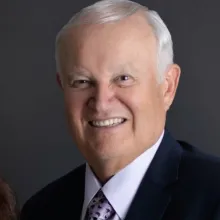
Mr. Seiglie was born in Havana, Cuba, and came to the United States when he was a child. He found out about the Church when he was 17 from a Church member in high school. He went to Ambassador College in Big Sandy, Texas, and in Pasadena, California, graduating with degrees in theology and Spanish. He serves as the pastor of the Garden Grove, CA UCG congregation and serves in the Spanish speaking areas of South America. He also writes for the Beyond Today magazine and currently serves on the UCG Council of Elders. He and his wife, Caty, have four grown daughters, and grandchildren.
