

Mario Seiglie
This transcript was generated by AI and may contain errors. It is provided to assist those who may not be able to listen to the message.
The news about the earthquake in Chile calls to mind the subject that we're going to be covering today.
It's part four about Christ's outline prayer. Remember, He told us, this is how you should pray, not what the words are. So it's a mistake to just repeat the Lord's prayer, as many churches do.
Because actually, He was providing an outline of how we should present ourselves to God.
We've gone over three parts already of this prayer. The first one is honoring God, hallowing His name, the way we should properly address Him with all that multitude of angels about Him.
And we compared it to that incense that rises up, that's a pleasing odor to God.
That's the way our prayer should be. And then secondly, we had the prop that I used on Thy Kingdom Come, used a little telescope, because that lets us know what the future is going to be like. How this present world is not what God had intended to set up, and that this is just temporary. There is a better world coming, a world where righteousness will reign, where all the rights will be maintained, and all the wrongs will be corrected. So that is part of our prayers to ask God for the coming of Christ's Kingdom. How many people in Chile, just from one moment to the next, they're without homes? The country has been cracked, the roads, the freeways, some of the beautiful scenery there, the bridges that I went over so many times and just marveled. Some of those have collapsed. Man's work doesn't last very long under a powerful earthquake. It shows how puny man's works are, and that we're just like little grasshoppers or little insects that God looks at here on this earth. And so we look forward to that coming Kingdom so badly. Then the third prop I used was Aaron's rod. Remember the one that blossomed. We should pray about the leadership in the church for God to guide these men, for him to inspire, to give them wisdom, to give them more of his spirit, so that the church, that the head is Christ, will be properly taken care of, that things will be righted that need to be, and that we can carry out the mission to send the gospel out to the world and to prepare a people. And so we come to this fourth part. And what do you think this symbol is? This is a very easy way to quote scripture because it says the fourth part of Christ's outline prayer. It says, give us this day our daily bread. And so here it is. This is what the prop is. Nice, big, round wheat bread. And actually, this is similar to the type of bread that they had in those days. They prepared them in clay pots. They put them in the oven, and they'd come out rounded this way. And so when we talk about give us this day our daily bread, of course, bread was the staple of the food then. This was the main meal. People had bread, and it symbolizes the physical needs that you need every day. And during Christ's day, they would use the bread as a spoon, as a fork. Of course, they didn't have those spoons and forks in that way. So they would take the bread, and then they would break it, and then they would pass it around, and they would dip in a broth. And this is the way they would eat. They would have a broth with vegetables and meat, and they would just dip it. And as you remember, when Christ was carrying out the Passover, why he dipped it into that sop, and he gave a piece to who? To Judas Iscariot, knowing he would be betrayed. Talk about loving your enemies, knowing what was going to happen, and he still dipped it and gave it to Judas as a sign of friendship. And yet he was betrayed.
So bread is the symbol of this fourth part of our prayers, and we can also divide this section into seven main points. The first one is to pray about our physical needs.
Notice it doesn't say, give us our weekly bread or our monthly bread. It's funny that bread here in the U.S. is also used for money. Now where's the bread? Because, of course, it's something so essential. And bread was a central meal. It was a central staple of people then. Just as today, they talk about bread as something very valuable. So these are our physical needs. God does want us to go before Him and to express our physical needs. Now the problem with a lot of people, when they begin praying, they address God and then immediately they go into their needs, because that's their priority. And yet here in the Bible, where there are seven sections, it's only when you get to the middle section that you actually address your physical needs.
You first honor God. You respect Him. You realize the honor and the majesty that God has. And then you pray for what God is looking forward to, which is the coming kingdom. We put ourselves not in our view, but in God's view of what is important. And then thirdly, it is the Church and what the Church is carrying out, because Christ is very involved. He is using human, fallible people to carry out His will. And of course, we are not the only Church that He's doing this through. We sincerely believe we are part of God's Church, but we are not all.
Let God determine that. Just like Elijah, when he was there complaining to God that he was the only one carrying out His will and he was the only one doing things. And then God said, look, I've got 7,000 prophets hidden away in caves. And so we don't know. We know that not everybody in our Church is converted and dedicated and spiritually motivated, just like there are other places where people are spiritually motivated and growing. But again, we believe we are part of God's true Church, and just like there are others. So God will determine who is who.
Because as you know, every time we go through a trial, we find out who are those that are truly loving God, loving His laws, putting Him first. And so we shouldn't be proud or arrogant at all.
We are nothing without God. But with God, we are something. And so let's turn to Deuteronomy 18 about the physical needs, some of these principles that we should learn. And remember, as we pray, what these concepts mean, what God wants us to be thinking about, the attitude and the proper focus.
Deuteronomy 8, 18. God told Israel here, He says, And you shall remember the Lord your God, for it is he who gives you power to get wealth, that he may establish his covenant which he swore to your fathers as it is this day.
A lot of people say, well, there are all these get rich schemes. That's where you're going to be wealthy. And they do not recognize the ultimate source of blessings and wealth. Because He says that He gives you the power. He gives you abilities. He gives you opportunities. He opens doors. But it is He who we should think and not think we out of our own wisdom have acquired it, which is one of the problems that the children of Israel had a problem with here so seriously.
Verse 3, it says, So he humbled you, allowed you to hunger, and fed you with manna, which you did not know, nor did your father know, that he might make you know that man shall not live by bread alone, but man lives by every word that proceeds from the mouth of God.
Your garments did not wear out on you, nor did your foot swell these forty years. He took care of people's health. He took care of people's clothes for forty years, miraculously. And still, people turned their backs on God. And so we should ask God daily for those physical needs, which of course have to do with food. They have to do with raiment, with clothing. It has to do with jobs, our income. We should be asking God to bless that as well.
Notice in Proverbs 30, verse 8. Proverbs 30, verse 8.
These are things that we should request, as it says in verse 7, as a preface, it says, two things I require of you. Deprive me not before I die. These are the things that we should be asking. It says, Remove falsehood and lies far from me. Give me neither poverty nor riches. Feed me with the food allotted to me. Lest I be full and deny you. And say, Who is the Lord? What do I need him for? I've got this big bank account. I can fulfill all the needs. I can handle all the emergencies. People can get on in that mind frame. And that's wrong.
But you don't want to go to the opposite extreme. He says, Or lest I be poor and steal and profane the name of my God. We're just so desperate you start cutting corners and you start doing things illegitimately. So we need daily food, daily physical needs. But if we have too much, we can get a swelled head and start forgetting the needs that come from God. Notice in Acts 2, verse 42, when the New Testament church began, what did they do?
It says in Acts 2, verse 42, And they continued steadfastly in the apostles' doctrine and fellowship, in the breaking of bread and in prayers. So you see, the breaking of bread was a symbol of the daily needs. And they would go and break bread together, sharing their food, the fellowship. And so it's a symbol. See, but bread is more than just what they ate. That means, well, give me just bread every day. No, this symbolized all the meals that they had.
When you broke the bread, it meant you had enough food for that day, and you should be thankful for that. So, of course, this includes asking for the food, for the jobs to produce that food, and also shelter, clothing, physical needs that we should not take for granted.
The second point about our daily bread, because this also not only includes our physical needs of food, jobs, and certainly in this economy, we have brethren that need our daily prayers.
And they should also let us know so we can keep those prayers up.
But it also includes our health and the health of others. That is also part of our daily bread.
Notice in 3 John chapter, well, the first chapter, of course, it only has one. Third John verses 1 and 2.
First John, I mean, Third John verse 1 and 2.
It says, The elder to the beloved Gaius, whom I love in truth, beloved, I pray that you may prosper in all things and be in health just as your soul prospers. So we should pray people will be blessed and also for the health needs. And as people get older, more health needs.
Happen. When you're in a very young church, everybody's in their 20s and 30s, you don't have much sickness. But as you get older, why all of the pipes start leaking, all of the body just doesn't reproduce as quickly. And God was very clever from all we understand about biology. What happened was that our cells have these what they call telomeres, which is like a little fuse at the ends of the chromosomes. And every time the body reproduces, those fuses get shorter and shorter. And so at first, why we got these young cells and they're just so brand new. And then about every seven years, you actually reproduce all your cells in your body.
You don't know it because they're the same color and the same function. But as you get older, the telomeres get shorter and it takes longer for the cells to reproduce. And so you get aging.
And finally, the telomeres just are in their little buds. And so there your cells are hardly going to reproduce. And that's why the big aging process happens. So probably before the flood, when people lived hundreds of years, but you had long telomeres. And so people, doctors have said that if we had longer telomeres, why we could continue with our youth for hundreds of years, wouldn't be anything that really would change that. Unless there was a serious disease.
Let's go to James chapter 5 verse 16. James chapter 5 verse 16.
I'll just mention here that medicine has found out that a person's maximum life is about 120 years. According to these telomeres, people that have lived the longest just are up to 120 years as a maximum. And that's exactly what the Bible said. That God said, you know, man will be up to 120 years.
That just, is that a coincidence in the Bible that is actually factually true? I believe it just shows the inspiration of the Bible. In James chapter 5 verse 16, it says, confess your trespasses to one another and pray for one another. Now don't be proud. It says, if you have needs, if something has happened, some trespass, whether it's something physical or spiritual that has caused some type of disease or some type of infirmity, those people that you have confidence in, and pray and go to them and pray for one another, that you may be healed so that God will listen to our prayers. It says, the effective fervent prayer of a righteous man avails much. So don't think that health problem can be licked by God. He has the ultimate answer.
He has the ultimate decision. He knows and he can do things in an instant. Although sometimes he lets us go through these trials, because again, God isn't so interested in what we achieve.
You know, how much you die with your bank account. He's not impressed with how many zeros you have in your bank account when you die. You know what really impresses God is not so much what we achieve, but what we have overcome. What we get to overcome in this life. And of course, that's the real tough one. Because for achievement, oh man, people will sacrifice. Look at these people in the Olympics. Oh, to get that medal, all of that! But to overcome it, a fault, overcome something of a weakness, overcome some character flaw in us. Oh, that's not fun. We'll just postpone that one. I can live with that one. Well, God is saying that's what I'm going to be impressed about the most. What you overcome, especially in the spiritual realm. And so, as it mentions here, God is very concerned about us praying for each other and helping us be healed.
Thirdly, God wants us to pray for protection. Protection of ourselves, protection of others. That is also part of our physical needs. Notice Psalms 91 verse 9. Psalms 91 verse 9.
I wonder how many just pray in the morning as you're going to school or going to work and just ask God for that protection upon all of the brethren around the world, upon yourself.
Psalms 91 verse 9.
Don't take protection for granted. It says in verse 9, Because you have made the Lord who is my refuge, even the Most High your dwelling place, no evil shall befall you, nor shall any plague come near your dwelling.
For he shall give his angels charge over you, to keep you in all your ways.
In their hands they shall bear you up, lest you dash your foot against a stone. You shall tread upon the lion and the cobra, the young lion and the serpent. You shall trample underfoot, because he has set his love upon me. Therefore I will deliver him. I will set him on high, because he has known my name. Jesus Christ quoted this when he was being tempted by Satan.
But this also applies to God's people. And how many times have we been miraculously protected?
I know one time I've had to live many years, 23 years in Latin America. Columbia is known as a number one nation where most murderers take place. And at that time there was a lot of stealing and murdering. And I remember, it's been a long time since I recall this, but here I was, a young minister at that time. And I remember going to the bus stop. I didn't have a car then, so I was taking buses and sometimes taxis or whatever. And I had a package in one hand, and I had my briefcase in the other. And I was about ready to just take the bus. I took two steps in, and I turned, and this fellow was looking at me. He was sitting in the front seat, and his face was white. And he says, I can't believe what I just saw. And I said, what did you see? I didn't notice anything. I felt something a little strange behind me, but I didn't pay any attention. I got, he says, I saw two robbers come toward you. They were going to grab your briefcase and everything else, and all of a sudden they hit something, and they bounced back. He says, I've never seen something like that in my life. And of course, I didn't have any idea what had happened, but something miraculously protected me from that. And many times God is there, and we have to pray for God's protection, especially a lot of people live in very dangerous parts of the world. Notice in Psalm 34 verse 7. Psalm 34 verse 7.
It says, the angel of the Lord encamps all around those who fear him and delivers them.
God has his angels placed about. So it's important to ask God to place his powerful and holy angels about God's people. You need that in the morning to get out and be protected from this dangerous world. We're all driving in very hazardous times. Of all things, what happened to us yesterday? We were driving to San Diego to be with my daughter and little grandson and Omar as well. And sure enough, we got caught on that five freeway at around 12 o'clock. And I mean, traffic was at a standstill. We stayed for like 45 minutes. I finally just took the H1, which is the coastal highway, and we just made it out of their Avenia Presidio. And the whole freeway was empty. We found out that someone had dropped a grenade on the freeway. And somebody had called the police, and the police came. They saw the grenade, a military grenade, and they stopped all the traffic. They had a bomb squad that came, and they had to blow the thing up. Then they found out they didn't even have gunpowder inside. But nowadays, you don't know what people can be doing.
So you talk about the need for protection. We don't know from one moment to the next.
With this terrorist-plagued world, we don't know what is going to happen. And so we have the protection from God. And it's so important at night before you go to bed.
To pray for God to places, powerful and holy angels, about all the homes around the world.
Because those angels are there. They can, you know, shoo away. They can scare away any thief. But we've had all kinds of miraculous things that have happened, too. In that way, we had one time a minister that was out in a feast of tabernacles. And two thieves broke into his house. And all of a sudden, before they left, they got hungry. And they started eating food from the refrigerator. And the people saw the lights from the kitchen. And they got apprehended. Now, what thief is going to sit there and just have a meal while they just finished stealing everything? And so they got caught and the minister, everything was was protected. So God has powerful angels. We need to also remember that's part of our daily breads. Bread. That's part of our physical needs.
Fourthly, we also should pray for God's favor to be given to us. Because in this society, we've got a lot of ill will. We have evil people. And yet, God says he can change people's minds. He can change bosses' minds. He can change unconverted spouses' minds. We need to pray for that favor to be given to us. Notice in Colossians chapter 4. Colossians chapter 4.
In verse 5.
This is a very wise saying. It says, walk in wisdom toward those who are outside. Talk about those that are outside of the faith. Deal with them wisely. Be careful. Be diplomatic.
My favorite definition of what culture means. Culture means knowing how to be considerate toward another person. Wherever you're at, it doesn't matter whether you know the Chinese culture or Italian culture or German culture or African or Latin. If you learn to be courteous, if you learn to be considerate toward others, they're going to consider you a cultured individual. Who's the uncultured one? You might have a degree in French languages and know all of the arts and all of the wonderful sophisticated knowledge, and still you can be a boor.
So just because you have a degree doesn't mean you're a cultured individual. There are educated boors out there, and yet they're very simple and humble folks who are truly cultured.
And the way they consider they're considerate, they know how to treat a person with kindness. Those are the people that are truly cultured in our society.
So it says here going on to verse five, four, it says, walk in wisdom toward those who are outside, redeeming the time, taking advantage, using time wisely. Let your speech always be with grace, seasoned with salt, that you may know how you ought to answer each one. That comes from God, knowing how to answer people with grace, having gracious words, not words that attack or hurt, or offend. And so God can give us that ability to know how to be courteous, how to have grace when we talk to others. It says here, season with salt. Food tastes so much better with a little bit of salt on it, and so should our words. Be something that people say, boy, that was good. I enjoyed that conversation. That was tasty. That was a delicious conversation instead of something that is sour, or that has gone bad. Nobody likes sour and bad food that has gone... Is that the way our conversations are? Boy, sometimes you just listen to the vocabulary now going on and on TV or movies, or some of these stand-up comics that used to be funny. And boy, I'll tell you now, they just use such language, foul language. It's just unappetizing at all. Also, let's go to Proverbs 16, verse 7. Proverbs 16, verse 7. And we're finally listening to that sweet sound of rain here in California. Finally, being able to break this drought, we're happy with it. Proverbs 16, verse 7.
It says, When a man's ways please the Lord, he makes even his enemies to be at peace with him.
What a great principle that if you're in good contact with God, if you're praying the proper way, if you're close, God says he will change even your enemies' minds to not do what they would like to do. He says that he makes even his enemies to be at peace with him. So that's a promise from God. We can claim it when we are praying before him. Let's go to the fifth point. We're having special music here now. It's called falling rain.
You know that joke? Well, I can't say anything serious now because of the rain, but it reminds me of that Indian joke about this little son who came up to the Indian chief, and he says, Dad, why did you name my sister fallen rain? He says, well, when I came out of the tipi after you were born, it was raining. So I named her falling rain. And so then he says, and why did you name my brother a fleeting deer? He says, well, when we came out of the tipi with your little brother, there was a deer crossing. And then the father says, you know, son, I'm concerned about this.
Why are you so concerned about your name? Fat woman hanging clothes.
So that's what they had named him.
Of course, a fellow had a complex. See, the moral of the story is, be careful how you name your children. All right, rain's over. Okay, commercial's over. We're ready. Number five. Remember also to pray for family, brethren, friends, and others. See, it's not just about ourselves, not our daily bread, but to consider family, brethren, friends, and others.
In 1 Timothy chapter 5 verse 8, it tells us here, principle about family life and our responsibilities toward them.
1 Timothy 5 verse 8, it says, but if anyone does not provide for his own, and especially for those of his household, he has denied the faith and is worse than an unbeliever.
So, of course, we have great responsibility to pray for our families, their needs, their problems, how they can be helped. That doesn't mean we should just carry all the burdens of our family on our shoulders. Sometimes you have to help them out the same way a lifeguard, sometimes he doesn't jump in the pool, but he just sticks a stick or a wand for the person to grab it, or he throws one of these life preservers with a rope, and he pulls the person out. Well, sometimes you have to be willing to stick out the stick and see if they're going to grab it, but sometimes they don't want to grab it. Sometimes they want to learn on their own, and so you can't just be jumping in the pool with every problem that's in the family, or else they're just going to get used and become dependent. Any problem, you just jump in, and they never are able to stand up on their own two feet. In Galatians chapter 6 verse 9, Galatians chapter 6 verse 9, it tells us another principle about praying for family, brethren, friends, and others.
It says, and let us not grow weary while doing good, for in due season we shall reap if we do not lose heart. Therefore, as we have opportunity, let us do good to all, especially to those who are of the household of faith. So remember, we are a family. It's good to remember the brethren, family in the church comes first. We have priorities. We have God, who is the first priority in our life. God and his way of life is the first priority. Then comes family, because we have a responsibility to provide for them, to help and support them, to guide them as we can, giving the example of God's way of life. And then the brethren in the church come in the third category. Take care of them, see how we can help their needs, and then fourthly, come the others, our community, our nation, and the world as we can help. So those are the ways and the priorities that we have. We come to the sixth point, and this is very important because, see, when it talks about our daily bread, it's not just talking about physical bread. It talks about spiritual bread, too.
What is the spiritual bread that God provides for us every day? His Holy Spirit. We also have to ask for that. As Jesus Christ mentioned in Matthew chapter 4 verse 4, Matthew chapter 4 verse 4, But He answered and said, It is written, Man shall not live by bread alone, but by every word that proceeds from the mouth of God. Yes, we need to be fed spiritually every day. And so we ask for that guidance, that spiritual strength. We are more than just human beings. We also have a spiritual element that needs to be fed every day. Notice in 2 Corinthians chapter 4 verse 16. 2 Corinthians chapter 4 verse 16. Just like a battery has to be recharged in a car, so we have a spiritual battery that needs to be recharged because as we expend spiritual energy to obey God, to overcome, it gets weaker. And we have to go to the source, which is God, to charge ourselves up spiritually. Notice in 2 Corinthians chapter 4 verse 16. It says, Therefore we do not lose heart, even though our outward man, our physical being, is perishing or wasting, yet the inward man is being renewed day by day for our light affliction, which is but for a moment is working for us a far more exceeding and eternal weight of glory. So it talks about renewing the inward man day by day. It doesn't say week by week. Of course, in order to develop spiritual strength, we have to do our spiritual exercises. You're not going to become a spiritual leader or a spiritual strong person if you have a week prayer life. It's just like a battery that's just going on its own strength.
Eventually it's going to run down. But if we get closer to God, He helps us. He strengthens us.
Notice in Luke chapter 11 verse 9. We have to ask God in prayer for that Holy Spirit, which He generously gives to those who ask Him. Luke chapter 11 and verse 9.
Luke 11 verse 9 says, So I say to you, ask, and it will be given to you. Seek, and you will find.
Knock, and it will be open to you. You have to take the initiative. It doesn't say God's going to knock at your door. It doesn't say God is going to ask. God is not going to seek. It says, you seek Him. You ask Him. You knock on His door, and it will be open to you. For everyone who asks, receives, and he who seeks finds. And to him who knocks, it will be open. If a son asks for bread from any father among you, will he give him a stone? Or if he asks for a fish, will he give him a serpent instead of a fish? Or if he asks for an egg, will he offer him a scorpion? No parent, evil as they can be, are willing to do that with their children. And God is contrasting loving parents with Himself, and He is far more loving than any parent could be, He says at the end. If you, then, being evil in comparison to God, know how to give good gifts to your children, how much will your Heavenly Father give the Holy Spirit to those who ask Him? But we have to go humbly before Him, knowing we don't generate that on our own. That is not something that we produce. Like it says there, blessed are the meek. Blessed are those who thirst and hunger for righteousness because they will be filled, because they admit to God they are empty. They cannot produce that Holy Spirit on their own. And so we have to go to the source and ask, God, about it. Lastly, the seventh part, or point, on this part about giving us this day our daily bread is Jesus Christ. It's not only receiving the Holy Spirit, but also that daily Jesus Christ can live in us. He is the bread of life. Notice in John 6, verse 32. John 6, verse 32.
Jesus Christ made this point very clear here.
Then Jesus said to them, Most assuredly I say to you, Moses did not give you the bread from heaven, but my Father gives you the true bread from heaven. For the bread of God is He who comes down from heaven and gives life to the world. Then they said to Him, Lord, give us this bread always. And Jesus said to them, I am the bread of life. He who comes to me shall never hunger, and he who believes in me shall never thirst, because if you have that relationship with God, one day He's going to resurrect you, and you will never feel hunger. You will never feel thirst. You will live forever if He lives in you, if that bread of life lives in you. Continuing on, He says, But I say to you that you have seen me, and yet you do not believe. All that the Father gives me will come to me, and the one who comes to me I will by no means cast out. For I have come down from heaven not to do my own will, but the will of Him who sent me. This is the will of the Father who sent me, that of all He has given me I should lose nothing, but should raise it up at the last day. And this is the will of Him who sent me, that everyone who sees the Son and believes in Him may have everlasting life, and I will raise Him up at the last day. So we need to also ask God to be more Christ-like every day. That's part of our commitment. We're supposed to be slowly developing ourselves more, not in our image, but in that image of Jesus Christ, to be picking up and to develop those attributes that He had. Notice one scripture that's so important in this light, Galatians chapter 2 verse 20. Galatians chapter 2 verse 20. I guess this is one of a person's favorite prayer and favorite scripture when after you're baptized. This is what it's all about.
After you dedicate yourself to God, this is how a person should think. In Galatians chapter 2 verse 20, Paul said, I have been crucified with Christ. In other words, I crucified my old body with all those evil desires. It is no longer I who live, but Christ lives in me, and the life which I now live in the flesh, I live by faith in the Son of God, who loved me and gave Himself for me. I do not set aside the grace of God, for if righteousness comes through the law, then Christ died in vain. If we could all do this by our own, you know, pick ourselves by our own bootstrap mentality, we would need Jesus Christ. But we know that it is through Him that we receive that Holy Spirit, the strength, the guidance to change truly our lives.
Notice in 1 Corinthians chapter 10, 1 Corinthians chapter 10, also another scripture that substantiates this. Verse 16, 1 Corinthians 10 verse 16. This is something we're going to be doing at Passover, just a month away. It says, the cup of blessing, which we bless, is it not the communion of the blood of Christ? The bread which we break, is it not the communion of the body of Christ? See, it's something that we are committing ourselves to having that contact and that relationship with God. It says, for we, though many, are one bread and one body, for we all partake of that one bread. We all partake of that Holy Spirit, and we're all part of a body of Christ.
That is a commitment. That is something that at Passover we rededicate ourselves to being part of the body of Christ. Sometimes we have our ups and downs, but the important thing is never to give in or to give up, because God will not abandon us. We can abandon God. That is the sad part, but He will not abandon us. And we know not everybody is in the same boat with everyone. Not everybody is that way, but that's not for us to judge. It is our own road toward that kingdom of God, and we have to walk in it to the very end. He who perseveres to the end, He will be saved. That's what the Scriptures talk about. And so we have that communion with the bread of life, Jesus Christ living in us. One other scripture in 1 John chapter 1, as we begin to conclude, 1 John chapter 1. This is again talking about that communion, which means just the relationship.
When you have communion, that's not some Catholic doctrine. That's not what the Bible communion just means the fellowship, the getting together, to being in a common accord, a common mind when we are able to fellowship together. And that's what we have to do with Jesus Christ. It says here in verse 5 of 1 John chapter 1. This is the message which we have heard from Him and declare to you that God is light, and in Him is no darkness at all. There's nothing evil.
There's nothing sinister. There's nothing bad. If we say that we have fellowship with Him and walk in darkness, we lie and do not practice the truth. If we're not following God's commandments, we are lying. I don't care how you talk about a relationship with God, because He says here that it has to be something consistent. We have to walk the walk and not just talk the talk.
Continuing on, it says, but if we walk in the light, as He is in the light, we have fellowship with one another. There's peace. There's joy. There's harmony. And the blood of Jesus Christ, His Son, cleanses us from all sin. Nobody's going to make it 100 percent perfect. We're going to stumble. We're going to fail. But you know what? We're headed that way, and Christ is going to forgive us as long as we continue to be faithful to His way of life. That's the commitment. That's part of the covenant that we draw with Him. If we say that we have no sin, we deceive ourselves. And the truth is not in us, because God's Holy Spirit shows us just like a spiritual mirror or shortcomings that we do have sinned. But that shouldn't discourage us. We should just go, confess, and do something about it. And God is going to forgive us, and He's going to empower us to overcome, to follow His way even stronger. It says, but if we walk in the light, as He is in the light, we have fellowship. Continuing on here, He says, verse 9, if we confess our sins, He is faithful and just to forgive us our sins and to cleanse us from all unrighteousness. There's nothing He cannot forgive if we're willing to confess, repent, and overcome it.
If we say we have not sinned, we make Him a liar, and His Word is not in us. So if a person feels so self-righteous that now He doesn't need the forgiveness of God, He is deceiving Himself, because we are here as repentant sinners.
We will never quit sinning absolutely in all our lives. We're not going to quit 100 percent sinning, but we are committed and we are repentant sinners, and we're willing to follow God's way no matter what. Continuing on, it says, verse 1, My little children, these things I write to you so that you may not sin. And if anyone sins, we have an advocate with the Father.
That means kind of a defense attorney that is there to defend us, Jesus Christ the righteous. And He Himself is the propitiation, which means sacrifice for our sins and not for ours only, but also for the whole world. So everybody has this good news. God is not a respecter of persons. Anybody that repents is able to go through this way of life.
Nobody is barred from it. Some are going to have a more difficult time. You know who? Jesus Christ says it's more easy for a camel to go through the eye of a needle than a rich man to enter the kingdom of God. So if you're filled with fame and wealth, it's going to be much harder for you to humble yourself and to submit yourself to God's laws.
So it's kind of nice not to be rich and have all of that responsibility of the world on you. I remember one time I was counseling a Chilean senator, a very wealthy man. He was part of the Senate in Chile, a very cultured man. And he finally came to stop the baptismal council. You know why he says this society and all of this rich people and all of this wealth, they're just like an octopus.
And every time I sling out a tentacle, another one grabs me. You know what? That octopus of the society grabbed him and he quit going. And I'll tell you, there are a lot of people that I had one lady that didn't even know how to read, but she knew her Bible in her mind. She never had learned to read. She was illiterate. She lived in a small house, but boy was she a faithful follower of Jesus Christ. She was baptized. Didn't have a bank account to her name, but she made it and she was faithful to the end of her days.
So who is the real winner? Well, it says here that he is the propitiation for our sins and not for ours only, but also for the whole world. Now, by this we know that we know him. Okay, how do we have this fellowship? He's going to say, what is the test? How are you going to verify this? He says, if we keep his commandments, he who says, I know him and does not keep his commandments is a liar and the truth is not in him.
But whoever keeps his word, truly the love of God is perfected in him. By this we know that we are in him. That's why our church is so wonderful in that way. We don't look at the stature, the importance of a person. We just say, are you keeping God's commandments? You know, there are 10 of them and you have to be faithful to them. You know, nine is not good enough. But if you're keeping the 10, and really that includes the Sabbath commandment.
And the Sabbath commandment by projection, by its own organic growth, goes into the feast days because those are Sabbaths too. But we don't make them into idols just because we keep the feast days or the Sabbath. That doesn't mean that our relationship with God is so great. But you see, it is a minimum requirement. You need to do that and then build upon that for your relationship. But if you withdraw that, it's just like pulling the floor from under you as far as the relationship with God goes.
So it's so important then not to forget. See, we've had a little bit of this bread today. Our daily bread, we should remember when we go before God, that fourth category that's in the middle. We've already covered three before. This is the one where we talk about the needs of ourselves, the needs of others. And then we finish with the last three parts, which we'll be covering in the following sermons. So to finish in Matthew 6, verse 30.
Matthew 6, verse 30. Jesus Christ talking about these physical things. He says, Matthew 6, 30, Now if God so clothes the grass of the field, which today is, and tomorrow is thrown into the oven, will he not much more clothe you, O you of little faith? If you ask, that's part of our daily bread. Therefore, do not worry, saying, What shall we eat, or what shall we drink, or what shall we wear? And again, this is talking about anxious worry. Don't just fret and get yourself all bent out of shape over that. He says, For after all these things, the gentile seek. That's what they want. They want all the physical and material things. He says, For your heavenly Father knows that you need all these things, but seek first the kingdom of God and his righteousness, and all these things shall be added to you. All those physical needs will be added. God will provide. Therefore, do not worry about tomorrow, for tomorrow will worry about its own things. Sufficient for the day is its own trouble. We have enough being provided with the physical and the spiritual bread that comes from our God when we ask Him, Give us this day our daily bread.
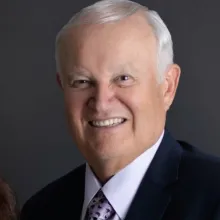
Mr. Seiglie was born in Havana, Cuba, and came to the United States when he was a child. He found out about the Church when he was 17 from a Church member in high school. He went to Ambassador College in Big Sandy, Texas, and in Pasadena, California, graduating with degrees in theology and Spanish. He serves as the pastor of the Garden Grove, CA UCG congregation and serves in the Spanish speaking areas of South America. He also writes for the Beyond Today magazine and currently serves on the UCG Council of Elders. He and his wife, Caty, have four grown daughters, and grandchildren.
