

How Do We “Stir Up” God’s Holy Spirit?
Given on
Given in
Downloads
Downloads
To download a file, right-click (or long press) a link above and choose Save As.
Paul likened God’s Spirit to an ember in a dying fire. He encouraged Timothy to stir up the live coal, to fan it into flames. He knew we must guard against neglecting the gift of God’s Spirit, of letting the fire grow cold. How can we maintain the courage, strength and love God gives us through His Spirit? How can we insure that we don’t “grieve” or “quench” the Holy Spirit? How can we maintain the spiritual high we received from the Spiritual Refresher we just received at the Feast? We do this by stirring up “the gift of God” – His Holy Spirit! But how? We find the answers in scripture.
Transcript
This transcript was generated by AI and may contain errors. It is provided to assist those who may not be able to listen to the message.
Alright, let's turn our attention to the sermon. As I may mention, we recently returned from God's Feast of Tabernacles. And I'm sure where you are at, from what I've heard, you've all enjoyed the messages that you received at the Feast of Tabernacles. You were inspired by what you heard. You were instructed by what you heard. You were on a spiritual high at the feast. And now we come back home from the feast. We've been home for a number of weeks. We want to maintain that spiritual high that we had at the feast. We want to make sure that is something that we continue on through the course of the year. With that in mind, let's turn to John 4. John 4 will help us launch this sermon.
You know, during the course of the feast, as we were listening to those inspiring and instructive messages, chances are you heard some messages dealing with how we are to worship our very special God, how we are to fellowship with God's very special people, how we are to be inspired by the very special future that God has in mind for us. Regarding the worship of our very special God, we see in John 4, verse 24, God is Spirit, and those who worship Him must worship Him in Spirit and in truth. In Spirit and in truth. God our Father, Jesus Christ, our Elder Brother, are in tremendous harmony and unity beyond anything you and I can humanly understand. They are without beginning, without end. They are eternal, but they want to share the kind of life they live with us. We pieces of clay. We mortal human beings. We were created in the image of God. We were created with the opportunity to enjoy not only physical life, but a portion of spiritual life as God has given us His Holy Spirit. God has graciously given us the gift of His Holy Spirit. You and I are in a high from the feast. We want to maintain that high, but we see in Scripture that there are some things we need to be cautious about. Let's look at Ephesians chapter 4. Ephesians chapter 4.
Verse 30. Ephesians chapter 4 and verse 30. And do not grieve the Holy Spirit of God, by whom you are a seal for the day of redemption. Don't grieve the Holy Spirit. Now, sometime back I gave a sermon on that subject. I believe it was on Pentecost. Do not grieve the Holy Spirit. God's Spirit can be grieved. You and I don't want to do that. We don't want to grieve God's Holy Spirit. But we read even further. We go to First Thessalonians chapter 5. First Thessalonians chapter 5 and in verse 19. First Thessalonians 5.19. Not only can we grieve God's Holy Spirit, but what it says here is, do not quench the Spirit. Do not quench the Spirit. So, brethren, despite the fact that God gives us this powerful tool, a portion of His own mind that we can have and we can enjoy, if we're not careful, we can grieve God's Spirit. We can quench God's Spirit. Now Paul, writing to a young minister, Timothy, had some very instructive advice. Let's take a look at 2 Timothy chapter 1.
And this will begin to narrow down what I would like to discuss with you today. 2 Timothy chapter 1 and verse 6.
Therefore I remind you to stir up the gift of God, which is in you through the laying on of my hands. Stir up the gift of God.
And it's interesting when you take a look at the original Greek there, talking about context. Stir up is Strong's number 329.
According to the Divine's Expository Dictionary of Biblical Words, it defines stirring up as this, to kindle afresh or to keep in full flame.
We've come back from the Feast of Tabernacles. We want to make sure that God's Spirit within us is not being grieved, certainly not being quenched. We want to make sure we are keeping that in full flame. How do we do that? How do you and I do that? How do we maintain the strength of love that God gives us through His Spirit? How do we make sure that we don't grieve or quench the Spirit? How do we worship God properly in Spirit and in truth? How do we maintain that high? As you were sitting in services, as I was sitting in services, we heard those messages. I know every time I go to the Feast or come to Sabbath services and I'm listening to God's Word being expounded and explained. God's Spirit just, there's something, it gets kind of grabs me, and not physically, but there's the mind where I say, yeah, that's right, and I need to be doing this, and He's right about that, and I may be doing that like I should, and here's what I need to be doing. And so, you know, I enjoy listening to the messages when I have an opportunity to do that, or at home, you know, going on the Internet and listening to messages there, and allowing that Spirit to just think about the words that are being said as they're being written here in the Scriptures and being expounded and explained through the Scriptures. So how, brethren, and my theme today is in the form of a question, how do we stir up God's Holy Spirit? How do we do that? How do we allow God to do that in our hearts and minds? I'm going to letter these, letter A. How do we stir up God's Holy Spirit or allow God to do that in our hearts and minds? Letter A. Focus on the big picture. Our very special calling and future. Focus on the big picture. You know, the thought behind this point for me, as I was thinking about this and getting ready for the sermon for today, the overarching thought is we allow God's Spirit to be stirred in us as you and I share the mindset of our Father.
If you and I aren't sharing the mindset of our Father, then you and I can find ourselves vulnerable to Satan's negative influences. And we don't want that. The key to keeping the working of God's Spirit active and alive and stirred in our lives is keeping our minds on the big picture. Yes, we're going to think about what's happening in our lives. We should be doing that. Yes, we want to be amending things in our lives. It's called repentance, and yes, we should be doing that. But when our focus is purely on us and that seems to be all it's on, and we're not looking at the big picture, then Satan can get the best of us if we're not careful. In your notes, you might want to jot down Jeremiah 29, verse 11. I'll read this for you. To me, this was, again, the overarching thought about focusing on the big picture. Jeremiah 29, 11, where God says, For I know the thoughts that I think toward you, says the Lord God, thoughts of peace and not of evil, to give you a future and a hope. To me, that's one of the great scriptures of the Bible, to give you peace, to give you a future and a hope. So what we want to do, if we want to keep God's Spirit stirred in us, is be at one with the mind of God. Be at one with the mind of God. Another way of looking at this, brethren, is what is it that excites God? We want that to excite us. God's plan excites Him. Now, I don't know how He does that in heaven above. I don't know if He does backflips or things like that, but I'm sure that God is very excited about the program He has, about the Holy Days, about His plan to offer us eternal life. Let's take a look at Luke chapter 24.
Luke chapter 24. Here we've got, again, in terms of context, we've got the story at this point is Jesus Christ has been tortured. He has been crucified. He has been put in a tomb. He has been resurrected from the tomb. But the people around aren't seeing a lot of the background that we can see as we look into the Scripture. In their minds, in their hearts, they're thinking, well, we were hoping that this guy was the guy, that he was going to get rid of the Roman Empire. We're going to have all those lovely Scriptures and prophecies from Isaiah and the prophets. They're going to come to be true. We're going to live in a, you know, utopia. And this is what they were thinking. Then all of a sudden, the man that they had their hopes on, he gets killed. There's rumors his body has been stolen. Again, they didn't understand all that took place. You know, they heard rumor. And so there's a couple of fellows now who are going away from Jerusalem. They're sad. They're down. They're discouraged. They're thinking about themselves.
They're thinking about themselves. And Jesus Christ comes to them and begins walking with them. And then he begins to discuss. We see the story here starting in Luke chapter 24 verse 25.
And then he said to them, O foolish ones, and slow of heart to believe in all that the prophets have spoken. Ought not Christ who have suffered these things and to enter into his glory? And now verse 27. And beginning at Moses and all the prophets, he expounded to them in all the scriptures the things concerning himself. He began to discuss the plan of God.
And this was exciting to Jesus Christ. And we'll note that this was exciting to them as well. Verse 28. Then they drew near to the village where they were going and he indicated he would have gone further. But they constrained him. Now Christ knew exactly what he was doing. He gave them some interesting material. As we're going to see in a moment, their hearts were burning within them as he was opening the scriptures to their understanding. But then he says, well, I need to keep on going. You guys are going to stay here. I'm going to keep on going. They didn't want that. They were excited about what Christ had been telling them. Verse 29. But they constrained him, saying, abide with us for it is toward the evening and the day is far spent. And he went in to stay with them. Now it came to pass that he sat at the table with them, that he took bread blessed and broke it and gave it to them. Then their eyes were opened and they knew him and he vanished from their sight. And then he said to one another, did not our hearts burn within us while he talked with us on the road and while he opened the scriptures to us? Didn't our hearts burn within us? Wasn't God's spirit, in this case, was working with them? Didn't that inspire them? The mindset of God, viewing the big picture that allowed their hearts and minds to be stirred. And the same thing can be true with us. I'd like to read you just one paragraph from our fundamentals of belief booklet, God's Purpose for Mankind.
We believe God's purpose for mankind is to prepare those whom he calls and to elect through a life of overcoming sin, developing righteous character, and growing in grace and knowledge to possess God's kingdom and become kings and priests reigning with Christ at his return. We believe that the reason for mankind's existence is literally to be born as spirit beings into the family of God.
Now, I don't know about you. We heard today from Mr. Duran about his calling, but I remember very distinctly. I can't tell you the date. I can't tell you I was 15 years old. I was up in my bedroom. I was listening to Garner Ted Armstrong. It was July 1967. And I remember GTA talking about our destiny, and he was nibbling around the edges as he so artfully did, talking about our destiny, and not quite giving all the information I would like to have heard, but talking about writing for a booklet. Why were you born? I remember writing for that book, and I remember reading this in that booklet. This is by Mr. Armstrong. Do you really grasp it? The purpose of your being alive is that finally you will be born into the kingdom of God when you will actually be God. I was 15 years old. That was one of the key points in my life as God began to call me. First time I heard that, realizing what God had in store for me, what God had in store for you. That was exciting. Now, it would be another five years before I would be baptized. But God's Spirit was working with me. It wasn't working in me. It was working with me. And my heart was burning because I saw a part of the plan of God. And brethren, as we keep fanning the flames, we think about what God is doing, not only in our lives, but in other people as they begin to be called. And we think about the whole story, including the last great day, and what that means. I remember a number of years ago, I was asked to give the morning sermon on the last great day in Italy. And I had went to Italy that year because I wanted to see the little village where my dad was born. Barggiano. It was about 50 to 60 miles to the east of Rome, up in the mountains, guarded by a castle, really kind of a beautiful little town, only about 50 to 60 hundred people. Very small. Kind of a peasant village. But, you know, we rented a car, we drove over there, we looked around, and I remember finally finding a lady that was working on her flower bed, and I don't know Italian, but I got out of the car, I pulled out my driver's license, showed it to her, De La Sandro. She said, oh, De La Sandro! And she began pointing to the households where the De La Sandros lived. Thankfully, her son came over, who spoke a little English, and he drove us over to the cemetery. And I saw, you know, a number of mausoleums, De La Sandro, a number of grave sites where they had taken pictures of the deceased and put them in a plastic bubble. I remember so distinctly, one of the men who had died before my dad was ever born looked just like my dad. And when you're giving a sermon on the last great day, that means a lot. God's Spirit burns in you when you see things later, and you know those people are going to live again. That stirs the Spirit. I had the same experience, or a similar experience, when I was, you know, you can be very emotional when you're going through certain things in your life, like when I was getting ready to have open-heart surgery, going over to the University of Michigan Medical Center and going down the various hallways to various appointments I had to keep. And there you have pictures of former University of Michigan graduates going back into the 1800s. And I don't know why my mind works this way, but I remember looking at those pictures of those people who are now long gone and thinking in an excited way, in a quiet but excited way, those people are going to live again. They're going to live again. That excites me. Hopefully that excites you as well. Let's take a look at Luke chapter 15.
Luke chapter 15. Here in Luke chapter 15, you know, we talk so many times that prayer is our communication with God. Prayer is our communication with God. Bible study, as we say so often, is God speaking back to us. So what is God saying to us in Luke chapter 15 here? In Luke chapter 15, we see three parables back to back to back, and they tell us about ways we should be thinking. But, brethren, there's layers of understanding here. And as I look at these three parables, I see something else. I see something in addition. I see not only how we are to respond to what we're reading, but I see why God put that there. Those parables, because those parables teach us about how God thinks. What excites Him? And whatever excites Him can excite us. It better excite us. We want to keep those flames fanned. We want to have the same mindset as God. Acts chapter 15, verse 1. Then all attacks, collectors, and sinners drew near to Him to hear Him. And the Pharisees and the scribes complained, saying, This man receives sinners and eats with them. So the context here, verse 1, you've got the, quote-unquote, undesirables of the day. Verse 2, you really see some undesirables in terms of the Pharisees and the scribes, the self-righteous people. So He spoke this parable to them, What man are you having a hundred sheep if he loses one of them? Now think about this from God's perspective. God, saying that there's somebody there who needs help. There's somebody there who needs grace. What man of you having a hundred sheep if he loses one of them does not leave the 90 and nine in the wilderness and go after the one which is lost until he finds it?
That's God doing due diligence for you, for me. And when He is founded, He lays it on the shoulders, rejoicing. Every time you and I repent of our sins, every time you and I make a proper course correction in our life, and we amend our life as we study the Word of God, and we see where we need to be closer to God, every time we do that, God our Father rejoices.
Verse 6, when He comes home, He calls together His friends and neighbors, saying to them, Rejoice with me, for I found my sheep which was lost. Again, think of this from God's perspective. God rejoices. Every time you have a choice between a right and a wrong decision, and you make the right one, God rejoices. He is so proud of us in the right context. Verse 7, I say to you that likely there will be more joy in heaven over one sinner who repents than over 99 just persons who need no repentance.
This talks about the mind of God and how He views us. What excites Him when you and I choose life over death? Then we've got the next parable here, the lost coin. Verse 8, or what woman having ten silver coins, if she loses one coin, does not light a lamp, sweep the house, and search carefully until she finds it? You know, here is, again, due diligence.
Are you just some cog in some big machine? Or does God know every hair in your head? Does God listen to every one of your prayers? Does God see every one of your tears? Does God heartache when your heart aches?
But He is excited when we go the right way. And when she has found it, she calls her friends and neighbors together, saying, Rejoice with me, for I have found the peace which I have lost. Likewise, I say to you, there is more joy in the presence of the angels of God over one sinner who repents. Over and over we hear this, seeing the mind of God, what excites God, His plan excites Him. Last one is the parable of the prodigal son. We're going to drop down to verse 20 here.
Verse 20. You know the story, the one son took his inheritance, went out wasted it, but he finally came to repentance. Verse 20. And he rose and came to his father, but when he was still a great way off, his father saw him, had compassion, and ran and fell on his neck and kissed him. Some of us have kids who don't come to church. Some of you do, and you're very blessed. Some of us don't. And I'm sure there are all of us who have children who don't come to services. I'm betting all of us pray every day for our kids. And as this man was looking into the distance, I think some of us look into the distance, hoping that something will happen with our kids where they'll see their need to come back to this way of life. I think this father was looking. I think this father was praying. He was wanting his son to come back. And when the son was still a great way off, his father saw him because he was looking for him. And he ran. He didn't just walk. He didn't wait for his son to come up to him and shake his hand. He ran to his son, fell on his neck and kissed him again. Think of this father like God, our father. As you and I amend our lives, how he sees us when we are a far off. And yet he would like to run to us and fall on our necks and kiss us. And the son said, Father, I've sinned against heaven and in your sight and no longer worthy to call your son. But the father said to his servants, bring out the best robe. You know, the son probably was dressed in tattered rags. Bring out the best robe, symbol of honor, and put it on him and put a ring on his hand, perhaps a signet ring, maybe with a family crest or something, showing authority. Put sandals on his feet. I'm sure he, well, I'm not sure, but the young man may have come in barefoot and in rags. And yet the father says, no, put sandals on his feet. This is my son. Bring the fattic half here and kill it for let us eat and be merry. For this my son was dead and is alive again. He was lost and he was found. Why does God put these stories in the Scripture? He puts these stories in the Scripture, brethren, because this is the way he thinks about us. Again, he wants for us peace. He wants for us hope. He wants for us a future, like we see in Jeremiah chapter 29 and verse 11. So how do you and I stir up God's Holy Spirit? We merge with God's mindset. We share the very mind of God. We make it a point to think to ourselves, what is God thinking right now? I can think about all sorts of selfish things in my life, but what would God want me to be thinking right now? What's going to make my heart burn within me? Focus on the big picture, our very special calling and future. Let her be.
How do we stir up? How do we allow God to stir up His Spirit within us? Let her be. Remember our very special part to play. We are not just bystanders. We're not just onlookers. We're not just having a seat in the audience. We are people who are there to be a part of things, a very special part of things. Overarching thought here. God's Spirit has stirred up in us as we share on the hands-on work of God. You've been called. I've been called, not just for our own salvation. How many times did Herbert Armstrong talk about that? Oh, sure, we're happy about that. We want that. God offers that to us. It's a great thing. It's a tremendous gift. But we have not been called just for our own salvation's sake. In your notes, you might want to jot down Luke 2 and verse 49. Luke 2 and verse 49. What did Christ say? This was on Passover season. He had separated himself from his family. His family was going home. They respected Christ. He was a young man. They respected him enough to know he probably was with some other family on the caravan going home. Well, he wasn't. He was there talking to some of the elders, some of the older folks. And so his parents came to him. They were distressed because they didn't know what had happened to him. But what did Christ say? I'll quote this for you in Luke chapter 2, verse 49. Christ said, Do you not know that I must be about my father's business?
I must be about my father's business. Brethren, you and I are a part of a very large family business. We're a part of the family business. Getting the word of God out, getting the word of truth out, we have got our part to play. A very significant role to play. Again, quoting from our Fundamentals of Belief, the section titled The Church, and I quote, We believe that the Church is the body of believers who have received and are being led by the Holy Spirit. The true Church of God is a spiritual organism. Its biblical name is the Church of God. We believe that the mission of the Church is to preach the gospel, the good news of the coming Kingdom of God to all nations as a witness and to help reconcile to God such people as are now being called. We believe that it is also the mission of the Church of God to strengthen, edify, and nurture the children of God and the love and admonition of our Lord Jesus Christ. This is the family business. And our Father has asked you, He's asked me, He's asked all of us, to be a part of that team, the part of that family.
Again, I've made mention to you on a number of occasions in the past when God began to call me and I came into the Church and went through Ambassador College, went back home to Detroit and Michigan. At that point in my life, I was very much doing the Jonah thing. I wanted nothing to do with the ministry, but I wanted everything to do with serving God and His people. But one of the things, you know, I was flown out to Glen Burney, Maryland for a sales interview. And I remember I had to meet first with a psychologist. That was just, you know, a number of the companies I interviewed. Maybe it was just me, but they very much wanted a shrink to take a look at me. And one of the questions he asked me was, what book in your life has made the most difference to you? And I said, we mean, in addition to the Bible. He said, yes, in addition to the Bible, what one book? And I said, the Autobiography of Herbert Armstrong.
Why that? I said, because the man's life was very interesting, was exciting. A man of God. There's so many lessons that we learn there. You know, Brethren, when you and I think about Herbert W. Armstrong, and this congregation really values that. When we think about the life of Herbert Armstrong, remember the excitement when he would talk about the work of God? Now, my first year at Ambassador College, 1970, and many of the years that followed, Mr. Armstrong was rarely in Pasadena. I think one year they said he was gone 300 days of the 365. He was always traveling. But when he had come back for a Bible study, he was energized. That man, who was elderly, was energized. He was energized by the belief that we as a church have a part to play in the Father's business. Brethren, we should never forget that. We should never forget that. Now God has His part to play in the family business. Let's take a look at John. You know, only God can do God's part. We're not going to try to do God's part. God does His part. Let's take a look at a little bit of that over here in John 6.
You know these scriptures by heart, but we do want to touch on this. John 6, verses 44 and 45 in my Bible, all read lettering.
No one can come to me unless the Father who sent me draws him. That's God's job. We can't grow a church. No one can come to me unless the Father who sent me draws him, and I'll raise him up on the last day. It is written in the prophets, and they shall all be taught by God. Therefore, everyone who has heard and learned from the Father comes to me. So God calls, He draws, He teaches.
Oh yes, we've got ministers, we've got literature, we've got all those wonderful things, but it's God that does these things. And only God can do those things the way the Bible says that He does those things. And we're so appreciative of those things that He does. But there are things that we are to do. Let's take a look at Ephesians 6. Ephesians 6.
Ephesians 6, verse 18, Praying always with all prayer and supplication in the Spirit, being watchful to this end, with all perseverance and supplication for all the saints, and for me, that utterance may be given to me, that I may open my mouth boldly to make known the mysteries of the gospel, for which I am an ambassador in chains, that in it I may speak boldly as I ought to speak. We are co-workers in the family business. Some of us give messages on the Sabbath. Some of us write articles. Some of us do all sorts of things. They're in the home office in terms of working with the computers and answering letters. But all of us together, a matter of synergy, all of us together are praying for the work. We pray that our leaders make right choices, wise choices, good choices, fruitful choices. We pray for one another. We pray for, as we did with an opening prayer here, that God would bless the messages today. That God would bless the food we'll be eating and all the activities afterward. We're brothers and sisters here. We're family here. And we want God's blessing upon us. And so one of the things we do as a group is we pray for one another. We pray collectively.
Mr. Armstrong said so many times that, you know, he went forward as on the prayers of the saints. And that's something we need to be doing. Certainly. No matter what era of the church we've ever been a part of, you'll find people in the church who are not doing what they should be doing. We'll find people in the church, whether they be members or ministers or leaders or followers, who don't have the big picture in mind and maybe do some things that aren't the best. But brethren, it's always been that way. Think about the church in Corinth. All the things Paul wrote as he wrote to the various churches he wrote because they all had need. None of them are perfect. None of us are perfect. And yet, with all of our imperfections, God gives us His grace. Not to continue in sin, but that we can overcome that. And we can overcome that as we are praying for one another. We're doing the job that God has called us to do. Philippians chapter 4.
Therefore my beloved and long-for brethren, my joy and crown, so stand fast, O Lord beloved. I implore Eudia and I implore Syntheche to be of the same mind in the Lord. So here we see there's looks like there's a couple of ladies in a church who aren't of the same mind. They're having maybe some issues together. But notice going on. Does that mean, well, since they're having issues, they're walking away from them. No. Verse 3. And I urge you also, true companions, help these women who labored with me in the gospel. Labored with me in the gospel. That is our job. You know, some of us don't have much money to give, but we've got time for prayer. We've got time for fasting. And that is what we can do. If you've got a job and you can support the church along those lines, wonderful. But whatever situation you are in, you can be supportive of the work of God that He's doing. I urge you, true companion, help these women who labored with me in the gospel with Clement also and the rest of my fellow workers whose names are in the Book of Life. Fellow workers. Second Corinthians chapter 1. Second Corinthians chapter 1. Here we see the need for such prayerful support as we do our part in the great work in the family business. First Corinthians chapter 1 verse 8. For we do want you to be ignorant, brethren, of our trouble which came to us in Asia, that we were burdened beyond measure. Here's one of the great men of God talking about the burdens he had. And if it was just for him physically having to take it on a cheek, on a chin, he wouldn't be able to do it. Burdened beyond measure above strength, above his own physical strength. So that we despaired even of life. Can you be a member of the church and be depressed and discouraged and down? Of course you can. This man was. But he didn't want to stay there. Yes, we had the sentence of death in ourselves that we should not trust in ourselves. And now we could see the mind working here, the mind of God. We should not trust in ourselves, but in God who raises the dead, in our Father who can intervene for us, who delivers us from so great a death and does deliver us, and we trust that he will still deliver us. So as he's writing to the church here, God's Spirit is working with him to see what God can and has done.
Verse 11. You also helping together in prayer for us, notice, helping together in prayer for us, that thanks may be given to many persons on our behalf through the gift granted to us through many co-workers in the family business. One other scripture. Let's go to Matthew chapter 5.
It's going to take me a little while to get used to giving split sermons. I've got three points here. You're only getting two today, because I don't want to stand between any of you and dinner. You know, the good thing about those of us who speak is we'll have other opportunities. So somewhere down the road, there'll be another opportunity to give you letter C in my notes here. Matthew chapter 5.
Again, our part in the family business. Matthew 5 verse 14. You are the light of the world, a city that is set on a hill cannot be hidden. They light a lamp and put it under a basket, but on a lampstand that it gives light to all who are in the house. Let your light so shine before men they may see your good works and glorify your Father in heaven.
That's what we can do. Have a tremendous light. A tremendous light. You know, I'm reminded Mary and I were in Hawaii this last year, and one of the things we wanted to do is go up to see the very top of Haleakala.
Haleakala is the volcano that is the high point on the island of Maui. Haleakala is just about 500 feet short of being two miles up. Two miles up. And people say they like to go up there for sea to sunrise. I didn't want any part of that. Didn't want to get up that early. But one day it was about three o'clock, and we're driving with that nice convertible that some of you have seen on the pictures.
And I said, let's go up to the top of Haleakala. Two miles. Now you think two miles can take you 20 minutes. It takes you over an hour to get up there, because as you go up they get all these switchbacks, and some of them are hairpin turns, you know, five miles an hour. And something about the state of Hawaii that maybe just where I was, they don't believe in guardrails. And in some of those hairpin turns, you miss your turn, and you're flying. But remember, we got to about 7,000 feet, and we started getting into fog.
And it wasn't fog. It was the bottom part of the cloud. And we kept on going up and up, and we got to the place where it looked like it was almost dusk. The cloud was so thick. Then after a while, probably about 8,000 feet or so, way more than a mile up, we broke through the cloud, and all you can see was beautiful white billowy. It looked like snow. You would think that high up, you would see all the ocean. You couldn't see any ocean. All you saw was white billowy cloud, pure like cotton, like snow that had never been touched.
We got finally to the top. You know, it was 92 degrees at sea level when we started. By the time we got to the top, 10,300 feet, it was 62 degrees in windy. But what a sight! What a sight to be there and see the beauty of what God had. And, you know, we had gotten out of our car earlier, and I had Mary take a picture of me, and behind me, maybe, I don't know, a couple hundred yards, was a part of that cloud that had settled into one of the little valleys.
And it was beautiful, and it was white, and it was bright. And words don't describe it. The picture we took doesn't do it justice. But I was thinking about this section of Scripture, you know, a light set on a mountain, set on a hill. We are that light, the bright and beautiful and white. Now, we are people that are clay. We have our share of issues, this, that, and the other. But if you ever go to Hawaii, and you want to take an afternoon, because it's going to take you an hour plus to drive up, and an hour plus to drive down, and on that mountain, on that volcano, they let the cattle runt room free.
So there's a couple of places where we had to stop the car and let the cattle go off the road. You know, they were looking at us like, what are you looking at? And I thought they were saying, well, we're looking at you, but they eventually got off. But the idea, brethren, here is light, brilliant white light, that cloud, gorgeous. I will never forget that scene. And certainly, as people around you watch your life, watch the way you live, watch how you interact with them, they're not going to forget what you bring to the table, either.
That's our part in the family business. And I think probably most of us have experienced that, where we've talked to people at work, they wanted to sit down with us. I know that before I came into the ministry full-time, when I worked in the world, a number of occasions where people would, and I would sit there, because I never made it a secret of what my beliefs, and that I went to church, I went to church on Saturday, had these holy days, and when I became a minister, that I was a lay minister, and this and that, and the other, and people would come, and they say, well, tell me about this, and tell me about that, tell me about this other.
Could a person like me ever be accepted by God? There's a tremendous hunger out there. The one company I worked for, little guy, worst mouth in the world, dirtiest stories, but one day he came to me, says, Randy said, could God ever forgive me?
Now, he wouldn't say that when everybody else was around, but I was in the back of the warehouse, he came to me and said, would God ever forgive me? Now, I've been able to answer those kind of questions, but I'm sure you have too, and you will in the future. That's our role to play in the family business, to be able to be a light, to be able to give an answer. So, brethren, how do you and I stir up the gift of God's Holy Spirit? How do we stir up the gift of God's Holy Spirit? We don't want the Spirit to be quenched. We certainly don't want it to be grieved or quenched. We focus on the big picture. We want to be at one with the mindset of God, and number two, or letter B, we remember our very special part to play, that we've got hands-on work in the family business. Let me tell you something, as I'm sure many of you have experienced, I've experienced, when you're talking to somebody and a light goes on in their face, and maybe they don't come to church, maybe they don't do a lot of the things that you and I would do in terms of living by God's way, but when you see a light go on in their eyes, that really stirs the Spirit. And you can be a part of that all the time.
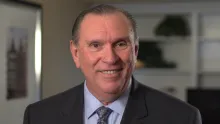
Randy D’Alessandro served as pastor for the United Church of God congregations in Chicago, Illinois, and Beloit, Wisconsin, from 2016-2021. Randy previously served in Raleigh, North Carolina (1984-1989); Cookeville, Tennessee (1989-1993); Parkersburg, West Virginia (1993-1997); Ann Arbor and Detroit, Michigan (1997-2016).
Randy first heard of the church when he was 15 years old and wanted to attend services immediately but was not allowed to by his parents. He quit the high school football and basketball teams in order to properly keep the Sabbath. From the time that Randy first learned of the Holy Days, he kept them at home until he was accepted to Ambassador College in Pasadena, California in 1970.
Randy and his wife, Mary, graduated from Ambassador College with BA degrees in Theology. Randy was ordained an elder in September 1979.
playlist
