


Daniel Apartian
This transcript was generated by AI and may contain errors. It is provided to assist those who may not be able to listen to the message.
In our society today, it's not unusual, especially in certain parts of the country. To hear people using all kinds of religious-sounding phrases and words. If you run across a religious broadcast, if you're trying to find a station to listen to, and sometimes that's difficult in these parts because every other station seems to have a religious program on, you will have people using phrases and you wonder if they really know, if they really understand, what those words mean. A lot of times when somebody sneezes, people will say, and maybe this isn't a religious phrase, but they'll say, well bless you. Apparently, the origin of this, people used to think, and when you sneeze, that your soul left you. Therefore, you were open to a possession of a demon, so they would say bless you to protect you so that nothing would bother you at that time. You hear people say hallelujah all the time, and especially those in the Amen Corner. Now, for those of you who do not know what the Amen Corner is, just ask somebody a little older. They can tell you, but many of the churches, especially the Baptist, we'll put it that way, there's a corner over where the deacons and some of the older men will sit, and if they like something that's said, they will say Amen while the minister is speaking. Now, according to what church you go on today, they also say, right on, and they'll use that type of praisiology. I was at a funeral once, and the Amens and the right-ons just were flying left and right, so I've heard it in services.
There are also people who will many times will say, well, it's good to know the Lord, or they will come up to you and ask you, do you know the Lord? And, you know, it's always, well, how do I answer this? And so, you know, you wonder what to say, and do they even know what the expression, do you know the Lord, really means? Well, to them, they're looking for people unconverted. I mean, that's what they're after. Do you say, no, I don't? Well, get ready. They're going to start preaching to you and try to have an altered call.
As we realize in 1 John 2.4, the Bible says, he who says he knows him and doesn't keep his commandments is a liar. So, the know God means that you know him, you know what he requires of you, and you will keep his commandments. When most people talk about grace, they don't have the true meaning of the word. For many, it means that they know that they no longer have to keep the Sabbath, don't have to keep the law. Grace is somehow a magic wand that God waves over everything, and now they are free and at liberty to do whatever they want to do. Even the word sin has a lot of different meanings. How many people know if you were to ask them, what is the Bible definition of sin? Well, tell you immediately, well, it's the transgression of God's law. They don't know that. They don't understand that. Well, what about the word glory? If you ever had anybody tell you, glory, glory, glory. You know, they're trying to express how happy they are. Are they trying to sound religious? I've heard people say that over and over again in conversation or talking to one another, but do they really know what that means? Rather, do you and I know what the word glory means? We have to have God's glory today, the Bible talks about, and we're certainly going to have it in the future. Glory is a word that many of us don't go around thinking about. You don't get up in the morning and say, well, today I'm going to meditate on glory. It's not normally something that a person does, but as we think about this time of the year, the Feast of Trumpets, the seventh trumpet being sounded, the time of the resurrection, there is coming a future time when we will have a glorified body. 1 Corinthians chapter 15, beginning in verse 35, talks about that. 1 Corinthians chapter 15 will begin in verse 35. So someone will say, well, how are the dead raised up, and what body do they come? Well, foolish ones, what you sow is not made alive unless it dies.
And what you sow, you do not sow the body that it shall be, but mere grain, perhaps wheat or some other grain. You stick a kernel of corn in the ground. A kernel of corn doesn't grow. A plant grows, and a stalk grows. And then there's an ear that comes off of that, and then it begins to develop grains of corn. So that's what he's talking about. But God gives it a body as he pleases, each seed its own body. All flesh is not the same flesh. There's one kind of flesh of men, another flesh of animals, another of fish, another of birds. There are also celestial bodies, terrestrial bodies, but the glory of the celestial is one, and the glory of the terrestrial is another.
Verse 41, there is one glory of the sun, and another glory of the moon, and another glory of the stars. For one star differs from another star in glory, talking about its brightness, and the energy and all that is radiating from it. So we read in verse 42, soul also is the resurrection of the dead, like one star differing from another in glory. The body is sown in corruption, but it is raised in incorruption. It is sown in dishonor. It is raised in glory. It is sown in weakness. It is raised in power, and it is sown in a natural body. It is raised in a spiritual body, and there's a natural body. There is a spiritual body.
In the resurrection, we will have a glorified body. The Greek word here for glorified is doxa, in the Greek.
In fact, I've got a program that pronounces Greek words for me. So I listened to this word about 10 times, and I thought, I think I got it. And we'll see, but it pronounces doxa. A look at the root word of doxa actually means to think or suppose is necessary. The etymology of this word primarily means thought or opinion, especially favorite human opinion. And thus, in a secondary sense, reputation, praise, and honor. So it can be true honor and praise or false honor and praise. It can also mean splendor, light, perfection, reward. Thus, doxa of man is human opinion.
That's often shifty, they say, or uncertain, often based on error. And sometimes it's a pursuit of one's own worth or self-worth. But there is a glory of God which must be absolutely true and changeless. God's opinion marks the true values of things as they appear in the eternal mind. And God's favorable opinion is true glory. Now, I'm reading here from the complete word study dictionary of the Bible. And it goes on to say, glory, therefore, is the true apprehension of God or God's things.
The glory of God must mean His unchangeable essence. Giving glory to God is ascribing to Him His full recognition. It is often spoke of as honor, duty that is rendered, praise, or applause. Externally, it means dignity, splendor, glory, brightness, all of those type of things.
In appearance, it appears as luster, brightness, or dazzling light. When you look the word up in the Old Testament, it means basically the same thing. Glory and honor, glorious, abundance, honor, splendor, and glory. Now, when you and I think about having God's glory, is that what we normally think about? I think most of us, when we think about having the glory of God, we're looking forward to anticipating the resurrection, the time when our bodies are changed, we're glorified, we're bright, illuminated like the sun, that we radiate power and energy and force from ourselves, as spirit bodies do. And yet, the Bible clearly says that you and I are to grow in glory today.
So how does one do that? Romans 3, 23 is a scripture you probably have memorized. Verse 23, Romans 3, all have sinned and fallen short of the glory of God. So we all break God's law. We all fall of the glory that God wants us to have. We have, on occasions, brought disgrace on God. We have not always honored God or praised God by our actions, our thoughts, and our standards. We've fallen short of God's values and God's standards. When we sin, we fall short of the standards God intends us to live by.
He has certain standards, certain values He wants us to live by, and we do not measure up to those. We are to radiate God's glory in this life now. We're to reflect God. Now, people are not going to say, as you walk down the street, well, there goes God. But they should be able to see that there's something different about us, that we're different people, that we are different in our values, in our character, in our outlook. Going back to Genesis 1 and verse 26, Genesis chapter 1, verse 26, we read when God created man on the earth that God said, let us make them, talking about the man and the woman, in our image according to our likeness, and let them have dominion over the fish of the sea, the birds of the air.
And so God made man in His own likeness. We are created in God's image, which means we resemble Him. You want to know what God looks like? Look around at human beings. He has a certain shape, God-fashioned man in His own appearance. He has endowed man with a measure of His creative power and intellect. We have minds similar to God, not in its total capacity, but in the ability to think, to reason, to have emotions, to learn, to develop character.
And so our minds are quite different in that sense from animals. God created man in a futuristic sense of the potential of becoming a Son of God and the family of God. We are to obtain a measure of His glory in this physical life now. Now, Adam and Eve forfeited that glory when they were on the earth. They were cut off from God. They were driven out of the garden. They were driven away from God and the knowledge of God. And as a result of what they did, and because every man has sinned since, we're all cut off or have been cut off from God.
All have sinned and fallen short of the glory of God, as we read earlier.
Dachsa embraces all that is excellent in the divine nature and coincides with God's self-revelation of who He is so that we know who He is and what He requires of us. When Jesus Christ was on this earth, we find that He set the example for all of us. John 1, verse 14, says, The Word became flesh and dwelt among us, and we beheld His glory. So Jesus Christ had a certain glory, a certain persona about Him. And what was that glory? The glory as of the only begotten of the Father, full of grace and truth. So He reflected God's glory. He was full of God's grace and God's truth.
In 2 Corinthians, chapter 4, 2 Corinthians 4 and verse 6, you'll notice something similar being mentioned. For it is God who commanded light to shine out of darkness, who has shown in our hearts to give the light of the knowledge of the glory of God in the face of Jesus Christ. So we have the knowledge of the glory of God, and we see that through Christ, in a sense, through His example. So what is that marvelous glory that you and I are to have? And how do we obtain that glory? Well, I've got several points here to show all of us what we need to be doing to have the glory of God. And you and I need to be developing that now in our lives. Revelation chapter 4 and verse 11 is an interesting scripture. Revelation 4, 11.
We find here the throne room of God and heaven, the angelic hosts there praising God.
And in verse 8, they cry out to God, Holy, Holy, Holy, Lord God Almighty, who was, who is, and who is to come. And it goes on to talk about that who lives forever and ever. But let's notice in verse 11, you are worthy, O Lord. That's a song, I believe, we sang. We're worthy. God is worthy. You are worthy, O Lord, to receive what? What is He worthy to receive from us, from the angelic hosts? Glory, honor, and power. For you created all things, and by your will they exist and were created. So you and I were created through the will of God. God has a plan, a purpose, and He willed it. Now, it's interesting, King James' version translates this, that we were created for His pleasure. And it uses that. That's the only translation I found that uses that phraseology. The question we need to ask ourselves when it comes to having the glory of God is, do we fulfill God's will for our lives? God has called us. He's given us His Spirit. He's placed us in His Church. He's given us an opportunity to be a part of a family, part of a spiritual temple, part of the bride. Do we fulfill God's will for us and in our lives? Do we please God by the way we live? Does my life, does your life, bring pleasure to God? Or does it sometimes bring anguish and sorrow?
Those of us who've had children know that at times our children disappoint us. Do they not? Or have disappointed us? Sometimes they bring anguish, disappointment, and sorrow because they're not always going the right way. Sometimes they go the wrong way. There are times they have to learn the wrong or through the wrong way. Well, you and I are to be those who are seeking God's will continually. Daksa means to honor, to praise, to glory God. So we are to constantly, by how we live, to bring honor to God, to bring praise to God. So that's one thing that we can do and should be doing. Now, in John 5, 42, we find the problem that all of us have to wrestle with.
And if you don't wrestle with this anymore, great. But I think most of us have a little difficulty. John 5, verse 42, Christ said, I know you, that you do not have the love of God in you.
I have come in my Father's name, and you do not receive me.
If another comes in his own name, you will or him you will receive. So somebody comes on his own authority, own credentials. He's got a PhD, a PPD, a DDD, or whatever it might be. He's got all these credentials. Wow! He's somebody. You give him a lot of praise or honor, respect. Christ said, I didn't come in that way. I came. My Father sent me. How can you believe who receive honor from one another and do not seek the honor that comes from the only God? So he was talking to those of his day that they sought honor, they sought praise from other human beings. And is that not a proclivity that we all have? You do something, don't we look for praise pat on the back? And it's not wrong to thank people for what they do, but there are human beings who do things just simply to seek that praise. As chapter 7 here in the book of John goes on to say, in John 7 in verse 14, it says, about the middle of the feast, Jesus went up into the temple and taught. And the Jews marveled, saying, how does this man know letters having never studied? And Jesus answered them and said, my doctrine is not mine, but he who sent me. See, our belief, our understanding of the Scripture, our doctrine, teaching should not be our own, but should be what we find God has revealed to us. If anyone wills to do his will, he shall know concerning the doctrine, whether it is from God or whether I speak on my own authority. He who speaks from himself seeks his own glory. See, he's seeking his glory, but he who seeks the glory of the one who sent him is true, and no unrighteousness is in him. Anything that is accomplished in the spiritual realm, the credit always goes back to God. Now, I have a list of them here, but you do not remember all of the Scriptures in the book of John where Christ said, I can do nothing of myself. It is the Father who does the works. What I say is not my own doctrine. It's what the Father gave me. He always pointed to the Father. He always gave credit to God, and so should we. We should do the same thing. You find that human beings seek the praise of other men, the approval of other men, so that they can have that glory. We need to ask ourselves, do we please God in every area of our life? Now, you could break your life down into many different components or parts. One could be marriage. One could be how you drive a car. That's a part of your life. How you relate to other people. How you deal with people. As we grow in grace and knowledge, as the Bible tells us, we should reflect God's glory and character. We should take on more of the glory of God as we go along, and we should be able to glorify God even more. So, we should seek honor from God. We should always give praise to God and not just seek it from other human beings.
Another point is that God created man to serve him and to do his will.
God created us ultimately as servants to do his will, to do what he wants.
Deuteronomy chapter 10 and verse 12. The problem with human beings is that we tend to be a little stubborn wanting to do our own thing and not give or yield ourselves to God. Now, in Deuteronomy 10 and verse 12, we read now Israel, what does the Lord your God require of you but to fear the Lord your God, to walk in all of his ways, to love him, to serve the Lord your God with all your heart and with all of your soul. God is looking for a people who will serve him with all of their heart, all of their soul.
Now, isn't that what Jesus Christ mentioned back in Matthew 22, beginning in verse 36 when they ask him, Lord, what's the great commandment? Did he not say you should love the Lord your God with all your heart or your soul or your might and love your neighbors yourself? Well, he's quoting from the Old Testament here. God, what this means is that God must come first in our lives, that God's way, God's law, must come first. We have a hymn that we sing, O how love I, by law. And so we need to love God, love his laws. And we wake up first thing in the morning. We need to do, we need to stop and think about God. It's easy. The first thing you do in the morning, you get up and think, 15 minutes late, I've got to get ready. You yell to your mate, put some toast in the toaster, I'm out of here, and you rush to get dressed, and you're out the door, and you're headed to work. First thing you know, you're fighting traffic, and instead of praising God, what are you doing? Sometimes you might be cursing other human beings, or you might be a little turned off, or you're not too happy, we'll put it that way. And you get to work, and all at once you've got a stack of things to do, and somewhere around noon when you stop to eat, think, I haven't even thought of God today. Every day, we need to start off with the right thing. I don't care if it's 30 seconds on your knees, you need to get down on your knees and pray to God, and say, help. I'm running late, I need your help. Please help me to reflect you today. And then you go on. Our love for God is shown in how we react, how we treat one another. If you love God with all your heart, all your soul, all your might, then you're going to love your neighbors yourself. In 1 John chapter 3 and verse 15, beginning in verse 15, we find that love isn't just an idle thought. Love is an action. Love is an action word. It's something you do.
Whoever hates his brother is a murderer, and you know that no murderer has eternal life abiding in him. But by this we know love because he laid down his life for us. So God loved us, he took action, he sent his son. The son loved us by being willing to give his life. And we also ought to lay down our lives for the brethren. That's an action word. We ought to lay down our lives. We ought to give of our time and of our effort for one another. But whoever has this world's goods and sees his brother in need and shuts up his heart from him, how does the love of God abide in him? My little children, let us not love in word or in tongue, but in deeds and in truth. So you and I need to love in deed and in truth. In verse 20 in chapter 4, if someone says, I love God and hates his brother, he's a liar. For he who does not love his brother, whom he has seen, how can he love God whom he has not seen? So you and I have to love God. We can't hate one another. We, as Christians, with God's spirit, developing the glory of God within us, must develop the ability to forgive one another, must develop the ability to be peacemakers, must begin to think correctly about one another, must have outgoing concern for the other individual. The Holy Spirit needs to be stirred up within us to reflect more of God in our lives every day. So that's another area that we can work on. What I'm trying to do here is to point out to all of us what we can do to have more of the glory of God in our lives. Another thing to have God's glory is God made man to fellowship with him. God wants to fellowship with us. You go back in the Old Testament and you find that God, when the tabernacle was first built and later the temple was built, God said that he wanted to dwell among them. And so that was his dwelling place. Today we are the temple of God and God dwells among us. In the future, the new heavens, new earth, new Jerusalem, there is no temple because God himself will literally dwell with his people. And so that's always been something that God has desired. He reaches out to us as human beings to dwell with us. In John 14 and verse 23, in John chapter 14 and verse 23, Jesus answered and said to him, anyone loves me, he will keep my word and my father will love him and we will come to him and make our home in him or with him. So you find both the father and the son abide in us or dwell in us. You and I have been made through the end dwelling of God's Holy Spirit to have a relationship with Almighty God of the universe. We just simply need to stop every once in a while and do what Christ said in the prayer that he gave, example prayer, our Father, which art in heaven, hallowed be your name. Now what was he doing when he said that? He was showing that first of all we give glory to God. We start our prayers off by acknowledging God, his greatness. And do we sometimes take five minutes in our prayers to thank God for who he is, for his power and his glory, for his plan, his purpose, and acknowledge him as the Almighty God and then proceed on with our prayers? Well, you and I can have that type of relationship with God. In 1 John chapter 1, beginning in verse 1, 1 John 1 verse 1, we find that which from the beginning, which we have heard, which we've seen with our eyes, which we've looked upon, and hands have handled concerning the Word of life. The apostles literally had touched Christ and knew him.
Now the life was manifested, and we have seen and bear witness and declared to you that eternal life which was with the Father and was manifest to us. Verse 3, that which we have seen and heard, we declare to you that you also may have fellowship with us. And truly, our fellowship is with the Father and his Son, Jesus Christ. Rather than you and I can have fellowship with God the Father and with Jesus Christ. What does that mean? If you say, well, you get up tomorrow morning and you say, okay, I'm going to fellowship with God today. What does that mean? Is that another one of those religious sounding words and praise? Well, let's notice 1 Corinthians 1.9. 1 Corinthians 1.9. 2 Corinthians 1.9. God is faithful by whom you were called into the fellowship of his Son, Jesus Christ, our Lord. And when it says that we've been called into the fellowship of Christ, it means that we have a close association with God and secondarily with those that God calls the rest of the family.
In the past, you and I were separated from God by sin. Once that sin has been forgiven, that barrier removed, you and I now can have a close relationship with God. We can talk to God, we can pray to God, we can go to Him, but we also are to have a relationship with the rest of the family. God is the Father. Christ is our elder brother, but I see sitting out here in this audience my brothers and sisters. And God says that we are to have a proper relationship with one another. That's one reason why we keep the Sabbath. That's why when it's possible we need to be here at Sabbath Services. To sit at home, you can fellowship with yourself, but you're not fellowshiping with the body. You're not fellowshiping with Christ. And part of fellowshiping with Jesus Christ is that Christ dwells in us. He's ahead. We're His body. And so when we fellowship with each other on the Sabbath, we're actually fellowshiping with His Son and with one another. 2 Corinthians chapter 6 and verse 14. 2 Corinthians 6, 14. We need to ask ourselves, do we want to be like the world or do we want to be like God? We find here, do not be unequally yoked together with unbelievers, for what fellowship has righteousness with unrighteousness and what communion has light with darkness? So we're told that we're not to fellowship with unrighteousness. What concord or accord has Christ with Belial? What part has a believer with an unbeliever? What agreement has the temple of God with idols? For you are the temple of the living God.
As God has said, I will dwell in them, I will walk among them, I will be their God and they shall be my people. Therefore come out from among them, be separate, says the Lord. Do not touch what is unclean and I will receive you. And I will be a father to you, and you shall be my sons and daughters, says the Lord God Almighty.
So one of the reasons we come to church is the fellowship with one another.
In your physical families you grew up, did you have the opportunity of choosing who your brothers and sisters were? Well, I'm the firstborn of my family, but I had nothing to do with my twin sisters. As I grew up, she was there. I didn't choose her, she didn't choose me. I didn't choose my younger sister. It had nothing to do with it. One day, parents went off to the hospital, the next day they were back, and here was a baby. There was a little sister. Same thing with my younger brothers. Well, the same thing is true here, isn't it? You did not pick one another out to be a part of this body. The Father did. He's the one who is responsible. He's the one who puts us in the body. He's the one who's working with us. So whoever God selects, we're stuck with each other, are we not? We're here. This is it. This is the body. These are the people, and God expects us to be able to get along. God is the one who places us in the family of God. So God wants to fellowship. And you and I fellowship through prayer, through our relationship with how close we are to God and with one another.
Now, God also created man to become upright and glorious in character. That our character is to take on a quality that is much like God. We are to rise up to a higher level, a higher standard. We are to live on the God plane, the God level. When God comes to the earth, how does He live? But we have the example. Matthew, Mark, Luke, and John. God came to the earth. God lived among us. He dwelt among us. Emmanuel, God among us. We saw how He lived. We saw how He treated people. We have that example. And so because of that example, you and I have the opportunity to become more like Him. And so we are to become our strive for the God level and love, strive for the God level and respect and service and in character. Psalm 140 and verse 13. Psalm 140. And we read here in verse 13. Surely the righteous shall give thanks to your name. The upright shall dwell in your presence. So it is those who are upright in character, upright, being honest, those who don't compromise. You see, our hearts should be totally involved in the work of God. There should be a commitment. I believe today commitment is a missing ingredient. It's a missing ingredient in many marriages in the world. People simply aren't committed to one another. So therefore, something comes along they don't like. They jump. They leave the marriage. I believe the same thing has happened in the church over a period of time. Our commitment to doing the work of God, our commitment to God's way, can be weakened. And it's a missing ingredient in the lives of many people. So we are, again, to reflect and live by the standard and the character of God. We are to grow in that grace and knowledge that character daily. If you had to go out and put up a brick wall in one day, you can't do it. Character is not built in one day. Character is built brick by brick by brick by brick, day in, day out, week in and week out, year in and year out. And finally, there's a beautiful wall that has been built and it's solid. If you try to do it in one day, you hurry, the martyr isn't set, and first thing you know, you've got problems. So God wants us to be upright and glorious in character. God also created us to be holy and blameless.
Now, how can you and I be holy unless we have the Holy Spirit? In Ephesians chapter 1 and verse 2, Ephesians 1 and verse 2.
It says, "'Grace to you and peace from God our Father and the Lord Jesus Christ. Blessed be the God and Father of our Lord Jesus Christ, who has blessed us with every spiritual blessing in the heavenly places in Christ.' So it's God who gives us heavenly blessings, heavenly gifts, talents, just as He chose us in Him before the foundation of the world, that we should be holy and without blame before Him in love. So we have been called to be holy. One of the things that we need in order to do this is the self-control to control ourselves, our thoughts, and our minds. And humanly speaking, we just don't have it. It's not something that most people have, especially when it comes to the spiritual realm. Now, there are people who can be ascetic, who can deny themselves, go without, punish themselves, do penance. They can do all kinds of things. But I'm talking about accomplishing things in the spiritual realm. 2 Timothy 1, 7. We read that God has not given us the spirit of fear, but God has given us power and love in a sound mind. The word love means self-control in the Greek.
If you and I have a soundness of mind, it is a mind that we're able to control what we're doing, what we're thinking, and we're able to give direction to our lives. And we don't just let life dictate to us, but we are in control and we dictate. We have a constant fight, striving to overcome. So everything that we do should be holy. Ask yourself, is my speech holy? What I say, is that holy? Or do we sometimes have vulgarity? Is our encouragement holy? Or do we offend other people? What are our motives in dealing with people? We are to be holy in everything that we do.
And then finally, God has created man to walk worthy before him, to be fruitful. God expects us to produce fruit. As 1 Corinthians chapter 10 and verse 31 tells us, 1 Corinthians 10 and verse 31, Therefore, whether you eat or drink, whatever you do, do all to the glory of God. Everything we do should bring honor to God, should be praise to God, should exalt God, should draw attention to him and to his standards and his way of life. So whatever we do. Revelation chapter 2 and 3 that we've read here recently tells us that God knows our works. He knows whether our works are good or evil. And Revelation 2 and 3, every church there he mentions, I know your works, I know your works. And so God has created us to walk worthy of him.
Now, this is how we have the glory of God now by reflecting him, honoring him, praising him, reflecting his standards and his values to a darkened world. We are a light. And the Bible tells us that if God lives in us, we're just like a city set on a hill. Our light cannot be hidden. It is a light and it will shine in this world. Now, 2 Corinthians 3, 18 is a scripture that I've mulled over for a long time. And I think a lot of people have about having the glory of God, because it tells us something about what we're to be doing today.
But we all with unveiled faces, beholding as in a mirror, the glory of the Lord are being transformed into the same image from glory to glory. How are you and I being transformed from glory to glory just as by the Spirit of the Lord?
Well, let's notice a few key expressions here. First of all, verse 18 says, but we all with unveiled faces. You go back and read through chapter 3, and you will notice that the Jews still had a veil over their face.
They, in studying the law of God, the Word of God, couldn't understand Him. It was like they had blinders on. There was a veil over their eyes.
You and I with unveiled faces, the Bible is telling us we're no longer blinded. Our minds are open. We can see God is revealed to us His way of life.
Now, how's that done? Well, beholding as in a mirror. Well, in the Scriptures, a mirror refers to the Word of God. The Scriptures, the Word of God reflects to us God's way of life and thinking. If we're going to have God's glory, we've got to know what God's standards are, what He values, and so that we can imitate it. That's what this Bible is all about. It reveals to us God's Word. And then it says, we are being transformed into the same image. That means you and I are being changed into the spiritual image of God. We're already made in the image of God. We look like God as far as shape, but we lack the spiritual image. We do not have the spiritual character. There are three images mentioned in the Bible. Number one, Genesis 1, we're created to look like God. We're made in His image after His lightness. Number two, the conversion process are becoming more like God in character and outlook. That's what we're going through today. When God calls you, gives you His Spirit, we become more like God. Thirdly, in the resurrection, we will bear the spiritual composition of God. We will bear the spiritual image of God in the sense of taking on His very composition.
The work of God's Spirit in us accomplishes all of this. As it says here, we go from glory to glory. That means that we grow. We don't stagnate. We don't stay the same way. God gives us His Spirit. That Spirit enlightens our mind as we go along. We grow in knowledge. We grow in obedience. We grow in God's character. We grow in love. We grow in service. And those aren't just idle words. Those are actions that we then show toward God and we show toward man. And therefore, we grow in the glory of God. We honor God by our lives, our example. We praise Him. We do it in word. We do it indeed. And we do it toward one another. Colossians chapter 3. Colossians 3 verse 9 also shows this.
Colossians 3.9, "...do not lie to one another, since you have put off the old man with his deeds, and have put on the new man, who is renewed in knowledge according to the image of him who created him." So the old man is made in the image of God. We're physical, made to resemble God, but now we are to be renewed in knowledge. The new man is created according to the image of him. So we have the spiritual character. We put on the image of Christ. We take on Christ. And as John 8 verse 50 says, Jesus Christ did not seek His own glory, but the glory of the Father. So the same thing is true of us. We don't seek our own glory, the glory of the Father. So how do we have glory now in this present life?
Well, glory is a transformation in our lives now to become like God. That's what it's talking about in mind, in nature, in outlook, in His disposition. We obtain to His high ideas, His values, and His standards in the whole of our being, in our conduct, in our actions. As we grow more and more in His likeness, we will reflect a greater degree of His glory. So we grow from glory to glory. We're ever changing. We're ever growing. We're ever becoming more like Him. So if we do that, if we reflect the glory of God's nature and character, He will one day in the resurrection give us the ultimate glory of His power and His majesty, His composition. And that's what we're ultimately looking for, but God will not give it unless we develop the spiritual character. Remember why Jesus Christ prayed in John 17 and verse 5, His prayer that's recorded here. John 17 and verse 5, Christ said, And now, O Father, glorify me, therefore with yourself, with the glory which I had with you before the world was. So before the world was, He was the second member of the Godhead. He was a glorified spirit being. He had glory, radiating power and energy from Him. And so He asked God to give Him that same glory again, that He would be a glorified spirit member of the family of God. That's what we're looking for. Revelation chapter 1 and verse 13, there are many scriptures you could turn to in the Bible. But in Revelation chapter 1 beginning in verse 13, we'll just read two or three verses here.
We see Jesus Christ described in His glorified form. It says, In the middle of the seven lampstands, one like the Son of Man, clothed with a garment down to His feet, girded about the chest with a golden band. His head and hair were white like wool, white as snow, and His eyes were like the flame of fire, or a flame of fire. His feet were like fine brass, as it is refined in the furnace, and His voice is the sound of many waters.
And He had in His right hand seven stars. Out of His mouth went a sharp two-edged sword, and His countenance was like the sun shining in its strength. Now, you and I cannot look on the sun without going blind. You stare at the sun, you'll eventually go blind. And so it is. No man can look upon God and live, because in His glorified state we would be burnt to a cinder. Here is a description of the glorified body of Christ. You go back to Ezekiel 1, Ezekiel 10, a number of other scriptures, and you find it begins to describe what it will be like to have that glorified body. Now, Philippians 3, verse 20, gives us the promise. Philippians beginning to read here in verse 20, chapter 3, that our citizenship is in heaven, from which we also eagerly wait for the Savior, the Lord Jesus Christ, who will transform our lowly bodies, that it may be conformed to His glorious body. One day we will have a glorious body like Christ, according to the working by which He is even able to do all things in Himself. So you and I will conform to His glorious body. Our bodies will be fashioned like His. We will become a member of the very family of God. We will take on the glory of God, which is the brilliance, the radiance, that comes from having eternal life, self-inherent within us, immortality, power, and energy, and glory will just radiate out from us. And we will differ, as one star does from another, in glory and in power. Romans 8, verse 17, tells us this, Romans 8, 17, that if we're children of God, then we are heirs, heirs of God, and joint heirs with Christ. So we're heirs of God. We're going to inherit what God has. We're joint heirs with Christ. If indeed we suffer with Him, then we may also be glorified together. So you and I are going to be glorified together with Christ. For I consider that the sufferings of this present time, anything that you and I would have to go through now, are nothing to be compared with the glory which shall be revealed in us. It doesn't matter what we go through now. It doesn't matter what trial we're faced with, even if it means martyrdom.
Nothing can compare to the glory and the power, the brilliance, the radiance that God will give to us at that time, the spiritual body. But all of that hinges on developing the spiritual character today. And you and I are to be growing in the glory, the grace of God. And as we read to start with, back in 1 Corinthians 15, we will have a spirit body that will be glorified. All man was made to resemble God or to look like God in human race. We're made in his image after his likeness. But we have the potential to have a connection with God through the spirit and man. Those that God calls, and he will eventually extend that calling to everyone, but the first fruits now, the children of God, are taking on the glory of God now. We are to be growing in glory. Rather than we don't want to God to say of us, they had my glory and now they don't have my glory, God wants to see that steady growth and development. So the called of God, the children of God today, are taking on the glory of God, of his character, his attitude, his approach to honor and to praise God. And then literally in the future, we will have the composition of God. We will be a spirit member in his family. In 1 Corinthians 6, one last scripture here, verse 19, 1 Corinthians chapter 6, and verse 19, says, Do you not know that your body is the temple of the Holy Spirit, who is in you, whom you have from God, and you're not your own? We've been bought and paid for by Christ's sacrifice. For you were bought at a price, the death of God. Therefore, what are we supposed to do now? Glorify God in your body and your spirit, which are God's.
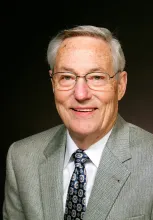
At the time of his retirement in 2016, Roy Holladay was serving the Operation Manager for Ministerial and Member Services of the United Church of God. Mr. and Mrs. Holladay have served in Pittsburgh, Akron, Toledo, Wheeling, Charleston, Uniontown, San Antonio, Austin, Corpus Christi, Uvalde, the Rio Grand Valley, Richmond, Norfolk, Arlington, Hinsdale, Chicago North, St. Petersburg, New Port Richey, Fort Myers, Miami, West Palm Beach, Big Sandy, Texarkana, Chattanooga and Rome congregations.
Roy Holladay was instrumental in the founding of the United Church of God, serving on the transitional board and later on the Council of Elders for nine years (acting as chairman for four-plus years). Mr. Holladay was the United Church of God president for three years (May 2002-July 2005). Over the years he was an instructor at Ambassador Bible College and was a festival coordinator for nine years.

