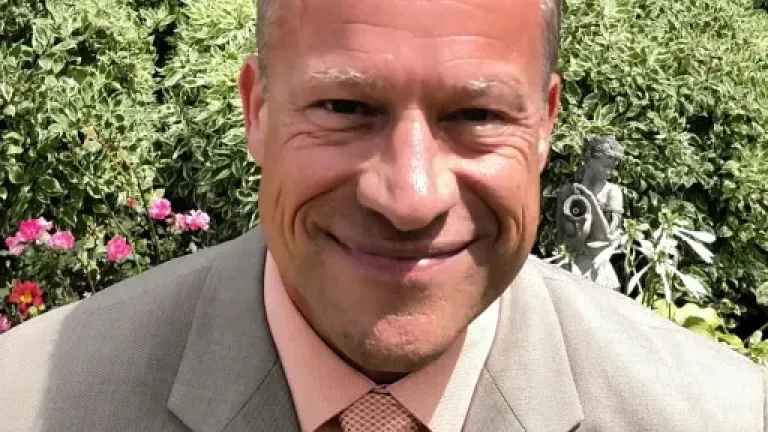

Daniel Apartian
This is the second part of a message building on the analogy of us being diverse and unique parts of the one body of Christ with the key goal of unity. To have unity with others we have to become unified with God first and yield to his Holy Spirit. God needs all parts of the body to be under the direction of the head and striving to be one-minded by refocusing on our one common purpose. We will ultimately be judged based on how we use our gifts and calling for the benefit and best interest of the whole body.
Good afternoon to all you seeds in God's hands. Thank you for that special music. That was beautiful. Nice words. Hope you all are doing well today. I'm going to talk about something which I guess doesn't necessarily fit to start this. It's nice and warm outside, but let's talk about snowflakes. Snowflakes are these very interesting things because individually, they're kind of inconsequential. If you have a magnifying glass, they're pretty to look at, but they blow away easily. They can melt. They're not going to really do much damage one way or the other.
They're really not that much fun. But if you get a billion of them, they come together? Well, suddenly it's different, right? You can look out on a field, and it's just the most beautiful thing to see it all painted white. Just a delightful view. You can maybe some of these little ones over here might pack them into a snowball. And of course, throw them innocently across the yard or accidentally hit somebody with one.
You could sled on the surface. You could even find, of course, difficulties that happen when roads get slick and other things that happen along the way. A single snowflake really doesn't have much of an impact, but again, a large quantity can have an immense impact. And the same is true for fellowship in Jesus Christ. Last week, you remember I spoke on 1 Corinthians 12, and this analogy of the church being the body of Christ.
Well, far too many lessons to be pulled from that topic in just one message. So today, I'm going to continue a little bit on that thought. And the focus is going to be on how to have unity in the body of Christ. How to have unity in the body of Christ. I'm sure you know the—even I figure the younger folks know the cartoon Snoopy.
Yes? Okay, so that's been around a long, long time. I got a kick out of Snoopy, that little lovable beagle. Because what he often does is he humorizes emotions that we feel as humans. And so there's this one of him, of course, sitting on top of his dog house with his left leg broken. And he says—he's philosophizing— My body blames my foot for not being able to go places. My foot says it was my head's fault.
My head blames my eyes. My eyes say my feet are clumsy and my right foot says not to blame him for what my left foot did. And of course, you could picture Snoopy because then he sort of looks at the audience. Every now and then, and he confesses, I didn't say anything because I didn't want to get involved. Well, Snoopy's body sounds a lot like the church body at times.
Jesus' greatest desire for his disciples for all future generations, as we talked about, is becoming one. So that second song we sang in the opening set was well chosen. One mind. He wants us all to experience the same kind of unity, to have togetherness that replicates what he has with God the Father, that same oneness. And it can only happen through the Holy Spirit. If you will turn to Ephesians 4, verses 3 through 6. Ephesians 4, verses 3 through 6. So how? How can the church, this collection of people from all this diversity of backgrounds and cultures and races and walks of life, do the united job that God has called us to do?
About 30 years after Christ's death, we start reading the Apostle Paul, taking on this same topic of oneness and describing what we need to keep in mind. And I'm going to read this mainly because of the first sentence of verse 3, but I'm going to read it from the New Living Translation. It says, So the fact that Paul had to make that plea kind of implies that kind of unity doesn't naturally happen.
Sad reality, especially when you make a plea of the nature. The goal for the body of Christ is really highlighted in verse 1. So if you look back there, it says, As we talked about last time, our calling is to walk in unity. That's where our calling is. Unfortunately, of course, we look around and there's differences among people that can lead to disagreements, that could lead to divisions, that could lead to disharmony.
Some of you love music along the way. You probably recognize the band Casting Crowns. And I love the words that are the chorus of the song, We Are The Body, because it says, If we are the body, why aren't his arms reaching? Why aren't his hands healing? Why aren't his words teaching? If we are the body, why aren't his feet going? Why is his love not showing them there is a way? It's very powerful words. And that's why Paul urged us to work diligently and make every effort, I mean a lot of dramatic words that are written by Paul, to preserve the unity of the Spirit.
And in Ephesians 4, he provides seven uniting elements, right? He talks about one body, one spirit, one hope for the future, one Lord, one faith, one baptism, and one God and Father who is overall and in all living through us. If you think about all of those bind us together, each one of those are what binds us together. And you could think of it in a relationship, but it's even more important spiritually.
The more points of agreement that exist among members, the more they're going to be united, the more harmony there is, and the less they're likely to fight amongst themselves. Well, we see the contrast in the world, right? Because there's a lot of division, lack of unity that exists in the world today. And there's fighting for control. We see people struggling to get their way.
It's common. And if we're not careful, that can impact us within the church. If we don't focus on unity. Please turn to 1 Corinthians 11, verses 18 through 22. 1 Corinthians 11, 18 through 22. What we can pray to is a satanic mindset of, we could walk together if you would just agree with me. Start getting the next minute. We would be in agreement if you would just change, right?
A culture of division is what can happen, and it's clearly what's described in Corinth. 1 Corinthians 11, verse 18. For first of all, when you come together as a church, I hear that there are divisions among you, and in part, I believe it. For there must be factions among you that those who are approved may be recognized among you. The new revised standard version I thought covered that verse 19 well. It said, I think that's well put.
Shall I say to you, shall I praise you in this? I do not praise you. So humans reason a lot. We have our own rationale, right? We can reason that the solution to unity is let's build a bridge. Let's build a bridge that we both meet on. I'll keep a little bit of my part. I can go back to you. You keep a little bit of your part. You can go back to, but we'll meet on this bridge. That isn't oneness to God, because in the end there is only one unifying mindset. That's unity. It's not yours or mine, it's God's, and everything else is going to be removed. You can think of the parable of the sheep and the goats. Those who enter the kingdom will all behave, they will all act in a unifying way which is in loving service, in the betterment of others. That's the example that's taught through that parable, because they're all one body. Turn to Ephesians 4 verses 11 through 13. Ephesians 4, 11 through 13. I should have told you to keep your finger there. We read earlier that we're to walk worthy of our calling, walking worthy, which we now realize is unity is the body of Christ. Well, often mentally we separate the roles of those in the ministry, I can point to myself now, those who are ordained as elders from common church members, and we think, well, I don't have to do that responsibility. That's theirs. I'd like you to look this verse a little differently, because it may reveal something about what our role is and what everybody in the church's role is. Verse 11. Ephesians 4 and verse 11. And he himself gave some to be apostles, some prophets, some evangelists, and some pastors and teachers. Okay. These higher profile people in the church have a purpose. What is their purpose? Verse 12. For the equipping of the saints, good Southern phrase, all y'all. For the work of ministry, for the edifying of the body of Christ. See, all baptized believers in the body of Christ are called saints.
That means this expectation of ministering to edify the body of Christ. It's for each and every one of you and me. It's the role of everybody in the body, not just ordained elders. Every one of you as saints are called to do the work of ministry for the body. And the role of ministers is to equip all of you to go out and be as effective as you can possibly be in your personal ministry and purpose that God called you for as a part of the body. Have you read that before and recognized your role of what's being talked about? No one should come to services only to absorb sound. You have a spiritual expectation of ministry to the body.
Everybody here, if you're a baptized member, edifying means we're to enable other members into the fullness of what the body is able to achieve, to each of us doing our part. That's what it's referring to. Each of the things that God architected for the body. And we have to find our ministry and carry it out. The body of Christ can't have parts that aren't functioning. It can't have parts that are cancerous and be effective. Think about what happens if your physical liver gives out. You're in a lot of trouble. And that can be played through for all the parts of the body. The NIV translates, verse 12, as to equip his people, Christ's people, for works of service. Ministry means service. So that the body of Christ may be built up. So again, look into a little bit of a mirror and evaluate. Are we willing participants in the process? Or do ministers have to ask and plead and beg you to be part of serving in the congregation? Does Mr. Martin have to do that? Or what are we doing to participate? We're reading about unity as the body of Christ is what he's talking about. Verse 13, Till we all come to the unity of the faith and of the knowledge of the Son of God, to a perfect man, to a mature adulthood, to the measure of the stature of the fullness of Christ. So we've all grown older. We have young people here. But as parents, they see you when you expect the same thing. You're going to get older. You're going to get bigger. You're going to get more mature. The church body was made to grow and mature, too. And a lot of believers get discouraged because we can look around the landscape of Christianity, and we don't see one body. Instead, we see a lot of different Christian churches. We see a lot of Sabbath-keeping churches of God that have split off over time. And that's why my first message focused on 1 Corinthians 12. And the concept and the realization that all faithful, baptized Christians with God's Holy Spirit are diverse but critically part of a single body. Not a corporate body, a single body. And until we start seeing one another as fellow Christians and members of one body, well, the church will never experience that oneness that Christ prayed we would have. So how do we do this? We gain unity through God and what He put into us. We talked about that a little bit last time with 1 Corinthians 12, right through His Holy Spirit. To have unity with others, we have to become one with God first. To have unity with others, we have to become one with God first.
We then gain unity with others through God. So if you're struggling to be unified with somebody else, back up a little bit. And are you acting God-like? Is your unity with God such that you're without reproach in the struggle that's taking place? It's not about unity happening because of my perspective. My recommendation is how this should work out based on how I see the world. Because, see, we won't ever see issues the same unless God gives us the ability to see things as they really are and how they need to be. That's through the lens of the person who really has a single outcome that works in mind. That's why we have to be one with God first. Turn to John 17, verses 20-23. John 17, 20-23. I'm sure everyone here has had multiple experiences in your life where you found something very effective working as a team. You're united whether it's a sports team, whether it's a school project, whether it's a work activity. Collectively, you achieved something remarkable. That power of working together is one. In my last sermon, I tried to again focus on that concept that we are one body of Christ, right? Where each member contributes to Christ's overall mission and purpose. We discuss that concept of being interconnected parts of this large divine plan. John 17, 20. I do not pray for these alone, but also for those who will believe in me through their words, that they all, all, may be one as you, Father, are in me and I in you, that they also may be one in us, that the world may believe that you sent me, and the glory which you gave me I have given them, that they may be one just as we are one, I in them and you in me, that they may be made perfect in one and that the world may know that you have sent me, and I've loved them as you have loved me.
So notice that Christ didn't pray that we would be one with each other. That's not what he said. That's a byproduct of us being one with God and yielding to a spirit. If we do that, we will become one with each other. If we're not, go back to the math formula, how does it work? We're supposed to be one with God first.
The prayer is that we have unity in God because we're all one spiritual family.
And what reflects the one that's shared by Jesus and the Father is they shared the same goals. They shared the same desires. They were so much alike when you saw one, you saw the other, right? Perfect harmony.
Their love for each other and us is always and is always unselfish and unconditional. Turn forward a little bit to John 13, 34 through 35. Is that forward? I guess that's backwards. John 13, 34 through 35. When we're unified with God, His Spirit helps us find a total unity, not just enough shared to get along. That's not what we're talking about here. If we're seeking unity with others, we must first seek unity with God. And when we allow God to be the center of our lives, honestly, the rest works itself out. John 13, 34. That's the reason this was stressed by Jesus. A new commandment I give to you that you love one another as I have loved you. That you also love one another. By this, loving each other that way, all will know that you are my disciples if you have love for one another. So when we have that same love with others as God loved us, we will truly reflect God's nature. We will reflect agape. That's what makes the math work because it displays as our love being what? Oh, long-suffering, kind, not having envy, not parading itself, not being puffed up, not behaving rudely or seeking its own. You can keep going. The love chapter, 1 Corinthians 13. That's where it's reflected. What we owe each other is Godly agape love. So God has united us by giving us His Spirit, right? He's given us forgiveness. He's given us a unity of purpose. If we keep focus there, things work. Everything we do should be focused on our shared purpose within the body of Christ. Ah, but then Satan comes in. Garden of Eden, then forward. His plans are pretty straightforward. He casts doubt. He casts confusion all along trying to break up the unity. Anything He does to take us away from God's plan, being the family of God, being the body of God, He feels like He's won. And at the judgment, Jesus will be evaluating how we have done at reflecting His nature. And if we have learned what we need to in order to be this positive contributing member to His body for eternity, have we had a positive effect on others? Have we been an encourager? Do we better the body of the church or do we tear it down? God wants us to be united. It's our goal, our shared goal. Another critical aspect to understand about the body analogy is the need for all parts of the body to be under the direction of the head. It goes along as a natural connection. We are supposed to be under the direction of the head. Try to imagine your body functioning without the direction of your head. And unfortunately, you've probably seen some people when you have a mental trauma and they can't control themselves anymore. It's a very sad state. Well, we are given the direction to yield to Christ as the head of the body. And we're going to always follow His direction and follow His leadership. If you'll turn to Romans 12, verses 1-8. Romans 12-8. I like analogies. You'll hear me use them all the time. But I think the orchestra is another wonderful analogy of the church. So in an orchestra, there needs to be diversity, right? You don't want to see a hundred violins or a hundred trombones or a hundred drums. The interesting wouldn't be nearly as beautiful.
That's why the finest orchestras, they have the basic sections. You have a brass section, you have a woodwind, a string, and a percussion. But the orchestra needs a leader to determine, first of all, what piece they do. That's kind of important. And then to have people come in and play that one piece at the right time on key and on beat. And the easiest way to compare that one, if you've ever been to a nice orchestral event and the people are warming up, all the instruments are up there and they're all playing whatever they want to play to practice and trying to get in tune. And it's just an awful cacophony. It's an awful sound. And then the conductor goes up there, taps, lifts his hands, everybody gets quiet, and this beautiful music starts to happen. Romans 12 and verse 1, Again, acceptable not to ourselves, not to each other, to God. That's where it starts.
So, again, measuring stick will never totally get there where we all have a lot of room to grow. We all have to change. And change takes choice. That's what makes it challenging. But that's what makes God know we actually love Him and yield to Him because we choose His way. How do we become a living spiritual sacrifice that's transformed and that has a renewed mind?
Being of one mind requires us listening to God's Holy Spirit. Verse 3, Didn't we hear warnings like that last week in 1 Corinthians 12? You know, it's that area for one part of the body not to either be think too highly of itself or too insecure about itself. Similar. Verse 4, And this all works. It starts in many ways with humility. It starts with humility because we're one of many members that makes up this single spiritual body. We can't do it without others. They can't do it with us. We're not that important, but we're a key part. It should also excite us to contribute to God's greater goals. Verse 6, Let us use them, such a key word, if prophecy, in order to reveal truth. Let us prophesy in proportion to our faith. Our ministry, we talked about service, let us use it in our ministering. He who teaches and teaching, he who exhorts and exhortation. He who gives with liberality, he who leads with diligence. He who shows mercy with cheerfulness. Just a partial list of gifts. But we can all do all of these. We absolutely can do all of these. We can all teach, we can all lead, we can all give. And then it's that let us, each of us, use them. There's your challenge. Let us use them. Because we're all critical body parts with very specific strengths and gifts that God wants to work through. He chose us, remember? And he gave us those special nuggets just for us to use in the way he wants. As we read in Ephesians 4, every baptized member has a role in ministering. Again, not just ordained elders. And if we allow ourselves to be led by God's love, by His Spirit, we will serve the rest of the body, and we will serve the rest of the body with the right motives, the right intentions. We can't refuse to do our function in the body and hide. You can't have a camouflaged Christian. The heart can't say, I'm just going to take a vacation for a week. Rest of the body, you just go. It's deadly. That's selfish. And that kills the body. And Christ knows that. We need to put away our divisions and be one. Churches, they can hear for a lot of reasons, but two come to mind that could easily happen. You can either have a firm-handed dictator, or you can go to the other extreme and allow everyone to be a leader, and everybody does their own thing. So what's the solution? Members of Christ's body must strive to be one-minded by refocusing on our common purpose, our one common purpose. Again, the second song that we sang in that morning part, be one-minded. Turn to Philippians 2.1. We're going to read through parts of those verses that we sang about. See, in a healthy church body, all parts look to Jesus Christ as their head. And then all parts let their gifts be employed by Jesus Christ in that one way He determines as the leader.
How do we do with that? Good days and bad days? Do we have unity of purpose in our congregation? Again, you don't need to answer that verbally because that's an individual question. But the true answer is going to be exemplified by what we do. Use it.
Do we take time to think on our common purpose, our mutual support of each other, to achieve God's purpose here in Cape Springs? Because together all the parts of the body seek to carry out the will of God while valuing all the other parts doing their functions.
That's the way it works. Philippians 2.1. Therefore, if there is any consolation in Christ, if any comfort of love, if any fellowship of the Spirit, if any affection in mercy— and again, I talked about that one before. Those are rhetorical questions. Obviously, there is comfort and consolation in Christ living in us and in His love. Why? Because kindred minds have good fellowship with one another. Okay. Verse 2. Fulfill my joy by being like-minded, having the same love, being of one accord, of one mind. That was actually the verse that's written on the top of that song. So I laughed when I saw that up there. Joy is fulfilled by the church being of one mind. And being of one mind literally means one thinking, same thinking. That doesn't mean we don't have our identities. But again, remember the analogy of diverse parts in the same body. The elbow is not expected to do the same thing as your big toe. But they both have to do their parts right. You don't have your big toe. You're going to have a real hard time walking. If you don't have your elbow, you're going to have a hard time reaching. You know, there's different intentions. The key is that we join the unity and the purpose of Christ. And we bring our individual strengths and join for that one purpose. Siki I, the kingdom of God, and His righteousness. That unifying purpose. And then when we do, we start seeing God's righteousness and care for the church. Through our actions, through other people's actions. The next thing to recognize is our outward expression of harmony will represent our inward harmony of purpose. If you don't see an inward harmony of purpose, go back and say, where are we at? You're going to express outwardly what you think inside. At the end of the day, what you're thinking is what's going to come out. So I'll say it again. Our outward expression of harmony, the church doesn't show harmony. Okay, it's going to represent our inward harmony of purpose. Do we share this same purpose? Because if we aren't sharing that spiritual purpose, yeah, you're going to see struggles in a church. But it goes back to whose goal are we trying to get? Are we trying to achieve our purpose? Are we trying to achieve God's? In other words, it isn't about what we say, but what we do. Let nothing be done through selfish ambition or conceit, but in lowliness of mind, let each esteem others better than himself. Let each of you look out not only for his own interests, but also for the interests of others.
Now, that's one of those verses that's very amazing, and it's, I don't know, a shame girl. It's hard to imagine. Can you imagine living in a world where nothing is done through selfish ambition or conceit? That would be wow. I don't know. Wow. Unity doesn't just happen automatically. It takes pre-thought, intentional effort.
And the lesson is it takes focusing on what unites us, our common goals, as cavespring congregation. And in the United Church is a goal. Are they bigger and more important than our differences or our personal desires?
What's most important to us? We're always going to be unique. We're going to have individual preferences. If I asked you all to pull out a piece of paper, and I asked you to write down what shampoo, soap, and toothpaste you use, I don't think we're going to get a trifecta in here, except for people in the same family. Okay. Different styles. Somebody likes one soap and shampoo combination? Great. Somebody uses a different toothpaste. That's fine, too.
Those aren't the decisions that count. The things that we all need to ask God to help us achieve with the help of the Holy Spirit is to refocus our attention to God's common spiritual purpose. If we go south, we're probably aiming toward the wrong purpose. We're letting our own inner desires in the moment become a more dominating purpose than something much higher and bigger.
It works when we have a common goal to focus on, and there are a lot of scriptures. I was going to have a term there, and I thought, you know what? You know these. Let me just read a couple to you. I'll read three. Notice also the pleading words that are used by Paul in these. In 1 Corinthians 1.10, Paul pleads, Now I plead with you, brethren, by the name of our Lord Jesus Christ, that you all speak the same thing, and that there be no divisions among you, but that you be perfectly joined together in the same mind and the same judgment. To the Ephesians, Paul beseech—let's go to the beseeching now. Ephesians 4.1-3, I therefore, the prisoner of the Lord, beseech you to walk worthy of the calling with which you were called, with all lowliness and gentleness, with long suffering, bearing with one another in love, endeavoring to keep the unity of the Spirit in the bond of peace.
To the church and Thessalonians, Paul exhorts all these great words. 1 Thessalonians 5.14-15, Now we exhort you, brethren, warn those who are unruly, comfort the faint-hearted, uphold the weak, be patient with all. See that no one renders evil for evil to anyone, but always pursue what is good both for yourself and for all. Over and over, there's just so many verses we could go to. The New Testament writers are exhorting or beseeching or pleading or pick whatever word you want to use. Believers to engage in special activities and attitudes that help the church function effectively. So much of the writings of the New Testament are about that. So that we would be healthy, so that we'd be able to carry out the mandates that God wants from us as His followers. Go ahead and turn to John 17.10-11. We're going to go to one other area, but this is now we're looking at Christ, and this is the one who didn't just tell us to do this, but he set the example for us in doing it. So we're coming right near Christ's death, John 17, and He's praying to the Father to ask Him to care for the disciples. John 17.10, And all mine are yours, and yours are mine, and I am glorified in them. Now I am no longer in the world, but those that are in the world, I'm sorry, but these are in the world, and I come to you, Holy Father, keep through your name those whom you have given me, that they may be one as we are. Go ahead and go to verse 21, and we'll read through 23. All right. With that in mind, turn now to 1 Corinthians 15 and verse 28. 1 Corinthians 15 and verse 28. So the Father and the Son, clearly two different individuals, but alike in mind and character and purpose, and to be united in one, Jesus submitted His will and His purpose to His Father. Now notice the example of humility that's displayed. Verse 28. 1 Corinthians 15 verse 28.
So Jesus hands it all back to the Father when He returns.
When Jesus had His greatest authority, He willingly relinquishes it. Do you and I do that? Because you can look around humanly, and that's a hard thing to do. When we have the most power and the most control of variables, we don't like to let it go.
You can think about a CEO who just will not step down until it's too late. You can think about a person who's too old to keep going but refuses to hand things off to others. I mean, there's a lot of ways you could look at those situations. Jesus has chosen to fully submit from before the earth was created with a full plan to be the supreme ruler and hand it all right back to the Father.
Because He's focused on the best interests of the whole body of Christ, the Church. Are we focused on the best interests of others, or do we focus on our own human nature? I think we all do both. Frequently, New Testament writers employed this unique Greek word that describes this mutual process. And I'll destroy the word, but it's something along the lines of alles lons, or something that's a French way of saying it. But it's translated one another. One another. And you'll think about verses along the way where you see it. It's stated. The Greek word is used 58 times in the New Testament. Paul used it 40 times. The phrase, love one another, is found 17 times in the New Testament. So one third of them is to love one another. And when you take them all together, what you realize is that there's this important priority that's in the New Testament. If you'll turn to Romans 12 and verse 5, you could say that the primary activity of the Church is one anothering one another. Are we one anothering one another? That's kind of what we're asked to do. Romans 12 and verse 5. So we, being many, are one body in Christ and individually members of one another. One of those examples of the word. So as members of the body of Christ, we've all been blessed, again, with spiritual roles, spiritual gifts, in the support of other parts of the body. One anothering one another. But having a gift is not as important as using that gift. What's the point otherwise, right? And it's more important to use that gift one anothering one another than just to have it or to use it on ourselves. Our gifts are for others, for in the body. So again, it goes back to this concept that I hope you're trying to get and realize, I'm attacking it from different angles, but we all belong to each other. It's really the core. We all belong to each other as a group belonging under the rulership of God. Think of this tightly woven fabric. You've seen those where you can't tell where one piece starts and the other stops, or which string is which, because it's also tightly woven together. That's the analogy. Every thread is strengthened by the other. And so it's important that we have mutual care, support, love within the church, within a whole larger community. It's important that we bear one another's burdens. We celebrate each other's successes, right? We talked about that with 1 Corinthians 12.
Pray to God and ask, God, please make it obvious what gift you have given to me. Help me to see it, to recognize it, to understand it, and help me to put it into practice. Because I want to serve you and your people. I want to be a vital part of the body of Christ, accomplishing the purpose that you gave me to do in it. That's the thought process along the way. If you'll turn to 1 Peter 3 and verse 8. We are the family of God and we need to focus on that special relationship. And that means submitting to, submitting ourselves not only to God, but to one another. We're like, I can submit to God, but not to, you know, so-and-so. They're not really, they're like a mold that's going to fall off in the body of Christ. They're not really a member. Well, we're supposed to submit to God into one another and that requires this willingness to give our lives for others. 1 Peter 3 and verse 8.
Again, in Greek, there's no verbs, right? There's no is, are, to be. So literally it's saying, finally, all like-minded, sympathetic, compassionate, friendly. And finally, it means this at an end, becoming complete, becoming perfect. So it's speaking of spiritual character that we need to reach readiness for God's kingdom. Verse 9.
So Peter's summing up our duty along the way. As Christians, recognizing that all members are of the same body and we should strive to be one-minded and demonstrated by how we treat others. That should be our level of humility and partnership and generosity with each other. You know, Ephesians 5, 21 says submit to one another in the fear of God. That's the right motivation and perspective when we love and care for each other.
And when we fear God and we realize He picked the perfect gifts for each of us to possess, and He placed us where He needs us to contribute, well, suddenly you look around and you see other people who are diverse and you're like, I guess it's a pretty beautiful gift. God obviously, nobody was doing. I don't get it yet, maybe. But we look at each other's strengths and uniqueness in a different way as we yield within the body of Christ. Again, our goal should be unity in committing to mutual love and support. Turn back to Ephesians, Ephesians 4, 14-16. Ephesians 4, 14-16. All these different verses that talk about the whole body working in harmony, all the parts working together, achieving a greater good, going all the way to God's Kingdom.
And when you do, the body is healthy and works great, and if the body is not healthy, it's not effective. Ephesians 4, 14-16. Though we should no longer be children, tossed to and fro, and carried about with every wind of doctrine by the trickery of men in the cunning craftiness of deceitful plotting. And so if we're healthy, we're not having cunning craftiness, deceitful intentions, we're not gossiping. Instead, we uplift each other. But if the others are happening, well, that's a sign that there's a challenge or something broken inside of us. But speak the truth in love. May grow up in all things to him who is the head.
Christ, again, our focus, our common goal. From whom the whole body joined and knit together by what every joint supplies. That's our part. According to the effective working by which every part does its share, causes growth of the body for the edification of itself in love.
So it's led by the head, we're aligned to the purpose of the head, and if we're all doing our part, then it causes growth in the body. God is about growth. God is about growth. And we as parts of the body must do our share. To be a healthy church, we should be a growing church. And growth, we see it with kids. I mean, honestly, sometimes you see somebody like, oh, I wish I had my little baby back. They were just so cute when they were just there, this snuggly little thing. Well, sure, I get what's being talked about there.
But we need to be comfortable with growth, just like we know our children are expected to grow and to get bigger along the way. The body of Christ is held together by what every joint supplies and from each growing and doing its share. Just like we would expect our child not to be a 10-year-old forever. Grow up, right? We're to mature mentally and emotionally and spiritually as a church body. Actor age. Actor spiritual age, in a sense, you could say.
And for Christians growing up, that means becoming more and more like Christ and developing a Christ-like heart and attitude. And if we do it right, then we see unity. We see harmony. We see getting along with other people. How long? Well, you can reread verse 13. I read it at the beginning. "'Til we all come to the unity of the faith and of the knowledge of the Son of God, to a perfect man, to the measure of the stature of the fullness of Christ.'" All right, that's a lifelong thing, and you still aren't going to totally get there.
But that's the goal. Unity requires us having that right attitude, that right motivation, and it has to be measured in relation to how well we're being led and motivated by the Son of God.
Evaluate yourself if you're struggling and try to play that math backwards. Because bodies need routine maintenance, they need nourishment, they need exercise to function well. And God has us doing the same thing by practicing Christianity. That's our exercise. We practice Christianity, and we support other imperfect Christian parts of the body, like us, trying their best to yield to the Holy Spirit with a stubborn human nature.
We're practicing Christianity together. That's what's happening. And through practice, we learn it isn't easy to serve others, but we grow.
It's like, again, lifting weights. There are so many analogies, but it all fits together with that body concept. Muscles lose strength. They atrophy become useless if they're not used. So, again, God makes us exercise godliness. And that often takes somebody pushing our buttons, or being a little selfish and a little bit human. And we're like, grrr! He allows resistance, weightlifting, in life to help us grow stronger. And we exercise the muscles of unity and service and love and forgiveness. Things He showed us first. Turn to Romans 14, 10 through 13. Romans 14, 10 through 13. The sad statement is, I think too often Christian churches are not known for their love as Christ intended. You know, you hear more people complain about that stuff anyway. New Testament letters are filled with pleas, beseeching all these words, strong dramatic words, to stop fighting, stop arguing. Romans 14, 10. But why do you judge your brother? Why do you show contempt for your brother? For we shall all stand before the judgment seat of Christ. For it is written, As I live, says the Lord, every knee shall bow to me, and every tongue shall confess to God. So then each of us shall give account of himself to God. Therefore let us not judge one another anymore, but rather resolve this, not to put a stumbling block or a cause to fall in our brother's ways. Do we focus on our differences? Do we vilify others because they disagree with us? If we engage in divisive thoughts or conversations, then we're behaving immature. There's a concept of a baby, you know, still needing milk, basically, you could say. When we start judging others, when we start assessing, you know what, on that righteousness continuum, I think they're kind of low, and somebody is more righteous, we're being divisive. If only everyone was an eye like me, I can see what's really going on. Remember 1 Corinthians 12? Do we practice that? A house divided against itself cannot stand. There's this picture that's in National Geographic where they found the fossil remains of two saber-toothed tigers who died attached to each other. Fascinating situation. Locked in combat. According to the article, one had bitten deep into the leg bone of the other, a thrust that trapped both in a common fate. They were unable to pull the teeth out. And so these two massive animals were locked in this uncomfortable combat until both died.
And similarly, when Christians fight each other, everybody loses. Turn to Galatians 6 and verse 1. It's not about your perspective on an issue, but it's God's perspective. It's all about God's perspective. Whether we're a knee or an elbow, we shouldn't say, I want all the glory to myself, I want the focus to be on me. They're not realizing the importance of the knee. There's no part of the body that we can do without, and there's no possible way that we can do what we're supposed to without God's Spirit and each other working through us.
That's the perspective. We must maximize understanding how God thinks and not get confused, striving to mix in what we see, what we think. God isn't looking to us to say, Dan, tell me, what should I learn from this situation? That's backwards. We're supposed to learn what God wants us to think and situation. And he builds unity by allowing us to understand his unchanging truths and then make us live by it in ouch situations.
That's the way he starts seeing whether we're yielding to him and what we're learning or whether we're trusting our perspective. Galatians 6, 1, Brethren, if a man is overtaken in any trespass, you who are spiritual restore such a one in a spirit of gentleness, considering yourself lest you also be tempted. So what Paul is describing is what it looks like to walk worthy.
That's what he's describing. We start with a goal of unity and oneness in mind, and then we realize we're called to work together toward this common goal while being united by the Holy Spirit. And it helps us see that things that our minds can't. We have these simple minds. You know, I was listening to something this morning. It talked about Adam and Eve being just infants in the Garden of Eden.
Paul prayed of what they fell prey to with Satan. They were babies. Yeah, they may have been in human adult bodies, but what do you expect of a one-week-old or one-day-old or whatever? The same happens with us. You can look back after baptism at things that were really, really struggles for you. Now you look back and like, that's not that hard. Growth. Maturing. That's what we're coming to. So we learn what we're capable of when we yield to God's strength and we learn not to rely on our own strength.
As we conclude, I'd like you to actually, you don't even turn there. I'll just read it to you because you know the leading verse. The last verse of 1 Corinthians 12, moving into the love chapter. So verse 31 says, So after Paul spent all the time talking about the body and the unity of the body and the parts and all the lessons, the gifts that were given to us, he said we should earnestly desire the best of the various spiritual gifts to be used in the right way, right? But prioritize the more excellent way of agape love.
And then he spends the whole love chapter. Everything we've received is for the purpose of living with each other like God lives. God's nature is love. That's what this is all about. Unity comes when we grow and edify each other in love, right? The verse we read earlier, love is what we're striving to be. And it's not only essential to having a good physical life, it's essential to having a unity in the church. There's no chapter breaks. It is what the Holy Spirit uses to unite us. And so when you think about muscles working and exercising, it's being exercised by us applying love toward others.
Don't miss that connection between those two chapters. All of this that we've talked about, everything when you think of the body of Christ, all centers back to unity. Are we being led? Are we being united by the Holy Spirit? And focus selflessly on the greater interest of others and what Christ is trying to achieve. I'll finish by giving you a couple personal questions to consider. Do you consider yourself a follower of Jesus and a member of the body of Christ? If so, are you connected enough to the body of Christ or are you trying to live a life independent of the body?
We all have times we do that. Next, if you're trying to be connected, what are you doing to be connected? Are you attempting to be faithfully connected to the body in fellowship and service of others? Or do you just check in for worship and then check out? Is this your booster shot day? For two hours? Three hours? Or is it the 24-7 thing? How are you trying to get to know others and their hurt and their joys and their needs? And finally, what are your gifts and how are you trying to employ them for the benefit of the body of Christ?
Because remember, we are all parts. We all have a part to play, too. And no part is insignificant. I'll finish with a story. One day, a young girl came home from school in tears. Because she'd been given only this little part in the school play and her best friend got the big part. Well, after her mom dried her tears, she wisely took off her watch and she put her in a little girl's hand.
And she asked the girl and she said, Tell me what you see. And so the little girl said, Well, I see a gold case and I see a watch band and I see numbers and I see two hands. And then her mother then opened the back of the watch and showed her all the tiny working parts. And her mother said, This watch would be useless without every part, even the ones you can hardly see. To refuse to play our part hurts the entire body. We might not think we need the body, but we certainly do. And the body needs us.

Dan Apartian is an elder who lives in Bloomington, IL. He is a graduate of Ambassador College and has an MBA from the University of Southern California. Dan is widowed and has a son.

