

John Elliott
In this temporary physical realm, and with temporary life expectancy, what should our focus be on? Since our lives are SHORT, let’s ponder “How Much Time Do I Have" to become approved to receive the crown of life?
Happy Sabbath, brethren! I'd like to thank the choir for that beautiful music, and also to say how much I appreciate that it's based on God's Word. That particular piece is very beautiful. I hope we can have more and more special music that comes out of God's Word. It's God's truth and something that we are able to reflect well in our praise, and it goes right hand in hand with what we're teaching here. We are living in an interesting time, and around the world right now you see this collision going on of many, many things. A collision of world powers, a collision of economic issues, finance issues. We have great escalations in military, just a profuse crowding of things in space that is going on. We're having a lack of food supply and fresh water that is increasing around the world. All of these things are coming together in a collision, and we'll speak to that more in the future. The doomsday clock has been reset to a new lower time, as it were. And what I'd like to talk about today is getting prepared for anything that lies ahead. We heard in the special music that we should be still and look to God. Know that God has things planned. Jesus Christ has laid out things in events, but he doesn't want us to worry. We're not to worry. We are to be prepared. Let's talk today about getting prepared for what lies ahead. You know, God's Sabbath that we're observing today and his Holy Days all speak to us not being here, not being in this physical realm that someday will pass away. God wants us to move to a higher form of life, a spirit life, eternal in a dimension that lasts forever. Sometimes we put our energies into things of today. I mean, we're human beings, and God blesses us with things, but sometimes our focus can be about that and about non-essentials. One non-essential I would just like to highlight is prophecy. Prophecy is very essential for warning us that we need to become godly, but prophecy by itself, you have to realize, is not my business or your business. That's something else. That's some other event. That's something you and I are not responsible for. And if all we do is think about things that we're not responsible for ourselves, we might be unprepared when those prophecies roll out. And when you think of all the prophecies in the Bible, like the Olivet prophecy with Jesus Christ and all the warnings of the end time and all the prophecies of Revelation and Isaiah and Jeremiah and Ezekiel, what is the message behind that? Be prepared. These things are coming. Be prepared. Cry aloud. Spare not. Tell my people their sins. You know? God wants us to be prepared. God wants us to be harvested. God wants all people to be saved. A good reward is coming, along with another reward. Which one will I receive? That's a question I'm asking myself, and I'm talking about me and sharing that with you today. Which reward will I receive? And if there's a better reward that I'm currently on track for, how much time do I have to prepare for that reward that Jesus said he's bringing with him when he comes?
You know, the reward that you and I will receive is an eternal reward, one way or the other. It's eternal life or eternal not there. And that reward comes at the end times. That thing that we can become all preoccupied about when it's going to come, what is it, where is it. Our reward comes at the seventh trumpet when Jesus Christ returns. Will we be prepared? And how much time do we have? The title of this sermon is, How Much Time Do I Have? Each of us has a little bit different time in a sense that you'd have to answer that question yourself. How much longer will your body last? That's how much time you and I might have, and we don't know, do we, exactly how many days we have left. The other thing is, how much time do we have left? And that's the return of Jesus Christ, and he says, that day no one knows the timing of. So we don't know either time, but whichever one is shorter, that's how much time we have. So how much time do you have? You know, that's a concern that those whom God has called his head down through the ages. We see people in the Bible asking similar questions to that. In 1 Corinthians 7 and verse 29, the Apostle Paul speaks to the church, and he says, But this I say, brethren, the time is short. Now, that was almost 2,000 years ago. They had a life span. They had the time to live and to accomplish what they needed to, to be in the first fruits harvest at the seventh trumpet. But they only had the time back then, and the time was short. Adam Clark's commentary says that life itself would soon run out. That's what Paul is saying. That life for some reason is going to soon run out. You had Caesar Nero right then, who was plotting intense persecution, and would take lives, including the Apostle Paul's, would be cut short. Most of the Apostles' lives were taken at a time when they didn't expect.
Similarly, Jesus warns in the end time of certain events coming at those who believe, and it will suddenly arise, and those things could intervene if one is not protected in the time that we have. He continues in verse 31, for the form of this world is passing away. Now here's an interesting thing. The term passing away, sometimes we use that when a person dies because we don't want to say they died. It's just not soft enough. So we say they're passing away. But the term passing away in the scripture is a permanent thing that you don't want to have happen to you. The heavens and the earth will pass away. The world is passing away. This society is not coming back, in other words. When Jesus returns and his government is established, and you're raised and reigning with him, this system is passing away. The Greek word parago, depart, disappear, are part of its meanings.
We need to lock our minds onto two things that will never pass away. Two things that will never pass away. Jesus says in Matthew 24 and verse 35, heaven and earth will pass away. They're going. At some point, they're going. They're going to burn up. They're going to dissolve. They'll be replaced with new heavens and new earth. So heaven and earth will pass away, but my words will by no means pass away. So God's word, his mindset, his agape nature, his commands, his laws, his way of thinking and living will never pass away. It's going to go for eternity. It's the kingdom of God where righteousness dwells, right? That's one thing that will never pass away. The Bible speaks of one other thing that won't pass away. It's found in 1 John chapter 2 and verse 17. 1 John chapter 2 and verse 17. And the world is passing away. The society, along with ultimately the earth, but the society, the cosmos, is passing away and the lust of it. But he who does the will of God abides forever. So you have the word of Jesus Christ and God will abide forever. And those who do the will of God, which is to keep and obey the word, they will abide forever. Now that's where we want to be. And it takes some preparation, doesn't it? We all know that. I know I'm preaching to the choir. But at the same time, life can get very busy. We can get distracted. We can live our lives in fantasy or on social media, or we can live out there in projects and work. And we only have so much time, don't we? Or we can focus on the wrong things that are not developing the character, and we can focus on timing. But that timing that we're focusing on just could be our end. And Jesus has many statements in the New Testament warning us not to let the end time be the time of your end.
So when we look at the things that are eternal and that won't pass away, and yet we are physical, we need to understand here the importance of priorities. James, in James chapter 1, he speaks of the temporariness of our physical bodies.
And he correlates this with needing eternity. So we have the temporariness of this life coupled with eternity. Let's see how he puts this together in James chapter 1 and verse 9.
He says he begins, let the lowly brother glory in his exaltation. I think he's referring back to Jesus who said, he who humbles himself will be exalted by God. So James says, let the lowly brother glory in his exaltation. If we are humble and we are being exalted by God because of how we live his life and people respect the outcome, the fruit of your life, that's a good thing. Verse 10, but the rich in his humiliation because as a flower of the field, he will pass away.
There's that word. This time it's parakomoe. It means to perish. Wow. So when we think here of just doing things that enhance our lives, we could call it rich, we're all rich, but if that's our perspective, that's going to pass away ultimately if not repented of. God will call everybody at some point in time now or in the future, or second resurrection.
The books will be opened again. This word of God, the teaching of God, will continue through eternity, but at some point in time one will pass away and the other will endure forever. And James likens flowers as well in this passage to one who is like a flower of the field.
He said it withers and goes away. You know, this last year there were a lot of wildflowers out there. They were pretty, but if you notice wildflowers, they don't last. Some of them are very short-lived and they're gone and they won't be coming back. Those flowers were delicate. They're gone. And your life and mind is kind of like that. But he turns this permanence of passing away into—just turns it on its head in verse 12.
If we instead, even though our physical body is going to pass away like a flower, if we instead develop God's character, he's going to resurrect that. Notice verse 12, blessed—again, the Greek word there having energy to it, like supremely blessed—is the man who endures temptation, for when he has been approved, he will receive the crown of life, which the Lord promised to those who love him.
So that's where you and I are. We could be distracted. We could blow away like a flower and pass away, ultimately, as a reward, not exist. Or we could be approved and received the crown of life for those who agape him, agape God, develop that mindset. Now we know all—we all know this. So what we need to do here, as James is saying, is live in a way that you don't pass away.
That's the last thing you want to do, is be gone with the universe, gone with the planets, gone with the earth, gone with society. Never heard of again, right? Live so that you don't pass away into eternal non-existence. Rather strive with the hope of living through a relationship with God and developing the mindset of God and put that as a priority. One of our widow ladies in Kenya, Janet Anjango, once wrote regarding a good works project in East Africa, she said, we know that all the blessings come from God, and they do help many within the community, and some of the brethren also will benefit from them.
That's our daily life. All these physical blessings are just for use in the meantime, while we are still in the human body, which needs to be assisted. But we really know that soon they will pass away, and we will wait and enjoy the everlasting blessing which our Lord Jesus will bring to us on that day, the eternal life which is our goal and focus in this primary need and is the primary need for us all. Words well said. And we all know those words.
I just want to remind you as I'm reminding myself not to let that primary focus become sort of second fiddle because of distractions that we have. So let's put some end time events into a personal time perspective. Again, when the end time events happen at the seventh trumpet, your eternal judgment and mind will take place at that time. Jesus Christ, when he returns, will only resurrect to eternal life those whom he and the Father approve, as James has said.
Will I be approved? Do I have time? How much time do I have in order to live a life? Is the end time going to be my end? Or is it going to be a breakout into eternal life? And that is a responsibility that I have. Let's let the Bible speak to this in Revelation chapter 22. Let's go to Revelation 22 and verse 10. This is the last chapter of the Bible. It's interesting that from the beginning to the end of the Bible, it starts with God ruling, God reigning, and mankind either choosing to come under God's laws in his reign or rebelling against it and saying, no, I'll do something else.
And so we come all the way to the end of the Bible here in Revelation chapter 22 and verse 10. And he said to me, do not seal the words of this prophecy of this book, for the time is at hand. And what does it say we should be doing? Verse 11, he who is unjust let him be unjust still. See, it speaks of a judgment here. This it's time for God to determine what kind of character have I developed?
I've used this time. Am I just or unjust? Let him who is unjust let him be unjust still. He who is filthy, let him be filthy still. Show me who you are. He who is righteous, let him be righteous still. He who is holy, let him be holy still. And behold, I am coming quickly and my reward is with me to give to everyone according to his work. Not according to knowledge, not according to anything else, according to that developing of God's character, that work which we wrestle, we fight, we war, as it were, with ourself and our nature and Satan.
So verse 14, he said, bless. There's that word. Action. Blessed, supremely blessed are those who do his commandments, that they may have a right to the tree of life and may enter through the gates into the city. He has cry aloud, spare not, tell my people their sins and the house of Israel their transgressions.
Why? So they will do his commandments. It's fine to talk about events leading up to the end time. Jesus did so to warn us, remember, to be prepared. Prophecy is good and it's intended to spur us on to developing sonship relationships with God and Jesus Christ, to really be family with them, dwelling in us, dwelling in them, us being connected one with another. These are the important things of life. Jesus at the same time warns us about a human tendency to confuse prophecy, prophetic events, with spiritual growth. Let's look at this in Matthew 7, verse 21. And I am in no way here minimizing the importance of prophecy, but accentuating the fact that prophecy is there to remind us that we only have so much time. And we need to be redeeming that time, using that time wisely, because there is no more time for firstfruits to have other than this life before Christ's return. In Matthew 7, verse 21, at his return, Jesus says, not everyone who says to me, Lord, Lord, shall enter the kingdom of heaven. That's a spirit realm. The kingdom that you actually enter is a spirit being. But he who does the will of my Father in heaven. We'll take a look in the Bible about what God's will is for you and me. Verse 22, many. Now, there's a word. If you want to look that up, that's a scary word. Many doesn't mean several.
Many in the Greek here doesn't mean quite a few. Many means what it says, and in some instances, it can mean most. So there's a group, an undefined group here, that you and I don't want to be a part of. That's why he's saying this. Don't be part of many. How many that is? You don't need to figure out who that is. You don't need to put a name on it or label people as who that will be. Just don't be in the many, because many will say to me in that day, Lord, Lord, have we not prophesied in your name? Now, we're going to see here something interesting about those who prophesy, maybe preach the gospel, but as both Peter and Paul say, they do not obey the gospel. See? Many will say to me in that day, Lord, Lord, have we not prophesied in your name, cast out demons in your name, done many wonders in your name? And then I will declare to them, I never knew you. Depart from me you who practice lawlessness. You're not doing this, right? It's those who do this that will endure forever, and this will endure forever. So you can't just talk about something else that you have no responsibility, no part of. You have to be living and dwelling and converting to the Word of God. The Apostle Paul warns about knowing the end without being righteous, without doing right according to what God says, without developing that mindset of agape. This morning, my wife and I were listening to a sermon by Mr. Rick Shaby, and he was talking about agape and reminding us, as all the ministers down through time have, and all the people in the Bible, that agape, that mindset, that that is our goal, is to put on and develop that agape mindset. Paul's here in 1 Corinthians 13 in verse 2 says, And though I have the gift of prophecy, and understand all mysteries, and all knowledge, and all faith, so that I could remove mountains, but have not agape, I am nothing.
So what this tells us is, well let's look at this. Okay, there's prophecy, there's understanding, and we might go through here and say, oh what's going on in the Bible, and how does this relate to that, and what's the history here, and we could have a lot of understanding, and knowledge, and faith, but if I haven't developed the mindset of the family of God, if I somehow am lawless, you see, and I have a mindset that would create havoc if God made me a spirit being at his level, it'd be worse than a Lucifer becoming Satan, right? And a big angel, imagine a God being let loose. If I don't have that mindset, I am nothing. I am nothing.
So these things are helpful. We go to Isaiah chapter 58 in verse 1. It says, And tell my people their transgression. Who are God's people today? I'm one. I'll put my hand up. Cry aloud, spare not, and tell my people their transgression. And the house of Jacob, their sins. Who's the house of Jacob? Well, Galatians 6, 16 talks about us and the church being the Israel of God, the spiritual Israel of God. Sure, there's others as well, but those aren't our responsibility. Yes, we want to teach God's Word and we want to get the Gospel out, but if we're going to reign with Christ, we need to know our transgression and our sins.
The message is a message of repentance. That's what John the Baptist came preaching, repent. Jesus spoke of repent. That was the first words out of Paul's mouth on the day of Pentecost when he was asked, what shall we do? Repent. And repentance down through time, including in the end times after Christ is reigning and the seven last plagues and the bowl judgments are being rolled out. They're told to repent, but they did not repent. And so these bowls and the penalties kept coming on them for lack of repentance. So what's important for us to do now? Prioritize our relationship with God and His Word. Prioritize that. Put it in our daily lives. Redeem the time. If we go to Ephesians chapter 5 and verse 14, here's the Apostle Paul telling the church at Ephesus. Ephesians 5, 14, Awake you who sleep, arise from the dead, and Christ will give you life. Verse 15, See then that you walk circumspectly. That's what we're here to do. Not as fools, but as wise, redeeming the time. Redeeming. You know, Jesus Christ redeemed you and me from heading to death. He redeemed us, right? Replaced in us truth and life. And so if we were to do something similar with redeeming, if we took time that was being used for death events, sin events, wrong thinking, wrongdoing, if we took that time and we redeemed it, we took back the deeds and the thoughts of death and we redeemed that time for life, like Jesus is redeeming our dead ways for life, then we would recover that time to do right in God's eyes, going on because the days are evil. Therefore, do not be unwise, but understand what the will of the Lord is. Sometimes we wonder what God's will is. I wonder what God's will is. Well, if we go to 2 Peter chapter 3 and verse 7 through 9, we'll find out what God's will is.
In 2 Peter chapter 3 and verse 7, But the heavens and the earth, which are now preserved by the same word, are reserved for fire until the day of judgment and perdition of ungodly men. So here we know the world's, the heaven and earth, they're going to burn up along with anything physical. So that's one reward. But verse 9, The Lord is not slack concerning his promise, as some count slackness, but is long suffering toward us, not willing that any should perish, but, insert, willing that all should come to repentance. So there you have Isaiah 58, sins, repent, the message from the beginning, repent, message to the end, repent, all should come to repentance. And that's part of the model prayer outline, is that we look to God and we give him the glory and we ask for his Holy Spirit, that bread of life, and then we ask for forgiveness of our sins as we strive to wrestle against deception and falsehood and put it away. That's the will of God for us daily. We all need to come to repentance. I find that sometimes I feel like, I'm pretty good, I think, I think, I think I'm good. And then I think, well, you know what that means? Time to fast. It's a great time to fast. And it's funny in fasting, a little weaker, a little this, a little whatever. And then you begin to pray more and you think about things and something will come up and you realize, oh, wow, I'm sure glad that I have the opportunity to fine tune that relationship with God a little better. It doesn't happen all at once, but pieces and parts, like I believe it was Peter told us, you know, add to your faith virtue and virtue this, and you grow up and up and up all the way finally agape love. You've got all these plates spinning and you've got knowledge and understanding and virtue and self-control and brotherly kindness and agape love. And that's that holy righteous character God wants us to be working and building into our life. And he's helping us with it. So going on here in our short life in this little time we have, Paul goes on in or Peter goes on here in verse 10, the day of the Lord is going to come as a thief in the night. So I don't know how much time you have, how much time I have, or how much time we all have. But at some point, he says, in which the heavens will pass away. There's that word again. They're going to pass away with a great noise and the elements will melt with fervent heat. Both the earth and the works that are in it will be burnt up. Don't want to be there. Therefore, verse 11, therefore, since all these things will be dissolved, what manner of persons ought you to be in holy conduct and godliness? How much time do I have to be in holy conduct and godliness? Verse 12, looking for and hastening. Don't we all pray for God's kingdom to come? We want the end of this. Looking for and hastening the coming day of God, because of which the heavens will be dissolved, the elements will melt with fervent heat. Nevertheless, we, according to his promise, look for new heavens and a new earth in which righteousness dwells. Those are powerful words right there. We are to look for the judgment. We are to look for the coming of Jesus Christ. We are to look for the burning up of the earth ultimately after the second resurrection, after everything's done. We look forward to new heavens and earth. Why? Because righteousness dwells there. God is perfect. He is righteous. You and I are growing in our doing right according to his word in righteousness. We're heading that direction. We want to make sure that we get to where we need to be. Work on righteousness. Work on right mindsets and attitudes. Strive to be like God.
So how much time do you have to prepare for your eternal reward? How much time do I do? We're all in this together, but we're all in it individually at the same time. How much time do we have to prepare to receive the eternal reward? It's going to be eternal one way or the other. In James chapter 4 and verse 14, James says, for what is your life?
It is even a vapor that appears for a little time and then vanishes away.
If you compare vapor to fog, it's an interesting thing. Fog, if you're maybe along the coastline sometimes, you're a kid like I've been, or you want to go to the beach and it's a nice day, and you get down to the beach and it's foggy. Like, oh no, it's foggy. It's not what I wanted. It's gray. It's overcast. And you think, wow, wow, this looks permanent. This is here. This is bad. And then you, I don't know, you undo your picnic blanket and stuff and you get set up. And next thing you know, that fog is not there anymore. It's a bright sunny day and you think, wow, it's bright. And when we got here, we were socked in fog. One feels very permanent, doesn't it? Fog can feel very permanent. What is your life? It's even fog. Feels permanent. Feels like we're going to be here. But it's like a vapor that appears for a little time and then vanishes away. The point James is making here, like Paul said, our time here is short. Our life honestly is short and there are things that can even interrupt the shortness of it. However, there is still some time.
There is precious little time, but we have some time, brethren. And God, Jesus Christ, you and I, we want all of us to be welcomed into God's kingdom at the second coming of Jesus Christ.
So in conclusion, these events are coming sooner than later. What should I be doing? Well, the apostle Paul says, I'm sorry, apostle Peter says, 1 Peter chapter 4 and verse 7. Let's conclude with this verse. 1 Peter chapter 4 and verse 7. But the end of all things is at hand. Therefore be serious and watchful in your prayers. And above all things have fervent love for one another, for agape love will cover a multitude of sins. So, brethren, let's remember to, in our own lives, prioritize the growing of agape love, the growing of obedience, careful obedience to everything God tells us. Use every moment wisely because remember, whatever final reward Jesus Christ is going to give you and me will last forever.
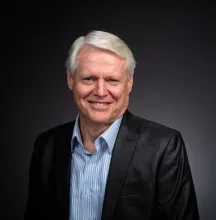
John Elliott serves in the role of President of the United Church of God, an International Association.
