
Chuck Smith
This sermon was given at the Panama City Beach, Florida 2007 Feast site.
This transcript was generated by AI and may contain errors. It is provided to assist those who may not be able to listen to the message.
Well, good morning, everyone. Certainly, that was very, very powerful and inspiring special music. One of the things that's really great about being at the Feast of Tabernacles is the special music that we receive and all the work and time that goes into that. And we certainly want to thank the Festival of Choir. That was extremely beautiful and very, very inspiring. Since there are a lot of you from Texas here in the audience, I just want to know that I have a connection with Texas also.
I started Ambassador College in 1964 in Pasadena, and then, at the end of my freshman year, I was transferred to Big Sandy. So I graduated in three years, so I spent two years in Big Sandy, 1965 through 1967. In fact, Mr. Martin was a student there at the same time I was, so it's really nice to be here with Mr. Martin at the Feast. But I really enjoyed it. Those are the fondest memories I had were those years of Big Sandy, 1965 through 1967.
Today is October 1st, 2007. Do any of you remember where you were on this date, this exact date, six years ago? Do any of you remember where you were on October 1st, 2001? Well, when I tell you what that date was, most of you here probably will be able to recall where you were and what you were doing.
So you see, October 1st, 2001, which also occurred on a Monday, that night was the opening night of the Feast of Tabernacles in 2001. And it was three weeks, almost three weeks, from 9-11, which occurred on a Tuesday. Now, I remember exactly where I was on that night. I was at the Wisconsin Dales because I had the opening night message on October 1st, 2001, at the Dales. And after 9-11, I changed my opening night message. The world had changed.
All of a sudden, the Feast of Tabernacles became much more pertinent, much more important. And so I changed my sermon after that, not after 9-11, for that opening night. I'm not going to give that sermon, but here's how I began that opening night message six years ago. And this pertains every bit as much today, maybe even more so than it did six years ago. I begin by asking, why are we here observing the Feast of Tabernacles? How important is the Feast of Tabernacles to you personally?
How important is it to the world? How important is it to God and to Jesus Christ? I then ask this, because, you know, as we watched 9-11, when that occurred, a lot of us probably, by the time we heard about it, we probably watched the second plane crash into the Twin Towers. And then, as we were watching in horror, we saw the towers collapse with just under 3,000, both of them flat with just under 3,000 people there, losing their lives in an instant.
And it almost didn't seem real, did it? You thought, is that real? Did I really see that? Did that really happen? And it almost didn't seem real. Well, how real is the Kingdom of God? How real is the Kingdom of God? Again, I'm going to ask you that question six years ago. And I ask, is Christ really going to return to the earth? Is Christ really going to subdue all nations?
Subdue all terrorists? Are all the dead in Christ really going to be raised to meet Christ in the air? Will those who remain be changed in a moment in the twinkling of an eye? Will there really come a time when two men will be in the field and one will be taken and the other left? Will there really come a time when two women will be grinding at the mill and when one will be taken and the other left? Will nations really beat their swords into plowshares and their spears into pruning hooks, as Mr.
Point mentioned in his sermon? Will that really happen? Will there come a time when nations will not lift up swords against nations and neither will they learn war anymore? Will there really come a time when the entire world will be safe for children? It's not very safe today. Will there come a time when the wolf will dwell with the lamb and when a little child will lead them?
Will there come a time when the streets of Jerusalem should be full of boys and girls playing in the streets? Again, will the entire world someday be a safe place for children? How real is the Kingdom of God? How real is it to you personally? Well, we're here because the Kingdom of God is real. We've heard that in a couple of messages already. Mr. Franks and Mr. Rhodes, especially, mentioned that. But the Kingdom of God is not a dream. It's real. And I are here because we have been called to be a part of that reality, to be participants in the future reality of the Kingdom of God.
You know, it's now exactly six years since that opening night of the Feast of Tabernacles in 2001. Where are we now, six years later, at this Feast of Tabernacles? How close are we now to when the Kingdom of God will become a reality? How can we prepare for what we know lies ahead of us? How can we prepare for that? How can we prepare for the reality of the soon-coming Kingdom of God? Those are questions we'll look at and examine this afternoon on October 1st, 2007. The title of my sermon here this morning, I should say, is, How Real is the Kingdom of God?
Where are we now, historically speaking? We saw the video yesterday, but how where are we? Our 911 that occurred on our soil that affected each and every one of us has changed our lives. That occurred six years ago. But for one young girl, her 911 occurred just after her tenth birthday. Probably have a number of girls in the audience here, about 10 years old. I know where there's one, one of our granddaughters, Alex, she's 10 years old, she's here. But there's probably a number of young girls who are about 10 years old who are here today. Well, there's a little girl 10 years old, and all of a sudden 911 hit her and her family.
Her birth was somewhat of a miracle of and by itself. Her parents had been married for over 20 years, and for over 20 years they've been trying to have a child. They've been praying to God for a child. Never had one. By 1964, in Silno Children, their mother was now 54 years old. All of a sudden, she saw that her stomach was beginning to swell, and it scared her. She thought, oh, I must have a tumor. I must have cancer. Maybe I don't have long to live. So she went to the doctor, and the doctor said, no, you don't have cancer. You're pregnant. He said, I'm pregnant? I'm 54 years old.
We've been trying for 20 years. How could I be pregnant? But she was. She was pregnant, and a few months later she gave birth to a very healthy little baby girl. On October 21, 1964, a healthy baby girl was born. They named her Bridget. The age of her mother was not the only unusual circumstance surrounding her birth. Bridget was born to Christian parents in an Arab world. She was born to Christian parents in an Arab culture. Very unusual. She was born in southern Lebanon, where her parents' home had an infrastructure view of beautiful Mount Herman.
Mount Herman in southern Lebanon, northern Israel, is 9,000 feet in elevation, has no cap to mountains. They lived right in that southern valley of Lebanon, right just across the border from Israel. From her home, you could look out over that valley and see beautiful Mount Herman in a beautiful setting, peaceful setting, when she was born up until she was 10 years old. In 1964, when she was born, 55% of Lebanon were Christian by religion. 55%? It's an Arab world, Arab country, but 55% were Christian. Only 45% at that time were Muslim. But not long after her 10th birthday, later in 1975, when she was 10 years old, the Muslim-controlled government issued ID cards for all the citizens of Lebanon.
And the ID card stated whether you were a Christian or a Muslim, and they had Muslim checkpoints throughout the country. And when you went through that checkpoint, if your ID card said Christian, they could, and sometimes did, pull you aside and shoot you on the spot.
In 1975, it was no longer safe for Christians to travel in Lebanon. After her 10th birthday, civil war broke out. Only it really wasn't a civil war, and that's in a real strict sense of the word. It was a war between Muslims and Christians, with the Muslims trying to wipe out all the Christians in Lebanon. It was at that time that a 10-year-old girl by the name of Vidget experienced her 911. Bombs fell on her parents' home, and her dad had a restaurant right next to the home, and bombs demolished the restaurant. All of a sudden, their beautiful home was just a stack of rubble. It was gone. Her dad's business and restaurant was gone. They built a bomb shelter in the back of the rubble, which was once their beautiful home. For the next seven years, Vidget, with her parents, lived in a 10 by 12 foot bomb shelter. Every night, bombs were landing all around them. They knew that if one made a direct hit on their bomb shelter, they were gone. They would never wake up in the morning. They'd be dead. Every night, they went to sleep with those bombs going off, wondering if they would be alive the next morning. When Vidget was 13 years old, one bomb nearly did make the direct hit. It buried their bomb shelter, leaving them trapped. They were trapped. They couldn't get out. They tried, but they couldn't get out. Not very much traffic would go back by in those days, but they were praying and praying. Someone would come by and find out they were in there. One day, they heard a car go by. They heard a car going on the road past the rubble that was their home and their bomb shelter. They yelled as loud as they could, but the car kept going. It didn't stop. The driver was an 18 year old resistance fighter. He was a Christian resistance fighter. As he drove by, he kind of thought he might have heard something. They thought, well, I don't think so. He kept on driving. About two or three miles down the road, he thought his conscience started bothering him. He thought, maybe I did hear something. Maybe I better go back and check. So, he went back to check and found out they were in there under the rubble. He got some friends to clear the rubble. He saved their lives. From that time on, he would go back there every week to check on him to see how they were doing. Five years later, the relationship between this young man, now age 23, and Bridget, who was now age 18, the relationship began to blossom. She wrote this in a book about her life, and she reveals the sterling character of this young Christian couple. Here's what she wrote. She said, we liked flirting with each other, knowing it was safe. Knowing it was safe. We knew we cared a lot about each other, and that we wouldn't do something stupid that would mess up our relationship.
Remember, this young man and woman lived in a war zone. They knew that any day could be their last, and yet they still were going to save that relationship until the right time. They weren't going to consummate it until the right time. That's the kind of character they had.
Knowing that, she then added this, we always included the possibility of death in our relationship.
Finally, the relationship blossomed, and the day finally came when he asked to meet her, wanted to meet her on one Sunday afternoon after church. He said, you know, I got something special I wanted to ask you. She knew what it was. She knew the day had finally come when he was going to ask her to marry him. She wore her best dress. She didn't have much in the way of clothes, but she had one blue dress that was not too soiled, and she put that on for the special occasion. She was going to meet him that afternoon. So she went to the place where they were to meet, and she waited for him, and she waited, and she waited, and she waited. But he never showed up.
She found out that as he was driving to meet her, his car went over a landmine, exploded, and blew him to smithereens. That was to be the most wonderful day of her life. It turned out to be the most devastating day of her life, and the blue dress that she was going to wear to her wedding proposal, she ended up wearing to his funeral, because he had the funeral that same afternoon. You couldn't delay funerals because of the war going on. So instead of the happiest day of her life, it turned out to be the most devastating day of her life. See, how real is the kingdom of God?
How real is it to you and me? How important is it for the entire world? Now, after this occurred, Bridget had a life-changing experience. Something happened that totally changed the rest of her life in a positive way. From the time she was born, even as a Christian in Lebanon, she was taught to hate Israel. After all, she was in an Arab country, in an Arab culture, in an Arab world, and Israel was their enemy. Even as a Christian, she was taught to hate Israel. Then one day, her mother, who is now in her 70s, was gravely wounded by flying shrapnel. She flagged down a car and got her mother to the little hospital in Lebanon. There wasn't much left of that hospital because the Muslims had bombed it, had one doctor and two nurses and very limited facilities, and the doctor took one look at her mother and said, I can't save your mother. There's only one way you can save her. You're going to have to take her to a hospital in Israel. She'd never been to Israel. She'd never met a Jew.
And she would soon find out how misinformed she had been in regards to Israel and the Jews. And when she found out, it was a life-changing experience.
She got in the ambulance to the hospital in Lebanon. It was only about a 10-minute drive to the border of Israel. Before she had left, her father had buried some money in the rubble. He tried to save her emergency. He gave her 60 lira for a trip. When she got to the border of Israel, she asked the Lebanese ambulance driver. The ambulance had been donated to Lebanon by Israel.
But she said, how much do I owe you for the trip? It was only about a 10-minute ride. He said, he said, all I have is 60 lira. He said, well, I'll take 30 lira. That'll be enough. He took 30 lira.
Then she got to the border of Israel and they checked her out and realized they didn't know what she was, whether she's a Christian or Muslim or what she was Lebanese. They saw her mother and they saw it was a very critical wound. So they brought an ambulance and they put her in the Israeli ambulance that took her to an Israeli hospital, which was about an hour drive.
When she got to the hospital, they took her mother into emergency.
And she said, you know, she knew it. She didn't have enough to pay for the ride. She told the ambulance driver, the Israeli ambulance driver, she said, all I have is 30 lira. You can take all of it. He said, oh, no, no, no, no. You don't owe me anything. All I want to do is try to save your mother. She couldn't believe what she'd heard. She couldn't believe her ears.
And he didn't even know whether she was a Christian or a Muslim. Didn't know. All he knew, she was in Lebanon. She was Lebanese, and Lebanon was the enemy of Israel, but that didn't matter.
She said, you don't owe me anything. We just want to try to save your mother.
She had never before encountered that kind of love and compassion in her entire life.
She was with her mother at the Israeli hospital for about a week.
And while she was there, she saw Jewish doctors and nurses saving the lives of all who were brought to the hospital. She witnessed it with her own eyes, and she couldn't believe what she was seeing.
They were saving Jews. They were saving Muslims, Arabs, Palestinians. Anybody who was brought in, they tried to save their life. Didn't matter who they were. Didn't even matter if they were sworn enemies of Israel. They were all treated equally with the same love and compassion and concern. Here's what she wrote in her book. I was amazed that the Israelis were providing medical treatment to Palestinian and Muslim gunmen. These Palestinians and Muslims were sworn mortal enemies dedicated to the destruction of Israel and the slaughter of the Jews.
Yet, Israeli doctors and nurses worked feverishly to save their lives. The Israelis did not see religion, political affiliation, or nationality. They saw only people in need, and they helped. Do we look at the world that way? Do we see people in need, whoever they are? Do we want and desire to help them? Any way we can? And she writes, I broke out crying.
I broke out crying again, but this time not from fear and uncertainty, but because of the compassion and love that was being bestowed upon me and my mother. She'd never experienced that kind of love and compassion and concern in her entire life. For the first time in my life, she wrote, I experienced a human quality that I knew my culture would not have shown to its enemy. I experienced the values of the Israelis who were able to love their enemies in their most trying moments. In Israel, she experienced a culture of descendants of Abraham, Isaac, and Jacob.
She experienced a culture of people who even show love and compassion to their enemies. For Bridget, that was a life-changing experience.
Her mother recovered, but it wasn't too many years after that. About a year or so after that, she died in Lebanon. She was buried in Lebanon near what used to be their home.
And after her mother died, she took her aging father, who was now an Israeli. She took him and she moved to Israel. She moved to Jerusalem. She wanted to live in a culture of love rather than a culture of hate. And after her father died, she buried him in Jerusalem, near Jerusalem, and she went back to Lebanon and retrieved the remains of her mother and brought the remains of her mother to Jerusalem to be buried by her father. She later married an American journalist, and she's now a citizen of the United States of America. You can read her life story in her book, which is entitled, Because They Hate, Because They Hate, a Survivor of Islamic Terror Worns America by Bridget Gabriel. So then, where are we now, historically speaking? Where are we?
Well, I think the video yesterday showed us, but let's turn there and read again. Let's go to Daniel 11.
Daniel 11, verse 40.
At the time of the end, the king of the south shall attack or push at him, the king of the north, and the king of the north shall come against him like a whirlwind with chariots and horsemen, many ships, and he shall enter the country, as he has overwhelmed them and passed through, and he, the king of the north, shall also enter the glorious land, and many countries shall be overthrown. Where are we now? We are right here in the middle of Daniel 11. 40. Terrorists from Arab nations of the south are now pushing at and attacking the European nations of the north, as well as Great Britain and the United States. They are pushing at and attacking Jews and Christians, capitalism, and western civilization. Where are we now? We are at a crossroads.
We are about to witness a clash of civilizations, which will lead to, as the video told us yesterday, to the threshold of a new age, to the new age of the kingdom of God. But we're at the clash of civilization, with Muslim culture and civilization clashing with Judeo-Christian culture and civilization, with Arab culture and civilization clashing with western culture and civilization.
And caught in the middle of that clash are the descendants of Abraham, Isaac, and Jacob, and the modern-day nation of Israel. And within the descendants of Abraham, Isaac, and Jacob, at least for the most part, is spiritual Israel, the Church of God, proclaiming the gospel of the kingdom of God. Is the kingdom of God real to you? Is it real to me? Oh, it better be, because we're now entering a critical time in the history of mankind. How can we prepare what we know lies just ahead of us? And how can we prepare for the reality of the kingdom of God? While we must incorporate into our lives what Christ taught, Christ showed us what we can do, what we have to do to prepare. He told us very plainly. And we're going to have to incorporate those things into our lives. We're going to have to become like Jesus Christ to be prepared for what lies ahead. What were some of the first things Christ taught and exemplified? Let's go to Matthew 4.
We're just going to be right here in Matthew 4 and 5 for the rest of the sermon, so we won't have to flip around a lot. Matthew 4, let's go there. Matthew 4, verse 13, And leaving Nazareth, he came and dwelt in Capernaum, which is by the sea, in the regions of Zebulun and Aptali.
Of course, this is immediately following his temptation by Satan, but sinners, he says, in the regions of Zebulun and Aptali, what do you mean in the regions of Zebulun and Aptali? Zebulun and Aptali were two tribes of Israel, which had gone into captivity hundreds of years before. There was no Zebulun and Aptali, but he went to the region where they would have been if they hadn't been expelled from their land. And he went there that a prophecy might be fulfilled, as he says in verse 14, that it might be fulfilled which is spoken by Isaiah the prophet. That's written in Isaiah chapter 9, verses 1 and 2. Where Isaiah said, the land of Zebulun, the land of Aptali, the way of the sea beyond the Jordan, Galilee of the Gentiles. Now, if you have a map in the back of your Bible, you might have a map that's a Palestine in the time of Christ, and you'll see the Sea of Galilee, and then to the west and north of Sea of Galilee, you'll see Galilee. The West Sea of Galilee, you'll see it says Galilee. And then to the far left of that, along the shores of the Mediterranean Sea, going all the way up to Tyre and side, and it says Phoenicia. That was the land of Phoenicia, which is in Syria. And then verse 16 says, the people who sat in darkness saw a great light, and upon those who sat in the region and shadow of death, light has dawned, the light of Jesus Christ dawned. It's very fascinating. Here in Matthew 4, right after Christ, the temptation of Satan, as he's beginning his ministry, where is the first place he goes? He goes to Galilee of the Gentiles. Gentiles now occupy this area where Zebulun and Ectilai had been given years ago. In that area, when you look at it and compare it today, you find out it's the area of southern Lebanon. It goes all the way up to the area of Tyre and Sidon. Tyre and Sidon were part of Phoenicia, and they were in Syria.
I say it's fascinating because we have to ask a question. Why would there be so many Christians in Lebanon? It's an Arab nation. They don't allow proselyting. Those who are Christians in Lebanon are not Christians because of missionaries. They traced their Christianity back to the 4th century AD and before. Maybe it goes all the way back here to Matthew 4, because it was in that area of Phoenicia. It was the first place Christ went to preach the gospel, the kingdom of God, to fulfill that prophecy in Isaiah. And, you know, it's interesting you talk to the Christians in Lebanon and you ask them who they descended from. They say, we're not Arabs. You know who they say they are? They say they're Phoenicians. They say they're Phoenicians.
Unfortunately, of course, like the rest of the world, their Christianity was hijacked by Satan in the 4th century AD, so their form of Christianity is now a somewhat counterfeit form of Christianity. They meet on Sunday and so on. But it's interesting that Christ first began preaching the gospel of the kingdom of God in the area that is now a part of Lebanon, as it says in verse 17. From that time, in Galilee of the Gentiles, Jesus began to preach and say, repent for the kingdom of heaven, the kingdom of God is at hand. Then in verse 23, now Jesus went about all Galilee teaching in their synagogue, so there were Jews scattered in there as well. There were Jews and maybe some of the lost sheep of the house of Israel, but it was also primarily Phoenicians and Gentiles. And he preached the gospel of the kingdom and healing all kinds of sickness and all kinds of disease among the people. Then his fame went throughout all Syria, because Phoenicia was a part of Syria. And they brought to him all sick people who were afflicted with various diseases and torments, and those who were demon-possessed, and so on. He healed them.
It's a fascinating story, a little bit later. A little bit later in Christ's ministry, and you can read this in Mark 7 and Matthew 25. Christ wanted to get away for a while, have some rest, but some rest. So he went to Tyre, it says. He went to Tyre, which is in Phoenicia, which is now southern Lebanon. And he went to Tyre to get some rest, and he wanted to just get away from it. And there was a woman who found out he was there. She probably heard the gospel of the kingdom of God when he first preached it there, and she at least heard about his healings and how he cast out demons. And she went to him, and Mark's account says that she was a serophoenician by birth.
She was a Phoenician who was born in the land of Syria, but she was a Phoenician. And she had a daughter who was severely demon-possessed. She went to Christ and said, my daughter is severely demon-possessed. Please help me. Christ didn't say a word, didn't respond.
And she said again, Lord, please help me. And the disciples said, well, you know, hey, this woman's bothering us. She's nagging at us. Get rid of her, the disciples said. Then Christ finally said something. He said, well, I've not come but the lost sheep of the house of Israel. But she replied to, Lord, you're my only hope. I've lost my daughter. I've lost her to Satan. You're the old hope of restoring her life to me. Please, Lord, help me, she says. And Christ makes a rather strange statement. It might be insulting to most of us. He says, it is not good to take the children's bread and throw it to little dogs.
I think he said that to test her faith, to test her attitude, to test her determination.
And the disciples probably thought, well, that's that statement will get rid of her.
But you know, her reply is one of the greatest replies in the annals of history. It's recorded. It's recorded. Amazing reply. She didn't leave. She didn't walk out. She didn't get offended.
She said, True Lord, that's true. I'm not an Israelite. I don't deserve you. I don't deserve your mercy. I don't deserve your attention. I don't deserve your healing power from you.
It's all true, Lord. I don't deserve that. I don't deserve if you give me any attention. But then she said, Yet even the little dogs eat the crumbs which fall from their master's table.
Oh, Lord, she said, I don't want much. I'd be happy with the crumb. Just give me a little crumb of your power. Give me a little crumb of your forgiveness. Give me a little crumb of your mercy. Just so I'll crumb my way so my daughter can be restored. Christ was moved. He said, Oh, woman, great is your faith. So be it unto you as you desire. And her daughter was healed from that very hour. Verse 25 of Matthew 4. And great multitudes followed him from Galilee and from Decapolis and Jerusalem and Judea and beyond the Jordan. Then we come to Matthew 5. Matthew 5, verse 1. And seeing the multitudes, he went up on a mountain, and when he was seated, his disciples came to him. They opened his mouth, thought them, saying, Blessed are the poor in spirit, for theirs is the kingdom of heaven. Some call, we call this a Beatitude, but some call this the Magna Carta of the kingdom. The principles that when lived by would guarantee the personal right for every individual to be what he or she was intended to be. Their teachings and principles we must all apply if we prepare for what lies ahead, if we prepare for the reality of the kingdom of God. Because we are about to enter a clash of civilizations. You know, it's very interesting that Bridget Gabriel in her book, she defined civilization. How would you define civilization? Here's how she defines it. Civilization is a collection of behaviors that people live by. It is respect for education, respect for human beings. It is a desire for their improvement of the self. Civilization is a result of citizens who have been nurtured and encouraged to reach their ultimate goal of bettering themselves at every level. Matthew chapter 5, verses 3 to 11, are the behaviors we must now learn to live by if we are to become permanent citizens of the civilization that become the kingdom of God.
They are principles that will help us reach the ultimate goal of bettering ourselves at every level. They will help us to prepare for the reality of the soon-coming kingdom of God.
And as I just read in Matthew 5, 3, the very first of those principles, Christ said, blessed are the poor in spirit, for theirs is the kingdom of heaven.
Do you and I want to be citizens of the civilization that will become the kingdom of God?
Then we must all become poor in spirit. What does that mean?
The Greek word used for poor here is a word which describes absolute and abject poverty, and describes someone who has nothing at all to rely on or sustain him, kind of like having to live in a bomb shelter for seven years.
But we must be poor in spirit, poor in our attitude. In other words, we must realize our own utter helplessness, and we must realize our total dependence on God and on Jesus Christ in the years ahead. We must realize that physical things mean nothing and that God and Jesus Christ mean everything. God's kingdom means everything. See, such poverty belongs to those who will be citizens of the kingdom of God, because as Christ said here, for theirs is the kingdom of heaven. Matthew 5, verse 4, Blessed are those who mourn, for they shall be comforted.
The Greek word for mourn here is the strongest word for mourning used in the Greek language.
It is used for the mourning of the dead, for someone that you dearly loved, that you lost. It is not only the sorrow which brings pain to the heart, it is the sorrow which also brings unrestrained tears to the eyes. Possibly some of you experienced that kind of sorrow. You lost somebody so dear to you, you just couldn't keep the tears back.
You know, when things go well, it is possible to live for years, kind of on the surface of things.
But when sorrow comes, a person is driven to the deeper things of life, and if properly accepted, a new inner strength is developed within us.
A poet once wrote this, I walked a mile with pleasure, she chattered all the way, but let me none the wiser, for all she had to say. I walked a mile with sorrow, and a narrow word said she, but all the things I learned from her when sorrow walked with me.
Do you want to become a part of the reality of the kingdom of God?
Become a deeply caring Christian. Disparably sorrow for the sufferings of the world, and for the sufferings of the same beings on the world, because blessed are those who mourn, for they shall be comforted. Verse 5, blessed are the meek, for they shall inherit the earth.
You know, there's no greater quality than that of humility, true humility.
You know, true humility elevates us to the level of Jesus Christ.
It's the one thing that can elevate us to the level of Jesus Christ, who made himself of no reputation, taking the form of a servant. He humbled himself and became obedient to death, even the death of the cross, or the death of crucifixion. Philippians 2, verses 7 and 8.
Blessed are the meek, blessed are the humble, for they shall inherit the earth.
They shall become citizens of the kingdom of God.
Verse 6, blessed are those who hunger and thirst for righteousness, for they shall be filled, or they shall be satisfied.
You know, there's very few of us here who really know what it's like to really be hungry and thirsty.
See, the hunger, which is described here, is not the kind of hunger that can be satisfied with a mid-afternoon snack. It's the hunger of a person who is starving to death.
And today, there are millions in the world who are starving to death, most of them children.
That's the kind of hunger this is describing. And the thirst described here is not the thirst that can be satisfied with a cup of coffee or a glass of water.
It's the thirst of a person who will die unless he gets something to drink.
Thus, this beatitude or teaching of Christ is both a question and a challenge to everyone who wants to be a citizen of the kingdom of God.
How much do you and I want righteousness? How much do we want it? Do we want it as much as a starving man wants food?
As much as someone dying to thirst and wants water?
How badly do you and I want the righteousness of the kingdom of God?
How much are we willing to sacrifice to help proclaim that gospel of the kingdom of God and the righteousness that will become from the kingdom of God? How much are we willing to sacrifice to bring satisfaction to others? How much do you and I hunger and thirst for righteousness?
Blessed are those who hunger and thirst for righteousness, for they shall be satisfied.
They shall be satisfied with the reality of the soon-coming kingdom of God with becoming a part of that reality. Matthew 5 verse 7.
Blessed are the merciful, for they shall obtain mercy.
Now, Christ originally spoke these words in Aramaic, which is also a language that was closely related to Hebrew.
And the word Christ used for mercy that he would have spoken in Aramaic means to be able to see and understand things from the other person's perspective.
To see what someone else sees, to feel what someone else feels, it denotes a mercy which literally identifies with others and what they go through in a very deep and personal way.
When we can do that and when we can exercise that degree of mercy, it can make a great deal of difference in someone else's life.
And not only that, it also levels us.
And I should say it elevates us to the very level of Jesus Christ.
What did Christ do?
Says he divested himself of all his glory as God.
And he became flesh and dwelt among us. John 1 verse 14.
And when he did that, when he became flesh and dwelt among us, experienced what it was like to be a human being in Satan's world, tempted by Satan even as we are.
What did that result in? It resulted in Christ becoming full of grace and truth. Also, John 1 verse 14.
Full of favor and mercy toward mankind. He knew what it was like.
He walked in our shoes. Experienced what we experience, and yet without sin.
Because of that, what kind of a high priest do we have, Jesus Christ? Well, we have a high priest who can be touched with the feelings of our infirmities.
And who can sympathize with our weaknesses. Hebrews 4 verse 15.
Why? Because as I said, he was in all points tempted as we are, yet without sin.
Blessed are the merciful.
Blessed are those who, like Christ, can understand as others, understand who can feel as others feel, who can sense what they sense. Who can walk with them in their shoes.
Blessed are the merciful, for they shall obtain mercy. And they should become citizens of a new civilization.
They should become citizens of the kingdom of God. And we are right now on the threshold of a new age, of a new civilization.
These things are very near. Matthew 5 verse 8. Blessed are the pure in heart. For they shall see God. It says, if you can be pure in heart, you will see God. A lot of people think you'll never see God, but here it says very plainly, if you're in pure in heart, you will see God. Do you want to someday, literally, be able to see God? Literally be able to see Jesus Christ, to stand on that sea of glass and look up and actually see them as they really are in their power and glory and majesty?
Can you even imagine what that would be like? To literally be able to see God? To literally be able to see God?
Well, we will see God if we become pure in heart.
The Greek word for pure means unmixed, without any foreign substance whatsoever.
Become pure in heart requires a deep self-examination, because it means our motives, whatever we do, must be unmixed.
That there must never be ulterior motives for anything we say or do.
You know, think about it, and we think we look at ourselves, and that's a very daunting task, because we seldom do anything with a pure heart, with totally unselfish motives.
We seldom do things for others, literally expecting nothing in return, not even any recognition, with love and outgoing concern as our only motive. And yet, that is a value we must all strive toward if we are to become prepared to be a part of a new civilization, and if we are to someday see God.
Blessed are the pure in heart, for they shall see God.
Verse 9, blessed are the peacemakers, for they should be called sons of God. They're going to be part of God's family. Mr. Crow talked about that in his sermonette, and as he pointed out also, note that this blessing is bestowed upon the peacemakers, not just the peacelovers.
A person can want peace, but to be willing to be a peacemaker is a different thing.
To be a peacemaker, we have to be willing to face what ourselves, face things that we maybe don't want to face. To be a peacemaker, we must be willing to face issues head-on and to deal with those issues head-on and to solve them.
A true peacemaker must never avoid issues.
He or she must actually face and address issues head-on and learn something about themselves in the process. One of the highest and most difficult tasks anyone can strive for and to perform is to reestablish and heal broken relationships, to make peace. He's been a broken, very difficult. Sometimes all we can do is do our part and do the other person's part.
There's always those kind of people who have allowed their minds to be troubled, sometimes with bitterness and anger or strife or resentment, who then, because of that, because of the trouble that's going on in their mind, they haven't learned how to have the peace of mind that Mr. Crow was talking about in his sermon that surpasses all understanding.
Because of that, they allow their minds to be troubled. They can't have peace of mind. They become troublemakers. On the other hand, there are those who obtain the peace that Christ gives that surpasses all understanding, as Mr. Crow pointed out, and who let not their mind be troubled.
There are people in whose presence bitterness and anger cannot live. We have to be that kind of a person. Bitterness and anger cannot live in us. Anytime it comes, we have to cast it out. We have to have the mind of Christ when we don't allow bitterness or anger or resentment to live in our mind or in our thoughts. You know, there are people who bridge the Gulf and who strive to heal the breaches and who strive to sweeten the bitterness that other people are having.
Such are the peacemakers. You know, the man who divides is doing the work of Satan.
The man who unites is doing the work of God. And those who promote peace and unity will become citizens of the family of God someday. Because as Christ said here, blessed are the peacemakers for they shall be called sons of God.
Think of one of the most powerful scriptures in all the New Testament. Matthew 5 verses 10, 11, and 12.
Blessed are those who are persecuted for righteousness' sake. For theirs is the kingdom of heaven, theirs is the kingdom of God. Blessed are you when they revile and persecute you and say all kinds of evil against you falsely for my sake. And then Christ says, when that happens, rejoice and be exceedingly glad, for great is your reward in heaven, for so they persecute the prophets who are before you.
Now Christ here is being brutally honest. He leaves no doubt that what will happen to those who choose to follow him is not going to be an easy road.
Christ did not come to make life easy, but this tells us that he did come to make life great.
How can you be blessed when you are reviled and persecuted? How can you be blessed when you are falsely accused?
How can you be blessed when you suffer wrongfully?
How could any of those things be great? How could they make your life great?
How should they make us rejoice and be exceedingly glad? You know, throughout our lives, especially at the time God calls us, throughout our lives there are certain moments that are critical moments, critical moments and critical decisions which will ultimately lead down one of two roads. One road will lead to obscurity. The other road will lead to greatness.
And when we are called to suffer wrongfully, for what we believe or what it happens to be, that is always a critical moment. It's always a critical moment when that happens. When that happens, we experience wrongful suffering.
And it's not only a critical moment, but it's also a great occasion.
It's a great occasion because when you suffer wrongfully, you're walking down the same road that Christ walked down. You are walking down the road toward Golgotha. You're walking down the road of your personal sacrifice by allowing yourself to suffer wrongfully and by putting the matter into God's hands as Christ did. That's a glorious road. It's a great occasion because the end of that road is unsurpassed glory and greatness. It's the same reward that Christ has waiting for us.
Blessed are those who are persecuted for righteous sake, for theirs is the kingdom of heaven.
Blessed are you when they revile and persecute you and say all kinds of evil against you falsely for my sake. Rejoice and be exceedingly glad for great is your reward in heaven, for so they persecuted the prophets who were before you.
I want to say something now just for a moment here.
To all of you teens and all of you young adults in the audience, God needs every single one of you. He needs you, especially at this time. He doesn't want you to die for him. He wants you to live for him.
Why? Because of what we read next in verse 13. You are the salt of the earth.
Now, we don't understand that today as we would have understood it 2,000 years ago when Christ said this, but in the ancient world, salt was a commonest of all preservatives. It was used to keep things from going bad. Salt preserved from corruption.
How can all you teens and young adults be like salt?
How can you be the salt of the earth?
You know, up to themselves, all things will begin to decay.
They will go from good to bad and from bad to worse. Today, our society is being left to itself.
To a large degree, many children are being left to themselves with no solid, no absolute moral compass to show them what is right and to uphold what is right, with no salt, you might say, to preserve what is right today.
You know, to some people, when you get in the crowd and some people in the company, it's very easy to go down a road of compromise.
It's easy to maybe do what's not right, go that way. And other people, it's not easy to do what's right, there's right influence. But, you know, sometimes you can be in the crowd and the crowd will want to go a certain way, and you know in your mind, no, that's not right.
Maybe there's somebody else in that crowd who also realizes it's not right, but they don't have the courage to stand up. But if you do, you say, no, no, that's not right. I don't want to complicate my life. I don't want to go down that road.
It's wrong. Maybe that stance that you make will influence somebody else in that crowd to say, yeah, you know, I don't really want to go there either.
Wouldn't have the courage to do it on their own, but somebody else, they're one of the person there, they'll have the courage. And maybe in doing that, you can preserve what is right and good. In the eyes of God, be the salt of the earth.
Stand up for and preserve what is right, even if you suffer wrongfully for it.
Verse 13, you are the salt of the earth, but if the salt loses its flavor, how shall it be seasoned?
If you go along with the rest of the crowd, how are right standards of behavior be preserved?
You are the salt of the earth, but if the salt loses its flavor, how shall it be seasoned?
It is then good for nothing but to be thrown out and trampled underfoot by men. And you go down the wrong road, and you will be trampled underfoot by men.
Then he goes on, you are the light of the world.
A city that is set on a hill cannot be hidden.
Nor do they light a lamp and put it under a basket, but on a lampstand, and it gives light to all who are in the house.
Let your light so shine before men that they may see your good works and glorify your Father in heaven.
How real is the kingdom of God?
Is it real enough for us to be totally dependent on God for all things and the years ahead? Is it real enough for us to mourn for the world as we would for the loss of our own son or daughter?
Is it real enough for us to make ourselves of no reputation and take on the form of a servant, seeking nothing in return, not even recognition?
Is it real enough for us to hunger and thirst after righteousness as if our very life depended on it? Is it real enough for us to see as others see and to feel as others feel, to walk in their shoes?
Is it real enough for us to struggle to obtain the mind of Christ, to rid ourselves of all our true motives so we can have the same love and outgoing concern for others that Christ has for us? Christ has for us? Is it real enough for us to make the sacrifices needed to be peacemakers?
Is it real enough for us to walk down the road to greatness, to allow ourselves to suffer wrongfully so we can obtain the glory and greatness of Jesus Christ?
Is it real enough for us to be the salt of the earth?
Is it real enough for us to be the light of the world? How real is the kingdom of God?
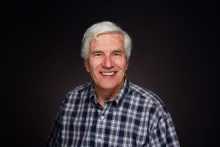
Steve Shafer was born and raised in Seattle. He graduated from Queen Anne High School in 1959 and later graduated from Ambassador College, Big Sandy, Texas in 1967, receiving a degree in Theology. He has been an ordained Elder of the Church of God for 34 years and has pastored congregations in Michigan and Washington State. He and his wife Evelyn have been married for over 48 years and have three children and ten grandchildren.
