

Scott Ashley
This transcript was generated by AI and may contain errors. It is provided to assist those who may not be able to listen to the message.
Of course, as you all know, we're all now about six weeks away from Passover. I don't think it's too early to start thinking about preparing for that and thinking about that as we... ...that six weeks will probably go pretty fast. Back almost 2,000 years ago, on the evening of the Passover, back in what we consider as probably 31 A.D., Christ met with his disciples in an upper room there in Jerusalem on that eve of the Passover. And he instituted the New Covenant Passover in commemoration of the monumental events that are going to take place that evening, throughout that night, and in the next day.
Of course, he began that service by washing his disciples' feet. And then he instituted the service of the bread and wine to commemorate the fact that before that Passover day ended, Christ himself would become the Lamb slain from the foundation of the world.
We're told in Revelation 13, verse 8. Now, later, God called the Apostle Paul, who wrote this in 1 Corinthians 11, which we often look at during the Passover, at the time of the Passover. I want to turn there first. 1 Corinthians 11, where Paul wrote it, beginning in verse 23, where Paul said, "...for I received from the Lord that which I also delivered to you." Of course, the Apostle Paul, as we know, was not one of the original 12 disciples who was there in that upper room with Christ, when he answered to that New Covenant Passover service.
He was called later. But he said, "...I did receive from the Lord which I also delivered to you, that the Lord Jesus, on the same night in which he was betrayed, on that Passover evening, he took bread. And when he had given thanks, he broke it and said, Take, eat this as my body, which is broken for you. Do this in remembrance of me." In the same manner, he also took the cup after supper, saying, This cup is the new covenant in my blood.
This, do as often as you drink it in remembrance of me. Of course, we do it on that very evening, on that anniversary, on that Passover anniversary, on that evening of Passover. For as often as you eat this bread and drink this cup, as we do every year on the Passover, you proclaim the Lord's death until he comes. But then, because of the way some in Corinth, at that time, as every indication is written, during the days of Unleavened Bread, but some in Corinth were not really taking the Passover in the way of really understanding what they were doing.
And as they should have, Paul then wrote this, beginning in verse 27, Whoever eats this bread and drinks this cup of the Lord in an unworthy manner, as it says in New King James, which is a good translation, in an unworthy manner will be guilty of the body and blood of the Lord. But he said, But let a man examine himself first, and then let him eat of that bread and drink of that cup. For he eats and drinks in an unworthy manner, he eats and drinks judgment to himself, not discerning the Lord's body, not probably discerning the great sacrifice that Christ gave on our behalf.
So Paul heard then in essence also, with mashing all of us to examine ourselves prior to taking the Passover also. And then after examining ourselves, to then, as he said, eat of that bread and drink of that cup. Paul then adds here in verse 31, for if we would judge ourselves, we would not need to be judged. So the question then becomes this, in what areas should we be examining ourselves and judging ourselves prior to the Passover, to make sure that we don't partake of it in an unworthy manner?
That's what we'll look at this afternoon, as we once again prepare for about five or six weeks from now to take the Passover once again. And again, those five or six weeks, six weeks or so, will go by very quickly. So today we will look at each of, what I want to do is look at each of the three symbols, the three things we do, at the New Covenant Passover.
We'll look at foot washing, we'll look at the bread, and we'll look at the wine, to more fully understand their meaning, and to see what they tell us in regards to areas we can examine ourselves prior to partaking the Passover. The title for my sermon here this afternoon then is, How to Partake of the Passover in a Worthy Manner. How to partake of the Passover in a Worthy Manner. First, let's look at the foot washing. What does foot washing tell us in regards to examining ourselves?
In regards to partaking of the Passover in a Worthy Manner. Let's go to John 13. John 13 is where you get a description of the foot washing service in detail. We're Christ instituted that with His disciples. Let's begin in verse 1. John 13 verse 1, now before the Feast of the Passover, or before the Feast of Passover, does that very night Passover evening, when Jesus knew that His hour had come and that He should depart from this world to the Father, having loved His own who are in the world, He loved them to the end.
I'll just stop right there and think about that statement. He loved them to the end. What a powerful statement. Because He not only loved them to the end, He personally demonstrated what that meant. He demonstrated no amount of wrongful suffering, no amount of pain that He was going to experience that night and the next day, no amount of sorrow, no amount of tremendous humiliation that He would suffer as the Son of God, and ridicule. He demonstrated not even an excruciating death could stand in the way of loving them to the end, loving all of us to the end.
This is a personal story for us also. Now, Christ did His part in loving us to the end, but what about us? What about you and me? What kind of love should we all have for one another, as we should demonstrate? Should we also love one another to the end, no matter what happens, no matter what we go through, no matter what we experience, good or bad, even as Christ did for us?
What did Christ say in regards to that, about us showing the kind of love that He showed? Let's go to verse 34 here in John 13. He says, The new commandment I give you, now we are always told to love our neighbors ourselves and love God with all our heart, mind and soul, but as a new commandment, He says that He demonstrated this in a way that had never been demonstrated before. How to love one another, that is.
And how much He loved us. A new commandment I give you, that you loved one another as I loved you. And nobody had ever demonstrated that kind of love until Jesus Christ did on that Passover day. A new commandment I give you, that you love one another as I have loved you, that you also love one another. You could say that you love one another to the end, to the end of our natural lives. That then is one area in which we can all examine ourselves. Will our love for one another, will it endure to the end? Will it last?
Will we all stay together until the end and show love for us again, no matter what happens? God's church, no matter what happens all around us, no matter what things negatively happen to us, things that we experience. John 13 verse 2, going continuing here.
New King James says, the supper being ended, or maybe a better translation, or during suffers, it should more correctly be. The devil having already put it into the heart of Judas Iscariot, Simon's son, to betray him. Let's pause here also for a moment and might ask this question.
Who might prevent us from loving one another until the end? Who might stand in our way?
Satan. Satan the devil. Satan does not want us to love one another until the end. What does he want?
Well, he wants to stir up strife and division. He'd like to use any kind of a negative thing he can, negative thoughts, negative things that happen to us, maybe in our relationship to one another, to cause us to turn against one another if he can, or to become offended by what someone else says or by someone else does, or become disgruntled over something. Anything like that. Satan will try to use that to get in there and to cause a wedge between us and someone else in God's church to turn us against one another. Now, you think about the example that Jesus Christ set for us, and he said, he'll love you to the end. Could Christ have become offended during his ministry and things that he had to suffer and go through? Did anybody say anything to him that might be offended? Did anybody ever call him a bastard? Did they ever say that he would have dimples by demons?
Did they call him to be a false prophet and so on and so on?
He had all kinds of things said to him blatantly that could cause great offense, because it caused him to become greatly offended on many occasions. But if he had, if he had become offended and taken it personally, his love would not have endured to the end, and he would not be our Savior.
Continuing in John 13 here, verse 3, Jesus knowing that the Father had given all things into his hands and he'd come from God and was going back to God, he then rose from supper and he laid aside his garments and he took a towel and he girded himself. I'm sure the disciples in that upper room, when he did this, it had never been done before, and they wondered what in the world is he doing?
In verse 5, after that he poured water into a basin and he began to wash the disciples' feet and to wipe them with the towel of which he was girded.
Now what does this tell us in regards to examining ourselves in regards to taking the Passover in a worthy manner? Well, it tells us at least two very significant things.
It also shows us two things, two areas, I should say, where we can examine ourselves. One is very obvious, the other might not be quite as obvious. The obvious one is that Christ was washing his disciples' feet. He was taking on the role of a very, very humble servant. Of course, back then, as you know, the roads were dusty and dirty and men, women usually wore sandals. And someone came to the house, their feet would be quite dirty, and they had a very humble servant. It was a job of one of the lowest of servants would be there to read people the door and to then wash their feet, wash the dust off their feet as they came in. It was a very lowly job.
So Christ in washing his disciples' feet was taking on that role of a very humble servant, demonstrating the attitude we should all have towards one another, wanting to serve one another and yield ourselves to one another and to help in any way we can.
So Christ in washing his disciples' feet was demonstrating not only how we should serve one another and be servants toward one another.
He was also simplifying something else. He was simplifying how we should esteem others better than ourselves. Hold your place here in John 13. Just let's turn for a moment to Philippians chapter 2. Philippians 2 beginning in verse 3, where the apostle Paul wrote, "...let nothing be done through selfish ambition or conceit, but in lowliness and humility of mind let each esteem others better than himself." You know, those are powerful words to read. They're not always easy to demonstrate in our lives and under certain circumstances.
"...let each of you look not only for his own interest but also for the interest of others." In other words, let this mind be in you, which is also in Christ Jesus, verse 5.
And by washing his disciples' feet, Christ was esteeming others better than himself, wasn't he? He was elevating others to a higher position of esteem than he was, because the person who washed somebody's feet when they came in, that was about the lowest position you could have. The lowest position, that was not an esteemed position. There was really nothing lower than that.
So by doing that, he was esteeming others better than himself, even though he was God, as it goes on to say here in Philippians 2, verse 6. "...but who being in the form of God, he didn't consider robbery to be equal with God, because he was God, who is God in the flesh, he was the Son of God. But instead he made himself of no reputation, taking on the form of a bombed servant of a slave, and coming in the likeness of men. And being found in appearance as a man, he humbled himself and became obedient to the point of death, even the death of the cross." See, how well do we do in that area of following Christ?
Do we esteem others better than ourselves, regardless of what position we may be in?
And do we strive to uphold the reputation of others, even if it means making ourselves of no reputation? We like to have a reputation for ourselves. We like to help others gain a positive reputation, and esteem them and help them, lift them up, encourage them.
But that is the role of a humble servant or of a bond servant, as the verse 7 tells us.
To esteem others better than yourself. That is a first and more obvious lesson of foot washing.
Let's go back to John 13 again. John 13, let's pick it up in verse 6.
Then he came to Simon Peter. Peter said to him, Lord, are you going to wash my feet?
Jesus answered and said to him, What I am doing, you do not understand now, but you will understand later. So Peter said to him, Well, you're never going to wash my feet.
Hey, you're my Lord of Master. You're not going to wash my feet.
But here's what Christ answered. Jesus answered and said, If I do not wash you, you have no part with me. So then Simon Peter said to him, Well, Lord, not my feet only, but also my hands in my head. You are going to wash me all over.
It's a really important lesson here when it comes to the second lesson of foot washing. Jesus then said to him, Well, he who was bathed needs not only to wash his feet, but it's completely clean and you are clean, but not all of you. Here he's talking spiritually because Judas was there with them still. He hadn't left yet. He shows that Christ actually washed Judas's feet. He washed the feet of the person he knew was going to betray him.
And so we know that Judas was not clean spiritually. So he's talking about being spiritually clean here. That's why you only wash the feet. You don't have to wash the whole body. They didn't need physical washing. They needed spiritual cleansing and washing. He was bathed only to wash his feet, but it's completely clean and you are all clean, but not all of you. For he knew who would betray him. Therefore he said, you are not all clean. So obviously he's talking about being cleansed spiritually here.
So the second important lesson in foot washing is this.
Christ, in washing his disciples' feet, was cleansing them spiritually.
We don't often think of that, but that's what he was doing. Foot washing is also symbolic of being spiritually cleansed by Christ and by Christ's sacrifice.
Now, why would washing only the feet be symbolic of that?
Well, because our feet, in essence, dictate the direction we walk. Now, of course, the mind controls the feet, but the feet is what directs us when we walk physically. Thus our feet can then be symbolic of the way we live our lives, how we live. And there's a proverb that supports that. Proverbs 4 verses 26 to 27, which I'll just quote.
Proverbs 4 verses 26 and 27 says this, "...ponder the path of your feet, and let all your ways be established.
Do not turn to the right or to the left. Remove your feet from evil." So Christ washed his disciples' feet to symbolically cleanse them from evil, from their former way of life, which is contrary to God.
But let's take it a step further. Interesting, in John 13, there's no mention in John 13 of disciples washing Christ's feet. Christ washed all of their feet, but there's no mention of them washing each other's feet, disciples I'm talking about here.
Why didn't they wash... why didn't the disciples wash Christ's feet at that point? Well, Christ let us sinless life, didn't He? He didn't need to be spiritually cleansed, but He did tell His disciples this as we go on in John 13, beginning in verse 12, "...when He had washed their feet, taken His garments, and sat down again, He said to them, Do you know what I have done to you? Do you understand what I've done?
You call Me teacher and Lord, or Master, and you say, Well, for so I am. So if I then your Lord and teacher, or Lord and Master, have washed your feet, you also ought to wash one another's feet." Why? Verse 15. Because I have given you example that you should do as I have done to you. I want you to think about this in spiritual sense, because this applies to our second lesson here in foot washing.
When we wash one another's feet, we're also symbolically cleansing others, and as spiritual says, not necessarily the one we're washing, but in the spiritual sense, we're saying we want to cleanse others of their sins against us as well.
Now how do you and I cleanse someone who has trespassed against us?
Well, we do it the same way that Christ cleanses us when we trespass against Him.
Let's go back here, hold your place here again in John 13.
Let's go back to Matthew 6 and see what Christ Himself says here. Matthew 6, just look at a few verses here.
Matthew 6, verse 12, forgive us our debts as we forgive our debtors, or as some have it, forget us our trespasses as we forgive those who trespass against us.
Verse 14, Christ said, then if for few forgive men, they're trespasses, your heavenly Father will also forgive you. How important is that? How important is it for us to cleanse others, in essence, by forgiving them, even if we feel they don't deserve to be forgiven?
Verse 15, but if you do not forgive men, they're trespasses, neither will your Father forgive your trespasses. Very important, isn't it?
So that's one place to examine ourselves. Are we willing to forgive other people, no matter what they've done?
Whether they've been against us or not, or understand what they've done to us or not?
So in regards to foot washing, there are at least two very important lessons all of us can learn, and two important areas we can examine ourselves before Passover. One, do we have the love and humility to serve others as Christ loved and served us?
And will that love endure to the end, no matter what happens?
Will we love others to the end of our lives, even as Christ loved all of us to the end of his life?
And two, are we willing to cleanse others by forgiving them, even as Christ has spiritually cleansed us by forgiving us of all of our trespasses and sins against him?
Let's move on to the next symbol. Let's move on to the bread, because next came the bread.
John's account tells us it was after the foot washing that Judas betrayed Christ. You can read that in John 13, verses 21 to 30.
And Matthew's account tells us it was after Christ was betrayed that he initiated the particular bread and wine.
We'll see that in Matthew 26. Let's turn to Matthew 26.
Matthew 26 will begin in verse 21.
As they were eating, Christ said to them, Assuredly I say to you, one of you will betray me.
And they were exceedingly sorrowful, and each of them began to say to him, Well, Lord, is it I?
He answered and said, verse 23, He who dipped his hand with me in the dish will betray me.
You can compare verse 23 here to John 13, 26 to get the timing.
Dropping down to verse 25 of Matthew 26, Then Judas who was betraying him answered and said, Rabbi, is it I?
And he said to him, You have said.
Then Judas immediately went out from them, as it tells us in John 13, verse 30.
And it was then, after Judas left, that Christ initiated the bread and the wine. Beginning in verse 26. As they were eating then, Jesus took bread, blessed and broke it, gave it to his disciples, and said, Take, eat, this is my body. This represents my body.
Then he took the cup and gave thanks and gave it to them, saying, Drink from it all of you, for this is the blood of the new covenant, which is shed for many for the remission or forgiveness of sins. You know, Christ suffered horribly before he died.
His body was broken, quote unquote, that is torn to shreds, even though not one bone was broken, we're told.
Because he had to go through all that suffering to pay for all the anguish and suffering that others have brought upon us and that maybe that we brought on others sometimes, maybe inadvertently. But sin brings a lot of suffering.
People who sin against us bring suffering on us, and sometimes when we inadvertently or sin against someone else, it brings suffering and anguish on them. So he paid for all that anguish and all that suffering the same brings on tearing apart and destroying relationships. He paid for that through the suffering he went through in order to heal relationships that have been broken and shattered because of sin.
So all of us can be reconciled to God.
And so we can also have peace and unity with God and among ourselves as well.
And that was only one way that can happen. How can we have peace and unity among ourselves? Just look at elastic. There's only one way. What way is that? It's by understanding what this bread really is all about.
Who is the bread?
See, who is the real bread of life who can heal broken and shatter relationships and who can reconcile back to God and can reconcile back to one another?
Let's go to John 6.
Back to the book of John, this time to John 6. Jesus Christ answered that question for himself.
John 6, verse 35.
Jesus said to them, I am the bread of life. I am the bread of life.
He who comes to me shall never hunger, and he who believes in me shall never thirst.
Now, stop and think about that. What happens when we don't have any food or water? We don't have any physical nourishment to sustain us, because we did on the Day of Atonement. But what if we went for a prolonged period of time of not taking in any food or water? What would happen? Well, our bodies would begin to starve.
We'd get weaker and weaker, and we'd get closer and closer to physical death.
Our bodies would begin breaking down.
Let's look at that spiritually, because Christ is talking spiritually.
What happens if we don't have enough spiritual food and water?
What happens if we don't have the real bread of life in us, and we aren't partaking of that every day? What happens if we don't have Christ working in us as the bread of life?
Well, our spiritual lives can become unraveled, and our relationship with God and our relationship with one another can begin to break down.
And we can begin to lose the peace and harmony and unity that we once had when that happens.
See, the bread symbolizes Christ as the bread of life, living his life in us, which is the only way that we can maintain our relationship with God and with one another, and the only way that we can really achieve and maintain peace and unity among ourselves.
As Paul said in Colossians 1, 27, I'll just quote it, Christ in you, the hope of glory.
Going on in John 6, Christ said it, we just read verse 35. Let's also look down to verse 48 again. He says this again, beats it again. Beats it again, John 6, 48.
He said, I am the bread of life. I'm the bread of life.
Your fathers ate the man in the wilderness, and they're all dead.
This is the bread which comes down from heaven that one may eat of it and not die.
I am the living bread which came down from heaven. If anyone eats of this bread, he will live forever. And the bread that I shall give is my flesh, which I shall give for the life of the world.
Who will Christ raise up at the last day when he returns?
Let's go to verse 53, verse 53. And Jesus said, The most generous aid to you, unless you eat the flesh of the Son of Man and drink his blood, you have no life in you, referring to, of course, the bread and wine of Passover, symbolic of his life and his flesh and his blood. Whoever eats my flesh and drinks my blood has eternal life, and I'll raise him up at the last day. And who will he raise up at the last day? Verse 56. He who eats my flesh and drinks my blood abides in me and I in him. The one who's going to raise up is the one who is abiding in Christ, and the one in whom Christ abides. If Christ is abiding in us, and we're abiding in Christ, we will be resurrected to eternal life when Christ returns, and we'll be raised up at that last day.
So Christ, the true head of life, must be living in us in order for our relationships to be healed and restored, in order for us to be given the gift of eternal life.
So that, then, is also another very monumental area that we can examine ourselves in and before the Passover.
We can ask ourselves, to what extent are we allowing Christ to live his life in us? To what extent do we allow him to direct our thoughts and our actions? To what extent do we allow Christ to direct our lives spiritually speaking? To what extent do we allow Christ to direct our lives spiritually speaking?
Is Christ the true head of life? Is he really actively living in us and directing our lives and our thoughts and our responses?
Let's go on now to the other final symbol of wine.
Matthew, let's go back to Matthew 26. Again, Matthew 26, this time we'll pick it up in verse 27.
Matthew 26 verse 27, Then he took the cup and gave thanks, and gave it to them, saying, Drink from it all of you.
For this is my blood of the new covenant, which is shed for many for the remission or forgiveness of sins.
So again, the wine symbolizes the shed blood of Jesus Christ.
Symbolizes the giving of his life.
To pay the penalty of the wages of sin, which is death, as we read in Romans 6.23, the wages of sin is death. That's the final result.
And death is the cessation of life.
Now, why did all of Christ's disciples and why do all of us drink of that cup of wine?
Well, because, as Romans 3.23 says, All have sinned and all fall short of the glory of God.
And also because of what it says in 1 John 1.8, If we say we have no sin, we deceive ourselves, and the truth is not in us, we all sin. We all fall short.
And also because we just read, Unless you drink of his blood, you have no life in you. John 6 verse 53, referring again to the wine as being representative of his blood at the new covenant Passover service.
So then what lessons can we learn and in what areas can we examine ourselves when it comes to the wine? The wine that symbolizes the shed blood of Christ. What can we learn from that? How can we examine ourselves in that area?
This might seem like a silly question, but what is blood? What is it?
Blood is the life of our flesh. It says that in Leviticus 17 verse 11, which says, For the life of the flesh is in the blood. The blood, of course, carries all the nutrients, the oxygen, everything our bodies need to sustain life is carried and distributed throughout our body by the blood.
It's a marvelous, marvelous part of our body.
And you can get a whole sermon on that.
Of course, we know that Christ died when one of the soldiers pierced his side with a spear, and immediately blood and water came out. John 19 verse 34. So when Christ spilled his blood, that's when he died because the blood is the life of the flesh.
The life of the flesh is in the blood.
Now here's what's interesting.
Back in Leviticus 17, we are told that it was forbidden to eat or drink blood.
In fact, Leviticus 17, 10, says, Whatever man of the house of Israel, or of the house of the strangers who sojourn among you, who eats any blood, I will sit in my face against that person who eats blood. And we'll cut him off from among his people.
Why? The very next verse, Leviticus 17, 11. For the life of the flesh is in the blood.
In the Old Testament, anyone who drank blood would be cut off from God's people.
But in the New Testament, unless you drank the blood of Christ, you have no life in you.
Why? See, what lessons can we learn from that?
And what areas of our lives can we examine in regards to that?
Of course, in the New Testament, wine symbolizes Christ shed blood. It symbolizes the giving of Christ's life, so we might live. The wine symbolizes the ultimate sacrifice that Christ gave on our behalf, to pay for the penalty of sin, which is death.
It symbolizes Christ literally laying down his life for us by shedding his blood and dying in our place.
Now, we don't have to do that. We don't have to literally shed our blood because Christ already did that for us.
We don't have to become a dead sacrifice like Christ did to pay the penalty of sin.
But what does Christ ask us to do instead? He's paid that for us. What does he want us to become?
What do we need to become instead? The apostle Paul answers that for us in Romans 12. Let's turn to Romans 12, and we'll spend the rest of the time here this afternoon in Romans 12.
Romans 12, verse 1, where Paul says, I beseech you therefore, brethren, by the mercies of God, that you present your bodies a living sacrifice, holy, acceptable to God, which is your reasonable service. Christ presents his bodies as a dead sacrifice. He died. He shed his blood to die. But what I'm asking Paul says, what you need to do, what we need to do as followers of Jesus Christ, is to offer ourselves as a living sacrifice.
Again, the wine symbolizes Christ's lifeblood, and drinking the wine a pass over then symbolizes having Christ's lifeblood in us in essence, which allows us to be a living sacrifice. Christ living his life in us and being a living sacrifice so we can lay down our lives spiritually for one another. Now, in what ways can we do that? How can we demonstrate that?
How can we partake of the wine in a worthy manner by becoming a living sacrifice? Well, Paul goes on to answer that for us in many ways in the remainder of this chapter, going on in Romans 12, verse 2. First, he says, do not be conformed to the world. Don't be conformed to the ways of this world, but instead be transformed by the renewing of your mind that you may prove what is the good, acceptable, and perfect will of God.
Now, you think about that. What does it take to not be conformed to the ways of this world, which are very enticing? Well, it requires becoming a living sacrifice. We have to sacrifice living as the world lives, and we must sacrifice the momentary pleasures that might bring and temporarily give us. Yeah, people in the world can do things and they can be temporarily pleasurable, but they have consequences and they don't last. It's very fleeting. But we have to be willing to sacrifice going that direction and experiencing those things that might give us some temporary pleasure. Instead, we must become conformed to the mind of Jesus Christ rather than becoming conformed to the ways of this world, which are very, they're all around us. We can comfort them every day. How can we know we're being conformed to the very mind of Jesus Christ? Let's go on here in Romans 12, verse 3. Paul says, For I say, through the grace given to me, to everyone who is among you, not to think of himself more highly than you ought to think.
Have you had the mind of Christ? That's going to be your attitude. You're not going to think of yourself more highly than you ought to think. You're going to realize we're here by the very grace and mercy of God. And if God hadn't opened our minds and called us and we hadn't responded and God hadn't extended His grace and mercy towards us, we'd be right out there with everybody else, doing what they're doing, and suffering the consequences they're suffering.
Do not think of yourself more highly than you ought to think, but think soberly as God has dealt to each one a measure of faith.
Now, how does that apply to all of us as members of God's church, with Christ's lifeblood symbolically in our veins, so to speak? Verse 4, For as we have many members in one body, now talking about the spiritual body of Jesus Christ, which is the church, all of us, as those who have been called to be a part of Christ's spiritual body.
For as we have many members in one body, but all members do not have the same function.
Everybody has a different function, way to function in God's church.
God has tremendous, infinite variety. He calls an infinite variety of people from all infinitely different backgrounds and experiences that they've gone through, things that they deal with. He has people with all kinds of strengths in this area, other strengths in that area, and he wants to pull out all together for the benefit of the entire spiritual body of Jesus Christ. So what does this mean here in verse 4?
Well, it means that we should never be jealous or envious of one another, because maybe somebody's got a position we'd like to have, but we don't have that. We shouldn't have jealousy or envious be envious towards one another, or feel that one person is better or more important because of that person's position. We should also all be supportive of one another, regardless of how or where we serve, or what our calling happens to be, or what our strengths happen to be, or what areas we can serve in within the spiritual body of Christ. We should all be pulling for one another, no matter what we're doing, what our position is. Verse 5, so we be many are one body in Jesus Christ, and then you go vigilantly, we're members of one another. Having then gifts, because everybody has some kind of a gift, something they can contribute to the spiritual body of Christ, to the church. Everybody can contribute something, and everything that everybody contributes is important. You know, I think it's in 1 Corinthians 12 where Paul goes through that, and he talks about, you know, if maybe you lose a member of your body, you lose your little finger. Say, oh, well, that little finger's not important. You lose your little finger, and you find out, wow, I missed that little finger. That's what's important. Or you lose your big toe or whatever. Every part of our body is important, as Paul was pointing out there in 1 Corinthians 12, and every single member of the spiritual body of Christ is extremely important. And when you lose it, we all know this, don't we?
We've lost people, haven't we? When you lose one person, it's sad, isn't it? You miss that person. Boy, I wish that person would come back. And when they do, wow, what a wonderful time that is when somebody comes back. So we, being many, are one body in Christ and individually members of one another. In verse 6, having gifts differing according to the grace that is given to us, let us use those gifts. It says, if prophecy, let us prophesy in proportion to our faith.
You could say, inspire others. Let us inspire others according to how God has worked things out in our life. We've all gone through things that in parts of our life, maybe we don't want, how in the world am I ever going to get through this? How is God going to work this out in my life?
And then in time, if you hold in there and you have faith, and you faith in God and you stick with it, somehow it'll work out. You'll get through it. And you learn something, you grow in faith, that God can work that out. So then when somebody else you find out they're going through something like you went through, you can encourage them. Hey, you're going to get through this. God got me through it. He'll get you through it. Just hang in there. You can inspire others. And you can even show them it's a prophecy in a sense because you can say, if you stick in there and you have faith and you continue on the path you're on and trusting God, He will work things out and your future is going to be secure. This is what your future is going to be like. But if you don't, this is what your future is going to be like. You can even see where the direct person's life may go.
And you can help them out in that regard.
But anyone can do that regardless of their age or position they might be in or their condition of health that they might have. In fact, some of the very greatest gifts of inspiring others can come from those who are in the worst positions.
I know Doug Knott was very inspiring and he couldn't get out of bed. He couldn't move. He was paralyzed from the neck down. But if anyone went out and visited him, he was very inspiring, very encouraging. Same thing with Dennis Morgan, up in Cedar Wood and many others that you've known. Sometimes a person is facing death in a very positive way with tremendous faith in the future and God and God's promises. They can be the most inspiring people you'll ever meet.
So it doesn't matter what your position is or what your health is. You can be very inspiring to others and help them to make it into God's kingdom and to hold on no matter what they face.
Verse 7 of Romans 12. If your gift is ministry, let us use it in ministering.
Maybe I could say serving. And some do have a special gift of serving. They really do.
They just love to serve. They don't want any recognition or claim for it. They just enjoy serving. It's a gift they might have more than somebody else. And that is a sacrifice because they have to you have to sacrifice your time when you're going to be serving. But God sees that.
He sees that. He sees those individuals have that kind of an attitude and they're going to be very blessed in the long run. But some just like to serve others. That's a special gift when it comes to being a living sacrifice. Another part of verse 7. He who teaches and teaching. Some have to get to teaching. Others may not have that gift to the same extent. Teaching and the time it takes to prepare things, prayer or message. That takes sacrifice. It takes time. But don't be jealous or envious because maybe somebody else has that gift and maybe you don't.
Some not everyone is called to have that particular use that gift.
So don't be worried if you're not called by for that particular job as much as somebody else. Because you may have much more important gift to give than that. There are other gifts that are just as important, sometimes more important. Going on in Romans 12 verse 8. He who exhorts, use the gift of exhortation. If you can exhort someone, if you can encourage them, if you can admonish them in the right way. And no one was better than doing that than Denny Luca, in my opinion. You know, he could exhort you in a way and I don't care what it was, he was exhorting you and helping you to maybe overcome this or see where you need to grow in this area. He did it in a way that was positive. He made you want to go out there and do it. You felt good about whatever way he would try to exhort you. He had the best gift of that of anybody I ever knew. And he helped me so much in that area. I wouldn't be where I am without that. But he had a gift in that area. So if you have that gift, use it. He who gives, gives with liberality. Some people are just really good at giving. They love to give to others. They love to help others. They'll see a need that somebody has and they just want to use their gift to help out in that need. They love to, they don't want recognition. They don't want anybody to know who they were necessarily, but they just love to do that. And if you have that gift of giving and helping people in need when they need help, well, use that gift. Use it with liberality, it says.
And he who leads with diligence. And of course, the best way to lead is by example.
And he who shows mercy with cheerfulness. Some people are very good at just being merciful. Verse 9, let love be without hypocrisy. In other words, don't do anything with an ulterior motive.
And don't do anything. Do you expect something else in return for what you're doing?
So whatever we do, we should do it with genuine love and outgoing concern, expecting nothing in return. But we know that God sees everything we do. God sees it, and God's the one who will reward us in his own way, in his own time. And that's where we should be seeking a reward, if any reward, to be from God, not from man. So let love be without hypocrisy, abhor what is evil, cling to what is good, be kindly affectionate to one another with brotherly love, and honor giving preference to another. Now that also required being a living sacrifice, to give preference to someone else. Really just step back and let someone else take what you were doing, maybe, or be in the forefront. To be willing to step back and take a back seat so someone else could have the preference of having a front seat, so to speak, as far as their position of leadership or what they're doing. So be willing to step back and support someone else, taking maybe a leading position, to give preference to others. That takes sacrifice and a special gift is something we can demonstrate. And if we have that attitude, we're going to be taking the pass over in a worthy manner for giving preference to others. Verse 11, not lagging in diligence, fervent in spirit, serving the Lord, rejoicing in hope, patient in tribulation, and continuing steadfast in prayer.
Patient in tribulation. Again, waiting for God to work things out according to His will, instead of trying to work things out now according to our will. That would require sacrifice, having to wait, as you're talking about the kids, what patience is, waiting. That requires sacrifice. It requires the same sacrifice Christ had to make.
When He said, basically, you know, He was there on the Mount of Olives that Passover night, there was His disciples after He initiated the New Testament Passover service.
And He knew His betrayer was at hand, and they're going to be coming back with the Roman soldiers. And He knew what was going to happen. He was off there praying by Himself, and one account says He sweat great drops of blood. But nevertheless, He said He was struggling because He was human. And He knew all the prophecies concerning the sacrifice He was going to have to make. He knew exactly what Psalm 22 said in regards to the sacrifice. He was going to have to make that very night in the next day. And yet He said in that prayer, as recorded in Matthew 26, verse 39, not as I will, but as you will. Speaking to His Father, not as I will, but as you will.
Patient and tribulation, wanting God's will to be done, not our will. Also, it says here, verse 12, "...continuing steadfastly in prayer." Now that takes sacrifice. Praying is a sacrifice. It's a living sacrifice. It requires sacrificing time. You know, we all have busy lives. I don't think there's ever been a time when people are more busy than we are today. All the things we have to do, our jobs, responsibilities. It's not easy to find time to pray, is it? Try to set aside a little time here, a little time there, and maybe I can do five or ten minutes here.
But, you know, there are some who have a gift of really praying. They can be prayer warriors who, yeah, they have to sacrifice your time, but they have the time and they enjoy doing that. They enjoy taking the time. And they like to look at what people's needs are and they want to pray for them. Some of the most encouraging things, you know, you get the prayer requests that come in from around the world. People facing very difficult trials and so on in their life. And yet, when people send them cards, and you know, we can't do that. We can't send everybody a card, but once in a while somebody does. They take that, they send a card, and cards come in all over the world sometimes from people that are facing very, very, very sore tribulation and difficult health trials.
And that's so encouraging to get a card from somebody you don't even know on the other side of the world. But here, this person is personally praying for you every day, fervently. That's a sacrifice. It's a living sacrifice, praying, being steadfast in prayer. And anyone can make that sacrifice regardless of their age or condition. You can be in bed and not be able to move, but you can pray. Pray for others.
But those who are prayer warriors, who generally and sincerely pray for others in need and have the gift of doing that, will be among those who partake of the wine and the Passover service and the bread in a worthy manner. Going on in Romans 12 verse 13, distributing to the needs of the saints, given to hospitality.
Some people have that. They have the gift of hospitality. They love to serve others, and people come into their home. They have a gift of that. And some have a gift of distributing to the needs of the saints. They see a need, and they have the they've been blessed in a way where they can actually help that person in need. And they don't have to make have their name mentioned or anything.
They don't care about that. They see a need, and they've been blessed by God, and they meet that need. We have people who do that all the time. Bless those who persecute you, and bless and do not curse. Wow! How easy to do that! Do we symbolically have Christ's blood in us, so to speak?
That is, can we do that as Christ did? Christ blessed those who persecuted Him by literally laying down His life for them. Can we do that? Can we pray for and bless and do good to those who may turn away from us or may even persecute us? It was interesting. I was watching the Lawrence up there with the children, and I forget exactly what they said, but now what if some kid punches you in the nose? And what if you go down, and what if he stumbles and goes down too?
The fellow punched you. Instead of punching him back, what if you get up and say, oh, can I help you get up? Are you okay? You hurt yourself? To do good to the person who just punched you in the nose? Wow! That's what Christ said. He said, bless those who curse you.
Do good to those who persecute you and despitefully use you. Can we do that? Can we pray for and bless and do good to those who may turn away from us or who may persecute us? Can we, like Christ, say, Father, forgive them for they do not know what they do? Luke 23 verse 34. Finally, continue here in Romans 12 verse 15.
Rejoice with those who rejoice. Weep with those who weep. Be sympathetic and have empathy for every situation anybody might be in, as Christ did for us. Be of the same mind toward one another and do not set your mind on high things, but associate with the humble. Try to be with those you know who need help, who are humble and who are suffering or having difficult time.
And do not be wise in your own opinion. Repay no one evil for evil. Just put that in the hands of God, let God repent. God says vengeance is mine. How will we pay?
Repay no one evil for evil. Have regard for good things in the sight of all men. Always look for what's good. Don't look for what's bad. Look for what's good and try to concentrate in your mind and thoughts on what's good. And if it is possible, as much as depends on you, live peaceably with all men. Now sometimes it's hard if somebody else is not willing to do their part, but as much as depends on you, strive to live peaceably with all men. And beloved, do not avenge yourselves, but rather give place to wrath. For as written as I just said here, vengeance is mine. I will repay, says the Lord. Therefore, verse 20, if your enemy is hungry, feed him. If he's thirsty, give him drink.
In so doing, you will heap coals of fire on his head. What does that mean? In so doing, you will heap coals of fire on his head. You stop and think about that. There's no better way to neutralize an enemy who may seem to be against you than to continue to do good to him or her in return. I mean, what if that's doing? Somebody's just, they're against you, and everything they do, they're trying to do against you. And instead, what do you do back? You try to do good to them in return. Not pay them back, but try to do good. You'll eventually cause their own conscience to burn with shame, I would think, in time when they realize how you have treated them, in contrast to how they have treated you, get them to think about how they're treating you. Say, well, he's not treating me that way. He or she's not treating me that way. They're doing good. They're doing me favors. They're helping whenever they can. They're not returning what I'm giving them.
By doing good, you will overcome evil in the most noble way possible, as the next verse implies.
Because here in the next verse, Paul also concludes, by summarizing how we can all become living sacrifices and be accounted worthy of partaking the Passover, and how we can take the Passover in a worthy manner. Romans 12 verse 21, do not be overcome by evil, but instead overcome evil by good, by doing good in return, because that's how you overcome evil.
In conclusion, and those are some of the deeper lessons we can learn from foot washing and from the bread and from the wine, from all the things that we'll partake of and do during the New Testament Passover coming up in about six weeks. And they all show us how we can partake of the Passover in a worthy manner. Now, you still have to think about some of those principles that Christ brought out and the Apostle Paul brought out. We'll never reach perfection in all those areas. We'll never reach the perfection of Christ in those things. But if our attitude is right, and if we are striving to apply those things in our life with God's help, and if we are examining ourselves in those areas, then we will take the Passover in a worthy manner.
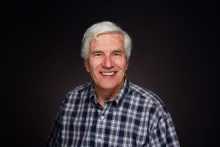
Steve Shafer was born and raised in Seattle. He graduated from Queen Anne High School in 1959 and later graduated from Ambassador College, Big Sandy, Texas in 1967, receiving a degree in Theology. He has been an ordained Elder of the Church of God for 34 years and has pastored congregations in Michigan and Washington State. He and his wife Evelyn have been married for over 48 years and have three children and ten grandchildren.
