
Roy Holladay
This transcript was generated by AI and may contain errors. It is provided to assist those who may not be able to listen to the message.
Well, good afternoon to everyone. It's certainly good to be back here in Chattanooga. Norm and I decided we'd come and keep Thanksgiving with Bill and Betty, and we did that. Ron and Emily were there. Likewise, I know Betty outdid herself in cooking preparation. We really had a wonderful spread for everyone. We really enjoyed eating and just having some time together. So, we appreciated their hospitality. I thought I might just mention a couple of announcements to you. Actually, I have nine of them. About some of the activities that are going on at the home office, and just to let you know basically what's occurring, we just had a camp coordinators conference, and in that conference, every year we will discuss the camp, what happened this year, problems that come up, good points, and the object is, as Bill was saying, to try to make the camp that much better the next year. And I think we really have a tremendous camp program, but there's always room for improvement. One of the things we've been talking about doing is trying to put out a quarterly magazine for the youth and the church. This would not go public. It would just simply be for church youth, and there would be an emphasis also on camp, but issues, especially the cultural issues facing young people today, that we would be able to address those, and we'd like to get a lot of young people writing for that. And I see a number over here. We've got all kinds of talent in the church that could really jump in and help with that. So that's one thing that we're looking at and trying to do. We had a regional conference here recently in Youngstown. We had 84 to attend the leadership workshop. What we started doing last year in December, this was 2013, out in Los Angeles, we would normally get there a day ahead of time and use Sunday to get ready, prepared for the ministers coming in. And so the idea came up, why don't we use that day and invite the leadership in the local church areas to attend? We've had three of these now, and in each case we've had about 80-something in attendance. We had down in Atlanta, as well as Youngstown, and then Los Angeles. And it's a great opportunity for us to be able to get to know those who are leaders and given church areas, who potentially, in the future, their names might be put forward to be ordained or just recommended for a certain position. And in this particular conference, we had a 16-year-old up to, I think, about 80. So there was quite a gap, age gap in there, but it was great to be able to meet and see all of those individuals.
I mentioned to you before, I've basically been working on trying to develop leadership within the church, training new leadership. We've been doing a pastoral care class. We have about 78 hours of training in that particular class. We started out, this is the third year, but the first year we started out simply with those men who had been hired.
They were elders, but they had never, in many cases, been trained to become pastors. So we're covering everything you can think of that a pastor does and trying to give the instructions on that. Well, this year we're trying to do something different. We're trying to make good recordings of the classes. And in so doing, make it available to all the ministry, and not just to those who are able to tune in on Monday morning at 10 o'clock.
That eliminates a lot of people because they're working. We're also recording the ABC classes this year, and we hope to be able to make those available. And we're going to probably ask our ministers to put in a number of hours each month, each week, listening to various classes to give them a review. It doesn't matter if you've pastored for 30 or 40 years. If it's been 40 years since you attended college, there's probably a lot of new information out there that you can learn from.
So we're going to make those available. We're also working on a program for WebEx. We can have 25 different individuals or groups who can watch a presentation on WebEx. This is what we use for these pastoral care classes. But what we're talking about doing is covering our young adults in the church to be able to get church areas together. As an example, here in Chattanooga, everyone could go over to David's house or go over to Bill's house, wherever you'd like to go.
And all the young adults could meet in a group. And that would only be one participant in the WebEx. We could actually put 25 churches online at the same time and literally have hundreds of young adults listening to a particular presentation. The idea is to have a presentation that the young adults actually recommend they'd like to hear this topic being covered.
And again, it could be on biblical topics, it could be on social issues, it could be on almost anything. And then we would send out the notes that are going to be covered, take maybe a half hour or 45 minutes covering it, and then open it up for discussion. One of the beautiful things about WebEx is you can hold your hand up.
And if you're, let's say the Chattanooga group wants to make a comment or ask a question, well, their hand goes up and we can see who's hands up, who's not. And then we can call on them, and whoever the representative is can speak into the computer and we can hear. So that's something we want to do. We'll do it by time zone, start in the Eastern, go to Central Mountain and then Pacific, work across the country that way.
And that way you don't have somebody listening at 7 here and 4 o'clock in the afternoon somewhere else. So it'll make it a lot easier. We're working on retiring older ministers. Right now we have next year, I know of five men who will be retiring. And one of them is an example is Fred Kellers. I don't think he's made any bones about the fact that he wants to retire. I asked Fred, when do you want to retire? He said four years ago. So he was ready to go four years ago. Gary Antion's retiring. And Frank Dunkel is coming in and replacing him at ABC.
So we've got that. Right now also we have five men who we've made assistant pastors who are, in a couple of cases, looking after a small congregation. Maybe of 20 individuals. And they're going to be under a pastor who we will call a mentoring pastor or training pastor who will work with that individual and help them. So we're beginning to get the process going. 2016 is when we've set our day to retire. And so we're working to get all of this up and running.
My mention concerning ABC is, you know, ABC has been renamed Ambassador Bible College. And officially you can do that in Ohio. You don't have to change a thing. You just become a college.
And we're doing this. We're having a review board come out to approve this. The reason why we've gone to use the term college instead of center is because international students, in order to get a visa where they can stay in the country more than four or five months, have to go to a college. They don't recognize centers. What is a center? Well, they're Muslim centers, but it's not something that someone can come over and attend. So in order to do this, we have to be approved. And so Aaron Dean has really been working on this.
I saw all the paperwork he had accumulated. It's a notebook about like this, of recommendations, information. We've got to prove that we've had classes. Of course, we've got pictures showing each class that we can demonstrate a lot of this. And so what we're hoping to do is to be able to, in the future, allow more internationals to come over. As an example, this year we had five from the Philippines who wanted to come. They could not get visas to be able to enter the country for that purpose.
So they simply were not able to attend. We're going to begin to put more emphasis on ABC, on training. Not that we're going to call it a seminary or anything of that nature, but more of an emphasis on those who come in, training them, teaching them, so that when they go back out, that they will have that as a background. And so we're going to be working on that as time moves forward. The council will be in town on December the 7th.
This is an extremely busy time for all of us in the home office because December, Strategic Plan, Operation Plan, and Budget have to be up and running. So we've been redoing the Strategic Plan, the Operation Plan, and this year it's even busier because every three years they do a major rewrite or a major lookover. Maybe it would be the better way of putting it. So we've already gone through the Strategic Plan, the Operation Plan, looked at it, made corrections, added certain things, dropped a few things.
And the council will take a look at it, give their suggestions, and then we'll have a final product for the February meeting. That's when it's all technically approved by the council, and they'll have another once over. So we'll see how that goes. My mention about our granddaughter Courtney, appreciated Bill mentioning Herb. She didn't actually stay with us. She was staying with a group of girls in a dorm.
But the last two days, I think it was a Friday and Saturday, she came over, stayed with us, was having such severe headaches that she'd sleep most of the time. The type of headaches that she's having right now actually cause paralysis. Sometimes her side of her face goes into paralysis, her arm, her hand, so that she's actually not able to move. Finally, what happened on Sunday, she was going to take a test, and on the way to that, she had one of these severe headaches, and her arm, the side of her face, froze.
So she had to pull off to the side of the road and just sit there for two hours to get the feeling to come back. And then she decided, why should I be doing all of this? She's not able to attend class. So she got a ticket and flew home the next day on Monday. So I know she really wanted to attend ABC, but just didn't work out for her. You might read over again that write-up about the Cleveland, this is Ohio, church building.
We purchased two buildings here recently, one in Wichita, one in Cleveland, and if you can find a building, and there are a lot of churches that are actually selling buildings now because, number one, they're either declining in attendance, and they don't have enough to keep it going, or they're growing, they're becoming one of these mega churches. They're building big, beautiful auditorium sitting, three or four thousand, and they've got this little pole-dunk church over here.
And so they want to sell them, and you can't get much for a church. And so if you find a place like that, and the cost is cheaper than the cost for what you're paying for rent, and that's including utilities, you can buy it. And, in other words, the church would continue to subsidize it, and actually I hope that we will be able to do that here in the future, and have dozens of churches around the country.
It gives you a presence in an area. You know, when somebody wants to know where you meet, and you say, well, we meet at the Moose Lodge, or the Masonic Temple, or something like this, that doesn't go over very well, but if you have your own presence in the community, it lends itself in that direction. So, just so that I put a bug in your ear, you can begin to look, and if you find something, see what you can do.
Well, a number of other things going on, but I better hurry up here, or we'll run out of time as far as the sermon is concerned. You know, at the recent Leadership Workshop Conferences in Atlanta and Youngstown, we've been covering some basic topics.
And one of the basic topics that Victor Cubic covers is having a Christ-like attitude when it comes to service, that we should be servants. And Christ said, if you want to be great, then you should serve.
Leadership should be based upon a foundation.
And I've been covering that topic, which is the topic of humility, that if we're going to serve, it should flow out of an attitude of humility. We've been called to serve one another, and God sees not only the service, He sees the attitude behind it. He sees the intention. He sees the motive. God can look at our hearts. He knows what's going on inside of us. And we might be able to hide it from others, but we can't hide it from God. Humility is the basis for proper leadership. It is the basis for the foundation that all godly leadership should be based upon.
Let's notice the example of Jesus Christ. Let's go over to the book of Philippians, chapter 2. Philippians 2. And we'll begin here in verse 1. Philippians 2. And verse 1. And notice the example of Jesus Christ. Jesus Christ is the perfect example.
And when He walked the earth, He was the perfect example of how a human being should live.
Now notice, it says, Therefore, if there is any consolation, in other words, if there is any encouragement in Christ, so there should be encouragement that we all receive from being a Christian.
If any comfort, any love, any fellowship of the Spirit, if any affection and mercy, fulfill my joy by being light-minded, in other words, fellowship and affection and mercy, having the same love being of one accord and of one mind.
Let nothing be done through selfish ambition or conceit, but in lowliness of mind let each esteem others better than himself. Now that's very difficult for human beings to do, because people tend to think of themselves better than others and look down on others.
Let each of you look out not only for his own interests, but also for the interests of others.
Now notice, let this mind be in you, which was also in Christ Jesus. So what kind of an attitude, mind, motive, intention did Jesus Christ have as God in the flesh when he walked the earth? Notice, who being in the form of God did not consider it robbery to be equal with God.
Now I want you to notice what verse 6 tells us. That the one who became Jesus Christ, the Word, the second member of the God family, before he came to this earth, had humility. He already had that as equality. He was being in the form of God. See, there were only two beings in that divine family.
Did not consider it robbery to be equal with God, but made himself of no reputation. He was willing to come to the earth and to die for us, taking the form of a bond servant, becoming a human being and coming in the likeness of man.
Being found in appearance as a man, he humbled himself further, became obedient to the point of death, even the death of the cross. He was willing to do that. As a result of that, God has exalted him above everyone else who will eventually be in that family.
He was humble, and he was willing to come to the earth to die for us. Jesus was one with the Father. You'll notice the attitude that he had. When Christ walked on the earth, you might remember that he always gave the Father the credit for everything. He didn't try to take credit to himself. Notice what Christ said out of his own mouth.
John 5.19 Verse 30 So Christ wasn't down here parading around, looking, look at me, look at what I can do. He gave the Father the credit. Chapter 6, verse 38 He sent me. Chapter 8, verse 28 I can do nothing of myself. John 8.28 Then John 12.49 For I have not spoken on my own authority. So Jesus Christ did not speak on his own authority. And then in John 14, verse 10, Christ said, Do you not believe that I am in the Father and the Father in me? The words that I speak to you, I do not speak on my own authority. I am not saying this by my authority, but the Father who dwells in me does the works. So he gave all credit to the Father.
Now, you and I should possess the same type of attitude that everything we do spiritually, all the credit goes to God. It's not anything that we do. If we have love, if we serve, if we're able to help, whatever we might do, all of that comes from God. Even the talents we have, the innate ability we have as human beings, come from God. God gives us all talents and all gifts. Jesus Christ, in Matthew 11.29, made this statement. In Matthew 11.29, he said, I am gentle and lowly in heart.
He was not arrogant, vain, cocky, proud, walking around, strutting around. No, he said, I am gentle and I am lowly in heart. The word lowly here means not rising far from the ground. Somebody who is lowly is somebody who doesn't rise far from the ground. Lolly and spirit are to be humble. So Jesus Christ said that he was lowly, that he was gentle. It doesn't mean he didn't have authority, didn't have power. There were times that he got angry, we all know that.
But he did everything out of service and out of humility. Jesus Christ was a sterling example of humility in action. You can just, if you want a title for the sermon, humility in action, to ask Jesus Christ. That's the way he was. Humility has to do with our relationship with God, how we react to God. But it affects our relationship with every other human being we come in contact with. It influences our relationships with them. See, a Christian can keep the Ten Commandments, like the Jews. The Jews in Christ's day, the Pharisees, Sadducees, kept the Commandments.
And yet, Christ said, unless your righteousness exceeds the righteousness of the Pharisees and the Sadducees, you will by no means enter into the kingdom of God or the kingdom of heaven. So there was something wrong with their obedience. It was not motivated, as it should be. There's an underlying commitment that has to be there in keeping the Commandments of God. There's an approach that must be there, that is observed, and needs to underline everything that we do in our obedience to God. Jesus Christ, back here in Matthew 5, while we're in the book of Matthew, let's go back to chapter 5 and verse 3.
What's called to be attitudes here, Matthew 5, verse 3. Blessed are the poor in spirit, for theirs is the kingdom of heaven. Not blessed are the haughty and the vain and the proud, but the poor in spirit, verse 5. Blessed are those who hunger, verse 5 says, Blessed are the meek, for they shall inherit the earth. So the meek are the ones who are going to inherit the earth.
The poor in spirit is actually an idiom. It implies to humble oneself in regard to our capacity and our relationship with God. Ask yourself the question, what are we compared to God? Humility is looking on ourselves properly before God and realizing that He's all-powerful, the Almighty, the Eternal, and yet we compared to God are nothing on our own. And yet human beings walk around saying, well, there is no God, claiming that God doesn't exist, and the pompous vanity of our own minds is thinking that we're something.
God says all nations compared to Him are a drop in a bucket. All nations are like the small dust on the balances. And so human beings of ourselves are nothing. So we have to realize that humility has to do with knowing and understanding that without God, we're nothing. That we have to have God through His Spirit dwelling in us to accomplish the work that God gives us. It doesn't mean that we lack in having the Holy Spirit, we lack in drive, we lack in ambition, or you don't have talent in ability, but it is a recognition that everything spiritual is accomplished through God.
It's a recognition of our need for God in our lives, for the need of God to give us direction, inspiration, guidance, help, strength, power, whatever we need, that God is there to give it. Anything spiritual is accomplished by God in us, and by and through His power, and by His might. Now ask yourself, does everything that I do, that's you, I, you, or me, me, is everything that we do, does it flow from that attitude, that approach? And our relationship with how we deal with others, and how we relate to God.
Humility and a servant's attitude go hand in hand. As I said, it's the underpenny, it's the foundation on which service should be based. Notice this quote from John Seldin. I think it describes humility quite well. Humility is a virtue all preach. None practice, yet everybody is content to hear.
The minister thinks it's a good doctrine for the servants, the laity for the clergy, and the clergy for the laity. So everybody thinks everybody else should have humility, or needs more humility. When it comes down to it, we all need it, don't we? We all need to be humble. Humility is something that Jesus Christ practiced, and the very fact that he was willing to come to this earth.
You stop and think about it. Someone who dwelt in eternity, stepped out of eternity, and stepped into time, and subjected himself to what every human being is subjected to. To gravity, to the pulls around, the temptations around, yet he never sinned, never gave in to any of that. Lived 33 and a half years without ever sinning. Lived a perfect life, motivated by humility. He came as a servant. In the Old Testament, he is called the suffering servant. He came to suffer and to die for us.
Yet, he was God in the flesh, and remembered what it was like to be in the family of God. He gave all credit to the Father. He knew that his power, his strength, and all came from the Father. We will see that humility today, in the sermon, that humility covers every facet of our life, everything that we do. Micah 6 and verse 8, let's begin there. Micah 6 and verse 8, it covers our relationship with God, our approach toward God. And what is it that God wants us to do? What kind of an attitude does he want from us?
He says, He has shown you, O man, what is good, and what does the Lord require of you, but to do justly, to love mercy, and to walk humbly with your God. God wants us to walk humbly with Him. That we go to God for everything that we need, and we rely upon Him. The word humble here, again, means to be humble, lowly, and modest in our approach. The Apostle Paul, as we know, was an outstanding minister. Notice in Acts 20, Acts chapter 20, we'll begin to read here in verse 18.
Verse 17, we find that he sent to Ephesus and called for the elders of the church. They came over to pay their respects here to Paul. And when they had come to him in Miletus, notice, he said to them, He said, He served God with all humility, with many tears and trials, which happened to me by the plotting of the Jews. So he had a lot of trouble. He had to run for his life, hide, and he cried many tears over the people, the church, and those who were trying to kill him. But he served God with all humility. The Greek simply means having a humble opinion of oneself, a deep sense of one's moral littleness, modesty, humility, and lowliness of mind. Do we realize that spiritually everything, again, comes from God? Remember, there are two ways of life. We've learned this for years. There is a way of give, that's God's approach, that is based upon love of God, love of neighbor, and is based upon humility. There is also Satan's way of get, of selfishness, which is based upon pride and ego. One way works, one way doesn't. And, as we've heard over the years, God's way works. Satan's way does not work. And we have the testimony of 6,000 years of human history to show us that man's way doesn't work. It ends up in war, suffering, misery. Every kind of human problem you can think of is a result of man's way.
Humility is a basic recognition and belief of the following. Let me just list certain characteristics that you can tell concerning humility. Humility recognizes that only God is good. Remember, Christ said, Why call me good? There is human good, we know, but that's based upon the tree of the knowledge of good and evil. You and I have to recognize that only God is good. All righteousness comes from God. That's another element of understanding humility. It takes God living in us to be righteous.
Obedience to God's law and way of life is only possible through the Holy Spirit. There is a spiritual dimension to the law of God that mankind is not aware of. He doesn't understand it. And so man, attempting to keep a spiritual law, keeps it physically without the Spirit of God. It is also an understanding that we are mortal, that our lives are mortal, limited. We can't give ourselves eternal life. We cannot forgive our sins atoned for our mistakes. Loneliness of mind springs from a grateful attitude toward God for His blessings, for what He does. He is willing to forgive us. It springs from the knowledge that our sins are forgiven. And, though we understand that there is no way that we can save ourselves, there is no way we can forgive our sins, that only comes from God's grace. Humility is a recognition that everything is spiritual and comes from God. It is a recognition that we are totally dependent upon God. Humility recognizes that every talent and spiritual gift comes from God.
It is also a recognition that we need God, He doesn't need us. When I say He doesn't need us, that doesn't mean He doesn't want us in His family and His kingdom. But we need Him. He lives for eternity without us. But He wants to share His way of life with us.
As Proverbs 22 and verse 4 tells us, let's go back and read that. We'll come back to this again later. Proverbs 22 and verse 4. By humility and the fear of the Lord are riches and honor and life. The reward of humility is the opposite of how most people try to obtain it. They make getting money their absolute goal in life. That's their objective. God says, have humility, fear Me, which implies your obedience to God. And that God will bless us with physical possessions, and we will have everything that we need to take care of ourselves. Our relationship with humanity, with our neighbor, depends upon humility. Let's back up again to Philippians chapter 2. Go back to Philippians 2 again. I want you to notice here, Philippians 2, beginning in verse 1, To fulfill my joy by being like-minded. The word like-minded means to be of the same mind, to be in agreement together, cherish the same view, to be harmonious. This is the way Jesus Christ said that people would be able to tell that we are His disciples.
Remember us as being like-minded, having the same love? What did Christ say in John? By this shall all men know that you are my disciples, if you have love, one for another. So humility helps us to have that type of love, to be like-minded. It's proof that Jesus Christ has come into the earth. Then you'll notice in verse 3, He says, Let nothing be done through selfish ambition. I wish our politicians would read this scripture and pay attention to it. The word selfish ambition, or strife, as King James' version says, means electioneering or intrigue for office.
It describes perfectly the political scene that we see about us today. It says, Apparently in the New Testament, a courting distinction desired to put oneself forward, a partisan and fractious spirit which does not disdain low arts. This word is found before the New Testament time, only in Aristotle, where it denotes a self-seeking pursuit of political office by unfair means. It means putting your opponent down, building yourself up. Anything that you can do to raise yourself up. As the L'Onnida Greek lexicon says, It is a feeling of resentfulness based upon jealousy and implying rivalry. It is a selfish ambition and rivalry. It is a resentfulness, selfish ambition, and rejecting of others. The word rivalry may be expressed as wanting to be better than someone else.
When you have rivalry, you are wanting to be better than that person, or wanting to make people think you are better. Whether you are better or not, you want them to think you are better. How often do people pretend to be one way when they know they are not? Because they don't want people to think badly of them. Well, if you don't do that, I don't think you are human. We all find ourselves falling into that trap from time to time if we are not careful. So, you find that the meaning of selfish ambition may be rendered as what they do is just to make themselves look bigger, or what they do is just for themselves. That is how L'Onnida would translate this particular scripture and the word here for selfish ambition. Then the word conceit says, let nothing be done through selfish ambition. In other words, trying to push yourself forward to appear better, to aggrandize itself, or through conceit or vainglory, it is vaingroundlessness, selfish esteem, empty pride, opinion. So, as the New Revised Standard Version says, do nothing from selfish ambition or conceit, but in humility regard others better than yourself.
So, we are to regard others better, and not trying to put them down. It seems like politicians, again, the only way that they know to win is in some way to find dirt, say something bad about your opponent. How many times have you heard a politician get up and say, you know, my opponent may be in the other political party, he's a good man.
If you elect him, whether you elect me or elect him, you're going to get a good servant. So, it doesn't really matter. I'd really like the job, but if you elect him, that's good too. You're not going to hear a politician say something of that nature. So, when you contrast that with loneliness of mind or humility, there's a complete different attitude.
Now, when it says here to assume others better than themselves, it means to consider others better than yourself, to be superior, better than, or to surpass. And this strikes at the very heart of the problem we human beings have, which is vanity and pride. Ego. Feeling superior or feeling better than others.
You see, none of us know the heart of another human being, do we? You might look at somebody and say, well, you know, I remember they did this, they did that, they made this mistake, and you look down on them. But you don't know what their relationship is with God and how they've gotten in their prayer closet, cried out to God, prayed, asked for forgiveness, asked God to help them, and, you know, that as far as God is concerned, He's washed all that away, and He's forgiven them. So, you and I need humility if we're going to have the right attitude in service. In James 4, verse 6, I want you to notice, James chapter 4 and verse 6, it says, He gives more grace, therefore He says, God resists the proud, but He gives grace to the humble. God gives grace to the humble. God opposes the proud, as it says here, He resists the proud or He opposes the proud. The word resist is a military term. In the Greek, it's a military term, meaning to battle against. Now, ask yourself the question, do you want God battling against you, resisting you? When two armies go out to fight, they're resisting each other. Two football teams go out and play football. The defense is resisting the offense, and there's a resistance, an opposition going on. And so it's a military term, meaning to battle against. To the humble, however, God gives grace.
How many of us desire grace? God's forgiveness, God's mercy, God's free will? That's something that all of us need. We need more grace, not less grace. We need more of God's grace extended to us. The cure for conflict is humility. How can you have two people hostile against one another if they have humility? I'm sorry, I made this mistake. No, it was me. I said this, it shouldn't have happened.
Both of them have the humility that they should have. There's not going to be a problem. So God resists the proud, but notice in verse 7, therefore, we're told, as a result of this, submit to God, resist the devil, and he will flee from you. Submit is, again, a military term. When you look at it, it means to be subordinate or to render obedience. Just as in the military, you have a ranking system, the private is on the bottom, and you have corporal and sergeant, and you work up the line. So you and I submit to whom? To God. We submit to God, to His authority, His rule over us. We are subordinate to Him. And it says to resist the devil, now the resist here means to take a stand against. Stand against the devil, against his wiles. And if we do, he will flee from us. So we take a stand, and how do you take a stand against the devil? You say, okay, put him up. I'm ready to fight. Is that the way you take a stand? Now you recognize when the devil is around. Pride, vanity, ego, arrogance, you know, these are how you take a stand against him. He gets at us through our human nature, our humanness. And so when we do battle with that, we also take a stand against the devil. The problem that Satan had from the very beginning that led to his disobedience to God was pride. Pride and vanity. He wasn't human, but he's ego. This is one of the main weapons that he uses against the human race to get us to become vain also. What is pride? Pride is conceit, self-love, arrogance, egotism, self-regard, self-esteem, self-importance, all the emphasis on the self. It is self-adulation, self-admiration. It has to do with disdain for others and loftiness of mind thinking about the self. Sometimes, we use words and we don't really just sort of look at them, break them down, and come to understand what we're really talking about. Humility is a cure for pride. How do you overcome pride? Through humility. The devil will never admit that he's wrong. He's got too much pride, too much vanity. It's part of his character now. It's the way he is. He thinks that God is wrong, that he is right. So, he will not repent. Do we start every day by asking God to help us to be a tool in his hands? Do we ask God every day to help us to stay humble? God will humble us through circumstances, right? If you're married, he will humble you through your wife, too. Or your mate. Your mates help us. They can point out things that we say or do that are wrong. But you know, there are certain traps that we fall into. One of the traps that we fall into, and anyone who's in a leadership position, I gave this originally for our weekends and was specifically designated for those who would be considered leaders, is to take credit for what God does through you. That's one of the big pitfalls that anyone who's in a leadership position can do. Another way is pride, to think that you're above the law.
One of the biggest problems that I've seen over the years in the ministry is pride. It just goes along with it. Somebody comes up, oh, what a great sermon that was. You did this. I just loved your messages or whatever. The first thing you know, must be pretty good. You begin to get the big hit. Instead of saying, thank you, and always giving God the credit, realize, just something. Think about it. Any speaker, any minister in God's church, anyone who speaks locally, it doesn't matter whether you're ordained or not ordained, how would you be able to speak unless God, number one, gave you a mind?
If God's spirit was not there to open your mind, to understand His law, His plan, His purpose, His way of life, and to help you to be able to speak. I know that we have men who stand up here every Sabbath, who are not speakers on their own, but yet who have been willing to yield to God, and God is able to use them because they are willing to yield to Him and obey. So we don't take credit, and none of us are above the law. None of us can think we're so important that we can allow sins in our lives, and sexual sins or whatever it might be. How often do you hear of a minister that they caught in a motel somewhere, or he has lovers on the side, this type of thing?
That always, it doesn't matter what denomination it comes from, basically what it does, it puts a black mark on, quote-unquote, the ministry as a whole. Jesus Christ, again, is our number one model for humility. Take a closer look at how humility would affect our relationship with one another. What I've talked about so far is basically about our relationship between us and God. But let's take a look here.
Go over to 1 Peter chapter 5. 1 Peter 5. 1 Peter chapter 5, and beginning in verse 5, here's a whole section talking about the ministry and serving, and being shepherds and overseers of the flock, and not lording it over God's people. Verse 5, likewise, you younger people, submit yourselves to your elders. Yes, all of you, be submissive to one another, and be clothed with humility. God resists the proud, but gives grace to the humble.
So notice, if we're given a responsibility, a duty, an oversight, then we are to take that and be clothed with humility. We're to do it out of humility. We're looking for leaders in the church who will serve others within the local congregation, and will serve them out of the right attitude, out of the right motives, in the right spirit. To be in the ministry in any position of authority, you must have humility.
That's one of the main ingredients that we look at. Not how many talents a person has. They have to have a certain amount of talent and skills, and so on, but humility. If we humble ourselves, as the Bible says in verse 6, Humble yourselves under the mighty hand of God, that He may exalt you in due time. God won't always exalt you immediately, but in due time you will be exalted. Casting all your care upon Him, for He cares for you.
Too often people worry about power, position, ordination, and realize that God is the one who exalts. We've gotten away from the...it used to be, if you were in the ministry, you started out as a local church elder. Then you were a local elder, then you were a preaching elder, then you were a pastor, and then you could become an evangelist.
The only way that, if you were in the ministry, you had to go, you thought you had to rise this way. Instead of growing laterally, you had to go vertically and climbing up. What it did, it actually produced an attitude of, Well, here I am. I've been a preaching elder for 20 years. What am I doing wrong? Why am I not a pastor? You began to look around. I remember, oh Joe, he was ordained a pastor 10 years ago.
We graduated in the same class. How could he be a pastor? I'm not a pastor. You get these thoughts in your mind. What we've tried to do is to say that, when you serve, that service, the title actually goes along with the job you're doing. If you're a pastor in your church, guess what you are? You are a pastor. If you're evangelizing, perhaps you're an evangelist. We're all elders in the church, but we have looked upon it since United has started. It is a job description that describes what kind of a job you are doing.
Proverbs 15.33 tells us that before honor is humility. If we want honor, first of all comes humility. So we have to have humility. How would humility affect our relationship with one another?
If we were all truly humble, we come to services. How would it affect our relationship with everybody else we meet, we talk to, at services with other members? How would it affect our marriage if you were humble? How would it affect your family in dealing with your mate and with your children?
Men, have you ever stopped to think how much humility it takes for a wife to be submissive to you?
Here you go. You get married. For all of her life, the wife, as long as she's been out of the home, she's been independent. She's on her own. She gets married. And now, according to the Word of God, she's supposed to submit to her husband. What kind of attitude does it take to be submissive? And are you an easy person for her to be submissive to? Are you a loving person? What if roles were reversed?
What if the wife were in charge and we men were told to be submissive to our wives? What would we be doing? How submissive would we be? Well, today we find that very few people have that type of an attitude. It takes humility for a wife to be submissive to her husband and for him not to take advantage of her.
You see cultures today around the world where the men take advantage of the women, treat them as second-class citizens, and they're not looked upon as, here's my wife, we're working together, we're partners towards a goal, towards God's kingdom. Humility is an attitude of always building up the other person. You're trying to build them up, strengthen them, encourage them, looking out for others. Now, in Ephesians 4, if you'll back up here, let's notice, beginning in verse 1, Ephesians 4, verse 1. I therefore, the prisoner of the Lord, beseech you to walk worthy of the calling with which you were called, with all lowliness and gentleness, with long suffering, bearing with one another in love, endeavoring to keep the unity of the Spirit in the bond of peace. So we're to walk worthy of the calling that God has given us. We've been called to become like Jesus Christ. He's our perfect example to become perfect. And we do this with all lowliness and gentleness, with long suffering, and we bear with one another in love. We demonstrate that love, and we endeavor to keep the unity of the Spirit. So, God wants us to have this lowliness of mind. People today in our culture are not willing to put up with anything. Have you ever noticed that? I have my rights. People will scream. And so, dogs have rights. It seems like everybody has rights today. And our culture states that we have rights, and so therefore, people aren't going to allow anybody to step on what they consider their rights. So somebody prays in public, I don't like prayer, I don't like God, therefore you can't pray in public. I don't know if you saw the news here the last day or two. This minister led... actually, it wasn't the minister, he was a mayor. They've had some, I think, murders in his town, some problems, and he let it be known that they were going to come together as good citizens, and they had a prayer. He led them in prayer. Well, an atheist objected, and therefore, he was being sued, I think, for what he did. And so, this is the state that our country has come to. Brethren, God is looking at each one of us, and before we get into God's kingdom, God must know what's in our heart. Let's go back here to Deuteronomy chapter 8. Deuteronomy 8 and verse 2. And notice, God led Israel through the wilderness for 40 years. We know that 40 was a sign of trial and test.
Trial and testing here, but notice verse 2. Deuteronomy 8. And you shall remember that the Lord your God led you all the way, these 40 years in the wilderness, to humble you. So why did God allow them to go through all those trials for 40 years? Well, to humble them. To test you. To know what was in your heart. Does God know what's in our heart? To know what was in your heart, whether you would keep his commandments or not. And verse 16, who fed you in the wilderness with manna, which your fathers did not know, that he might humble you, that he might test you, to do you good in the end.
Everything that God does for us, with us, is for our good. It will work out in the end. He wants you in his kingdom.
So we must show God in our hearts, must be a reflection of the attitude that Christ had.
We need to always be aware of the insidiousness of pride and vanity and arrogance. We need to always give credit to God, to the Holy Spirit, to God living in us, for any good that we do spiritually.
Let me just give you an example, in closing here, about a President of the United States. Many of you have heard of James Madison.
Well, James Madison was President for eight years, held the highest office in the land.
And it says, when James Madison completed his eight years as President, he retired to his Virginia plantation.
Now, he could have said, I've been President. I want all of you to come by and pay me honor and respect.
He could have gotten the big head. But notice, when he went back to Virginia, he filled the office of a Justice of the Peace.
So he became a Justice of the Peace. No wonder he had climbed up, for he knew how to climb down.
He didn't have to appear to be great, for he was great. No office could make him less. His meekness was not weakness. His humility was not humiliation.
He gladly came back to Virginia and became a Justice of the Peace, after holding the office of President.
Not many individuals would do that.
Then it says, the size of the job is not half as honorable as the size of the man who fills it.
I believe the first test of truly great man is his humility.
This was written by John Ruskin back in 1819, who lived from 1819 to 1900.
So the first test of truly great men and women will be our humility.
So rather than realize how important humility is in God's eyes, we will ask God to help us to have humility.
Humility is the basis of our service, helping one another, and it is the attitude that Jesus Christ had when he came to this earth.
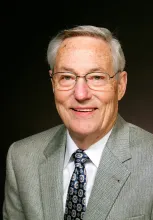
At the time of his retirement in 2016, Roy Holladay was serving the Operation Manager for Ministerial and Member Services of the United Church of God. Mr. and Mrs. Holladay have served in Pittsburgh, Akron, Toledo, Wheeling, Charleston, Uniontown, San Antonio, Austin, Corpus Christi, Uvalde, the Rio Grand Valley, Richmond, Norfolk, Arlington, Hinsdale, Chicago North, St. Petersburg, New Port Richey, Fort Myers, Miami, West Palm Beach, Big Sandy, Texarkana, Chattanooga and Rome congregations.
Roy Holladay was instrumental in the founding of the United Church of God, serving on the transitional board and later on the Council of Elders for nine years (acting as chairman for four-plus years). Mr. Holladay was the United Church of God president for three years (May 2002-July 2005). Over the years he was an instructor at Ambassador Bible College and was a festival coordinator for nine years.
