

John Elliott
This transcript was generated by AI and may contain errors. It is provided to assist those who may not be able to listen to the message.
You will hear at this time of year, joy to the world. The sermonette we heard today talked about rejoicing and about joy. The one thing that we will tend to find absent from our world is joy, true joy, even though people talk about it. Because the world right now is full of troubles, many troubles, and those troubles just seem to become increasingly worse.
No matter what humanity does to try to fix the troubles, it seems the troubles get worse and worse. And why is that? Because there is a cause for every effect, and the troubles in the world aren't cured by just saying, oh, let's have peace or let's have joy. The troubles in this world are caused by something that is very serious. Now, we live in a world fraught with trouble, and you might ask the question, what is the most serious problem that faces humanity?
Increasing world destabilization, perhaps? The prospect of terrorism and nuclear proliferation? Or maybe the financial economic meltdown is the worst problem facing the world? Weakening governmental leadership? That seems to be growing everywhere all the time. A breakdown of the family? Or various abuses that are taking place more and more, and society letting that take place even through the legal system? What about worsening diseases? Those loom larger and larger. The proliferation of international strife or global warming? These are things that we hear about all the time. If you were to think of, right now, just take a moment and think of the biggest pressing issue, the biggest problem that faces every human being, what would you say it is?
What do you think it is? The one that's pushing everybody? The single item that's going to end your world? Wow, that's a big one. The one that's going to end your world. What's actually found in the Bible, in Ezekiel 18, verse 20, simply says, The living person that sins will die, an eternal death. Sin kills. Sin is worse than a bad economy. Sin is worse than a bad disease. Sin is worse than warfare or any of the other things that we tend to think up.
And yet, how many of us would have said the worst problem in the world today is sin? Because sin ultimately will cause this physical cosmos to be burned up with the people in it. Romans 6, verse 23 says, The payback, the wages of sin, is death. So sin is going to kill you, and it's going to kill me. We've got crosshairs on us.
We have the death penalty waiting for us because we're humans and because we have sinned, and the penalty for sin is death. But you say, oh, but wait a minute. That all changed with Jesus. That all went away.
I'm in a different category. I'm in a different group. Let me quote to you something Jesus said in John 8, verse 21. You might want to turn and read this. If you haven't read it before, it's not one of those familiar scriptures. Jesus said to them again, I go away, and you shall seek me, and you shall die in your sins. Where I go, you cannot come.
Now, that's a scary statement coming from Jesus, who suddenly makes everything okay and easy and right and takes away all the problems, isn't it? You're going to die in your sins, and where I'm going, you can't come. Wow! Kind of a little wake up there. You know, sinners, the Bible says, will not inherit eternal life. They're going to die. They're going to be burned up. We can see in Revelation, chapter 21, in verse 8, what befalls those who sin. It says, the cowardly, unbelieving, abominable, murderous, sexually immoral, sorcerers, idolaters. I know that sounds like a really bad group, and they're probably all in prison somewhere, right?
Except the last group. And all liars. Have you ever told a lie? Have you ever been not truthful? These shall have their part in the lake which burns with fire and brimstone, which is the second death. So God is very serious. Sin kills, and sin is going to kill. It is the Achilles heel of human beings, and all humans sin.
So what's the biggest problem facing humanity? The biggest problem facing humanity is extinction. And all of us can have a part in that extinction, as it were, of the physical human race. It's going to be extinct. Now, it's not coming from war. It's not coming from disease. It's not coming because the sun is finally going to grow old. It's coming from a cause of sin. Let me ask you a question today. I want to make this topic personal and relevant and lively and meaningful. Not a historic topic. Oh, yeah, I used to sin when I was younger, but I'm over that now, and I've got Jesus, and we don't have to think about that. I just want to make this very personal between you and me. How do you feel about sin? Ask yourself that. Have you really thought about sin lately? Do you feel it personally? Do you identify with it personally? Or is that something that's a little far off? You might ask the question, what exactly is sin? That's a good question. A gamble. You probably don't know the meaning of the word sin, as it's written in the Bible, though I'm sure you can define it. But sin is this thing that hampers your life. It's the thing that takes joy and happiness away from humanity, including you and me. It's the thing that spoils our relationships. Sin is the thing that, without intervention, will kill us. And it's going to kill you, and it's going to kill me, unless there's a change, unless something is done about it. It's an urgent situation. It's something that really needs all of our attention, all of the time. So let's stop being fooled by this thing that will potentially bring genocide to the entire human race, if something isn't done. And that, I want to make clear, can include you and me. Don't get the feeling that we're in some safe zone. Don't get the feeling that you're in a safe group, or a safe situation that extricates you from any type of danger. That is not true. Today, I want to identify the poison that we all drink from. I want to see it for what it really is. I hope you will join me today as we look at this sermon entitled, I Am A Sinner. I am a sinner. It's going to be up close. It's going to be personal for all of us, including me, but including you as well. So let's begin. What is sin? And the mind searches, and we come up with the Scripture. Sin is the transgression of God's law. And true. Sin is the transgression of God's law. In other words, that's what sin does. Sin transgresses God's law. It is that, and it also does that. But that's not all that sin is. Sin. What is sin?
Certainly, it's a deed. But the word in the New Testament that's used very frequently is, hamartia. In fact, it's the most common noun in the New Testament that's translated, sin. Paul alone uses it 60 times in his letters. So when we think about sin, this definition is what should come to mind. Not just the deed of transgressing God's law, which sin certainly does. But what is sin? What is it? Well, hamartia does not describe the act of sin. That is not what the word does. Instead, hamartia describes a state of sin. I would call it a mindset. It's something that you're involved in. It's something that you're doing, you're thinking, it's part of you, it's part of me, it's part of who we are. It's something we adopted when we were little kids, and we're good at it. It's part of us, as it were. And so sin is a mindset, it's a state. From this mindset, acts of sin, deeds of sin, flow, like the transgressing of God's law. Of course, all sin would fall into that category. The deeds, you could say, were stealing or lying or cheating. But just because you might not be lying at this moment, doesn't mean the state of sin does not exist within you. It does not mean that you're not involved in that, thinking that, going that direction. And from that hamartia, this concept of a state of sin, these acts are happening all the time. So ask this question. Do you tend to think of sin as just the act, the deed? Or do you tend to think of it as a state of mind, as a mentality, as a process? The Bible also describes sin as kind of a dark power that has a hold on you. You see, again, sin isn't just a deed. It isn't just, oh, I did that and I'm sorry and I need to be forgiven. Okay, I got rid of that and therefore I'm free from sin. The Bible actually talks about sin as being something that has you in its grasp. In other words, we like it so much, we're so involved in it, it is something that almost controls us. It doesn't control you so that you don't have a choice. I don't mean that, but it compels you. It really encourages us. I'd like to give three points today for us to realize about sin. The first one is, sin is a universal mindset. It's universal because it's in all humans. It is germane to Satan the devil, the fallen angel, and the human race. That group. And it's universal in the human mindset. For instance, Romans chapter 3 verse 23 says, All have sinned, and we're saying, oh yeah, well I understand that. I sinned a long time ago. I admit that. All have sinned, but notice what it says next. All have sinned and fall short of the glory of God. It didn't say, all have sinned and fallen short, as in the past tense.
It says, all have sinned and fall short. They continue to fall short. We all sin and continue to fall short. Let's not get in our mind that, oh, okay, I'm in the church now, so yeah, I used to sin, but I repented of that. Yeah, I made a mistake three weeks from last Thursday, ten years ago, and I feel bad about that. No, all of us sin and continue to fall short of the mindset of the God family. And that is something, then, that causes us to say, well, wait a minute. If I continue to sin and fall short of God, that means I have to resist. I have to overcome. I have to fight. I have to take on the armaments of God and have a continuing daily fight against sin, don't I? That's the purpose of the message today. I'm a continuing sinner that has to continually fight. And any time that I somehow get bamboozled into thinking that that enemy within is not there, that it's not compelling, that it's not part of the nature that wants to control and dominate me, then it's got me, because the unseen enemy isn't even being fought.
In Romans 5, verse 12, Paul talks about this concept of sin and how it came to us. Romans 5, verse 12, Therefore, just as through one man sin entered the world, in other words, the first humans picked right up on it. Sometimes we want to point at Adam and say, oh, it's his fault.
We're just, you know, they say the nut doesn't fall far from the tree. We're like Adam and Eve in that we also pick up on that and are very, very willing to develop that culture of sin into our life. And so it came through this one man. It's a mindset common to all the descendants of Adam and Eve. And death through sin, that's the result. The result of sinning is death. And thus death spread to all men because all sinned.
So it didn't spread to all men because Eve sinned. Right there in Romans 5, verse 12. Death has come to all of us. And that's the extinction of the human race if something doesn't happen.
Because all have sinned and all are falling short of the glory of God. And you might say, well, you know, there are sinners and then there's me. Or there are sinners and there's us. We're often quick to say, oh, let's get out and cry aloud and spare not and tell everybody else there are sins. Like we're just perfect and we're just fine. And if Christ came back today, He'd just be so pleased with us. We just really need to get out there and tell all those other people their sins. Well, is that kind of like sin is a disease?
Some get it and some don't. You know how that works? Sin is not a sporadic outbreak. It doesn't just sort of happen over there. You know, the people in that country have it or the people in that city have it. People of that age group or whatever have it. It's not sporadic. Galatians 3, 22 says, but the Scripture has confirmed all under sin. Yes, we got a report in from the Bible and it's confirmed.
You and me and everybody. Notice, all are under sin. Now we've moved from the concept of having sin in the past to all are under sin. That's a challenge, isn't it? Sin, then, is a universal state of man. It's what guides how we live, how we work, how we think, how we act. Okay, but that applies to the world. Mr. Eliot, it doesn't apply to me. I'm in that church.
And I've been baptized. My sins were forgiven. I've moved on. I am now clean. Well, I was that way, but I'm not anymore. It's easy to think that way, isn't it? It's very difficult to admit that you're a sinner. If you don't believe it, just have somebody come up to you.
Just ask them. Sometime when I'm not expecting it, come up and tell me that I'm a sinner. And see what your reaction is. Who, me? No, no, no, no, not me. And our little mind will play some wonderful games. That's the way I was, but I'm not that way anymore. You know, to allow yourself to see sin is like opening the door of a safe.
And, you know, going through all the combinations, I really want to open this. But, you know, you finally open the door. And, you know, to open it wide, or you're just going to crack it open. When I counsel people for baptism, talking about the repentance that comes from God. Not the kind you see yourself, oh yeah, I know I do this and that. No, but the kind that comes from God. It begins to show you about your nature, your human, sinful nature.
And you say, oh, okay, I saw it. Ooh, I didn't like that. I want you to let God open the door all the way up to your heart, to your mind. See who you really are in there. It's not going to be pleasant. It's not going to be pretty. You're not going to like it.
And some people slam the door shut. That's the last time you hear from them. Some open the door and they don't see anything. Well, look pretty good in there. Well, you got those rose-colored glasses on. Ask God to really show you what's in there behind door number 4 and 5 and 6,445. Because we really need to see it, and it's difficult for us to see it. We tend to think of ourselves, no, I've been in the church a long time. I'm not a bad person. I may be I'm ordained to a position, or I've got a role or responsibility.
You can play that game all day, but how do you get to the point where the Apostle Paul did, who was an apostle doing the work, having miracles performed around him, writing most of the New Testament, and you come to the place where he did? Romans 7, 14. He's got the door wide open as an apostle, and he's looking at himself.
And he says, for we know that the law is spiritual, but I am physical, sold under sin.
He didn't give himself a free pass as an apostle. He doesn't give himself a free pass because he knows a lot, because he's overcome a lot. He says, I know that I'm a physical human being, sold under sin.
Do you and I... Have we allowed ourselves to think a thought like that? Or do we button it up and say, no, no, no, not me? That Paul must have been a really bad guy, because I don't see myself that way. But you see, sin is the state of human beings. Sin is the state of you and me. Paul just said it right there.
I am currently in the state of being sold under sin. We can never leave it. You might think you left it. If you do, you're deceived. You can't leave the state of sin. You're still stuck. Just like the Egyptians were told to come out of Egypt, a type of sin. Oh, they worked and they tried and they came a long way. And it's good to look back down the road and say, look at the sins I've overcome, but where are you? I am a state of sin. I'm sold under sin. Six days representing a lifetime, they marched out of Egypt. And where did it get them? Just as stuck in Egypt as they were the day they left. You could say even more so, because now they really couldn't get out. There was an ocean in front of them. And it was impossible for them to get out of that. So during your lifetime and my lifetime, we have to recognize this common enemy that we all have. Nobody gets a free pass. Nobody gets to say, oh, sin doesn't apply to me anymore, because I'm in this special group. I'm in the church. I have God living in me. I have forgiveness. I have Jesus Christ. He's paying my sins for me. Those things may all be true. You are still under sin. You are still controlled by it to a degree. You are tuned into it. It is your arch enemy. And it will, with every sin you commit, take you to extinction. Because that is the penalty for sin. Of course, you know that there are some exceptions, and we'll get to those later on.
You can never leave the state of sin. You can be in it and resolve to it and not fighting it. Or you can be departing from it, like the Israelites. You can be in the process of departing from sin. Now, God loves it when you and I are in the process of trying to get out of it and go out of it. That's a wonderful place to be. The only time that you or I will ever be free from sin is when we're spirit beings. And his kingdom is perfect like God is. Right now, we are stuck, as it were. We're making progress, and I hope you're making progress, too. But realize that sin is the universal state of man. The second point is, sin typically controls humans. It typically controls humans.
Now, it's not that it has to control humans. It's not that humans don't have any other options, necessarily. Certainly, there are exceptions that are available. But what I'm saying here is, typically, sin controls humans. Let's notice this in Romans chapter 3. We'll begin in verse 9 and go to verse 12 and also verse 14.
Romans chapter 3, verse 9. What then? Are we better than they? Oh, well, wait a minute. Are we better than they? Well, we would think that we're better than they, aren't we? You've got the world out there, you might say. And certainly, we're better than they. Hmm. Not at all, Paul says. Not at all? See, we're quick to give ourselves a free pass when it comes to sin, aren't we? Because of God, our Father, Jesus Christ forgiving us, God living in us, our baptism, our commitment, our hope for the kingdom, the pursuing of righteousness that we are doing, we think, well, we're better than everybody else. Paul says, no, we're not. As it is written in verse 10, there is none righteous, no, not one. I'm not righteous. Do I do things righteous? Only when God Himself in me prompts me to do things righteously. So He gets the credit for that. That's not me. I know who I am. If it weren't for the help or if it weren't for God doing righteousness in us, if it weren't for His faith in us, we of ourselves can do nothing. Even as Jesus Christ showed that as a physical human being, it is God that is relied upon. There's none who understands. There's none who seeks after God. We don't really seek after God that much. We are God's children, but once we get up in the morning, what are we really seeking? As we go through the day, what are we really seeking? What's really on the forefront of our minds as we go through life? Don't we have to kind of remind ourselves to pray, kind of push ourselves to study? Don't we have to really work hard to turn off our thoughts when the Sabbath comes around if we even try to do that? Do we get rid of our music and our entertainment, our books? Do we get rid of the discussions that we have about work, or taking the phone calls, or doing the emails, or whatever? It says, there is none who seeks after God. Only when God's Spirit prompts us, oh yeah, I should do this. Oh, I should do that. God gets the credit for that, you see. They have all turned aside. They have together become unprofitable. There is none who does good, no, not one. Their throat is an open tongue. How many times do we catch ourselves saying something that is not gracious, that is not lifting up, that is not seasoned and encouraging and helpful? When God's Spirit prompts us to, once we have been baptized, we do better, don't we? We begin to recognize it. We say, I need to come out of my Egypt. I need to struggle with that. But don't ever get the idea that, oh, I'm now in the church. I don't have to worry about that stuff.
I'm just good to go. I don't see anything that's wrong. I'm just waiting around.
Verse 17, the way of harmony, the way of unity, they have not known. There is no fear of God before their eyes. I know you and I are a little different than just the callous society who don't have God's Spirit.
But like Paul said, look, even though I'm trying to do all these things, I am not perfect. I am still so old to understand. I have two things raging inside of me, and there's a fight. There's a battle. Paul says, I'm working hard. I am pushing. I'm trying to go forward. And that's what I want to bring across today. Not to discount the work that any are doing.
Not to discourage you, but rather to encourage you to realize the race is afoot, as Sherlock Holmes might say. You know, the war is on. We're in the thick of battle. And the noise you hear isn't music. Those are bombs going off. And you're in somebody's crosshairs. We need to do something about it.
In verse 14, whose mouth is full of cursing and bitterness, you know, we tend to think of ourselves as nice people. But sometimes what comes out during conflict or disputes or sometimes referring to people who aren't present, it's not that pretty, is it?
Inside there is this fire. There is this engine that burns in all of us. And it's the engine of sin. It's the mindset of sin. It's a system that really supports what we want, me. It supports and elevates me and focuses on me. It makes me the center of the universe in almost any and everything.
We can even get religious about me and sin and put ourselves first. It's very, very subtle.
Under sin, when Paul says, I am sold under sin, the term under sin means a dependence upon, we depend upon sin, subjection to sin, I am under it, I am subject to it, or under the control of. Which definition do you like? You and I are under sin. You want to be under the dependence or independence to it, under the subjection to it, or under the control of it. In other words, it rules over men. Sin rules over men. Now, what do you tend to do if a strong ruler is ruling over you?
Well, people tend to submit. People tend to go along. They don't want to create any waves.
Somebody who's got an iron fist and ruling you, not too many people are going to turn around and really fight and resist that.
Sometimes you submit even against your better judgment. It's not like, oh, sin is, I didn't even know I was sinning. No, it's like this opportunity comes up, I'm looking at it, I'm saying, that's not what I should do. No, no, but against my better judgment, it looks like it's going to work out for me pretty well.
I know I shouldn't. It dominates. It pushes us places we logically don't even want to go.
I'll give you a couple of instances here. Romans 5, 21. Sin reigned, it said. It was king, you see.
It's our king. Romans 6, 14. Paul says, For sin shall not have dominion over you, it shall not control you. That's the goal. That's not the state. It doesn't mean if you're in the church, oh, sin can't control me. Oh, yes, again.
But we're told not to let it have dominion and domination. Dominion means absolute possession, domination.
In other words, you've got to fight back. You've got to fight back. In World War II, when the Germans were coming through and they were absolutely controlling and dominating certain countries, you had an underground movement that was fighting back. And it was hard to do that. Most of the people just wanted it to happen or just let it be pacifist kind of, we don't want any more trouble. But some people were fighting back, fighting back.
Now, you probably feel that this domination of sin, it doesn't apply to me. Because we're all so quick to say, no, no, tune that out. It doesn't apply to me. You know why? Because sin's best defense is hiding.
You know, Monty Knudsen and I are doing some elk hunting. You know, an elk's best defense is you can't see it. They're big. There's lots of them. And you can go out looking all over the place and you can't see any. But they're there.
Sin is just like that. It's everywhere, but we can't see it.
I dare say, if you looked at yourself right now and said, all right, where are my sins?
Scam.
Don't think they're already today. It's like going hunting.
You look all over the hills and the mountains. There just aren't any animals around here.
You're standing knee-deep in tracks and other signs, but I guess they're not here anymore.
It's like your own life. You've got all these responses and reactions and things going wrong.
The results of sin are everywhere in our lives, right?
But I guess there's no sin around here. It must be somebody else's sin.
Well, sin hides well, and we tend to respond by saying, what sin? I don't see any sin.
In Romans 7, verse 11, there's an example of this.
Romans 7, 11, For sin, taking occasion by the commandment, deceived me.
And guess what? And by it, it killed me.
Sin deceives us, and then it kills us.
Because it sets us up once we sin, then we're set up for death. Now, you might ask the question, am I better than the Apostle Paul?
I'd say, well, maybe in 2,000 years, human nature's improved from what it was back then.
Probably not the right direction to be thinking.
Are you better than the Apostle Paul? Well, let's see sin's factual role in your life and in my life.
In Romans 7, verse 23, Paul says, But I see another law in my members warring against the law of my mind.
Paul realized that this invisible enemy was in there warring, and bringing me into captivity, to the law of sin which is in my members.
Now, this didn't come to Paul sort of in a flash.
This shows an individual who's been fighting.
You know, there's a book out where an individual postulates that people have big breakthroughs in their life at the 10,000 hour mark.
When you've done something for 10,000 hours, typically that's where a breakthrough comes through.
That's where somebody gets published. That's where somebody becomes noteworthy.
That's where a craft or a talent really begins to step out.
10,000 hours. You think Paul had 10,000 hours into God's word, 10,000 hours into the ministry, 10,000 hours into fighting sin? Well, you bet he did.
And at the 10,000 hour mark, he was really knowledgeable. He had been in this war for a long time, and this man with God's inspiration is able to see the players, the events, and how it all puts together.
In other words, Paul has been warring and working on this for a long, long time.
He's been witnessing in other people that he's been counseling, has been seeing in the world and in the church and in himself, and he is telling us something deep here.
There is something going on in my mind and bringing me into captivity, the law of sin, which is in my members.
I know the enemy. I'm very familiar with it. I've been working at it, been overcome by it, pushed around by it.
You and I can't just sort of take this as a little topic from the Sabbath.
We spent 60 minutes today, heard a little flash about sin, and really get it.
We need 10,000 hours to get started in fighting our sins and coming to grips with our human nature and seeing how God's nature can assist us with it and really see what the enemy is and be working on it.
You know, I wouldn't say 24-7 because we should be sleeping in there sometime.
But all the time, we need to recognize that enemy is always there and not let this point of sin typically controlling humans get the better of us.
So Paul goes on.
Verse 24, O wretched man that I am, how would you describe yourself? Adorable, probably.
How did Paul come to the state of, O wretched man that I am? We tend to say, Whoa!
Step away from Paul at that point. I like Paul a lot of the time, but O wretched man that I am?
Not sure we have a real identity. We're not really bonding here.
Unless we're of the same mindset. Unless we're fighting the same fight.
Now, I enjoy sharing with some of you in our private discussions, just personal discussions, how this war against sin is ongoing all the time.
And we are always trying to push back and find it. And it's over here, and we're working on that, and over here, working on that.
Realizing that we're sinners, but there's a battle going on, and progress is being made.
And there's progress on many fronts. Maybe we're losing on a front over here. We don't realize it, but the report comes in. Hey, they're breaking through over here. Now we've got to keep working here and over there and push that one back.
You know, there's nothing wrong with that. It actually is good. We can call it fun, necessarily.
But you really can get energized, and the result is always, you feel a good accomplishment, a sense of fulfillment, a sense of place, of knowing where you are, of being like Paul, saying, I know who I am. I know what I am. I know where I'm going. I know what I'm trying to be. And at the end, there's a crown of life waiting for me, and for all of those who love God and are trying to do His commandments.
See, it's a very positive battle, but it is a battle.
When he says, bringing me into captivity, in verse 23, this law bringing me into captivity, the law of sin, that Greek phrase comes from the time when he was alive, and it meant being taken as a prisoner of war.
Sin lives in you. It lives in me. It has a luxury suite in the penthouse.
How do you like that? You know, right here. A luxury suite in the penthouse. It shares at least as much space as God's Spirit, probably more, depending on who we allocate space and preference to.
But sin looks good. It looks like it's going to feel good. It looks like it has the immediate benefit for us if we follow that way. So it gets good billing, good space, good attention. Romans 7, verse 15, it says, For what I am doing, I do not understand.
Paul is saying that? You think Paul understood everything. What I'm doing, I don't understand. For what I will to do. I mean, you and I are Christians in the sense that we know right, we stand for right, we look at the world and say, I just wish Christ came to come so we would do away with that. In other words, you're saying, so would everybody be kind of like me. But Paul says, what I will to do, that I do not practice. But what I hate, that I do. Remember, sin typically controls humans. And that even that we hate, we say we're against and we say, nope, I'm not going to do that.
We end up doing that.
Going on.
Down to verse 23. We who have the first fruits of the Spirit, even we ourselves groan within ourselves. Why wouldn't we be jubilant and happy? We're groaning within ourselves, eagerly waiting for the adoption, for the redemption of our body.
In verse 25, but if we hope for what we do not see, we eagerly wait for it with perseverance. We continue on, we continue the battle, we continue the fight.
You know, this... Oh yeah, I was in chapter 8. Sorry about that. In fighting this, we find that it's not merely an external power. It's an internal power. It's an internal thing that comes after us in verse 19. That good thing which I will to do, I do not do. It's chapter 7. But the evil, I will not to do, that I practice. Now, who are we talking about here? We're talking about Paul. We're talking about me. Are we talking about you? That's the question. Is it talking about you? Can you open up and see that? Certainly in verse 22, I delight in the law of God according to the inward man. But notice, I see this other law whirring against the law of my mind and bringing me into captivity of the law of sin. There's where we are. There's where we fight. That's what we have to get through and get by. The result of this is that humans are slave to sins. The fundamental beliefs of the United Church of God under sin, it says here on verses 12 and 13 that sin's universal presence is in all humans. Furthermore, sin is an enslaving power from which we need redemption and release. It's an enslaving power. No amount of obedience following sin can reverse its effect. You can't just say, well, I keep the commandments. I do good things. I keep the Sabbath. Therefore, somehow it all goes away. No, sin is an enslaving power. It's gotten deep. It abides in every fiber of our being. It's had a long, healthy life. It occupies us like an enemy, occupies occupied territory. It's occupied. It's not really part of us.
It's occupying, but it's dominating. It's having a huge effect. The result is that the humans with sin are slaves of sin, slaves to that occupying power that we have let in. John 8, verse 34, Jesus makes a statement. John 8, verse 34, Most assuredly I say to you, whoever commits sin, whoever commits sin, now you might, if you're like I tend to be, I will say, okay, I'll think of those people, whoever commits sin. Do you think of yourself? When Jesus says, whoever commits sin, do you think of me, you know, John Elliott, or your name? Just thinking of yourself. Whoever commits sin, you say, hmm, I don't know if I commit sin. John 1, verse 8, it says, If we say we have no sin, we deceive ourselves, and the truth is not in us. See how sin is? Sin can be invisible. It can be hard to see. And if we say, I don't see any, then we're being deceived. So Jesus is saying, whoever commits sin, and that means you and me, means everybody. Going on, whoever commits sin is a slave of sin. Again, the question, do you sin? If you do, you're a slave of sin. This sin is something that tries to dominate you, tries to control you and me, tries to enslave us. Like Paul says, that which we don't want to do, it gets us to do things that we say, no, I'm not going that way. Something that is not just an act, as Jesus said. A slave of sin, not just an act only. So your sin is the transgression of God's law. But he says, the person, whoever commits sin, is a slave of sin. Again, that Greek word meaning the mentality of sin. The power of a master over a slave is fairly absolute, unless the slave runs away, gets redeemed. What he's saying here is humans are under the domination of sin. Now, this concept can be argued, it can be debated. You may be thinking of some other concept, also some other scriptures, which I have not brought in today. I'm not trying to bring out that sin is only a mindset, as I've said before. Sin is also a deed. But I'm examining and also focusing on the scriptures that show us that it's a continual mindset that is with us. It is something that continues to try to control us and enslave us, just like the Apostle Paul brought out. And just as Jesus is saying here, humans need to not be fooled that it doesn't exist or that it's a minimal thing. And the truth is that every man is heading for eternal death due to the mindset of sin, due to having a mindset of sin and the resulting sins that spill from that mindset. We are heading for death. The truth is also that without an intervening army, your eternal death is certain. You need an army to intervene and get rid of the conquering power and help you fight it off. But, but, but, but... And I know you've got some buts there that you could bring out. We all can. We can say, but, but, but, but, yes. Well, yes, there are buts to that. However, those buts may or may not apply to you and me. Just because the Bible says there are ways to get around the eternal death penalty doesn't mean you or I are going to get around the death penalty.
There are some exemptions. The point to be made today is without those exemptions and without an intervention, eternal death is certain for all humans.
There is a dumbing down of the human mind that takes place towards sin. First we see it and we're shocked by it. Later on, we're okay with it. It's amazing how that can work. First time we commit a wrong action, there's a shuddering guilt. First time you think of it, there's kind of a horrifying, ahh, just, oh, I can't even imagine that. The first time you do it, it's like, oh, I have this horrible, horrible guilt. The next time it comes up, you have reluctance. Like, oh, I don't know. You know, once burned, twice shy. I shouldn't. The third time, it's more easily done, until you can go on doing it without even thinking at all. It's like taking God's name in vain or talking about somebody, putting somebody down, or thinking the wrong thought, or wrong kind of entertainment. There's this dumbing down that takes place. The sensitivity-ness to sin begins to wear away, and our heart becomes hardened. We say, oh, I'm under grace. God understands. I'm a new man now. The old man got buried. We could say, I'm free. Jesus paid the price. We could come up with all kinds of things to not have to fight the battle. However, Romans 6, 23 still applies. The wages of sin is death. That's what's coming for sin. Revelation 28 defines some sins and then says, lake of fire. So the result, ultimately, of sin is eternal extinction.
Now, why should I bring this up to the potential children of God? Why aren't I out on the street corners, talking to the people selling drugs or something? Why am I bringing it up here? Well, turn with me to Hebrews 3, verse 13. Paul here is going to talk to the church. The book of Hebrews is clearly written to the church. And in chapter 3, verse 13, notice what he says here to the members. But exhort one another daily. Exhort one another daily. See, if we're good to go, why all the exhortation on a daily basis? Why the daily concern here? While it is still called today, while there's time. Lest any of you be hardened through the deceitfulness of sin. Notice he didn't say, lest any of you might sin. No. Lest any of you might be hardened. You can just say, sin is okay. I'm okay with doing this particular sin or these particular sins. Because sin is deceitful. Okay, let's move on to point 3. A very vital point, and that is, sin is always deceitful. Just as Paul said in that last verse, the deceitfulness of sin. Sin is always deceitful. It promises what it cannot do.
Sin is always a lie. Satan is the originator of sin. He is the encourager, pater, father of sin. He's the encourager, pater, father of lies. And that's what he is. That's what sin is. It's all fake. It's all show. It's deceitful. And it's a lie.
Revelation 12, verse 9 says that Satan deceives the whole world. He deceives. Sin deceives. It's all deceit.
The forbidden is done to increase happiness. Just think about it. When things are forbidden, suddenly they're in lights and they're enticing and people are advertising them or whatever. You just see it. It's alluring. Oh, that's going to be great. The forbidden is going to increase happiness. And yet what does the forbidden always bring? It brings the opposite of happiness.
Experience shows us that the result of sin is less happiness. Always. Every time. Sin and deceit go hand in hand. James 1.14 says, but each one is tempted when he is drawn away by his own desires and enticed. That's the mindset swirling in our head, you see.
The sin mindset that deceives us, it tempts us, it draws us away by our own desires. What I want for me, we're enticed. It looks good, it sounds good, it may feel good, but it never delivers what it promises. It always delivers the opposite.
Verse 15, then when desire has conceived, and it's about me, self, and that's why sin is so tempting, when desire has conceived, it gives birth to sin the deed. When sin the mentality gets roaring along, then it ends up producing sins the deeds. And when that sin is full grown, that brings forth death. So I hope today we've all been able to look at this concept that so easily besets us, that is ingrained as part of our nature. I hope we've brought it out of hiding, taken some of the camouflage off of it, at least as a subject, to also show that we all have it, I have it.
And I hope you're able, with God's help, to see that you have this propensity for this other nature.
And I would encourage you to pray to God and ask Him to show you where that nature is, not just the deeds, but where the fire is brewing inside.
Really open up your mind again and be able to see what's in there. Sin is the most important issue that faces mankind. There's no issue of greater importance than sin.
An important question to ask ourselves this week is, where have I come in relationship to sin in my life? Where have I come with this relationship?
Kind of define that, where you are in relationship to the mindset of sin. How far have you developed in understanding it and beginning to fight it and maybe making some changes over to a different nature?
Are you blind to it? Are you defeated by it? Or are you coexisting with it against your will? Are you disliking it? Are you wanting it off your back? Or are you a freedom fighter?
You're going tooth and nail, seeking to overthrow and oust it. Everywhere you can find roots of it, you're trying to cut those roots, cut those ties.
The daily question is, what do I want to do about the sin living in me today? What do I want to do about that? When you wake up in the morning, what do I want to do about the sin that lives in me today?
Very important questions. I'd like to close by reading Romans 6, verses 20-22.
This apostle who God inspired to show us this enemy also reveals to us that there is help, there is ultimate victory, but we must be very, very serious.
Romans 6, chapter of the Bible, talks about baptism and fighting the fight with God's help. He says this, For when you were slaves of sin, ah, past tense, there can be a time when we were totally enslaved to sin, and you can move from that.
You were free in regard to righteousness. What fruit did you have then in those things of which you are now ashamed? For the end of those things is death.
But it doesn't have to be. There are some exceptions. Yes, there are some buts. But we have to be involved in the battle in order for those exceptions to count on our behalf.
And so in verse 22, But now, having been set free from sin, slavery to it, absolute domination by it, and having become slaves of God, now there's being dominated more by God, you have your fruit to holiness in the end everlasting life.
Now how we can come to that state is the topic of another sermon.
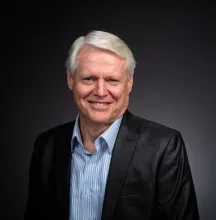
John Elliott serves in the role of President of the United Church of God, an International Association.
