
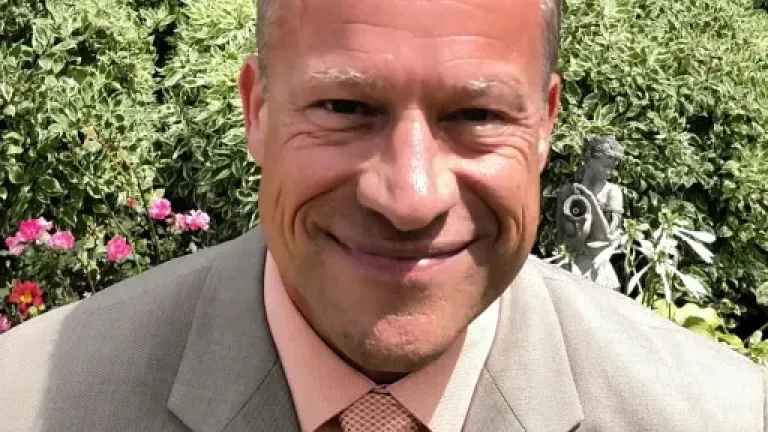

Ben Light
This transcript was generated by AI and may contain errors. It is provided to assist those who may not be able to listen to the message.
Good afternoon to everyone. It's great to see everybody here. We have a full house and a bunch of extra young people, which is excellent. It's good to see all of them here. It was a little over, or I should say it was a little after 9 a.m., June 7, 1958, so roughly 60 years ago. The Air National Guard Jet Precision team called the Minutemen was putting on one of their performances.
They were flying at the famed Wright-Patterson Air Force Base, which is just outside Dayton, Ohio. All of the West Point grads were just in awe as they watched it, as were thousands of other observers at that time. Because for everything there was amazing. It was spectacular. For the men and the pilots, it was routine because they'd done this show hundreds and hundreds of times.
As they flew in the diamond position, Colonel Williams pressed the microphone button on top of his throttle, and he called, Smoke On! Now! The diamond deplanes pulled straight upwards in the turquoise sky. The smoke came behind him, and they split in four directions as they turned off the smoke and made the shape of a fleur-de-lis.
And of course, the whole crowd, for those of you who've seen that before, go, ooh, ah, it was spectacular. It's what's famously known as the flower burst maneuver. Out of the end of this, his part of the flower, Colonel Williams turned the saber hard, cut off the smoke trail, and dropped the nose of his F-86 to pick up speed for a low-altitude crossover moon over.
But then, when he glanced over his shoulder, he suddenly froze. Far across the sky to the east, John Ferrier's plane was rolling. He was in trouble. And his plane was heading right for the small town of Fairbourn, on the edge of Patterson Field.
So, in a moment, this amazing, lovely morning turned to horror. Everyone saw it. Everyone understood. One of the planes had gotten out of control. Well, Colonel Williams immediately raced his saber in the direction of the crippled plane, and raised his voice over the muck, and he said, Bail out, Johnny! Bail out! There was still plenty of time. There was still plenty of room.
Twice more, Williams issued the command, and each time he answered, or all he got is an answer, it was a puff of smoke. Now, Colonel Williams grasped immediately what was happening. John Ferrier couldn't reach the mic button on the throttle, because his hands were being tugging as hard as they could to the right to try to stabilize the plane.
But on the handle, on the stick, was the smoke button, and so he was answering the only way he could, squeezing it to tell Walt that while he could pull out, he couldn't let his airplane go into the houses of Fairbourn. Captain John T. Ferrier's saber jet hit the ground, equidistant, between four houses. There was hardly any place other than that one backyard garden, where he couldn't have hit without killing many, many people.
And so there was an amazing explosion. There was a woman and some children who were knocked over, but nobody was hurt, besides, of course, Captain Ferrier, who was killed instantly. Major Wynn Coomer, who had flown with the Ferriers for years, or with Ferrier, I should say, for the years, was the first to arrive at the scene.
And he found a neighborhood, of course, that was still stunned from the awful thing that had happened, but there was no resentment, as is common when you have a peaceful community that's turned upside down by a crash like this. Instead, a steady stream of people came up to this tall, handsome pilot who was still in his uniform, and humbly all said the exact same thing. This man died for us. This man died for us. A bunch of us were standing together watching this show, an elderly man told Coomer. When he started to roll, he was heading straight for us.
For a second, I felt like we looked right at each other, and as he spoke, tears welled up in the man's eyes. Then he pulled up, right over us, and put it in there. It was a bold and it was a courageous last act. But it wasn't anything that was unusual for John Ferrier. It's a reason, 60 years later, we can speak of the man. He had been awarded one of the nation's most honored medals of courage and bravery beyond the call of duty in Korea, and you could go through his track record. Shortly after the crash, Johnny's wife wrote a letter to Bill Lance, who was a man in charge of a youth camp named Kanaka Camps.
He may think, what can a youth camp do? In it, she wrote, Coach, I went through his billfold last night and found the old worn card which he always carried, which said, I am third. He told me once he got it from you, and you had stressed it in one of your camp sermons. Anyway, he may have had a few faults, but they were few and minor. He followed that creed to the tee, and certainly to the very end. God is first, the other is second, and I am third.
Not just the day he died, but long before that, certainly as long as I have known him, I'm going to carry that same card with me from now on to see if it wouldn't serve me as a reminder. Today, I'd like us to focus on this lesson of I am third. I am third. If you'll please turn to Mark 12 verses 29 through 31. Mark 12, 29 through 31. We're about to read a scenario where Jesus is replying to the question of an expert in the law. He was trying to test him, and he asks which commandments are the most important. So Jesus is talking to us and teaching us all what matters most in life. Mark 12 verse 29. Jesus answered him, The first of all the commandments is, Hear O Israel, the Lord our God, the Lord is one. And you shall love the Lord your God with all your heart, with all your soul, with all your mind, and with all your strength. This is the first commandment. And the second, like it, is this. You shall love your neighbor as yourself. There is no other commandment greater than these. Now you can literally take, God is first, others are second, I am third, from that set of verses. It is simple to say, it is mighty hard to do, as with so many things in the Bible. Only Jesus fully lived that type of prioritization throughout his life. So let's start with the concept of God is first, because it seems pretty logical, if nothing else to me. God deserves to be first in all things, right? After all, our God has allowed us to have life. We have this beautiful earth to live in. And if he stopped caring, oh, trust me, we would know it. You're watching a show a week or so ago on what a single volcano going off does around the world in the whole course of the globe, you know, killing off thousands in all parts of the globe because of the fallout that happens if that was to take place.
Not only did he create this amazing universe and this amazing planet, but he has subsequently put up with an ungrateful mankind for six thousand years. Humans really haven't given much back in the way of appreciation or devotion or obedience to living what we were taught. Obedience.
And despite us shunning him, our God has shown love and willingly gave his son, even though we were uncaring and undeserving. And as a result, you can see that love playing forward, as a result of that perfect sacrifice, pick up the plane crashing or picture the plane crashing in the community, we're able to be forgiven, justified, made right with him. God sees us differently as a result. He allows a personal relationship. We have help in time of needs. We're granted spiritual gifts. We're even offered salvation. We can keep going on and on with the reasons. If you'll turn to Luke 22, verses 41 through 44. Luke 22 verses 41 through 44.
All of this God's first stuff makes perfect sense, at least when times are less stressful and things are going great. Right? It's easier to focus on and appreciate God at those times. But when times are toughest is when the excuses, when the self-justification start rushing through our heads.
What are the circumstances that make you, that make me, what are our circumstances that make us most likely to struggle? To prioritize our personal desires for the moment ahead of God. When do we justify putting self and our own priorities before putting God first? Now, our greatest example of loving, of serving, of course, is Jesus Christ. And so what we're stepping into is one of the hardest moments in his life where he was struggling with the same thing we're going to struggle with. And we do struggle with. Luke 22 verse 41. And he was withdrawn from them about a stone's throw, and he knelt down and prayed, saying, Father, if it is your will, take this cup away from me. Nevertheless, not my will but yours be done. Then an angel appeared to him from heaven, strengthening him. And being in agony, he prayed more earnestly. Then his sweat became like great drops of blood falling down to the ground. Friends, for anyone who thinks putting God first should be easy, just look at Jesus pleading with God for any possible other way, and sweating drops of blood. Putting God first is hard, but it's what is expected. Obedience. The first sermon we heard.
We're commanded to fear God, to love Him with every ounce of our being, and to serve Him in everything we do. That's what it means to love God with all of our heart, mind, and soul. That all word scares me. Every time I see it, that's one of those big, ugly words that slaps me in the face because I fall so short of it. All. It means without limitations, without conditions. Please turn to Philippians 3 verses 7 through 11. Philippians 3, 7 through 11. Paul is another example of loving and serving God first, and in this next verse we can clearly see Paul pointing out his intentionality because you cannot prioritize this way without intentionality. You'll hear me use that word multiple times during this message, but it shows his intentionality of putting God first way before his own desires, way before his own pleasures. Philippians 3, 7. But what things were gained to me, these I have counted lost for Christ. Yet indeed, I also count all things lost for the excellence of the knowledge of Christ Jesus my Lord, for whom I have suffered the loss of all things, and count them as rubbish, that I may gain Christ and be found in him not having my own righteousness, which is from the law, but that which is through faith in Christ the righteousness which is from God by faith. So what was Paul's motivation for putting God first, for letting, making all those sacrifices? We see it next. That I may know him and the power of his resurrection and the fellowship of his suffering being conformed to his death, if by any means I may attain to the resurrection from the dead. That is the awareness that helped Paul to withstand all that was there to push his own self-will aside to put God first. And for us as believers, only God can make resurrection possible, so only God should come first.
What does that look like in practice? What does it look like? Putting God first looks like waking up every morning and spending time talking to God and being in his word before I check my phone or get on my laptop or go to work. It's about starting the day with my priorities clear and in focus.
Do you put first reading and praying and meditating on God? Do you prioritize that in your day? Do you go through your day being thankful? And maybe even singing a song of praise somewhere, even if the voice cracks and sounds less than deserving to be on the radio. It means, in a non-cliche way, asking what would God do? What would God do? How would God treat the other person in my current situation?
What would God say? How would God react? What would God think? What would God feel?
It isn't about us becoming monks. It isn't about us separating ourselves from anything that is a temptation or withholding anything that's a pleasure. That's missing the big picture. Because, friends, we can put God first while enjoying blessings and pleasures just as much as we can put self first while serving others and obeying God.
It is all about our motivations and our intentions. At the end of the day, that's what God is looking at. Putting God first keeps our life centered around Him, as it should be. Are all of the decisions in our life measured against the will of God without any compromise?
Do I personally put God first all the time, every time, perfectly? Absolutely not.
I come before you full of imperfections.
God's will often is unclear to me. I am inherently impatient, guilty.
And I could go on and on. I am sinful. I am imperfect. I am impatient. I am selfish. I could be lazy. Basically, I am human.
I have my insecurities and sometimes make bad decisions and mess up. But do you know what the best part of all that is with that embarrassing confession? Jesus made a way for me and for you to repent for those inherent human flaws that we have and be made clean. That's the beautiful part. And after I put God first, then and only then can I successfully move forward to putting others second. It has to come first. So let's move on. Let's move past God first and transition to what should come next.
Many people are willing to worship and to cherish a loving God, but then they choose their own way and their own timing, and then immediately follow up by putting themselves second. And you can argue by choosing their own way and timing they put themselves first, but let's work with it.
They have chosen how they prioritize.
And some people even go to the point of looking at what Jesus wrote and says, all right, let's look at this. After all, it says, I am to love my neighbor as myself. Right? So we could work the logic here. Isn't this really saying that I should focus on perfecting how well I love myself so that way I could learn how to love others? Is that what the Bible says? All right. If you'll turn to John 15 verses 12 through 13. John 15 verses 12 through 13. I think this verse, as well as hundreds of others, is clear to clarify. This one is Jesus telling us where our priorities are supposed to be. How are we supposed to love our neighbor? John 15 starting in verse 12. This is my commandment. Love each other in the same way I have loved you. Okay, now we got four books in the Bible laying that one out for us. There is no greater love than to lay down one's life for one's brother. To me, that very clearly clarifies the ranking order that we're supposed to put ourselves in. I am to put my friends and my families and my neighbors and strangers and all of their humans before me.
That requires my prioritization of others first—I'm sorry, others second, God first—to be intentional. There's that word again. It has to be intentional. I would argue that in the future, anthropologists are going to look at this age. The books we read on self-help, self-realization, self-esteem, they will look at the way we look at morality as being true to oneself. The way we look at politics is a matter of individual rights. They even can look to the new religion ritual that's called selfing and conclude that what we worship in this time is the self, the me, and the I.
Turn to 2 Peter 3 and verse 18. When we have too much of the I and too little of the we, we cannot find ourselves in the way God intends us. Instead, we find ourselves vulnerable and fearful and alone. And boy, there's a lot of that in this world right now, isn't there? A major tenet of our calling is the grace that is extended to us by God. Grace is a beautiful word. 2 Peter 3 and verse 8. But grow in the grace and knowledge of our Lord and Savior Jesus Christ. To Him be the glory both now and forever. Amen. I hope you've come to realize in your spiritual journey that grace is much more than unmerited pardon. That is something that hopefully you've figured out as we go. Because growing in grace doesn't mean sinning more.
Rudeness does not inspire more kindness from other humans or with God. Okay, so how do we grow in grace then?
The answer is through reciprocity. We have favor with God when we show favor to Him and to others. Grace is designed to flow back and forth.
That's how God created it. And it can only happen when we put others second before ourselves. Turn now to Matthew 7 and verse 12. Matthew 7 and verse 12. We were designed by our Creator to learn from altruism, to develop spiritual characteristics like friendship, like love, like trust, like loyalty. And as we put others first, we are taken past our selfishness, taken past our self-centered way of thinking. And to put it another way, by a TED talk that maybe some of you have heard by Rabbi Lord Jonathan Sacks, he said, the best way to strengthen the future you is through focusing on the future us. Another quote from his talk was, he said, we begin realizing that people not like us are just people like us. It's just very wise, short speech that he presented. Matthew 7 and verse 12. Therefore, whatever you want men to do to you, do also to them. For this is the law and the prophets. If we want things taken care of in our life, do we first take care of them in others? If we want people praying for us when we are sick, do we take the time to pray for others when they are sick? God looks to see if we live the golden rule and we grow in grace by extending forgiveness to others as we have been forgiven. It's a wheel that keeps happening if we are doing what we're supposed to, what we're being taught to. And it starts with us putting others before ourselves. Now turn forward a few chapters and go to Matthew 25 and we're going to read verse 31 through 39. Matthew 25 verses 31 through 39. The challenge is that putting others first is very counter to human nature. It's very counter to the way we naturally want to live. And you see that in young kids. I see Drew fighting through that one right now because as teens you have to overcome and you start growing past as little kids. The whole world's there for you. Everybody's, oh, give, give, give, give. Then you start maturing, which means being less selfish and serving others. And it's hard. It's the transition you struggle with. All teens do that. All people do that. Good night. All senior citizens still do that. It's a lifelong battle for us, isn't it? This is hard. Matthew 25 verse 31. When the Son of Man comes in His glory and all the holy angels with Him, then He will sit on the throne of His glory. All the nations will be gathered before Him and He will separate them, one from another, as His shepherd divides his sheep from the goats. And He will set the sheep on His right hands but the goat on His left. Then the King will say to those on His right hand, Come, you blessed of my Father, inherit your kingdom, I'm sorry, inherit the kingdom prepared for you from the foundation of the world. For I was hungry and you gave me food. I was thirsty and you gave me drink. I was a stranger and you took me in. I was naked and you clothed me. I was sick and you visited me. I was in prison and you came to me. Then the righteous will say to Him, Lord, when did we see you hungry and feed you? Or thirsty and give you drink? When did we see you a stranger and take you in? Or naked and clothe you? Or when did we see you sick or in prison and come to you? And the King will answer and say to them, Assuredly I say to you, inasmuch as you did it to one of the least of these my brethren, you did it to me.
See, when we serve others in need, Christ feels us doing it toward Him because we are reflecting His values and His priorities. We are putting God first and we're putting others second when we do that. To put it in other words, we can't truly love God first if we don't love others second before ourselves. The sheep being praised, meanwhile, didn't think about the service they provided because it was part of their lifestyle. Those are the ones God's looking for. It was the way they regularly expressed service and care for others.
And that's what it looks like to have the love of God in us.
Turn to 1 John 3, verses 23. 1 John 3, verses 23.
Having God in us is supposed to change us and how we treat others. If we are led by God's Spirit, then we need to live up to being future sons of God. We have no evidence we love God until we love His children. 1 John 3, starting in verse 23. And this is His commandment that we should believe on the name of His Son, Jesus Christ, and love one another as He gave His commandment. Now go forward to 1 John and we'll start in 4, verse 7. 1 John 4, 7. Beloved, let us love one another, for love is of God, and everyone who loves is born of God and knows God. He who does not love does not know God, for God is love. In this the love of God was manifest toward us, that God has sent His only begotten Son into the world, that we might live through Him.
In this is love, not that we love God, but that He loved us and sent His Son to be the perpetuation for our sins. We can never love God more than He loves us.
Beloved, if God so loved us, we also ought...
ought was an interesting word. I had to look that one up. Literally, that means we owe as our good will do. That's a good way to put it. So this is saying, beloved, if God so loved us, we also owe as our good will do to love one another. Now turn to verse 20 and verse 21.
If someone says, I love God and hates His brother, he is a liar. For he who does not love his brother whom he has seen, how can he love God whom he has not seen? How can you put God first if you can't love others second? And this commandment we have from him, that he who loves God must love his brothers also. Simple concept. I love simple concepts because they're always so hard to achieve.
Do we put our friends' needs above our own? Some of the ways we can do this are as seemingly simple as listening, being intentional with our time, with our conversations with them. Do we set aside time to be one-on-one with each other? Do we ask what prayers are needed by others? Are we aware of what their struggles are, what their stumbling blocks are in this time of their life? Do we know who had the hard week? Putting my family first means thinking of my parents and my elders, the examples and everything they've taught me, and all the things that they've done for me when I go and make my own personal decisions. More importantly, it's setting aside pride and overconfidence and being humble enough to consult them, whether personal family or elders in the church and throughout, and ask for input. So I consider that in how I shape the future for myself or for Drew. It's about asking what kind of example am I setting for my family name, for my reputation? In regard to my son and hopefully my potential grandchildren, the next little party is running around, it's being aware of what example I will be for them and what influence I am having on their lives as I make daily decisions. In essence, what legacy am I leaving? For future generations stemming from my branch of my family tree, and even more importantly, for the legacy of being called a future son of God. For the one I'm supposed to reflect.
Please turn to Philippians 2 verses 3 through 4. Philippians 2 verses 3 through 4. As you know, we could go through hundreds of sermons on this concept of putting others first, but I'd like to finish with one verse that highlights the basic lessons about considering others and their things and their needs more important than ourselves. Philippians 2 and verse 3.
Let nothing, there's no other room in that word, let nothing be done through selfish ambition or conceit, but in lowliness of mind let each esteem others better than himself. Let each of you look out not only for his own interests, but also for the interests of others. Do your thoughts and your words and your actions show clearly that others are more important than yourself.
Something to think on during the week. Okay, let's finally transition to the concept of I am third.
Please turn to 2 Timothy 3 verses 1 through 5. 2 Timothy 3 verses 1 through 5. And I guess the best starting point for this section is blatant honesty. Friends, sometimes I don't want to be third. I want to be second. Okay, who am I kidding? I want to be first. All right?
Sometimes I feel like I can justify not showing love to my friends and family or strangers because I am coveting something or I'm hurting or I'm exhausted and I'm angry and impatient. I'm lazy and secure. Fill in the blanks. At those selfish points in life, I can disregard or probably better put lower in priority other people in their needs. Paul is really describing that mentality in the evil that is inherently in us in these next verses.
2 Timothy 3 verse 1. But know this, that in the last days perilous times will come. For men will be lovers of themselves, lovers of money, boasters, proud, blasphemers, disobedient to parents, unthankful, unholy, unloving, unforgiving, slanderers, without self-control, brutal, despisers of good, traitors, headstrong, haughty, lovers of pleasure rather than lovers of God, having a form of godliness but denying its power, and from such people turn away.
What a terrible, selfish list of words describe a person. And the more embarrassing part is that I'm being honest, I have to admit I've been guilty of every one of those things at different points in my life. That's a mirror set of verses there. That's powerful. You can go on each of them. You could say, lovers of self, alright, guilty. Lovers of money, you know I've done that.
Disobeyed to parents, my parents would say, amen! Headstrong, yeah? You can keep going down the list.
All of them stem from not putting God first and others second. And most often, it's when I'm led by either selfish feelings or longings or a lack of patience or fatigue. That's when the problems start. That's when this list becomes my mirror. In contrast, when we do get things in the right order, our communication is no longer about talking about myself.
It's listening. It's analyzing. It's helping others. We stop asking what our church can do for us, but what we can do for our church. So the concept of today's message is really a simple one. And I hope it sticks in your mind, just like that little simple card I could imagine having in a wallet for a lifetime. God is first, the other person is second, and I am third.
And I am third. And that understanding leads to a happy way of life. It leads to a loving way of life. It leads to the best way of life. It really leads to the only way of life. But it also speaks of a way of life that is impossible without the example of Jesus Christ and without us maintaining a powerful life-changing relationship of Him living through us. It's the only way. In closing, turn to 1 John 4 and verse 19. 1 John 4 and verse 19. And as you turn, I want to remind you of the first verse I read to you. And that is the one in the sermon where Jesus was talking in Mark, and he said, we are to love God with all of our heart, with all of our soul, with all of our mind, and then to love others as we love ourselves. In 1 John 4 and verse 19, the Bible says, we love because He, because God first loved us. But then reverse, first of all, and think about it. Friends, the great news is that God loves us deeply. Jesus loved us enough to go to the cross. He was humble and caring enough to say, Father, forgive them, to wash stinky feet. He was perfect enough to be the Son of God, and it's only because of Him first loving us that we're even capable of loving it all.
So it's pretty obvious that God really, really wants us to understand the concept of putting Him first, and then by learning from His example, to put others second. So what is hindering you in these priorities? Is it time? Then redeem it. Is it selfishness? Then confess and repent of it.
Is it bad habits? Then stop them. Is it bitterness? Then let God's mercy and peace help you let it go.
Is it carnality? Then replace it. Maybe it's sickness. Maybe you're physically just broken down. Then pray about it, and then trust God's will and God's power. Friends, I encourage you to do a search and replace operation on the text of your mind, and wherever you encounter the word self, substitute the word other. So rather than self-help, other help. Rather than self-esteem, other esteem. And then talk passionately to God in prayer about helping you put first God, and then put other second to keep yourself third. It's a humbling prayer.
But that order of priority is really what opens up all the doors of righteousness that the Bible talks about. And when we do this, God can help us truly live the words that Acts 20-35 says, where it says it is more blessed to give than to receive, because that's the way we live our lives.
It really opens up all the verses in the Bible, if you think about it. When we put God first and other seconds, we begin to feel the full power of the famous verse that says, though I walk through the valley of the shadow of death, I will fear no evil because you are with me.
Because when we face evil, as long as you know, we won't face it along, and our life isn't about ourselves, and we're putting God first, it's like, okay, it kind of stinks.
But I get it now. God first, others second, and I'm third. True Christian joy or peace and contentment will only result from us ordering our lives with that simple prayer.

Dan Apartian is an elder who lives in Bloomington, IL. He is a graduate of Ambassador College and has an MBA from the University of Southern California. Dan is widowed and has a son.
