


Paul Moody
This transcript was generated by AI and may contain errors. It is provided to assist those who may not be able to listen to the message.
Heat the fiery furnace! Seven times its normal intensity!
Cried the king, and all his fury and anger, Bring the most mighty men of valor from among my army, And bind these insolent Jews, and throw them alive into the fiery furnace! For no one is above the law, which I have decreed. I am King Nebuchadnezzar of Babylon, And no one who defies my word will live to see another day.
Could you imagine being on the receiving end of those words as perhaps three young men of the Jewish faith coming from Judah, brought by captivity into Babylon, now standing before the king, before his rage, before his fury, and having this condemnation declared against you? Well, for three young men again from the nation of Judah, this was the moment that would test their faith in the living God. If you were here this morning for the Bible study, I really appreciated the groundwork that was set in that message by Mr. Sexton and Mr. Davis, who's going to continue on throughout the weekend, and I really had no interaction with what those messages would be about, but I think we can take this and kind of set it in the context of what we're hearing over the course of the weekend, because God's people in the past have faced incredible times of challenge, times that tested their faith, that caused them to have to stand up and, frankly, in front of a life and death decision and determine, will I be faithful unto God, or will I compromise? It's happened in the past, and indeed, brethren, in the same capacity it will happen again in the future, as we shall see not only in this message, but throughout what we hear the remaining of this weekend. But far from home, far from the land of their birth, Ananiya, Mishiel, and Azariah, whose names have been changed to Shadrach, Meshach, and Abednego, faced a king, and they faced a decision that would determine the course of their lives from that point forward. These young men, and were probably more almost youth than men in their age at this time. They were contemporary and friends with Daniel, again, had been brought out of Judah, Jerusalem at a young age, into Babylon. They had spent their childhood in Jerusalem, and as such, they understood who the God of Israel was. They had grown up in the teachings of the laws of God and the ways of God, and they had an opportunity to establish a relationship with their God. And now, in the land of their captivity, that's being put to the test. But they'd shown themselves faithful along the way. As gifted youth, King Nebuchadnezzar carried them away again into captivity. They had positions of responsibility within now his administration, his palace region. They'd shown themselves faithful time and time again, but now they stand before a decision as elevated individuals in the province of Babylon.
The scene had changed rather dramatically for them, rather quickly. Again, they were educated, they were well-received, they were filling a role. God had said, you know, be faithful in whatever it is you find your hand to do. And they were doing that, and they had had blessing, and it had worked favorably for them. But now they're standing before the wrath of the king of their captivity, condemned prisoners, slated for death and complete destruction. The title of my message today is, But If Not. Three short words of faith, but if not. It's a short phrase of faith extending from Shadrach, Meshach, and Abednego, and it's important one for us to understand in context and meeting today, brethren, because again, we will move forward under perhaps some of us similar circumstances to what it is indeed they faced at this critical point in their lives. Let's go to Daniel chapter three and start the account that will take us up to this important phrase and give us some thought in terms of what it is they were facing and what indeed we may perhaps on occasion find ourselves facing as well. Daniel chapter three and verse one says, Nebuchadnezzar the king made an image of gold. We know the story. Whose height was 60 cubits, its width was six cubits, and he set it up on the plain of Dura in the province of Babylon. Going about the rough estimate that a cubit would be perhaps a foot and a half or so, this is a golden image 90 feet tall, nine feet wide by most estimates, a rather impressive structure. And there was a plan for this image. As the story continues, the officials of the provinces are called into the assembly. There's now this great dedication of this image with incredible pomp and circumstance. And as we know the story, whenever the music played, right, whenever they heard those instruments blare aloud, they were to fall down and worship before this great image. And those who did not, those who restrained for any reason, were to be cast alive into the fiery furnace. Now if we go down to verse 8, jumping down to verse 8, this is pagan idolatry to its fullest extent. Verse 8 says, therefore at that time certain Chaldeans came forward and accused the Jews. Shadrach, Meshach, Abednego, they were of this descent. It says, and they spoke, and they said to King Nebuchadnezzar, O King, live forever! You, O King, have made a decree that everyone hears the sound of the horn, the flute, the harp, the lyre, and sultry, and symphony with all kinds of music. They shall fall down and worship the gold image. And whoever does not fall down and worship shall be cast into the midst of a burning fiery furnace. There are certain Jews whom you have set over the affairs of the province of Babylon. Shadrach, Meshach, Abednego, these men, O King, have not paid due respect, due regard to you. They do not serve your gods, nor worship the gold image which you have set up. The Nebuchadnezzar in rage and in fury, verse 13, gave the command to bring Shadrach, Meshach, Abednego, so they brought these men before the king. And Nebuchadnezzar spoke, and he said to them, Is it true, Shadrach, Meshach, Abednego, that you do not serve my gods, or worship the gold image which I have set up? It is true. Would have been the response. Now, if you are ready at the time, and at the time that you hear the sound of the horn, flute, harp, lyre, and sultry, in symphony with all kinds of music, and if you fall down and worship the image which I have made, then good. It says, I'm giving you an opportunity here. I'm giving you an out. You're standing in the face of my judgment condemned unto death, yet you know you can have a choice in this matter. You can walk away right now. Simply fall down and worship. How challenging really could it be?
But if you do not worship, he says, you shall be cast immediately into the midst of the burning, fiery furnace. And who is the God who will deliver you from my hands? Shadrach, Meshach, and Abednego answered and said to the king, O Nebuchadnezzar, we have no need to answer you in this matter. If that is the case, our God, whom we serve, is able to deliver us from the burning, fiery furnace, and he will deliver us from your hand, O king. But if not, let it be known to you, O king, that we do not serve your gods, nor will we worship the gold image which you have set up. I'm going to come back in a little bit, take a closer look at verse 17 and 18, because there's actually a few proclamations here that are essential that we take from this message. But carrying on in verse 19, Nebuchadnezzar was full of fury, and the expression on his face changed toward Shadrach, Meshach, and Abednego. You know, they were favored in his sight, but you know, they've gone just a little too far this time if they refused to bend the knee and bend to his command. It says, he spoke, and he commanded that they heat the furnace seven times more than it was usually heated, and he commanded certain mighty men of valor who were in his army to bind Shadrach, Meshach, and Abednego, and cast them into the burning fiery furnace. Then these men were bound in their coats, their trousers, their turbans, and their other garments, and they were cast into the midst of the burning fiery furnace. Verse 22, therefore, because the king's command was urgent and the furnace exceedingly hot, the flame of the fire killed those men who took up Shadrach, Meshach, and Abednego, and these three men, Shadrach, Meshach, and Abednego, men, men of God, men dedicated to his service, fell bound into the midst of the burning fiery furnace. Again, these three men, these three youth, we would call them, refused the command of the highest authority of the land. Frankly, the king of the superpower of the day, they refused to submit, to bow down, to yield, to worship any other than the true God, and now they find themselves subject to the king's wrath and judgment. Death would seem certain in this circumstance, wouldn't it? Certainly, apart from the salvation of the Lord, death would seem certain. If we go back up to verses 17 and 18 of Daniel chapter 3, I want to consider a few important concepts here in this message.
Again, verse 17, it says, if this is the case, our God whom we serve is able to deliver us from the burning fiery furnace, and he will deliver us from your hand, O King. But if not, let it be known to you, O King, that we do not serve your gods, nor will we worship the gold image which you have set up. This is clearly an example, brethren, of profound faith, and faith that they held in their deepest core of conviction, because again, they had an out, right? They had an opportunity. They could change their mind. They could yield. They could think of their mind, well, you know, I really do serve God, but I'll just bow down. I'll go through the motions. I can be dismissed and go my way. But this was a point that tested their faith and conviction to the point of life or death. Do you believe and trust God, or do you not?
And I would say for many of us, honestly, it is actually rare that we come up to an opportunity where the distinction is this clear in the decision that we would make so defining for our life. But indeed, this is what they face, that a profound example of faith. And so, the purpose of this message is to help to educate and instruct us in matters of faith, hopefully bolster our faith in the face of challenges in the life today, yet to come. We're going to do so by looking at some of the details of the faith of Shadrach, Meshach, and Abednego. So again, verse 17 and 18, three proclamations we should take note of. Number one, they said, our God is able to deliver us.
Our God is able to deliver us. They were founded upon an absolute confidence in their God. It's a declaration of faith stating that the God of Israel is above any power, any authority, that we put our trust in Him, and it doesn't matter, King Nebuchadnezzar, how powerful you are, how many men you have standing behind you. What your incredible might is in this physical world. Our God, who we serve, is able to deliver us. For these young men, this was displayed as an absolute fact of trust, complete commitment in their God. Now, this is the same kind of faith you and I have been called to build in our lives today as well, to establish these are the good times. Honestly, we look around at the world and there's challenges, there's difficulties all around. We see the storm clouds on the horizons, but frankly, we as the Church of God of the modern era have lived in the good times, and it is the good times that you prepare for the times of challenge. And there are challenges coming, difficult times. We, in the message this morning, in the Bible study, heard about the age to come. We heard about the opposition to God, to the people of God, the system of end-time Babylon, which indeed will rise up and not only be an opposing force to the truth of God, but we seek to snuff out the people who are faithful to that God, and who would endure as well. So, in the face of trial, we must trust fully in God's ability to deliver us by whatever means he should choose. Our God is able to deliver us. He has the ability, he has the power, he has the resolve, the determination should he choose, our God is able to deliver us no matter how dire the circumstance, no matter how powerful the enemy may seem. And that's a point of faith we must hold to. We must never waver. We must never question. Indeed, the Bible reveals that God's people at the end of the age are going to be facing circumstances not unlike Shadrach, Meshach, and Abednego.
Revelation 13, verse 8, I'll just quote it for you. We heard it this morning. It says, All who dwell on the earth will worship the beast, whose names have not been written in the book of life of the Lamb. I used to think, well, you know, a lot of people know what's coming, can read the Bible. There's a lot of people that are looking and anticipating perhaps the beast power coming on the scene. And perhaps there'll be those besides us who won't bow down, who won't worship, who won't submit. It says, All who dwell on the earth will worship the beast, whose names have not been written in the book of life of the Lamb. For some, they're just going along with the system. They've fully bought in. They'll worship the beast. For others, maybe there is some resistance, but this will be compelled worship because, frankly, they're just a bridge too far. And they would fall down and submit all you have to do when you hear the music. Bow down and worship the idol, and you can be on your way. All who dwell on the earth, apart from those whose names are written in the book of life of the Lamb. The Bible tells us the faithful will resist, and the faithful will stand, frankly, perhaps even to the point of death for some. They did not love their lives unto the death. So there's a faith, a core determination and belief that must be in place. Because, you see, this kind of faith doesn't develop in the midst of the trial. It's not when you're marched up there and told to fall down, bow, and worship that you now say, oh, I've got to go back and muster up a little bit of faith here. Faith must already be present in your life before the gold image is built, before the music starts to play, before the command of the king, before the consequence of the furnace, the faith must already be there, because that is not the time then to go back and build that faith. It takes a relationship with God in the good times, the times that we have the time to study and spend on our knees and grow and develop those things. Shadrach, Meshach, and Abednego had that faith already before they were taken captive into Babylon, before the command of the king was ever issued, and because of that they were able to stand. And they said, our God is able to deliver us.
Second proclamation we find here in verse 17 and 18, he will deliver us. Our God is able to deliver us, but not only that, he will deliver us. Again, it's an absolute statement, and the expectation and the belief and the trust is in God's deliverance. Not only is he able, but he will deliver us as his people. Shadrach, Meshach, and Abednego trusted in God to deliver them from the consequences of the king's wrath. And it wasn't a question in their mind of, will he or will he not? He will deliver us. So, how is our faith when it comes to that point? When facing challenge, trial, struggle, do we believe that God is not only able to deliver us, do we believe he indeed will deliver us? Again, this is an element of the faith that they had, they trusted in God to do so. You know, King David believed that. King David, a man through the Bible who had all kinds of afflictions, he understood what it meant to be on the run from the king for his life, did he not? And what did David say about the God of his devotion? Psalm 34, 19, David says, many are the afflictions of the righteous, not few, many. If you're faithful to God and you live this way, there will be challenge, tests along the way. That is a natural part of the process. Many are the afflictions of the righteous, but the Lord delivers him out of them all.
That's an encouraging statement. It should give us comfort. Psalm chapter 15 and verse 50 says, And call upon me, this is God now expressing to his people, Israel, where their deliverance would come from, and call upon me in the day of trouble, and I will deliver you, and you shall glorify me.
Again, you're going to know what the source of your deliverance is. And the glory always goes to God.
And so our expectation in the face of trial and tests must be that God will deliver us. Absolutely, without a doubt, our God who is on the throne will indeed deliver as he has promised. It is promised in his word. And that must be an encouragement and must hold that as an encouragement.
With that being said, we understand that God does not always deliver in the timing or according to the exact manner that we would perhaps prescribe to ourselves if I was writing the story. Right? If I was going to say, here's God, what you should do in my circumstance, let me make a recommendation. God's deliverance doesn't always come in the way at the time we would necessarily prescribe for ourselves. Sometimes God's answer for us is, wait. Right? And there's lots of scriptures throughout the Bible that say, wait upon the Lord. And honestly, the blessing for those that wait upon the Lord, what the ultimate resolution of that will be. But sometimes God says, wait. Sometimes God says, not now. Not today. And sometimes, as in the Apostle Paul's circumstance, God says, my grace is sufficient. Which, if you understand truly what God's grace is, the fact that he sent his only begotten Son who died for us, who shed his life for our sins, and the mercy that God has extended. We understand that the answer of my grace is sufficient isn't a lesser answer. Like God, I'm asking for this blessing. But God says, my grace is sufficient. It's sort of down here. No. God says, I have extended to you the greatest deliverance possible. Bestowed upon a human being. My grace is sufficient. And we walk forward faithfully, knowing that his deliverance in his time will come for the rest.
Sometimes God's deliverance takes the form of him walking through various trials by our side.
You're not necessarily removing the trial, not necessarily taking it away. There are times where God says, you know, there's a profound lesson you're going to learn through this for your growth. And you know what? This will not only be a benefit in your life today, this will be a benefit for eternity and those who you will yet work with in the future. And there's times where God walks by our side, accompanies us, comforts us, strengthens us, encourages us, so that we do have in that sense the deliverance that the trial does not overcome us, because the God whom we worship is by our side.
Also, in some cases, God's deliverance from the trial will ultimately come through the resurrection.
Scripture was mentioned this morning about being counted worthy. Pray they be counted worthy and stand as in resurrection in fullness before the Son of Man. Sometimes that deliverance will come ultimately through the resurrection. We won't go there for time today, but Hebrews chapter 11 is the faith chapter, right? An incredible line of servants, line of people who look to God in faith. And God open seas before these people. He delivered them from the sword. He brought incredible blessings to their life of deliverance. And we like those stories, and we cheer for those stories, but you get a little farther down the line as well. We find in Hebrews 11.35 it describes individuals who would not accept deliverance that they may obtain a better resurrection.
King Nebuchadnezzar offered Shadrach, Meshach, and Abednego deliverance. But you see, the deliverance that comes from man often involves compromise. And they did not accept that deliverance. Many in Hebrews 11 who actually died, we would even say, in terrible ways because their faith to God did not receive the deliverance of compromise in their day that they might receive the better resurrection, the first resurrection, and truly stand in glorified deliverance before their God.
It is indeed a better resurrection reserved for those who reject the temporary deliverance of compromise because, you see, God's deliverance will never, ever, ever ask you to compromise.
God's deliverance will never ask you to compromise. But man will give you an out. Man will give you a temporary solution. We want the eternal blessing that comes from our God. And Shadrach, Meshach, and Abednego saw that perfectly. Indeed, first resurrection is a better resurrection. And no matter what form their deliverance would take, they said, our God is able to deliver and He will deliver. But they submitted to God's perfect will, which leads us to the third proclamation of Daniel 3.18, but if not, these are incredible words of faith.
I've heard it described before that, but if not is sort of like doubt or it's a cop-out. Like, you know, you just didn't have enough faith for God to do it up front. But if not, does not include that. But if not means if the deliverance does not come at this time, no, O king, that we do not worship you.
We do not fall down before your image. We do not yield ourselves up to you because we worship the God of our fathers. The God who is true. The God who has all power and all might above this earth. But if not, is an incredibly powerful statement for us to consider, because I would say it may be a circumstance that we all find ourselves in at one point or another, trusting in God, having faith, praying for His deliverance and recognizing, but if not today, I still will not falter, will not bend.
Chad Ragnishak and Abednego stated, but if not, and no matter God's decision for them, they would not yield to the spiritual opposition in front of them, simply for the preservation of their physical lives. How much faith does it take to declare, but if not, and still stand solid without an understanding of what that deliverance will ultimately look like? You know, at this point, they did not know for certain that they would not just simply perish in the fire. They knew God could resurrect them.
They knew that God would have a plan and a purpose for His faithful people. But again, how much faith does it take, but if not, and still continue steadfast in obedience to God? I would submit to you it takes an incredible amount of faith, and often it takes even more faith to continue serving God faithfully, even when you don't see the immediate outcome or the immediate answer which He will reveal, more than simply receiving the blessing. I've heard some say, well, you know, they must be lacking faith because the blessing didn't come, or the healing didn't come immediately, or whatever it was, or whatever it was, or you pray, your will be done, and that somehow a cop-out.
It is not a cop-out. I would give you, brethren, that, but if not, is a level of faith when you stand solid, even not knowing what the immediate outcome will be, but trusting God until the end. That takes more faith, I believe, than simply just receiving the blessing up front. There are times when God's answer is, yes, immediately. And I've seen it many, many times.
He's pulled people back from the edge of the cliff, dramatic healing, just instantly. I've anointed people on a couple of occasions where there was something very serious happening, and literally you said, amen. And they said, it's gone. And it's just, you know, in some ways, it's almost a little surprising to me. And it should not be, but I'm just saying from the standpoint of I've seen God dramatically intervene, just bang. But I've also seen other times where somebody was right at the edge of the cliff, and he brought them back just a little bit, and he gave them some buffer.
But he didn't remove everything that they were struggling and dealing with. And yet they continued forward in great and unmovable faith. So there's times when God's answer is yes, there's times when it is not now, there are times when his answer is my grace is sufficient, and we understand that is an incredible blessing. Thank you, God, for that.
Yet there's times where we continue to persevere through the trial without wavering in conviction. Again, not even knowing for certain how that deliverance will take place. But if not, as an incredible perspective to hold on to. Let's go back to Daniel 3. Let's see how this story continues where we left off. Let's see God's response to their faith. Daniel chapter 3 here in verse 23. Daniel 3, 23, and it says, And he spoke, saying to his counselors, Did we not cast three men bound into the midst of the fire?
And they answered, and they said to the king, True, O king. But look, he answered, I see four men loose walking in the midst of the fire, and they are not hurt. The form of the fourth is like the Son of God. You know, possibly the pre-incarnate Jesus Christ, possibly an angel, certainly God's divine protection in the midst of the fire with them. Verse 26, Then Nebuchadnezzar went near to the mouth of the burning fiery furnace and spoke, saying, Shadrach, Meshach, Abednego, servants of the Most High God, come out and come here.
Then Shadrach, Meshach, Abednego came from the midst of the fire, and the satraps, administrators, governors, and king's counselors gathered together, and they saw these men, on whose bodies the fire had no power. Their hair of their head was not singed, nor was the garments affected, and the smell of the fire was not on them. You know, they didn't even smell like smoke. I can't seem to sit around the fire pit at my house without coming in on a Friday night, and just all my clothes smell like smoke. But God's deliverance was so perfect and so complete and so wonderful that not even any any indication that they had even been in the midst of this fire was there. Verse 28, it says, Nebuchadnezzar spoke, saying, Bless be the God of Shadrach, Meshach, and Abednego, who sent his angel to deliver his servants, who trusted in him. They trusted in him. That was clearly acknowledged. And they have frustrated the king's word and yielded their bodies, that they should not serve or worship any god except their own. Therefore, I make a decree that any people, nation, or language which speaks anything amiss against the god of Shadrach, Meshach, and Abednego shall be cut in pieces, their houses shall be made in ash heap, because there is no other god who can deliver like this.
He didn't say there is no other god. Nebuchadnezzar believed in multiple gods. But he's like, well, there's none of all the gods that can deliver like this. Then King Nebuchadnezzar promoted Shadrach, Meshach, and Abednego in the province of Babylon. So I guess in Babylon, if you didn't die in the midst of the fiery furnace, you got a promotion. And now you are considered, maybe, somebody great. But if not, it's not a statement that conveys a lack of faith, brother, rather it acknowledges a profound confidence in the perfect will of God. It acknowledges God and our submission to God as the ruler over our lives, as the one who holds our life in his hands.
It's the god who declares the end from the beginning. We recognize he has both the will and the power to bring the past that which he has declared. And we put our very life being and faith and trust in him. But if not, it's not a cop-out, and it's not a falter in faith. There's an incredible statement of faith. Jesus Christ had that. Jesus Christ expressed complete confidence in his Father, so much to the point that he was willing to go from right divine glory, God with God, became a human being born as the Son of God. He of greatest reputations became of no reputation, became a humble servant in the flesh to the point of death, and his trust was to the degree that he would go to the grave absolutely faithful, that his Father would raise him again, that his flesh would not see corruption.
What kind of faith does it take to go from all-powerful to of no reputation?
And he put himself in the hands of his Father who would deliver. Following his final passover with the disciples, Jesus prayed in distress to his Father. And you'll remember this. It's in Matthew chapter 26 in verse 39. Jesus said, Oh, my Father, if it is possible, let this cup pass from me. He knows what's coming. He's walked the streets. He sees what crucifixion is like. They used to put people up on street corners of major intersections. They would nail them on capital T, cross T's, X's, scaffolding, put ten of them up there. But people would walk by and see and fear the consequences of crossing the Romans. And Jesus Christ knew what awaited him. And he said, Father, if it is possible, let this cup pass from me nevertheless.
But if not, not as I will, but as you will. So again, he had such a level of faith that he could place himself into the hands of his Father, knowing that from the point of death in the grave, his deliverance was secure. God would not leave him there. His Father, in fact, would deliver him. And he believed it absolutely because God is on his throne. And he is active. And he is faithful, as long as we remain faithful to him. Jesus Christ, our example, had the same level of trust that, but if not in his request of a certain deliverance, he still knew God's deliverance was sure and true.
I spent the feast this year in Nigeria. And it's always interesting to me when I travel somewhere else because we have challenges here, certainly. But it's a whole different world when you go to another country where their challenges are such that what they are facing day by day are the things we talk about as some day. For them, it is today. At the Feast of Nigeria this year, I heard stories about how much the brethren have to do just this, how they have to put themselves in God's hands for protection day by day, living in confidence in God's deliverance, physically, financially, for their very life. One of our three congregations in Nigeria, the O'wary congregation farthest to the east, has actually become central to a very dangerous area in the southern part of the country. You've heard of Boko Haram. They're up to the north and the east of Nigeria, but other terrorist cells have erupted in other parts of Nigeria, and the O'wary congregation is in the midst of such a region. Terrorists have been coming out for about a year and a half now by the hundreds. They've blown up police stations, freed prisoners by the hundreds, and those have joined their forces as well. They're grabbing people off the streets, out of their homes.
They'll raid a wedding party. They'll grab the bride in the groom, kill them brutally, post it on social media. They'll grab somebody who's just innocently riding his motorbike to work in the morning, behead him, post it on social media. People live in fear in that region, so the government says, we have to step in, we have to take control. And honestly, it's difficult to tell where the police and the military end and where the terrorists begin, because you see these are unknown gunmen. They're kind of identified. They have a way of just sort of melting into the background once they've done their work. And so now the authorities come through and they drag people out of their home in the middle of the night without really any cause and evidence. Some of them never to be heard from again. And this is where our brethren live, right in the middle of these circumstances. And they still have to work. They still have to send their children to school. They still have to function, and they still have to serve God. So for me, at the feast, it was just fascinating and frankly very humbling to sit and listen to those that gave sermonets and sermons talking about just the blessing of God to bring us here safely. We all praise God for bringing us to this place safely, right? Because we had some ice. We maybe had a little bit of challenge, but we didn't have anybody along the road seeking to take our life. And they deal with that on a fairly consistent basis. So they talked about that, but what was fascinating to me as well is this year the feast was the highest attendance in Nigeria that we've had in several years. We had 130 that had assembled, and frankly you think persecution would drag people and push them underground. How about the fact it brought them out in faith? That there is opposition, but that's not going to stop us from serving God. And they came out with dedication and zeal at the Feast of Tabernacles this year, and it was an incredible thing to consider. But again, they live in faith.
They have to put themselves in God's hands completely. And honestly, it's not a completely random incident. We were traveling from Nigeria in Lagos out to the feast site about four hours out, and I was in the car with Olu Dari Akimbo, his wife Tone, and their family. Some of you have met Dari over the years, and we're on the road, and we're about, well, a short distance from the feast site, but it's a pretty private area. Small villages scattered around this highway, pretty remote, and we come to an area where there's speed bump in the road. Those are typical. Slow the cars through the village, but there was a log across the road, across one of the two lanes there, and again, that's actually kind of typical, too. It slows the cars down, and you go around and carry on, but as we were coming up to this speed bump, this young girl was running alongside the car, and she was selling cola nuts. These little nuts, and she's running outside holding this up. She's saying, cola, cola, cola, and then all of a sudden, she glances into the car, and she says, cola, cola, cola, cola, and I got to thinking, what's with this gal? This is kind of odd. Well, cola was the code word for stop this car, and three people stepped out into the open portion of the lane in front of Dari's car, and we had to come to a stop, and they said, pull over. You're getting out. And Dari's wife, Tone, said, why are you stopping this car? This is a family car, and they said, we will stop who we please. And we look around, and there's 12 to 15 men that have surrounded the car, and they said, you're going to pull over, and you're going to get out. And, frankly, we were loaded down with everything for the feast. This is a minivan, practically squatted on the ground. We had goods, we had supplies, we had Dari's family in the car, and these weren't authorities. They weren't a terrorist cell either. These were local thugs. This basically, you will pull over, and we will do what we please, and we will take what we please. And they just, because we're sitting out, sort of in the middle of this roadway, and they want to just get around the roadway, they say, pull around the edge of the log, and just pull over to the side. So Dari kind of edges the nose of the car around it, then he hits the gas, and you have three guys, like, diving out of the way of the car, and one man running alongside with a homemade spike strip, where they've taken a two-by-four and driven all these nails through, and he throws it out, and he's trying to throw it under the front cars to, you know, flatten the tires and stop us, but we weaved around that, and we're on our way. That's not unusual. That's actually typical to a road trip in Nigeria. The fact is, God's people live day by day in places that are intensely, in some cases, dangerous. It is their daily life, and yet it does not stop them from worshiping God, placing their faith in Him, and it does not lead to compromise. Again, record numbers nearly at the feast this year. It strengthens their faith.
I believe that accepting, but if not in our relationship with God, does a number of things for our faith, and so I want to conclude with this short listing. I apologize, you'll have to write quickly. But if not, if we accept that in our life as part of our faith, but if not, acknowledges that we will serve God no matter the temporary or immediate outcome.
Deliverance is not immediate. If the blessing is not immediate, if the way is not immediately open, it does not matter. We serve God anyway. But if not, acknowledges that God is sovereign over all. Sovereign over the King, sovereign over whoever it is that may be standing before us, is even sovereign over our life. It means we submit ourselves to that. He is of the highest will we submit to Him. But if not, acknowledges that we worship God on His terms and not ours.
You know, this weekend we're surrounded by a world that is worshiping God on their terms, and that does not lead to life. But if we accept that God's decision and God's will is perfect, and the one who declares the end from the beginning as the will and power to bring it to pass, we recognize that we live life on His terms, not on ours. But if not, acknowledges that we place our trust in Him fully, just as Jesus Christ fully trusted in God's will and power, even to the point of death, that His Father would not leave Him in the grave. But if not, acknowledges that we love God no matter our circumstances. Because, you see, loving God is easy when the deliverance comes right away, when the blessing comes, when the answer comes, but maybe we're still struggling through the trial. Maybe we don't know exactly how the outcome will be in the short term, but it means we still love God no matter the circumstances.
And finally, but if not, acknowledges that God will always do what is best for our eternal salvation.
God will always do what's best for our eternal salvation. God sees the big picture clearly, even when we don't, and we can be confident of this very thing that He who has begun a good work in us will complete it until the day of Jesus Christ. That is the promise of the Word of God. It is faithful, and it is true. The weak link is, do we believe it or do we not?
Brethren, in the face of trial and difficulty in this life, we must always stand fast, the same level of faith and integrity, conviction, commitment, and courage that Shadrach, Meshach, and Abednego displayed. Being fully confident that our God is able to deliver us, our God indeed will deliver us, but if not, if not in the manner I would determine, if not today, if not exactly right here and now, but if not, let it be known that we still serve Him, that we still put our trust in Him, but if not, let it be known that He is still our God, and we wholeheartedly know He is on His throne, and His will is perfect, but if not, we still look faithfully to His great and precious promise of deliverance, unwavering, committed, steadfast, determined, and faithful to the very end. Brethren, it's good to be here with all of you.
Have this wonderful opportunity to grow our relationships and to sharpen one another. Pray that God gives us safe travels and blessed relationships here together as we grow in this. Don't take these weekends for granted. Don't take our ability to assemble as God's people for granted. This is where our faith grows, and this is where our love for God increases. It is indeed a blessing. These are the good times. Let us rejoice in that.
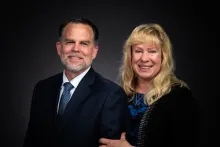
Paul serves as Pastor for the United Church of God congregations in Spokane, Kennewick and Kettle Falls, Washington, and Lewiston, Idaho.
Paul grew up in the Church of God from a young age. He attended Ambassador College in Big Sandy, Texas from 1991-93. He and his wife, Darla, were married in 1994 and have two children, all residing in Spokane.
After college, Paul started a landscape maintenance business, which he and Darla ran for 22 years. He served as the Assistant Pastor of his current congregations for six years before becoming the Pastor in January of 2018.
Paul’s hobbies include backpacking, camping and social events with his family and friends. He assists Darla in her business of raising and training Icelandic horses at their ranch. Mowing the field on his tractor is a favorite pastime.
Paul also serves as Senior Pastor for the English-speaking congregations in West Africa, making 3-4 trips a year to visit brethren in Nigeria and Ghana.
