

Don Ward
This transcript was generated by AI and may contain errors. It is provided to assist those who may not be able to listen to the message.
Well, greetings, everybody, and welcome to the Bible study, the first in our ball series. I guess everybody is aware of—well, I don't guess—I know everybody is aware of what's going on in the Middle East, and the world is in great turmoil at this present time. So I thought that I would review a bit about the plan, purpose, and providence of God as we go into Isaiah 42, 43, 44. Isaiah 42, 43, 44 are some of the deepest material in the entire Bible. So I want to go back and review the reason for the conflict.
The conflict between the Palestinians or the Arabs and between Israel goes back, of course, to the days of Abraham when Isaac received a blessing and Ishmael was sent away.
When Isaac saw that Isaac had blessed Jacob and sent him away to Paden and Rem to take a wife from there, and that he blessed him, he gave him a charge saying, You shall not take a wife of the daughters of Canaan.
Jacob obeyed his father and his mother and was gone to Paden and Rem, and he saw seeing that the daughters of Canaan pleased not Isaac's father.
Then went Isaac unto Ishmael and took unto himself the lives of Ishmael, which he had Mahalah, the daughter of Ishmael, and Abraham's son, the sister of Niba Haoth, to be his wife. That's Genesis 28, 6, through 9. So right away after Jacob received a blessing from Isaac, then he had to flee because Esau threatened to kill him. And as you know, the story that Jacob labored for 14 years finally to get the wife he wanted, Rachel, the first seven years he wound up with Leah. But then Esau married into Ishmael, and there's been a tremendous amount of intermarriage between Esau and the various, even some of the Canaanites and the various tribes, especially Ishmael.
In Genesis 33, verse 1, Jacob lifted up his eyes and looked, and behold Esau came, and with him four hundred men, and he divided the children unto Leah and Rachel and unto the two handmaidens.
So this is the time in which Esau and Jacob met, and they embraced each other, and you thought everything was well. Esau, verse 4 of Genesis 33, and Esau ran to meet him and embraced him and fell on his neck and kissed him, and they wept.
And Jacob offered to give some of his wealth to Esau, but in verse 9, this is Genesis 33-9, Esau said, I have enough, my brother. Keep that you have unto yourself.
And Esau said, let me now leave with you some of the folks that are with me, and he said, what need ye need? Let me find grace or divine favor, or favor in the sight of my Lord.
So Esau returned that day on his way unto Mount Seir.
So the Arabs have lived historically in Mount Seir. Mount Seir is Horeb, and it's also the place where God thundered the Ten Commandments to the children of Israel. It is also the sight of Petra, often referred to as the Rock in Hebrew. It is Selah, S-E-L-A.
So Genesis 33-16, so Esau returned that day on his way unto Seir.
And then Jacob went to Beth-El, and Beth-El, this is Genesis 35-1, Beth-El means house of bread. Of course, house of bread contrasted to the wilderness of Seir is quite a contrast.
Eventually, of course, Isaac died and was gathered unto his people being old and full of days, and his sons Esau and Jacob buried him. So when Abraham died, the sons came back together and attended his funeral. So here, when Isaac died, they came back together and attended the funeral.
Now, in Genesis 36 and verse 1, and this is a verse that probably you should, not probably, you should remember and memorize. Now, these are the generations of Esau who is Edom. The two nations that God has the most negative to say about in the whole Bible are Esau and Moab.
And so when Christ returns again, it seems that he begins at Bazarah. Bazarah was one of the principal cities in the area of Seir. So as time went on, even though they had met and seemed like they had buried the hatchet, so to speak, the hostility between them continued, and Esau determined that he was going to kill Jacob. Now, before we get to this question in Hebrews 12-16, what was Esau's great sin? Esau's great sin was this. He treated the sacred as profane.
He treated the sacred as profane. What was sacred? It was the birthright.
He sold his birthright for a bowl of soup.
And after Isaac was deceived into blessing Jacob, Esau hated Jacob, and he hates Jacob into this buried day.
In Obadiah, we find basically a history, and I want us to turn to Obadiah.
Obadiah has only one chapter, and there's a book we seldom refer to in our preaching and teaching.
In Obadiah chapter 1, the vision of Obadiah thus says the Lord God concerning Edom.
Edom is Esau, and Esau is Edom, and they are mixed together with Ishmael, and they constitute the vast Arab congregation. Now, one thing that we should remember in all of this is that Iran is a Muslim country, but Iran, they are not descendants of Abraham, Isaac, and Jacob.
Iran is what they call a republic of Iran, but really it is a dictator, a ship that is headed by the Ayatollah. The Ayatollah has said just in the recent hours that if Israel continues in the way of path that they're going, that they are going to have to pay a price. Now, the reason I'm going into this is that we should understand what is going on and how it applies in Isaiah and throughout the Bible, the purpose, the plan, and the providence of God. God chose Abraham. Abraham left Ur of the Chaldees and came into the Promised Land. Abraham was given a promise. The great promise was, in your seed shall all the nations be blessed. And in Galatians chapter 3, verses 15, 16, and 17, we find that that seed is Jesus Christ. Of course, the Jews have rejected Jesus Christ, and so have the Muslims rejected Jesus Christ.
Now, to a large degree, what prophecy is about is that God's great plan and design is to bring all nations into a relationship with Him, the Israel of God.
Now, to have the understanding that you have, and hopefully you have this understanding, that the plan of God is ancient before the foundation of the world at some point in eternity past.
You can't say from eternity, though commentaries may say from eternity.
It is in eternity past that what's determined that Jesus Christ would be the agent through whom that God the Father worked through. Let me say that again.
I think you think you know that, but do you really know that? That Jesus Christ is the agent through whom the Father works. Now, we want to hold your place there in Obadiah, and we want to go to Philippians 2, and Philippians 2 will begin in verse 5.
Let this mind be in you which was also in Christ Jesus. There's a colon after that that means something is to follow. What was the mind then in Christ Jesus? Who being in the form of God thought it not robbery to be equal or a thing to be seized to be equal with God. He was the way of the eternal. They are co-essential. They are spirit. But at this point, and whenever this was in eternity, Jesus Christ agreed to become subservient to God the Father and to be his agent in interfacing with humanity. It is through Jesus Christ, as we read in John 1, that God created the world. And it was through Jesus Christ that he created Adam and Eve. And it is through Jesus Christ that we can be justified through the death of the Son of God. And sometimes I think we don't even realize the significance of that, the very death of the Son of God. So God's great purpose is to bring all nations into a relationship with him. And he chose to start, first of all, with Abraham. I was at the funeral of Herbert Armstrong back in 1986. Dr. Hay was the one who gave the sermon. And basically what he did is what I'm doing now is trace the history of Israel from Abraham to the present day to the Church of God. It is only the Church of God this is what I tried to make clear in my Beast of Tabernacle sermon that understands the plan, the purpose, and providence of God.
That God has a great plan for all nations. But the Great Adversary is determined to wreck that plan. And when you treat the sacred as profane, and a lot of people now are treating the sacred as profane, it's a calling that God has given you and I to his salvation, to his deliverance, to his family, to his kingdom.
And that is the most important thing there is.
So I hope we know that and I hope we keep that in mind forever. But you see, in this world that we're living, people don't understand that. The President of the United States was in Israel today for seven hours. He gave a speech in Tel Aviv, which used to be the capital, but now Trump declared Jerusalem to be the capital, which it is, and it currently is the capital.
And in that speech, he began to quote about Moses. He never mentioned God or Christ, but he talked about Moses, how revered Moses is. And they'll look back at the people that died and think about the great memories of them and so on and so forth. That may be good in a way, but the law and Moses really is a stumbling block to the people, and they don't really understand the plan and purpose of God. And Satan the devil is there stirring up everything they possibly can. So this conflict dates back to the time that the birthright was given to Isaac and the history of Israel coming all the way through to the time that the Church of God was established. Now we go back to Obadiah.
The vision of verse 1, the vision of Obadiah.
Thus says the Lord God concerning Edom. We have heard a rumor from the Lord, and ambassadors sent among the nations. Arise you and let us rise up against her in battle. Behold, I have made you small among the nations, and you are greatly despised.
You see, at the present time, we have riots going on on college campuses, and there was a big protest in the rotunda of the Capitol building today, in which young people, basically the 18 to 35 age group, are taking the side of Hamas in the conflict, totally unaware of what they are what they're saying, what they're doing. See, God has chosen Israel. God has chosen Christ.
God has sent Christ. God has ordained a plan of salvation. It is sacred. It cannot be changed, and it will not be changed, even though in the darkest hour it may seem that it will be changed.
So verse 3, the pride of your heart hath deceived you that you dwell in the clefts of the rocks down in the area of featuring through that area, whose habitation is high, but said in your heart, who shall bring down me to the ground? And though you exalt yourself as the eagle, and though you set your nest among the stars, there will it bring you down, says the Lord God.
Now, in verse 10, for your violence against your brother Jacob, shame shall cover you, and you shall be cut off forever. In the day that you stood on the other side, in the day that the strangers carried away captives, his forces and foreigners entered into the gates and cast his lots upon Jerusalem, even you were as one of them. But you should not have looked on the day of your brother in the day that he became a stranger, this talking about the time in which Israel went into captivity under the hands of the Babylonians. First of all, northern tribe that captivated under the hands of the Assyrians.
You should not have rejoiced over the children of Judah in the day. Of course, you see great rejoicing among the children of the Arabs today, among the Moslems. You should not have rejoiced.
You're rejoicing against the very purpose, plan, and providence of God. You don't understand that.
So you should not have entered into the gate of my people the day of their calamity.
And you should not have looked on their affliction in the day of their calamity, nor have laid hands on their substance in the day of their calamity.
Neither should you have stood in the crossway to cut off those of his that did escape. Neither should you have delivered up those of his that did remain in the day of distress. For the day of the Lord is near upon all the nations. As you have done, it shall be done unto you. Your reward shall return upon your own head. Who knows whether or not this conflict shall continue to explode into the Third World War, and as a result of the Third World War, some kind of peace is established. It says in 1 Thessalonians chapter 5 that when they say peace, peace, sudden destruction comes upon them. So a period of peace is going to come after the conflict, but then the beast power is going to arise and going to persecute, especially Israel and the Church.
Verse 16, For as you have drunk upon my holy mountain, so shall all the nations drink continually. Yes, they shall drink, and they shall swallow down, and they shall be as though they had not been. But upon Mount Zion shall be deliverance, and there shall be holiness, and the house of Jacob shall possess their possessions. Now the house of Jacob, of course, is Israel. Oftentimes, as I've told you in prophecy, Jacob is used in a generic sense for the entire house of Israel. And the house of Jacob shall be a fire. Now that's an interesting expression there. The house of Jacob shall be as a fire, because at the present time, the Arab nations say we have a ring of fire around Jerusalem. You have Hamas to the west and somewhat to the south, and you have Egypt. Though Egypt is semi-neutral, their loyalties are really with Hamas and with the Palestinians.
And you have Lebanon and Syria to the north and Hezbollah. You have Jordan to the east, and then you have Iraq. By the way, there were drones that came against our air bases there in Iraq today. We have about 2,500 soldiers stationed in Iraq and drones tried to take them out today. And people believe, the newscasters and so on, believe the commentators that it came from, that Iran was the one responsible for it.
So there's great rejoicing today by some over the evil that is taking place.
Now in verse 20, we'll see more and more of the old testament books. And so, from the chaos and confusion of today, the kingdom of God is eventually established. Now look at Malachi chapter 1. Malachi chapter 1, the last one of the Old Testament books was started in verse 1. Remember Malachi is from the Hebrew word malak. Malak can refer to a human being or to a spirit being. It means, oftentimes, translated messenger.
The burden of the word of the Lord to Malachi, to Israel by Malachi. I have loved you, says the Lord, yet you say, wherein have you loved us, was not Esau Jacob's brother, says the Lord, yet I loved Jacob, and I hated Esau, and laid his mountain and his heritage waste for the dragons of the wilderness.
Whereas Edom said, we're impoverished, but we will return and build the desolate places.
Death says the Lord of hosts, they shall build, but I will throw down, and they shall call them the border of wickedness, and the people against whom the Lord hath indignation for ever.
So you get a bit of the background of what the Bible says with regard to what is going on in the Middle East at the present time.
Now, in the New Testament, the name Esau appears three times.
Romans 9, 13, as it is written, Jacob have I loved, but Esau have I hated.
So once again, thus quoting Malachi 1, 3, Esau have I hated.
Then Hebrews 11, 20, by faith, Isaac blessed Jacob, and Esau concerning things to come.
By faith, Isaac blessed Jacob and Esau concerning things to come.
Then Hebrews 12, 16, and this is the warning to us, lest there be any fornicator or profane person, what is a profane person? A profane person is a worldly secular person who discounts the promises and blessings of God.
And like I mentioned earlier, probably the greatest blessing that you could possibly have at the present time would be the calling that God has given you and lifted the veil from your face so that you understand the plan, the purpose, the providence of God dating back into eternity past when God and Christ ordained and planned the great plan of salvation for all nations so that they could become members of his divine family and his kingdom.
So Hebrews 12, 16, lest there be any fornicator or profane person, as Esau, who for one morsel of meat sold his birth of that which was sacred.
And what are people selling their birthright for today? Basically nothing.
What a tragedy that it is. So as we turn now to Isaiah, in Isaiah 42, Isaiah 42 is where we went to go.
I'm getting there. I'll be there in just a minute. In Isaiah 42, verse 1, Behold my servant whom I uphold.
Now, back in the days of the Septuagint translation, perhaps you've heard the Septuagint translation, during the days of the Septuagint translation, a group of Jewish scholars met at Alexandria, Egypt. There were three great learning centers in the Middle East during the days of the Maccabees and continuing down into the days of the New Covenant Church.
That was Tarsus, Paul of Tarsus. Then, of course, he went to Jerusalem and learned under the feet of Gamaliel and Alexandria. So in Alexandria, there was a group of Jewish scholars who met in circuit 270 BC.
They translated the Hebrew Bible into Greek. They translated this word Serbant into Jacob or Israel.
I should remind you once again that to a large degree, and especially in Isaiah, the prophecies are written, the verses are written in parallelism.
A declarative statement is made, and then a similar statement is made that reinforces the former statement. Behold my servant. Now, this servant is Jesus Christ.
It is not Jacob. It is not Israel. It is Christ, as you shall see, whom I uphold mine elect, in whom my soul delights. Now, isn't that interesting that it says that God says, in whom my soul delights? So does God have a soul? Of course, he doesn't have a soul as an entity. He is eternal. So that means my inner being, my life essence, everything within me delights in him. I have put my spirit upon him, and he shall bring forth judgment to the nations, to the Gentiles, and that is to all nations, the Gentiles, and that will then, of course, Israel is included. You see, the God of the Jews only know he is the God of everybody, of the Gentiles as well.
This will be for Gentiles, and the Hebrew is goi, g-o-y, goi, and plural, that is goim, which oftentimes, in straight Orthodox Judaism, they make fun of the goim, those who are not of Jewish origin, those who are still stuck with the law. So, in this case, it is Jesus Christ, behold my servant Jesus Christ, my final, my very being delights, my spirit in him, and that just for some reason brings to mind that after he came up out of the baptismal waters, the Spirit of God lighted upon him as the dove of west from heaven and said, this is my beloved son in whom I am well. That was not the time in which Jesus Christ recently spirit. Jesus Christ received the Holy Spirit from begetl to birth.
As it says in Luke 1.35 verse 6, my spirit shall overshadow you, Mary, that which is born in you shall be holy. Now verse 2, he shall not cry nor lift up nor cause his voice to be heard in the street. He is not a street preacher per se, but Jesus Christ went to the main places.
What is the main meaning of this word is of this clause. Not the literal sense that we think about going out on the street and preaching is that he shall not use loud and angry words as they do who are engaged in the conflict, but all his teachings were gentle, humble, and mild for the most part. But at times he made it very clear that judgment was coming upon the wicked. A bruised reed shall he not break. Now this word reed is one. This is quoted.
Also, the bruised reed is quoted in Matthew, where God said Matthew 11.7, he quotes this verse here, what went you out into the wilderness to see a reed shaken with the wind.
A reed had to do with that which was tender, that which was easily broken.
So a bruised reed shall he not break. In other words, even the tenderness of things he did not. The smoking plaque shall be not, shall he not quit. He shall bring forth a jim unto truth. And of course, judgment is the truth has fallen into the street now and the world is in a state of chaos and confusion. You have the opportunity to live in this period of time in which you can be a rock, one who sets the example and says true to the Word of God.
He shall not fail nor be discouraged. You don't find Jesus Christ saying, woe is me, though we may say that and we do say that. And we get weary and tired.
But he continued on. He shall not fail nor be discouraged. Meaning that he knows that he is determined, that he set his mind, his heart, his being, that he's going to fulfill his mission to be the Savior, the Redeemer of the world. He shall not be discouraged, he'll have legitimate errors and the aisle shall wait for his law. The whole world is going to be taught the law of God.
Verse 5, Thus doth God the Lord. Now, we should be reminded here, and this is deep, and I guess you'd call it deep, and it is, I touched on this earlier with regard to God and Christ and past eternity. And I read Philippians 2, Styx, he did not think it a thing to be seized, to be equal with God because he wasn't equal with God. But he made himself with no reputation. He humbled himself, he took on the form of a man, but he became the agent through whom God worked. Now, one of the things that we have not really emphasized, I gave a sermon on this way back two or three years ago, I think maybe three or four.
Now, if you would go to Exodus 23 and verse 10.
Exodus 29, it's not verse 10, verse 20. Exodus 23 and verse 20.
These verses that I'm about to read are very, very important. In Exodus 23, get there in a minute.
Exodus 23 and verse 20.
Behold, I send an angel. Notice that word angel. The Hebrew word is malek, M-A-L-A-K.
It can mean a divine being or a human being. In this case, it's divine being.
In fact, it is Jesus Christ. Behold, I send an angel before you to keep you in a way and to bring you into the place which I have prepared. Beware of him and obey his voice.
Provoke him not, for he will not pardon your transgression. If you do, he will not pardon your transgressions if you don't obey. For my name is in him. My name is in him.
So oftentimes in the Old Testament, and we have said so over the years, that the context basically tells you whether it is God the Father or Jesus Christ that the Hebrew word yave can refer to God the Father or to Jesus Christ. Now, you look at there are many verses I can turn to, but we're going to go to Isaiah 61.9. Isaiah 61.9, and you'll see, and then we'll go to the New Testament to see that my name is in him, is referring to Jesus Christ. In Isaiah 61.9, I'm sorry, that's the wrong reference I'm looking for, but I sent the angel of my presence so someone could look angel presence up and tell it to me. Now we want to go to 1 Corinthians 10 and verse 4. 1 Corinthians 10 verse 4, and we'll see very clearly here that the New Testament confirms what I was talking about. My name is in him. The angel of my presence will led you into the promised land. That was the scripture I was just looking for, but didn't see. In 1 Corinthians 10 and verse 4, and did all drink of the same drink, for they drank of that spiritual rock that followed them, and that rock was Christ. And that where it says, followed him, Jesus Christ was the one that they followed. It wasn't that he followed them, they followed him. It's a bit confusing there in 1 Corinthians 10 verse 4. You had the cloud by day and the fire by night, and they didn't move on their journey to the promised land unless that cloud and fire move with them. Dr. Ward, Dr. Hope. So we see what we... Yes. What's the verse?
Hello. I'm getting feedback. Hello.
Isaiah 6, what's the name?
I can't hear you.
Isaiah 63 verse 9.
Isaiah 63 verse 9.
So many times I have read that. Even at sermon. So let's read 63-9, which ties in with Exodus 23, 21, 22. My name is in him. Section 39. In all their affliction, he was afflicted, and the angel of his presence staved them in his love, and in his pity he redeemed them. He bared them and carried them all the days of old. And then we return to 1 Corinthians 10 and verse 4.
So now hopefully you have this straight about God and the Lord and so on, because Isaiah 42, 43, 44, and for that matter all of Isaiah is really filled with this going back into with Yahweh and speaking of the Father, speaking of Jesus Christ, and some people get bogged down with that.
And we very clearly it says in John chapter 1 that through Jesus Christ, God created the heavens and the earth. And of course, he created Adam and Eve through Jesus Christ, the one who became Christ the Word. Continue here. Verse 5, thus says God the Lord, God, Elohim, the Lord, Yahweh, he that created the heavens and stretched them out, he that spread forth the earth and that which comes out of it, he that gives breath unto the people upon it, and spirit to them that walk therein. The Holy Spirit is shed on us through Christ, the Father is the source of the Holy Spirit. You should memorize John 1526. The Holy Spirit proceeds from the Father. It is shed on us through Christ. Titus 3 verses 5 and 6. Also in Acts 2, in Peter's great sermon, that which you see he has sent forth.
Now continuing, he that gives breath unto the people upon it, and spirit to them that walk therein.
Verse 6, I the Lord have called you in righteousness, and will hold you in and reap you and give you for a covenant of the people.
Now that, when it says I give you for a covenant for the people, means that it is through Jesus Christ that the covenantal promises are realized. Let me say that again. It is through Jesus Christ that the covenantal promises are realized. I've already quoted Galatians chapter 3 verses 15, 16, 17, that in your seed, that is Christ, shall all nations be blessed.
And so it is through Christ that the covenantal promises are realized. Verse 7, to open the blind eyes, to bring out the prisoners from the prison, and then that set in darkness out of the prison house.
I am Beyaveh, that my name and my glory I will not give to any other, neither my praise to graven images.
Of course, the pagan nations gave their praise to graven images, to idols, and the Islamic world is giving their praise to Allah, who is no God at all, and the prophet Mohammed, who is, of course, was not begotten by God the Father, and so on.
Verse 9, Behold, the former things were come to pass, and new things do I declare.
Before they spring forth, I tell you of them. Sing to the Lord a new song.
But that's what this segment of scripture is about, singing this new song to God.
Of course, it talks about in Revelation about the saints.
The saints sing a new song after they were resurrected.
Sing unto the Lord a new song and his praise from the end of the earth.
You that go down to the sea and all that is therein, the isles and the inhabitants thereof.
Let the wilderness and the cities thereof lift up their voice. The villages that Kedar does inhabit. Now, Kedar said, let the inhabitants of the rock sing.
As I've already told you, the Arabs basically Edom took up their habitat within the area of Mount Seer and Kedar, which is the rocky area of Petra and Mount Seer. Let the wilderness and the cities thereof. Now, some commentators talk about, it seems like, let the wilderness and the cities thereof.
Well, in the Jewish mind, and when the prophets were writing, wilderness had to do with vacant barren land. It was not necessarily a heavily forested wilderness that we might think of that Daniel Boone had to trod through in his trek toward the west.
It wasn't that, and there were cities that were built out in those areas.
They were built out in those places. And the cities there upon, their voices of villages of Kedar doth inhabit, let the inhabitants of the rock sing, let them shout from the top of the mountains.
Let them give glory unto the Lord and declare His praise in the islands. He will go forth as a mighty man. He shall stir up jealousy like a man of war. He shall cry, yes, he shall roar. He shall prevail against the enemies. He'll go forth as a mighty man and he'll stir up jealousy. He shall arya arouse a vengeance or his indignation over the wickedness that he is having to confront.
And he will do that like a man of war. When Jesus Christ returns again, as you read in Revelation 19, beginning in verse 10, and especially 14 and on down, that He is coming as a mighty warrior and the saints are with Him. And He is going to stamp out wickedness.
For some reason, people can't get in their minds about eternity. Are you going to live in eternity, or are you going to live for the here and now? God is interested in you living in eternity. Verse 14, I have a long time held my peace. So God has been very patient. Over the years, He has let things rock along. He has not intervened. I have a long time held my peace. I have been still and refrained myself. Now will I cry like a prevailing woman. I will destroy and devour at once. I will make waste in mountains, hills, and dry up all their herbs.
And I will make the rivers and islands, and I will dry up the pools. And I will bring the blind by a way that they knew not. And I will lead them in paths that they have not known. Remember when Jesus Christ stood up to read in the temple after being baptized, and before He went back to Nazareth, His hometown, He talked about how what He had come to do to heal up, to bind the hearts of the brokenhearted, and to open the eyes of the blind, and the ears of the deaf, and so on.
I will bring the blind spirit. Of course, there will be healings, I'm quite sure, of physical people. But the eyes of the blind in the spiritual sense, by a way that they knew not, I will lead them in paths that they have not known. I will make darkness light before them, and crooked things straight.
These things will adieu unto them, and not forsake them. They will be turned back, and shall be greatly ashamed, that trust and grave images, that say to the vault and images, you are our gods. Of course, you're reminded of the showdown that the prophet Elijah had with the priest of Baal on Mount Carmel with regard to the pagan gods. The pagan gods cannot do anything to save, but the god of Israel can. Then the next segment of scriptures is about Israel's failure to hear and to see. Hear you deaf, and look you blind, that you may see. Who is blind but my servant, or deaf as my messenger that I send?
Who is blind is he that is perfect and blind as the Lord's servant. Who is blind but my servant? Some of the Jewish expositors suppose that my servant here, the prophet himself, is intended. Who they suppose is here blind and deaf by the impious Jews who reject him, but it is evident that my servant here, the Jewish people themselves, are intended.
They're the ones that are blind, not Jesus Christ. Who is blind but my servant? In this case, servant does refer to Jacob or deaf as my messenger. Of course, Israel was to be the model nation for all nations to come into a relationship with God, but failed under the terms of the Old Covenant. Who is blind as he that is perfect and blind as the Lord's servant? Seeing many things, but you observe not. You see a lot, like Paul writes in Romans chapter 10, that people are destroyed for lack of knowledge. One of the things that the Jews do most of is their intelligence. Their contributions to Western civilization. All the great artists and all the great entertainers, pianists and so on, composers, actors, Hollywood, so on, have come from the Jewish community.
They boast themselves in their intelligence. They have a form of godliness and they have intelligence in the secular worldly sense, but they do not have the knowledge of God. Seeing many things, but you observe not. Opening the ears, but you don't hear. The Lord is well pleased for his righteousness sake. He will magnify the law and make it honorable. That scripture is a scripture that should be memorized and often quoted. Jesus Christ basically quotes this scripture in Matthew 5 verse 17. In the Sermon on the Mount, Jesus Christ magnified the law and made it honorable.
I'm not turning there, but you know the words where it says, you have heard of old times that it was said, you shall not hate your brother in your heart. But I say unto you, even he who is angry with his brother is in danger of he hit a fire. The Lord is well pleased for his righteousness sake. He magnifies the law and makes it honorable.
But this is a people robbed and spoiled. They are all of them snared in holes, and they are hid in prison, delivered for a spoil, and none says restore. None says restore. What about destroying? That's how people think that human beings are going to bring peace. And of course, the world is caught in a vice between good and evil, and it's always been from a garden of time.
The world is caught in a vice between good and evil. You have to choose the good and hate the evil. It says in Proverbs 8.13 that the beginning of wisdom is to hate evil. But this is a people robbed. Now verse 23. Who among you will give ear to this and will hearken and hear for the time to come? Who gave Jacob for a spoil and Israel to the robbers? Did not the Lord he against whom we have sinned, for they would not walk in his ways, neither were they obedient unto his law. So who gave Jacob everything that they had?
Who gave the Jewish people to be plundered? The object of this verse is to be distinctly before them the fact that it was Yahweh, the God of their fathers and of their nation, who had brought their calamity upon them. It was not the work of chance, but it was the immediate and direct act of God on account of their sins.
And of course, we are on the side, I guess you would say, of Israel in the present conflict, because we know that the temple needs to be built and sacrifices restored and all of that, if we understand 2 Thessalonians 2, the first five or six verses correctly, that one will sit in the temple of God saying that he is God, that that has to be fulfilled and Israel has to be able to build an altar or a temple and offer those sacrifices.
And evil is evil, no matter who does it. Therefore he hath poured upon him the fury and his anger and the strength of battle, and hath set him on fire round about. So at the present time, Israel is in a ring of fire, and the nations do surround him. Yet he knew not, and it burned him, yet he laid not to his heart. Now, next time we will take up with Isaiah 43, which continues the thought from Isaiah 42. Now, let's turn to Zechariah 12, about this ring of fire.
In Zechariah 12, the burden of the word of the Lord of Israel says, The Lord which stretched forth the heavens and laid the foundation of the earth, and formed the spirit of man within the world, I will make Jerusalem a cup of trembling unto all the people round about, when they shall be in the siege both against Judah and against Jerusalem.
So the time is coming. What's going on now is not a siege against Jerusalem, but a siege against wickedness. And in that day I will make Jerusalem a burdensome stone for all people, and all that burden themselves with it shall be cut into pieces, though all the people of the earth be gathered together against it. And of course, the day of Armageddon is coming.
So I hope you need to go back and refresh yourself about Abraham, Isaac, Jacob, the 12 tribes, the nation of Israel, the Old Covenant, New Covenant, Ishmael, and what God's plan and purpose is for all humanity. So with that, we will close the study tonight.
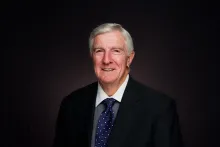
Before his retirement in 2021, Dr. Donald Ward pastored churches in Texas and Louisiana, and taught at Ambassador Bible College in Cincinnati, Ohio. He has also served as chairman of the Council of Elders of the United Church of God. He holds a BS degree; a BA in theology; a MS degree; a doctor’s degree in education from East Texas State University; and has completed 18 hours of graduate theology from SMU.
