

Don Ward
This transcript was generated by AI and may contain errors. It is provided to assist those who may not be able to listen to the message.
Today, the title of the sermon is The Israel of God, subtitle, Inheritors of the True Promises. Or, The True Inheritors of the Promises. We'll take probably this sermon and at least one more to say what I want to say here. This material I have presented in classes when it taught the minor prophets and also in ministerial refresher. But you continually learn more. And I've studied this topic for many years. And still, each time I learn more, I learn quite a bit this morning, I think, about it. So what could sermons or a sermon on the Israel of God, what could that mean to you? Well, I have several things here that it could mean to you. One would be, it could be one of the greatest learning experiences in your life. And why do I say this? I say this because it will show you the unity of the Bible. A beautiful unity of the Bible. How it's a beautiful tapestry woven together with a central theme. And what is that theme? The theme of the Bible is salvation. That God is bringing sons and daughters to glory in His kingdom. You'll also see the principle of progressive revelation. How that something is mentioned in the Old Testament and the meaning of it is given in the New Testament. You will see how the Bible interprets the Bible. You will come to understand more clearly what prophecy is all about. You'll see that the principle focus of prophecy is the establishment of the kingdom of God. You'll see that the kingdom of God begins with the Church of God. As has been expressed in the past, the Church of God is the kingdom of God in embryo. Unfortunately, so many of our people are caught in the prophecies that deal with the enemies of the kingdom of God. Who is the beast? When will the beast appear? How long do we have? All the things that have to do with the Gentile nations and the beast's power and so on. Paul writes in 1 Corinthians, and we heard this brought out well in the sermonette, that if we're not developing love as God is love, then we are nothing. In 1 Corinthians 13, verse 2, And though I have the gift of prophecy, understand all mysteries and all knowledge, and though I have all faith so that I can remove mountains, and have not charity, becoming as God is, I am nothing. And though I bestow all my goods to feed the poor, and though I give my body to be burned, and have not charity, it profits me nothing. To some degree, we have lost our focus and lost it through the years. Though many times, Mr. Armstrong would talk about how the real focus had to do with what we were to become and what we were becoming and what the purpose of human existence is, I think we became puffed up to some degree over our supposed understanding of prophecy. Now, we do understand many things, but all the prophetic timelines that the church set failed. 1975 and prophecy, it came and it went, and some said, well, it has to do with Daniel and Daniel 4 and Nebuchadnezzar seven years out in the fields. 1982 came and went, and after that, we didn't set too many timelines.
One of the greatest difficulties in rightly dividing the word of truth centers on the ability to discern between what applies physically and that which applies spiritually. And I submit to you, it is quite a challenge. If you have ever taught the prophets before large audiences and you have fielded the questions, you'll come to understand it's much more difficult than you might think. So once again, the ability to discern between that which applies physically and that which applies spiritually. Historically, the Church of God in the past 80 years has had difficulty in distinguishing between that which applies physically and that which applies spiritually, and they're not alone. The commentators have the same problem, and some tend to jump in one ditch or the other of being all physical or all spiritual. So in my view, we've heard at times in emphasizing the physical over the spiritual, for example, we have emphasized that the promises to Abraham were that of race and grace. And that's true to a certain extent. Abraham's seed was promised physical blessings. On the other hand, we have to be careful in our explanation of God blessing some people more than others because of race.
Now, I know that we could turn to Genesis chapter 10, and we could read about Shem, Ham, and Japheth. And God has chosen to work through the seed of Shem, Abraham, Isaac, and Jacob. But God is not a respecter of persons. And what I would ask you to do as we cover this material is to believe what the Scriptures say. Not what you've always heard, or what you think it says, but what does the Bible say?
We have to remember that God is not a respecter of persons, and none of us are superior to anyone else based on our physical descent. I'm not superior to the lowest peasant in China, who ekes out a meager subsistence maybe on an acre of land, and neither is anyone else superior to that Chinese peasant. We have approached the promise of national blessings as unconditional. However, we could look at numerous passages of Scripture that clearly show the promise of physical blessings is conditional. We have the blessing and cursings chapter that we reference in Deuteronomy 28 and Leviticus 26. You read those chapters, you will find that it is conditional. Let's turn to Isaiah 48, verse 16. Isaiah 48 and verse 16. Come, you near unto me, hear this. I've not spoken in secret from the beginning, from the time that it was. There am I, and now the Lord God and His Spirit has sent me. Thus says the Lord your Redeemer, the one who buys you back, the one, the Holy One of Israel. I am the Eternal your God, which teaches you to profit, which leads you by the way that you should go. Oh, that you had hearkened to my commandments. Then had your peace been as a river and your righteousness as the waves of the sea, your seed also had been as the sand and the offspring of your bowels like the gravel thereof. His name should not have been cut off nor destroyed before me. It is conditional. Go you forth of Babylon, flee from the Chaldeans, with a voice of singing, declare you, tell this, utter it even to the end of the earth, say you, the Lord hath redeemed His servant Jacob. And that is one of the great things about prophecy. Prophecy is covenant. Prophecy is based on covenant promises, the promises to Abraham, the promises to Isaac, to Jacob, to Israel, the promises that were promises that were enumerated by Moses and the Pentateuch. It's covenantal. If you will do such and such, then God says that He will do such and such. So when people go astray, the prophet comes on the scene and says, you have not obeyed me, and because you have not obeyed me, this is what I'm going to do. That I'm going to, oftentimes it was captivity. Or, shut the heavens that it rained not, or famine in the land, whatever it might be, but always God holds out this promise, this promise of hope and of restoration.
The plan of salvation centers on how one can become a member of the spiritual family of God and inherit the promises made to Abraham and to the prophets, and the principal promise is spiritual. Let's go now to Romans 9. Romans 9.
In some of this, we will be repeating and going to it more than one time, depending on the context of what I'm talking about. In Romans 9 and verse 1, I say the truth in Christ I lie nigh my conscious, also bearing me witness in the Holy Spirit, that I have great heaviness and continual sorrow in my heart. For I could wish that myself were a curse from Christ, for my brethren, my kinsmen, according to the flesh, who are Israelites, to whom pertains the adoption or sonship and the glory and the covenants and the giving of the law and the service of God and the promises, whose are the fathers, Abraham, Isaac, and Jacob, the patriarchal age, and of whom is concerning the flesh Christ came. Christ was a descendant from Abraham, Isaac, and Jacob. It says in Hebrews chapter 7 that it is evident that our Lord sprang out of Judah. Christ was a Jew according to the flesh, of whom concerning the flesh Christ came, who is over all God bless forever. Amen. Not as though the word of God had taken non-effect, for they are not all Israel, which are of Israel. Brother, do you believe that scripture? They are not all Israel, which are of Israel. It seems like a contradiction. So you have on the one hand physical Israel according to the flesh, and on the other hand you have spiritual Israel, and the Holy Spirit has been made available to all nations, kindreds, tongues, and ethnic groups, and all races, and every person under the heavens. Once again, God is not a respecter of persons. Neither because they are the seed of Abraham are they all children. It's not because of physical descent, not because you were born from a certain family in a certain gene pool, but in Isaac, shall your seed be called. Now we answered that question last week as well. Why does it say that in Isaac your seed shall be called? Because Isaac was born of faith. Abraham and Sarah were past the way of having children when God appeared to Abraham and to Sarah and told them that they were going to have a son. You remember Sarah's response was that she laughed. You know, she was long past the way of women and childbearing. Now we pick it up again, and we'll be going to the Book of Hosea might be next week, but right now in verse 24. Even us whom ye have called out not of the Jews only, but also of the nations, ethnos or Gentiles, as says also in Hosea, I will call them my people, which were not my people, and her beloved, which was not beloved, it shall come to pass into the place where it was set unto them, you are not my people, there shall they be called the children of the living God. Isaiah also cried concerning Israel, though the number of the children of Israel be as a sand of the sea, a remnant shall be saved. As far as all of the peoples of the world that are descended from Israel, a remnant has been saved, and most of the people that are in the church today in the United States are probably in some way or the other related back in their background to Abraham, Isaac, and Jacob, but surely not all. For he will finish the work, he will cut it short in righteousness, because of short work with the Lord make upon the earth. And as Isaiah said before, except the Lord of Sabbath had left us a seed, of course that seed is Christ, we had been as Sodom and Gomorrah. And of course, the seeds and the children of God are those who are joint heirs of God and joint heirs with Christ. What shall we say then that the nations which followed not after righteousness have attained to righteousness even the righteousness which is of faith?
Wherefore, because they sought it not by faith, but as it were by the works of the law, for they stumbled at the stumbling stone, that stumbling stone was Jesus Christ, verse 33, as it is written, Behold, I lay in Zion a stumbling stone and a rock of offense, and whosoever believes on him shall not be ashamed. Now let's go to John chapter 3 and verse 6. John 3 and verse 6. For sure, we need to have implanted in our minds these two scriptures for sure with regard to the kingdom of God. Now we talk about the kingdom of God and how it's going to be about eating the juicy steaks and drinking the wine and all of the prosperity and good things that will be in the millennium. Now spirit beings can appear as physical as Christ appeared to the disciples on at least three occasions after his resurrection. Let's notice this. John 3, 6, That which is born of the flesh is flesh. That which is born of the spirit is spirit. Marble not that I say unto you, you must be born again. Now in 1 Corinthians 15, 1 Corinthians 15, direct statement here concerning the kingdom of God and what state you will be in. Will you be physical or will you be spirit in the kingdom of God? 1 Corinthians 15 verse 50. 1 Corinthians 15 verse 50. Now I say this, brethren, that flesh and blood cannot inherit the kingdom of God. So it is spirit beings in the kingdom of God, but they will be ruling over physical beings. And one of the principal jobs of these spirit beings will be to bring all of the peoples of the earth into a relationship with God and Christ and into the Israel of God. Neither does corruption inherit incorruption. Behold, I show you a mystery. We shall not all sleep, but we shall be changed. And the corruptible must put on incorruption and the mortal must put on immortality.
We also tend to forget the clear words of the apostle Paul at times. Let's go to Romans chapter 2 verse 28. Paul defines who is a Jew spiritually. There are physical Jews. There are spiritual Jews. The whole Israel of God, the Church of God, in the spiritual sense, is referred to as, here, spiritual Jews. Remember when we covered the book of Romans, the first chapter takes the Gentiles to task, the second chapter takes the Jews to task, the third chapter takes everybody to task, everybody's sin, and comes short of the glory of God.
So in Romans chapter 2 verse 28, for he is not a Jew, which is one outwardly, neither is that circumcision which is outward in the flesh. But he is a Jew, which is one inwardly, and circumcision is that of the heart, in the Spirit, and not of the latter, whose praise is not of men, but of God. And we go once again to Galatians 3. As I said, we're going to repeat these scriptures in various contexts.
Galatians chapter 3 verse 14, that the blessings of Abraham might come on the nations through Jesus Christ, that we might receive the promise of the Spirit through faith, so it's in Isaac shall your seed be called, because it is of faith. Brethren, I speak after the manner of man, though it be a man's covenant, yet if it be confirmed, no man dissimmonals your heads thereto. Now Abraham and his seed were the promises made. He said, not into seeds as of many, but as of one into your seed, which is Christ. Now in Galatians 3 and verse 26, For you are all the children of God by faith in Christ Jesus, for as many of us as have been baptized into Christ have put on Christ. There is neither Jew nor Greek. Obviously, this is not speaking physically. In the ethnic sense, there are still Jews and there are still Greeks. There is neither bond nor free. There are still people in servitude, slavery in some parts of the world, even to this day. There is neither male nor female, and we obviously know that we are still male and female physically, but spiritually. There is neither male nor female, for you are all one in Christ Jesus. And if you be Christ, then are you Abraham's seed and heirs according to the promise? In my view, it cannot be over emphasized the importance of how we become spiritual Jews, recipients of God's mercy. Recipients of God's mercy are those who have repented of their sins, exercise faith in the sacrifice of Christ, have been baptized, and have received the laying on of hands, and receiving God's Spirit. And this mercy can be shown to anyone who allows the Word of God and the Spirit of God to circumcise their heart and to be recipients of God's forgiveness, His mercy, have their sins blotted out, and receive the Spirit of God in their minds and in their hearts. God will save those who are true recipients of His mercy, the Church. And spiritually, according to the Bible, they are called Jews. Paul identifies them clearly. As we see what is developing today in this world, if we are wise and have discernment, we will begin to realistically see the steps necessary, the steps necessary, that the leaders of this world, of course, that they are going to take to bring on world government and how the beast power will come to authority. In Daniel 12 and verse 10, Daniel 12 and verse 10, Daniel has given several visions, of course, in the course of this prophecy, the book of Daniel. In this particular one, he wants to know the meaning of it. We're breaking in on the thought, Daniel 12-10. The story of Israel begins with the calling of Abraham. So we went up front in the New Testament first. Usually, you start in the Old Testament and go to the New Testament, but we're going to go back to the Old Testament now, and we'll come back to the New Testament and so on. Back to Genesis 12.
The genealogy of Abraham is given in chapter 11, so let's read this. In Genesis 11-26, and Terah lived 70 years and begat Abram, Nahor, and Haran. Now these are the generations of Terah, Terah begat Abram, Nahor, and Haran, and Haran begat Lot. And Lot, of course, Abraham's nephew, was one person that he brought with him into the promised land. Haran died before his father Terah in the land of his Nativity, and early Chaldees, and Abram and Nahor took them wives in the name of Abraham's wife with Sarai, in the name of Nahar's Milka, the daughter of Haran, the father of Milka, and the father of Ischah. But Sarah was barren. She had no child. And Terah took Abram, his son, and Lot the son of Haran, his son-son, and Sarai, his daughter-in-law, his son Abram's wife, and they went forth with them from Ur of the Chaldees to go into the land of Canaan. And they came unto Haran and dwelt there. And the days of Terah were two hundred and five, and Terah died in Haran. Now the Lord had said, unto Abraham, Get you out of your father's house, unto a land that I will show you, and I will make of you a great nation. I will bless you and make your name great, and you shall be a blessing. I will bless them that bless you, I will curse them that curses you, and in your seed shall all the families of the earth be blessed. I added seed there because Paul says that it is seed singular. I will bless them that bless you, and curse them that curse you, and in you shall all the families of the earth be blessed. The promises were passed on to Isaac. Let's go to Genesis 26. Genesis 26. After Abraham died, of course it had become obvious even before Abraham's death that Isaac would have the promises passed on to him, but here we see it officially in writing in Genesis 26. There was a famine in the land beside the first famine that was in the days of Abraham, and Isaac went unto Abimelech, king of the Philistines, unto Girar. And the eternal appeared unto him and said, a lot of times we don't think about God appearing to Isaac. God had appeared to Abraham. Now he appears to Isaac.
The eternal, the Yahweh, appeared unto him and said, Go down into Egypt, dwell in the land which I shall tell you of. Sojourn in this land, and I will be with you, will bless you. For unto you, unto your seed, I will give all the countries, and I will perform the oath which I swore unto Abraham your father. Now you can read that Abrahamic covenant and promises where it talks about the extent of Israel's territory from the Great River back to the Great Sea and the north and south borders as well. I will make your seed to multiply as the stars of heaven will give unto your seed all these countries, and in your seed shall all the nations of the earth be blessed, because that Abraham obeyed my voice, kept my charge, my covenant, my statues, and my laws. Then, as you recall, that Jacob and Rebecca deceived Isaac, and the birthright promises were given to Jacob, and Esau from that point on hated Jacob. Now we go to Genesis 32, and we see here a remarkable encounter, and here we have recorded the origin of the name Israel. So if we're going to talk about Israel, where did the name come from? Well, here it is revealed where the name comes from.
In Genesis 32.22, and he rose up that night and took his two wives and his two women servants and his 11 sons and passed over the ford, Jabak, and he took them and sent them over the brook and sent them over that he had. So they went on ahead of him, and Jacob was left alone, and there wrestled a man with him until the breaking of the day. And when he saw that he prevailed not against him, he touched the hollow of his thigh, and the hollow of Jacob's thigh was out of joint as he wrestled with him. If you've ever had a joint out of place, you know what it's like. I was tackled on the sideline one time after running a bootleg and had this shoulder knocked down, dislocated, and the collarbone separated from the shoulder. We were playing over in Arkansas on Thanksgiving Day. All the medical facilities closed, so we drove all the way back to Mississippi, got back in the wee hours of the morning, then drove another 230 miles to an orthopedic, and he put it back in place. That's as close as I ever came to feigning. It is very painful. I used to play in the defensive secondary, and the defensive secondary as well as quarterback. We played 60 minutes, and very often you're deflecting balls and come in, and the ball hits you on the point of the finger. Sometimes we have had this one guy, he had a habitual, dislocated little finger, and he'd go up and tip the ball, and he'd come running to me. Hey, help me! So I would put his finger back in place.
But the ugliest side I've seen is a dislocated elbow. Some of you might remember Jim Cassie, who was at the college, quite a basketball player. One time he was playing there in the fieldhouse on the old floor. Remember that old floor was raised up about six inches, so he was running after a ball, and all of a sudden he slipped, and he went skidding out. The first thing to hit was his elbow, and it drove that elbow back onto his humerus and dislocated him. And I put it back in place.
There's a certain technique to that, but I wouldn't want to try it too often. So Jacob Stine was out of joint, and he wrestled with him. And he said, let me go for the day breaks. And he said, I will not let you go, except you bless me. And he said unto him, What is your name? And he said, Jacob. Now the literal meaning of Jacob is supplanter, and Jacob supplanted Esau and received the birthright. And he said, Your name shall be called no more Jacob, but Israel. So here's how Israel, that name, came to be. For as a prince, have you power with God and with man, and you have prevailed. Now the name Israel means prince with God or ruler with God. And it has some other meanings that can be given to it. But it has to do with rulership. And probably one of the best definitions is prince or ruler with God. You have power with God and with man and have prevailed. And Jacob asked him and said, Tell me, I pray you your name. And he called whereof is that you ask me my name. Isn't it obvious? Don't you know by now? And Jacob called the name of the place Peniel, for I have seen God face to face. My life is preserved. So that's how the name Israel came into being. Now, generally speaking, when you see Jacob in the Bible, that name Jacob, it is speaking, and I'm saying generally, it's not in every case. Generally, it's speaking of physical Israel. And when you see Israel, it is oftentimes speaking of spiritual Israel. Now, the context and the subject matter will to a large degree determine the application. So there are two Israel's. There's physical Israel. Jacob, before his name was changed, was supplant. He was of the flesh. And we'll talk more about that. And of course, there is spiritual Israel, the Israel of God. Notice quickly Galatians 6 and verse 15. Galatians 6 and verse 15. It's the only place in the Bible that this particular term is used, but it's implied in many, many places. Galatians 6 and verse 15. For in Christ Jesus, neither circumcision avails anything, nor uncircumcision, but a new creation. Of course, one of the big problems in Galatia was that there were Judaizers there teaching that you had to be circumcised according to the law of Moses to be justified. And Paul makes the argument that that is not the case. And as many as walk according to this rule, peace beyond them and mercy and upon the Israel of God. So there's physical Israel, there's spiritual Israel. There are two Jerusalem's. There's physical Jerusalem and there's spiritual Jerusalem. There are two Zion's. There's the literal place. It says David pitched his tabernacle on Mount Zion. Now they think that Mount Zion is just across from the Temple Mount to the southeast of the Temple Mount. But there is controversy over exactly where the physical location of Zion is. Maybe we should turn to 2 Chronicles 5 just to to document what I've just said.
This is where the Solomon's Temple was dedicated and they brought the Ark of the Covenant from the tabernacle that David had pitched on Zion into the Temple that Solomon had built on what is called today the Temple Mount. According to the tradition, it is the place where Abraham was asked to sacrifice Isaac, Mount Moriah. So this is 2 Chronicles 5. 2. Then Solomon assembled the elders of Israel and all the heads of the tribes of the chief of the fathers of the children of Israel unto Jerusalem to bring up the Ark of the Covenant of the Lord out of the city of David, which is Zion.
Now remember, David is a type of Christ. He was ruler over all of Israel at one time. So we see here that there is a physical Zion and there is a spiritual Zion. Now practically speaking, any one of these can be applied to the same entity, whether speaking physically or spiritually. For example, at times the Bible may use Jerusalem in the generic sense to include the whole nation.
Sometimes it's Jacob, sometimes it's Israel, sometimes it's Zion. But on the other hand, there is a spiritual Israel. There is a spiritual Jerusalem and there is a spiritual Zion. And we'll see that quite clearly from Scripture. Zion is the apple of God's eye because Zion symbolizes spiritual Israel and the Jerusalem above the city of the living God, the Church of God. Let's notice now Hebrews 12 verse 22 and we will have the Bible documentation for what I just said.
In Hebrews chapter 12, what is the book of Hebrews about? I think I've mentioned this to you two or three times. The book of Hebrews compares and contrasts the elements of the Old Covenant with the elements of the New Covenant. There was the Old Covenant, there was the New Covenant, there was the Levitical priesthood, now it's the priesthood of Melchizedek. There was a physical temple, now it is the spiritual temple of the Church of God. There were sacrifices under the Old Covenant, animal sacrifices. Today, the sacrifice of Christ. There were promises and blessings, promise to national, physical Israel.
Today, spiritual blessings. There is an earthly calling, there's a heavenly calling. So all of these elements of the Covenant, both the Old and New Covenant, are compared and contrasted in the book of Hebrews. That's what it's about. Now, this comparison and contrast has to do with the temple, the tabernacle, and the place, Zion.
Hebrews 12, 22. In the preceding verses, he talked about, that is Paul writing, talked about Israel coming to Mount Sinai, where God spoke to them and thundered the Ten Commandments. But in verse 22, "...but you are come unto Mount Zion," not to that physical place where David had pitched the tabernacle, not that earthly physical piece of ground across from the temple mount, "...but you are coming to Mount Zion unto the city of the living God, the heavenly Jerusalem," that's the spiritual Jerusalem. I said there were two Jerusalems, "...and to an innumerable company of angels to the general assembly and church of the firstborn." See, all of these are equated.
The city of the living God, the heavenly Jerusalem, the general assembly and church of the firstborn, which are written in heaven, "...and to God the judge of all, and to the spirits of just men made perfect." So once again, there's a physical Israel, there's a spiritual Israel, there's a physical Jerusalem, there's a spiritual Jerusalem. There is a physical Zion, there is the spiritual Zion.
You've come to that mount in verse 24, and to Jesus, the mediator of the new covenant and to the blood of sprinkling that speaks better things than that of Abel. Abel was able to offer animal sacrifice, and it's not possible that the blood of bulls and goats should cover sin in the sense of purging the contents from evil works. See that you refuse him not that speaks. See, when he spoke from Mount Sinai, the people shook and they quaked, and they wanted Moses to speak and not God.
For if they escaped not who refused him that spoke on earth, much more shall not we escape, and we turn away from him that speaks from heaven, whose voices then shook the earth. But now he is promised, saying, yet once more I shake the earth, not only the earth, but also heaven. And of course there will come a mighty shaking of the earth and the heavens.
The day of the Lord is introduced, and during the day of the Lord. And this word yet once more signifies the removing of those things that are shaken as of things that are made that those things which cannot be shaken may remain. Those physical things can be shaken, and many of them will be removed. But the spiritual things will remain forever as we sing that hymn.
Now abideeth these three, faith, hope, charity. But the greatest of these is charity. As you heard in the sermon at, the challenge to become love. I'm sorry, the split sermon. The split sermon, the challenge to become love as God is love.
Wherefore, we are receiving a kingdom which cannot be moved. Let us have grace, whereby we may serve God acceptably with reverence and godly fear, for God is a consuming fire.
Zion is the apple of God's eye. Now let's go back to Psalm 87.
I would like for us, if it's possible, if... Well, I would think that Pam can play this, most anything. If this... I think this is in the hymn of glorious things of the earth spoken. Zion, city of our God. Hopefully it should have more meaning. We come to understand these things. When this... I remember very often standing there in my chair singing just Psalm 87, and little... sort of like sometimes you might hear the national anthem and little chills go up the nape of your neck and you just stand there in awe. In Psalm 87, the Lord loves the gates of Zion more than all the dwellings of Jacob. The dwellings of Jacob in the flesh are nothing compared to what we read from Hebrews 12, 22, 23. Glorious things are spoken of you, O city of God. I will make mention of Rahab and Babylon to them that know me. Behold, Philistea, Tyre, Ethiopia, all the surrounding nations. That's why that there... This man was born there. Where? In Zion. Does that mean that he was born on that physical little hill where David pitched that tabernacle? Or was... Are we born into the Church of God? And we'll be resurrected as members of the body of Christ. Verse 5, and of Zion it shall be said, This and that man was born in her, and the highest himself shall establish her. See, the Jews want to be buried on the Mount of Olives because what it says in Zechariah where it says, And in that day his foot shall stand on the Mount of Olives, and the Mount shall cleave in two. So if you stand on the Temple Mount and you look back there to the east, look back to the east, the Mount of Olives is to the east of the Temple Mount, you'll see little white speckles dotted on the side of the Mount of Olives. Those are tombstones of Jews who want to get a head start in the resurrection. But this says that you're born in Zion.
And if Zion shall be said, This and that man was born in her, and the highest himself shall establish her, the Lord shall count when he writes up the people that this man was born there. As well, the singers as the players on instruments shall be there. All my springs, my life essence, Christ said, out of my belly shall flow living waters of life. All my springs are in you. That is in Zion, and God's dwelling place today is in his church. Once again, Hebrews 12, 22, 23. Now, look at Zechariah. I have said twice already, at least, that Zion is the apple of God's eye. In Zechariah chapter 2, let's see, Zephaniah Haggai Zechariah.
One time we had a bonus question on a test, and I thought I'd memorize the books of the Bible at that time. What is the book found between Zephaniah and Zechariah? Not a person in the class, got it? Zechariah chapter 2, verse 8, For thus says the Lord of hosts, after the glory, hath he sent me unto the nations, which spoil you. For he that touches you, touches the apple of his eye. For behold, I will shake mine hand upon them, and they shall be as spoiled to their servants. And you shall know that the Lord of hosts has sent me. Sing and rejoice, O daughter of Zion, for lo, I come, and I will dwell in the midst of you, says the Eternal. And many nations shall be joined to me in that day, and they shall be my people. And I will dwell in the midst of you, and you shall know that the Lord of hosts has sent me unto you. And the Lord shall inherit Judah, his portion, in the Holy Land, and shall choose Jerusalem again. Be silent, O all flesh, before the Lord, for he is raised up out of his holy habitation. Now, let's go to Isaiah 66, Isaiah 66, and verse 8. Isaiah 66 and verse 8.
In Isaiah 66, and there are other places, I'm just going to quote this in the interest of time right now. In Revelation 1 and verse 5, it says that Jesus Christ is the first born from the dead. And when did that happen? It happened at the resurrection.
Jesus Christ, the first born from the dead, the first one to become a glorious radiant spirit being, a life-giving spirit in the kingdom of God. Jesus Christ was the first born from the dead. The first one resurrected who had lived in the flesh, and now is spirit, spirit being. Of course, it says in 1 Corinthians 15, Christ the first, and then each man in his order at his coming.
So what is my point there? The point that born is equated with resurrection. That's the point.
In Isaiah 66, verse 8, Who hath heard such a thing, who has seen such things, shall the earth be made to bring forth in one day? Or shall a nation be born at once? Now once again, we get into, is this talking about physical Israel restored? Or is this talking about resurrection of the church? For as soon as Zion travails, she brought forth her children. Shall I bring to birth, and not cause to bring forth, says the Lord? Shall I cause to bring forth, and shut the womb, says your God? Rejoice you with Jerusalem, be glad with her, all you that love her, rejoice for your joy with her, all you that mourn for her, that you may suck and be satisfied with the breast of her consolations, that you may milk out and be delighted with the abundance of her glory. For thus, says the Lord, Behold, I will extend peace to her like a river. This has not been done in the past, and the glory of the nations, like a flowing stream. Then shall you suck. You shall be born upon the sides, and be dandled upon the knees, as one whom his mother comforts. So will I comfort you, and you shall be comforted in Jerusalem. And when you see this, your heart shall rejoice, and your bones shall flourish like an herb, and the hand of the Lord shall be known toward his servants and his indignation toward his enemies. What is the context? Behold, the Lord will come with fire, with chariots, and whirlwind, to render his anger and fury in his rebuke with flames of fire. For by fire and by his word will the Lord plead with all flesh, and the slain of the Lord shall be many. Them that sanctify themselves and purify themselves in the gardens behind one tree in the midst, bale worship in all its many derivatives, eating swines of flesh, and the abomination and the mouth shall be consumed together, says the Lord. For I know their works and their thoughts. It shall come that I will gather all nations and tongues, and they shall come and see my glory. Then it talks about going out to the nations and bringing them into a relationship with God. Verse 22, For as the new heavens and the new earth, which I will make, shall remain before me, says the Lord, so shall your seed and your name remain. And it shall come to pass from one new moon to the other, from one Sabbath to another, shall all flesh come to worship before me, says the Eternal. Of course, those that are in the resurrection will be spirit beings, and they will minister to these who are in the flesh. And they shall go forth and look upon the carcasses of the men that have transgressed against me, for their worms shall not die, neither shall their fire be quenched, and they shall be of men whoring unto all flesh. So that valley of Hinnom, the Hinnom fire, is going to be burning throughout the millennium, and those who are incorrigibly wicked will be thrown into the lake of fire. Now, let us look briefly at the two Jerusalems. Galatians 4 and verse 21. Galatians 4 verse 21. Remember, I talked about progressive revelation.
Galatians 4 verse 21. Tell me you the desire to be under the law. Do you not hear the law? For it is written that Abraham had two sons, one by a bondwoman, the other by a free woman. The bondwoman, as we shall see, is Hagar the free woman, Sarah. But he who was I, the bondwoman, was born after the flesh, Ishmael, a work of flesh. Sarah said, Go into my handmaiden. Abraham did. Ishmael was born. But he of the free woman was by promise and of faith. Which things are an allegory, for there are two covenants. The one from the Mount Sinai, which genders to bondage, which is Hagar. For this Hagar is Mount Sinai in Arabian answers to Jerusalem, which now is physical Jerusalem and is in bondage with her children. But Jerusalem, which is above, is free, which is the mother of us all. And here we get the analogy of the church serving as the mother, and that we being begotten sons and daughters are to be nourished in the womb, the mother of us all, Jerusalem above. For it is written, Rejoice you barren that bear not. And this is a quote from Isaiah. If you just read this from Isaiah without any other thing, you would wonder, well, what does this mean? Rejoice you barren that bear not. Of course, Sarah was in that condition when she had Isaac. Rejoice you barren that bear not. But this is speaking about the Jerusalem above. Break forth and cry you that travail not, for the desolate hath many more children than she which hath a husband. Now we, brethren, as Isaac was, are the children of promise. Remember, he's writing to the Galatians. But as then he that was born after the flesh persecuted him that was born after the spirit, even so it is now, and one of the main persecutors of Christians and the Judaizers in Galatia were no exception, were Paul's own countrymen, the Jews. Nevertheless, what says the Scripture cast out the bondwoman and her son? For the son of the bondwoman shall not be heir with the son of the free woman. That's what the Bible says. So in order to inherit the promises in the ultimate sense, there is only one way, and that is through Christ. So then, brethren, we're not children of the bondwoman, but of the free. The ultimate tabernacle of God is the New Jerusalem. Look at Revelation 3 and verse 12. In Revelation 3, verse 12, remember that Revelation, these letters to the seven churches, first of all, gives characteristics of Christ. Then it describes what is wrong, if anything is wrong. Then it describes the punishment. Then it describes the reward. Notice the reward that is described here for Philadelphia.
One day I'll give a sermon on the many misconceptions about the rewards to the seven churches. But anyhow, this promise here. Revelation 3, verse 12. Now, what did I preface this with? The ultimate temple tabernacle of God is the New Jerusalem. And we read this verse. And I will make a pillar in the temple of my God, and he shall go no more out. And I will write upon him the name of my God, and the name of the city of my God, which is New Jerusalem, which comes down out of heaven from my God. And I will write upon him my new name. He who hath an ear to hear, let him hear.
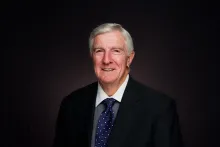
Before his retirement in 2021, Dr. Donald Ward pastored churches in Texas and Louisiana, and taught at Ambassador Bible College in Cincinnati, Ohio. He has also served as chairman of the Council of Elders of the United Church of God. He holds a BS degree; a BA in theology; a MS degree; a doctor’s degree in education from East Texas State University; and has completed 18 hours of graduate theology from SMU.
