


Gary Antion
This transcript was generated by AI and may contain errors. It is provided to assist those who may not be able to listen to the message.
If we're going to be in that glorious kingdom, it takes faith. Some people say it just takes faith. I want to share with you the situation with Jesus Christ. And Jairus, the ruler of the synagogue's daughter, he sent to let him know his daughter was dying, asked him to come. So Jesus, on his way there, gets stopped and goes through the crowd. The woman touches his garment, and she's healed of a disease of many years of having this flow of blood, this issue of blood. She's healed instantaneously, so he looks around and touches me. So then he goes on, and by the time he gets near, they come to him and say, you're too late. She died. So he tells Jairus, the ruler of the synagogue, don't be afraid, just believe. And that's what the New International Version says, too, but God's word says this. When Jesus heard this, he told the synagogue leader, don't be afraid, just believe, and she'll get well. Now, many have extended that just belief idea way beyond just healing. They've extended it to what you have to do in life. I remember when some of the changes were coming down, there are former Association Worldwide Church of God, that one of the administrators who was pushing the idea that the law is done away and you don't have to do anything, just believe, he was talking and he walked by and he thought I was agreeing with their changes. He said, well, we know all you have to do is believe. Jesus said, just believe. That's all you have to do. And he was saying that to say it didn't matter what you did, law-keeping, that just believe. That's all it is. So this thought and this idea is prevalent. In fact, one of the great religious reformers, Martin Luther King, sorry Martin Luther King, Martin Luther, Martin Luther King believed in a lot of action. He actually did action, too, and his belief. But Martin Luther said this about Romans 1.17. He said, the just shall live by faith, and then he added, alone. The just shall live by faith alone. Now Romans 1.17 only says the just shall live by faith.
Is this true? John 3.16 is one of the famous scriptures. You can see it in basketball games. You can see it on people's tennis shoes sometimes. You can see it in football stadiums. You can see it on the bumpers of cars. You can see it sometimes just at a billboard. John 3.16. John 3.16, in that section, notice what is recorded. John 3.16. For God, this is in red letter, so loved the world that he gave his only begotten Son that whosoever believes in him should not perish but have everlasting life. So Jesus tells us that's all it takes is belief. Just believe, and you can be saved. In Acts 16, let's take a look at this verse. Acts 16, these two verses, verses 30 and 31, the Apostle Paul and Silas had been thrown in prison, and while they were in prison, they were praying loudly and singing songs of praise even after they had been beaten and cast into the inner prison, the hardest part, maybe maximum security part of it. And while he was praying, there was an earthquake, doors all flung open, and the people, the inmates, could have actually escaped. But Paul said, no, don't, don't, he exercised. And here came the guard, and you know, in Roman times, if you were the guard, prison guard, you let your prisoner escape, you got what penalty he was in for. So, the guy, there were so many who escaped, he might as well just kill himself. So he brought in his sword, took a light, came into them, he was going to kill himself, and Paul said, stop, don't do it, we're all still here. Now, how did Paul know that? Because Paul must have exercised some kind of authority over them and said, don't do it.
And the man didn't. The man called them out, and he said, I've been hearing you, I'm giving you this part of it, fill in. He likely said, I've been hearing you. You've been beaten, you've been thrown in the inner prison, and you've been nothing but singing and praising, and I've heard your prayers to God, because many times people back then prayed out loud, they didn't care who heard them. My granddad, Middle Easterner, when he prayed, my wife was staying in the same house that he had, he wanted some company because his wife had died. So we were neither nearly married, we were sleeping in the next bedroom. And we could hear him praying in the next room, the walls were fairly paper thin.
But we could hear him praying. They didn't care who heard them, they prayed. Paul and Silas were praying, and the other prisoners would have heard him, and a jailer would have heard him before he fell asleep. What kind of men are you? And now, I could have killed myself, it would make it easier for you to escape. You stopped me.
And so in Acts 16, in verses 30 and 31, we read this.
And he brought them out, well, he called for a light and fell down trembling before Paul, because verse 28 he says, Do yourself no harm, Paul said. Called for a light, ran in, came and fell down before Paul and Silas. He brought them out and he said, Sirs, what must I do to be saved?
So here's Paul's opportunity to tell him, keep the law, you've got to obey. You've got to obey, that's what you have to do. Obey God, keep the law, the law saves you. Notice what the Apostle Paul said. He said, What must I do to be saved? So they said, he and Silas, believe on the Lord Jesus Christ and you will be saved. You and your household. Now that's not the end of the story, because what did he do after that? He went to the jailer's home. Jailer took him and Silas. Remember, they had just been bludgeoned and beaten, so they still had wounds that hadn't been treated yet. Blood on them. He took them and he washed them.
And you know what else happened? Verse 32. And they spoke the word of the Lord to him and to all that were in his house. So it wasn't just a matter of empty belief. Oh, I believe there's a Jesus. I believe there's... I believe... He spoke to them the word of God, so that they might understand more. We'll see more about this in a moment. So is faith all that is needed to be saved? Jesus Christ said, yes. Yes. What did he mean? What did he mean by this? Did he mean all you have to do is say, I believe in Jesus? Before my dad died, I didn't know this until afterwards. I had been very upset. Before my dad died, my brother-in-law, who used to be in our church years ago, now was going to some of the other Protestant churches, he got my dad to say, I believe in Jesus. He kind of pleaded, Dad, don't you... I don't know if you can just say, I believe in Jesus.
So then, at the funeral, he figured he's going to get to go to heaven because he said, I believe in Jesus. Now I know my dad better than he knew my dad. My dad is a no-nonsense person, very practical. And the only reason he did that, because he was on his deathbed anyway, and he said, I accept Jesus. You accept Jesus as your... Yes. My dad knew better. He had sat at church many times, many years. Very practical man. He knew that wasn't the end. But he did it. My brother-in-law thought, that's a great thing. Is that all it takes?
Is it just an acknowledgement? Is that all it takes? Is just some mental acuity that says, I believe. And the words that follow, I believe, is that all it takes? What did Jesus mean? So let's see what the Scriptures say about this, because I'll tell you, there are lots of churches that believe this.
That all you have to do, including our former one, because the guy said to me when they were talking about law keeping on, he said, Well, you know, all it takes is to believe. All you have to do is believe. Well, I believe that. I believe all it takes is belief, if we understand what belief is. For years and years we published two booklets in the Worldwide Church of God. One was, what is faith? And the second one was, what kind of faith is required for salvation? There's one thing to believing intellectually. There's another thing to believe in a way that you do it actively.
If what we believe does not, in our heads, does not affect our feet, and where they go, and what they do in our hands, then our faith is lacking. We've got 50% of the belief. And if you don't have all, you don't have it. And we'll see some of the Scriptures on this.
So what is faith? Hebrews 11, verse 1 gives us a definition. Hebrews 11 and verse 1, we read, Now faith is the substance of things hoped for, the evidence of things not seen. So I believe in this, though I don't see it. Does that affect me? When you were baptized, there were many things you had to believe that you never saw. You were baptized because you wanted to be a part of the kingdom of God.
Right? Did you ever see the kingdom of God? Have you ever seen it? Not yet. You hope. The Feast of Tabernacles kind of pictures that. But have you actually seen the kingdom of God? No. So you're believing in something, you're modifying your whole life for what you naturally would do, because you believe in something you've never seen. Did you ever see Christ live a perfect life? Did you ever see Christ put to death?
Did you ever see his blood drip out of his body? Did you ever see him resurrected afterwards, proving he was very God in the flesh? Did you ever see that? No. How do you believe it? Because it's evidence. You have faith. It's evidence of things not seen. But that intellectual faith by itself, what you know in your head, is not enough. Unless what we know in our heads goes down to our feet, goes through our whole body, and affects how we live, what we do in life.
See, that's when people fail. They think this is an easy thing. All you have to do is accept Jesus. Okay, come on, here's your ticket. That's your ticket to the salvation trade. Come on. Come on. Where's your ticket? I believe in Jesus. Okay, come on in. I accept Jesus. Come on in. Okay, now find yourself a nice, easy, comfortable birth, because this train is heading to the kingdom of God.
Or, as the world would believe, heading to heaven. This is a salvation trade. All you have to do is have your ticket. Is that what life is all about? Is that what faith is all about? Or doesn't faith demand us to act on what we believe? Doesn't it do something to us if we believe it?
If we believe that there was a Jesus Christ? If we believe that Jesus Christ died for our sins? If we believe that Jesus Christ who preached and promised the kingdom of God and said to his disciples, it's my good pleasure to give you the kingdom? If he said that, what are you supposed to do now? So understand two sides of faith, two dimensions. What I know in my head, what I read about, what I think about, what I decide in my head, and what I do with it.
If what we know in our head in faith does not translate to how we live our lives, something is wrong with us. We're falling short spiritually. So somebody says to me, do you believe that it was required for salvation as faith? Absolutely. But it's what kind of faith do you mean? I mean both. I mean you've got to know it in your head, but you also have to know it in your feet.
Where do you direct your feet on the Sabbath day? He even talks about that. And I say, what do you do with your feet? What do you do with your services? What do you do with your feet? You direct them to not do your servile work. What do you do on that day? It's a day to draw closer to God. It's a day to honor Him. So what we do has two sides. Let me go to James chapter 2 because the Apostle James was Jesus Christ's brother. He didn't like Jesus when he was alive, or didn't seem to like Him too much. In fact, he and his brother said, you know what?
They're waiting for you out there in Jerusalem. They're waiting to take you in. They're waiting to send you to the gallows. Why don't you go up and keep the feast? And he said to them, you go first. I'll come later. And he did. Now, if this was your brother and you loved him, would you send him up to some people that want to kill him?
I don't think so. And you read and Mark, his brothers and his family did not believe. Because, after all, what it would be like to live with a perfect brother. What if you have a perfect brother? He never does anything wrong. But you mess up every so often. And you get scolded. He doesn't. And, in fact, your mother and father might say, why don't you be like Jesus? How come you're not more like Jesus? You both came from us, from me. How come you're not more like Jesus? Why do you mess up? If you hear that enough, it gets you upset.
His brothers didn't believe in Him. But, strangely enough, two of them, Jude and James, did come to the realization afterwards. And look what James writes. Do you think James did not know what his brother believed? Do you think he did not hear him? All the preaching he did, all the talking he did at home. Do you think Jesus never spoke at home? And so, in James chapter 2 and verse 14, James 2 verse 14, he says, what does it profit my brethren?
If someone says he has faith but does not have works, so now we're talking about somebody says, I have intellectual faith, I know this, I understand this, I see this, but does not have works that are following that faith and inspired by that faith and driven by that faith. He says, but does not have works, can faith save him? That's only the part in your head, the thinking part, because he says they don't have the works. If a brother or a sister is naked and destitute of food, and one of you says to them, I know you don't have any food, I hope you'll find it, I'll be praying for you, goodbye.
If they need to be warm, oh, no, I know it's cold outside, I hope you find a coat too, and I hope you find some food, and I'll be thinking about you. I'll be thinking about you, not praying for you. What good did you do? None. He says, depart in peace, be warmed and filled, but you do not give them the things which are needed for the body.
What does it profit? You didn't do anything. I'm thinking about you. I care about you, but I don't give you any food, and I don't give you any clothing. Thus, also, faith by itself, that's intellectual faith, if it does not have works, is dead. If they are only nice thoughts, if it's only I accept Jesus, if it's only I believe in Jesus, if it's only saying, yes, Jesus loves me, does that save us?
No. No. It takes both. Both aspects of faith. He says, thus also faith by itself, if it does not have works, is dead. It doesn't accomplish anything. But if someone says to you, you have faith and I have works, show me your faith without your works, and I will show you my faith by my works. I have a sermon I've been working on, and I'll give you it today.
Entitled, Do People See Your Faith? You know how many times, there are several times in the Bible it says, well, when they saw their faith, can people see your faith? If you only have intellectual faith? No, they might hear it, because you could blabber on, you know, talk about, oh, I love Jesus, oh, I love the Lord. I've learned also, when I find people that talk a lot about that, they probably don't really do it.
And the reason they're talking about it openly is because they want people to believe they're actually doing that.
If you're doing it, you don't have to try to convince everybody. You just do it.
So he says, I'll show you my faith by my works, by what I do. There is a faithful man. How do you know he's faithful? He's reliable. How do you know he's faithful? He walks a moral path that God has prescribed. How do you know he's faithful? His actions, his way, his fruits, right? By your fruits, they shall, by their fruit you shall know them. There's action.
He says, you believe that there is one God you do well, even the demons believe. The demons have a sort of intellectual faith, but do you want, do you know, oh, foolish man, verse 20, that faith without works is dead.
I want to read you a quote from 15,000 illustrations by Lee Tan. This is number 3376, so I only had to go through 3,000 of them to get to this one.
It's entitled, Two Oars, Faith and Works. An old Scotsman operated a little rowboat for passengers.
One day a passenger noticed that the old man had carved on one of the oars faith and the other works.
Curious, he asked the reason, why did you do that? The old man, being a Christian, said, I will show you.
So he dropped one oar and used the other works. And the boat went around in circles.
Then he dropped that one and he used the faith-only one, and the little boat went around in circles the other way, but still circles.
Then he used both oars and the boat swiftly sailed over the waters.
He explained, one without the other will get you nowhere.
But faith and works, pulling together, makes for progress.
It takes both. In Hebrews 11, you read these men of faith. It's a faith chapter.
I'll just give you some of the statements.
By faith, Abel offered a more excellent sacrifice.
By faith, Noah prepared an ark.
By faith, Abraham obeyed God.
By faith, Abraham feared God, offered Isaac.
By faith, Jacob blessed his children.
By faith, Moses refused to be called an Egyptian.
And by faith, Rahab received the spies.
Do you see, by faith, they did something.
Faith motivated them to live according to how they understood and believed.
It can't just be one. It can't be the other either. If you think you could just work your way, that was the Jewish way. That was the Old Testament. They thought they'd keep the law perfectly, they'll be okay. Of course, you can't do it. That's why Christ had to come.
So you can't work your way. You can't earn salvation. That's a gift of God.
But God wants to see what you believe, and he wants to see how you believe.
And that's faith with works.
Look at John 8, verses 30-32.
John 8, verses 30-32.
It's something really important. You probably run into this. You've even had people say, do you believe? Just believe!
We had some of our students when I taught comparative religion at Ambassador College in Big Sandy, Texas.
I usually would ask them to sign up who wanted to go to one of the Christian churches in the community and take notes and see what they believed. Because it was part of a comparative religion.
So one of the groups went to, I think it was the Baptist Church.
They identified themselves. They called the Baptist pastor and said, you know, there are four of us who are in a comparative religion class. We'd like to come visit your church this week, and that's okay. Oh, sure, come on! So he knew they were from, we're from Ambassador College. They told him, so they came. They were sitting there. He knew this. So he said, in the middle of his sermon, he said, now anybody who believes, who doesn't, no, anybody who believes they're going to heaven, stand up.
And of course, most of the congregation stood up. Who didn't stand up? Our students.
Then he said, okay, soul-winning time. That means it allows members of the church, anybody to try to come to these four or whoever else didn't stand up, and try to convince them that they need to go to heaven.
And so this one girl, she was very, she's a pretty strong young lady from the church. She was sitting there, this woman came up, and she was in tears, and don't you see you, don't you understand, don't you see you're going to get there? Don't you want to go to heaven? Don't you want to do it? And after she finished her little spiel, she said, now what do you think? No.
Then she cried more than she tried to give her word, went through all this room, and she said, now do you see why?
And our students said, no. And so that ended soul-winning time. They didn't win any. They went back, feeling with their tails between their legs and feeling like they didn't make it that time. But that was dirty, okay. Most of them never did that, pulled out, stunned. All they wanted them to do was say they believed. They believed.
You've got to be more than that. The students held their own. They came back and they reported, told me they would usually give a report. So for them to do it, they would write up the report, tell me what was the church like, what was the sermon like, what were the people like, and all that. So they'd give an impression of what they were taught, what did they believe.
John 8, verse 30 to 32. Jesus Christ was talking to Jews who didn't really believe in Him. A lot of them did not believe in Him. John chapter 8 and verse 30. As He spoke these words, of course it says before that time, many did not believe in Him. As He spoke these words, though, He was preaching the Gospel. Many believed in Him.
So it's one thing to say, you know what, you sound believable. I believe you. Okay, that's great. But what do you do with that belief? Does it affect you?
Notice what Jesus said. They said, we, many, believed in Him. And Jesus said to those Jews which believed in Him, If you abide in My word, you are My disciples indeed. It's not enough to tell Me I gave you a good story. It's not enough to tell Me I had smooth words. It's not enough to tell Me that My words were clearly understood. If you abide in My word, you are My disciples indeed. Verse 32, And you shall know the truth, and the truth shall make you free. So it isn't just belief intellectually. It isn't just saying, Boy, this is the best I've found so far. Oh, okay, so there are lots of other groups out there that tell the truth, that teach the truth, and follow the truth.
Lots of them.
And so, a lot of them are just the best that I've found. So you're the one that's deciding, not the Bible. The Bible is what tells you what's true or not true. So again, it's belief and doing something about it. When the disciples were not preaching after Jesus Christ's death, they were commissioned after His death. Mark 16, verses 15 and 16. Mark 16, verses 15 and 16. He appeared to them, and He said to them, Go preach the gospel to every creature.
Go preach the gospel to everyone. That was His disciples' commission. In verse 16, here's what Mark wrote in his gospel. He who believes, quoting Jesus, He who believes and is baptized will be saved. So now we see all you have to do to be baptized is just believe.
Believe in your head. Is that all required? That's one part. Yes, you need to say everything I've heard and studied and read. I believe it's the truth. And it affects me, and I'll do something about it. That's where fruits of repentance come in. But look at Acts 2, verses 38 and 39, which adds to the story.
It's part of the same Bible, part of the same subject. Acts 2, verses 38 and 39. It's not just intellectual belief. Acts 2, 38 and 39. Verse 37 tells us that when they heard that them say that Jesus Christ, whom you crucified, He is Lord and Christ. The one that you crucified is in heaven at God's right hand.
And when they heard this, they were cut to the heart and said to Peter and the rest of the apostles, Men and brethren, what shall we do? So now they're stirred in spirit and heart. Then Peter said to them, repent. He didn't say, just believe. The believe has to be a part of it, because if you don't believe what Jesus Christ preached, how are you going to follow that way?
Repent and let every one of you be baptized in the name of Jesus Christ for the remission of sins, and you shall receive the gift of the Holy Spirit for the promises to you and to your children and to all those who are far off, as many as the Lord our God shall call. So it isn't enough just to believe. You've got to believe and do something about it. I believe what Jesus Christ is preaching, and then I believe that what I was doing before is wrong.
I've got to do something about this. That's repentance. Changing. That's repentance. We used to ask people to bring forth fruits, meat for repentance. Show me. Show me you're repentant. How do you do that? Well, I'm working on the Sabbath now. Well, you work it out when you feel you can do it, when you have conviction.
You work it out. I won't baptize you until you do, because you're breaking one of God's commandments. But you have to do it on your timeframe. Not on my timeframe, your timeframe. I hope you do it soon, but you have to do it.
And they come back. I went and talked to my boss, and I could have the Sabbath off. I didn't think I could. Or I had to quit my job and get another one. That's a fruit of repentance. That's changing their lifestyle by what they, because of what they now believe. When you receive God's Holy Spirit, Acts 5.32, when you receive God's Holy Spirit, who does He give it to? To those who just believe in Him. Acts 5.32. We read this, And we are His witnesses to these things, and also, so also, is the Holy Spirit, which God has given to those who obey Him.
Didn't say, God gives His Holy Spirit to those who believe. He gives His Holy Spirit, yeah, He does. But He also gives it to those who believe and obey. That's who gets it. It's faith with works. Not faith with that works. I remember that fellow very clearly saying, I just believe, that's all it takes. And my brother-in-law saying, I got Dad to say He believed in Jesus. Dad, just do you accept Jesus? Yes. Oh, He thought He had done a world of good. My dad knew better. I know He did. Because I was around Him a lot.
I know what He believed. He didn't believe in that stuff. He believed in doing things that are practical. If you're going to change it, my dad changed a lot. He used to use pretty dirty language. He worked as an electrician on construction sites. They don't talk nicely, nice talk. They use dirty language. My dad could let it fly if he wanted to, but boy, he changed.
He quit smoking. He was doing a lot of things. He started going to church. He started tithing. He was doing a lot of things. He went to our church for a long time. My brother and sister and I weren't even around. He was still going. They helped people. They were trying to do things, good deeds to others. So I knew He knew better than just to say, I believe, just believe. That's all it takes. Let's take a look at Genesis 26, verse 5. You know that Abraham is called the father of the faithful. You can find that in Galatians 3, verses 6 and 7.
I'm not going to go there. I'm going to go to Genesis 26, verse 5. Abraham is called the father of the faithful. What did the father of the faithful do? Just believe intellectually? He had to believe in God. He trusted in Him. But what did that trust do? What did that belief generate?
Genesis 26, verse 5. Breaking into a thought. He talks about, I'll give you all these things. Your descendants will multiply as the stars of heaven. I'll give your descendants all these lands. Your seed will be blessed. Why? Verse 5. Because you believe in Me only? Because Abraham, the father of the faithful, kept my...obeyed my voice, kept my charge, my commandments, my statutes, and my laws. Why did the father of the faithful do that? Didn't he know that all you had to do was just believe? Why did he have to do all that? Because when you believe, you do it. If you're convicted of your belief, you'll do it. James 2, verses 21 and 22. Again, go back to the book of James. James, after he said, faith without works is dead. Here's the brother of Jesus Christ. I think he knew a little bit more than many of the other individuals today. James 2, verses 20 and 22. Was not Abraham our father justified by works? Yes. Works that emanated from his faith. Works that came because he believed when he offered Isaac his son at the altar. Do you see that faith was working together with his works and by works? Faith was made perfect. Abraham believed, but you know what it tells us in Hebrews? That Abraham, when he went there, said, If God requires me to kill my son, I know God could raise him from the dead. And one of the translations says, we will go to his son. We will go up and we will come back. Because even though he knew he was supposed to sacrifice his son, and in his mind he was fully determined to do what God told him, God spared him. But he said, in his heart and mind, if he didn't, God was able to bring him back from the dead. He believed God and believed in God. And that belief led him to do. Now he knew God. I don't know if I hear a voice that says to me, Go kill somebody. I don't listen to that. It's against God's law. But he knew God, personally. He knew God. So he listened, and God stopped him, because God wouldn't let him do it. So he believed and obeyed, and he believed in works as well as faith. Take a look at Matthew 7, verse 21. Let's see what Jesus Christ has to say about this matter, because we want to know, what does he mean? What did he mean by that? Just believe. In Matthew 7, verse 21. It's amazing how people can put words and thoughts in Christ's mind and add to the story, unfortunately. Matthew 7, verse 21. Not everyone who says to me, Lord, Lord. Not everyone that says, Lord, Lord, Lord. Do you know the Lord? Do you know the Lord? Do you know the Lord, brother? Here, let it look. I may know the Lord, but what do I do because I know the Lord? What do I do if I call him Lord? Am I calling him master? Am I calling him my boss? Am I calling him one who has a rule over my life? Yes, I am.
Not everyone who says to me, Lord, Lord, shall enter into the kingdom of heaven.
He's talking about people who believe in him, who call on him.
He says, not everybody that says that will enter into the kingdom of heaven, but he who does the will of my Father in heaven. He who does God's will.
What is God's will? There it is. 66 books, God's will.
He who doesn't. Verse 22, many will say to me in that day, Jesus is speaking, many are going to say to me in that day, Lord, Lord, have we not prophesied in you? We used your name a lot.
We didn't use Buddha. We didn't use Shinto Shintao. We didn't use the gods of the Shinto people. We didn't use the gods of the Muslims, even though that name is what we would use if we were praying to God.
Yet, it's a different God than our God.
Have we not prophesied in your name, cast out demons in your name, and done many wonders in your name? We did all these things. Don't you know us? We used your name.
Verse 23, and then I will declare to them, I never knew you.
But we know you. We've accepted you.
We believe in you. We believe you existed. We believe you're the Savior.
I never knew you. Depart from me. You who practice lawlessness.
Your faith doesn't lead you to follow me as your Lord.
Your faith leads you to do your own thing. Your faith leads you to establish your own rules.
I don't think God would mind if I did this. I don't think God would mind if I did that. I don't think you're making your own rules. What, do you make the rules on how God should be worshipped, or does God make them?
Mark 7, verses 7 through 9. What did Jesus Christ say when he saw these people making some kind of a sham of religion? Mark 7, verses 7 to 9.
He said, The people honours me with their beliefs, with their lips. They can talk a good fight, but their heart is far from me. They're intellect. They know they can say the right things, but in vain do they worship me, teaching as doctrines the commandments of men.
They are actually trying to worship Jesus, but they're doing it all for nothing. That's what vain means. They're doing it in vain. It's useless. Why? Because they're teaching as doctrines the commandments of men.
They rejected God's law. Notice what he says in verse 8. For laying aside the commandments of God, you push those aside, and you hold the tradition of men, such as washing of pictures. You're good at that. Men tell you, watch those pictures so many times, put them in this, do this. You're really good at that.
He said, you're doing all those things, and other such things, cups, and many other such things you do. And he said to them, all too well, you reject the commandment of God, that you may keep your tradition. You want to decide what you're going to do. If I'm God, I decide. I decide. And his decision is the Scriptures, which he's inspired through the years.
Luke 646, I'll just quote this. He said, Why do you call me Lord, Lord? And do not the things that I say. Why do you think you can just say the words, and somehow, magically, you're going to be brought into the kingdom of God? That's not what Paul said. Paul said, I've got to keep myself under, lest after I've preached to others, 1 Corinthians 9, 27, lest after I've preached to others, I should become a cast away.
I might preach the truth to others, but if I'm not doing it myself, he says, God will cast me away. Why did he have to keep himself in check? Why did he just believe, intellectually? Let's look at Matthew 19. Here was Jesus Christ's golden opportunity, golden, to settle the issue about law and grace and law and belief and faith and works. Here was his golden opportunity, Matthew 19 and verse 16. Now, behold, one came and said to him, Good teacher, or rabbi, what good thing shall I do that I may have eternal life?
This is Jesus' golden opportunity. He could have clarified it real well for us and just said, My son, there's nothing you have to do but believe. Just accept me. Is that what he said? The guy's asking him about, How do I get to that glorious kingdom that we heard Chad sing about? How do we get to there?
Just belief? Empty belief or intellectual belief? He said, How do I get there? What can I do? And he said to him, Why do you call me good? No one is good but one, and that is God. In other words, nobody is as good as God. But if you want to enter into life, keep the commandments. If you want to be a part of life, you've got to do something about it. You've got to modify your living. You've got to follow my ways. And the man said to him, Which ones?
And Jesus said to him, Don't murder. You shall not commit adultery. You shall not steal. You shall not bear false witness. Honor your father and mother. And you shall love your neighbor as yourself. Which is a summary of it. Where are those first several found? Dead commandments. And the young man said to him, All these things I've kept from my youth. And Jesus said, If you really want to be perfect, go sell all you have and give to the poor. And the man walked away, shaking his head. Which meant he didn't really want to follow God.
So, again, Jesus Christ had a golden opportunity to tell them. So Hebrews 11 and verse 6 as we bring this to a close. Is it enough just to have intellectual faith? Answer, no. It's dead. Is it enough just to do works and not believe? Intellectually. It's dead. It takes works that are generated by your faith. Works that are generated by your faith. If you believe it, do it. If you don't believe it, find out why you don't.
Ask God for more help. And seek his help. And then when you see it, do it. I'm reminded of Dr. Hay. Dr. Herman Hay, some of you old timers will remember him. Dr. Herman Hay was one of the first students to go to Ambassador College. Very smart, very intellectual. He came to college thinking when the Passover was. He thought it was on the 15th, not the 14th. Mr. Armstrong was going to have services for the small group in Pasadena, including the four students.
And Dr. Hay was resisting it all the way. So when school was out, he went and he was studying and studying and studying, trying to come. He had already had several discussions with Mr. Armstrong. And in his studies, he finally saw the light. Passover is on the 14th, on the 14th, not on the 15th. And when he finally came to it, it hit him like a ton of bricks.
He ran all the way from his place where he was dwelling, down the street, not on campus at all. He ran all the way to Mr. Armstrong's house, came there with his tongue hanging, knocked on the door and said, I believe, I see it, I see it, I see it. And he kept the Passover on the 14th. If you don't understand something, you've got to ask God for help.
Search, seek, ask for help. Ask somebody who may be more newer in the church, or who may be older in the church, who has better knowledge, to give you some guidance. Ask the ministry to help you. Ask God to help you. So, in Hebrews 11 and verse 6, Hebrews 11 and verse 6, as we bring this to a halt today, we read, Without faith it is impossible to please him.
For he who comes to God must believe that God is, so you must believe he exists, and that he is a rewarder of whom? Of those who diligently seek him? He's not a rewarder of those who diligently think about him. He's not a rewarder of those who just say, Well, I know him. I believe in him. Those who diligently seek him. There's action involved. Ephesians 2 verses 8 to 10. Ephesians 2 verses 8 to 10.
Ephesians 2.8 is great scripture quoted by many in the Protestant realm. I quote it. I like it. I like Ephesians 2.8. I believe it. Ephesians 2.8. For by grace you have been saved through faith.
When you're going to be baptized, you're believing God can forgive everything and anything I've ever done. God will forgive me when I go under that water. Because I believe in the grace of God, the mercy of God, the kindness of God, to look after me and take care of me, I believe in that. Because he knows you believe, God will spare you. And you believe in the grace of God that God can pour out upon you his favor, his mercy, his kindness, his love, and his forgiveness. And he said, you have been saved by grace, you have been saved through faith. How have you been saved? I'm saved from sin in my life before. I'm saved from Satan, because God's in my life now. I'm saved, in a sense, from death, ultimate death, perishing, because I believe in God, and because I follow him. So notice what else he says, and that not of yourselves. And I believe that that refers to salvation and the grace of God, is not of yourself. You can't save yourself. But it's the gift of God. And in verse 9, not of works, lest anyone should boast. I can't say, God, I did so many good deeds, now forgive me. God, I'm a good person now, forgive me. No. That doesn't make God forgive you. That merely writes the course you were going on. It shows God intention. It shows God your faithfulness. And then we read, not of works, lest any man should boast. For we are his workmanship. He's working on us. Created in Christ Jesus, what? For good works.
God expects good works from his people. From those who have been baptized. From those who have accepted the grace of God in their life. He expects good works. He expected it before we were baptized. That's fruit of repentance. He expects it afterwards. Good works, good deeds. Created in Christ Jesus, for good works. Which God prepared beforehand that we should walk in them. Faith without works is dead. Faith with works is living faith. So if somebody asks me, do you believe? Do you believe you should be in John 3, 16? If you believe in Christ, you could be saying, yes. Yes, I believe that. Just believe. If you understand that belief means, I think about it, I accept it, and I follow it. I believe it, and I do it. That is living faith. That's the kind of faith that's required for salvation.
Thank you.
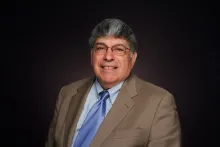
Gary Antion is a long-time minister, having served as a pastor in both the United States and Canada. He is also a certified counselor. Before his retirement in 2015, he was an instructor at Ambassador Bible College, where he had most recently also served as Coordinator.
