
Greg Thomas
This transcript was generated by AI and may contain errors. It is provided to assist those who may not be able to listen to the message.
Well, once again, welcome to the Feast of Trumpets. This is the fourth Holy Day of the annual year in the Hebrew calendar. It is also the Mid-Holy Day, with three that went before it, and three that will follow it. It's also the Holy Day that bridges the present evil world with the new world that we know of as the Kingdom of God. This is a very important day in God's plan for humanity. And let's review the original instruction, which is always a good thing to do in God's Holy Days. Going back to Leviticus, chapter 23, beginning in verse 1. We need to know why we do these things, why they were instructed, and whose Holy Days these really are. Because they're not my Holy Day, they're not your Holy Days, they're not the Holy Days, the United Church of God, even though we observe them and respect them and honor them, they're someone else's Holy Days. It says here, Leviticus chapter 23, verse 1, and the Lord spoke to Moses, saying, Speak to the children of Israel and say to them, The feasts of the Lord. So God says, I own these feasts. They're my feast, which you shall proclaim to be holy convocations, a holy convention. And sure enough, we are assembled here from at least three to four different congregations, and we're having a holy convention in order to take time to worship and give honor to our great God to recognize what this day represents and to acknowledge God's sovereignty in our lives.
Continuing, he says, The feasts of the Lord, which you shall proclaim to be holy convocations, these are my feasts. So very quickly, there's no mistaking whose feasts these are. God states twice in these two verses that He is the owner and originator of these feasts, beginning, if you follow through the rest of the chapter, with the weekly Sabbath. And church councils cannot make God's feasts obsolete. Church groups, church organizations, scholars, no one can take the sanctity away from days that God says are His, that God says are holy. Propping down now to verse 23, specifically regarding this day, and then the Lord spoke to Moses, saying, Speak to the children of Israel, saying, In the seventh month, on the first day of the month, you shall have a Sabbath rest, a memorial, a blowing of trumpets, a holy convocation. And hence we, in a new covenant sense, call this the Feast of Trumpets, rather than using a Hebrew name. And again, it's a holy convocation. It's a convention in which God's people all gather together to fellowship and to celebrate in joy together and worship God on His holy day. Verse 25, You shall do no customary work on it, and you shall offer an offering made by fire to the Lord. So this isn't a day in which we go to work, in which we do our daily chores or a vocation, like we may do other days of the week. This is a day that we get off of the merry-go-round, we step out of the rat race, and we stop, and we worship God and obey His command. And of course, the offering that we make today is no longer an animal sacrifice. We are living sacrifices. Once we've received God's Spirit and we commit and dedicate ourselves to be disciples of Jesus Christ. Of course, we observe the New Covenant holy days, not the Old Covenant observances, and I know that still confuses a lot of people. But what Paul taught the Gentile Corinthians, whom he encouraged to keep the feast, he said that these days they're no longer about animal sacrifices, they're no longer about pilgrimages, they're no longer about Levites, and they're no longer about temples. What they are about is a brand new approach because of what Jesus Christ did for the world and having an attitude of sincerity and truth. The main difference is that the holy days are no longer focused on reliving and remembering the past. That's what the Old Covenant did. It relived the past over and over and over again. The New Covenant focus on God's festivals is on what Jesus Christ is doing now and what he is yet to do. And that's a big difference. The trumpet blast was anciently used to gather people together to make a startling or important announcement. Well, I would like to look at an ancient event today that symbolically represents the fall of modern Babylon, something that we know is going to happen on the Feast of Trumpets at the time of the return of Jesus Christ. The fall of a modern human system, 6,000 years of human beings trying to govern and ruin themselves as well, but rule themselves and look at the mess that we've made out of this world today.
Many people think that the Battle of Jericho is simply an interesting historical event that occurred as Israel was entering the Promised Land. However, there's far more to this event than first meets the eye. Prophecy is often dual in fulfillment. It usually has an earlier, minor event that pictures something much greater, much larger in scope, yet to come. And this is true of the Battle of Jericho. But what actually happened in Jericho and what the future events did are very important, and they pointed to something in the future, something represented by the Feast of Trumpets itself. If you'll turn to Joshua 5, we'll begin to read about this event. I'd like to quickly review some background about Jericho. We'll be going to chapter 5 and verse 13. Jericho was a city that existed in the west side of the Jordan River. Moses had recently died in the Israelites, who were finally entering the Promised Land after 40 years in the wilderness. And Joshua led the Israelites across the Jordan River into the land of Canaan. The crossing was made possible by a supernatural event, the separation of the waters of the Jordan River. You may recall that in Joshua chapters 3 and 4. And after the crossing, the river they camped at Gilgal. Joshua had previously sent two spies into the city who had been protected by, of all people, a Canaanite, a Canaanite harlot, whose name was Rahab. I don't even know in our politically correct world am I allowed to say the word harlot anymore. That may be a hate crime. They may haul me off to jail. Well, how would we rephrase that in the 21st century to make it okay? Well, we could call her Rahab the monogamously challenged. Maybe that's okay. Now they won't arrest me. But anyway, her name was Rahab, and for her kindness and faith in Israel's God, she was promised protection. The name Jericho means moon, and many archaeologists believe it is the oldest city in the world. And that it was the first city, of course we know from scriptures, that was conquered under Joshua. Jericho was a stronghold. It was a major barrier that prevented Israel from entering the new world that had been promised. One city stood between Israel and their entrance into the promised land. One huge barrier. And that was Jericho. So with that background, let's pick it up now in chapter 5 and verse 13. And it came to pass. When Joshua was by Jericho, that he lifted his eyes and looked, and behold, a man stood opposite him with a sword drawn in his hand.
And Joshua went and said to him, are you for us, or are you for the adversaries? And he said, no, but as the commander of the army of the Lord, I have now come. He said, my agenda isn't particularly your agenda, Joshua. It's not anyone else's agenda. My agenda is purely the word and the will of God.
And Joshua got it because it says, and Joshua fell on his face to the earth and he worshipped. And he said to him, what does my Lord say to his servant? And the commander of the Lord said to Joshua, take your sandal off your foot for the place where you stand as holy. And Joshua did so. As it says in weary Bible notes appropriately, quote, Joshua worshiped the captain of the host of the Lord as Yahweh, acknowledging that this was his war and that the Israelites were but a part of the Lord's host, which also included angels and forces of nature. End of quote. So the commander of the army of the Lord is the very one who would later become known as Jesus Christ.
Joshua worshiped him, knowing the first commandment, certainly, that you shall have no other gods before the true God. Joshua was told to remove his sandals, exactly what Moses had been told when he was in the presence of God in Exodus chapter 3 and verse 5. Notice the commander has his sword drawn. This is a description of the conquering Christ that we will see later in a scripture. Joshua understands that what's about to happen is only due to the power and the presence of the sword-bearing commander of the army of the Lord. He's the one actually doing this. So now let's pick it up here, continuing. Now Joshua, or Jericho, I should say, now Jericho was securely shut up because of the children of Israel. None went out and none came in and the Lord said to Joshua, See, I've given Jericho into your hand its king and its mighty men of valor. Now Jericho would have seemed impregnable to a mere man like Joshua or his army. But the commander tells Joshua that he will conquer this city and that he will give control of the city over to Joshua and the people. The tribes had crossed the Jordan River, but Jericho stood in the way of fulfilling the promise of the Promised Land.
Biblical archaeologists believe that at this time in the city's history that it had a double wall. The first part of the retaining wall, according to archaeological digs, says that it was a towering structure of huge stones about 15 feet high. So they had to overcome a city that had walls two and a half times the height of a typical male, typical man.
That's pretty difficult to do. Verse 3, You shall march around the city. This is an instruction. You shall march around the city. All you men of war, you shall go all around the city once. This you shall do six days. And the seven priests shall bear seven trumpets of ram's horns before the ark. Now at first this may seem rather simple, perhaps unimportant, but the truth is that the seven priests with trumpets represented seven angels, each blowing a trumpet. Once a day for six days they would march around the city with the priest, picturing angels bearing trumpets.
The daily march around this doomed city for six days pictured the first six trumpets in Revelation. That's chapters 8 through 10.
Then down in verse 4, But the seventh day you shall march around the city seven times, and the priest shall blow the trumpets. It shall come to pass that when they make a long blast with the ram's horn, and when you hear the sound of the trumpet, that all the people shall shout with a great shout. And then the wall of the city will fall down flat, and the people shall go up every man straight before him. It's going to be a mighty collapse, and it's going to make it possible for you to be established in the promised land. So they marched around this doomed city seven times on the seventh day. This pictures the seven last plagues outlined in Revelation chapters 15 and 16. If you're a student of Bible prophecy, you know that the seventh trumpet is comprised of the seven last plagues upon the earth. Israel's army marching seven times on the seventh day represented these plagues. Again, the priest represented the angels blowing trumpets in the book of Revelation. So let's see what happened on that seventh day. Verse 20. So the people shouted when the priest blew the trumpets. And it happened that when the people heard the sound of the trumpet, and the people shouted with a great shout, that the wall fell down flat, then the people went up into the city, every man straight before him, and they took the city. They conquered it. It was no longer an obstacle. Now they were officially established in the promised land. Many scholars believe that God actually caused an earthquake to occur at this very time, at the time when the shouting and the trumpets were blowing, that just the vibration, the vibrato, that God caused a great earthquake to shake the city and have the walls fall straight down. Let's take a look at verse 22. But Joshua had said to the two men who had spied out the country, Go into the harlot's house, and from there bring out the woman, and all that she has as you swore to her. Verse 23. And the young men who had been spies went in and brought out Rahab, her father, her mother, her brothers, and all that she had. So they brought out all of her relatives and left them outside the camp of Israel. But they burned the city, and all that was in it, with fire.
Only the silver and the gold and the vessels of bronze and iron, they put into the treasury of the house of the Lord. So Joshua spared Rahab the harlot, her father's household, and all that she had. So she dwells in Israel to this day because she hid the messengers whom Joshua sent to spy out the Jericho. So some wonderful commentary about the time that this was actually written. So Rahab was saved because she believed in the spies' mission and their message, and because of her faith in Israel's God, it made it possible for her and her family to be spared. And this represents the fact that God is a merciful God. You know, Rahab's a lot like us. She was a sinner, and she deserved to die just like we do. But because of her faithful attitude and actions, she was given grace. Though she was a sinner, though she fell far, far short of God's law, she was given the grace of God, and God had mercy on her and her family. I want you to notice in the scripture that we just read that the city was burned with fire. So this is the story, the very simple story, not many verses, of the Battle of Jericho. And God's direct intervention by spiritual forces caused the mighty walls of Jericho to fall flat, and the city was destroyed. But did this historical event picture something more powerful and more profound yet to occur in the future? Or is it just a very interesting story about an event, an episode in the history of ancient Israel? Did this historical event have any significance? Does it have any significance regarding the Kingdom of God? Well, the answer to that question is yes, absolutely. And let's see how. Let's begin by going to 1 Thessalonians 4 and verse 13.
1 Thessalonians 4 and verse 13.
We just read the story of the Battle of Jericho. Let's tie in some New Testament scriptures.
1 Thessalonians 4 and verse 13.
Paul, writing about the return of Jesus Christ, he said, He said, For this we say to you by the word of the Lord, that we who are alive and remain until the coming of the Lord will by no means proceed those who are asleep. So Paul is discussing the order of the resurrection, what we call the first resurrection. First, those who had died in the faith over millennia will be resurrected and be given the honor to be the very first to leave this earth to meet the arriving Jesus Christ in the air.
And they will be followed by those who are still alive at the time of the Second Coming of Jesus Christ. Everyone will meet Christ in the air and become part of his army and will return to earth with the conquering Christ. Continuing here, verse 16, at the fall of Jericho, shouting, and trumpet blasts were heard as that event occurred. The shouting in Joshua 6 and verse 20 symbolized the future literal return of Jesus Christ to the earth as pictured by this very feast of trumpets. Let's turn now to Revelation 16. Revelation 16.
Beginning in verse 17. Revelation 16-17. Then the seventh angel poured out his bowl into the air, and a loud voice came out of the temple of heaven. What do we call a loud voice? I believe the proper phrase is shouting. Right? So it says, And a loud voice came out of the temple of heaven from the throne, saying, It is done! And there were noises and thunderings and lightnings, and there was a great earthquake, such a mighty and great earthquake, as had not occurred since men were on the earth. Now the great city was divided into three parts, and the cities of the nations fell, just like the walls of Jericho.
And great Babylon was remembered before God to give her the cup of the wine of the fierceness of his wrath. Jericho stood between Israel and the Promised Land. Babylon and its system today is what stands between spiritual Israel and the establishment of the Kingdom of God. We read earlier that many of the inhabitants of Jericho died. Only a few survived that terrible tragedy. They were Rahab and her immediate family, and the city itself was burned.
Well, what does the prophet Isaiah tell us about the earth at the beginning or the start of the millennium? Let's go to Isaiah 24 and verse 6 and see what the prophecy tells us will occur. Isaiah 24 will actually begin in verse 4. Isaiah 24 and verse 4. God's prophet was inspired to write this. The earth mourns and fades away. The world languishes and fades away.
The haughty people of the earth languish. The earth is also defiled under its inhabitants because they have transgressed the laws, changed the ordinance, broken the everlasting covenant. Therefore, the curse has devoured the earth, and those who dwell in it are desolate. Therefore, the inhabitants of the earth are burned, and few men are left. Just like happened at the Battle of Jericho. The city was burned, and of that entire city, only a few were left alive.
Isaiah tells us that only a small percentage of mankind survives to begin the millennium of the kingdom of God. Recall the parallel again that Jericho was burned with fire, and few were left alive. They represented that only a small percentage of mankind will be left alive after the fall of modern Babylon, after the devastation of a world war, of famines and diseases, and a complete loss of order within our world. Brother, in the events surrounding the fall of Jericho, have significant meaning for us today, as it did in Joshua's time.
There's a reason God inspired the events of the Battle of Jericho almost 3,500 years ago. In order for Israel to enter the promised land, a powerful city stood in the way. In a similar pattern, a powerful ruling system of evil, pictured in what Revelation calls Babylon, stands in the way today. Jericho could not be defeated by mere men. It took divine intervention by Jesus Christ, by a sword-bearing commander of the army of the Lord.
That's what it took for that city to fall. Jericho could not be defeated by mere men. It took divine intervention by Jesus Christ. It will also take God's intervention for the Babylonian system that controls this present world, has its grips, and is so deeply embedded in this present world to collapse and fall. Do you remember how the commander of the Lord in Joshua 5? 13 had a sword drawn in his hand? Let's see the fulfillment of this in Revelation 19, 11. Revelation 19, 11.
Just a different description of the commander of the army of the Lord here in the book of Revelation, chapter 19. It says, Of course he makes war. He is the commander of the army of the Lord.
Verse 15, You and I have been called to prepare for this future event that God prophesied thousands of years ago, as surely as Jericho fell, and its ruins are studied by archaeologists today. So too will be the destruction of the final resurrection of the Roman Empire that is led by spiritual forces that are determined to destroy the earth and all of humankind.
Brethren, are we ready to be part of that army? Do we have our spiritual armor on? On final scripture from the book of Revelation, if you'll turn there with me, Revelation, go back a few chapters to chapter 11. Revelation, chapter 11.
Chapter 11, beginning in verse 15, Then the seventh angel sounded, representing that final day marching around Jericho, And there were loud voices in heaven, saying, The kingdoms of this world have become the kingdoms of our Lord and of His Christ, And He shall reign forever and ever, And that is the kingdom of our Lord, And of His Christ, And He shall reign forever and ever, And that is because the cities fall. Modern Babylon falls. Gone. The barrier is removed. The big obstacle between the spiritual Israel of today entering God's promised land, known as the kingdom of God, is finally removed. And the twenty-four elders who sat before God on their thrones, fell on their faces and worshipped God, saying, We give you thanks, O Lord God Almighty, the one who is and the one who was and the one who is to come, because you have taken your great power and reigned, and the nations were angry, and your wrath has come, in the time of the dead that they should be judged, and that you should reward your servants, the prophets and the saints, and those who fear your name, small and great.
Can we see that reward ahead of us, that Jesus Christ is bringing back with him when he comes to this earth? Can we catch the zeal and the excitement of being part of the army of Jesus Christ, part of the spearhead that institutes a new kingdom on this earth, that literally takes this civilization and turns it upside down and buries it where it belongs, and starts all over again with a new heaven and a new earth and begins to provide love and order and God's laws and God's values being taught to the inhabitants and begins everything anew?
Can we catch that spirit? Can we catch that enthusiasm and our calling and our part in that? We are the saints spoken of here in Scripture. We are the spiritually armed servants in their rear guard that God has called the battle in this world's ultimate fight for liberty. How many times do we read in the newspaper that people want liberty? There are revolutions all over the world. There are people within nations who are saying, I'm not getting liberty, I'm not getting the rights that I deserve. Well, real liberty is no longer being a slave to sin, because Satan the devil has been playing the human race for thousands and thousands of years.
Real liberty is when Jesus Christ returns, when that terrible influence is put away, and when a beautiful and wonderful kingdom in a positive environment can allow everyone who lives, and ultimately whoever lived, allow everyone to reach their full God-given potential. That, my friends, is what real liberty is. And right now it's a fight against Satan the devil for control of the human race. So, brethren, on this feast of trumpets, please don't grow weary of the battle. Don't grow weary of the battle of overcoming ourselves.
Don't grow weary of the battle of overcoming the world. And all the problems and trials and things that are thrown at us constantly to pull us down and to discourage us. Don't retreat back into the world. Remember the example of those who went before us, and never forget that, although it may not know it yet, the world is counting on us to be part of the family of God. The world's counting on us to be the teachers and the caregivers and the priests and the kings and the servants in the world tomorrow.
Ten thousand years from now, they'll be telling stories about how we overcame obstacles, how we struggled against diseases, how we were pounded on all sides from this Babylonian system, yet we wouldn't give in. They'll be telling stories about how we endured until the end, how our faith was strong. People will admire our strength and determination. And yes, though, we have personal troubles, and though each and every one of us have weaknesses, and we all have our crosses to bear with the power of God's Holy Spirit, we can endure, we can be strong, and we can be part of God's team to bring in the kingdom of God.
So as we begin the fall Holy Days this year, please remember that God has you on a personal development program. It's different for you than it is for the person sitting next to you. But God knows what He's doing, and everything that happens to you, both good and bad, joyful and painful, is there for a reason.
It's there for God to mold us, and to chisel us a little bit, sculpt us, rework us, so that we become more like Him and develop the mind of Jesus Christ. Everything that occurs in your life is preparing you for service in the kingdom of God. So let's allow God to continue to change us, to mature us, to strengthen us, and to mold each and every one of us into new creatures in Jesus Christ. Have a wonderful Holy Day.
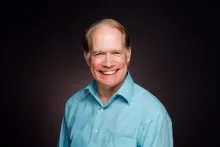
Greg Thomas is the former Pastor of the Cleveland, Ohio congregation. He retired as pastor in January 2025 and still attends there. Ordained in 1981, he has served in the ministry for 44-years. As a certified leadership consultant, Greg is the founder and president of weLEAD, Inc. Chartered in 2001, weLEAD is a 501(3)(c) non-profit organization and a major respected resource for free leadership development information reaching a worldwide audience. Greg also founded Leadership Excellence, Ltd in 2009 offering leadership training and coaching. He has an undergraduate degree from Ambassador College, and a master’s degree in leadership from Bellevue University. Greg has served on various Boards during his career. He is the author of two leadership development books, and is a certified life coach, and business coach.
Greg and his wife, B.J., live in Litchfield, Ohio. They first met in church as teenagers and were married in 1974. They enjoy spending time with family— especially their eight grandchildren.
