

Jesus's Blood
For Forgiveness and Much More!
Given on
Given in
Downloads
Downloads
To download a file, right-click (or long press) a link above and choose Save As.
Jesus’ blood began the process of salvation for us and all mankind. No part of the overall process of our salvation could proceed any further without this vitally important event and glorious gift. Jesus Christ shed His blood for the remission of our sins. But as we examine the subject of His shed blood we see that much more has been accomplished by His blood. This sermon reveals those eternal life giving details.
Transcript
This transcript was generated by AI and may contain errors. It is provided to assist those who may not be able to listen to the message.
Brother, tomorrow evening is the Passover. The Passover is the first step in God's Master Plan of Salvation. Our God is an all-inclusive God. He includes everybody in His plan. Not everybody is being called now, but God is calling some now. He's calling very few now, but God will work with everybody who's ever lived at some point. Some will have to wait for a future resurrection to be brought back to life, and God will work with them at that time, and some are being worked with now.
This Passover that we're celebrating tomorrow evening after sundown is the most solemn occasion of the year. It's solemn because we are reflecting on the painful suffering and death of Jesus Christ. On the other hand, Passover is very encouraging. It's encouraging because this service shows Christ's victory over sin, Christ's victory over death. And because of that, as we heard in the sermon at today, our victory over death, our victory over sin, the Passover shows us as disciples of Jesus Christ that we are loved unconditionally by God the Father and Jesus Christ. We come here tomorrow, and again, this is for baptized members only, we come here tomorrow to express our faith in the sacrifice which we have accepted.
We have accepted the sacrifice of Jesus Christ as our personal Savior. And so we're coming to express our faith in that sacrifice, and more so, we are coming also to renew our dedication, to renew our commitment to allow Jesus Christ to live inside of us, each and every one of us. Our Passover is Jesus Christ. For over three decades, he lived a sinless life. He was tested in all areas as we are tested, and yet he went through a tremendous ordeal in the last 24 hours of his life.
Britta, I felt as your pastor that I needed this year, and I don't know, you know, God just led me to do this, but in some years and years gone by, we've given a number of messages regarding getting ready for the Passover. But this year, we did a lot. This year, I think we did a good bit. I send out a midweek Bible study on Wednesday evenings, Wednesday during the day, to those on the email listing.
In the last five or six weeks, here's what I sent you by email. How do we examine ourselves? It was one study, another study, lies Satan wants us to believe at Passover time. Another study was, why is humility an important part of our spiritual life? A fourth study was going through John 13. We've always looked at that in terms of the foot washing, and well, we should. But that chapter also has deeper meaning than just washing the feet.
We went through that in the email Bible study. We looked at Jesus Christ the bread, and now when we take that bread on Passover evening, it shows that Jesus Christ was dedicated, and we are to be dedicated just like he was. And also, in the midweek study last week, last Wednesday, we took a look at the import of the blood of Jesus Christ.
That was just the studies I sent out midweek. Now, in the last five weeks, when I've been here, speaking, starting March 1st, I asked the question, are you leading the back door open for Satan? And in that sermon, we went through, we talked about the Maginot Line of World War II fame, and how people looked at that, and that was going to be their salvation.
We talked about how there's no salvation in the flesh. We, as human beings, may at times want to put up our own walls, and that certainly doesn't help anything. We may be leaving the back door open for Satan along those lines. On March 8th, I gave a sermon entitled, Three Myths that Rob Christians of Their Passover Joy. On March 22nd, what should the Passover teach us about our motives? And we took that sermon, we went through John 3 and verse 16. We tore that verse apart, and we looked at that verse very extensively. Then on March 29th, we looked at John 13, and talked about how Jesus is still washing our feet today.
This is not something that was done just 2,000 years ago. He's doing it today. Then last week, on April 5th, we talked about Jesus Christ, the true manna. So we've looked at examination, we've looked at the foot washing, we've looked at the bread today to finish up the cycle. We want to take a look at the blood of Jesus Christ. And bread, the blood of Jesus Christ is not some Protestant topic.
It's a Biblical topic. It's something that you and I need to know about. And it's something, brethren, that when we think about the blood of Jesus Christ, the first thing that pops into our mind is that the blood of Jesus Christ washes us from our sin. And that's great. But the blood of Jesus Christ does much more than that. What else does the blood of Jesus Christ do for you? For me? For all of us? We're going to take a look at that today because we want to make sure that we're fully prepared for tomorrow evening.
If there's a number of points I could have given you here, I've narrowed this down to seven. We'll move through this rather quickly. But seven points, and of course there are more, one sermon is not the end-all for any subject. But let's ask the question. If you're writing notes, you want to take something down across the top of your paper, write down the question, what does Jesus' blood do for you? And we'll answer that today, at least partially. Number one, the obvious, the blood pays for our sins.
The blood pays for our sins. Eric gave a very thought-provoking and meaningful message today. He went through that subject very nicely. I appreciate that very much. Asking, why did Jesus Christ have to die for us? And I think he covered that material very nicely. Let's take a look at Romans 5. Because we want to zero in on the blood of Jesus Christ. Romans 5, starting in verse 9, Romans 5-9, where it says, much more than having now been justified by his blood. And we've talked about this word, justification, or justified, many times in the past. It means that our past sins have been forgiven.
When we are justified, we have right standing before God. Right standing before God. And notice, much more than having now been justified by what? We have been justified by his blood. We shall be saved from wrath through him. Now, so many times we'll stop at that, where it says, we've been justified by his blood, and we'll stop reading. But notice the end of verse 9. We have been saved from wrath.
Rather than the blood of Jesus Christ does powerful things for us as Christians. And, you know, we sometimes in the past have come to Passover services and have been so sober that it's almost been sad. You know, and again, I appreciate the fact that our Lord and Savior, Jesus Christ, went through a tremendous ordeal. And we don't walk into a funeral home, you know, just dancing and singing. On the other hand, most funerals that I conduct, most funerals I go to, people as they're congregating, they pay their respects to the family.
But then people will break off into little groups and they'll talk about the deceased, about how we enjoyed him or her, and how we loved them. Humorous little stories about them. When the person is giving the funeral sermon, they'll talk about humorous anecdotes about the individual. And the people who are sitting there in the audience, they like that because that person who is now gone, they once were alive and vibrant and so forth. Well, Jesus Christ has done this for us.
Because of his blood, we shall be saved from wrath, verse 10. For if when we were enemies, we were reconciled to God through the death of a son, much more having been reconciled, we shall be saved by his life. Saved by his life. We dropped on to verse 21, same chapter, chapter 5, verse 21. So that as sin reigned in death, even so grace might reign through righteousness to eternal life through Jesus Christ our Lord. So it's the blood of Jesus Christ, brother, the result of the sacrifice of Christ, the result of the blood of Jesus Christ, gives us a past that's dealt with and gives us a new lease on life.
We have a new beginning. We've got a bright future because of the shed blood of Jesus Christ. Now, I don't know about you, but as I go through life, many times, and this thread will kind of go through the whole of the sermon, as we're going through life, and as I look at you out in the audience, some of you have gone through, and some of you are currently going through, a very, very hard time.
And when you're going through a hard time, when you're going through a trial, and it just seems to keep, like the waves of an ocean, they keep on breaking on the shore, and you're the shore, things keep on breaking on you, and any times they can get to us. And I've been in situations like that in my life as well. But in those same situations, I've got to tell myself that I'm only going to live so long.
And, like one person said, the way they got through their trials, they've stated to themselves, and this too shall pass. And this too shall pass. I mean, here I'm standing in front of you. I remember, I was telling Ann Arbor earlier today, I remember when I was a young man, my late teens, early twenties, at Ambassador College, back in the good old days, and Mr. D was even a little on the buff side.
Hard to understand that, you know? You had to build kind of like a yield sign. You had the nice, big, broad shoulders. You were narrowed to the hip. Well, you fast-forward a couple of several decades, and now you're kind of narrowed to shoulders, and gravity's got a hold of your middle section. You're kind of spreading out in life. But, you know, I'm 62 years old now, and it doesn't seem like that long. It just seems like life has come and passed. Decades have come and gone, and before you know it, brethren, we'll be gone. Either Christ will return, and we'll be resurrected, or we will wait for Christ in the earth.
But what we have to look forward to is eternal life in God's kingdom. Eternal life. We have got a bright future to look forward to. So let us think about that, and we think about the blood of Jesus Christ. Yes, it costs Him a tremendous amount, but look what we have as a result. Our sins are forgiven. Our past has been dealt with. We've got a bright future. Beginning of Romans. We've looked at the very end of Romans, chapter 5. Look at the beginning of Romans, chapter 5.
Therefore, having been justified by faith, we have faith in the sacrifice of Christ. That's why our passions have been forgiven. Having been justified by faith, we have peace with God through our Lord Jesus Christ. Paul talked about this over and over again. Now, here is a man who is talking about peace, but remember, brethren, who is writing. A man who was beaten up many times, a man who was imprisoned, a man who was, you know, what do you say, he was in the deep for a period of time, he was shipwrecked, he was beaten so badly, we think, that toward the end of his life he was going blind. That's why he talked about the size of the letters he wrote. And here's a man who is going through all those things, and he talks about how we have peace. Now, you think, it's easy for us to think as human beings, that peace is the absence of trial. And we would be mistaken to think that. Jesus Christ, look what he went through, but he was at peace, even on the stake, you know, knowing what his sacrifice would mean to you, that you would have eternal life. So we have peace with God through our Lord Jesus Christ, verse 2, through whom we also have access by faith into this grace in which we stand. This grace in which we stand. We don't stand because of our intellect. We don't stand because of the abilities we have. We don't stand because of who our parents were, our economic or social background. We stand because of the grace of the great God. And notice at the end, having rejoiced in the hope of the glory of God. We rejoice in the fact that we are going to be made into spirit beings. We'll be no longer flesh. We'll be 100% spirit. We'll be 100% what God wants us to be. That's the future worth looking forward to, and it's brought to us by the shed blood of Jesus Christ. So, number one, the blood pays for our sins. Number two of the seven. The blood purchases us. The blood buys us.
The blood buys us. Acts 20.
We're starting Acts 20, verse 17. Here you've got the Apostle Paul. This is probably written sometime in the 60s A.D. Paul died somewhere in the later 60s A.D. So Paul realizes his life is coming to an end. There are certain things that he needs to get taken care of. He has been with a group of ministers here, training them, discussing things with them, getting them ready to do the work. But now Paul realizes that his days are coming to an end. And he's heading for Jerusalem. Normally he would stop and meet with these men in their hometowns. But what he does here, he does something different. He realizes that he wants to be in Jerusalem for Pentecost. So he asks them to come to him. Let's start this here in chapter 20, verse 17. From Miletus he sent to Ephesus and called for the elders of the church. Again, Paul normally would have gone right to Ephesus, but here he doesn't. He stays in Miletus and tells them to come to him. And when they had come to him, he said, Do you know from the first day I came to Asia what manner I always lived among you, serving the Lord with all humility, with many tears and trials which happened to me by the plotting of the Jews? Now this is the same guy who talked about the peace that we have. How I kept back nothing that was helpful but claimed it to you and taught you publicly and from house to house? You know, Paul says here that we had church services, we probably had Bible studies. He went to the individual's homes for independent personal counsel. Verse 21, testifying to the Jews, also to the Greeks, repentance toward God and faith toward our Lord Jesus Christ. Why does the Bible talk about it like that? Why does the Bible talk about repentance toward God and faith toward Christ? Why isn't it repentance toward Christ and faith toward God? Why is it written that way? Repentance toward God. Whose laws are we breaking? We're breaking God's laws. Whose faith do we have? Why do we have? Who are we looking to in faith? We're looking to Jesus Christ and His sacrifice in faith. That's why it's written this way. And see, now I go bound in the spirit to Jerusalem, not knowing the things that will happen to me there. He's moving by faith. For those of you who will be in Ann Arbor on a holy day, I've got a sermon that deals with miracles. It's a sermon that deals with miracles and a sermon that deals with us today. And I was excited about the material that I found that we're putting together this last week. And as I was putting it together, the whole concept we're going to talk about on a high day is walking by faith. And as I was putting the material together, I saw a juicy quote from Dr. Martin Luther King. Dr. King said, faith is taking it one stare at a time. He said, God doesn't show us the whole staircase. God shows us that first step. I thought that was choice. That was really good. And that's the same thing we see right here. You get Paul, he doesn't know what's going to happen, but he's got an inkling. God is giving him an inkling. Verse 23, Except that the Holy Spirit testifies in every city, saying that chains and tribulations await me. Now, would you say you've got great peace, realizing that chains and tribulations await you? Well, that's what this man says, because he understands what true peace was. He was at peace with God. And whatever God wanted him to do and go through, even though it would be painful, if that's what God wanted, he was okay with that. Verse 24, But none of those things move me, nor do I count my life dear to myself, so that I might finish my race with joy.
Again, the man knows that chains and tribulations are awaiting him. He's talking about finishing his race with joy.
He's a good example of somebody who's following Christ. What does it say about Christ? That for the joy that was set before him, he endured the cross?
For the joy that was set before him, he endured the cross? Now, the cross wasn't a joyful thing. What was joyful is knowing what the end result of that process would be.
Verse 25, And indeed, now I know that you all, among whom I have gone, preaching the kingdom of God, will see my face no more.
This is very sad. Now, it may be that Paul might have seen one or two here or there, but as a group, Paul wasn't going to see that group ever again.
I think I may have mentioned to you some years ago, we had the same thing happen with us before Mr. Armstrong died. Mr. Armstrong wanted one last time to see his men before he went. He was very sick, and they didn't want him to be exposed to a lot of other people, because they were afraid that his situation might worsen, he would die, more quickly, and of course, back in those days, we had a work that was much larger than now. We were at three college campuses, we were the biggest thing on TV, we had eight million magazines, eight million magazines going out every month. And so I said, Mr. Armstrong, please don't see your men. And so he didn't. And he died shortly after that. Well, Paul went through the same thing. He wanted to see his men one more time. Verse 26, Therefore I testify to you this day, that I am innocent of the blood of all men. Verse 27, For I am not shunned to declare to you the whole counsel of God. And to all of our men who speak, all of our sermon men, all of our sermon men, I take this very seriously. That's why this Passover we've gone through preparation so painstakingly, because it's my responsibility and responsibility of all of us who speak, to make sure that we don't just get ourselves into one little area. We can't get just into one area of prophecy. We can't just get into one area of history. We can't just get into one area of Christian living. We can't just specialize as ministers. We have to be people in the ministry, those who speak to the congregation, who declare the whole counsel of God. You must have a well-balanced diet from those who serve you in the ministry. And certainly I would pray that you would continue to pray for me. I pray for you. You pray for me. That after 17 years of doing this, when the Holy Days come, that's the hardest on me. When you've given, especially on love and bread, when you've given two sermons, each an hour in length, and you've done that now for 17 years, you've got 34 hours of material you've given on the days of on love and bread. With each succeeding year, it's a little tougher. How do I go at this? And what do I say? 34 hours!
Think about it. If I came to you and said, okay, for the next 34 hours, I want you to give me a chapter and verse about on love and bread.
So again, I respectfully ask for your prayers along those lines. But notice here, verse 28.
Brethren, what is the result of being purchased by the shed blood of Jesus Christ? Again, this is something that is so beautiful. It is so encouraging. And we should reflect on this during the Passover season. The result of being purchased by the shed blood of Jesus Christ is we are no longer shackled to Satan. We are no longer shackled to sin. We are unshmear...we can break out of our slavery to Satan, the way Satan would have us live and think. Break out of this slavery that we had hanging over us, which is death, eternal death. Now, we've got eternal life to look forward to as a result of being purchased by God.
So let's appreciate the shed blood of Jesus Christ. It pays for our sins, giving us a bright future. The shed blood of Jesus Christ, we're purchased with that, and it gives us the ability to no longer be shackled to Satan and things of Satan. Number three. What does the blood of Jesus Christ do for you? Number three. Because of the shed blood of Jesus Christ, all peoples can have a relationship with God.
We can have a relationship with God.
And just, you know, how meaningful is that? A relationship with God. Let's go to the book of Ephesians. Ephesians chapter 2, starting here in verse 11. Ephesians chapter 2 and verse 11.
Therefore, remember that you once Gentiles in the flesh, talking to the people there in Ephesus, who are called the uncircumcision by that which is called the circumcision, in other words, the Jews. We're going to have a discussion here about Jew-Gentile. Made in the flesh by hands. Verse 12. That at that time, you were without Christ, the Gentiles. They were without Christ, being aliens from the commonwealth of Israel, strangers from the covenants of promise, having no hope without God in the world.
That's a really big sentence. And none of that's good. But you know, because of the shed blood of Jesus Christ, all of that is reversed.
And I take this very personally. I'm half-Gentile. My father was a true Italian, true Roman, true Babylonian.
Who knows? There may have been some priests back in the Thelosandro family back in years gone by. I know that probably a priest in my mother's side, now her maiden name was Moore. Her people were from Wales. And if you've ever been to Wales, some of our people have gone there for the feast. And I remember Steve St. Charles was talking about how he had talked to some people there in Wales. And he said, well, what exactly is your religion? He said, well, we're Druids.
And so, you know, I guess on both sides, I was bent to be in the ministries, you know, tree-worshipping people and Babylonians. Thankfully, God didn't convert me, though, and we've gotten to some better things here. But notice verse 12. We reverse this. The now Jew, Gentile, whoever comes to Christ. Now we are no longer aliens from the Commonwealth of Israel. We're grafted in. We're a part of spiritual Israel. We're no longer strangers from the Covenant. We are new Covenant people. I don't care what race you are, what your ethnic background is. As a Christian, we all are part of the new Covenant Church. We have a part of this Covenant of Promise. We have hope. We've got the hope of the resurrection, the hope of eternal life. And we are now with God in the world because of the blood of Jesus Christ.
Verse 13. But now in Christ Jesus, you who once were afar off have been brought near by the blood of Christ. Notice the blood of Christ brings us near as brothers and sisters. As brothers and sisters. Verse 15. Having abolished and slushed the enmity, that is the law of commandments, contained in ordinances, and so on and so forth. So here we see that all peoples now have a relationship with God as a result of the shed blood of Jesus Christ. Doesn't care who you are, what you are, your family standing, how much money you've got in your pocket. None of that matters to God. None of that matters to God. What matters to God is the fact that you've accepted God's Son, Jesus, as your personal Savior, and you've dedicated yourself to live the way He said we should live. That's what counts to God. And that brings you in a relationship with Him that is just mind boggling. We'll get to more of that later through the sermon. Moving on to point number four of the seven points I have for you here today. We're asking the question, what does Jesus' blood do for you? We've covered three points. The fourth point is we have peace through Christ's blood. Now, we've kind of been chewing on the edges of this idea all through the sermon today, but let's just take this on its own. We have peace through Christ's blood. Colossians chapter 1 and verse 20.
And by Him to reconcile all things to Himself, by Him whether things on earth or things in Heaven, having made peace through what? Having made peace through the blood of His cross. Having made peace through the blood of His cross. We have a relationship with our Father. We can get on our knees, or if we're just at work and we're wanting to talk with God, or we're driving in the car, as some of us do, we're talking to God as we're driving, we're singing to God. Dan Van Pelt is very good. I forget how many songs Dan has authored simply by going through the Scriptures and putting them, because he's got the ability. He takes the songs, he takes the lyrics, he gets with his guitar, and he does beautiful music.
Of course, Dan's an interesting fellow. Not only is he very highly placed in his field of computers, but he was also an Elvis impersonator. So a very, very interesting man, Dan Van Pelt. A wonderful voice and just a great love for a song and praising God. But we want to do that as well in our own way.
We've talked about in the past, we may not be able to sing real well, but that's not the point. God knows our voice. We have our little children, and we've seen little children's choirs. The Feast of Tabernacles, one of the highlights every year at the Feast, is a little kid's choir. They're just up there, and they're trying to do their best. All the little girls have got their nice little dresses on, their little patent-leather shoes, their little white socks, with the little ruffles on them, and the little guys. There's always one little guy who's got a skirt half pulled out. He wants to punch the guy next to him. It's fun to watch, little kids. And they're singing away, and no one's going to hire them for the Metropolitan Opera. But when you watch them sing, it is a beautiful thing. And that's how God views us, because we're God's kids. We're God's kids.
So remember, if you're going through the trials of life, and you're praising God's name, and we need to do more of that in this church, we're praising His name, we're singing praises to Him, remember, this too shall pass. This too shall pass. Number five. Number five of the seven, we're asking the question, what does Jesus' blood do for you? Number five, our conscience is purged to do good works. Our conscience is purged through the shed blood of Jesus Christ. One of the scriptures I'll be reading tomorrow evening is over here in Hebrews 9.
9 and verse 14. Actually, we're going to start on verse 11, chapter 9, verse 11. Hebrews 9, verse 11. But Christ came as a high priest of the good things to come, with the greater and the more perfect tabernacle, not made with hands, that is not of this creation, not with the blood of goats and calves, thinking about the Old Testament sacrifices, but with His own blood He entered the most holy place.
With His own blood He entered God's throne room, once for all, having obtained eternal redemption. For if the blood of bulls and goats and ashes of the pepper sprinkling the unclean, sanctified for the purifying of the flesh, how much shall the blood of Christ, who through the eternal Spirit offered Himself without spot to God, cleanse your conscience from dead works to serve the living God? Brethren, this is another one of the beautiful things about the Passover season. Again, let's not...we want to be balanced.
There is an aspect of sobriety here, but there's an aspect of pure rejoicing here. Because of the sacrifice of Christ, our conscience can be purged, we can be unshackled by the past. And too many Christians go through life shackled to the past, looking over their shoulder. The sacrifice of Christ, the blood of Jesus Christ, tell us we don't have to do that. Now, guilt is a good thing. Don't misunderstand. Guilt is a good thing. But it's only good to a certain degree.
Guilt is there to bring us to repentance. But after we've come to repentance, and we see that we were wrong, we need to go God's way, then, jettison the guilt. Get rid of the guilt. Unshackle yourself from the guilt. Walk away from that. Because if you don't, you're not going to be able to serve God the way you would want to.
I think I've given you the story in the past I want to reiterate it here, because it's so appropriate. Years ago, many years ago, in another state, I was counseling a young woman for baptism. And we got to the place where we were talking about repentance and God being able to forgive anybody for anything, if they're repentant, because of the sacrifice of Christ. And the young woman, the whole conversation just stopped. She started crying. When she finally was able to get back to where she wasn't crying so badly, she said, well, you know, Mr.
D, years ago, when I was in my teenage years, I was a teenager, I wasn't married, and I got pregnant. And I couldn't keep the baby. And society, the state we lived in, was a very, you know, kind of a Bible-belt place. And back in those days, there was a stigma attached to having a baby out of wedlock. And so she literally would jump in her pickup truck and find every horribly bumpy road she could find, because she was trying to work herself into a miscarriage.
She told me she actually threw herself down several flights of stairs. And eventually, the baby wasn't miscarried. And she said, you know, Mr. D, I killed that baby. I murdered that baby. Now, God will forgive her for that. But see, she couldn't forgive herself for that. She would not allow God to purge her conscience of that. And because of that, she never, well, I was there in the area, she never got baptized. She was never able to move forward, because she had this on her record, and somehow she thought she was the worst sinner.
But brethren, we're all sinners. And I don't care what sin you have or what sin I have, sin is sin. It's a man who says, well, this one's worse than another. But any one of them, if we don't repent, will get us into the lake of fire. God would have forgiven her. Forgiven her instantaneously if she would just repent. But she couldn't forgive herself. So brethren, allow the shed blood of Jesus Christ to purge your conscience. Allow that shed blood to do its beautiful work. Paul talked about the precious blood of Jesus Christ. It is precious, and we need to take a good, long look at the beauty of what has been done for us.
Christ was crucified for us. We don't have to keep on living in the past. So that was point number five. Point number six of the seven. I can see time is moving quickly here. Point number six, again, the question is, what does Christ's blood do for you, or Jesus's blood do for you? Point number six, Christ's blood allows us bold access to the throne of God. Bold access to the throne of God.
This is something we should rejoice in so much. Bold access. You know, as Mickey mentioned, I think it was just last week. But here I was driving around Ann Arbor, running errands. I think it was last Wednesday, a week ago Wednesday. And I come to the interstate exchange where I live, and I notice four state cops.
Four state policemen. One at each entrance to the interstate 94. I thought, somebody important is in town in Ann Arbor. And so I keep on doing my errands that I come across, where Michigan Avenue runs across US-23. Again, four state troopers. I call my wife, who's in town? Because she normally, he'll feel here before I hear, I don't know who's in town. So I said, I'm going to watch the news.
Somebody important is in town. Little did I know that that Wednesday, Barack Obama, was in Ann Arbor, and he was having lunch over at Zingerman's. Well, somebody important was definitely in town. And as important as our president is, we have an audience with God. We have an audience with God. You know, let's not take that for granted. How beautiful, how wonderful that is. Hebrews chapter 10. Hebrews chapter 10.
All because of the shed blood of Jesus Christ. Yes, Jesus Christ's blood, we have the forgiveness of sins, but so much more, brethren. So much more. Hebrews chapter 10 and verse 19. Therefore, brethren, having boldness to enter the holies, by the blood of Jesus. Now the high priest entered, but we can enter as well.
We are a new covenant church. We can enter the throne room of God himself with our prayers at any time. At any time, you know, I've seen a number of shows over the years. There was one that was on here a few years ago called The King's Speech. I don't know if any of you saw that.
It was a really interesting movie, talking about the King of England during World War II. And the King of England during World War II had a horrendous stuttering problem. And he, as the king, especially in wartime, he was expecting to make speech after speech after speech. But he had an extremely hard time doing that. And so he had to hire somebody to help him with his problem.
But as you're watching the show, and you're seeing how the man who eventually helped the king so he can give magnificent speeches in wartime, but you saw that the children of the king were, you know, they didn't get to see their kids very often. There was always a nanny, there was always these other people taking care of their kids. And it was kind of a big deal if the kid could come into the presence of his parents. Well, brethren, we can come into the presence of our father and elder brother any time we want. Any time we want, because of the sacrifice of Christ, because of the blood of Jesus Christ, and we can come boldly. Let's go to Hebrews 4 for a minute. Hebrews 4, verses 14 through 16.
Hebrews 4, verse 14.
Seeing then that we have a great high priest who has passed through the heavens, this is why we have faith in Christ, because he was crucified, he was buried, but he was resurrected. And he went to heaven. It says, Jesus, the Son of God, let us hold fast our confession, for we do not have a high priest who cannot sympathize with our weaknesses, but was in all points tempted as we are yet without sin. And notice what it says in verse 16. Let us therefore come, how? Come boldly to the throne of grace. We can be bold because of the blood of Jesus Christ. Let us therefore come boldly to the throne of grace, that we may obtain mercy and find grace to help in time of need. There's a boldness we have there because of the sacrifice of Christ. As I was putting my thoughts together, I thought, and I said, let's turn, and please, you come with me over here to Revelation 4.
Revelation 4 is a beautiful chapter because it shows where your prayers go.
Your prayers go up to God and his throne. Revelation 4 gives us a little bit of an insight as to what that throne room looks like. Revelation 4, verse 1. After these things I looked, and behold, a door standing open in heaven.
Brethren, think about this. That door is always open to you if you're following God.
As I gave, as one of the sermons I gave here in the last several weeks, God isn't happy just with the strong. Sometimes we think in our mind, God only loves the strong. Well, God loves the strong, but he loves the weak too. He knows that we all are a work in progress. You know, today I was wondering, talking to you about you coming over to Ann Arbor for the Holy Days. It's that we're getting to that orange barrel season. You know, where the roads are under construction, and last Sabbath when I tried to get up here, Interstate 275, there was construction. I was held up about a half hour because things were going so slow.
And things just don't open up for us. But here we see how we've got an open door, an open door, any time we want it as followers of God. Middle of verse 1 of chapter 4. And the first voice, which I heard, was like a trumpet speaking with me, saying, Come up here, and I will show you things which must take place after this. Immediately I was in spirit. In other words, John, the apostle, is having a vision here. I was in spirit, and behold, a throne sat in heaven, and one sat on the throne.
Brethren, what you are about to read, when you pray to God, here's where your prayers go.
And he who sat there, he, capitalized, God, our Father. He who sat there was like a jasper, and a sardia stone in appearance.
Now, I'm going to give you my supposition here. I'm going to give you my thoughts here. Can I explicitly prove what I'm about to say to you here? No. But when I look at this, a jasper stone in Bible times is different than what we think about today, but in Bible times it was like a diamond. It was a clear, bright, brilliant stone.
My thinking, my speculation, much like God in terms of purity, whiteness, representing purity. So he sat there as like a sardus, like a jasper stone, but also a sardia stone. Now, a sardius was more like what we would call a ruby today. It was red in color. And I'm wondering if that isn't referred to the blood of Jesus Christ.
Jasper, sardius, stone at appearance, and there was a rainbow around the throne. What does a rainbow represent? Today there's a movie out talking about Noah. I've not seen the movie, but apparently from what I'm hearing, that if you really love the Bible, you probably won't love the movie. Because I don't think God has mentioned it all in the movie. But, you know, during the time where Noah lived, there was that, you know, the ark and what happened to the world, the flooding and all that. And then God set his bow in the sky. That rainbow represents life. So here at the throne of God, you've got this jasper stone, the sardius stone. You've got a rainbow around the throne. And he says, in appearance, like an emerald, emerald green life. Verse 5, And from the throne proceeded lightnings and thunderings and voices. I tell you, I've been in some lightning and thunderstorms that, if I wasn't in the church, I think I would have come into the church.
You know, it's like that little girl, you know, she was being bothered by the lightning thunderstorm and, you know, flashes of lightning and the loud claps of thunder. And she was so afraid, she runs over to her parents' bed, jumps between mom and dad, and she's shaking like a leaf. And the little girl said, the little, the father in his nice deep voice says, Don't worry, the Lord will protect you. She says, well, Dad, I know that, but right now I need somebody with skin on. And right now I need somebody with skin on. And that's what we need. But, you know, we've got our Almighty God who is there with all that power. And when you're praying, that's where your prayers go to. You have bold access to this throne room here in chapter 4.
Lastly, point seven, what does Jesus' blood do for you, for me? Point seven, Jesus' blood allows us to defeat Satan. Jesus' blood allows us to defeat Satan. Over here in Revelation chapter 12, in the past, we referred to this as an inset chapter, talking about the true church of God. Jesus Christ came to found His church. Somewhere on this planet today is the church Jesus Christ established. Where is that church? What does that church believe? Can God's church be so many different denominations, each arguing with one another, holy different beliefs, at times literally going to war with one another? As we saw in World War I, World War II, and all the different conflicts, man has always talked about God is on our side.
Well, where is God's true church today? That's for another time to talk about. Revelation 12, verse 11.
And they, talking about the saints, and the saints overcame Him, talking about Satan, by the blood of the Lamb. They overcame Him by the blood of the Lamb. But it wasn't just the blood of the Lamb. There are three things being spoken of here. And by the word of their testimony, and they did not love their life to the death. And, brethren, this Passover season, let's remember all three of these aspects here. Yes, the blood of Jesus Christ, by that blood, our sins are forgiven, our past is squared away. All the lovely things we've discussed at this point. But also notice, we defeat Satan because we also have the word of God's testimony.
We have been called to do a work. We've not just been called to our own personal salvation. As Christ said there at the very end of Matthew, the Gospel of Matthew, Chapter 28, go into all the world and proclaim this Gospel to everybody. We've got a work to do. And this verse says, people are busy doing that work. And it says at the very end of verse 11, they did not love their lives to the death. Well, Passover, what we're experiencing tomorrow night, shows that we're dedicating ourselves to live as Christ lived. And Christ gave His life, He gave His all, for what He believed. And He lived accordingly. The sermon I gave here a few weeks ago talked about how Jesus Christ was under constant attack 24-7, 365.
How long does it take you to sin? How long does it take me to sin? A fraction of a second? Jesus Christ could not allow Himself the freedom of a fraction of a second to sin. He was dedicated every waking moment of His life. There was nothing in Him that could be considered anything near sin.
Okay, final Scripture for today. 1 Corinthians chapter 15.
1 Corinthians chapter 15. This is the resurrection chapter.
1 Corinthians chapter 15 and verse 57. But thanks be to God who gives us the victory through our Lord Jesus Christ. Thanks be to God who gives us the victory. Brethren, we have the victory because of the shed blood of Jesus Christ. Now, let me, because we... I know sometimes when you're taking notes you don't always get everything. Let me go through these seven points one last time. And then we'll be done. I ask the question, what does Jesus' blood do for you? 1. The blood pays for our sins. The blood pays for our sins. 2. The blood purchases us.
3. The blood gives us a relationship with God. 4. We've got peace through the blood.
5. Our consciences are purged by the blood. 6. The blood allows us bold access to God's throne.
7. The blood allows us to defeat Satan. So, brethren, in this Passover season we have gone through a lot of material, both in the midweek studies and in the sermons here in church. I'm hoping that these have been helpful and valuable for you. Please remember what we talked about about registering for the feast. Remember, next Sabbath I'll be over in Windsor, speaking to the brethren there, but get that information in to me so I can get it into the home office.
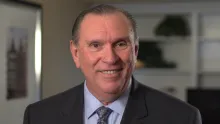
Randy D’Alessandro served as pastor for the United Church of God congregations in Chicago, Illinois, and Beloit, Wisconsin, from 2016-2021. Randy previously served in Raleigh, North Carolina (1984-1989); Cookeville, Tennessee (1989-1993); Parkersburg, West Virginia (1993-1997); Ann Arbor and Detroit, Michigan (1997-2016).
Randy first heard of the church when he was 15 years old and wanted to attend services immediately but was not allowed to by his parents. He quit the high school football and basketball teams in order to properly keep the Sabbath. From the time that Randy first learned of the Holy Days, he kept them at home until he was accepted to Ambassador College in Pasadena, California in 1970.
Randy and his wife, Mary, graduated from Ambassador College with BA degrees in Theology. Randy was ordained an elder in September 1979.
playlist
