

Steve Shafer
This transcript was generated by AI and may contain errors. It is provided to assist those who may not be able to listen to the message.
Well, good afternoon again. I want to begin with a question just to see how many of you may have been there. This goes back to 1989, but the interview here, back in 1989, this is the first time we ever went overseas, they had a special fee site that year. They had that year and the next year as well, this two years. They had what they called the Mediterranean Cruise to Turkey and Greece, the Greek Isles. Were any of you here on the Mediterranean Cruise back in 1989? Nobody here, okay? We had, I think, three people up in Saginaw who were on it, but I know probably not too many back then. That was the first time we ever got a chance to go overseas. It was quite a very interesting feast of Tabernacles. It was to Turkey again in the Greek Isles. On that cruise, it also included some side trips, and one of the side trips was to the site of ancient Corinth, which is now in ruins, but you got to explore those ancient ruins of Corinth. It was quite interesting to go through that. Among the ruins of ancient Corinth, there was the remains of an ancient wall. It was located in what had been the marketplace of ancient Corinth, and on the plaque on that wall in Corinth, there was a word inscribed in Greek, the word bima, b-e-m-a. And as we looked at that, and at that time, thinking of Acts 18 especially, as we'll turn to here in just a second, we realized we were standing in a very historic place. Something very interesting happened there almost 2,000 years ago at this bima in the city of ancient Corinth. Let's turn to Acts 18.
Acts 18, verse 1.
It says, after these things, Paul departed from Athens, and he went to Corinth. Corinth's not very far from Athens. It's just a short few number of miles. Well, it's a little bit longer than that, but it's not too far from Athens. Actually, it's not too far. I think the city on the coast is Cusidasi now, I believe. And then from Cusidasi, it's a short distance of a few miles inland to ancient Corinth, which is on the estimates there of Turkey. But it's a little ways from Athens, but it wasn't too far. But anyway, after these things, Paul departed from Athens, and he went to Corinth. What happened next? What happened to Paul in Corinth? Verse 11.
And he continued there for a year and six months. So he was in Corinth quite a long time, preaching the gospel, visiting the synagogue, talking to people, getting many converts. And he was teaching the Word of God among them. What happened then to Paul in Corinth? Verse 12.
When Galio was pro-counsel of Achaia, the Jews with one accord rose up against Paul, and they brought him to the judgment seat. Verse 12, saying, this fellow persuades men to worship God contrary to the law. Of course, he wasn't teaching them contrary to the law of God.
He was teaching them contrary to their own laws that they had incorporated. But the great word for judgment seat in verse 12 is bima. That's what the word bima means. It means judgment seat. So here it says Paul was brought to Galio. He's brought to the judgment seat.
In our visit to ancient Corinth in 1989, we were standing, presumably, at the very place Paul had been brought to, as was quoted here in Acts 18, 12, which is, of course, now just a wall in most Corinth's ruins. But it was a very vibrant city back in Paul's day. We were standing before the judgment seat, or bima, of ancient Corinth. Now recently, I was asked if I might revive a sermon that I actually gave a number of years ago. A person asked me if he wasn't sure when I gave it. He said, I think he gave it sometime between 2003 and 2007. Well, I asked the government, I thought, I think I know what the title would have been. So I said, look for a sermon. Among all my notes I had, I have a couple hundred notes I still saved to see if I have one by this title. And Evelyn went through all my notes and sermon notes, and she found one with that title. And so I said, that must have been it. And so I thought it might be appropriate to go through this one again. A lot of you haven't heard it, and those of you who did 13... it was actually dated January 31st, 2004. So it was almost 13 years ago I gave it. So if you did hear it, you might remember portions of it, but I don't remember the whole thing. I was originally going to give a... not give a sermon here today, have you go online, but I decided it'd be good to book in an extra sermon here, rather than do a... just work summer sermons for trumpets in atonement, try to give them more than once. But today, the... it's appropriate for this time of the year, as we think about the Feast of Trumpets coming up on Monday, and the blowing of the trumpet or the shofar.
Today, the shofar or trumpet is commonly used by Jews to declare the day of judgment.
It's clear that that day is approaching. That's why all the Jews look at it, and that we should then be making ourselves ready for that day. Because, as we all know, all men or some day going to have to stand before the Judgment Seat of Christ.
Today, now, I want to talk about Judgment Seat, so to speak. I want to talk about judging and being judged. What is proper judgment? Why is judgment called the weightier matter of law? Matthew 23, 23. What did Christ really mean by that? Are we being judged now?
And if so, how are we being judged now? What is Christ looking at? How are we being judged?
What is God looking for in us? How are we being judged? On the other side of the coin, how should we judge others? Should we judge others?
And if so, how should we judge them? By what standard should we judge them by?
Is there a danger when it comes to judging someone? What might that danger be?
That's what we'll look at today. Today, my sermon is going to be centered around one particular verse from which I derive my title, and that verse is Matthew 7, verse 1.
And my title is, Judge Not, Let You Be Not Judged.
Let's turn there to Matthew 7, verse 1. What did Christ say in regards to judging?
Well, the first thing he said that we can read here in Matthew 7, verse 1, he said, Judge not that you be not judged. Now, the Greek word translated judge here is krenos, k-r-i-n-o-s, number 2919 in Strong's Concordance. In Vine's expository dictionary of biblical words, gives it a broad meaning, but primarily defines it as this, to assume the office of a judge.
And that's the way it's used in Matthew 7, verse 1, to assume the office of a judge, which then can denote to pass judgment on someone. Or maybe you can even go beyond that and say it can also be mean to condemn. What did Christ say in regards to judging? He said, Judge not, be you be not judged. I want to analyze that in depth just to see what the real meaning there is behind that, that we can learn from. Next question, will everyone be judged by Christ?
Well, three scriptures clearly answer that question for us. First one is in John, chapter 5. Let's turn to John, chapter 5. Looking at the question, will everyone be judged by Christ? We all know the answer, but let's read it for ourselves in these three scriptures. John 5, beginning in verse 20, John wrote, for the Father, these are the words, actually the words of Christ, here that John's quoting, for the Father loves the Son and shows him all things that he himself does, and he will show him greater works than these. He just healed this man and told him to take up his bed and walk, and he healed this man. He said, he will show him greater works than these that you may marvel.
For as the Father raises the dead and gives life to them, even so the Son gives life to whom he will.
For the Father, verse 22, this is the point I want to make, the Father judges no one, but the Father has committed all judgment to the Son, to Jesus Christ. The Father has committed all judgment to the Son. And there's, of course, I can understand why, because the Son was the one who came down, Jesus Christ as the Son of God, came down in the flesh. He understands what it's like to be human. He understands the struggles that humans have. He understands the world we live in.
And how difficult it is. And he knows how to give proper and righteous judgment in a special way, because he had to go through it himself without ever sinning one time.
That's why all judgment has been committed to the Son. But this verse of him by itself has very important implications. And we can ask this question when you think about this. Who then, that being the case, if all judgment has been given to the Son, who do we need to try to please?
Who do we need to be concerned about when it comes to being judged ourselves?
For the Father judges no one, but has committed all judgment to the Son.
So that's the question we can think about. The second scripture that shows that we'll all be judged by Christ is Romans 14. Let's go to Romans 14, verse 7.
Where it says, for none of us lives to himself, and no one dies to himself.
That's a very interesting scripture as well. Why not?
Why don't we live to ourselves or die to ourselves?
Well, the real basic answer is because we didn't evolve from lower life forms.
We were created by God who made into his image and likeness.
Therefore, we are not just accountable to ourselves or to some other person.
Since we've been created by God, we're accountable to God. We're accountable to Jesus Christ, our Creator.
We're all accountable to God, to God the Father and to the Son, who is our Lord and Savior.
Going on in Romans 14 again, verse 7. None of us lives to himself and no one dies to himself. For if we live, we live to the Lord who is our Master.
The one who died for us.
And if we die, we die to the Lord.
Our whole lives have to be dedicated to God with his purpose in mind, for why he created us throughout our entire life.
Therefore, whether we live or die, we belong to Jesus Christ.
We are the Lords.
Whether we live or die, we belong to Christ who purchased us with his own blood. Acts 20, verse 28.
Verse 9 of Romans 14.
For to this end Christ died and rose and lived again, that he might be Lord of both the dead and the living.
That's an interesting scripture. How is Christ Lord of the dead?
Well, the ultimate fate of all who are now dead is in Christ's hands, isn't it?
As we just read in John 5, the Father has committed all judgment to the Son, including the judgment as to who is going to receive the gift of eternal life by being resurrected from the dead.
To this end, Christ died and rose and lived again, and he might be Lord of both the dead and the living.
Our eternal fate, once we die, is in God's hands, in Christ's hands.
Check out how we lived in this life, what fruits were produced. What fruits were produced?
Verse 10, But why do you judge your brother, or why do you show contempt for your brother, for we shall all stand again here before the bema, or the judgment seat, of Christ.
And Christ's judgment is ultimately the only judgment that we have to really worry about. That's the only one that matters. You don't have to worry about how people judge us.
All we have to worry about is Christ's judgment, because it's his judgment seat that we're going to stand before, ultimately.
Now, the third scripture says basically the same thing as Romans 14 and 10. There are three scriptures to show this.
The next one is in 2 Corinthians 5 and 10, which basically says the same thing as Romans 14.
2 Corinthians 5 and 10 says, For we must all appear before the judgment seat of Christ, that each one may receive the things done in the body, in the flesh, or in this life, according to what he has done, whether good or bad.
We've all done things that are good, and we've all done things that are not so good sometimes.
But it's thus very clear that everyone will be judged by Christ, and that we must all appear before the judgment seat of Christ, as these verses clearly show.
Next question.
Are we being judged now?
I think we all know the answer, but it's extremely important to understand, considering especially the times we're now living in. I want to bring this up to the times we're living in, and considering what may happen in the years just ahead of us, because things are changing, as we all know.
Things are changing in our country, and they're not changing for the better, and things are changing in the world we're living in, and they're changing quite rapidly.
Okay.
Let's go to 1 Peter 4.
1 Peter 4, verse 12.
We're going to have some fiery trials ahead, I think, as Christians, especially as true Christians.
So there can be some fiery trials ahead of us, because things are going against Christianity in general, alone, up to Christianity.
So he says here in verse 12 of 1 Peter 4, Peter says this, Beloved, do not think it strange, concerning the fiery trial, wishes to try you. And I think we are going to have some fiery trials ahead of us.
It's already beginning to happen to some Christians, as though some strange thing happened to you.
But rejoice to the extent that you partake of Christ's sufferings, that when His glory is revealed, you may be glad with exceeding joy that you committed your life to Jesus Christ, and you followed Him no matter what, even though you had to suffer for it.
And then it says in verse 14, if you are reproach for the name of Christ, and I want you to stop there and pause for just a moment, because I think in the years just ahead of us, we will be reproach for the name of Christ.
Some will try to make us feel ashamed, maybe ridiculous, and think we're having a crutch to believe in Christ and believe into Christianity. That's already happening to some extent.
In the case of many Christians of the world, and it's a trend that will become more and more pronounced as time goes on.
If you are reproach for the name of Christ, blessed are you, for the Spirit of glory and of God rests upon you. So don't worry about it.
Don't worry about it. Don't know what people think.
Don't worry about how people might judge you or reproach you.
Call you silly.
Call you weak.
Hang in there. Be strong to the glory of God, because on their part, he is blasphemed.
But on your part, Jesus Christ is glorified by your stance for what's right, your dedication to him, and not being ashamed of his name.
And be called a Christian, a follower of Christ.
But then it says in verse 15, Let none of you suffer as a murder or a thief or an evil doer, or as a busybody in other people's matters.
Yet if anyone suffers as a Christian, as a true follower of Jesus Christ, don't be ashamed.
Let him not be ashamed, no matter what the world might think, what they might say, even maybe publicly against you.
But let him glorify God in this matter. And who knows what might happen to some of us? Maybe some of us have to go on the news some day and stand up for what we believe to the whole world.
Don't be ashamed. Don't be afraid.
And then it says in verse 17, For the time has come for judgment to begin at the house of God, and if it begins with us first, what will be the end of those who do not obey the gospel of God?
My question was, are we being judged now? But the time has come for judgment to begin at the house of God. We are all a part of the house of God. Everyone who has God's Holy Spirit is a part of the house of God at this time.
But what is the main point that Paul is making here?
The point Paul is making is this. We don't need to be overly concerned about how people judge us.
And we don't need to be overly concerned about how they misjudge us, because they are going to misjudge us. Don't let that worry you. Don't be concerned about that.
All we have to do is worry about Christ's judgment. He is the only one we have to worry about. But God is the faithful Creator. And if we are striving to live according to God's will, we can commit our life and God's judgment of our life. We can commit all that to God. That's all we have to worry about. Don't have to worry about what anybody else thinks or about how people might judge us. But as Peter stated here in verse 17, the time has come for judgment to begin at the house of God.
We are being judged now by Christ, and by Christ's judgment. In Christ's judgment, I should say, we will overrule all of the judgments. So it doesn't matter what anybody else thinks. Christ's judgment is going to overrule all of the judgments. And Christ wants to make a positive judgment. He doesn't want to condemn us. He wants to welcome us into His kingdom.
He wants to make... He's rooting for us. And He's looking at ways that He can affirm us. And He's looking at ways that He can affirm us. And He's looking at ways that He can affirm us. It's not a judgment we have to... In one sense, you have to fear God, of course, and respect God and be worried about it. But in another sense, we know that Christ died for us.
He loves us with a love that we can't even begin to imagine. He devoted, suffered, and died the way He did. And so He wants us to be in His kingdom. He wants us to be in His family. He wants to give a positive judgment. He wants to welcome us into His kingdom. But we are being judged now. And again, God's Christ judgment is going to overrule all other judgments. But what then was Christ really getting at in Matthew 7-1? Let's go back there and read it again. I want to get into the depth of this particular Scripture. Matthew 7-1, again, I think we all know it by heart by now, judge not that you be not judged.
Now, as we have seen, we're all going to be judged. We're all going to... Everybody who's lived is going to have some point in their life to stand before the judgment seat of Christ. We may be doing it figuratively now. Some later will have to do it literally in resurrection. But that being the case, the fact that we're all going to be judged by Christ and stand before His judgment seat, that being the case, what did Christ mean here?
What did He mean when He said, judge not that you be not judged? Now, He said that you be not judged. What do you mean by that? Because we're all going to be judged. And judgment has begun at the house of God now. You are being judged. So what do you mean that you be not judged? What do you mean by that? He could not have meant judge not so you can escape the judgment seat of Christ. He couldn't have meant that. Because nobody's going to escape God's judgment or Christ's judgment.
We're all going to have to be...we're being judged now. So He couldn't have mean judge not so you're not going to be...you don't have to be judged. We're all going to be judged by Christ, and those of us who are currently in the household of God are now being judged by Christ at this time. As I said, we just read, the time has come for judgment to begin at the house of God.
It might seem a little confusing when you look at that and try to analyze it, but it's extremely important to understand. Let's turn to 1 Corinthians 11. We're all familiar with 1 Corinthians 11. It's something we always look and read at the Passover and before the Passover. I want to get to 1 verse here, but we're all familiar with these verses. In beginning in verse 23, where Paul wrote to the Church of Corinth, He said, For I have received from the Lord that which I also delivered to you, that the Lord Jesus on the same night in which He was betrayed, He took bread and gave thanks, and He broke it and said, Take, eat, this is my body, which is broken for you, do this in remembrance of me.
And He also took the cup after supper, saying, This cup is the new covenant in my blood. This do as often as you drink it in remembrance of me. For as often as you eat this bread and drink this cup, you proclaim the Lord's death until He comes. Therefore, if he eats this bread or drinks this cup of the Lord in an unworthy manner, he will be guilty of the body and blood of the Lord. Now verse 28 is what I wanted to get to.
But let a man examine himself, and so will he eat of that bread and drink of that cup. And we all do that before the Passover, don't we? We all take some time to think and meditate and maybe even fast. So we can examine ourselves to make sure that when we take of that Passover, we are taken in a worthy manner.
Now, not that we're worthy, but that the manner in which we're taken is worthy. We have the right attitude, the right frame of mind, the right on respect for Christ's sacrifice. We are taken in a worthy manner. But we examine ourselves in that way.
One area where it would be beneficial for all of us to examine ourselves is in the area of judging. That's what we're talking about today. We're talking about judging. To examine ourselves as to what Christ meant when he said, judge not that you be not judged. But how can you examine yourself in that area if we don't fully and deeply understand exactly what Christ meant by that? See, what was Christ really getting at when he said that? What do you really mean when he said, judge not that you be not judged? Let me ask another question.
Did Christ ever sin or commit any wrong?
Peter answers that question for us in 1 Peter. Let's turn to 1 Peter 2. See what Peter wrote.
This time we'll go to 1 Peter 2 and let's begin in verse 18.
1 Peter 2.18 Peter wrote, servants be submissive to your masters with all fear, not only to the good and gentle, but also to the harsh. Why? Verse 19. For this is really commendable that because of conscience toward God, one endures grief and suffers wrongfully. And what I was talking about here is being judged wrongfully. He suffers wrongful judgment. If we suffer wrongful judgment, and if we can do that and put all judgment to God and to Christ and suffer wrongful judgment at the hands of man and not get upset about it or try to take matters into our own hands, that's commendable to God. I said, wow, that's a person who really has faith in Jesus Christ and his sacrifice. Verse 20. For what credit is it when you are beaten or wrongfully treated for your faults, or wrongfully accused for your faults, and you take it patiently? For when you do good and suffer, and if you take it patiently, this is commendable for God. For to this very thing you were called, because Christ also suffered wrongfully for us, leaving us an example that you should follow his steps.
So what did Christ suffer wrongfully? He suffered wrongful judgment, didn't he? I mean, he suffered more wrongful judgment than anybody ever could have suffered when it came to wrongful judgment. He was judged by many as being a sinner and as being a false prophet. Did Christ ever commit any sin or any wrongdoing? Well, Peter answers that for us right here in verse 22. Who committed no sin? No one was there anything ever deceit found in his mouth? He spoke the truth. He committed no sin. So that begs this question then, if Christ committed no sin, how was it possible for him to be judged as being a sinner?
How could that be? How could they judge him to be a sinner when he committed no sin? When you ask that question, you think about it, we're beginning to get to the harden core of what Christ was getting at in Matthew 7.1. Where he said, judge not, be not judged. Just go back there again to Matthew 7. I want to go a little bit further this time. I want to take us down to the next verse. Because the next verse is the key to really understanding what Christ meant by what he said in verse 1. It's also the key to understanding why we should not judge other individuals. I want to make it clear. I'm not talking about judging actions. I'm not talking about judging decisions. I'm talking about judging an individual. We all judge actions that people make, whether they're correct or not. We all judge decisions people make and we make and we can judge by the fruits whether that was a good decision or not. We're talking here about judging individuals. As we read in verse 2, we will plainly see that Christ was not talking about how we might escape from being judged. Instead, he was talking about how we're going to be judged. This is so important. Want to know how you're going to be judged? Christ tells us right here in verse 2.
Matthew 7, 1, judge not thee, be not judged. And in verse 2, for with what judgment you judge, you will be judged. And with the measure that you use in judging others, it's going to be measured back to you. That puts a lot of responsibility on us, doesn't it, when it comes to judging? See, how do we want to be judged by Jesus Christ?
Do we want to be judged by Jesus Christ the way we judge others? Because that's what we're going to be judged, it says here. Do we want to be judged by the same measuring stick that we use? Which then leads to another all-important question. What measuring stick do all of us tend to use for judging others? What do we all tend to use as human beings?
I'm not making any person individual. I don't know how you judge, or I know how I judge. I make mistakes sometimes. But humans tend to use a certain measuring stick when judging others. It's just a tendency of human nature. We all tend to judge others by our own standard that we have in our minds. We have a standard in our minds, and we tend to judge others by that standard, which is not necessarily God's standard.
We don't really judge by God's standards, even though we probably think we do. And there's a reason why we think we do, which I need to get into and explain as well. See, why do we think we're judging by God's standards? Well, we all know God's laws, don't we? We all know the Ten Commandments. Probably most of you can recite them by heart. We know the Ten Commandments, and we can judge outwardly as to whether we think someone is living up to that standard or not. We can use that as a standard and say, well, that person is living up to that standard. What we don't see is God sees, and we don't tend to judge as God judges.
I mean, that is a standard. I'm not saying that's not a standard we're trying to strive to live up to. But I'm saying it goes deeper than that. There's much more to it. Because our standards of judging are not necessarily God's standard of judging.
He goes way beyond that. What does God tell us through the prophet Isaiah? I'm not going to turn there. I'm just going to quote the Scriptures. God tells us, My thoughts are not your thoughts, nor are your ways my ways. Isaiah 55, verse 8. Of course, that can include judging. God does not judge the way we judge.
His thoughts and his way of judging are not our thoughts and our way of judging. Note also what God said in the next verse back in Isaiah, 55, verse 9, says this, As the heavens are higher than the earth, so are my ways higher than your ways, and my thoughts higher than your thoughts. So in what way, then, are God's ways and God's thoughts higher than our ways and our thoughts? God does not judge as man does, as we do, as we tend to do.
God, we know, judges righteous judgment. What does it take to judge righteously? Why can't we always judge righteously? And absolutely, we can't always judge things righteously when it comes to other individuals. But God can't. How does God judge righteous judgment? What does that take? Well, to put it very simply, God judges the heart. He can know the heart. He can know what's going on in our mind. He knows what's going on in our inner thoughts. He knows how we respond and react to things.
He knows whether we have a humble, repentant heart and attitude or not. He can judge things below the surface that man cannot see or understand. We can't know somebody's heart. We can't understand their motives. We can't understand maybe things that... how much they love God and the way they love God, or how dedicated they are in the way that they understand God. We can't know those things. God judges the heart, and only God can really know someone's heart.
And there's another thing. God throws other things in there for making judgment that we don't always throw in there. God also judges with mercy, with compassion, with understanding all factors in that person's life, going all the way back to maybe our birth, early childhood. And God judges with forgiveness as well. If our heart is right, if our attitude is right, if we repent, if we're humble before God, if we're asking God to help us. He can see all those things, understand all... He knows what we're praying and struggling with in our private prayers with God.
God knows that. We don't know that. We don't hear those prayers. We can't know what's going on in someone's mind. All those factors come into play when God judges, with Christ just judges.
But we tend to judge others by our own standard of righteousness. And there's nothing wrong with having our own standard of righteousness. But probably our own standard of righteousness is different. I probably have all those in this room that have a different standard. We tend to think it's the same standard as God's laws, but when you get right down to it, all the nitty-gritty of it, and the small things, we probably all use a slightly different measuring stick based on our experiences, the way we are, the way we're brought up, what we think our experiences.
And it's fine to have our own standard of righteousness for ourselves, as long as we're not too hard on ourselves. Because human nature can sometimes tend to be too hard on itself as well, and lay a guilt upon itself, because we feel like we're not living up to this standard that we have. But here's the problem when it comes to measuring or judging others by our own standards. No one can ever live up to someone else's standard of righteousness.
You can't do it. You can't do it. In fact, we can't even fully know or understand another individual's standards. We don't know. Sometimes you can even be married to that person, not know exactly, meet up to their standards sometimes. No one can live up to someone else's standard of righteousness, which is one of the main reasons why we should judge not to be not judged, for with what judgment you judge, you will be judged, and with the measure you use, we'll be measured back to you.
Another problem is this. We have our own standard of righteousness sometimes, but most of us can't even always live up to our own standard of righteousness that we've set. We often fall short, even to that. That's not to say we shouldn't set high standards of righteousness for our sales. We should. But don't measure others by that same standard. Why not? Because they're going to come up short. You know, even if we were perfect, we would still fall short of living up to someone else's standards.
And Christ is a prime example of that, which I think is important to understand and analyze. Christ was perfect. He did no sin. There was no deceit that ever came out of His mouth. And yet He was still judged to be a sinner, wasn't He? Even Christ, who was perfect, could not live up to the standard of righteousness of the Pharisees and the scribes.
They set a standard that Christ couldn't even measure up to. Do we understand why we should not judge others? And do we understand what Christ is really getting at in Matthew 7 and 1? We should not judge others for two basic reasons. I'll just review quickly. One, no one can ever live up to maybe the standard that we would set. No one can live up to someone else's standard of righteousness.
And two, it says with the measure you use, it will be measured back to you. So you want to be very careful how we measure others, because it says, Christ will use the same measurement stick on us. And that's what Christ is really getting at in Matthew 7 and 1. I want to get to one final question, which I want to take a little bit of time on here, in the few 15 minutes or so I have remaining. And we have often people have wrestled with this question, and I've had people who have come to me, and they're...
even recently, some people have come to me, and they're worried because they think they may have committed the unpardonable sin. And in my 30 plus years in the ministry, I don't know how many people have come to me, not a lot, but probably a good dozen or more, have come to me and they're worried to death because they think maybe they committed the unpardonable sin. So my final question is, is there such thing as an unpardonable sin, and if so, what is it?
What is the unpardonable sin? And is it related to Matthew 7 verses 1 and 2? What were the Pharisees in danger of? Let's go to the book of Mark this time. Let's go to Mark chapter 3. Mark chapter 3, let's begin in verse 1 of Mark 3.
And speaking of Christ here in verse 1 says, He entered the synagogue again, and a man was there who had a withered hand. So they, the people that were there, including the scribes and Pharisees, and we'll see a little bit later, they watched Him closely to see whether they would heal Him on the Sabbath day, so that they might accuse Him.
So you have to ask the question here, accuse Him by whose standards? By God's standards or by their own standards? Verse 3, And He said to the man who had the withered hand, and he said, Step forward, Christ knew their thoughts. He knew they were trying to set a trap for Him. They were trying to find something that they could condemn Him for or accuse Him of. He knew that, He knew their thoughts. But He said to the man who had the withered hand, Step forward. Then He said to them, He asked them a question, which they couldn't answer, because either way they answered, they would have been condemning themselves.
Is it lawful on the Sabbath to do good or to do evil? To save a life or to kill someone? But they kept silent. And when He looked around at them, He was with a little bit of anger because of the hardness of their hearts, and failing to understand and have compassion for this poor man who had been going around with the withered hand for maybe many years. Grieved by the hardness of their hearts, He said to the man, Stretch out your hand, and he stretched it out, and his hand was restored as whole as the other. What a fantastic experience for that person on a Sabbath day. A Sabbath of pictures, the time of peace and harmony and healing.
But then, how did the Pharisees react? Then, verse 6, the Pharisees went out, and they immediately plotted with the Herodians against Him how they might destroy Him. Can you imagine that? Why did the Pharisees want to destroy Christ? Because He was taking away from their following, and their power base was being greatly eroded and diminished. Everybody began to follow Christ. They weren't following the scribes and Pharisees like they were before. And they desperately wanted to find something against Him, to accuse Him of, so they could turn that around.
But the problem is, how can you bring an accusation against someone who is perfect? How do you do that? How do you find something to accuse Him of when He's no deceit ever found in His mouth and no sin He ever committed? Well, you have to create a standard that would be impossible to live up to, and you'd have to make an impossible accusation. Verse 10 of Mark 3, For He healed many. For as many as had afflictions pressed about Him to touch Him, and you know, somewhere He'll just by touching His robe.
There's an example of that of one lady. Verse 11, In the unclean spirits, whenever they saw Him, they fell down before Him and cried out, saying, You are the Son of God. Even the demons knew He was the Son of God. People here who were demon-possessed fell down before Him, and the demons spoke through those individuals who were possessed, saying that Christ was the Son of God.
How could the Pharisees counter that? When people were hearing and seeing this with their own eyes, it was undeniable that Christ was the Son of God, and He was casting out these demons. He had the power of God behind Him. To do that, how could they counter what the people were seeing and hearing for themselves? Well, they figured out a way. Verse 14, then He appointed twelve that they might be with Him, and that He might send them out to preach, and to have power to heal sicknesses, and a power to cast out demons.
They had the power of God's Holy Spirit to do that. And of course, Christ had done this many times, to heal people. He was still doing this now before their very eyes, including the eyes of the scribes and Pharisees. So how did the scribes and Pharisees then judge that, and how did they counter that, what people were seeing and hearing with their own eyes? How could they turn that into an accusation against Christ? Matthew, not Matthew, excuse me, Mark 3, verse 22, and the scribes who came down from Jerusalem, they said, well, He's doing it by Beelzebub.
By the ruler of the demons, He casts out demons. Of course, one part of Christ said, well, how can that be? Then He was divided against Himself. How will He stand? Those who are divided against Himself cannot stand. But they said He's casting this out by the prince of the demons, the ruler of the demons. That was their accusation, that was their judgment. See, how can you counter or live up to that kind of a standard of judgment?
You can't. It's an impossible accusation to counter. No matter what Christ did, He's going to be condemned. See, Christ miraculously healed people and cast out demons before their very eyes, and the scribes and Pharisees attributed all that to the power of Satan. They set an impossible standard for judging, that not even Christ could counter or live up to that standard. Because using that standard of judgment, Christ would be judged and condemned no matter what He did.
But here's how Christ responded, verse 28, for the... excuse me, Matthew 3, verse 28, Assuredly I say to you, all sins will be forgiven the sons of men, and whatever blasphemies they may utter, all sins can be forgiven, and even all blasphemies against God can be forgiven. What kind of tells you there is no such sin as a sin that can't be forgiven or pardoned, if it's repented of.
There are a couple of examples of that you can go back and read. One is King Manasseh, Judah. He reigned 55 years, and he did evil in the eyes of God. He did horrific things, horrible things, burned children. He did all kinds of horrendous things. But at the very end of his life, he repented. Same with King Nebuchadnezzar, Babylon, did horrible things, and yet at the very end of his life, he repented. I'm not going to know if they're going to be in God's first resurrection. I don't know if Christ's judgment has been given to Christ, but they did come to repent at the end of their lives.
But the point is that there is no sin or blasphemy that cannot be forgiven or repented of, as Christ says right here in verse 28. I say to you, all sins will be forgiven to sons of men, and whatever blasphemies they may utter. They can all be forgiven and repented of.
If a person's heart is right, it turns to God with deep sorrow and repentance. But what about the scribes and Pharisees? Were they in danger? And if so, why were they in danger? Verse 29, "...but he who blasphemes against the Holy Spirit never has forgiveness, but is subject to eternal condemnation." Now, we have in the past, some have termed this as being the unpardonable sin, but in reality there is no such thing as a sin that cannot be pardoned or forgiven if repented of.
A person's heart is right and he humbles himself and deeply repents before God and asks for forgiveness and changes the way of his life. But what is blasphemy against the Holy Spirit and why might that be subject to eternal damnation?
Verse 30, "...because they said, He has an unclean spirit." Were they in danger of eternal damnation and have never been forgiven because they confused God's Holy Spirit with an unclean spirit? Well, that's part of it, but is there a deeper reason? One that ties into Matthew 7, verses 1 and 2.
Can you write Christ say in Matthew 7, the first two verses? He said, "...judge not that you be not judged, for with what judgment you judge, you will be judged, and with the same measure you use, we measure back to you." Here in Mark 3, the scribes and Pharisees were judging and measuring Christ by a totally impossible standard of judgment, one by which Christ could be condemned no matter what he did. There was no way for Christ to escape their condemnation. In this scenario that the Pharisees created, there was no way out for Christ, and no room for mercy, and no room for forgiveness. However, here is the danger. The Pharisees, by setting an impossible standard of judgment for Christ, were at the same time setting an impossible standard of judgment for themselves. Because, as Christ said, with what judgment you judge, you will be judged, and with what measure you use, we measure back to you. Now, what's the purpose of God's Holy Spirit? The purpose of God's Holy Spirit is to write God's laws on our hearts and our minds so we can be made into the spiritual image and likeness of God. But the scribes and Pharisees were setting a standard of judgment that even the work of God's Holy Spirit could not live up to or compete with. It was an impossible standard of judgment, which is why they were in danger, which is why we should judge not that we be not judged, judging individuals. Furthermore, one final point, when we tend to judge by our standards, oftentimes what do we tend to judge? The real important things are the small and significant things. Let's go on and look at verse 3 here of Matthew 7. Go back to Matthew 7, verse 3. Verse 1, Just not to be not judged, for what judgment you judge, you will be judged, and with the measure you use, we measure back to you. And then verse 3, And why do you look at the speck in your brother's eye, and why do you look at the little things that really don't matter all that much in the eternal realm of things? But do not consider the plank in your own eye. So human beings can tend to judge specks. They can tend to judge little things that don't measure up to their standard. They are not all that important on the overall scheme of things. And then, if we do that, we can't be blinded by the fact that it is our own standard of judgment that we are using, which can then become a beam in our own eye. Now, it's okay to use our own standard of judgment on ourselves, as long as we are not too hard on ourselves, as I said.
Because we at times can set as standards for ourselves that we can't even live up to. But don't judge others by our own standards. We shouldn't do that, because if we do, we will always be disappointed, because, again, no one can live up to someone else's standard of judgment or standard of righteousness. In conclusion, when we properly understand Matthew 7, verse 2, and apply it to ourselves, how should that make us want to judge others? When it says, we're going to be judged by the same measure that we use, how should that want us to judge others? When it says there in verse 2 of Matthew 7, with what judgment you judge, you will be judged. It should make us want to judge others with all the mercy, compassion, and forgiveness that we can muster. Because that's why we all want to be judged, isn't it?
We don't want to be judged by the mistakes we make. We want to be judged by our hearts. We want to be judged by with a lot of mercy, with a lot of forgiveness and compassion. That's what we all need. And that is how we all want to be judged. And that is how we want to be judged when we stand before Christ's behemoth, when we stand before Christ's judgements. We want to be judged with mercy, compassion, and forgiveness.
Therefore, as it says in Matthew 7.1, judge not that you be not judged.
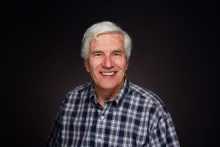
Steve Shafer was born and raised in Seattle. He graduated from Queen Anne High School in 1959 and later graduated from Ambassador College, Big Sandy, Texas in 1967, receiving a degree in Theology. He has been an ordained Elder of the Church of God for 34 years and has pastored congregations in Michigan and Washington State. He and his wife Evelyn have been married for over 48 years and have three children and ten grandchildren.
