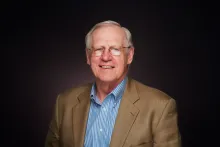


Robert Dick
This sermon was given at the Branson, Missouri 2023 Feast site.
This transcript was generated by AI and may contain errors. It is provided to assist those who may not be able to listen to the message.
It's absolutely beautiful music and so very inspiring and so and that's the very reason why we're all here, isn't it? To be thinking about the kingdom of God, to be looking forward to the kingdom of God, and soon it will be here. So here we are at the very beginning of the feast, the very first day of the feast. So I want to start with some basic scriptures as to what God will be expecting us as kings and priests in His kingdom and His soon-coming kingdom.
So let's look at our role, our very role, at not only the start of the millennia but on through as His kingdom grows bigger and bigger. So let's turn to Revelation 11, verse 15. And to get to my title as well, I want to get to my title. The title is Justice and Judgment in the Kingdom of God. Justice and Judgment in the Kingdom of God. Revelation 11, let's take a look at verse 15. And we see this, we'll probably turn to this scripture before the end of the feast as well. But Revelation 11, verse 15, Then the seventh angel sounded, and there were loud voices in heaven, saying, The kingdoms of this world had become the kingdoms of our Lord, that's God the Father, and of His Christ, and He shall reign forever and ever.
The Father will send Christ to this earth. Jesus Christ, His feet will touch the Mount of Olives. The kingdom of God will begin. Now let's turn to Revelation 20, and verse 4. Revelation 20, verse 4, our role as kings and priests. And I saw thrones, says John, and they sat on them, and judgment, key word, judgment, was committed to them. To us will be committed judgment, and we're talking about that during the sermon.
And I saw the souls of those who had been beheaded for their witness to Jesus and for the Word of God, who had not worshiped the beast or His image, had not received His mark on their foreheads or in their hands, and they lived and reigned with Christ for a thousand years. But the rest of the dead did not live again until the thousand years were finished. This is the first resurrection.
Blessed and holy is He who has part in the first resurrection. Over such the second death, or eternal death, has no power. But they shall be priests of God and of Christ, and shall reign with Him a thousand years. That's what we're going to be doing in the coming kingdom of God. The topic of judgment is indeed a key topic in the Bible. It is listed as one of the basic doctrines of the church, the basic doctrines of the Bible.
I'll just summarize Hebrews 6, verses 1 and 2. And Hebrews 6 talks about the foundation that we have of repentance, faith, baptism, laying out of hands, the resurrection of the dead, and eternal judgment. So eternal judgment is one of the basic doctrines of the church. Now, what was Jesus Christ's message during the Feast of Tabernacles that He observed about six months before He was crucified? Let's turn to John 7. John the seventh chapter. And this is kind of an interesting chapter in so many ways. Some years ago, when I was coming here to Branson for the Feast, a hotel man called me, and he wasn't the owner, but he was manager.
And one of the churches business, of course, someone else other than I makes those decisions, that's Charles Melere. But he said, you know, I'm a Bible reader, and I've read through the Bible, but I've never seen that Jesus Christ Himself kept the Feast of Tabernacles. It was an embarrassing revelation to him when he found out that His Lord and Savior, our Lord and Savior, observed the Feast of Tabernacles. So, about the middle of the Feast, this is John 7, verse 14.
Jesus went up into the temple and taught. The Jews marveled at how brilliant Christ was. And Jesus said in verse 16, My doctrine is not mine, but his who sent me. If anyone wants to do his will, he shall know concerning the doctrine, whether it is from God or whether I speak on my own authority. He who speaks from himself seeks his own glory, but he who seeks the glory of the one who sent him is true, and there is no unrighteousness in him.
Now, let's go to verse 24. Christ said, Do not judge according to appearance. This was part of His sermon. Part of His middle of the Feast sermon. Do not judge according to appearance, but judge with righteous judgment. I don't think it's just a mere coincidence that Jesus Christ, the very Feast which pictures His kingdom, would say that we need to be learning now about righteous judgment, that we are to be doing righteous judgment.
I don't think it's just a coincidence that Jesus mentioned righteous judgment at a time which pictures the era, the very era of righteous judgment, which will be directed by our righteous King. Let's look at another scripture here, 1 Corinthians 6. 1 Corinthians 6 and verse 2, a very intriguing scripture. I don't have all the answers to questions that come up when we do read this scripture, but we'll just have to wait a while. We'll find out. So we have verse 2, Do you not know that the saints will judge the world? Can you believe that? Yes, you can.
It's in the scriptures. It's going to take place. The saints will judge the world. And if the world will be judged by you, are you unworthy to judge the smallest matters? Do you not know that we shall judge angels? Scripture says we shall judge angels. How much more things that pertain to this life? So the saints of God are going to judge the world. We're going to judge angels.
Now let's turn to a parable that speaks about our reward in the kingdom of God. Let's go to Luke chapter 19 and we'll start in verse 12. Luke 19 and verse 12. Therefore, he said, Well done, good servant, because you were faithful and very little, have authority over ten cities. Let's think about that for a minute. Ten cities. The second came to him and said, Master, your mina has earned five minas. Likewise, he said to him, you also be over five cities.
Now we know in the kingdom of God, Christ will rule the earth and he will set King David over all of the tribes of Israel. And then under King David, Jesus Christ is going to set the twelve apostles.
Each apostle will be over one of the twelve tribes of Israel. And then after you have tribes, or nations, or tribes, you drop down to cities. And so by logical flow, it certainly looks like I'm looking at people who will be ruling over, some of you will be ruling over ten. Some of you will be ruling over five cities in the coming kingdom of God.
And we will be rendering godly judgments over those ten cities, five cities, and so on. So I would like to turn now to PowerPoint number two. And again, that's the title of my sermon, Justice and Judgment. And these are powerful words that are found in the Holy Scriptures. And let's turn to the first example, which will be PowerPoint number three. And that's just a summary of Genesis 18, verse 19. Now we'll read to you Genesis 18, in verse 19. God is saying, God speaking, For I know him, I know Abraham, that he will command his children and his household after him.
And they shall keep the way of the Lord to do justice and judgment, that the Lord may bring upon Abraham that which he has spoken of him. Abraham did justice and judgment. That's the way he lived. That's the way he raised his children. And that's the way he directed his household as well. These are powerful words, and they are filled with great meaning.
They have a great deal to do with what we will be doing in the coming Kingdom. So now let's turn to PowerPoint number four. And in the Hebrew, tzedakah and mishpat. And depending on what dictionary you might look them up in, they spell a little differently in English, but that's just the basic idea. And these words, like so many Hebrew words, have a wide range of meaning. But for today, I just want to concentrate on a few basic meanings.
They have a lot to do with being judged, for example, in a court of law, where you are hoping that you are being judged fairly by a righteous judge. That's your hope. So let's turn now to PowerPoint number five. Tzedakah means justice or rightness. I guess you could combine those two words, right justice. And vine's dictionary, righteousness. Tzedakah meaning righteousness. And it is often translated as, again, justice or righteousness.
Now, the next slide is number six, which is mishpat, which is a very interesting word. Strongs has it as verdict, either favorable or unfavorable, with regard to the one being accused. Mishpat means you're in this court of law. You don't know which way the judge is going to go. Is he going to give you mercy, or is he going to lay down the hammer?
You don't really know for sure. It may mean punishment, or in another case, the verdict delivers mercy. It's a word that can go either way, as one is being judged. It can also be translated as right or justice as well. Now, let's go to PowerPoint number seven. Both of these words convey the meaning of righteous judgment, righteous leadership. You have a person, a man, or a woman who is filled with godly character, Christian character, and when decisions must be made, these righteous people render a righteous decision, righteous judgment. That's what you parents are doing, by the way, parents, grandparents, and dealing with your children.
I'll have a few more examples of that after a while. But that's what you want to be doing as parents, righteous people delivering righteous judgment to your family. Again, the verdict, though, can be, again, in many cases either favorable or unfavorable, speaking of the word, mishpot.
So, going back to mishpot again, let's go to PowerPoint number eight. We see where mishpot here is being used in the sense of punishment. Psalm 1.5 says, Sinners will not be allowed to stand in that day of judgment. So it goes that way. Now, let's look at number nine, PowerPoint number nine. Here is an example of mishpot that is not going to be applied against David.
David had sinned. We don't know what the sin was, but he was asking for mercy. David was asking for favorable treatment. So he said, Do not enter into mishpot. Do not lay the hammer down on me. I deserve it, but don't lay the hammer down on me. Do not enter into judgment with your servant, for in your sight no one living is righteous.
That's a very beautiful psalm to read if you feel like you need mercy from God. David is saying, I'm brokenhearted. I'm totally contrite. I don't deserve it, but what I really need is your mercy. So do not enter into a mishpot with me. It's like Psalm 130. Now, let's just turn to Psalm 130 and verse 4. Psalm 130 and verse 4. Get to hear it a minute.
Verse 3, and this is another kind of ties in with the sermon we heard, the wonderful sermon we heard this morning on the fear of God. If you, Lord, should mark iniquities that God kept track of all of our sins, Psalm 130 verse 3, O Lord, who could stand?
If God wanted to keep track of our sins, none of us would be able to stand. But there is forgiveness with you. Mercy, grace, forgiveness. That you may be feared. God's mercy is so awesome that we hold God in, not in a cowardly, craven fear, but in a fear that awesome.
We are in awe of God, absolute, total awe, because of the greatness of His forgiveness. Psalm 103 says His mercy is as high as the heavens is from the earth. God's mercy is so wonderful. And so the Psalmist here was saying, you know, I deserve punishment, but please don't punish me. Apply your mercy upon me. And frankly, God loves it when His children cry out to Him for His mercy. He loves that, because that's what He is by His very character, a merciful God. So let's now go to the next slide, number 10. And this is, I'll go back to this after a while, but Zechariah 7, verses 9 and 10.
So, execute true justice, which is mishpot. This is an example of mishpot being the merciful result. So execute true justice or mishpot. Show mercy and compassion. Everyone to His brother. We'll get a lot of chances this week when people are cut in front of us, you know, when we're trying to go somewhere.
So show compassion, everyone to His brother. Do not oppress the widow or the fatherless or the alien or the poor. And this world has a lot of aliens. You will look into all the refugees coming in from the south, but there's also coming in from Africa up to Europe. There's refugees in Ukraine, you know, fleeing, you know, the Russian army.
And a lot of people are homeless around the world. Just a lot of people. God says, do not oppress them or the poor. Let none of you plan evil in His heart against His brother. This is the kind of mishpot that God loves and that He applies in our life. So it's used here then to show the favorable treatment. Not the punishment, but the favorable treatment.
Now, PowerPoint number 11. So another key meaning of mishpot is rightness rooted in God's character. It's what the kind of attitude, the kind of character that God is developing in us right now. Rightness rooted in God's character. We can depend upon that.
So going to PowerPoint number 12, I'm going to repeat what I had said earlier. I think it was slide seven or whatever it was. I want to repeat that. This is the key to understand these words. They convey the meaning of righteous judgment, righteous leadership, righteous character acting or performing judgments that are fair and merciful.
So the last slide we have then is PowerPoint number 13. So both Tzadaka and Mishpot are aspects of Godly character that God expects us as future kings and priests. And we ought to be exercising this in our lives even now. If you're a boss, a manager, God expects you to exercise Tzadaka and Mishpot.
If you're a mom or a dad, grandma or grandpa, God expects you to be exercising even now at Tzadaka and Mishpot. So that's the end of the PowerPoint slide. Not the end of my sermon yet, but my slide, yes. So putting these two words together, we see that they convey the Christian living principle that righteous people are to live righteous lives.
And with God's help, Christians will be rendering righteous decisions now and practicing for God's coming kingdom. So that righteous people living righteous lives with God's help will be rendering righteous decisions now. So I want to go back and I'll just read this to you. Genesis 18-19 and then to King James again. Genesis 18-19, God speaking, actually the pre-incarnate Christ speaking of Abraham. So when God said that he was ruling and Abraham was ruling with judgment and justice, he was praising Abraham for ruling his family and his household well.
Whatever Abraham was doing with his family, he was doing something right. And God was very pleased with that. Now let's turn to a scripture that shows God's compliments to a national leader. This is not just a family man, but this is a national leader. And we find this in 2 Samuel 8 and verse 15. David reigned over all Israel, and David executed judgment and justice unto all his people. David executed judgment and justice unto all his people. This is really the highest compliment that you could ever pay a ruler of a kingdom such as this, such as what David was ruling over. David had God's mind, he had God's heart, and so he was rendering to the people, the twelve tribes of Israel, judgment and justice.
2 Samuel 8 and verse 15. It's the best way, the only way, to rule a nation. Now let's take a brief look at how bad things are today. I won't dwell on that, but I do want to show a contrast. So let's turn to Isaiah 59 and look at a couple of verses here. We'll start in verse 13. And I'll again read this into King James.
In transgressing and lying against the Lord, and departing away from our God, speaking oppression and revolt, conceiving and uttering from their heart words of falsehood. Isaiah 59, 14. And judgment is turned away. And justice, again, Mishpat tzedakah, justice stands far off. For truth is fallen in the street. And that is so true in America today. Truth has fallen in the street, and equity or fairness cannot even enter, cannot enter. Yes, truth fails, verse 15. And he that departs from evil makes himself a prey.
And the Lord saw it, and it displeased him that there was no judgment. Now, just an example, Wisconsin this past summer, Wisconsin is really a beautiful state in the summer. You know, nice, bright, sunny days, at least when I was there. And cool evenings, really pleasant to be outside. But then there was this park, this city park, and, disgustingly, there was a drag queen performance doing terrible, rotten things as drag queens.
And it was public, so children were watching. In the same park, not too far away, very same park, there was a Christian, a couple of Christian men, but one Christian had a Bible, a microphone.
He's reading scripture. He's reading scripture on the other side of the park. He's got drag queens over here doing filth. You have a Bible reader over here reading scripture. Who goes to jail? Who goes to jail? Who has the microphone snatched away from him and put in handcuffs and goes to jail? The Christian, the Bible reading Christian. Truth has fallen in the streets. Truth has fallen in the streets.
They claimed he was disturbing the peace? How backwards can you be? So, you know, when you read Isaiah 59, which we just did, and you think about something like that, you've got it completely backwards. So we've seen so far some biblical examples of justice and judgment. One bad example I could have found a lot more, but I just don't want to start this feast out on a downer.
But we've given some definitions of it. So now the next question is then regarding Abraham and regarding David, which are these two heroes of the Bible, where do they learn all this? Where do they learn this judgment and justice from? And where does true justice and judgment come from anyway? Well, of course, it comes from heaven. It comes from our heavenly Father and his Son, Jesus the Christ. So let's go to some scriptures then to talk about Christ and how Jesus Christ will rule in the coming kingdom.
Isaiah 9 and verse 7. Okay, of the increase of his government and peace, Isaiah 9 and 7, there shall be no end. The government of God, the government of Christ, there'll just be no end to it. Upon the throne of David and upon his kingdom, to order it and to establish it with judgment and with justice, from henceforth even forever. We have the millennium, we have the kingdom of God growing and going way past into the new heavens and the new earth. Judgment and justice will be henceforth even forever and ever.
And the zeal, I'm adding the word and, scripture says, the zeal of the Lord of hosts will perform this. Let's talk more about the righteous rule of Jesus Christ in Isaiah. Let's go to Isaiah 32. Isaiah 32, verse 1, a millennial scripture, which talks about our Lord Jesus Christ. Behold, the king shall rule in righteousness.
And the word there is a little shorter word than tzadaka, but it's basically the same meaning, but it's the same in the same family of words. And princes shall rule in judgment, princes shall rule in mishpat. Let's go to another scripture, Isaiah 33, verse 5. The Lord is exalted, Isaiah 33, 5. The Lord is exalted, for He dwells on high, and He has filled Zion with judgment and righteousness. Judgment and righteousness, mishpat and tzadaka.
Judgment and righteousness is not something that the world has today. Let's go to Isaiah 33, and now verse 22. Isaiah 33, 22. And this is about government, and it's about the three forms of government, or the three, I guess, divisions of government. We have the lawmaking group, which is Congress. The Supreme Court makes the judges. They make the judgments.
You have the executive branch, again, the highest one. It would be the president. So you have the threefold government, and they're doing such a wonderful job. We don't even know if they'll be closed for business by midnight tonight. I don't know, maybe they've passed some last-minute budget plan, but they've been worried about the government, again, having to shut down. But we'll see.
Sometimes in the last hour or two, they find a solution to borrow more money. But anyway, it's going to be so different in God's kingdom. Isaiah 33, 22. For the Lord is our judge. Christ is our judge. The Lord is our lawgiver. He already gave the law. He thundered the law from Mount Sinai. No, the Ten Commandments. Our lawgiver. And then he had statutes and judgments after that.
The Lord is our king, and he will save us. So today we have the Supreme Court, the Executive Branch, Congress. Tomorrow we'll have Jesus Christ doing all three with judgment and justice. Now let's turn to Jeremiah. Jeremiah 4, verse 2. Jeremiah has a lot to say about judgment and righteousness. Jeremiah 4, and we'll go to verse 2 now. Jeremiah 4, 2. You shall swear the Lord lives in truth, in judgment and righteousness.
Truth, Mishpat, and Tzadaka. Judgment and righteousness. And the nations shall bless themselves in him and in him, in Jesus Christ. Shall they glory? Now let's go to Jeremiah 9. Jeremiah 9, verse 24. But let him that glorious glory of this, that he understands. And, brethren, you and I understand what's going to be said here. That he understands and knows me that I am the Lord, which exercise loving-kindness, judgment, and righteousness.
Mishpat and Tzadaka in the earth, for in these things I delight, says the Lord. The Lord delights in exercising in judgment and righteousness. Now, one of the very names of Jesus Christ is Tzadaka, is righteousness. Jeremiah 33, verse 15. In those days, and at that time, will I cause the branch of righteousness to grow up unto David? The branch of righteousness, Jesus Christ, to grow up unto David. And he shall execute judgment and righteousness in the land. Now, the setting of these scriptures in Jeremiah was the impending fall of Judah and Jerusalem, soon to be conquered by the Babylonians.
In Jeremiah, when God was holding out the hope of the future to Jeremiah, the day would be coming when the branch of righteousness would grow up unto David, who would be executing judgment and righteousness. Chapter 33, verse 16, Jeremiah, In those days shall Judah be saved, and Jerusalem shall dwell safely, and this is the name she shall be called, the Lord our righteousness. Even Judah, even I should say, Jerusalem will be called the Lord our righteousness. Not their own righteousness, not the righteousness of man, but the righteousness of God.
Now, let's turn to Psalm 72. Psalm 72, and it says a psalm for Solomon, but ultimately it's a psalm for another son of David. Now, Solomon, of course, was the son of David, but there's another son of David, great-great-great-great-great-great-grandson, Jesus Christ. So this really is a psalm as we read this. It's a psalm for Jesus Christ. Psalm 72, verse 1, Give the king thy judgments, O God, and thy righteousness, unto the king's son. He shall judge your people with righteousness, and your poor with judgment. Psalm 72, verse 3, The mountains shall bring peace to the people, and the little hills by righteousness.
Well, oftentimes the mountains refer to governments of man, and the little hills, smaller nations, or smaller governments, and Christ is coming to bring peace to them by His righteousness. Psalm 72, verse 4, He shall judge the poor of the people, He shall save the children of the needy, and break in peace the oppressor. So again, I want to emphasize that Psalm 72 is actually about the coming rule of Jesus Christ. And from our own Bible commentaries called the Bible, either the Commentary or Bible Reading Program, it says this, It should be clear from reading this remarkable psalm that it is not the reign of Solomon, or any merely human king that is primarily in view here.
And that is primarily in view here. And rather, Psalm 72 concerns the reign of the ultimate Son of David, who is also the Son of the Almighty King, God. This psalm is intensely messianic, speaking in ideal terms of the coming of the great King, who will establish this glorious reign. Again, that's from our own online Bible commentary or Bible reading program. Let's move on in the Psalms and go to Psalm 89 and verse 14.
Even in the second resurrection, people are going to come up and they're going to say, as Ezekiel 37, I believe it is, Our hope is lost. We are cut off for our part. Boy, Mom told me Judgment Day was coming. Boy, she told me I wouldn't quit drinking. I was going to end up like this. Boy, am I sure in trouble now. And then God puts them back together, bones and sinews and flesh, and then He breathes upon them. And He said, Now is your first chance. And you're going to give them the Holy Spirit. They're going to have to repent, of course. They're going to be given their first chance. And they're going to be standing before a throne, as we're reading here in Psalm 89, verse 14, a throne of justice and judgment. Now, let's turn to Psalm 99, and let's take a look at this, Psalm 99. And again, as soon as I get there, we will start in verse 1. The Lord reigns, let the people tremble. A lot of people are going to be trembling. He dwells between the carobene. Let the earth be moved. The Lord is great in Zion, and He is high above all the peoples. Let them praise your great and awesome name. He is holy. He is holy. And by the way, Psalm 99 is one of the royal Psalms, one of the royal Psalms of the book of Psalms. And there are several Psalms in Psalms. They just talk about the coming royal reign of Jesus Christ. I believe it's Psalm 93 through 99 is a section of royal Psalms. You go through there, very good Bible reading during the feast. Because it's just talking about the coming kingdom and how Jesus Christ is going to reign. And this is just described what His reign will be like. So it's called the royal Psalms, which celebrate Christ, you know, God in certain places. You know, God is His Son Jesus Christ on this earth as King. So we've got as far as verse 3. The King's strength also loves mishpot. You have established equity. You have executed justice or mishpot, verse 4. And righteousness, tzedakah in Jacob. And this is what we're going to get to do, brethren, for eternity. Exalt the Lord our God and worship at His footstool. Or as a commentary brings it out in church more than one, worship at His mercy seat. For He is holy. This describes the righteous rule of Jesus Christ. Christ will rule the earth with fairness, with equity, with righteous character. Now, briefly, our call, our personal call for action. Let's apply some of this to our daily Christian walk today. Because we, too, must be walking now in judgment and justice. Let's turn to Amos 5, verse 24. Amos is one of the minor prophets. And so we have here a very beautiful and poetic way that God describes what we're supposed to be doing. So Amos 5, verse 24, let judgment run down as waters. Just flow down running like waters and righteousness as a mighty stream. Now, to our kids, when dad comes home and mom comes home from work, and the door opens, you know, mom and dad come in, you know, maybe a different time, whatever. And the kids know that they're looking at a righteous, godly Christian person. And if they did something and got themselves in trouble, that judgment will be, merciful judgment will be applied to them. That, you know, that they won't have to be afraid, oh, we'll just wait until dad comes home. Boy, you're going to get it. Maybe, you know, maybe something needs to be dealt with, okay? But it will be dealt with with judgment, fairness, righteousness. Now, I've read Zechariah 7 already, but I want to go back to that. Zechariah 7, verse 9. Daniel, Hosea, way back here. Beautiful, beautiful verse. I've read it once. I want to read it again.
True Mishpat, show mercy and compassion every one to his brother. Do not oppress the widow or the fatherless, the alien or the poor. Let none of you plan evil in his heart against his brother. So, this is about, and again, I just have to read again from the Bible reading program on this. In these verses, God reminds the people to focus on what's really important, the weightier matters of the law. Such as justice, mercy, faith, and love. The true religion of looking out for the widow and the orphan and other matters of serving and helping one's neighbor. Well, I have an example here, true story, of a proper justice and judgment at the family level. So, I heard a sermon on this some years ago in church. And the man was talking about his little son, and his son was, I forget, either a young teen or a pre-teen. If I remember right, I've got the basic idea. It was a day they weren't in school, but it was a snow day, so the little boy couldn't go out and play outside, windy, too windy, too cold. So, he was inside, and he got restless and started bouncing off the wall, jumping over the furniture, knocking things around, crash, bang, thud. And so, Dad said, now, look, son, you better get yourself under control here. I'm going to warn you now, you better just calm down a little bit and figure out a way to just settle down. Well, that lasted about just a few minutes. And all of a sudden, crash, bang, thud, jumping over furniture, running into the wall, knocking things around. Now, son, this is your second warning. I'm going to give you a second warning. You know what's going to happen to you if you keep this up, you can stop, you can do something else or else. Okay, well, that lasted for a while. And then, crash, bang, thud, here comes the little boy again. And, alright, Dad says, now, son, this is the third time, and I warned you twice. Now, what do you think is going to happen to you? The boy looked up at his daddy and said, mercy.
See, he'd been paying attention at church, and he understood. So, I think that's a very practical application of justice and judgment. What about this, you know, as parents, we have a wonderful opportunity to render mercy to our children. I know there's times for correction, we understand that. But even that, to be done in mercy. But supposing you have a daughter that loves to bake, and so you have company coming over. So, she wants to bake the cake, and she does.
She puts it all together, made from scratch, not out of a box, but made from scratch. And puts it in the oven, and everything's fine, except she forgets to set the timer. And goes off and bought her business, and burns the cake. So, basically, you tell your guests that, hopefully, you're going to enjoy our dinner, because there's going to be no dessert tonight. But you make it a point not to belittle, or shame, or scold your daughter.
You uphold her honor, and you do not shame or scold her. Well, two weeks go by, company is invited again, and you turn to your daughter, and you say, Honey, would you like to bake the cake tonight? You give her a chance to get it right this time. That's proper judgment and justice. Now, let's turn to Micah 6, verse 8. Micah 6, verse 8.
And I'll read this here, Micah 6, 8. He has showed you, O man, what is good, and what does the Lord require? What does the Lord require of you but to do justly, and to love mercy, and to walk humbly with your God? Now, we also know, because we're building from this morning's sermon, Mr. Shabe quoted Deuteronomy 10, I believe, verse 12, where he said to God requires that we obey Him, and we fear Him.
And then, now God is building. The foundation is the awe of God, the fear of God, obedience to God. And then he expects us to do what Micah 6 and verse 8 says, these essential qualities of character, to do justly, to love mercy, to walk humbly with your God. Now, let's turn to Hosea 12, and verse 6, which is a sister verse to Micah 6, 8. Therefore, turn thou through your God, and keep mercy and judgment, again, judgment being mish-bought, and wait, and I'll say wait patiently, that's what the context of that is, wait patiently on thy God continuously.
So, these are sister verses, and again, I just want to quote from our Bible reading program, which is very excellent on these points. So, we heard from Hosea, we heard from Micah, and much later, Jesus Christ referred to these essential qualities of character as the weightier matters of the law. Now, these Old Testament words that we just read, these verses of Micah 6, 8, Hosea 12, 6, these are the weightier matters of the law.
So, let's turn to Matthew 23, because Christ is building on this from the Old Testament. Matthew 23 and verse 23, weightier matters of the law. The book of Luke covers another point of that, and so, let's go to Luke 11, and Christ said something else in addition, that He inspired Luke to write down.
Luke 11 and verse 42, and pass by justice and the love of God. You forget about the love of God. Christ told us in Mark 12 and verse 30, that you shall love the Lord your God with all your heart, with all your soul, with all your mind, with all your strength. These you ought to have done without leaving the others undone. Well, I'm going to wrap this up. I want to say one more thing. In conclusion, I know we've been thinking about, we've been hearing messages already about the coming Kingdom of God.
That's what we should be doing. But regarding the coming of Christ, this is the picture I have in my mind regarding Carol and I. And when the seventh trumpet sounds, you know, Scripture tells us, verse Thessalonians 4 and verse 16, The Lord will descend from heaven with a shout, with the voice of the archangel, and with the trumpet of God.
Nobody is going to miss that. A shout, the voice of an archangel, and with the trumpet of God. And the dead in Christ will, of course, rise first. So whether Carol and I are alive or not alive at that time makes no difference. The dead in Christ will rise first. Those who are alive will be caught up together with Him in the clouds to meet the Lord in the air.
So I just picture Carol and I going up, holding hands, and somehow we change from, you know, physical, whatever is left of us, to spiritual, and we go up 100 feet. We go up 1,000 feet. By the way, I am really afraid of heights. I wanted to be a mountain climber, but I won't make it as a mountain climber in the flesh, because I'm really afraid of heights, but I'm not going to be afraid of heights. You know, 1,000 feet, 10,000 feet. When we go up a mile, Carol and I holding hands, going up with you, brethren, and with thousands of other people around the world, thousands of other firstfruits, thousands of other saints who for the first time will be born again.
That's when we will be born again when we're changed to spirit, because flesh and blood cannot inherit the Kingdom of God. Neither does corruption inherit incorrect, but we have to become spirit beings, divine children of God, which is being born again. So then we will accompany Christ, you, my wife and I, and thousands of other firstfruits from around the world. We will accompany Jesus Christ as he comes back to earth. I believe Christ will be the first to land on the Mount of Olives, and then he will establish his Kingdom on this earth.
And after the conquering of the enemies of God, the enemies of Jesus Christ, we will all be able to begin the process of rendering proper judgment and justice to the peoples of this earth.
