
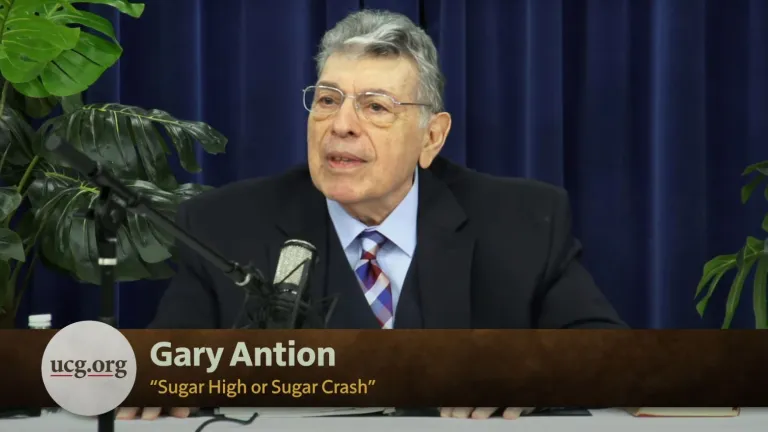

Gary Antion
This transcript was generated by AI and may contain errors. It is provided to assist those who may not be able to listen to the message.
Good afternoon, everyone. Nice to be here with you on this first Sabbath after the feast.
We drove back on Tuesday. It was about 10 hours from Branson. Ten and a half hours. We got to Louisville and went to make the turn to go up to Highway 71 off of 64, and it wouldn't let us go that way. So now, what am I gonna do? I've got a garment in my car, but it's sending me all over the place. I have no idea where it's sending me. Finally, it brought me back down on 65 a different way, and I was able to connect and finally get home. So anyway, we got home after 10 o'clock on Tuesday night. Left the car, packed up. We didn't bring much in. Just came in and collapsed. It was a long drive. But we had a wonderful feast, and I hope you all did too. We had a Holy Day offering the second day. We had fewer people, about 30 fewer people, but we ended up having a 15% increase in the offering on that last day. And being over the business office, I was the one with my son-in-law and daughter, and another good staff of individuals counted it all up. And then came to realize Monday was banks were closed, at least in that area. So now I have the, what do I do with this? All this money. Had like almost $50,000. What do I do with this money?
Thankfully, the hotel we stayed at had a safety deposit box in the lobby, so I wrapped it in plastic, and I had already put something in before. So I said, I just need to put some more valuables in here. Can you please open this for me? And I had my security guy there with me anyway. So then they opened it up, and I put it in there, and they locked it. And Tuesday morning, I was so happy to go to the bank and bank it and get it out of my hands. I don't like traveling around with $50,000. It belongs to God's money. So I took it back to the business, took it to the bank, and after she counted it all, it was like about $9,000 worth of cash and change. Took a long time for them to count it all. And they were off $100.
And then they found that they recounted the stack that they had put through the automatic machine that's supposed to count it perfectly, and it took an extra $100 in there. So she counted up here. Sure enough, here was the other $100.
So she said, you're perfect. Thankfully, the group I was with, perfect both days. Everything worked out to the penny. So I was very grateful for that opportunity. I want to shout a hello to my daughter and son-in-law and Samantha and Josh, who were in the hospital, viewing this webcast. They took the computer there so they could enjoy services. Samantha is still recovering. She still has some pain. She's trying to get her to eat something and where it stays down. And until she can have two meals that stay down, they're not going to release her. And I think that's a good thing.
It's just hard for her stomach because it feels like it's full. So when food goes down there, it just bounces back out again. So I know I entered when we went down to the hospital on Thursday. And yesterday, I dropped my wife off. I had a counseling last night to do for counseling for marriage. And my wife stayed with her for a while, and then Mike finally came back from his trip.
So he relieved Jan. Today, she stayed two nights, and she wanted to go home and take a shower. So she did go home after Mike and Josh came this morning. So they're all there in the room with Samantha today.
So she certainly can use your prayers. She lost about 17 pounds, probably even a little more than that because all she has is fluid in her. So I certainly hope to ask you to please pray for her because, you know, once you get into the cycle of throwing up, it's hard to keep things down. And so that needs to be overcome for her to be able to be released. So certainly appreciate your prayers on her behalf. Also, I had a prayer request given to me by Matt Hernandez. It says, Prayer request for Jacob Smith, who's the younger brother of Matt Hernandez and Zach Hoover. On his way home from the feast, he had a car accident in which both ankles were crushed.
Both feet were broken. One surgery was performed on Friday to repair his right ankle. And because of the swelling, they will have to wait for them to operate on the left. Jacob's in good spirits, but the pain is fairly severe. Please pray for his recovery to be full and swift. Jacob Smith. So I'll remember him in prayer as well. It just seems like a lot of people, either sick or accident, happened this year at the feast.
So we just have to pray more for God's protection and safety. And from all reports that we've had, it was a very good feast, a very wonderful feast. Well, we've returned from another eight-day feast of tabernacles. And did you have a wonderful, meaningful feast? I hope so. Services, fellowship, rejoicing with family and friends. And on the last day, the song leader said, maybe we should have another eight days.
And of course, you know, there is scriptural precedence for that, not for the Feast of Tabernacles, but for one of the feasts in 2 Chronicles 30, verses 21 to 23, when Hezekiah was reintroducing the observances of these days. Notice in 2 Chronicles chapter 30 and verse 21. And the children of Israel that were present at Jerusalem kept the feast of unleavened bread seven days with great gladness, and that Levites and the priests praised the Lord day by day.
You had songs, service, you had special music. I remember one real special music was, there's a river in Judea. And it took me back to my first time that I went to the feast with United up in Ottawa, Canada. And we had two ladies from the Toronto church. I wasn't pastor yet. I was just feeling my way.
Well, I guess I had agreed to be pastor at that time. Hadn't moved up there yet. And these two ladies saying there's a river in Judea, and it was so beautiful. And when they corral sang that, I really brought back some memories. My wife was in tears because it reminded us of the beautiful people we knew up there.
The Levites and the priests, they praised the Lord day by day, singing with loud instruments to the Lord. And we had instruments where we were as well. And Hezekiah spoke comfortably to all the Levites that taught the good knowledge of the Lord. Hopefully you were taught good knowledge. Now, if it's from God's Word, it's all going to be good. If it's God's Word. And hopefully you heard lots of good sermons. Hopefully you were inspired or motivated. You were able to be enlightened at the feast that taught good knowledge of the Lord. And they did eat throughout the feast seven days. And one thing we all do is eat. You know, you go to services and you eat. You go back, you grab a bite to eat. Maybe you go to a Bible study or a special event that evening. Then you come home and you eat. And so you eat. And so now we're not eating. We're trying to not eat. But at the feast, you're eating and you're supposed to feast. The feast is not called a fast. It's called a feast. So you are supposed to enjoy yourself and at the feast of time. So they did eat throughout the feast seven days offering peace offerings and making confession to the Lord God of their fathers. And hopefully the feast was a turning point. Hopefully there were things that you learned at the feast that made you feel like, boy, I need to change that. And I want to be in God's kingdom badly enough. I need to overcome that. I need to be more of a doer than just a hearer. We had a sermon, a sermonette about that. I need to be more family. The Bible, they talked about family.
One sermon gave the whole thing about how we are like family. Need to be like family. Another one was about rejoicing in life. So I'll share some of those with you just in a moment. The whole assembly took counsel to keep other seven days. Verse 23, and they kept other seven days with gladness. So we do have a precedent of extending the feast. So I propose that we extend the feast of tabernacles for us. I propose that we extend it for 360 days. You can't do it 365 because we've been home four days now. But I propose we extend it 360 days. And here's how. We can extend it, not by traveling somewhere and staying in a motel, not by eating out all the time, not by going to fun things and spending lots of money on rejoicing areas. But we can if we observe three great lessons that we should have learned at the Feast of Tabernacles. If we observe those three great lessons on a day-by-day basis, we will continue to observe the feast that, as Mr. Myers said, we will keep the momentum that we felt at the feast, being around godly people, being with godly people. We will feel that have that same momentum and keep it. So to continue to observe the feast for 360 days, we need to, number one, only three. Number one, worship God. Worship God on a daily, weekly basis. It doesn't end after the eighth day sunset.
We need to worship God daily. We need to worship God weekly. We need to worship God in our lives. Don't stop the worship of God. In 1 Peter 1, we read the scripture which says, though you haven't seen Jesus Christ, you love Him. I wonder how many times we tell Jesus Christ and God the Father, I love you. I love you, Father. I love you, Jesus Christ. Thank you so much for all you do for me. Worship involves coming before Him. Worship involves bowing to Him, yielding to Him. Worship involves saying to God praises and honor, giving Him that honor that's due His name.
So it doesn't end after that day. Zechariah chapter 14 verse 16, I looked for a scripture to talk about worship. There are many of them that say, come before Him and fear Him, and so on. But Zechariah 14, at the end, when all are going to be keeping the Feast of Tabernacles, notice what it says, Zechariah 14, 16, what Zechariah wrote. And it shall come to pass that everyone that is left of all the nations which came against Jerusalem shall even go up from year to year. And what are they going to do when they go up? They're going to worship God and keep the Feast of Tabernacles. Part of the Feast of Tabernacles enjoyment is worshiping God, is hearing from a variety of speakers, is standing up and singing, is participating in the chorale, is participating in the events that they have. I rescued a couple of animals that they were going to... well, stuffed animals. They were going to divide those up. They're going to say, oh, can't give this one. This one looks like it's a little bit made up, and we have to give a real one. So they were putting these out so they had Simba. You know what? You're not giving Simba away through gifts throwing them bad or good. So I rescued it for my grandchildren. So there were, though, many, many offerings. Many people. There were way too many animals. There were only about, as you know, Branson is the elderly people's feast, generally speaking, although some young people were there. But it is... there's a lot of gray hair. And I fit in very well. My wife didn't as much, but I did, at Branson. And there are a lot of older people, but they only... I don't know how many teens they said 20 some, 23, and children even fewer than that. But anyway, they had them all lined up on the stage. And some of the kids ended up with armfuls of animals, and they still gave a bunch of them to charity at the end. So people were generous and giving, but we had sermons. We had song service. We had special music. We had sermons about the crown. I hadn't heard a sermon about the crown. What is a crown? You know, you're going to be crowned as king... as a king in God's kingdom. What does that mean? And we had lessons from Ecclesiastes. Tony Walselkopf gave a very good sermon on lessons we learned from Ecclesiastes, and showing how we need to live life, but we need to live it with a proper approach. And of course, what is the key word in living life?
Fear God. Keep His commandments. So he came to that at the end, but a very good sermon on that. We had a sermon on the family. We had a sermon on God watching over us. Mr. Al Mishnick got up the last day of the feast, not the last great day as we call it, or the eighth day, but he got up, and he just said, you know, I haven't had a chance to prepare much. He said, I had a lot of things happening just before the feast, death of a friend, and all this. And he's 91 years old. So he stood up and he read. He said, I wanted one thing I wanted to share with you, Psalms 23.
The Lord is my shepherd. I want you to remember this. The Lord is my shepherd. I won't need.
Brethren, when you go back home, God will watch over you. So it was a very heart-to-heart, heartfelt message, and I think appealed to a lot of the those of us who were elderly there. Anyway, God watches over us. And then we had, on the last day of sermon, given on the great mystery of the resurrection. He talked about how we all love mysteries and how there's going to be a great, the great mystery is how God raises people from the dead.
So it was very powerful, a great message, and the way that Mr. Wasselkopf gave that one to end the feast. So we have a lot of memories. We have a lot of information that we can bring back with us that we need to take and use throughout the year. But every week we get sermons. Every day in your study, you're learning about God. You're studying about God. You're hearing about God. And we need to worship God. Worship Him by learning about Him. Worship Him by drawing near to Him. Worship Him by prayer. Worship Him by study. John 4, verse 24. John 4 and verse 24. We need to honor God. Give Him praise. Let Him know that you care every day and you'll be keeping the feast because that's one of the great lessons of the feast. John 4 and verse 24. You'll perpetuate the meaning of the feast. John 4, you'll capture the very essence of the feast. John 4, 24. God is spirit and they that worship Him must worship Him in spirit and in truth. God wants to hear from us truthfully, honestly, honorably, and He wants to hear from us coming to Him through God's Holy Spirit dwelling in us. Also, Psalms 138, verses 1 to 5 tells us to bless God. Do you bless God? Say, I'm so glad you're my God. I'm so pleased that you're my Heavenly Father. I'm so great that I have a Father. I remember when my Father was alive. He used to thank God that He was like the Ancient of Days to me. Now I know what the Ancient of Days is like as my dad has lived 97 years.
And I can still say to God, the Father, thank You that You're the Ancient of Days. You're always there. And He's the same yesterday, today, and forever. He doesn't change. I am the Lord. I change not. There's no variableness. He doesn't get moody. So when you pray to Him, He's not saying, I'm not listening to prayers today. I'm mad. I got out of the wrong side of bed. I'm not hearing you. God doesn't do that. You've got a Heavenly Father who's perfect. Psalm 138, verse 1, I will praise the Lord with my whole heart before the gods, the gods of this world. I will sing praise to you. I will worship toward your holy temple and praise your name for your loving kindness, for your truth, and for you have magnified your word above all your name. I can look at your word and I can understand you. I can have a better understanding of who you are by reading it. In the day when I cried, you answered me and strengthened me with strength in my soul.
You give me power. You give me might. It's God in you that does the work.
That was one theme we heard a lot about, too. It's God in you. It's not you. It's about God. It's not about you. Verse 4, all the kings of the earth shall praise you, O Lord, when they hear the words of your mouth. Even kings ultimately will praise him. And in verse 5, yea, they shall sing in the ways of the Lord, for great is the glory of the Lord. Do you give God great glory? Do you give Him great honor? Do you magnify Him? I know. Let's get over this. Let's get through this first part. Okay, God, I love you. Hell, be your name. Let's get into the real important stuff. My needs.
Or do you take time to praise and honor God? Worship God. That's one lesson that we learn from the Feast. Proverbs 15, 8. When we pray, it brings delight to God. Proverbs 15 and verse 8. Some of these scriptures are merely reminders, and that's all I want to do is remind us that we can keep the Feast. We don't have to lose the momentum of the Feast. We don't have to say, I've got to wait another whole year, and I've got to dwell in all this darkness, because every day you can recapture what the Feast was all about. Proverbs 15 and verse 8. The sacrifice of the wicked is an abomination to the Lord. Whatever He brings from His wickedness, not going to be acceptable, but the prayer of the upright is His delight. When God hears from His people who love Him and are trying to live according to His ways, and are classified as upright, not because they're perfect, but because they want to be, not because they're there yet. No, they haven't arrived, but they want to be. They want to be in line with God. Not that they always are, but they want to be. The prayer of the upright is His delight. You bring delight to God. 2 Timothy 2.15, you're familiar with this scripture. 2 Timothy 2.15 talks about studying or do your diligence, as New King James says. I'll read Old King James says, study. This is the thought. To show yourself approved to God. How do you become approved to God? How do you make God happier? How do you make God look down on you and say, wow, He's doing a good job. A workman. Notice, workmen, there needs not be ashamed, rightly dividing the word of truth. Someone who studies the truth, studies the Bible, and rightly divides it.
Doesn't just pick out things that suit his or her own purposes, but rather, studies it and gets the true meaning. Study the word of God. What about service? Part of worship of God is serving Him. At the feast are many opportunities for service, many opportunities to do things for people. I don't know what you did. Sometimes people, I went out to dinner and took people out, able to pick up the tab. Other cases, I went out planning to pick up the tab, and someone else picked up the tab. They served me. I served them. People were so willing to help in any way. We had our parking crew there at the Bald Knobbers in Branson, and they were so standing out there, rain or shine, they were standing out there waving us in, helping people to get out of the cars when you dropped off people on your way there, and help anything I can do, anything I can carry in for you. What an attitude, a wonderful attitude of service. Don't lose that because you're home. While we're not at the feast now, we don't have to serve. Look for ways to serve. You don't have to have a position. You don't have to be a deacon or a deaconess. You don't have to have anybody appoint you. You can serve by being aware and by caring. You can be aware and you can serve in that way. And of course, Matthew 22, what did Jesus Christ say? We're two of the greatest commandments. Matthew 22 and verse 36, the man, the lawyer came tempting him, saying, which is the great commandment of the law? And Jesus said to him, you shall love the Lord your God with all your heart, with all your soul, and with all your mind. If you love him, you look for a way to help him and serve. Do what you can to advance his purposes. And then, verse 38, he said, this is the first great commandment, and the second is just like it. You shall love your neighbor as yourself. That's service. What can I do for me? What can I do for you? How can I help you? Not, how can I help me? What's good for you? Not what's good for me. On these two commandments, hang all the law and the prophets. And in Matthew 25, verses 36 to 40, it's interesting that when you serve others, you actually serve God. Notice what Jesus Christ said, the king, then shall the king say to those on his right hand, Come, you blessed of my father, inherit the kingdom prepared for you from the foundation of the world. Come on, you, for I was hungry, and you gave me food. I was thirsty, you gave me something to drink. I was a stranger, you took me in, and I was naked, you clothed me, and I was sick, and you visited me. I was in prison, and you came to me. Then shall the righteous say to him, When did we do that for you?
I don't remember doing that. You know why they didn't remember doing it? Because it had become so much their way of life to help people that they didn't even think about it. It wasn't something they said, Oh, I helped 10 people today, or I helped four people today, or I helped sick. They just did it because that's the way they became. They became servants of others. The righteous said to him, Lord, when did we see you hungry and feed you thirsty and give you a drink? When did we see you a stranger? Well, you weren't even alive now and took you in, or naked and clothed you. When did we see you sick or in prison or come to you? And the king shall answer and say to them, These are people at the end time, right? Verily I say to you, inasmuch as you have done it to one of the least of these, my brethren, you have done it to me. I submit to you, when you worship God, you also serve Him. And when you serve His people, you also serve Him. Don't forget to serve. Don't forget to serve. John 13, 33, keep up that love of one another. Love, John 13, verse 33, Little children, yet a little while, and I am with you, and you shall seek me. And as I said to the Jews, where I go, you cannot come. So now I say to you, a new commandment I give to you, that you love one another as I have loved you. That you also love one another. How did Jesus love us?
Did Jesus want anything from us? Did Jesus try to get something from us? No, Jesus Christ gave something to us. He gave the blessing of forgiveness. He gave something to us. He gave His life for us. Verse 35, By this shall all men know that you are my disciples, if you have love one to another. This is how people know that you love, that you are my disciples by the love you have. And in John 15, 13, greater love has no man than this, that a man lay down his life for his friends. And every minute you spend with someone else. Every second you spend doing something for someone else. You gave up a part of your life. Because 70 plus years you die. And every minute you give up for somebody else you didn't use for you. You give up your life. Malachi 3 16, I won't read it or quote it.
I recommend that you keep up your fellowship with each other as we fellowship at the feast. And by the way, I was thrilled at the feast to be able to meet a new couple that sat right, happened to be sitting right in front of us. I guess he was on the stage crew. And they had asked, how many have been here for how many years, you know, you've been, how many, it's the first year you've been at the feast. These people raised their hand. First year at the feast. Now they've been in the church longer than that, but the previous year they weren't able to go because they hadn't worked out the Sabbath and feast issue. So this is their first feast. They sat in front of us and I sang, and I told them I was sorry. They had to hear my singing. And they were nice about it. They were kind and gracious. And they were real nice. So they sat in front of us a lot, and she thanked me for my sermons. And she was very, he, she and he both were very gracious. And when my daughter, Susie, and my son-in-law Todd were there too, and Susie took her name down from Facebook. She's already written on Facebook because they don't have many people in their congregation where they attend. So it was nice to make that connection. And then another one that I made a connection with was a girl who was a baby in Pasadena. She was born of African parents, Nigerian parents in Pasadena. So she is an American, and she is in residence as a doctor in Chicago as she completes her degree and her qualifications for the United States because she was trained over in Nigeria. But she's an American living in America. So I happened to see her come walking down there. I said, say hi. She shook hands, and she told me her name. And I said, are you so-and-so's daughter, your relative? Yeah. So it was really nice to make her acquaintance on the last day we went out with her. Chad took her and a couple of others out. And Corey's parents went out. Dad went out, and his granddad and grandma went out to Corey Gennaro. So we had a really nice time with her. She seemed to really appreciate it. And just the fellowship that we connected there made there. You made some too. Malachi 3 16 says, those who fear the Lord speak often one to another.
How do you encourage people? How do you let them know you care if you don't even send a note?
And so those who are nearby, you can contact easily, but those who are afar, you can use Facebook, you can use email, you can use letters, whatever, cards to let them know you care for those that you met during the feast. Keep up that fellowship. Second point, second lesson, to keep the feast 360 more days, is to rejoice. Rejoice. The Feast of Tabernacles is about rejoicing. Sing, brethren, smile, you know, rejoice. It's about feeling uplifted. Okay, days are over now. I can go back to being humdrum and boring. No, God wants us to be rejoicing.
Do you have a rejoicing spirit and a rejoicing heart? How do you affect other people? Are you happy with life? We can read Deuteronomy 16 verse 13 just to see that the feast, that's what they did. Deuteronomy 16 and verse 13, in fact, were urged to do it several times here, as well as in chapter 14. But Deuteronomy 16, 13, you shall observe the Feast of Tabernacles seven days after you have gathered in your corn and your wine, and you shall rejoice in your feast, you and your son and your daughter and your man servant, your maid servant, the light, I don't have any man servants or maid servants, so I didn't take them along, Levite, the stranger, the fatherless, the widow that are within your gates. Verse 15, seven days you shall keep a solemn feast of the Lord your God in the place which he Lord your God shall choose because the Lord God shall bless you in all your increase and in all the works of your hands therefore you shall surely rejoice. So the whole theme of rejoicing, the whole theme of being positive, the whole theme of being uplifting, and it's very important as we go into how many months before Passover, what six or seven before Passover season, maybe six, how many more months of darkness, no feasts to remind you of the plan of God, how important it is to stay uplifting.
Are you an uplifting person? Are you a positive person? Do you have a happy approach to life?
Now that doesn't mean you're giggling all the time or telling jokes like Mr. Myers does, but it does mean that you are happy and upbeat and when people meet you they don't feel like they've been to a buzzsaw, run into a buzzsaw or a grinder, but rather they feel uplifted. You helped me. Just your presence, just your kindness made me feel better. We talked about Mr. Ed Smith and what an uplifting personality he was. And if we could be like that, uplifting, glad to meet you, nice to see you. A happy approach to life is really a gift to other people.
It uplifts them. What a blessing that is. Isaiah 35 verse 10, in the kingdom, that's the way they're going to be and that's how you perpetuate the Feast of Tabernacles by rejoicing, putting it in your life not just every Sabbath but every day. And it doesn't have to be toward God's people, it could be toward anyone. You help make their day by your presence. You're gracious, you're grateful, you're thankful, you're appreciative. You're not haughty and you're not hard and you're not tough and you're not mean. And that doesn't mean you're a doormat either or a dishrag.
It doesn't mean you just take anything. You have certain rights that you know you have behind you. But to rejoice and to be happy and to have that approach is so awesome. Isaiah 35 and verse 10 we read this about the kingdom and the ransomed of the Lord shall return and come to Zion with songs and everlasting joy. That joy does not end at the Feast of Tabernacles. That rejoicing should not stop at the feast but continue. So how do you affect other people when you meet them? How are you to them? No matter what their age is. How are you to your family?
It's easy to take it out on our own family because, well, they understand me. I don't have to kick it up for them. How are you toward your own family? Are you rejoicing? Are you uplifting? John 16 and verse 33, we have come back to the world, but it doesn't mean we should absorb the attitudes of the world, the negativity of the world, or the downward look of the world, but rather the upward look toward Jesus Christ and God the Father and His kingdom. John 16 verse 33, these things I have spoken to you that you might have peace. In the world you shall have trouble.
We come back, and there are troubles, we come back, and there are difficulties, there are health issues, there are various other things that may have spawned at the feast, too. But as we come back and get settled into our routines, there will be trouble.
But how do you handle that trouble? What is your response? You can only change your response to it.
You can only change your response to someone else. You can change it. You can't change them. In the world you shall have trouble, but be of good cheer. I have overcome the world. And how do you overcome the attitudes of the world by being uplifting and outgoing and looking ahead, rejoicing, lifting up, having joy in your life. It doesn't mean being giddy and laughing and telling jokes all the time. But joy, a deep inner joy, a glow that makes you feel that life is worth living, and you want others to feel that, too. Philippians 2 verses 14 to 16, though we come back and we're part of a world, what will the world see in you? Will they see a Christian? Will they see someone who's different?
Will they recognize this person is special? When I've said in some places I've been grateful to individuals or for what they've done for them, they said, you people are a nice people.
We like your people. That's not about you and it's not about me. It's about God in you and God in me that makes it acceptable. Philippians chapter 2 verse 14, he says, do all things without murmurings and disputings that you may be blameless and harmless, the sons of God without rebuke, in the midst of a crooked and perverse nation among whom you shine as lights in the world. Does the world see us having a different demeanor, a different approach, a different mode of operation?
Or do they see us becoming just like them? Well, I'm going to be like them. They're that way toward me. That's the way I'm going to be toward them. We're going to be like that in the world.
In verse 16, he says, holding forth the word of life. God has called us to life, holding forth the word of life that I may rejoice in the day of Christ, that I have not run in vain, neither labored in vain. Paul said, I want to have joy in seeing you shine as lights in the world. One way we shine is by having that joy in our life. Joy is one of the fruits of the Holy Spirit, as we know, Galatians 5, 22. But look at Philippians 4 and verse 4. How long should we rejoice? I get tired rejoicing. How long should we rejoice? We had a really nice family outing. In fact, we had two family outings. One was to go see the Osmonds. Now, Andy Williams was supposed to be alive, and when we made the reservations, Andy Williams was alive. It was his 75th anniversary of his business in show business, because he started when he was like 12 or 13. Well, he died at 86 or 87, and he didn't make it to the show. So we had tickets to the show. Well, they had the Osmond brothers who were supposed to be part of the show anyway. So the three of them put on a fantastic show. My daughter, Susie, loves the Osmonds. She always has. She just sits here with a glow on her face the whole time. They're singing. We were in row three, so she actually got to shake hands with one of them they came by, and it was three of the brothers. And they said one of their brothers had multiple sclerosis. He couldn't come, and the other brother, Wayne, had just had a stroke.
And so they were not able to be there. So it was Jimmy, and it was Meryl, and it was Jay.
Did they ever put on a fantastic show? And my son-in-law and daughter and their children, and my son-in-law's parents and we sat in that third row and thoroughly enjoyed an hour and a half. And then when they were done, they said, and everybody clapped, oh, I guess you want a few more. So they gave us a few, sang a few more, and it was beautiful. And you know what I really noticed about that? You know what they said about Andy Williams? Andy Williams cares about those who are on his show, people that he has. He cares more about things being good for them than he cares about things being good for him. And they kept saying the Osman brothers, because he gave the Osman brothers a chance to succeed. He knew them from the time they were just little kids.
And they said, Andy Williams always cared more about us than he did about himself.
Isn't that a wonderful tribute to somebody? And then the Osman brothers, they talked about their family. They had lots of things, because they're 50 years in show business, and they had films, pictures of all the parents and family and the packs and background and what they had done over the years. And they said, we miss our brothers that are not able to be here to sing with us.
And the last song they sang, they said, He ain't heavy, he's my brother. And it was a beautiful song to end with, He ain't heavy, he's my brother. And they talked about all the memories. And each one would give each other praise. And here's Jay, he does it. And Jay did. You should have seen Jay play the drums. But we enjoyed that. It was a rejoicing moment with the family. We also enjoyed seeing the Titanic. Well, we experienced visiting the Titanic, because they had like a Titanic exhibit. It was like half the ship. And you got to walk through and you got to see. They gave you, when you paid your dues, paid your for your ticket, they gave you a card that had a name on it.
It was represented somebody who was on the ship at that time. And it didn't tell you whether they lived or died. You had to wait till you got through most of the tour to find out on the memorial wall whether they lived or died. I was the only one that died. I was the purser on the ship. And I guess I was helping other people and didn't get on the lifeboat. My wife got on the lifeboat. She was in second class and she still got on the lifeboat. And she lived to be 84 years old, according to what they wrote about her in the end. My granddaughter Stephanie was a 15-year-old on the ship and she lasted. And my other granddaughter, Megan, actually got Molly Brown, the unsinkable Molly Brown. That's who she was, so we knew she lived.
It was a very interesting exhibit and sobering, too. But interesting, you go through, you put your finger in the water that's 28 degrees, which is what they fell into when the ship went down. And they have to keep it swirling around or else the water will freeze because the 28 degrees is lower than 32. It'll freeze. So they have you put your finger in there. See how long you could hold it. I only held it 30 seconds. My son-in-law held it for three minutes. By that time, he had frostbite.
And anyway, it was an interesting exhibit. We did that as a family and then we played cards at night. We shared lots of meals together and it was really nice. It was a nice feast to be able to be with family and friends. But they're no longer, they're not here, but we still have our family and the church here with us. And that's also wonderful. But Philippians 4 verse 4 tells us, Rejoice in the Lord always. Not just rejoice in the Lord eight days. Rejoice in the Lord always. And again, I say rejoice. So, joy four times. Joy over again, joy another over again. Have joy.
Put joy in your life. Let others see and feel the joy that you have and brighten their lives, too. The third lesson, that's the second lesson, the third lesson we may, by which we may keep the feast 365 days, is to seek God's kingdom. We went to the feast and we picture God's kingdom. You know, there's not a, there's not a lot of correlation between that last day and some Scripture to tie in, but here's what I say about the Feast of Tabernacles and the last day of the whole period of time. It is called the time of in-gathering. In-gathering. What was that all about? At the end of the year, you gathered in all the crops. Now we know from Pentecost is about first fruit harvest, and we know also that we're called first fruits. So what must the people at the end be called? The in-gathering. Let's bring in, let's bring in the larger groups, and we see that Scripture on in-gathering is Exodus 23 verse 16. It calls it the Feast of in-gathering, not the Feast of Tabernacles. Now they're the one and the same, but the Feast of Tabernacles, a time they gathered everything in. In Micah 4 verses 1 to 4, what is that picture? Micah 4 verses 1 to 4, the time when all peoples are going to be coming together, the time when God's Kingdom is going to be here on this earth. And we have that opportunity to keep seeking that Kingdom, looking for it, searching for it. Micah chapter 4 verse 1, in the last days it shall come to pass that the mountain of the Lord's the house of the Lord shall be established in the top of the mountains it shall be exalted above the hills and people shall flow into it just like they'll be gathering in.
And in verse 2, many nations shall come and say, come let's go up to the mountain of the Lord, to the house of the God of Jacob. He'll teach us of His ways as was brought out in the sermonette. We have an opportunity to teach people God's way. And we will walk in His paths for the law shall go forth of Zion and the word of the Lord from Jerusalem. And in verse 3, and He shall judge among many people, rebuke strong nations afar off. No more war, no more saber rattling, no more enriching uranium, no more saying, I'm going to wipe you out, no more. What a day that'll be when that occurs. Beat their swords in the plowshares, spears into pruning hooks. Nation shall not lift up sword against nation, neither shall they learn war anymore. But verse 4, but shall sit every man under his vine, under his fig tree, and none shall make them afraid. And you find in Solomon's day, that's what was a sign of peace and prosperity. Peace. When you could sit under your vine and under your fig tree. You could pick a grape if you want from your vine, or your tomato. You could pick a fig from your fig tree, and nobody's going to make you a frayed. And nobody's going to take it away from you. So again, for the mouth of the Lord has spoken it. God's kingdom. We went to the feast to picture it. But let's keep seeking it. Keep looking for it. Keep hoping about it. Keep talking about it. Keep contrasting it with the world we see out here today. And all the troubles that go on, and the lies that go on, and the people that promise the world and can't deliver it. People who make treaties and don't keep them.
The crime that is rampant. What people will do to fellow men. The murders that take place.
Sensuous murders. The girl over in Pakistan who was shot in the head because she wanted to improve learning for the young women in Pakistan. And the Taliban shot her.
I look for a better world than that. I want a world in which dwells peace. I want a world in which that's stopped. I want a world in which people can be happy and joyful together. When people can learn and grow and laugh and not have to worry about someone taking something. I want a world where I don't have to carry lots of keys in my pockets. Because nobody's going to break into my home. I'm in a world where I don't have to worry about whether I get ADT or some other alarms, whatever it is, alarm force, put on my house. Because people are breaking into homes so often.
I want a world that's God's. Are you seeking God's kingdom at the feast? That's what we were all about. We heard sermons about how it's going to be. It's going to be that all these animals up there. One day the animals are going to be peaceful and joyful. Note the difficulties this world and contrast it. In Matthew 6, 33, you know the scripture, seek first the kingdom of God and His righteousness. I want to emphasize seeking first the kingdom.
If you seek for something, it means you're searching for it. It means you're in... you're striving for it. You're trying to find it. You're searching for it. You're looking for it. You're keeping your eyes on it. Seek first the kingdom of God. And don't let yourself be lulled to sleep because the plan of God will be dormant for several months. Keep your eyes on the kingdom. Keep looking for it. Hebrews 11, verses 9 and 10. The heroes of faith did just that, and they were a whole lot farther away from it than we are. Hebrews 11, Hebrews 11, verses 9 and 10. We read this.
By faith he sojourned in a land of promise, in the land of promises in a strange country dwelling in tabernacles, temporary dwelling places which we did at the feast, with Isaac and Jacob, the heirs with him of the same promise. He was willing to go through what he had to do. He was willing to say, I'm only a pilgrim here. I thought of a sermon I might give at one of the feasts entitled, A Pilgrim, a Stranger, and an Ambassador. That's what we're supposed to be. A pilgrim, a stranger. I'm just passing through. A stranger. I'm not really part and parcel of this.
An ambassador. I represent a different country.
Pilgrim, stranger, and ambassador. They look for that promise, verse 10. For he looked for a city which has foundations, whose builder and maker is God. Verse 13. These all died in faith, though, not having received a promise. They didn't receive what God promised them in their lifetime, but having seen them afar off, seen afar off. Are you looking far off? Are you seeing? Will you see? Will you continue to see? Though the feast is up and gone, come and gone, will you continue to see?
Verse 13. These all died in faith, not having received the promise, but having seen them afar off, and were persuaded of them, are we persuaded? There's a kingdom coming. How will we order our lives if we know God's kingdom is coming? What manner of man should we be? What manner of person should we be if we believe God's kingdom is coming to this earth, and we believe it? What kind of person should we be? How should we react? How should we live our lives? What should our lives be like?
And we're persuaded of them and embraced them, and confessed that they were strangers and pilgrims on the earth. We're just passing through. We don't put a lot of roots down in this world now, because this world doesn't have the answers. If it did, there wouldn't be the troubles and the woes that there are. So verse 13, and then going on to verse 14, for they that say such things, is that what you say? Can you say that with them? I embrace God's kingdom.
I confess it. They that say such things declare plainly that they seek a country.
And verse 15, and truly, if they had been mindful of that country from where they came out, they might have had opportunity to have returned. If they put their mind on Egypt, if they put their mind on the world from which they all came out of when you were baptized, we all did. Verse 16, but now they desire a better country. That is a heavenly one that's going to come down from God to us. Wherefore God is not ashamed to be called their God, for he has prepared for them a city. And that city whose builder and maker is God.
That's the city we look to. That's the kingdom we look to. And that's why, if you read later on in chapter 11, people were willing to be sauna sunde, people were willing to walk through places, destitute, people were willing to have violence come upon them, people were willing to accept the troubles, the torture, the scourgings, the mockings, the stonings, because they believed in a kingdom. As we live each day after the feast now, we can keep seeking God's kingdom.
Keep God's kingdom real in front of you and in front of me.
Hosea 11 verses 7 and 8. Hosea is all about the day of the Lord. It's also about Israel being rescued. Hosea 11 verses 7 and 8. God's love for a sinful people. But he says in verse 7, And my people are bent to backsliding from me, and though they called them to the most high, none at all would exalt him. My people, he's talking about the physical peoples of the world, the Israelites particularly, they're bent to walking away from me, and why should we be surprised? Romans 8 and 7 says, The carnal mind is enmity against God, not subject to the law of God, neither indeed can be. But notice what he says in verse 8. O, how shall I give you up Ephraim?
But I don't want to do this to you. I don't want to send you into captivity. I don't want to give you up and ruin you. How shall I deliver you Israel? How shall I make you as an Edema, cities that were destroyed, Edma? How shall I set you as Zeboim? My heart is turned within me, and my repentings are kindled together. I don't want to see you go through the sufferings.
I want to make it good for you, and he will. Look at Hosea chapter 2, because he goes in and out of threatening, condemning, and then he comes back to giving them hope. So in Hosea chapter 2 in verse 14, we read this, Therefore, behold, I will allure her and bring her into the wilderness and speak comfortably to her. I'll draw her to me with kind words. I'll speak comforting words to her. Verse 16, And it shall be at that day, at that day is a good sign of the end, says the Lord, that you shall call me Ishe, and shall no more call me Bailey. You're going to call me my husband. You're not going to call me my Lord. We will have a close relationship between me and you, God says. Verse 17, For I will take away the names of Balaam out of your mouth, and they shall be remembered no more. Skipping down to verse 20, I even I will betrothed you to me in faithfulness, and you shall know the Lord. That's the kingdom when God rescues this world. And it shall come to pass in that day, and he starts with Israel, says the Lord. I will hear the heavens, and they shall hear the earth, and the earth shall hear the corn, and the wine, and the oil, and they shall hear Jezreel. God is going to sow his people again. God is going to plant them that they might bring forth fruit. And in verse 23, And I will sow her to me in the earth, and I will have mercy upon her that had not obtained mercy. And I will say to them, which were not my people, you are my people. And they shall say, You are my God. That's a picture of God's rescue of physical Israel for the kingdom of God.
First Peter 1, verse 3. Keep the kingdom in front of you. Keep the goal of being in God's kingdom in front of you. First Peter 1 and verse 3. The last day, the last great day we call it, some say just the eighth day. The Bible calls it the eighth day. It's the last day of the feast, that great day of the feast. Some think that might be the seventh day of the feast, and not the eighth day, but irrelevant. As a church, we've always called it the last great day. But it's the same as the eighth day. That day is a time of hope. Tony Waslakoff talked about going to a grave. He said, there are many sites to see in Branson. There are many shows. He said, but he went to one the night before, the day before, he and his wife. They had to look it up on a map. There weren't very many directions to it, but it was the cemetery in Branson. And he went through the cemetery, just sections, and he read different epitaphs there of people who died, what they said about life, what they said about their hope. He talked about the day when all these people were going to come alive. I want a great hope that is. And see what I love about God's church, about the teachings, ever since I first became a part of the Church of God over 50 years ago, is we're not just about saving our own skin. We believe there's hope for other people, too. That God is going to call all people in their time, even if he has to resurrect them from the dead. And that's what Revelation says. Now the rest of the dead live not again until after the thousand years. Because you want to know who... Now these people who were martyred for the sake of Christ, who were faithful in Christ, those are the people who are going to be resurrected. Those who are in Christ are going to be resurrected. But what about the rest of the dead? Who is it that you would like to see? Who is it that you want to see? I think that my mother will finally get to meet her twin. Her twin brother, who was born the same time she did, but for some reason or another, either her mother or she rolled over on that little baby when it was born, that little twin boy, and he died. And that they didn't have the courage to tell her dad that a little boy had died. So they buried it. He thought it was a little girl, so he didn't grieve as much. She must have made my mother feel awful when she learned about that later on.
But one day my mother's going to get to see her little baby brother.
Who is it you want to see? You see, that's the hope we have of God's kingdom to come, and beyond.
God is going to give every human being a chance who's never had one yet. That you and I are having our chance. But everyone who doesn't have a chance yet is going to give them a chance for eternal life. We want to enjoy 1 Peter 1, verse 3 says, Blessed be the God and Father of our Lord Jesus Christ, which according to His abundant mercy has begotten us again to a lively hope by the resurrection of Jesus Christ from the dead. My living hope, my lively hope, is not just about me. It's that all people are going to have a chance for the resurrection. Of course, John 5 says everyone in the grave is going to hear his voice in their time, according to 1 Corinthians 15.
Everyone is going to hear his voice and come forth. We have hope for the rest of the dead.
That's part of the hope we have of seeking the kingdom of God. That's part of the lesson of the feast, that those who've lived and died are going to live again. What a joy that's going to be!
Let that motivate us and keep us going and keep us seeking the wonderful kingdom of God.
So the eight-day feast, the highlight of our year, is over for this year. But these three lessons may be lived all year long. Worship God, rejoice in life, and seek God's kingdom.
Let's keep the momentum of the feast, and let's press on toward the coming kingdom of God.
Gary Antion is a long-time minister, having served as a pastor in both the United States and Canada. He is also a certified counselor. Before his retirement in 2015, he was an instructor at Ambassador Bible College, where he had most recently also served as Coordinator.
