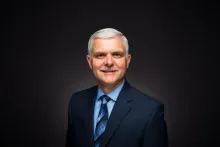

Mark Welch
This transcript was generated by AI and may contain errors. It is provided to assist those who may not be able to listen to the message.
Now, I was going to ask you if you remembered that you are the temple of the living God. And if you were paying attention to the sermonette, Mr. Daniels did tell us, he reminded us, that yes, we are the temple of God. We are the temple of God individually and collectively. And let's turn to 2 Corinthians 6, 16. He referenced it, read a bit of this, and let's look at it again. Paul makes this point very clear in the New Testament that we are to be considering ourselves as part of the temple of God. And so, in 2 Corinthians 6, verse 16, as we heard earlier today, Paul is encouraging the followers of Christ to separate themselves. They begin thinking of themselves differently than the way they are brought up, differently than the society around them.
He urged them to reject the beguiling ways of believers and of idol worship.
Ancient Israel had the same problem, as we recall. And so, he writes 2 Corinthians 6, verse 16, What agreement has the temple of God with idols?
For you are the temple of the living God. As God has said, I will dwell in them and walk among them. I will be their God, and they shall be my people.
Then, over in Ephesians 2, verses 19-22, Ephesians 2, verses 19-22, Paul makes clear that as the temple of the living God, we are united. We are united in one, not by a piece of paper, not by a badge or where we wear our clothes or anything like that, but we are united as one through God's Holy Spirit living in us. And we are founded upon the chief cornerstone, Jesus Christ. Ephesians 2, verses 19, Paul writes, Now therefore you are no longer strangers and foreigners, but fellow citizens with the saints and members of the household of God, having been built on the foundation of the apostles and prophets, Jesus Christ himself being the chief cornerstone, in whom the whole building, being fitly together, grows, it grows into a holy temple in the Lord, in whom you also are being built together for a dwelling place of God in the Spirit.
And so Paul takes effort to make clear that God's temple is now his church. The people in whom he dwells is a spiritual body, it's in the people of whom he dwells through his Holy Spirit. These saints and members of the household of God, as he said, have been begotten of the Father through the indwelling of his Holy Spirit. Therefore, they and we, if God's Spirit dwells in you, we are holy. We are set apart. We are uncommon and distinct spiritually from the vast majority of humanity.
At this time, we are the temple of God, called to love and to serve the Father and his Son, and we are also called to love one another.
Now, we individually and collectively are not the first temple made for God.
We are not the first temple made to honor in his holy name. That designation belongs, of course, to the temple that King Solomon built. And that masterful work of devotion, engineering, and craftsmanship was indeed a place to worship God. And God accepted that first temple. He placed his presence there.
But sadly, through the success of generations, centuries go by, the children of Israel increasingly turned from God and neglected his temple, in part because they are also neglecting God. And in due course, God rejected that first temple, and it was destroyed.
Could we ever neglect God? Could we ever neglect God? Could we ever be rejected from being the temple of the living God? And the answer is, yes, we could. But the good news is that God allows to us the capability to make right choices, part of what we heard about in the sermonette today. He allows to us the capability to make right choices so that such a fate would never happen to us that we would ever be rejected of God, or that we would reject God. Now, the historical example of Solomon's temple and the people who worship there provides to us several vital lessons to help us evaluate our spiritual condition so that we will remain strongly founded on Jesus Christ, that chief cornerstone. And so we're going to be making some comparisons today. And I've entitled the sermon, Keep Removing the Rubbish.
Keep Removing the Rubbish. Sounds like I hit home with some of you already.
And I'm going to have to take a swig of water here. Excuse me.
Keep Removing the Rubbish. So let's begin in looking back in history to the ancient time during that first temple. Let's turn to 1 Chronicles, chapter 29, if you would. 1 Chronicles, chapter 29 and verse 1. And we're going to notice some basics. We're going to notice specifically here, for whom and why the temple was built. For whom was the temple built and why? And we find that answer in 1 Chronicles, chapter 29, verse 1. It tells us here, we actually find King David's announcement. It's an announcement by King David himself that God had chosen his son Solomon to build the temple. And the work would be a great work, not just because it was big, it would be a big building, but it would be a great work. It would be great because the temple was not being made for man. Let's look at that. 1 Chronicles 29, verse 1. And furthermore, King David said to all the assembly, all the people gathered there, leaders, great and small, he said, My son, whom alone God has chosen, is young and inexperienced. He's going to be new at this job of kingship. He is young and inexperienced, and the work is great because the temple is not for man, but for the Lord God, for the eternal God. And then furthermore, let's look down to verse 16. We find the answer of why it was built. Verse 16, same chapter, the temple was to honor God's holy name, we are told. And David adds, read here, O Lord our God, all this abundance that we have prepared to build you a house for your holy name is from your hand, and all is your own.
They are going to build a house for his holy name. And thus the temple was built for God to honor his name, holy name, two very important points to consider. And so to take kind of a shortcut through this long, very interesting history, it's very worth our time to read. What we find is that indeed, Solomon built God's temple, and it was truly a spectacular building. For instance, now if you turn with me to 2 Chronicles chapter 3, just a few pages over, next book, but just a few pages over, 2 Chronicles 3, verse 5 through 7. We find, described for us here, how just a small part of the temple, its spectacular qualities, how Solomon overlaid the interior of the temple, as we read here in verse 5, how he overlaid the temple, the interior, the cypress, the wood that composed it with fine gold. And he carved palm trees and chain work on it. In verse 6, and he decorated the house with precious stones for beauty and gold, and the gold was gold from Parvaim. He also overlaid the house, the beams, the doorposts, its walls and doors with gold, interior covered with gold, and he carved caribim on the walls. And then down in verse 15, some other amazing details about the temple, verse 15, it tells us that he made in front of the temple two pillars, 35 cubics high. Now best I can tell, that would have been about 52 feet high, 52 feet high. And the capital that was on top of each of these two pillars was five cubits, meaning just the capital portion alone was seven and a half feet high. So we're talking almost 60 feet. If we add it together, it'd be a 60, nearly 60 feet high. And more amazing, these pillars were not made of some big pine tree like we might find here in East Texas. These pillars were made of bronze. And just a side note, you can write down 1st King 715. 1st King 715 adds that bit of detail. The two pillars were made of bronze. Again, the temple was truly unique. There is not another building like it. Now in 2nd Chronicles 6, verse 14, let's read some more. 2nd Chronicles 6, 14, here we find Solomon's prayer of dedication.
And the temple is dedicated, it was finished, and the best we can ascertain is approximately around 937 BC. 937 BC the temple is dedicated. And so Solomon prayed, as part of this dedicatory prayer, his prayer of dedication, he prayed that the temple would help to maintain God's covenantal relationship with the children of Israel. As we know, God is all about relationships. This temple was to help Israel have that good and right relationship with God. Solomon's going to pray that it was a relationship established upon faithfulness, mercy, and forgiveness.
And so in verse 14, we read, and he said, Lord God of Israel, there is no God in heaven or on earth like you who keep your covenant and mercy with your servants who walk before you with all your with all their hearts with all their hearts. Now to verse 18, and Solomon adds this, but will God indeed dwell with men on the earth? Behold heaven and the heaven of heavens cannot contain you. How much less this temple which I have built. And Solomon humbly recognized that despite all its grandeur, despite all its detail, its pillars, everything they put into it, and the expense and time included, it could not possibly contain God. Solomon knew no structure could house God because God is no idol. Solomon knew that. And he was certainly no fantasy of human creation.
Solomon also prayed that God would always watch over his people, be merciful and forgiving. We see this in verse 19 through 21. Continuing in his prayer, Solomon said, regard the prayer of your servant and his supplication, O Lord my God, and listen to the cry and the prayer which your servant is praying before you, that your eyes may be open toward this temple day and night. He wanted God to keep his eye in the temple day and night. And toward the place where you said you would put your name, that you may hear the prayer which your servant makes toward this place. And may you hear the supplications of your servant and your people Israel when they pray toward this place. Hear from heaven, your dwelling place, and when you hear, forgive. Forgive us.
And so again, we see that the temple was to be a place where God's people could turn their hearts, their thoughts, their minds towards God in worship, and so build an enduring, covenantal, loving relationship with God. And with the conclusion of Solomon's prayer, something truly astonishing happened. Look what God did. 2 Chronicles 7, verses 1-3. With the conclusion of his prayer, God truly did an astonishing thing. Here we read 2 Chronicles 7, verses 1-3. When Solomon had finished praying, fire came down from the heaven. Fire came down from heaven and consumed the burnt offerings and the sacrifices. And the glory of the Lord filled the temple. And the priest could not enter the house of the Lord because the glory of the Lord had filled the Lord's house. And when all the children of Israel saw how the fire came down and the glory of the Lord on the temple, they bowed their faces to the ground on the pavement, and they worshiped, and they praised God, saying, For he is good, for his mercy endures forever. Could you imagine that? Your mind's eye. It seemed like another building, a spectacular building, another fine day, and all of a sudden that miraculous event, fire from heaven and filling the temple. I would be very scared. I would have probably fallen, I hope, flat and forward towards the temple at that presence. And what we see described here, the glory of God's indwelling presence filled the temple. Scholars tell us this is God's showing of the Shekinah glory, is what it's often called, what they would call as the indwelling presence of the Shekinah glory. God's presence was made apparent in the temple. His presence in the temple made it holy. Now, of course, as a little aside here, we find a parallel between God's indwelling presence of the Shekinah glory in the temple with the indwelling of God's Holy Spirit and those whom he is called now to be part of his spiritual temple, those who are called and chosen and who remain faithful to God. The presence of God makes both holy. The temple then, in his presence in us now, makes us holy. Jesus solemn built the temple for God and to honor his holy name, so should those who have accepted God's calling and undertaken the process of conversion to do good works to the glory and honor of God. We are holy. Now, that was a wonderful beginning to God's temple, wasn't it? Talk about the astonishing things. It was long remembered for decades, stories told for a long time. It was remembered. But over the ensuing centuries, Israel's and Judah's reverence for God wavered. It proved wishy-washy, to use a word from our day and age. They didn't stay solidly with God. The history of Israel and Judah is a history of an ever-increasing preference to do exactly what the temple is supposed to keep them from doing.
They ever increasingly had a preference to worship idols, worship idols of the surrounding nations, of the surrounding people, the people they lived amidst. And God's magnificent and beautiful temple actually became a place for idol worship. It actually became a place where idols and other repulsive things and activities and behaviors occurred. I'm going to read about that here in just a bit. Now, there were times when a righteous king, someone who truly feared God, would arise and lead the nation to a momentary, sadly it was somewhat momentary, repentance and revival of godly worship. But sadly, those efforts to restore righteous worship of God seldom outlasted the life of that king. Hezekiah and Josiah were two such kings that we're going to consider now, two kings of Judah. They tried to revival, they accomplished a revival, but did not stick. It did not stick. So let's turn to 2 Chronicles 29. That's where I think I left you. Let's look at 2 Chronicles chapter 29 now, and here we're going to read about Hezekiah. Now, Hezekiah, we can learn as we read the history. History tells us in the scripture that Hezekiah did not follow the evil ways of his father. His father, King Ahaz, with the Z, had worshiped the gods of Damascus, as Hezekiah's father had turned in wrath against God. And we can read in chapter 28 of 2 Chronicles how his father, King Ahaz, had cut up the special and holy utensils and the vessels actually used in the temple of God. He cut them up and used them. He valued them for their gold. And he closed up the doors of the temple. We are told in 2 Chronicles 28, 22, 24, he actually then barred the people from worshiping God in the temple that had been made for God. He had locked the people out. Now, Hezekiah was unlike his father. Hezekiah did revere God. He had a fear of God. We've been hearing about the fear of God. Hezekiah feared God, and he revered God. He worshipped him sincerely from the heart. In 2 Chronicles 29, verse 3, we read that upon assuming the throne, Hezekiah acted immediately to purify the temple and to restore the worship of God. In verse 3, we read, In the first year of his reign, in the first month, Hezekiah opened the doors of the house of the Lord. They'd been locked up, remember. He opened the doors of the house of the Lord and repaired them. And then he brought in the priests and the Levites, and he gathered them in the east square. And he said to them, gave them their marching orders, he said, Hear me, Levites, now sanctify yourselves, sanctify the house of the Lord God of your fathers, and carry out the rubbish from the holy place. That's part of the title of my sermon.
Verse 6, why is there rubbish? For our fathers have transpressed and done evil in the eyes of the Lord our God. They have forsaken him, have turned their faces away from the dwelling place of the Lord, and turned their backs on him. They have also shut up the doors of the vestibule, put out the lamps, and have not burned incense or offered burnt offerings in the holy place to the God of Israel.
And how do the Levites respond to Hezekiah? Were they slow about it? No. They responded very quickly with great energy in zeal. Verse 15, same chapter. Verse 15. And they, the Levites, gathered their brethren. They sanctified themselves, and they went according to the commandment of the king, at the words of the Lord, to cleanse the house of the Lord. And then the priests went into the inner part of the house of the Lord to cleanse it, and they brought out all the debris, all the debris that they found in the temple of the Lord, to the court of the house of the Lord.
And the Levites took it out from there and carried it to the brook, Kidron. Now they began to sanctify on the first day of the first month, and on the eighth day of the month they came to the vestibule of the Lord.
It took them a long time to make their way through all the debris. And so they sanctified the house of the Lord in eight days, and on the 16th day of the first month they finished. It was not an easy task. But notice that the Levites did give great effort to remove it from the temple. Much rubbish, which we're told in verse 5 of this chapter, the word there is niddah, n-i-d-d-a-h, n-i-d-d-a-h, and they also removed debris.
Verse 16, debris, the Hebrew word there is tuma, t-u-m-a-h, t-u-m-a-h. Now both Hebrew terms mean impurity, uncleanness, moral filthiness, moral filthiness, such as related to idols and idol worship. They weren't just taking out, well, what would they have used for food wrappers back then? They weren't just sweeping up the dust. There were immoral, wicked, evil things in the sight of God in that temple. And such rubbish and debris in the temple was an abomination to God.
He called it, they called it, we would call it trash. And their diligent efforts to remove the rubbish signified their profound repentance. This was all part of their repentance, their way of showing God how seriously they wanted to be right with Him. And their swiftness to purify the temple and to reinstitute God's system of worship reflected that eager zeal for that right relationship to be restored. Now the end result of Hezekiah's and Levite's action was an immense second pass over observance and the restoration of God's favor upon them. Their zealous actions of repentance greatly pleased God. And God blessed them, and especially so when he miraculously, in short time later, would deliver them for the Assyrian siege of Jerusalem, as we can read later on in the history of 2 Chronicles.
And so that was, that would have been a wonderful thing to see. We all like seeing things that run down and worn out and trashed, fixed up. How many of us have not seen HGTV and fixing up down homes? Can you imagine the joy in the righteous hearts of men and women and children seeing God's temple cleansed, made right? Can you imagine the joy in God's heart seeing some joy in God's heart, seeing such wonderful action from his people?
But sadly, you've read the history, I'm sure. We know it, that too didn't last. Judah's zeal for God would prove to be short-lived. Hezekiah's son, Hezekiah, had a son named Manasseh. And Manasseh's son, Ammon, well, Manasseh and Ammon both were evil kings. They were evil kings, and they were known for idol worship and debauchery. It seems like as the years went by, the evil worsened. During their reigns, the reigns of Manasseh and then Ammon, Judah turned increasingly away from God.
And again, the temple of God became a place of false worship, idol worship, and it seems worse than ever before.
Now, Hezekiah's great-grandson would finally return back to Hezekiah's way. His great-grandson was named King Josiah. King Josiah was a righteous king. King Josiah, like his great-grandfather, feared God and revered God. And so, it's during Josiah's reign and with similar zeal that Josiah restored a right relationship with God by once again removing the rubbish from the temple and restoring God's system of worship. And let's read a bit of his efforts now in 2 Kings. We'll go back a few books to 2 Kings 23. In 2 Kings 23. Now, if you look at the history and we try to figure out the chronology, it's just been a little over 60 years since the end of Hezekiah's reign and the temple within 60 years has been trashed and filled up with idol worship and all sorts of wickedness. And so, it's under Josiah's reign that these workmen were making repairs on the temple, cleaning it up again. And while they were working in the temple, the workmen found a copy of the book of the law. It seems it was a rare find. It seems it had other copies were not found. They found this one. And when Josiah heard its words of judgment read out loud to him, when he heard its words of judgment upon Judah for its rejection of God, righteous Josiah's reaction to hearing the book of the law read to him, he tore his clothes and he mourned. That's what the history tells us.
And instead of ignoring God's warning, instead of ignoring His judgment to come, and instead of turning to other gods, hoping to find a stronger God that could protect him from his father's God, Josiah turned to God and urged the people to get right with God. He bestirred himself and his people to repent. And so in 2 Kings 23, 2 through 4, we see a time of removing of rubbish again. 2 Kings 23, verse 2, The king went up to the house of the Lord with all the men of Judah, and with him all the inhabitants of Jerusalem, the priests and the prophets, and all the people, both small and great. And he read in their hearing all the words of the book of the covenant. He's going to let them hear what he heard. All the words of the book of the covenant, which had been found in the house of the Lord. 3 And then the king stood by a pillar, and he made a covenant before the Lord to follow the Lord, and to keep his commandments, and his testimonies, and his statutes, with all of his heart, and with all of his soul, to perform the words of this covenant that were written in this book. 4 And all the people took a stand. They stood up for the covenant. They took a stand with it. 5 And the king commanded Hilkiah the high priest, the priest of the second order, and the doorkeepers, to bring out of the temple of the Lord all the articles that were made for Baal, for Asherah, and for all the hosts of heaven. 6 And he burned them outside Jerusalem in the fields of Kidron, and he carried their ashes to Bethel. So as his great-grandfather had done, great-grandfather Hezekiah had done, Josiah removed the rubbish from the temple. Now let's notice some of the filth they removed. Continuing, verse 6 through 7 now. 7 And he brought out the wooden image, what some of your Bibles, Old King James, may have said, Asherah. That was the type of idol that God has Asherah. He brought out the wooden image, or Asher, from the house of the Lord to the brook Kidron outside Jerusalem, and he burned it in the brook Kidron and ground it to ashes. And he threw the ashes on the graves of the common people, made it a curse. You want to make sure no one even takes a splinter of that burnt wood and turn it into some kind of idol. And then he tore down, and get this, he tore down the ritual booths of the perverted persons that were in the house of the Lord, where the women were hanging for the wooden image. Now, what is that? What is this exactly? When we look at the Hebrew, and we try to figure out what these words really mean, what he's talking about, let me go back, we'll read verse 7, and include the meaning. He tore down the ritual booths in the house of the Lord, remember, in the temple of the perverted persons. The Hebrew word for perverted persons is kedashim. It's Q-E-D-E-S-H-I-M. And its definition is, it refers to those people practicing sodomy and prostitution and religious rituals. So this is part of the fertility cults of the time that had been going on in God's temple.
You know, it's just incredible. That's what had been going on. In the women reference, the women were the women wolf hangings for the wooden image. Those weavings, those tapestries that they were making were to drape over and clothe the asherah, the asherah, the wooden idol. And so is their way of decorating their faults idols in the temple of God. Let's look at verse 11, continuing on. Here's what else Josiah had to do. And then he removed the horses that the kings of Judah had dedicated to the son, at the entrance to the house of the Lord. By the chamber of Nathan Malek, the officer was in the court. And so they actually had these horses that the kings of Judah dedicated to the son. It sounds similar to what the ancient Greeks later had at honor Apollo. They'd have horses. The horses of Apollo would draw the sun in the worship of Apollo, the sun god.
It seems the ancient Assyrians, Babylonians, others had something similar in the neighboring religions. And he burned the chariots. We see it here. And he burned the chariots of the sun with fire. And the altars that were on the roof, apparently on the roof of the temple as well.
The altars that were on the roof, the upper chamber of Ahaz, which the kings of Judah had made. And the altars, in reference here, the side note I find in some Bibles, the altars for all the hosts of heaven, which Manasseh had made in the two courts of the house of the Lord. The king broke these down and pulverized there, and he threw their dust in the brook, Kidron. So it's really amazing when you try to picture this, not only were these detestable things in the temple, they're on the roof of the temple, they're in the courtyard, they're everywhere around God's holy temple. And when you think about all this, it is just really revolting. It is really disgusting. All these repulsive idols, altars to other gods, and then the sinful and abhorrent behavior that were part of the worship of these idols, these false gods, actually in God's holy temple. Just think of it. This is that once beautiful temple Solomon had made for God, and all the gold inside, and all the beauty, and all the hard work and effort they put in there to glorify God. They made it for God. They made it to honor His holy name. The same temple had the glorious appearing of the indwelling of God's presence, remember. God's presence had been in that temple. And so it's just incredibly sad and terrible, even just from a human point of view, what it was and what it had become, how very far the people had turned away from God.
And yet, the positive outcome of their actions was that King Josiah and his people then kept the Passover. They kept the Passover, as had never been kept for many centuries. The Passover marks wanting to have that right relationship with God. We read about verse 22, In such a Passover surely had never been held since the days of the judges who judged Israel, learned all the days of the kings of Israel and the kings of Judah. It was really a spectacular Passover. And of Josiah, God's word states this, verse 25, Now before him there was no king, speaking of Josiah, God said, to before him there was no king like him, who had turned to the Lord with all his heart, with all of his soul, and with all his might, according to the law of Moses. Nor after him did any arise like him. He's quite an amazing king. And what a powerful lesson we can take away from this. What a powerful lesson about repentance from the heart and about removing the rubbish from the temple of God. Removing the rubbish from the temple of God. What lesson might we, temples of the living God, individually and collectively, what lessons might we draw from this historical account the Bible records for here, about that first temple, about the removing of all this rubbish, all this trash? Of course, pretty simply, we need to be removing rubbish from our lives, from the way we are.
And what is our rubbish? What would our rubbish be? Well, we do live in the midst of a world that is seeming to turn even more quickly away from God than we've seen before in recent history, especially. We're living in a society that is shockingly more immoral than many of us have seen before. You know, where we live in, we're surrounded by this, our day in and day out lives. We can easily pick up some of the rubbish and debris of the unclean things, of the impure things, of the morally filthy things we see around us every day. Whenever we turn on the television, whenever we listen to our music, whenever we read, whatever we see going on in the streets and homes and workplaces of friends and neighbors around us.
These are things God would deem contrary to Him, much of it, in His way of life. Things like sin and lawlessness, rebellion, stubbornness. Now, can we be more specific in that? Are there more specifically things that we need to be in on guard against? And the answer is yes. Or more exactly, the Bible is rather specific. God is rather specific. Let's be turning to Galatians 5 16-22.
Galatians 5 16-22.
What rubbish do we need to be removing from our lives?
We don't want it to build up at all. The Apostle Paul provides us a good list of spiritual debris, we might call it, of spiritual debris in Galatians 5 16-21. It's a place for a good checklist. It's a place to start. Galatians 5 16. Paul writes, he says, I say then, walk in the Spirit and you shall not fulfill the lust of the flesh. The poles that you're wanting to give into temptations are sinful, of course. Verse 17, Paul writes, for the flesh lust against the Spirit. It's rebellious against the Spirit, against God's Spirit in us. And the Spirit is against the flesh. And these are contrary to one another, so you do not do the things that you wish. We know there's this tug of war in our hearts and minds. We don't want to do what we do sometimes, and we want to do what we don't do. Paul talks about that as well in Romans. Verse 18, but if you are led by the Spirit, you are not under the law, meaning you're not, if you're led by the Spirit, you're repenting, you're humbling yourself before God, you are not under the law, meaning the penalty of breaking God's law, the penalty of breaking his commandments, that penalty being death. Now here's a list of some of the rubbish, this checklist we need to be on guard against finding it in our hearts and minds, practicing it. Now the works of the flesh are evident, which are adultery, fornication, uncleanness, lewdness, idolatry, some of the same things, false worship that happened in the physical temple of Solomon. Idolatry, sorcery, but here's something else. Hatred, contentions, fighting.
Sometimes fighting can occur of attitudes of self-righteousness, differences of opinion, jealousies, outbursts of wrath, selfish ambitions, dissensions, heresies, envy, murders, drunkenness, revelries, and the like, of which I tell you beforehand, just as I also told you in the time past, it sounds like Paul preached this and he preached it and he preached it over and over again, as I also told you in the time past that those who practice such things, they make it a part of their way of life. They will not inherit the kingdom of God. Now just because we may slip into these things and get hateful, get have dissension in our midst sometimes, in our hearts, we may not practice it, but even a little bit of it in us, we need to be working to get it out.
I don't think any of us want to have or to keep any of these rubbishy things in our lives. We need to be removing them. We need to be removing them. So what can we do then? Let's talk about application. What can we be doing then to remove the spiritual rubbish and debris from our spiritual temple? And this list is where we have a checklist. What can we do? How can we get it out?
Well, here's three things that we could be working on. Here's three things that we should be doing. The first, practice living faith in the sacrifice of Jesus Christ. Practice living faith in the sacrifice of Jesus Christ. We cannot cleanse ourselves from sin as much as we want to, as much as we can strive to resist temptations, and as hard as we may strive to resist old habits and sinful habits, we just can't get rid of it by ourselves. We cannot remove the rubbish of sin on our own. We just lack the capability. It's not in our nature, but it is in God's nature to help us do that. Our willpower, our strength of faith alone, is just mortally insufficient. Only faith in the sacrifice of Jesus Christ, along with the faith of Christ in us, can help us get us pushing that sin out of our lives. Through Jesus Christ, no sin is too great. No sin is impossible for us to overcome, even those we've been struggling with since before we can possibly remember. No sin is too great or impossible for us to get rid of, to overcome.
In Philippians 4 verse 13, we're in Galatians, Philippians 4, 13, sometimes trying to get the rubbish out of our lives can be very discouraging. Sometimes we can be fearful that we're just not going to get it. We're not going to get rid of this. Well, I would encourage us to take heart. To take heart in hope and encouragement. In Paul's words here in Philippians 4 verse 13, Paul said, I can do all things through Christ who strengthens me. And that should be a scripture we keep in our minds day in and day out. I can do all things through Christ who strengthens me. So Paul reminds us that we must be asking for the strength of Christ's will and even of his faith to help us because ours alone will never be sufficient. We just can't have enough willpower to strengthen our own. We must pray to God, our Father, in the name of Jesus Christ, with profound and sincere trust in him, believing and knowing that he will supply our need. He will help us. And we have to do it. Pray this way. We may think, oh, my prayer will never be good enough. Yes, it will. It will. And God's the only one we can turn to for that help. Christ's precious sacrifice for our sins cleared the way for us to go to our Heavenly Father. We can go to him. And our Father loves us, too. And we can seek his help in our dire need to get rid of this garbage, this rubbish, in our lives. Let's look at Hebrews 10, verse 12-14. Hebrews 10, chapter 4, verses 12-14.
And we're reminded this is part of what Christ died for, to make this way directly to the Father available, so we might be forgiven. Hebrews 10, 12. But this man, Jesus Christ, after he had offered one sacrifice for sins forever, set down at the right hand of God. From that time, waiting till his enemies were made, his footstool. For by one offering he has perfected forever those who are being sanctified, who are being set apart, those who are holy, have God's Spirit in them. Now to verse 19, In full assurance of faith, having our hearts sprinkled from an evil conscience, and our bodies washed with pure water, let us hold fast the confession of our hope without wavering.
For he who promised is faithful.
Ancient Israel wavered again and again. They wavered in their trust in God. Paul's exhorting us, urging us not to waver.
My experience has been, if I ever have that terrible thought that I cannot pray to God, I cannot go to God about whatever it is, I better go to God.
Absolutely. Do not allow, we must not, we must not allow ourselves to ever think that we cannot talk to God. Even if we've done the same stupid sin 10, 20, 100 times that same day, you keep going to God. You keep going to God. Let's also read Titus chapter 2, verse 11 through 14.
Titus 2, 11 through 14. Now, this passage of Scripture reminds us that God's about God's love and how he's pulling for us and how he'll help us to live righteous lives. He's not against us. I said, Titus chapter 2, verse 11 through 14, God is not against us. God is not out to get us. He's out to help us. He wants to help us live righteous lives in him. Titus 2, verse 11. For the grace of God that brings salvation has appeared to all men, teaching us that denying ungodliness and worldly lust, that's our part, to try to turn from that, fight it, denying ungodliness and worldly lust, we should live soberly and righteously and godly, in the present age right now. And we're looking, we're to be looking for the blessed hope and the glorious appearing of our great God and Savior Jesus Christ, who gave himself for us that he might redeem us from every lawless deed and purify for himself his own special people and zealous for good works. Sometimes we may not feel very zealous. We may feel discouraged from trying to overcome sin. Ask God to help you stir up, to heat up those coals that fire of the Holy Spirit in you, to help you get energized to fight sin. We must be zealous for good works. He will help us to be zealous for good works. Just ask. So God the Father and Jesus Christ the Son have made it possible for us to repent from sin. What a great blessing. They've made it possible for us to have a one-on-one relationship with them and to remove all this terrible rubbish and debris from our lives. We simply need to practice living faith in Jesus Christ and go to God, believe and trust God, and do what He says. Now the second thing we can do, it's a matter of taking firm action against sin. Take firm action against sin. Point number two. I think we can learn from the actions of Hezekiah and Josiah and the Levites and the other zealous people we read about in Chronicles and Kings, how they were decisive and zealous to do what it took to remove the rubbish and re-establish God's way of worship, to re-establish a right relationship, faithful relationship with God. They model for us in many ways the sort of determined attitude, the sort of effort we need to be applying against sin in our lives. They knew God's Word, so they understood that God desired faithful obedience to Him, and they acted within their ability to remove the sinful things of behavior. They got the junk out of the temple. They acted with great enthusiasm to glorify God, to please God and not themselves. Their faith was reflected by their actions, their works of repentance. We need that same fervor and zeal and effort to stay near to God and let Him help us. We might remember tying this point into the previous one about practicing living faith and the sacrifice of Christ. The words of James, chapter 2, 26. James 2, 26. James wrote, For as a body without the spirit of dead, so faith without works is also dead.
And so faith is absolutely necessary, but we also need to put effort, actual behavioral change, actual choices, doing things differently. Faith in God requires firm actions. Confronting sin in our lives and its causes can be very daunting, discouraging. We all know it. We may think it impossible to repent. With God, all things are possible.
Who are you going to believe? Yourself or God's Scripture?
With the help of Christ dwelling within us by God's Spirit, He will help us. We must activate the choice to stay close to God, to draw upon His strength, to study His Word, to try to activate it as best we can, to resist temptation and sin. In Jesus Christ has gone before us. He has conquered sin and death.
In that regard, we might remember the words of Deuteronomy, chapter 6. Excuse me, Deuteronomy, chapter 31, verse 6. Deuteronomy 31, verse 6, I'll turn there and read it for you. Deuteronomy 31, verse 6.
What Moses told the ancient Israelites applies to us today.
Deuteronomy 31, chapter 6. Be strong and of good courage. Do not fear. There's that fear thing again.
Do not fear, nor be afraid of them, your sins, whatever's holding you back. For the Lord your God, your God, He is the one who goes with you.
He will not leave you nor forsake you. Through God's Holy Spirit, God is in us. He's with us. We don't have to go far to find Him. Ask. Seek and knock.
Jesus Christ will help us in our fight against sin. He will answer our prayers for help, especially in helping with the heavy lifting. Some of those things in the temple, that ancient temple, pretty heavy. God will help us do the heavy lifting, removing sin in our lives. We can do all things through Christ who strengthens us, and we must remain humble, sincerely repentant, and seek God's help. Then take action. Resist temptation and sin. I think you and I know what that might mean for each of us as individuals, what we might need to do. Now, the third point, and this is an attitude. It's a very dangerous attitude.
We must refuse to be complacent about sin. Refuse to be complacent about sin. Now and whenever we find sin in our lives is the time to take action, to act decisively, to repent.
We must not be complacent about sin, nor we should not be procrastinating about it. We should not tell ourselves, oh, yeah, I'll repent about that tomorrow.
Don't tell ourselves we'll deal with it tomorrow. I'll repent of that sin next year, or maybe when I feel better, or maybe when I get around to it. You see, tomorrow might not come for you. Tomorrow might not come for me.
We are not guaranteed tomorrow. We are guaranteed now. And as best we can, we need to be striving against sin, talking to God. James 4, verses 13-14. James 4, 13-14 warns against this sort of attitude of complacency, of putting things off.
James 4, 13. That's the attitude I'm focusing on here. James writes, James 4, 13, come now, come now at this time. Come now. He's not chiding. That's not what now means here. Come now means at this time. It's n-y-n-n, Greek word, nyn. Come right now at the present, right now. You who say today or tomorrow we will go to such and such a city, we'll spend a year there, we'll buy and sell and make a profit, whereas you do not even know what will happen tomorrow. We can talk about that in planning our vacation. We might talk about that in planning, oh, we're going to go find a bargain at the mall. You don't put off, you don't make plans about taking care of sin tomorrow. It has to be now. God allows us to act against sin. We'd be most wise to do so. To not do it or knowingly postpone repenting against sin is itself a sin.
Look at James 4, 17. You're still there in that chapter. James 4, 17, James writes, Therefore to him who knows to do good and does not do it, to him it is sin. If you know to repent and you're not doing it and you're complacent putting it off, you've just compounded your sin. You've just made it worse. And so we must confront our sins, take steps to remove them from our lives, and not just get used to living with the sin. Now, if I can use a house cleaning metaphor, I do know a little bit about house cleaning.
We need to do more than just chase around those little dust bunnies of our lives. You ever do that in your house? You can't ever quite seem to get them. They get bigger and bigger under our beds. A terrible thing. I'm not confessing anything. But it happens. We shouldn't be chasing around the little dust bunnies of sin.
They're gross. They need to be rid of. They need to get out. We need to be sweeping them out of our lives. We also need to keep pushing and shoving out of our temple those huge sinful habits that we may allow to pile up in the midst of our hearts. Just as we have clutter in our houses, sometimes we have clutter in our lives and our hearts we need to get rid of. We need to quit ignoring it. We need to quit living around it, putting up with it.
Now's the time and the best time to be cleaning the temple of God and God will help us.
And so those are three points. Now, give me time. I'll come up with lots more points and sub points. And you have your points. There are always these are just three practical ways for removing the rubbish from our hearts or minds. Practice living faith. Take firm action against sin. Refuse complacency about sin. We do that, then truly we can be removing the rubbish in our lives.
And it begins with placing our hope of salvation and the sacrifice of Jesus Christ.
It's not just action. It has to be faith and action.
And so it is always time then, as we should now know, to be scrutinizing ourselves for sin and as to whether we remain firmly founded on Jesus Christ, that cornerstone. God holds each one of us accountable for how we deal with sin, just as God did not ignore, historically, the sinful rubbish and debris in his temple of Jerusalem.
So he will not ignore the sin in those whom he calls his temple today. And so we each need to ask ourselves this question. Am I allowing rubbish to gather in me?
Now, wouldn't it be a shame? What a shame it would be to become so distracted by all these crises and problems, what some of us feel obviously is a disaster in the moral realm and other realm, all around us, all the problems of our times, the crises. Wouldn't it be a shame to get so focused on all those things that we would neglect to deal with sin in our lives?
You see, it's the sin that can keep us from salvation, unrepentant of sin. As long as we're working at it, as long as we're going towards God, we'll stay right with God.
Now and always is the time to bestow ourselves, and with the help of God, his word, spirit, we can overcome sin. We can get rid of the rubbishy, sinful attitudes, thoughts, and behaviors from our lives. And why do we want to do that? We want to do that so that we will forever be a beautiful temple to the glory and honor of our Heavenly Father.
