

Frank Dunkle
This transcript was generated by AI and may contain errors. It is provided to assist those who may not be able to listen to the message.
Well, good afternoon, everyone. I see a fairly good crowd here anyway. There are a lot of people over in Lansing today with all the teen activities over there and the teen bible study and everything.
I really appreciate the sermonette. You know, anger is a big problem today and that church in Texas was one of those a couple weeks ago or whatever and a man got angry and went in there and shot three people outside and another 23 inside or something like that.
And I just want to say we have good security here. We always keep the back door locked and we have Dr. Comerchusi watching the front area there, so because you just never know when something like that might happen. So we have some special security here as well to hopefully prevent anything like that ever happening. Hopefully, it never will, but it's a horrible thing to happen, to have go to church even though we don't understand the truth, but go to church to worship and then end up something like that, having 26 members of your congregation killed. So anger is a huge problem today in our society and probably a lot of reasons for that. But anyway, this particular Sabbath that we're observing today is also a very special Sabbath, special day, which today falls being November 11th or Veterans Day. What was that day originally called? A lot of you probably know it was originally called Armistice Day. The word armistice means a temporary stopping of warfare by mutual agreement until a formal peace treaty is signed by the warring parties.
Why do we celebrate on November 11th? Because at 11 a.m., on the 11th day of the 11th month in 1918, a little over 100 years ago, Germany signed a peace agreement with Great Britain and France to end the hostilities of World War I. The formal peace accord was actually signed about six months later. When you think about World War I, because that was before our time, but how many died in World War I? I looked it up and they said about 18 million people died in World War I. A lot of them were civilians, a lot of civilian deaths. But of those 18 million, over 53,000 of those who died in World War I were American soldiers. America, of course, ended World War I a little bit late. I think they were in 1917 and then 1918. But over 53,000 American soldiers died in World War I.
And a few years later, after they agreed to end those hostilities, in fact, on March 4th, 1921, the United States Congress approved the burial of an unidentified American soldier from World War I in the plaza of the New Memorial Amphitheater. They approved it at that time. That's located, that amphitheater is located on the top of a hill overlooking Washington, D.C. in Arlington, Virginia.
Of course, right now it overlooks Arlington National Cemetery. But on November 11th, actually, in 1921, an unknown American soldier was brought back from France and was interred below there at a marble tomb there. And that hill overlooking Arlington Cemetery that was now called the Tomb of the Unknown Soldier. It was never for my name, but it became known as the Tomb of the Unknown Soldier. And when they deterred that person there, when they buried him there, he was highly honored for giving his life for his country. Later, unknown soldiers from World War II and Korea were also interbed beside the unknown soldier from World War I, and it became the Tomb of the Unknowns, plural, but it's still most often called the Tomb of the Unknown Soldier.
Later, a soldier from Vietnam was buried there, but they later found out who he was.
Some information was there. He was identified, and once he was identified, then he was removed and given to his family. So right now there are just three unknown soldiers buried there, as far as I know. But on the western panel of the tomb was described the words, Here rests in honored glory an American soldier known but to God. In November 1925, it was decided to post a guard at that tomb, the Tomb of the Unknown Soldier, to make sure the tomb was always be highly honored and respected. People wouldn't go up there and just, you know, have their picnic lunch there, so they wanted that to be kind of sacred area.
The first 24-hour guard was posted there on midnight on July 2nd of 1937. That was the first 24-hour round of the clock guard. And the Tomb of the Unknowns has been guarded continuously 24 hours a day, seven days a week, since that time, since July 2nd of 1937. It's extremely high honor to be chosen to be a guard of the Tomb of the Unknown Soldier, and it's not easy to qualify. There are very strict qualifications. Tomb guards are required to memorize 17 pages of information about Arlington National Cemetery, including the names and locations of everyone who's buried in the National Cemetery. Over 300 people have to know the names and a little bit about each one and where they're buried there. 17 pages worth of information. Each duty can last from anywhere from 30 minutes to two hours, depending on what time their duty is. And they have to, by the time they're on duty, have to press their uniform, it has to be pressed and cleaned, and they have to polish their shoes. And they must, the guards have to get a haircut once a week, make sure their hair is always trimmed and neat. They have to commit two years of their life to serving as the guard of the Tomb of the Unknown Soldier. And after those two years, they are given a special pin of recognition that they can then wear, which shows they have been served on that place, been a guard of the Tomb of the Unknown Soldier. It's the second rarest pin that's made. The only other one is an astronaut pin, but it's very rare to have that pin. And they get to keep that pin, and, but to keep that pin, I should say they have to sign an agreement in order to be, keep that pin, they can keep it and wear it the rest of their lives, but they have to sign an agreement. They have to agree to never drink any alcoholic beverage for the rest of their life, to ensure they would never get drunk, to dishonor that position. And they would also have to agree to never swear in public for the rest of their lives, or do anything that in any way would disgrace their uniform, whether on or off duty. If they're caught violating any of these agreements that they have to sign, then they, the pin is removed, and they have to return the pin.
Currently, I think, from what I could find out, about 650 or so individuals wear that pin, including four women. Actually, four women have served as guards there and wear that pin today.
It's also worthy to note that the guards of the Tomb of the Unknown Soldier guard, regardless of what the weather is, I mean, it can be pouring down, it can be a downpour, it can be a blizzard.
They still guard that tomb. Those who are on guard duty. The only thing that would prevent them from being on guard would be a hurricane. Anything short of a hurricane, they stay on guard.
And while on guard duty, they follow a very precise procedure, which involves a series of 21 steps, taking precisely 21 seconds. Why 21 steps in 21 seconds? Because the 21-gun salute to a fallen veteran is the highest honor anyone can receive. 1954 President Dwight D. Eisenhower changed the name to Veterans Day, from Armistice Day to Veterans Day, to honor all veterans.
Guards also have special uniforms they wear while guarding the tomb, and the main thing that's different about that uniform is, regardless of what they have, they have a certain regiment in the Army. I think it's the third regiment of the Army, that they pick guards for the Tomb of the Unknown Soldier. And regardless of what their Army rank is, when the uniform they wear when they're guarding the tomb shows no rank. They remove the rank. Especially, the uniform does not have any rank displayed on it, regardless of what their rank might be. And the reason for that is because they want to make sure whoever is guarding the tomb of the Unknown Soldier, that their rank is subservient to whoever's buried there. And regardless of what the rank of who's buried there, the people guarding it want to make sure that they honor that person who's buried there by making sure that their rank is less than the rank of the person buried there. So they wear no rank at all to make sure that they don't have a higher rank.
Also, regarding the tomb, they, oh, I've mentioned that. So anyway, there's a lot of very high, high requirements. And it's a tremendous honor to be a guard of the Tomb of the Unknown Soldier. I just want to mention something I thought about doing this, but it just has to do with, you know, down in Heritage, down in Ann Arbor, as you might know, John Kozmalski owns that hall down there. And he's named it Heritage Hall. And around, if you've been down there, a lot of you have been down there, along the, around the walls of Heritage Hall, he has pictures of our founding fathers and different individuals there.
Plus, he has some of the founding documents, our constitution, other things there, Declaration of Independence, they're all also framed on the wall there as well. And so he's very patriotic there. And I wanted to see if there was one particular picture on the wall, and I looked over there, and there it was, underneath their clock, on one side of the wall. They had this picture I'm going to refer to a little bit later in the sermon here, because I want to talk about that particular individual, and even about that particular picture, and the timing of that picture. But I also want to mention that I joined the Coast Guard in 1963.
My first day in boot camp was May 1st, 1963. I brought a little insignia to wear just temporarily. My Coast Guard hat. That's not the one I wore in the service, it's the Coast Guard hat, but I am a veteran of the Coast Guard, and this is Veteran's Day, so I thought I might show that just for a moment. I was in boot camp in the Coast Guard down in what's called a government island.
It's a small island right off the coast of Oakland, and I was in boot camp for three months, May, June, and July of 1963. You served for 12 weeks, and I was told by a friend who I graduated from high school with, and he just lived down the street from us at the time, and he'd been in the Coast Guard ahead of me, and he told me, he said ahead of time, he knew I would sign up.
He said, when the first time you muster, he said they'll ask if you want to join the rifle guard. He says, volunteer for the rifle guard, whatever you do. And the reason he told me that is because during those 12 weeks of boot camp, you don't get any leave, and you're confined to boot camp, and it's very rigorous. But he said, if you join the rifle guard, you go out and you'll train for a couple hours a day on certain maneuvers, but then every weekend you'll get leave, because they use that Coast Guard rifle guard as very highly esteemed, and they've had very precise maneuvers.
They do with their rifles and so on, and they get to march in parades all around that time, southeast United States. We go to Salt Lake City, Las Vegas, San Diego, Sacramento, etc. Every weekend we go and do a parade. So I volunteered, and the very first day we mustered. All of us mustered. They're getting ready to start to drill us, the sergeant who was out there, or the commanding officer who was out there to drill us and train us. He came up to me first thing before we even started, and he said, you didn't even know whom I was, really, but he said, you step aside.
I thought, oh, what did I do? I didn't think I did anything, you know, I just showed up. But what he did then, he said, I want you to be a part of the honor guard, and I didn't know what that was, but what they do, they have four individuals that they select to be a part of the honor guard, and they have two that carry rifles, the two middle one carry rifles, the one on the one side carries a Coast Guard flag, and the other one carries the American flag, and it alternates, because of course, one carrying the American flag will then he'll graduate out of boot camp and go off into another part of the service, so then they have to replace that person with a new trainee that comes to come in and train, and so that's why they needed a new trainee at that particular point.
That's why he picked me. And the reason he picked me, he didn't know me from Adam, but he picked me because they want everybody about the same build and the same height, and I was a proper build, and I was exactly six feet high, and they want them all to be six feet high, just approximately, and so that was the only reason he happened to pick me, because I happened to fit the build and height that they wanted at that time.
But that was quite an honor to have that, and again, we rotated every time one, the one carrying the flag, graduated.
I carried the American flag for the last three weekends. I was in boot camp, and it's very interesting because you had to be trained how to handle that flag in a very, very precise manner, with a great deal of honor and respect. It had to be carried in a precise manner with the utmost care and dignity. I got to make sure it would never touch the ground. Before every parade, we had to make sure our shoes were polished and that our uniforms were pressed and clean.
We had to wear white gloves, because when you touch the flag, you didn't want any oil from your hand getting on, solving the flag. So we had to wear white gloves whenever we handled it, and we had to carry the American flag. You had to carry it in a very precise manner and be very careful how you carried it. We made precise maneuvers. We had to actually practice those maneuvers. Every day I was in boot camp, they would have the honor guard go off on their own, and they would, for two hours every day in boot camp, we got dismissed from class or whatever it was, and we would practice those maneuvers, because everything had to be very, very precise maneuvers in the way we did things. So we practiced for two hours every day, Monday through Friday.
And then we go off on the...they fly us somewhere on Friday in these big transport planes to Salt Lake City or wherever it was we're going to be in the parade on Saturday. But it was a tremendous honor to, when you get that Coast Guard regiment, to be in the honor guard, which led the regiment, led the Coast Guard regiment, and especially when you got to where you're actually carrying the American flag, and you're in this parade and people are actually cheering as you walk by. A lot of people, a lot of establishments, Honor Veterans Day, the Honor Veterans on Veterans Day, Bob Evans, the restaurants, for example, offer all veterans. If you show you're a veteran, even tell them you're a veteran. They will give you a free meal on Veterans Day. When I signed up for Social Security, I told them I was a veteran, and they said, show us your discharge papers, which I did, and then they add a small amount to your Social Security check. So if you're a veteran, you can get a little bit added to your Social Security check, just for being a veteran. And also, Chase Bank will give a free checking account to all veterans, regardless of whether you don't have to have a minimum balance. The same banks know you have to have a certain balance in there to give you free checking. But if you're a veteran, you show them you're a veteran, you can get free checking with no minimum balance. And there's other other establishments that also kind of give special thanks to veterans. I'll take that off now.
But what do all this have to do with the people of God, all of us, and with all the followers of Christ, whoever they may be? And what should Veterans Day mean? That's what I want to talk about today. I want to talk about things we can learn from Veterans Day, and we can apply in our lives, lessons we can learn from that. I've taken my title for today's sermon from what is written, some few words written on the very end of the tomb of the Unknown Soldier. My title is Known But to God. That was the last part of that, what's written there on that tomb, Known But to God, and that's my title. To what is our calling likened? Let's go to start with here. Let's go to 2 Timothy 2, beginning in verse 1.
Paul writing here to Timothy says, You therefore, my son, be strong in the graces in Christ Jesus, and the things that you have heard from me among many witnesses, commit these to faithful men who will be able to teach others also.
And then verse 3, he says, You must endure hardship as a good soldier of Jesus Christ. Of course, you're a soldier and you're in a war. You have to endure a lot of hardship.
And then he said, verse 4, No one engaged in warfare, entangling himself with the affairs of this life, that he may please him who enlisted him as a soldier. So our calling, then, is likened to that of a soldier engaged in warfare.
Of course, our warfare is spiritual. We are engaged in warfare, but our warfare is spiritual.
We are called to be, as the song says, Christian soldiers.
But now, what does it take to become a veteran Christian soldier?
One of the main definitions of a veteran is, quote, a person of long experience in a particular profession. Of course, our profession is being a follower of Jesus Christ.
So what, then, does it take to become a veteran follower of Christ?
Well, Paul actually tells us what it takes to become a Christian veteran right here in 2 Timothy chapter 2 in the verses we just read. Number one, it takes being faithful to what you have heard and been taught. As it says here in these verses we just read, the things you have heard from me, commit these to faithful men. Commit them to others who will hold to God's truth faithfully and pass it on to others. Number two, it takes and says here, enduring hardship.
You therefore must endure hardship. I want to take a little time talking about that, and this takes me back to Heritage Hall this morning. And one of the pictures they had on the wall, the John calls, he bought all these pictures that had them framed. He put them on there. That is his expense. But one of them was a picture of George Washington at Valley Forge. I mean, we talk about Valley Forge because that ties him with hardship, enduring hardship. But they've had a picture of George Washington at Valley Forge, excuse me, praying to God.
And he was on one knee because, like John calls along, he told me, he says the other knee was a bad knee. He had a problem with one knee and he could only kneel on one knee. But he's kneeling on one knee, praying to God at Valley Forge. That's a picture of one of the pictures on the wall down there in Ann Arbor. If George Washington and his Continental Army had not been willing to endure hardship at Valley Forge, there would probably be no United States of America today. By February of 1978, George Washington's Continental Army, because he was chosen to be the general of the Federal Army, and by February 1978, his army was starving. They were at Valley Forge and they were starving. One of the worst winters on record. The winter was too brutal for either side to engage in battle. So the British Army, they housed themselves. They took over Philadelphia at the time and they went in and they lived in some of the people's homes in Philadelphia. So they housed themselves in Philadelphia to keep the winter there. No, they couldn't fight. It was too brutal to fight. So they housed themselves in people's homes in Philadelphia, the British did. The Continental Army of George Washington had no such luxury. They pitched tents in an open field and then, very currently, the first month of that winter or so, they built little 14 by 16 foot log huts and they had 12 men in each hut. It was fairly crowded. Those huts had no furniture, no kitchen, and no bathrooms. You had to go outside in zero degree temperature if you want to go to the bathroom. And they had no flooring. The dirt flooring was covered with straw and the straw was infected with lice and maggots and there was very little food. The Continental Army is starving that winter and many actually do die of starvation at Valley Forge because temperatures at night would drop to zero or below. And most of George Washington men's have no overcoats and many do not even have shoes. Their foot were having rotted away many months before that.
So what do they do for their feet? A lot of them, they had their feet wrapped in rags and some just went barefoot. If you can imagine that. I mean, they're in a desperate and seemingly hopeless situation. It doesn't look there's any way they're ever going to win the Revolutionary War. In fact, their firearms, most of their firearms had rusted and were not usable.
And the British had a bayonet on every rifle. The Continental Army only had a bayonet on about one out of five rifles. So only about one out of five of the rifles even had a baronet and mostly they couldn't shoot the rifle because they were rusted for most cases. So they're in a really desperate situation. And yet it's amazing. No one desserts at that time. None of the soldiers deserted. Why not? Well, primarily because they see the courage and resilience of their leader, who was suffering along with them living in the very same conditions they're living in and who refuses to quit or give up or lose hope. In the end, Washington triumphs. And you wonder, well, how could he triumph over the British in a situation as desperate as that? What turned it around? Well, first of all, he read his Bible every day and he prayed every day.
And he prayed at this particular point of value. Forged he prayed for a miracle because he knew that was the only hope was a miracle. In March, that miracle came in the form of two generals who showed up at Valley Forge in March of 1978. One was a Prussian general by the name of Baron von Steuben. The other was a general by the name of Nathaniel Greene. Von Steuben brought in discipline and order out of chaos and he made them into a fighting force. He drilled them every day. He got them up, got them drilling, got them doing something. He made them into a fighting force.
He disciplined them. He got them to feel some pride, got them doing something rather than just sitting around freezing to death. And General Greene, he confiscated food and clothing from, he went from a 20-mile radius around Valley Forge to all the homes of civilians that were there. And some of those civilians were loyalists. They were loyal to Britain. The others were supporting the revolution. So he didn't know anyone to somebody's home, which side they'd be on.
But some were willing to, very willing to give food and clothing to General Greene for the Washington soldiers of Valley Forge. Others would not have been, but they confiscated the clothing of the ones that were loyalists. And so anyway, but they got enough food and clothing, General Greene did, to clothe the George Washington's Continental Army and to give them enough food so they could be revived and gain some strength. And by June, the Continental Army is ready to take on the British, having endured extreme hardship at Valley Forge. Now I want to look at another Christian veteran that's known in the Bible. It's mentioned in the Bible. Let's say, Paul. What about him?
Was he a veteran when it came to enduring hardship? That's what we're looking at right now, this quality of enduring hardship. Let's go to 2 Corinthians 11.
Most of us are very familiar with these scriptures, but 2 Corinthians 11.
1st verse 18. Paul here writing to the Church of Corinth says, "...seeing that many boast according to the flesh." Got a lot of these people going on boasting different things. He says, well, I can boast too if I need to do that. I don't like to do that, but I can boast. I got some things to boast about. Dropping down to verse 22, he said, "...are they Hebrews?
So am I. Are the Israelites? So am I. Are they the seat of Abraham? And so am I. Are the ministers of Christ? He said, I speak as a fool, but I am more. In labors, more abundant." And talk about enduring hardship. Look what Paul endured. In stripes above measure, in prisons more frequently, and deaths often. From the Jews, five times I received 40 stripes minus one. Three times I was beaten with rods. Once I was stoned. Three times I was shipwrecked. A night and a day I had been in the deep. In journeys often, in perils of waters, in perils of robbers, perils of my own countrymen, in perils of Gentiles, in perils in the city, in perils in the wilderness and in the sea, and in perils among faults of brethren, in weariness and toil, in sleeplessness often, even as a man at Valley Forge. In hunger and thirst and fastings and cold and nakedness, as Washington's army at Valley Forge also suffered and endured all those things as well.
But Paul was a veteran. He endured many hardships and losses, but he never quit and never gave up. What else does it take to become a veteran Christian soldier in addition to enduring hardship?
Well, three, it takes not being entangled with the affairs of this life. As it says here in Timothy, the description we just read, he said, no one engaged in warfare entangles himself with the affairs of this life. It doesn't say we can't deal with the affairs of this life. We all have to deal with things. It says we shouldn't be entangled in them. Entanglements can become a major distraction and can cause us to lose our focus and become distracted from the goal of our calling. And then we can become vulnerable to the enemy, because we know who the enemy is, who wants to destroy us. What does it take to become a Christian veteran? Well, three things here I mentioned. It takes being faithful to what we have heard and been taught, according to the truth. It takes enduring hardship and sticking with it, not giving up, not getting discouraged from that, keeping our mind focused on the goal, the calling, what lies ahead for us. And it takes continual focus by not being entangled with the affairs of this life. So are you and I Christian veterans? Let me ask this then. How many classes of Christian veterans are there? This applies to real veterans as well. And there's two classes. Two classes of real veterans and there's two classes of Christian veterans. Those who are known and those who are unknown are those who are known but to God. As the veterans who are buried at the tomb of the Unknown Soldier, they're known but to God. Now, the Bible is full of known veterans who lay down their life and sacrifice their life for God and for Jesus Christ and for the truth.
The whole Old Testament is full of them. You could spend several hours. But let's just look at the lives of three known Christian veterans. Here's the first part of the sermon. But before we look at the first bit of an example, I want to touch on another quality display by most veterans.
Because every once in a while, they'll interview a veteran. They come home, especially if they receive some kind of special recognition or an honor. In fact, recently, I think President Trump bestowed the Medal of Honor on a certain veteran who returned from, I forget what it was, from Afghanistan. I believe it was. But anyway, he was given the Medal of Honor. And then they got to speak afterwards. But at times when those veterans are interviewed for their bravery in battle, especially if they receive, again, like I said, special recognition like the Medal of Honor, they'll always say they were just doing their duties. This man did. He just received the Medal of Honor from President Trump. He said, I was just doing my duty. He said, the real men that should be honored are those who sacrificed their lives. Those are the men that should be honored. I was just doing my duty. The real heroes are those who gave their lives. So in other words, they always, those who receive that, those veterans, they almost always display an attitude of humility.
And a true Christian veteran will do the same. A true Christian veteran will always display a humble, repentant attitude, as in the case of this first example that we're going to look at. It's already been touched on in the sermonette, but I'm not going through it anyway. I appreciate the sermonette. He's already touched on this particular person. I'm going to touch on it again. That's Abel.
These are known Christian veterans. The first known Christian veteran I want to talk about today is Abel. But the first thing I want to ask is, why would Abel be considered to be a veteran?
Because his service seems to have been very short-lived. Or is it short-lived? I think it is. I don't like that word, though. It doesn't make sense to me. But short-lived, short-lived.
Look at what the New Testament records of Abel in Hebrews 11. He was 11, verse 1, Now faith is the substance of things hoped for, the evidence of things not seen. For byeth the elders obtained a good testimony. And one of those who obtained a good testimony was Abel, as we read in verse 4. By faith Abel offered to God a more excellent sacrifice than Cain, through which he obtained a witness that he was righteous. God testifying of his gifts, and through it he being dead still speaks.
See, his record of his service may have been short-lived. It doesn't tell a lot about Abel.
Seems like he died fairly early, and his service is a Christian veteran. But his example, it says here, still speaks to us today, 6,000 years later. That makes Abel a Christian veteran.
His example lives on long after he died. And Abel was the first to literally sacrifice his life in line of duty. Why was Abel's sacrifice more excellent than Cain's? I mean, the reason was given in the sermon yet, but I want to expand on it. Let's read Genesis 4 again and analyze it a little bit to even find out a little bit more about that. Genesis 4, beginning in verse 1.
Adam knew his wife, and she conceived and bore Cain, and said, I have acquired a man from the Lord. And then she bore again, verse 2, this time his brother Abel. And we don't know this, but there's some commentary that he may have been twins, because the Hebrew indicates it could have been translated. Then she added to bear his brother Abel. It sounds like Abel was born right on the heels of Cain. So they might have been born at the same time, or they might have been twins. We don't know for sure, but that's an indication it could be. Then she bore again, this time, his brother Abel. Now Abel was a keeper of sheep, but Cain was a tool of the ground. And in the process of time it came to pass, it came about an offering to the fruit of the ground to the Lord.
Now, in the process of time literally means at the end of days.
That would indicate what? It would indicate there was a specific day, and a specific occasion on which they were to bring their sacrificial offering.
A specific day, and occasionally they both knew of in advance. And since this is, we'll see in a moment this would be a grain offering that would indicate it might possibly, it was a holy day, it might possibly be in Pentecost, because that's when we offer grain offering on Pentecost.
Going on, though, verse 3, at the end of days it came to pass that Cain brought an offering to the fruit of the ground to the Lord. And offering the fruit of the ground was a grain offering.
Abel also brought of the first born of his flock. And that was like he brought an additional offering and of their fat. And then in the latter part of verse 4 it says, And the Lord respected Abel in his offering, but he did not respect Cain in his offering.
Notice it does not say, it was just their offerings that were respected or not respected. It also, it was the individuals themselves that were either respected or not respected. And it says, The Lord respected Abel, but he did not respect Cain. So it was more than just the offering, the individual themselves. There's something about them that showed respect and they got respected in some things that he didn't. Didn't respect Cain. So there's more here than meets the eye. Again, like I said, an offering of the fruit of the ground is a grain offering. And the structures for that are given in Leviticus 2. You get all the instructions for a grain offering. So Abel may not have followed those instructions and Cain may have. We don't know, but that could have been the case. But regardless of that, there is more to the story.
Abel here went beyond the grain offering. As it tells us in verse 4, that Abel also, in addition, he also brought of the firstborn of his flock, which would be more like a Passover sacrifice.
What would that indicate in regards to Abel's attitude and frame of mind?
What does Hebrews 9.22 tell us? We don't have to turn there.
Hebrews 9.22 tells us that without the shedding of blood, there is no remission or forgiveness of sin. So Abel, by also sacrificing the firstborn of his flock, is acknowledging that he is a sinner who needs forgiveness. It indicates that Abel had a humble and repentant attitude and he wanted forgiveness. Well, it does not indicate that Cain had that same kind of an attitude.
There was obviously something wrong with Cain's attitude and frame of mind. It was indicated in the latter part of verse 5. And Cain was very angry. It brought out in the sermon. Cain was very angry and his continents fell. He had a problem with anger. He had a problem with his attitude.
And he was jealous. There's jealousy there. To which God replied here, Genesis 4 verse 6. So the Lord said to Cain, why are you angry and why is your continent falling?
Again, in that goes point in the sermon, if you do well, will you not be accepted? If you do not do well, sin lies at the door and its desire is for you, but you should rule over it.
Indicating that Cain did not do well and that sin was lying at the door in the case of Cain, and that Cain was not ruling over it. That Cain was not ruling over his anger and his wrong, hostile attitude and his feelings of jealousy. Cain, in that sense, and because of those had it that wrong from a mind and an attitude, was not a Christian veteran. Because a true Christian veteran must always display a humble, repentant attitude who follows God's instructions and who leads a testimony that will long outlive his or her life, as did Abel. So Abel here was a true Christian veteran. Now, there's many of them, as like I said, the whole Old Testament is filled with veterans and not sins who follow Christ or Christ, God's Word and God's laws. But who was another known Christian veteran in the Old Testament? The second one I'll look at is Abraham.
He was another true Christian veteran, but what made him that? What made Abraham a true Christian veteran? Let's go to Hebrews 11 to find the answer for that. Let's go back to Hebrews 11.
Might put a marker there. We're going to be here quite a bit. He was 11. He was 11, then dropping down to verse 8. By faith Abraham obeyed when he was called to go out to the place which he would receive as an inheritance, and he went out not knowing where he was going.
And by faith he dwelt in the land of promise as in a foreign country, dwelling in tents with Isaac and Jacob, the heirs with him of the same promise. And then he waited for the city which has foundations whose builder and maker is God. Abraham became a Christian veteran by living by faith. Now, when you look through here, this whole example here, and he was 11, all these individuals mentioned here, it says by faith. They all lived by faith. But faith especially applies to Abraham. He was faithful to what he had heard and been taught from God.
But here's the difference with Abraham. He was faithful to God, totally faithful to following what God told him to do, doing what he told him to do, and following that even when it didn't make any sense. Like when God told him to get out of your country. I mean, he lived in luxury. He came from a rich family. His father was pretty rich, Tara. A lot of land, a lot of sheep, a lot of livestock. He lived in pretty comfortable quarters. He's doing pretty well. He's very comfortable. And God says, I want you to get out of your country. I want to get out of your country. I want to leave your father's house. Leave all this you have, all your luck, all that, behind all your possessions. There's often much you can take with you. Leave your father's house and go to a land that I will show you, and then live in a tent. You can read all that in Genesis 12.
And then he also said, take your only son Isaac and not for him as a burnt offering. Genesis 22, verse 2. See, all those commands made to Abraham by his commander in chief, Jesus Christ, made no sense. But when you are in a warfare situation, a veteran soldier faithfully follows the directions of his commanding officer. You don't question it. You do it. And by doing what God told him to do, it made Abraham into a good soldier of Jesus Christ. It made Abraham a Christian veteran.
Because a true Christian veteran not only has to endure hardship and stay in the forefront of the battle, but he also has to faithfully support the directors of his commanding officer, even if it doesn't make any sense. And do what God told him to do. And by doing those things, Abraham became a Christian veteran. And of course, also because he exercised such a extravagant amount of faith under those conditions, what God asked him to do, that he's called the father of the faithful. He probably displayed more faith than anyone other than Jesus Christ himself. So are you and I Christian veterans? Do we live by faith as Abraham did? Or at least try to? The third known Christian veteran, the Old Testament I want to look at, is Moses. Right here again in Hebrews 11. Let's drop down to verse 24.
It says, By faith Moses, when he had become of age, refused to be called the son of Pharaoh's daughter. You know, he had, wow, what faith happened to him? He's born out there and he could have died, and he's picked up by Pharaoh's daughter. He's brought into Pharaoh's palace, the most powerful man in the world. He's raised by Pharaoh as the son of Pharaoh. And living in a lap of luxury, has everything anybody could ever want. And then one day he realizes, wait a minute, I'm not an Egyptian. I'm an Israelite. And all my people are out there being beaten, they're starving, and they're being ill-treated. And I'm in here in luxury.
I said, I shouldn't be here. I don't deserve this idea. I'm an Israelite. I need to be out there with my people. Let's see where we're going, verse 24.
He refused to be called the son of Pharaoh's daughter, choosing rather to suffer affliction with the people of God than to enjoy the passing pleasures of sin that he could have, you know, as an Egypt society there, living high up in the very top of Egyptian society and power.
Asteeping their approach of Christ's greater riches than the treasures in Egypt, for he looked to the reward, future reward, in God's kingdom. And by faith then he forsook Egypt, not fearing the wrath of the king, for he endured as seeing him who was invisible.
I just want to note from these verses things that made Moses a Christian veteran. Number one, since he refused to be called the son of Pharaoh's daughter, he forsook Egypt and all the riches and treasures of Egypt. So he refused to be entangled in the affairs of the flesh in Egypt. The sequel was best for himself. He sacrificed what was in his own best interest to do what? Number two, he chose rather to suffer afflictions with the people of God than to enjoy the passing pleasures of sin, and he endured. Verse 27, one of the things we have to do as a Christian veteran, we have to endure.
So he went out and decided to be a part of God's people, part of the Israelites, and suffered with them, and endure what they endured with all the pain being a slave, and even knowing that once he became a slave with them, he might even have to face death. So he endured hardships even to the extent of becoming a slave, and refused getting entangled in the ways of Egypt or in the ways of the world, because the ways of Egypt pictures the ways of the world. And that made Moses a true Christian veteran. Now I want to look quickly at a second class of Christian veterans, even as mentioned here in Hebrews 11. Let's not look at unknown Christian veterans. Let's look at veterans who are known but to God. You know Hebrews 11 categorizes many known Old Testament Christian veterans in addition to Abel and Abraham and Moses, bringing us to verse 32. And what more shall I say for the time would fail me to tell of Gideon and Barak and Samson and Jepthah and also David and Samuel and the prophets, who through faith subdued kingdoms, worked righteousness, obtained promises, stopped the mouths of lions, quenched the violence of fire, escaped the edge of the sword, and out of weakness were made strong, became valiant in battle, turned to flight the armies of the aliens. But then the writer of Hebrews turns our attention to unknown Old Testament veterans who are known but to God. Verse 35. But also I'll just mention this as well. The known Christian veterans mentioned here in the previous verses of Hebrews 11 includes two women, Sarah and Rahab in verses 11 and 31. So this takes both men and women. But being in verse 35 says, women receive their dead, raised to life again. Imagine that these women, they lost their children, lost their son or lost their daughter. And you know, can you imagine the pain and hardship that was for them? But some of them, God gave them back and raised their children to life again. There's a couple examples out in the Old Testament. Others were tortured, not accepting deliverance, that they might obtain a better resurrection. Others had trial of mockings and scourgings and even of chains and imprisonment. And they were stoned and they were sawn in two. They were tempted. They were slain with a sword. They warned about in sheepskins and goatskins being destitute and afflicted and tormented, of whom the world was not worthy. They wandered in deserts and mountains and dens and caves of the earth. And all these, having attained a good testimony through faith, did not receive the promise, did not receive the promise of eternal life.
We don't know any of their names, but God does know their names. Their names are all written and recorded in God's book of life. All these unknown men and women are true Christian veterans, whoever they are. They remain faithful in spite of what you read here. I mean, that's horrible. I can't even think of going through those things. In spite of mockings and scourging, false imprisonments, enduring unimaginable hardships. Hardships which even led to horrible deaths, being stoned and sawn in two and slain with a sword. They're all now dead and buried in unknown tombs. They don't know where they're buried. They don't even know their names. But God does. He knows who they are and he knows where they died and where they're buried, even though it doesn't really matter where they're buried or what happened to their physical bodies. And that's what God does.
But how well does God remember those who are known but to God? Let's go to another scripture here, Matthew 10 quickly. Matthew chapter 10, beginning in verse 28, Christ said this. He said, Do not fear those who kill the body but cannot kill the soul, cannot take your real life away from you. But rather fear him who is able to destroy both soul and body and Gehenna.
Are not two sparrows sold for a copper coin, and not one of them falls to the ground apart from your father's will. But the very hairs of your head are all numbered. Do not fear, therefore, you are of much more value than many sparrows. How does God know us and remember us? He said, even the very hairs of your head are numbered. God doesn't forget anything about those who are Christian veterans. He remembers every detail about their life and about what to restore in their life. There are no unknown Christian veterans to God. Going back to Hebrews 11 here quickly, let's notice the last verse of Hebrews 11. Let's first read Hebrews 11.39.
He said, All and all these, having attained a good testimony through faith, did not receive the promise. Verse 40, God had provided something better for us, that they should not be made perfect apart from us. You think about that. What a tremendous honor that's going to be, to be resurrected to eternal life with all of these countless Christian veterans mentioned here in Hebrews 11. Those who are known and unknown. Those who sacrifice everything for the sake of the kingdom of God, for the sake of the calling they were given. What an honor it will be for all of us to be made perfect with all of them, and to get to know them, get to know their names. We'll find out who they've done, who's been unknown, we'll find their names, we'll hear their stories, we'll hear what they went through. So what an honor it will be to finally get to know all those who are now known but to God. I want to conclude now by going back to something that takes place on special occasions at the Tomb of the Unknown Soldier. On special occasions, the President of the United States, or the Vice President of the United States, are very high dignitary, will lay a wreath on the Tomb of the Unknown Soldier, to honor and respect all those who have served or died for their country. On January 19th, in our new research, as you find it, on January 19th, 2017, the day before he became the 45th President of the United States, President-elect Donald Trump and Vice President-elect Mike Pence laid a wreath on the Tomb of the Unknown Soldier.
In Trump's family, including his wife Melania and his adult children and his grandchildren, were also present to show honor and respect to all veterans. He wanted to show that he wanted to show honor to all military veterans.
Again, this past Memorial Day, this past May 29th, President Trump again laid a wreath on the Tomb of the Unknown Soldier and then placed his hand over his heart and he had generals there who saluted as they played taps in honor of those unknown soldiers.
You know, over the past 2,000 years, I got the thinking, how many Christian veterans have died who are known but to God?
Even now, we've recently lost some great Christian veterans who are known to us, but the world didn't know them. They wouldn't recognize them. We recently lost Dennis Luker.
We recently lost Bob and Evelyn Faye, Dave Ronesby's, and John Sephoric. Their profession is all being Christian soldiers and Christian veterans who are really unknown to the world. The world went out there and visited the father of the grave. They're just somebody who died.
They all know that they're really Christian veterans who are known but to God.
But all who die in Christ, as we know, are known but to God. They are known to God. God knows them. He knows everything about them. They all have the honor of being buried in the Tomb of the Unknowns because the world doesn't know them or recognize them, but God does.
And there's no greater honor than to be buried in the Tomb of the Unknowns, in the Tomb of those known but to God. Known but to God for laying down their lives, living down his or her life, I should say, because things of men and women, for the sake of the people of God, and for the sake of the kingdom of God, there is no greater honor than to be a Christian veteran who is known but to God.
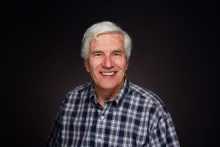
Steve Shafer was born and raised in Seattle. He graduated from Queen Anne High School in 1959 and later graduated from Ambassador College, Big Sandy, Texas in 1967, receiving a degree in Theology. He has been an ordained Elder of the Church of God for 34 years and has pastored congregations in Michigan and Washington State. He and his wife Evelyn have been married for over 48 years and have three children and ten grandchildren.
