


Mario Seiglie
Here is an in-depth study proving the validity of God's Word given to us in the Bible. With comparison to the writings, teachings and beliefs of false religions, only the Bible, God's law, stands as truth (Ps 119:142).
This transcript was generated by AI and may contain errors. It is provided to assist those who may not be able to listen to the message.
I'd like to begin, first of all, discussing what has happened this week, because from one week to the next, things can change so dramatically. Now we have warfare between Israel and Iran. What we are witnessing is one more of those clashes of two civilizations, between the Judeo-Christian civilization and the Muslim civilization. And we also have the threats from dangers Russia and China, in the Bible. We identify them as Gog and Magog. And if you turn with me to Daniel 11, verses 40 through 42, it's describing, in the end times, there will be a clash of civilizations, and in particular, as best as we can tell, from these four different systems. Daniel 11, verses 40 and 42, and then 44 and 45. It says, at the time of the end, so this is not talking about just regular history, but it's talking about the time of the end before Jesus Christ returns. We can look at this news headline ahead of time. This is something that God published as headline news. It says, at the end time of the end, the king of the south, which is talking about that area, which is south of Israel, because that's where the center of prophecies takes place. So this is the king of the south, which now basically is dominated by the Muslim countries, shall attack him. And the king of the north, which is north of Israel, that whole area of Europe in particular, shall come against him like a whirlwind, with chariots, horsemen, and with many ships. And of course, this is talking about the terminology of their days, but in the end time, you don't have chariots and horsemen. You have tanks and armored soldiers with many ships. And he, talking about the king of the north, the leader, shall enter the countries. Notice here, it tells you what countries the king of the south is in charge of, overwhelm them, and pass through. He shall also enter the glorious land, talking about Israel. And many countries shall be overthrown, but these shall escape from his hand, Edom, Moab, and the prominent people of Ammon, which is the area of Jordan to the east of Israel. And then in Daniel 11 verse 44, it goes on to say, but news...let's go to verse 43. He says, he shall have power over the treasures of gold and silver, over all the precious things of Egypt. So again, this is the area of the south. Also, Libya, which is west of Egypt, and Ethiopians, which is south. So it's a whole area. This is all controlled today by Muslim countries. They shall follow at his heels. So talk about...they'll be conquered. But then, here comes the other two nations. But news from the east and the north shall trouble him. And again, what do we have to the east of the Middle East? We have Asia. And basically, you have India and you have China. And then to the north, you have Russia.
It goes on to say, that shall trouble him, because they are going to mobilize. They're not going to just fold their arms and watch. Therefore he shall go out with great fury to destroy and annihilate many. So it will attack these countries before. These are called preemptive strikes. And he, the king of the north, shall plant the tents of his palace between the seas. Talking about the Mediterranean and the Sea of Galilee and the Jordan Valley, which means Jerusalem. And the glorious holy mountain, Jerusalem. Yet he shall come to his end and no one will help him. So Christ will take care of things. So again, we're seeing some of these initial clashes between these civilizations, which will eventually crescendo into the major war. That hasn't happened yet. Not all the pieces are in their place right now. But you see now it's getting worse because you've got nuclear bombs. What they're trying to do, the Israelis will stop them before they can arm themselves in Iran in this way. We don't know how long this will go on. Will it spread or not? Only God knows. He's in charge. He allows things to happen up to a point. And then it tells us in Daniel chapter 8, some other key scriptures in this regard, talking about the king of the north again, Daniel 8-19. It says, and he said, look, I am making known to you what shall happen in the latter time, in the end times of the indignation. For at the appointed time the end shall be. God has all of this laid out. It goes on to say in verse 23, it says, and in the latter time of their kingdom, when the transgressors have reached their fullness, a king shall arise. This is the king of the north, having fierce features who understand sinister schemes. His power shall be mighty, but not by his own power. So he's going to be given these powers by Satan himself. He shall destroy fearfully and shall prosper and thrive. He shall destroy the mighty and also the holy people, talking about Israel.
And through his cunning he shall cause deceit to prosper under his rule, and he shall exalt himself in his heart. He shall destroy many in their prosperity. He shall even rise against the prince of princes, talking about Jesus Christ when he returns. But he shall be broken without human means. In other words, it's not going to be humans that are going to do this. It's going to be Christ himself. So that's the outline of prophecy. As we understand it, and of course as more and more pieces fall into place, we'll understand better and make the necessary adjustments. So I'm just giving you what we know right now. In Matthew 24, let's go there, Matthew 24, this is a similar scenario which Christ establishes for the end time, as he described the end time. Matthew 24, verse 12, it says, And because lawlessness will abound, remember how it says about the transgressors, they have to reach a certain amount of wickedness before God intervenes. You know, another translation here of Daniel 8, which I read to you, verse 23, it says, And so in Matthew 24, it talks about how it's going to be so hard to be faithful to God's truths, to the faith. Lawlessness can characterize this world. Violence, like we have never seen before. A couple of congressmen, people got shot today. The violence breeds more violence. You have protests everywhere. And it says, It's easy to let your faith grow cold. Verse 13, it says, See, it's not just something momentary, emotional type of acceptance. No, it's a commitment that is lifelong. You have to cross the finish line to receive the reward. And we have a job to do. And this gospel of the kingdom, that coming kingdom, will be preached in all the world as a witness to all nations. And then the end will come. So God's truths have to go out to the world, because it's going to shock the world when God intervenes. People will not be ready. Meanwhile, in college classrooms, which are increasingly dominated by faculty members who grew up in the religiously suspicious 1960s, and all kinds of secular beliefs now on humanism, instead of Christianity. According to the landmark 2006 study by professors from Harvard and George Mason universities, the percentage of atheist and agnostic teaching at U.S. colleges is three times greater than in the population as a whole. Three times greater. More than half of college professors believe the Bible is, quote, an ancient book of fables, legends, history, and moral precepts, compared to less than one fifth of the general population. So we see why people are becoming more and more cold to God and religion. And as you know, many enter universities, especially if you go into the higher echelons. They say that, for instance, people that go to more of a community college level, they don't have as much. Professors are more conservative minded, but as you get into more and more specialized type of universities, it becomes more and more liberal, more and more agnostic, not believing in God. And taking this into account, how important is it to remember the scripture in Isaiah chapter 8 verse 20, which is the title of this sermon? Isaiah 8, 20, it says, to the law and to the testimony. It's talking about the scriptures. If they do not speak according to this word, it is because there is no light in them. In the New Living Translation, it says, look to God's instructions and teachings. People who contradict His word are completely in the dark. And so, when studying different world religions, which I did for over a year, just examining different explanations of things, I actually taught a class called Biblical Engineering, which goes into just like an engineering class, but about world religions.
As Professor Monteiro Williams, a professor of Sanskrit, which is the language of the Hindu and Buddhists in India, in that area of Asia, he studied it all his life. He was an expert. And when he compared the religions between Hindu and Buddhism and Christianity, this is what he wrote. Pile them, if you will, on the left side of your study table, all of these Hindu and Buddhist books. But place your own Bible on the right side. There is a gulf between it and the so-called sacred books of the East, which severs the one from the other utterly. It separates the two utterly, hopelessly, and forever. No reconciliation. The Bible is so unique and separate from all of these other religions and their supposedly holy books. Take the Koran, the Muslim religious book written some 600 years after the time of Christ in the 600s.
It doesn't show any miracles that this book is inspired. And when it asks, how do you know this book is true, it says, just read it and you will see its poetic style and how it's written. And by the way, some Arab scholars have taken the challenge and they've written better prose and poetry than what you have in the Koran. So that's not really some earth-shaking proof just saying, well, just read it. I've read it. I don't find anything special about it at all.
It also denies the resurrection of Jesus Christ. In one section it says that actually God made it appear that Christ died, but he really didn't. And so the Muslim world, they don't believe Christ was resurrected. And when they're asked, well, wouldn't that be deceitful of God? To say God kind of pretended he died, but then he came back, but he never truly died. Isn't that deceitful? They can't answer that. They just say God can do what he will. He can deceive people if he wants. Now, how about some of the ancient writers? Before the New Testament was created, we have a whole of books from Jewish authors.
Written between the third century BC and the first century AD. These are called the pseudopigrapha, which means books under false names. Because in order to impress people, they used all kinds of different names. One of them they took from Enoch, who actually lived before the flood. This was written between the third century BC and the first century AD. I've read it. At the very beginning of this first Enoch, because there's a second part to it, in chapter 3 verse 9, it discusses how evil angels had sexual relations with women who produced the Nephilim humans that were 300 cubits tall. That's about 450 feet.
He also toured heaven, contradicting what John 3.13 says, that no one has gone up to heaven except the Son of Man, who is in heaven. It has all of these wild tales of the fallen angels. To me, it's not inspired. It doesn't have any positive things. It's almost like this frightful book that's trying to scare people. Sounds like Dante's Inferno.
Well, the pseudepigrapha were books that were written to try to imitate what the Old Testament was written. And again, some of them are a little more like historical books, like Maccabees. But the Maccabees have some teachings that contradict the Bible. For instance, praying to the dead. And the Bible says that the dead know nothing. And yet in Maccabees, it says that they prayed to those that were dead.
The Catholics added seven books to the Old Testament. It's called the Apocrypha. These are the books of Tobit, Judith, Baruch, Ecclesiasticus, Wisdom, First and Second Maccabees, and the Greek editions to Esther and Daniel. I've read them. They contradict the Bible. They were never accepted by the Jewish people and the scribes and also the priests.
Josephus, the Jewish historian of the first century, writes, We have but twenty-two books containing the history of all time, books that are justly believed in. And of these five are the books of Moses, which comprise the law and the earliest traditions, from the creation of mankind down to his death, from the death of Moses to the reign of Artaxerxes, king of Persia, the successor of Xerxes.
Then we have the prophets who succeeded Moses and wrote the history of the events that occurred in their own time. In thirteen books, the remaining four documents comprise hymns to God, talking about the Psalms, and practical precepts to men. So we actually have the Old Testament as it came to us in twenty-two different scrolls. And these comprise what we have today as the Old Testament. Nothing was added to those books, nothing was taken away.
And then we have twenty-seven books in the New Testament, which comprise these books that we have in the Old Testament and New Testament. This is the entirety of the Old Testament and New Testament. Forty-nine books, which are very appropriate, seven times seven. Seven is a number of perfection in the Bible, multiplied by seven times.
And Jesus Christ quoted from the Old Testament, and those twenty-two books were separated into three sections, which Christ mentions. In Luke chapter twenty-four, in verse forty-four, when He was resurrected, it says in verse forty-four, Then He said to them, These are the words which I spoke to you while I was still with you, that all things must be fulfilled, which were written in the law of Moses. Those are the first five books of the Bible. The prophets, which are all the books dealing with the history of Israel, including the prophets themselves, and the Psalms, which are all the poetic writings, that includes Proverbs, Ecclesiastes, concerning me.
So we have all of these books that have been inspired. In verse forty-five, it says, So it's not a given. God has to open a person's mind to understand these forty-nine books, how they all fit together like a hand and a glove. How you have a unity of thought throughout the entire Bible. How these books came to us intact to the twenty-first century. We have thousands of different copies to be able to know that what we study in the Bible is the truth.
Believe me, I can tell you that my life changed because at the age of seventeen, as a Catholic, I went to church on Sundays. I was an altar boy. I listened to these electionaries. The priests would just always give one little section of one of the Gospels throughout the whole year. And basically, it didn't make any sense to me until I came to the understanding in this church that all the Bible is inspired by God and should be respected.
Notice in 2 Timothy chapter three. Sometimes we kid each other here in the church that what we did is we took God at His word that He knew what He was doing and it just put it into practice. We're not trying to outsmart God. We're not trying to change what God said. 2 Timothy chapter three, starting in verse thirteen. Paul is talking to Timothy. He says, but evil men and impostors will grow worse and worse deceiving and being deceived.
So we're going to have people that are going to distort what the Bible says. He says, but you must continue in the things which you have learned and been assured of, knowing from whom you have learned them and that from childhood you have known the holy scriptures, which are able to make you wise for salvation through faith, which is in Christ Jesus.
All scripture is given by inspiration of God. God has supervised everything that has been put into practice. He has used men, used their personality, their education, and He's used them to reveal those wonderful truths. And it says the scripture is profitable for doctrine. So this is the only book we use. We don't bring a second book here to talk about. I don't use the Apocrypha.
Those are extra books that were never accepted, nor the Suvapidrogrypha, which are also New Testament additions to it, with all of these different Gnostic books that were written. That were written to confound and confuse. They don't have the pedigree. They don't have the legacy. They don't have the unity that we find in the Bible.
Believe me, I've looked. There's no other book like this one. And it says here that this is the one inspired. It's profitable for reproof. So it will correct us, as it says, for correction, for instruction in righteousness. Which is, righteousness means the right way of living according to God. Righteousness is right-way-ousness. That's the whole term. Right-way-ousness. That the man of God, and that includes men and women, may be complete, thoroughly equipped for every good work. According to God, and so, yes, when I started studying the Bible, and God opened my mind in His mercy, I knew there was just one way to follow Him.
And I started my own solitary path against the will of my parents, against the will of my friends, and everything else. But I just thought, this is the truth. What can compare to it? As Peter said in John 6, verse 65, And basically, all of you have come to this knowledge of the truth. God has worked in your life to bring you to His church. As it says in John 6, verse 65, He says, and He said, Christ talking here, Therefore I have said to you that no one can come to me unless it has been granted to him by my Father.
It's not intellect. It's God who separates you to be able to understand things. He says, From that time many of His disciples went back and walked with Him no more. Then Jesus said to the twelve, talked about twelve apostles, Do you also want to go away? Are you going to leave me too? But Simon Peter answered him, Lord, to whom shall we go? You have the words of eternal life, and we have come to believe and know that you are the Christ, the Son of the living God.
And so, really, we don't have much of a choice because you look at all the different religions, and they will not put the Scriptures all together. They will not tell you the full truth. Notice when Pilate asked Jesus there in John 1838, Christ mentioned about the truth, and Pilate just said, What is truth? He had studied Greek philosophy and Roman ideas. What is truth? Well, Christ did not answer him. Christ was already arrested, and Pilate was a bloody man. He's got a terrible reputation from those days. And so he was not given the answer because he was not worthy. But he did give it to his disciples. What is truth? Christ answered in John 17 and verse 17.
He said, and he prayed about his disciples. He said, Sanctify them by your truth. Your word is truth. This is where, and sometimes like you say, maybe you run across it and you weren't ready, or maybe you'd rather not, but once you know the truth, it's something that you're committed to. Notice in Psalm 119, 142, Psalm 119, 142. Psalm 119, verse 142. David, inspired by God, said, Your righteousness is an everlasting righteousness, and your law is truth. God does not lie. God does not make mistakes.
So we should be so thankful about God's word, because out there, we're not going to find anything that's going to satisfy you that way. There are all kinds of hucksters out there. We'll try to falsify things, just like they did in Paul's day. Notice 2 Thessalonians, chapter 2. People got so desperate to hide God's truths that they started, as we've seen with that, through the piggurah and also the apocrypha and all of these false books. Notice 2 Thessalonians 2, verses 1 and 2. It says, Now brethren, concerning the coming of our Lord Jesus Christ and our gathering together to Him, we ask you not to be soon shaken in mind or troubled, either by spirit, because there are types of demonic spirits that try to deceive people, or by word, or fancy speaking, or by letter, as if from us. So, even in Paul's day, already some were falsifying some of the epistles and all of these false teachings. We got these books, the Gnostic books, that were part of this falsification. We got the Gospel of Peter. We got the names of Paul, the Gospel of Mary. See, they were using all of this to try to get people off the truth, as though the day of Christ had come. So, nothing's new. We've got to discern. We've got to examine things very carefully. 1 Thessalonians 5, verse 21 says, Examine all things, whole fast to that which is true.
And so, as we finish now in Romans 15, verse 4, we're going to go over this Scripture later in the Bible study. Romans 15, verse 4, tells us the purpose of the Bible, why it's so important to study it. It says, For whatever things were written before were written for our learning, that we, through the patience and comfort of the Scriptures, might have hope. That's the result. We know that God is not going to allow the world to end in some type of destruction. God is going to wait for the time to come, and then He's going to send Jesus Christ. And then He will put down these authorities. He will take care of things, and He will establish His kingdom that's going to last a thousand years. It tells us there in Revelation 20, verse 4, that we will reign with Christ a thousand years and be kings and queens of that coming kingdom, and also the priests. God is calling a person to be part of that kingdom. That's the kingdom we're preparing for. Because you're going to be disappointed with this world. You're going to be disappointed with everything that eventually happens. If that is your only hope, it's a very poor hope. But if we're looking forward to that kingdom that will come, that we can be a part of, then it's worth it to retain that and to keep our faith strong. As we go through all of these difficulties that the world now, a lot of people are in their basements in Israel, in Iran, other parts. They're scared to death. And that can spread, believe me. But we know who's in charge. God cannot lie. He is love, just as Jesus Christ is. And all of this was predicted. Mankind would eventually come to this point. So brethren, what a blessing it is. And these dangerous and troubled sometimes we live in to have this wonderful hope.
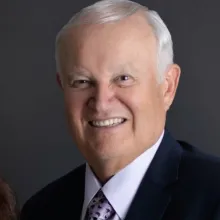
Mr. Seiglie was born in Havana, Cuba, and came to the United States when he was a child. He found out about the Church when he was 17 from a Church member in high school. He went to Ambassador College in Big Sandy, Texas, and in Pasadena, California, graduating with degrees in theology and Spanish. He serves as the pastor of the Garden Grove, CA UCG congregation and serves in the Spanish speaking areas of South America. He also writes for the Beyond Today magazine and currently serves on the UCG Council of Elders. He and his wife, Caty, have four grown daughters, and grandchildren.
