
Frank Dunkle
The laying on of hands in the old and new testament and its purposes.
So, the laying on of hands. We just did, I mean, I did what Jesus did, laid hands on these children. I didn't do anything except ask for the blessing which God gives. Why does God do it this way? Once again, what Jesus did there, we could say, well that's a nice quaint little thing, and we can do that. But it goes beyond that because it's part of this incredible concept of laying on of hands. Let's go to Hebrews chapter 6.
Hebrews 6.
Verse 1 and 2. Paul says, therefore, leaving the discussion of the elementary principles of Christ, he said, so he said, I'm teaching you, and he's writing here to Jewish Christians, but this book or this letter went to everyone, so you know, it went to everyone. He said, so let's, the foundation is the principles, elementary principles of who Christ is. Let us go on to perfection. So now we're living this life of learning holiness. We're now moving towards what is called sanctification. We're living this life of holiness. Not laying again the foundation, he says, this is where you start. This is the very beginning of understanding what God is doing once you understand who Jesus Christ is. Repentance from dead works and faith towards God. You know, when new people come into even our faith, we start with these things. Repentance, faith towards God. The doctrine of baptisms.
Laying on of hands. Now he puts this concept of laying on of hands in the same list as this is, he's talking here about what it is now to become part of the church. You understand who Jesus Christ is and who sent him and what his work was and how it applies to you, and he says, now what we do is we look at repentance and faith and the doctrine of baptisms, laying on of hands, the resurrection of the dead, and eternal judgments. So he says, now then we go on to other teachings, but this is the foundation that has to be laid first. This has to be laid first. Now, once again, when we think of this list, we hardly ever, you know, someone said, what are the very foundations we wouldn't think of laying on of hands, yet it's that says that here. And there's a reason why. There's a reason why. And it's because of what it's the focus that we are to have because of this simple ceremony. Once again, it's not because it's not because the minister does some magic work. It's the focus that happens here. And it's interesting, once again, that it's always, it's touch, it's words, it's sight, you see it. It's something he wants us to see when this happens. So let's look at the laying on of hands. And we're sort of a Bible study here, laying on of hands in the Old Testament. Then we'll go to laying on the hands in the New Testament. The purpose of the laying on of hands in the Old Testament is actually the same as the New Testament, but it means to set apart. In other words, when the priest would lay their hands on something, or even before the priesthood, well, Abraham was told to lay his hands on someone. When he did that, it was a public expression. I mean, even if there's only a few people in the room, everybody could see it, right? It was a public expression of something God is doing.
Through this touch, verbalizing, you know, and people seeing it. It is a focus on something coming from God. And in the Old Testament, a place could have hands laid on it, the tabernacle did by the priest. Sacrifices could have hands laid on it. People had hands laid on them. Individuals and entire groups this was so important because it's all through the Old Testament, and it's always for the same thing. This is from God, and the people especially, that hands are being laid on, they are an extremely humble state of mind. You know, you think about these three little ones. You can't get anything more humble than that. I mean, they have no, they, you know, they have no power, right? It's three little humble beings. They were humbled by what was happening because they realized this simply represented a greater reality, a greater reality. Because that meant that whatever hands, when the hands were laid on that person or place or thing, that this was God. God was going to do something here.
Let's look at a few examples. Genesis. This to me is very important. A number of years ago, I gave a whole sermon on the patriarchal laying on of hands, and how it is, the concept behind this is absolutely fundamental to understanding parenting. Absolutely fundamental to understanding parenting. Genesis 48 verse 13. Here's where Joseph is going to bless Ephraim and Manasseh. And Joseph took them both, Ephraim with his right hand toward Israel's left hand, and Manasseh with his left hand towards Israel's right hand, and brought them near to him. Then Israel, where Joseph stretched out his hand, I'm sorry Isaac, or Jacob, I mean, stretched out his right hand and laid it on Ephraim's head, who was the younger. And his left hand on Manasseh's head guided his hands knowingly, for Manasseh was the firstborn. The greater blessing always went to the firstborn. And there was other blessings that went to the other sons, but they were lesser. Think of Esau, when Jacob took the blessing, saying, begging, crying to his dad. He's a grown man. He's not some 15-year-old kid. This is a grown man who's known as a hunter, a tough man, a very physical man. And he's broken down crying, is there not a blessing for me? Is there not a blessing for me? I have nothing when he gave him a blessing, but of course it was less than what his brother got. So this is a problem. He's crossing his hands and he's giving, he's mixing up the blessing here.
And he blessed Joseph and said, God, be whom my fathers Abraham and Isaac walked, the God who has fed me all my life long into this day, the angel who has redeemed me from all evil. Very interesting, that messenger. And you can see where the angel of God is different than any other angel. It's a messenger from God, and you'll see in the New Testament where this messenger from God is actually Jesus Christ. So they did have a concept of the Messiah, even at this time. The angel who has redeemed me from all evil, blessed the lads, let my name be named upon them, in the name of his fathers Abraham and Isaac, and let them grow into a multitude in the midst of the earth. He blesses them. Now, this blessing was so important. It was passed on through the family from father, the sons, the father, and sons. Today, and once again, that sermon I gave a number of years ago, we have to realize that as fathers, we bless or curse our children by what we do to them and say to them. And they want a blessing from us as fathers. They need a blessing from us as fathers. Of course, we don't usually know that when we have children, that need for a blessing, that my father has blessed me, that I have value to my father.
So here we see the laying on of hands in a family sense. Now, that's saying you have to go lay hands on your children, although it would not be wrong to do so if you're asking for God to bless them. Because they're your children.
Another is in Numbers chapter 8. Boy, this laying on of hands is so important. And at times, maybe, we have not recognized its importance in us in the church today. Numbers 8 verse 5. Then the Lord spoke to Moses, saying, Take the Levites from among the children of Israel and cleanse them ceremonially, and thus you shall do to them to cleanse them. Sprinkle water of purification on them, let them shave all their body, let them wash their clothes, and so make themselves clean. Then they have to take a young bull, and they have to sacrifice it. And verse 9, And you shall bring the Levites before the tabernacle of meeting, and you shall gather the whole congregation of the children of Israel. So you shall bring the Levites before the Lord, and the children of Israel shall lay their hands on the Levites. Now, this is very interesting. God says, I have chosen them to be my priest. And to show that you accept them as my priests, you all have to lay hands on them. You all have to participate here. So what happens is the Levites, all the Israelites would have been men, but it came up and gathered around those who could get close enough. I mean, there was a lot of them, laid hands on them. So you shall bring the Levites before the Lord, children of Israel shall lay their hands on them. And Aaron shall offer the Levites before the Lord like a wave offering from the children of Israel that they may be formed the work of the Lord. Interesting. They shall now be the Levites are an offering to God from Israel. God chose them, but in this case, all the Israelites participated. That's quite an amazing thing, isn't it? They all came out and laid hands, and now this entire tribe, which God has chosen, they now accept it. This is God doing this. In other words, it wasn't them putting them in place. This is God doing this. We're participating, and we're showing, yes, we agree with God, and physically they touched. Everybody could see it, and it was spoken. And they were through the laying on of hands. Numbers 8, verse 12. The sacrifices in the tabernacle, later in the temple. Numbers 8, verse 12, just skipping down here.
Well, I turned the page and lost myself here. Okay, verse 12. Then the Levites shall lay their hands on the heads of the young bulls, and you shall offer one as a sin offering, the other as a burnt offering to the Lord to make atonement for the Levites. So now the Levites were ordained because God chose them, and all of Israel laid hands on them. And then the Levites now had to start doing their functions. And that is, look at these sacrifices. We lay hands on these sacrifices, and they are now offerings to God. The whole system involved the laying on of hands as a recognition of God's action. What we just did was ask for God to be active in the lives of these children. And you all watched, right, right? As God said, come do this, Jesus did it to ask for God's involvement in the lives of these children. This is not just a little ceremony. This is a whole lot more than a simple ceremony because of who we are pointed towards as we do this. So the whole Levitical priesthood was set up for this. There was also that you could be chosen throughout the Old Testament to be a representative of God as a prophet, as different things. And that was usually done also by the laying on of hands, an ordination into an office. Numbers chapter 27.
And verse 18. And the Lord said to Moses, Take Joshua, the son of Nuh, with you, a man in whom is the Spirit, and lay your hands on him. And set him before Eleazar the priest, and before all the congregation, and inaugurate him in their sight. And what happened? Well, verse 20 then. And you shall give him some of your authority to him, that all the congregation of the children of Israel may be obedient. And he shall stand before Eleazar the priest, who shall inquire before the Lord for him by the judgment of the Urim. This was a Urim and Thummim was used as a way of determining God's will in something.
At his word they shall go out, and at his word they shall come in. He and all the children of Israel with him, all of the congregation. So Moses did as the Lord commanded him. He took Joshua and sent him before Eleazar the priest, and before all the congregation. And he laid his hands on him, and inaugurated him just as the Lord commanded by the hand of Moses.
And this is how Joshua then, when Moses died, replaced him. Because he was brought before the high priest, and they laid hands upon him. And now he was to take over that duty that Moses had. It's very interesting. Sometimes they used oil, but David, they poured oil on him. Samuel poured oil on him, olive oil. Sometimes he used oil as part of this ceremony. And even there's a Messianic prophecy in Psalm 45 in which it talks about the Messiah being anointed with oil. Oil, when you look, there's one place that tells us why it's the Spirit of God. It represents the Spirit of God. So the use of oil, specifically olive oil, not 10W30, olive oil, is, as it represents the very Spirit of God.
So sometimes that's involved in the laying on of hands. Not always, but you'll see it used. So we see the importance of this in the Old Testament. It's at the heart of a lot of the ceremonies. So we say, okay, well we don't do the sacrifices today. Do we do the laying on of hands today? Well, we just read in Hebrews, yes. So how do we apply it? Well, we just saw one example following Jesus' example of laying hands on children, to bless them, to ask for God's blessing on them.
Remember, he's doing this, by the way, in Judea. He's taking these children who are part of the Jewish people, who at that point are God's representatives on earth. And he's saying, you are part of the people. We do this in the church today because we're also saying these children are part of the people. They may not be baptized yet. They may not have God's spirit yet, but they're part of the people. And we always pray and hope, and I know the parents do, that God works with them with His spirit, right?
That God's interacting in their lives. It just, every once in a while, I'll hear a parent say, well, I'm not going to influence my children until, you know, they reach like 16, 17, 18, and they make their own decisions. Well, Satan doesn't play by those rules. He's influencing them already. You wait till then? You've already lost the battle.
You've already lost the battle. We need to be praying for God's spirit to be guiding and helping our children now. And that's part of the blessing. That's part of the blessing that they receive here. We ask that God be with them. And once again, God's not going to take away anybody's free will. We all get to decide. Our children decide, right? But we ask God to give them that blessing.
So laying on of hands in the New Testament, one of the things we find very early in the New Testament is the pouring out of God's spirit. In ancient Israel, the majority of people did not have the spirit of God in them. It was with them but not in them. But you see some that did have God's spirit in them.
In the New Testament, it is said they bring out prophecies from the Old Testament. And they say, well, the Holy Spirit will be poured out. Joel said that. And right away in the book of Acts on that Pentecost, where all of a sudden all these people receive God's spirit, Peter says, oh, what was prophesied in the book of Joel is already, is beginning.
The Holy Spirit's being poured out. So it's being poured out. Then they had two, and actually Jesus has already told them how to do this, how then does a person receive God's spirit in them, not with them. In other words, you can't even come to the point where God's spirit is put in you and lets us with you because we can't come to God on our own. We don't have any ability to do that.
God works with us and works with us and works with us. I had a man one time tell me, I waited 30 years, baptized. I said, okay, so take that look. He just was with you. He just stayed with you. And now it's time for God to be in you, His spirit in you. That's the new covenant, that He will pour out the spirit and it will be in you.
That's what He promised in Jeremiah. It'll be in your heart, in your mind. Okay, how is that going to happen in the New Testament? How would you know? Acts chapter 8. Acts chapter 8. This is a forgotten issue in the New Testament. And it's forgotten many times in Christianity today.
What happens is, in Samaria, Philip goes, who's a deacon in the church, he goes and he teaches about Jesus Christ. Now, Jesus had gone to Samaria, remember? He'd already laid the seeds. Now, Samaria were not Israelites. There were people in Israel, the northern tribes had been taken out of the area. The Assyrians had brought in other people, who were just a mixture of people from all over their empire. And they came in and they settled. And so they claimed many times to be Israelites. They were pretty much despised by the Jews, because they said they're not Israelites. And they said, yes, we are. Except when the Jews were in trouble, Josephus says this. Josephus says, whenever the Jews are in trouble with the Romans, the Samarians say, Samaritans say, uh, we don't know them. So they were part of the the nation of Israel whenever something good was happening. When it wasn't, it was like, oh no, we're not related to those people. So that's how it went. So Philip goes there, and he's in Samaria, and he's preaching. And the seeds that Christ had already planted, people are starting to come, and they want to be baptized for the forgiveness of sin. John the Baptist had been teaching baptism, you know, a few years before. The idea of baptism wasn't foreign in Judaism itself. There was a form of baptism that many of the priests and the rabbis would do. And so these people are being baptized. Verse 9, but there was a certain man called Simon who previously practiced sorcery in the city and astonished the people of Samaria, claiming that he was someone great, to whom they all gave heed from the least of the greatest, saying, this man is the great power of God. So now what we have is a person that, and the whole story puts together, is under demonic influence. And he does all these, what people consider miracles, and therefore he's given great credence as a great spiritual leader in Samaria. And they heeded him because he had astonished them with these sorceries for a long time. But when they believed Philip, as he preached the things concerning the kingdom of God and the name of Jesus Christ, both men and women were baptized. Then Simon himself also believed and when he was baptized he continued with Philip and was amazed, seeing the miracles and signs which Philip was doing. Now the word gets back to the apostles in Jerusalem of what's going on. And so they say, okay, they're being baptized. This is good. But they also have to take the next step. See, there's another step that they have here. And this was foretold by Jesus when he talked about three different types of baptism back in Matthew chapter 3.
So they came down, verse 15, so that some of the apostles come down. When they had come down, they prayed for them that they might receive the Holy Spirit. For as yet he did not fall upon any of them, for they had only been baptized in the name of the Lord Jesus. Then they laid hands on them and they received the Holy Spirit. There's a second baptism. Baptism has two parts. Baptism of water for forgiveness and baptism through the laying out of hands, which remember when you're baptized in water, the water doesn't save you, right? It doesn't wash away your sins. It is a public declaration of the covenant you have made with God and He is forgiving you of your sins. God makes a covenant with you and He forgives you of your sins through Jesus Christ, and you go under the water, you die with Christ, and you come up. But what changes you now? If you are forgiven, does that give you the power to have your corrupted human nature changed? Do you now have the power to do it? No. The power comes from God and therefore what has to happen is you must receive the Holy Spirit, a second baptism. You must be baptized with God's Holy Spirit. And what we find in the New Testament, it becomes their custom that after baptism, they lay hands on people and then this, once again, it's not because it's coming from the minister, what happens is this public declaration is this is what God is doing and He gives the person His Spirit. Just like water doesn't save you, but we have to be baptized. Now this doesn't mean, by the way, that if people mess it up, God will do what God's going to do. And the example of that is with Peter and Cornelius, the Roman Satorian. God sent Peter to talk to him. Peter went and preached to him. He said, I want to be baptized. Now think about Peter, a Jew, under Roman occupation, and you have a Roman officer, an army officer, asking to be baptized, and he wasn't going to do it. And suddenly, the actions, the speaking of the officer, showed him that God had given him the Spirit. It says he spoke in tongues, which we know means languages. This is my speculation, okay? I would guess instead of speaking in Latin or Greek, he probably spoke to Peter in Hebrew. That would blow his mind.
So that's my little…you know, you like to make up things every once in a while that would be, to me, that'd be hilarious. You'd just start speaking in Hebrew to him. Okay, okay, God, I get it. And he baptized them. So God was going to give him his Spirit, in this case, because Peter wasn't going to baptize him. But guess what? Even after he received God's Spirit, Peter baptized him. Why? Because it needed to be done right.
These procedures are important to God. He's not bound by these people, always come up with, okay, if you live on an island someplace and you never meet another Christian, and God comes along and calls you, and you're not baptized, that means you can't receive God's Spirit? No. God does what God does. We're talking about the standard procedures within the church, just like the standard procedures that were in ancient Israel. Now there's the standard procedures within the church. And so we see here where they received God's Spirit after hands were laid on him, and they received the baptism of the Holy Spirit. You know, look at Acts 19. This is a very interesting example here, because Paul's reaction here is a little different than what you would think it would be. Acts 19 verse 1. And it happened while Apollos was at Corinth, the Paul, having passed through the upper regions, came to Ephesus and finding some disciples. So there's disciples there that are not just, they're not Jewish. It doesn't say whether they're Jewish, I would guess they're doing probably Gentile. But even if they were Jewish, they believed in Jesus as the Messiah. And he said to them, did you receive the Holy Spirit when you believed? So they believed in Jesus as the Messiah. So they said to him, we not even so much as heard whether there is a Holy Spirit. In other words, what is the Holy Spirit? In this literal sense, if they were Jewish, they would have had some understanding of the glory of God, which is the Ruach, the Spirit of God. I mean, that's explained throughout the Old Testament. But they didn't know what he meant by, did you receive it? Is it in you? And he said to them, and to what were you baptized? And they said, it was John's baptism. So it was John the Baptist. Remember, John the Baptist said, I baptized you, baptized you for repentance, but he who comes after me will bring you the Spirit. He is greater than I. So they had received a form of baptism. Then Paul said, John indeed baptized you with a baptism of repentance, saying to the people that they should believe on him who would come after him that is on Christ Jesus. When they heard this, they were baptized in the name of the Lord Jesus, and Paul laid hands on them, and the Holy Spirit came upon them, and they spoke with tongues and prophesied. And they were about 12. It wasn't a big group. What's interesting is that when Paul got there, this group of people have been there for years. We don't know how long. Twelve men and their families. He baptized them, and even in just the rest of this chapter, the influence of these people begins to change, and people start coming into the church. There's a riot. This just starts with 12 guys. And there's a riot. I mean, Ephesus was a major city in the Roman Empire. It's an incredible place to go visit today if you ever get the chance to do so.
The whole economy of Ephesus is being changed because people are leaving paganism and coming into this new church. It didn't happen before because God's Spirit was with them. It wasn't in them. And now it was in them. And Paul was there preaching, and people began to respond.
Once again, though, notice he rebaptized them. He said, okay, you have a partial baptism. We need to go through it again. Once again, we need to go through the procedures, which is, I'm going to baptize you again for repentance, which you understand, and then I'm going to lay hands on you, and you will receive the two baptisms in order. Paul was very strict in some ways on how he saw things. And it's just not because of his pharasical background. It's because he saw that this is the way Jesus wants it done. So that's what we do.
In fact, Paul even tells Timothy in 2 Timothy, therefore I remind you to stir up the gift which was in you through the laying on of my hands. He says, remember, Timothy, you received the Holy Spirit through the laying on of hands, and then he had been ordained in the ministry through the laying on of hands. He says, remember that. Remember that ceremony. Don't forget that when that ceremony happened, we were asking God to be directly involved in this, in you. So let's go to...
Okay, there's a couple other reasons. I was looking at some other scriptures, but I'm going to go ahead and skip them. We've made the point here. There's a couple other reasons in the New Testament that you find the laying on of hands.
As the church expanded throughout Judea and beyond, and churches began to be formed, they had an interesting problem. I mean, how do you take care of the churches? Peter could show up. James could just show up. You know, somebody can show up, start a church. What do we do now? That's what Acts 14 is so interesting here. Because it's where we get... we have a word that we use that's very important in this. Acts 14, 21. It's talking about here that Paul is traveling throughout the... some regions here, throughout the Roman Empire. And when they had preached the gospel... Barnabas is with him too. When they had preached the gospel to the city, they made disciples and returned to Lystra, Iconium, and Antioch. So they had gone from city to city preaching. People had come along and listened to their teaching, applied their teaching, repented, and had received God's Spirit. And now they were going back to the churches they... their places they'd just gone through to see, okay, how those churches doing. Strengthening the souls of the disciples, exhorting them to continue in the faith, saying, we must go through many tribulations to enter the kingdom of God. And when they had appointed elders in every church and prayed with fasting, they commended them to the Lord in whom they had believed. This appointing, we will see in other places, it involved the laying on of hands. In other words, there were elders. Elders. It's interesting, the word elder there can mean, and is implied just to mean an old person, or older person, okay. We will use that term. Oh, that person's elderly in English. That's an older person. But in the context of ordaining elders in the church, they were supposed to be spiritually older. In fact, Paul tells Timothy, don't let people disrespect you because you're so young. You are an elder. So yes, just like they were priest ordained, there are elders ordained in the church. And they go through a process of being ordained through the laying on of hands. They would be called also overseers. Here's the important thing about the word elder. An overseer is a manager. But you know, the elders of the church are only called overseers in a few places. Elders is a tribal term. None of you, when you go to work, someone says, hey, the elder wants to talk to you. And you think, oh boy, I am in trouble, right. Now your manager wants to talk to you, oh boy, I'm in trouble. None of you work for an elder. It's a tribal term. An elder is part of the community. In the Old Testament, they were related. All elders were local. Well, not all of them. There were elders that weren't, because there were priests that weren't, and there were prophets that weren't. It's also very interesting. In the Old Testament, there was a separation of powers within Israel.
King David could not tell the priest what to do. There was a separation. Jeroboam took over the priesthood of Israel, and God destroyed their nation. Or, you know, he created a new priest. Okay, that's it. You can't do that. You may be king, but you can't do that. I mean, when Nathan came to David and said, you've sinned before God, and he's going to punish you, David could have said, guards killed this man. And he did not, because Nathan received his authority from God as a prophet, and he didn't have the authority to do anything to him. So there's a separation in Israel of certain things for the function. And they were all ordained into these things. David was ordained. So they were ordained into these functions.
And so they ordained elders, because they're, and they're called elders, because of their relationship with the people they were with. You know, Mr. Raines isn't here. You know, sooner or later, I'm gonna have to ordain that man, and he's gonna be an elder. So he will be an elder, but he's younger than many people in this room. But he will be an elder. And you know, I have no problem. I know you will treat him properly, and yet he'll still be your friend, won't he? He'll be your friend because he's an elder. He's part of the community. I feel like here, I've been here 10 years, and I feel like you are all part of my family. Because, but that's what we are. We're family. So, elders are ordained. Also, there was another group of men that were ordained, Acts 6. The question comes up, can women be ordained elders? And in accordance with the New Testament, and this is really controversial, no.
Now, I think I have reasons for that, but that's the issue here is there's no case of that ever happening, where a woman was ordained an elder. Did they have functions in the church? Yes. Did they exert at times sort of leadership in the church? Yes.
But they were never ordained elders. We have another group. This is early on in the church, in Acts 6. This is in Jerusalem, where they have an explosion of people coming into the church that we have never experienced, and probably hasn't happened since that time. I mean, 3,000 people baptized them one day. That's because Jesus had walked around teaching them, right? And they knew what had happened, and he'd been resurrected, and lots of people had seen him, and now they're flocking into the church. Now, in those days, when the number, verse 1, of the disciples was multiplying, there arose a complaint against the Hebrews by the Hellenists, because their widows were neglected in daily distribution. Hellenists is Greeks, but this doesn't mean they were genetic Greeks in this term, because they were all there, remember for the Day of Pentecost, they were Jews from all over. Now, there were some that weren't Jews there, because it says there were proselytes there. So there would have been people there that would have been non-Jewish. But the problem here is that Judaism is divided into two parts, a Hebrew-speaking Judaism and a Greek-speaking Judaism. So you went to some synagogues, and they used the Hebrew scriptures, and you'd go to another synagogue, and they'd use the Septuagint, which is the Greek scriptures, depending on which language you knew. So the problem here is in the church, at this point most people are Jews. Later, most people actually would be non-Jews, as time would go on. So there's this problem. So the church has an immediate problem, because we say, well, why do we always have little problems with each other, and arguments, and fights in the church? I don't know. They had it because one group, they were all the same tribe of people, but one group spoke Greek, and the other spoke Hebrew. Obviously, if you spoke Hebrew, you probably were superior to those who spoke Greek, right? And the 12 summoned, the multitude of the disciples said, is it not desirable that we should leave the word of God and serve tables? In other words, the problem is our widows aren't being taken care of. Right? The end of verse 1 says, because their widows were neglected in the daily distribution. Well, the Greek-speaking widows aren't being taken care of. Therefore, brethren, seek out from among you seven men of good reputation, full of the Holy Spirit and wisdom, whom we may appoint over this business. But we will give ourselves continually to prayer, to the ministry of the word, and the saying, please the whole multitude. And they chose Stephen. And it talks about all these people that they choose here, which won Nicholas a proselyte from Antioch. Okay, so you have at least one non-Jew in this group by the name something that maybe another was. So there may have been two here that were non-Jews. Whom they set before the apostles, and when they had prayed, they laid their hands upon them. So what's the official name of these people? Well, they wait on tables. So I guess table waiters would be their official name. In the course of the development of the New Testament, they became known as deacons or servants. So there's another ordained position in the Church of people that just, okay, this servant, when there's a problem, everybody go to this servant and he'll solve it. He works, he serves, he gives, takes care of widows. Which is something, by the way, all of us should be doing. We have a deacon here, but you know, this Church doesn't need too many deacons, because you do it. You do it. And so, you know, if you don't do it, we'll start ordaining more deacons. And Mr. Bittner won't have to do everything himself.
So they ordained people, they laid hands upon them. There is one other reason that people, they laid on hands in the New Testament. And that is in anointing the sick.
When the sick come to be anointed, I, you know, I'm always glad when I'm really sick and I get anointed. I don't know what God's decision is going to be, but that act of having someone speak it, and you see them, and they touch you, it's like, okay, God, thanks.
There's something in that action that you know, okay, this person, this man's not going to do this. I've never healed anybody in my life. I've watched people be healed. I remember a woman one time, this was years ago, she wasn't in our church. I got a call, she was in the hospital dying, and one of her daughters said, she said, I have to call you personally and you have to come anoint her. Oh, so I got in a car, I went to the hospital, I went in, and there's this woman. She said, they said I probably, well, she was a very weak, frail woman. They said I probably won't last the night. She said, but the Bible, I've been reading the Bible, says, you have, when you're sick, be anointed. So I don't want, even if I'm going to die, I don't want to die without obeying God. So you have to anoint me. And I said, yes, ma'am. I anointed her. I went home. The next day, the woman called me, the daughter called me, she wasn't in the church either, and said, they sent her home. They sent her home. She didn't die. Three months later, they called me, and they said, she died. But it was the best three months she had had for years. She was happy. She had no pain. Her mind was clear. And one day, she laid down to go to sleep for one night and just didn't wake up. They said it was the most remarkable time. I said, well, huh, she didn't repent. She wasn't baptized. But God gave her a blessing. All I did was lay hands on a woman I don't know. Doing your funeral was interesting because you don't think about, you know, the color of your skin, right, until you walk into a place and there's 400 black people and you're the only wipers. It's like I never thought about the color of my skin before.
And it was an incredible experience because they lined up afterwards to thank me for doing the funeral. And we were hugging each other and it was just an incredible experience. And a few months later, the daughter came into the church and was baptized. Now, I couldn't plan that out in my wildest dreams. God did this. God did it. And I was thankful that he let me be part of it. All I did was lay hands on her and got to know her a little bit as we talked. And she was the most incredible woman. It was a privilege to get to know her.
So the laying of hands for the sick, Mark 16.
Mark 16.
Verse 14. Later, Jesus here appeared to the 11 as he sat at the table and rebuked their unbelief and their heart as a heart because they did not believe those who had seen him after he had risen. And then he says to them, go into all the world, preach the gospel to every creature. He who believes and is baptized will be saved. So you've got to do baptisms here. We know they didn't lay hands on. So this ordinance of laying on of hands. And he who does not believe will be condemned. And these signs will follow those who believe. And by name they will cast out demons. They will speak with new tongues. They will take up servants. And if they drink anything deadly, it will by no means hurt them. And they will lay hands on the sick and they shall recover. Now we see those kinds of miracles happening throughout the New Testament. We see sometimes they happen today. Not every person who started out like this spreading the gospel to the New Testament, some of them got killed right away. In other words, God says, I'm going to do these miracles. Oh well, except for Stephen. He gets killed right away. So sometimes we take this all. Every one of us has promised all these things. No, we're not. We're told, go out, and when it's necessary, I will do these things. And when it's not necessary, I will not. That's where faith comes in. That's where faith comes in.
But they will lay hands upon the sick. So the laying out of hands is actually something Jesus instructed his disciples, or his apostles here, to do. And it's actually commanded in James, James chapter 5. So this is much later now. You know, Jesus died. The church started. Paul went out. You know, the disciples went out. They started churches all over the place. And now James writes, years later in James 5, 14, Is anyone among you sick? Let him call for the elders of the church, and let them pray over them, anointing him with oil in the name of the Lord.
And the prayer of the faith will save the sick, and the Lord will raise him up. And if he has committed sins, he will be forgiven. Sometimes we're sick because we've committed sins. Sometimes it's just because we're human.
And because we live in a fallen world where our bodies are all messed up. This is the way God designed us to be. But notice the laying on of hands is all through the New Testament also. All through the New Testament also.
Once again, healing is a whole other—I went through the eternal judgments here a while back. I went through the three heavens last week, laying on of hands this week. Every once in a while, we're going to be going through some of these basic, very basic teachings in the Scripture. Healing will be one of them that we need to go through. So why does God then have the laying on of hands? First of all, when we submit to this simple ceremony, the three couples that came up here, they have hands laid on their children, anticipated God's going to do something. They just didn't do it because, oh, this is a nice ceremony we do once in a while. They anticipate God's going to help me. God's going to help my child because this isn't going to be easy.
We show when we do this that we are in humble submission to God, to Jesus Christ as the head of the church, and to God as the ultimate authority. That's what we're showing. Many years ago, I heard a minister tell a man, he's not in united. He said, I laid hands upon you and God gave you a spirit I could take you away, take it away from you. That was a lie. In fact, it was blasphemy. It was blasphemy. He didn't give him his spirit. He did the outward sign of what God is doing, and nobody can take God's spirit away from you. You have to give it up. I mean, I guess you can, but nobody can take God's spirit away from you. It's a connection with God, not with a person. I just couldn't believe it when the person told me that he had told that to him. It's a lie. I don't know what else to tell you. Sorry. I mean. Secondly, we acknowledge that it's God who establishes how his church will function as a community, and laying on of hands is one of the ways we function. Like baptism is one of the ways we function. Like keeping the Passover on the night that Jesus kept it, and taking the bread and the wine every year. That's one of the ways we're supposed to function. Meeting here for Sabbath services is one of the ways we're supposed to function. He says this is how this community functions. And laying on of hands is a function of the community. And three, we acknowledge that we're members of the body of Christ. We are not independent Christians.
We are together. We're not independent Christians. I know people who won't be anointed when they're sick because they say, I don't have to be anointed. I go to God, and that's all I have to do. And you know, there's a truth to that. You go to God. God heals people all the time. But as Christians in the community, we were asked to be anointed as part of the community. It's important. But, you know, once again anointing doesn't heal you. God heals. And, you know, when you're sick, when you're hurt, you cry out to God. It's not like he's saying, uh, no, don't talk to me until you get anointed. That's not how this works. But as the community says, now go get anointed at some point here, go get anointed. Go interact with the community the way you're supposed to. And like I said, many of you have experienced healing after being anointed. I've seen it. I've experienced it. But, you know, I also know that after being anointed a few times, God says, now you blew out your knees. I'm not going to fix them for you.
Yes, sir. Right? That's the way this...that's not God's fault. And God makes that decision, and as the sovereign king and our God, okay.
So, what we did here today with these three little children was beautiful. But it was also incredibly important. It's part of a foundational doctrine called the laying on of hands.
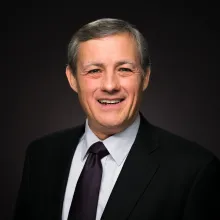
Gary Petty is a 1978 graduate of Ambassador College with a BS in mass communications. He worked for six years in radio in Pennsylvania and Texas. He was ordained a minister in 1984 and has served congregations in Longview and Houston Texas; Rockford, Illinois; Janesville and Beloit, Wisconsin; and San Antonio, Austin and Waco, Texas. He presently pastors United Church of God congregations in Nashville, Murfreesboro and Jackson, Tennessee.
Gary says he's "excited to be a part of preaching the good news of God's Kingdom over the airwaves," and "trusts the material presented will make a helpful difference in people's lives, bringing them closer to a relationship with their heavenly Father."
