
Frank Dunkle
This transcript was generated by AI and may contain errors. It is provided to assist those who may not be able to listen to the message.
That's right. This is the second half of the sermon.
Actually kind of cool. Write one together and then give each person give one half. Actually kind of an interesting way to do it. My wife reminded me when I when I got back to sing the hymn that I should probably make certain everybody understands kids are not a prerequisite to attend said family camp. It's open to couples. It's open to singles. It's open to anybody who would like to attend the family camp over at Camp Magruder. It's not just, you know, pre-teen camp 2.0. It is if you would like to spend three days on the coast over at Camp Magruder and enjoy the facility and enjoy the meals. And they do have very good food at Magruder, which is not I can't say that about every camp we've ever attended. I won't pick on Davidson, but I remember one year they were deep frying grilled cheese sandwiches and they were coming out a big soggy mess and the kids they would roll the cereal bowl out or the big they had a cereal cart. One year they roll that thing out and the kids would just like climbing over the top of each other to get cereal because they were so hungry. Hadn't eaten all week.
That wasn't our food. Our food has always been amazing when we've had cooks and whatever there, but that one was one that was a challenge. But if you would like to go and you'd like to be there, please reach out to Mr. Sexton. Let him know. It really is a beautiful facility. Even if you wandered down and spent all day just sitting on the beach, it is a very beautiful area, a very beautiful facility. So, brethren, behind closed doors of boardrooms around the country, discussions are always being had.
Boardrooms and business meetings and groups that are making the decisions when it comes to various businesses, there are a variety of discussions that are being had on this concept of a commitment and a diligence to the vision and the mission of a corporation.
Now, very frequently when you look at these sorts of meetings, it happens in education, it happens in various businesses, there are so many buzzwords that get thrown around in these meetings. Words like fidelity. We're gonna do this with fidelity. Words like synergy. We're gonna be synergistic. We're gonna work together. Synergy.
Impact. Competency. Deep dive. Growth hacking. And so many other words. And inevitably, people will grab on and latch onto these things and they'll write, you know, best-selling books on management and whatever based on these concepts. Well, one of the concepts that has come up in the past, you know, decade or so has been a concept of leaning in. This concept of leaning in. And it was popularized by Sheryl Sandberg. Sheryl Sandberg is the chief operating officer of Facebook.
And the concept of leaning in as it built and as it developed, this whole idea of leaning in at least, became really synonymous with this like unflinching commitment to the work at hand. I mean, such that you are leaning your full weight, your full effort into whatever it is that you're working on, whatever it is you're putting your effort into.
You might think like, I don't know, from a visual, for those of you that like visuals a little bit, you know, you're thinking about somebody who's putting their entire weight behind something. So a batter that's getting ready to hit a home run, I mean, they are swinging for the fences. They're putting everything into that swing. Or a boxer that's going for the knockout punch is putting all of their weight behind that punch. Every bit of energy and weight and everything that they have, not leaving anything behind. Not leaving anything behind, but following through entirely.
And I think it builds a mental picture such that if you think about somebody who has done this, if they miss that swing, if that ball goes by them, I mean, it's full windmill, right? That guy is off balance when it's done because he's put everything he had into it full windmill and realizes, oh, I missed. Or the boxer that goes for the knockout punch and happens to miss the guy because the guy dodges out of the way ends up off balance and stuttering past the guy because everything he had was in that punch or everything was in that swing. If you miss, you're going to be off balance, you're going to be exposed. Michelle Sandberg advocated this level of commitment, this level of focus, this level of dedication to the task at hand, kind of whatever that task may be.
Now, her book, which was titled Lean In, there was a subtitle on it as well, but her book titled Lean In, it examines concepts of seizing opportunities as they were presented, and really, as those opportunities are presented to you and those things come up in your life that you're given an opportunity to be a part of, her point was to lean in means seizing those opportunities as they come up.
Taking that chance at that promotion, taking that chance at this project, or taking that chance at this. One of the things that Miss Sandberg has been criticized for is that ultimately it's created what people say is a generation of workaholics, that they feel like the only way to advance is to throw their entire life into what it is that they're doing. Well, her real point, and I can see how that could be taken in that direction, but her real point was simply to not be idle, to not hold back, to not necessarily wait in these capacities, but in the vein of Ecclesiastes 9 and verse 10, whatever your hand finds to do, do it with all your might.
This idea of really putting as much effort into the project, putting as much effort into things as you could. Leaning in creates momentum. Leaning in is sometimes the first step down a very uncertain path, a path where the end result may not be known, where you're not really certain exactly where it's going to end up, but your commitment and your diligence to that path and what you approach will ultimately lead to success. How can this concept of leaning in help us in our spiritual journey? You know, as we consider the lives that we lead, as we consider the calling that we've been provided, how can this concept of leaning in be something beneficial to all of us? The title of the second split today is, Leaning In. Leaning in. Now, there's three primary words in the Bible that are translated as lean, and I think it's important that we take a look at these words because it's going to help us to build a picture of what we're really talking about here. There are three of them. The first is shawan in Hebrew, shawan. The second is samok, also in Hebrew. And the third is anakimai, which is in Greek, anakimai, which is in Greek. Shawan means to support oneself, to lean on, or to trust in. Samak means to prop, to lean upon, or to take hold of, while anakimai means to recline or to lie down upon. It might be already kind of in your brain thinking of places in Scripture where these words take place. Let's go ahead and turn to a few of those places just briefly to be able to see the context. Let's go to 2 Kings. 2 Kings 5 to begin with. We'll see the first of these words, shawan, in context. 2 Kings 5. 2 Kings 5, and we'll go ahead and pick it up in verses 17 to 18. Now this passage records the story of Naaman. It records the story of the miraculous healing that he sought at the hands of Elisha. We know a little bit about Naaman. We know that he was a mighty man. We know that he was a man of valor, it says in Scripture, that he was a warrior. He was somebody who was a very powerful and mighty and strong person. We know he was the commander of the army of the king of Syria. And we also know that he suffered from leprosy. And he suffered from leprosy such that he was seeking out Elisha for the healing that God provides because he knew that Elisha was this man who followed God. So we see Naaman arrives, and just kind of summarizing the story here briefly, Naaman arrives. He's surprised, very much surprised, that all Elisha tells him to do is to go wash in the Jordan. After all, he thinks there's magnificent rivers in Syria, you know, magnificent rivers where I come. And they're nicer than this muddy old Jordan, you know, muddy old Jordan. That's gross. You want me to go in that water? I got crystal clear water back home where I'm from. His servant ultimately convinces him to follow through on Elisha's instructions. Kind of says, look, if he'd have told you to do some just grand, grand thing, you would have done it. But here he's asking you to do something simple and you refuse. So he follows through. He follows through on the instructions to wash in the Jordan seven times his flesh is restored. He returns to Elisha to thank him to offer to compensate him, which Elisha turns down. And of course, the story continues with Gehazi deciding, no, I'd like to get whatever you offered. But there's a blip here in the center of this story in verse 17 that uses this word Shema. Shema in here. And it is verse 17. First Kings five verse 17. He says, and the king commanded them. Oops, that's not it. That would be first Kings. I want second Kings. Maybe. What did I do?
I broke it. I broke it. Oh, yeah, second Kings. Did I tell you second Kings?
I told you second Kings and I turned to first Kings. Well, there you go.
Like that is not what I'm looking for. Second Kings. Yeah, that doesn't have Naaman in there at all.
Second Kings five verse 17. And second Kings five verse 17. He says, so Naaman said, then if not, please let your servant be given two mule loads of earth for your servant, speaking of himself, for your servant will no longer offer either burnt offering or sacrifice to other gods, but to the Lord. So Naaman realized he recognized the power of God. He recognized the authority of God. But notice what he says next. He says, yet in this thing, may the Lord pardon your servant.
So he's asking Elisha to intercede on behalf of God for him. He says, when my master goes into the temple of Ramon to worship there, Ramon is a false God, and he leans on my hand, and he leans on my hand, and I bow down in the temple of Ramon. When I bow down in the temple of Ramon, may the Lord please pardon your servant in this thing. And so Elisha tells him, go in peace. And so he departed from him a short distance. That word lean is shawan. It means to support, to lean on, to trust. And what we get is a picture here. His master, the king of Syria, is older. He's uncertain in his footing. He relies upon Naaman to keep him steady while he worships his false gods. That would require Naaman to bow down as well, so that the older king could bow.
And he's asking Elisha for God to pardon him in this as he serves his master. There's another place where we see this word used. It's in Proverbs 3, verses 5 and 6, and we won't turn there. We'll just reference it. But we're admonished not to lean shawan on our own understanding. Not to lean on our own understanding. And again, this is the word shawan, to support, to lean, or to trust him.
Now you might start to build a little bit of a picture in your head as to what this looks like, what these things mean. The next word samok is translated lean, and we're going to go just a few pages the other direction here to 2 Kings 18. Just a few pages over from where we are here with Naaman. 2 Kings 18, and we'll pick it up in verses 19 to 21, where we'll see again this second word used. And this is the account of Hezekiah and this particular challenge that he faced at this time, at the hands of the Assyrians. You know, we know that Hezekiah went through and did some amazing things. He went through and he worshipped God very strongly. He reestablished the temple. He took down the high places where these secondary locations where Israel was worshipping away from places where God had placed his name. Well, we see that in the seventh year of Hezekiah, so it happened, it began in the fourth year of his reign, but it took three years for that to occur, the nation of Israel fell into captivity by the Assyrians. So we know that happened during Hezekiah's reign, and seven years later, after that occurred, Sennacherib, who was the king of Assyria at that time, came up against Judah. And so in 2 Kings 18 and verse 19, we see that the Rabshica, who was kind of this unofficial herald commander that was the governor of the Assyrians from Lechish, tells Hezekiah. 2 Kings 18 verse 19, then the Rabshica said to them, saying out of Hezekiah, thus says the great king, the king of Assyria, he says, What confidence is this in which you trust?
You speak of having plans and power for war, he says, but they are mere words.
And in whom do you trust that you rebel against me? Now he's saying these loud swelling words to try to kind of inspire some some dismal feelings in them as they face this potential siege. But notice what he says in verse 21. Now, look, you are trusting in the staff of this broken reed, Egypt, on which if a man leans against Samach, if a man leans, it will go into his hand and pierce it.
So is Pharaoh, king of Egypt, to all who trust in him. You know, you consider the picture that's present there. We're talking about a reed that has been bruised. It's been its structure has been compromised. You think of a, I don't know, like a cattail, I guess would be one of the closer things that we have to it, the big hollow stalk of those reeds. And, you know, if it gets bruised on the outside, it becomes really weak. It becomes really flimsy. So the Rapshika is telling those on the battlements that if their plan is to ask for aid from Egypt, you know, Pharaoh's a bruised reed.
He's a reed in which the structure of the stalk has been damaged and it's been weakened. And when that person leans on it, when they put their weight on it, when they trust in it, it fractures and it pierces them through the hand. Rapshika is telling Hezekiah and those who were within earshot that Egypt can't be trusted, that Egypt can't be relied upon. The final word that we see that's used for lean is in John. Let's turn over to the Gospel of John. So to the Gospel of John.
And this particular word, once again, means to lean or to recline. John 13 and verse 21. John 13 and verse 21. And we see again, context here, we see the account on the evening of the Passover. The disciples are gathered together here in the upper room with Christ and they're reclining for their meal, was kind of custom of the time. But in this case, it describes that John records kind of his positioning and where he was. Verse 21 of John 13 says, so when he had gone out, Jesus said, now the Son of Man is glorified. That's 31, not 21.
There's 21. When Jesus has said these things, he was troubled in spirit and he testified and said, most assuredly I say to you, one of you will betray me. So the disciples looked at one another. They were perplexed about whom he spoke of, so they weren't really sure which one of them it would be.
And now there was leaning on Jesus, this is the word, leaning on Jesus' bosom, one of his disciples whom Jesus loved, which we realize is John. That's the way that John describes himself. He doesn't identify himself by name. Simon Peter therefore motioned to him to ask who it was of whom he spoke. So Peter kind of goes, John, ask him. Figure out who it is. You're right there. And so John, it says, leaning back again, reclining backward onto Jesus' breast, he said to him, Lord, who is it? And so we notice that he, you know, passes the soft to Judas. We know that Judas is identified. This is that word, anachimae, anachimae, which means to recline or to put your weight upon or to kind of rest backward or to lean against. Like you might lean against a column or you might lean against the edge of a sofa, which wasn't a sofa at that point in time, I suppose. But it kind of builds the picture a little bit, I guess. We know that after that's been there, that after they were, after Judas was identified, that he leaves immediately, John there is reclined against Christ's breast.
He was leaned, he was reclined, he was lying there upon Christ. Then you consider all three of these words kind of in their general usage. Within Scripture, they literally mean to lean, to support, to prop up, to recline, or to rest in. But figuratively, in these words, is an implicit concept of trust and in faith. A concept of trust and in faith. And to kind of help make this make a little more sense, I want to build one last little picture here before we move forward. And that is going to be back in the book of Ecclesiastes. And turn back to Ecclesiastes with me. Ecclesiastes 12, and we'll go ahead and pick it up there. You know, one of the pictures that this can help us to build is this idea of what happens as we become weaker. What happens as we become less certain of our steps. What happens is we become and have to maybe be a little bit more careful as a result of advanced age. Or we have to be a little bit more careful as a result of illness or sickness that might make us maybe not as steady as we once were. Ecclesiastes 12, you know, we've read this before, and I've read it in the New Living Translation. I'll just read it today in the New King James. But Ecclesiastes 12, and we'll pick it up in verse one. And this, again, describing the conditions of older age. It says, Remember now your Creator in the days of your youth, before the difficult days come, before the times come, in which it is more challenging, and the years draw near when you say, I have no pleasure in them, while the sun and the light, the moon and the stars are not darkened, and the clouds do not return after the rain, in the day when the keepers of the house tremble. And he's being figurative here. He's describing the slower breakdown of the body, and how the body doesn't always, isn't always capable of doing what it once was able to do. Verse four, he says, And when the doors are shut in the streets, and the sound of grinding is low, it's just describing the windows that grow dim, the eyes, the grinders cease, the strong men, the keepers of the house, the legs tremble. Talking about the sound of grinding is low. One rises at the sound of a bird, and all the daughters of music are brought low. Verse five, The afraid of height and the terror is in the way. When the almond tree blossoms, the grasshoppers of burden and desire fails. For man goes to his eternal home, and the mourners go about the streets. And Solomon's point here is, remember your God before these days. Right? That's his whole point here. But it also gives us a really good picture of the challenges of aging. I've been told by many of you as I go out and visit with you that getting old isn't for whims. Getting old is not for whims. I can't count how many times I've been told that, as people describe the different challenges that they face as they get older and the legs begin to become unsteady. The keepers of the house shake. It's more challenging to get around safely. It's maybe a little more fearful of falling. You have to be a little more careful of exactly where you put your feet sometimes. You've got to watch out for where some of those things may be. Sometimes, as we get older too, we may have to rely on mobility devices. We may need canes. We may need walkers. We may need a scooter of some kind to be able to get around. And that's the picture that I want us to have in our mind when we talk about leaning and when we talk about what it means to really fully lean upon something. When you look at an older person that is reliant upon a cane or reliant upon a walker, they are placing their weight on that device.
If that device catches, if it catches the ground or if it happens to trip or it happens to stop on a curb or something along those lines, it goes out from underneath them. They're going down because their weight and their trust is in that device at that point in time to keep them moving forward. Now, I think it's the same thing when you take a look at these scriptures that we looked at. That older king that Naaman was working with, he was leaning on the steadiness of Naaman. Why? Because he trusts him. He knows that Naaman's not going to let him fall. He knows for an absolute fact that if he were to start to tumble, that Naaman, as a strong mighty man of valor, would catch him and would not allow him to fall. We saw that Egypt wasn't trustworthy. Egypt wasn't like Naaman.
In fact, you put your weight on Egypt? Yeah, you're going to get pierced in the hand. There's going to be a result that comes from that because Egypt was weakened. Lastly, we see an element of trust and an element of love in that John reclined, arrested upon the bosom of his Lord and his master.
Now, Christ would not have done this, but if Christ were to all of a sudden go, where would John have gone? You've done this as kids to your brothers and sisters. Like, okay, okay, lead against me, lead against me, lead against me. And you watch him fall because they're putting all their weight against that person. Each of these words, it has a degree of concept of trust and faith. It's implicit in them, you know, regardless of their immediate context. So, brethren, the question I have for you today is, as we go down this road that we've been called to walk, as we go down this life that we've been called to, and we think about the obstacles and the challenges that we face, upon whom do we lean? Upon whom do we lean? Where do we place our trust? Where do we place our faith in order to keep us steady? Are we one of those individuals that looks at our lives and decides, I don't need anybody else. I can take care of myself. I am fiercely independent. I am stubborn. I don't need anybody. I am good. I can take care of myself. Or, opposite extreme, right? I'm giving you the extremes. The opposite extreme is the individual that needs their handheld for every possible step of the way. They can't step out on their own. They can't take the first step because they need the hand to be held through the process. Obviously, in between those two extremes are a lot of different gradations. You have fiercely independent on one side, you have completely entirely dependent on the other. We've been called to become a disciple of Jesus Christ, and as we just explored on this past Sunday during the day of Pentecost, the disciples of Christ were given a mission, and the mission that they were given was to go out and to create more disciples. To go out to preach the gospel of God to every creature. The gospel of the kingdom.
They were to go out, they were to command that those that heard and those that believed were to be repentant and baptized, that they would receive the Holy Spirit, and God followed through on that promise in a very powerful, very incredible way. Day of Pentecost, we see 3,000 disciples added on that day. Early church begins to grow, leaps and bounds, just on fire as it spread from Jerusalem through Asia Minor, through the region, into Rome, into the lower parts of Europe, and it grew and continued to move. But throughout, as these individuals were made, these disciples, they were learning to follow and to trust their God. And they were dealing with the same challenges that all believers face. They were dealing with challenges of heresy, challenges of things that simply weren't true, but that were being, you know, preached about God. They were susceptible to false doctrines. They were susceptible to schisms. They were facing the same challenge that all of us face, and that they were coming out of their culture, and they were ultimately leaving behind their sins. Regardless of the scenario, God expected that those disciples, those new converts, were going to lean into Him. That they were going to lean into Him.
And as has been mentioned before in previous messages and been discussed, that's not passive.
No, that's not something where we're necessarily expecting God to do all the heavy lifting for us.
It requires effort on our part as well. Part of being a disciple of Jesus Christ is stepping onto that path, and in some ways having absolutely no idea what the future holds, but taking that first step anyway. Don't know what the future holds. We have a basic picture. We see through a glass darkly. We understand the basic picture, but the details of how and what's going to happen on the way there. That's yet to be seen. You know, the challenges that are on this road that each and every one of us face, they've yet to be enumerated. The twists and the turns in that road are not necessarily mapped out, but that road is before us. And if we made the choice to step out on that road, and if we've made the choice to go down that road, you know, as we confront these things, as we see these things, these twists and turns in the road, so to speak, the challenges that might come up if we use that analogy, honestly, they don't really matter, because we know we're going to take the next step anyway. They don't really matter. They're challenging. They're difficult, but they're a part of the journey. The question I think that we're being asked, brethren, is as we go down that road and we confront these twists and turns and challenges and things that come up, the question that's being asked of us is twofold. To whom will we lean on for our support, and will we lean into and seize opportunities as they're provided, as they come up? I'd like to spend the remainder of our time today looking at these two things. We mentioned earlier the concepts that were found in Proverbs 3, verses 5 to 6 that tell us we must trust in God with our whole heart, that we must lean upon Him, not upon our own understanding, not upon our own cleverness, our own knowledge, our own skill. But what does that look like? Let's go ahead and turn over there to Proverbs 3. Proverbs 3, what does it look like in our life to know whether or not we're leaning on God, whether or not we're trusting in Him, whether or not we're putting our faith and trust and assurance in Him and in what He does for us, what He's promised? Let's go ahead and go to Proverbs, Proverbs 3, and we'll pick it up in 5, 6, and 7. Proverbs 3.
Proverbs 3 and verse 5 says, Trust in the Lord with all your heart, and lean not on your own understanding. So we might say that then the moral of the story then is that we lean upon God. In all your ways, acknowledge Him, and He shall direct your paths. Well, that's all right and good, but what does that look like?
It says in verse 7, Do not be wise in your own eyes, fear the Lord, and depart from evil.
Fear the Lord and depart from evil. You know, if we're not, like it says in verse 6, if we're not seeking His will purposefully in the situations that we find ourselves in, or you know, if we're asking Him for His advice and prayer and meditation on what His will might be, you know, if we're not doing that, then we're relying too strongly on ourselves, and when we're not relying on Him.
Again, God doesn't expect that we're going to sit back and sit on our hands while He does all the work, but He does expect that we're going to ask His will, that we're going to pray for Him to show us the path He desires us to take. But the important part, brethren, is that His expectation is that it's up to us to take the steps to achieve it. It's up to us to take those steps to then achieve it. That's us leaning in. That's us leaning in. That's us showing our reliance on God, showing our trust in Him, recognizing and trusting that He will make a way forward. And honestly, at times, it may not be the way that we've envisioned. It may not be the path that we thought it was going to be. But at times, by trusting Him and recognizing what it is that He desires, praying for His will, considering the paths and the options that we have before us, asking ourselves each and every time, what is God's will here? What does God want me to do here?
Scripture tells us God's will is for our sanctification, our holiness, our setting apart. It says it's the result of a transformation of our mind via His Spirit. It talks about how it gives us in a bit or it kind of enables us to discern that which is good, that which is acceptable and perfect. His will for us is to be thankful. His will for us is to do good. But we also recognize, and Scripture records, that at times it might be His will that we suffer for doing right, that it might be His will that we suffer for doing right, to endure the challenges that He puts in front of us in order to build godly character. Provided all those things are in place, provided we're seeking sanctification of God, provided we're transforming our mind by His Spirit, provided we're discerning that which is good, and provided we're thankful and we're doing good and we're doing what we can to live His way of life, then God desires us to make the decision.
Within those boundaries, make the call. Make the decision. Step forward. Step out in trust and in faith. Decisions, obviously, that are contrary to God's will for our sanctification or our setting apart or our holiness. Sinful choices. Choices which quench His Spirit in our lives. Choices that are not discerning good from evil. Choices that are thankless and doing evil. Those are clearly contrary to God's will because God has stated in Scripture in places what His will is, that it's for our sanctification, for the transformation of our mind, to discern what is good, acceptable, and perfect. Those decisions that would be contrary to that are then not in accordance with God's will. And it doesn't mean that the path that we're on, it doesn't mean the things we're experiencing are going to be easy. Part of His will as we explored when we looked at Smyrna in the Bible study this past Sabbath, part of what was God's will for Smyrna was persecution and the difficulties that they faced. Now, our natural human proclivity—I don't know about you guys—my natural human proclivity is to avoid pain, is to avoid discomfort, to avoid things that are really difficult in that regard. And so I think as humans sometimes, when we experience pain, when we experience challenges, we want to alleviate that. We want to stop that pain. And so sometimes maybe we wrestle a little bit. We may go in the other direction. We may go, oh, that looks painful. I'm going to go over here. You know, we might move just a little bit because that path is suddenly painful. That path is suddenly a challenge. That path is suddenly difficult. And so as humans, sometimes we avoid that. We run. We move. We do everything we can to make the pain stop. Right? But sometimes, brethren, there's a purpose to that pain.
There's a purpose to that pain. There's a purpose to those challenges. There's a purpose to those difficulties, particularly in circumstances where we aren't experiencing the consequences of a choice that we made. Right? You experience the consequences of a choice that you made. Sometimes that purpose is to learn the lesson, to not do it again. But at times, there are issues that we face in our life that are not a direct fault of our own. You know, Mr. Miller mentioned in the opening split today, he talked about the sins of the fathers being passed on to the third and the fourth generations. You know, there are dysfunctions that are passed generation to generation to generation that you inherited simply being a child. You know, difficulties in the experiences that you grew up in. And it's not to make excuses for it. It's to process through those things. But, you know, you're just experiencing those things. It doesn't mean you're going to stay there. It means you take the steps, you take the actions to go forward, you take the steps, you take the actions to, you know, get it taken care of. But, brethren, the one thing we want to be careful of, we don't want to find ourselves in a position where we say, this is difficult, this is challenging, this hurts, this is not of God. There are times in which it is. We have to be discerning. We have to be acquiescing to His will. We have to be reaching out to Him and trusting in Him, because He will make a way forward for us. But at times, it may not necessarily be the way that we expect it. Let's go over to Jeremiah. Jeremiah 17. Jeremiah 17. And we'll see the message that God gave to Jeremiah to give to the people of Judah. Jeremiah 17. We'll go ahead and begin in verse 5. Jeremiah 17 and verse 5. This is a message that was given to Jeremiah to give to his people prior to their captivity. This is, you know, a message that Jeremiah is bringing to the people of Judah. This is God's words to his people, those who he had called. And Jeremiah 17.
We'll go ahead and begin in verse 5. Sorry, let me stop talking and actually get there.
17 and verse 5 says, This is what the Lord says, Thus says the Lord, Cursed is the man who trusts in man, and makes flesh his strength, whose heart departs from the Lord. For he shall be like a shrub in the desert, and shall not see when good comes, but shall inhabit the parched places in the wilderness, in a salt land which is not inhabited. And then he contrasts it. He says, Blessed is the man who trusts in the Lord. Verse 7. And whose hope is the Lord. For he shall be like a tree planted by the waters which spreads out its roots by the river, and they will not fear when heat comes, but its leaf will be green, will not be anxious in the year of drought, nor will it cease from yielding fruit.
You know, the message to Judah is strongly worded, and it's strongly worded for a reason. Judah, at that point, had turned to idolatry. They had turned their trust, and they placed their trust in man. In some ways, they were worshipping everything but God. And God tells him, Don't put your trust in man. Don't rely upon human strength. Don't rely upon, you know, your own your own selves. He says, rely on me. He says, turn your heart to me. He says, those who do, those who put their trust in man, he says, they're stunted shrubs with no hope. They're in a barren environment. They're without water. They're drying up, and they're dying. They're in this uninhabited salty land. But he says, those who trust in the Lord, those who put their hope and their confidence in him, might say those who have placed their weight on him, who have leaned on him, who trust in him. They're like trees planted along a river. Their roots are deep. The heat won't bother them. The drought won't have an effect. Their leaves stay green, and they remain fruitful. One turns away from God, doesn't consult him, relies upon their own strength, their own wisdom.
I don't need help. I can do it myself. While the other recognizes their incredible need for God, their incredible need for him. Interestingly enough, I think it's really fascinating in this stretch, both situations, whether it's those that trust in God or those that do not trust in God, both situations involve heat and drought. Both situations have the same environmental situation.
Both are experiencing challenges. Both have difficulties. Both have issues. But the difference is those that are relied upon God, those who are relying and leaning upon God, those who are rooted in him, those individuals will weather that heat, they'll weather that drought more effectively than those that do not. And why? Well, because of that hope, because of that confidence, because of that trust that they have in him, in spite of those challenges.
He concludes in verse 9, and I think it's critical that we recognize this is where he kind of goes next. Like, this is important. That's why it comes following this little statement. He says, the heart is deceitful above all things, desperately wicked, who can know it?
He says, the human heart is deceitful above all things, it cannot be trusted. I think there's times in our lives where we're convinced that the best solution in our life is this or it's that, whatever it might be. And I think more often than not, in those situations, at times, those are human desires that have come up as a result of our deceitful heart.
We desire pleasure, we desire escape, we desire solutions, but we're not placing our trust in God in those situations. We're placing our trust in something else. We're turning from him, and we're relying upon our own human wisdom. We're relying on our own human knowledge, and we're convincing ourselves, justifying it to ourselves, that this is the best scenario.
This is what God must want for me, because I feel better.
Romans 12, verses 1 and 2. That's not what God says. That's not what God says. Romans 12, verses 1 and 2. What does God say? How do we know the will of God? How do we understand the will of God? How can we know what God's will is for us? Romans 12. We'll pick it up in verse 1.
Romans 12 and verse 1. It says, I beseech you therefore, brethren, by the mercies of God, that you present your bodies a living sacrifice. A complete dedication to.
Holy, acceptable to God, it says, which is your reasonable service. Verse 2, do not be transformed to this world. Do not be conformed to this world, but be transformed by the renewing of your mind, that you may prove what is that good and acceptable and perfect will of God.
Understanding the will of God requires us to be a living sacrifice to our God. Becoming conformed instead of to this world and its patterns and its form, instead being conformed to His thinking, being transformed to His thinking, His characteristics, His way of life, through the yielding of ourselves to His Spirit and allowing that Spirit to work in us to change who we are, to change the way that we think, to change the way that we look at the world around us, so that we can discern that which is good, that which is acceptable, and that which is perfect. So what does that mean for us? That means for us to be able to do that. It means we are residing in His presence. We're residing in His presence. We are leaning into Him, so to speak. And brethren, if our relationship with God is suffering, if our relationship with God, if we are distant, if we are struggling, if we have not been praying like we need to, if we've not been studying like we need to, if we've not been meditating like we need to, how can we be in His presence?
It is those things which bring us into His presence. It is those things in which we are leaning. And if we're not leaning and we're distant, we're leaning away, so to speak, then how can we ascertain His will? How can we know what He wants for us? How can we conclude that this is what He desires? How can we know the will of God if we're not transforming our mind via His Spirit, if we're just conforming to the world around us or conforming to fit its mold, focusing on the solutions that it provides in its infinite wisdom, because the world is so wise. It knows so much. Sarcasm. C.S. Lewis once wrote, and I love this quote. C.S. Lewis is an interesting individual to read, but I love this quote. He said, if you want to get warm, you must stand by the fire.
If you want to be wet, you must get into the water. He said, if you want joy, if you want power, if you want peace, if you want eternal life, He says you must get close to or even into the thing which has them, meaning we have to lean into His presence. We have to put our trust and our faith and our assurance in Him. We have to put all of our weight into that lean, rather than holding back. For us to understand God's will, it requires us to lean into His presence in our lives, because if we're leaning away, if we're distant, if we're going in the other direction, we cannot and we will not be able to discern His will fully. We won't be able to fully lean upon Him if we're leaning away from Him or if we're pulling away from Him. And frankly, brethren, it's a very good sign if we are pulling away from Him and we know in our lives that that relationship is suffering, that the solutions that we are determining in our life are probably based on our human reasoning.
If we are pulling away from Him, and yet this is the solution that we've determined, it is quite likely that is our human reasoning talking, and not necessarily God's will.
For us to make consistent decisions, leaning into God, for us to be consistent in that capacity, stepping out on that path takes faith, it takes commitment, and it takes diligence.
These days, you know, you look around us in society in particular, commitment kind of seems to be a four-letter word. You know, you only in many ways commit to something as long as it benefits you when it doesn't benefit you anymore. The wisdom of society says, cut and run. 2019 Bureau of Labor Statistics, I found this kind of fascinating, shows the average American will hold 12 different jobs throughout their lifetime. Now, for some of you who are a little bit older, and have, you know, gone through the last, you know, two, three decades in the workplace, 12 jobs sounds just unfathomable. You know, you remember a day in time in which you got hired on at a company, you started at an entry level, and you worked your way up.
And maybe you reached the top part of your thing, and then you moved sideways. Maybe you moved into management or whatever, but, you know, gone are the days where somebody puts 35 years at a company. You know, retires on a 35-year pension from Ford Motor Company or something, you know, that doesn't really happen much anymore. And it's not necessarily a bad thing. I'm not trying to say it's a bad thing, you know, sometimes maybe those changes are necessary in our lives, but trying to make the point that that level of commitment to just a single company, it just doesn't really seem to be a thing anymore. 12 different jobs, you know, 12 different careers, that many different shifts between their working years and their time of retirement. It's a very different system than was there before, and I think it kind of helps to illustrate a little bit of the differences and the challenges in our society relating to committing to something, putting your hole into something. It's a challenge. Let's go over to Luke 14. Luke 14. Oops. Luke 14. We get an account and a description here of the wedding feast.
Sometimes termed the Great Supper, you know, here is kind of by way of an analogy.
Luke 14. We'll go ahead and pick it up in verse 15. Christ describes the challenge that he faced. Christ describes the challenge that he faced. Luke 14. We'll pick it up in verse 15.
It says, Now when one of those who sat at the table with him heard these things, he said to him, Blessed is he who shall eat bread in the kingdom of God. Verse 16. Then he said to them, Christ speaks to them, He says, A certain man gave a great supper, and he invited many. He sent his souther at supper time to say to those who were invited, Come, for all things are now ready. Verse 18. But they all with one accord began to make excuses. The first said to him, I have bought a piece of ground, and I must go to see it. I ask you to have me excused.
And another said, I have bought five yoke of oxen, and I am going to test them. I ask you to have me excused. And still another said, I have married a wife, and therefore I cannot come. And as we've pointed out with this before, those were actual excuses that were allowed by law to a certain degree back in Book of Leviticus. But he says, That servant came, and he reported these things to his master. Verse 21. Then the master of the house, being angry, said to his servant, Go out quickly into the streets and the lanes.
Lanes kind of being another word for alley, you know, narrow, little bitty streets. Go out into the streets and the alleys, and bring in the poor and the maimed and the lame and the blind. The servant said, Master, it is done as you have commanded, and still there is room. There's still space, he says. He says, Go out into the highways and the hedges and compel them to come in, that my house may be filled. He says, Verse 24, For I say to you that none of those men who were invited shall taste my supper.
So we see those that were invited, at least, that provided those excuses had a number of reasons why they couldn't make it. Why they couldn't go forward in that capacity. Master of the house was angry. He opened up the supper, we might say, to the dregs of society, kind of really scraping the bottom of the barrel here as he grabbed a hold and as he pulled these individuals in, and I say bottom of the barrel, brethren, that's us, you know, recognizing we're not mighty, we're not, you know, powerful and, you know, incredible people. We are amazing servants, and we listen, and we yield, and we do what our God has asked us to do, and he does incredibly mighty things through us.
But none of us are titans of industry. You know, none of us are Bill Gates, none of us are Jeff Bezos, you know, we're not loaded to the gills with money. We simply are humble servants who do what our God has asked us to do. But he makes the point that they go out to those that are poor and those that are maimed and lame and blind, and they offer this opportunity. And then lastly, he sends them out to the highway and to the hedges. He says, go out in the streets in the bushes and just get them! Get people. Bring them in. Bring them to eat at this point.
And he says the original ones that didn't follow through on that invitation lost out. They weren't committed. They weren't able to then see it through. There are a lot of things, I think, in life today that can help prevent our commitment to things. There's just so many options today. There's so many different things that are out there. You know, your attention is being vied for so many different things. You know, it's hard to settle on one thing.
It's hard to commit to one thing these days. So people partially commit to dozens of things. You know, master of, or a jack of all trades, master of none sort of thing. You know, I do a little everything. Not really good at anything, but I do a little everything, right? Kind of that jack of all trades, master of none mentality.
We also have a great deal of trust issues, I think, in society around us because we've been burned. We've been burned when we rely on things in the past, and so we're really hesitant to throw a whole weight into something because what happens if it fails?
People will see the failure if it fails. We'll get hurt. And I think lastly, the other thing that kind of gets in the way and is an issue at times is the challenge of not being able to see the end of the road. Not being able to see exactly what's coming in between here and there. Not being able to see all the twists and the turns and the challenges and the difficulties. So I think sometimes people step up to the path, they look as far down the path as they can possibly look, and they go, that's too much risk. We make the decision based on what we see, but God is asking us to do something different. God is asking us to do something different. God is asking us to walk this path. He's asking us to respond to this calling in such a way that we're putting our weight on Him. He wants us to lean into Him. He wants us to lean into His strength and lean into His love, particularly because we can put our full weight upon Him because He does not fail. He does not fail. That reed is not going to buckle underneath us. You know, that person that you're leaning up against is not going to suddenly pull their hands back and let you fall.
The person is going to support you and protect you and love you the whole way, even at times when it feels like maybe He's not because things are hard. He's still there. He's still protecting. He's still caring for you. He's still working with you, just like He was working with those in Smyrna, just like He was working with those throughout the first century church.
But God desires that we will trust in Him to take care of the issues, not trusting in our own understanding, but instead trusting in Him. You know, this manifests itself in a lot of different ways in our lives today, ultimately. Frequently, I think sometimes the desire that we have to begin trusting in ourselves comes when our faith doesn't necessarily happen in our timetable. And we're thinking, this is what has to happen, but it didn't happen on time, so I'm going to grab the wheel. I'm going to take it. I'm going to do it myself. And it's in those times in which God had a plan, and we went ahead and rested the wheel from Him. We decided we were going to do it on our own timeline, and so we trust on our own understanding. We take over, and we decide we're going to do it ourselves. God's asking us to walk this path. He's asking us to lean on Him. He's asking us to recognize that whatever comes down this path, whatever comes down this road, it's, I call them opportunities. Sometimes opportunities look a lot like tests and challenges, but He's asking us to deal with these opportunities, to be able to work through these things, to seek His will as we come across them, and that ultimately requires us to be close to Him.
It ultimately requires us to be in His presence. It requires us to be in relationship with Him, in prayer and in meditation, in study, and ensuring that the steps that we're taking are within the boundaries of what God has said His will is for us. And provided it's within those boundaries of what God said His will is for us, then God expects us to take those steps, to step out on faith and trust and assurance, and work our way towards that Kingdom that He's called us to. Brethren, as we come out of the spring holy days, as we work ourselves toward the Feast of Trumpets and ultimately the fall holy days here in just a few short months, let us all work towards leaning in. Let us all work towards putting our full trust and our full weight and assurance on our great God.
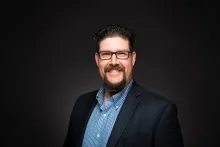
Ben is an elder serving as Pastor for the Salem, Eugene, Roseburg, Oregon congregations of the United Church of God. He is an avid outdoorsman, and loves hunting, fishing and being in God's creation.
