

Gary Petty
This transcript was generated by AI and may contain errors. It is provided to assist those who may not be able to listen to the message.
From the unnamed man of God. Lessons to be learned from the unnamed man of God.
We may not learn his name here and now, and at the end of this message, I will not give you his name.
God knows who he is, but we can learn valuable lessons regarding his walk with God, and thus learning from his lessons to learn how to more effectively carry on the walk that God has given each and every one of us. Recently, he was reading through the book of 1 Kings and was looking at the calling that different of those individuals had in the book of Kings, and there was a calling. There was a calling to rulership from two of these individuals, actually back to back, and then the calling of a man, the man without a name.
The first two rulers you know about, and they are Solomon, the ruler of all of Israel, and then there is the one that follows him that rules over a truncated Israel, the northern ten tribes, and that's Jeroboam. And then, yes, oh yeah, then there's the man without a name, and we're going to get to him, and that's going to be actually our focus.
But there is some similarity, and the similarity between Solomon, Jeroboam, the man without a name, and you and me today is simply this. We have all been called by God for a purpose. Each and every one of us has been chosen by the Almighty above for a purpose, to honor him and to follow his word as Mr. Miller brought out, and to take his word for what it is, word by word, and even if it's one word, to obey and surrender ourselves to it, and to live it fully as God would want us to live it.
I'd like to dwell on Solomon for a moment, who started out really well, just like later on Jeroboam would, but something happened along the way. But it's going to be to a point. Join me, if you would, in 1 Kings. In 1 Kings, and I'm just going to kind of go back, rewind the movie a little bit, just to give you some context where we're at.
In 1 Kings 8, and picking up the thought if we could around verse 22. Now let's understand what is happening. It's the time of the building of the Solomonic Temple. The temple that God did not allow David, who has also had a calling, who is also chosen, but was not chosen to build the temple. He got to do the blueprints, but it's Solomon that was able to do it.
And to recognize the words of Solomon, as he was starting his reign. Starting his reign. It says in verse 22, Then Solomon stood before the altar of the Lord in the presence of the assembly. All of the assembly of Israel spread out his hands towards heaven. Just like this. That's how the people of Israel, how the Jews even to this day, pray.
They lift up their hands, and they are open, expecting God to fill them with his direction. And it says that then Solomon stood before the altar, lifted up his hands, and he said. So he's on record for saying this, Lord God of Israel, there is no God in heaven above or on earth below, like you, who keep your covenant and mercy with your servants, who walk before you with all of their hearts, with all of their hearts, before this one above all the gods.
You have kept what you promised your servant David, my father. You have both spoken with your mouth and fulfilled it with your hand as in this day. Therefore, because of all of this, that has just been mentioned, Lord God of Israel, now keep what you promised your servant David, my father, saying, you shall not fail to have a man up before, sit before me on the throne of Israel.
And if your sons take heed of their way, that they walk before me as you have walked before me. There's a lot loaded in that scripture. It is conditional. And now I pray, O God of Israel, let your word come true, which you have spoken to your servant David, my father. But will God indeed dwell on the earth? Behold, heaven and the earth and of heavens cannot contain you.
How much less this temple which I have built? Yet, regard the prayer of your servant and his supplication. O Lord, my God, and listen to the cry and the prayer which your servant is praying before you today. Listen!
That your eyes may be open towards this temple, night and day, toward the place of which you said, my name shall be there. That you may hear the prayer which your servant makes towards this place. And may you hear the supplication of your servant, speaking in the singular. Hear the supplication of your servant and of your people Israel, when they pray towards this place. Hear in heaven your dwelling place. And when you hear, forgive.
May I ask you a question? And you can answer it. You don't have to do it oddly. I think Solomon really started out with the bang here, didn't he? He was a trooper.
He was in movement. He was leading the people of Israel towards the one that had rescued them from Israel. You know, it's one thing to start something, God's way. It's another way to end it the same way that you started. But we don't always find that in Scripture. Just a few chapters over as we go to chapter 11, 1 Kings 11. It says that in verse 4, For it was so when Solomon was old that his wives turned his heart after other gods, because he married all these wives in the Middle East based upon how they used to make all of the alliances. And you know what? He tried to keep them happy.
And so that his wives turned his heart after other gods and his heart was not loyal to the Lord his God, as was the heart of his father David. David, with all of his faults thinking about it, and you know you read that and it's chronicled forever. I mean, it's like an open autobiography almost. Wow! But one thing, he was always devoted to worshiping the God of Israel. Solomon? Not so much. For Solomon went after Ashtoreth, the goddess of the Sidonians.
Those are Phoenicians. And after Milcom, the abomination of the Ammonites. Solomon did evil in the sight of the Lord and did not fully follow the Lord as did his father David. Then Solomon, oh my, he did not only build the great temple that we always speak about, but you know, he was a builder. Then Solomon built a high place for Chimosh, the abomination of Moab, and that is east of Jerusalem. Not just the temple on the Temple Mount, but he built another temple to this pagan god and for Molak, the abomination of the people of Ammon. And he did likewise for all of his foreign wives. Well, have you ever read how many wives he had?
He must have been a real temple builder. And he did likewise for all of his foreign wives, who burned incense and sacrificed to the gods. So God became angry.
Yebeche, as they say in Minnesota. Yebeche.
The same Solomon that went on record about the great God.
But further down the road, he didn't follow God. The solution to all of this was God called a guy named Jeroboam, because Rehoboam, Solomon's son, followed him and he was actually worse than his father. And notice in chapter 12 verse 29. See, Jeroboam was chosen. He had a messenger come to him to tell him what was going to happen. That the northern ten tribes were going to come to him, hopefully that he would be a solution that would remove this problem, at least for the northern ten tribes. But notice what Jeroboam did in verse 29. Then Jeroboam built Shechem in the mountains of Ephraim and dwelt there. And he went out from there and built Pinuel. And Jeroboam said in his heart, Now the kingdom may return to the house of David. If these people go up to offer sacrifices in the house of the Lord at Jerusalem, then the heart of this people will turn back to their Lord.
Rehoboam, king of Judah. And they will kill me and go back to Rehoboam, king of Judah. Therefore, verse 28, the king asked, advice, May two calves of gold, friends here in San Diego and those, are you kidding me? Not just one calf like back in the wilderness in Sinai. This guy's going the outer limits. He's building two.
Sometimes history repeats itself and is doubled. He builds two golden calves, unbelievable.
And said to people, It is too much for you to go to Jerusalem. Here are your gods.
Here are your gods. Not calves in front of the great invisible God, but these are your gods. And he set up one in Bethel and the other he put in dam. Now this thing became a sin for the people who went to worship before the one as far as dam. And he made shrines on the high places, made priests from every class of people who were not of the sons of Levi. Not so good.
The priests were to come out of the house of Levi and especially out of the house of Aram. And Jeroboam ordained a feast on the 15th day of the eighth month like the feast that was in Judah and offered sacrifices on the altar. So he did at Bethel, which was very special in the history of Israel, which I'll bring out in a moment, to the calves that he had made. And at Bethel, he installed the priests to the high places which he had made. So he made offerings.
They all started out pretty good. But what I'm sharing with you is we learn the spiritual lessons here. Dear friends, it's simply this. It's not how we start that counts.
It's he that endures to the end. And not only the expression of he that endures could sound like which sometimes it can be in the spiritual walk, but he that expresses the ways of God to the end.
He that expresses the holiness of God to the end. He that honors the skip brought out in the first message honors the word of God and takes it straight and puts it in his life and, uh oh, here's the O word, and obeys it. Even when you don't understand the ultimate results, to know that a good God would never give us a law or give us a word that is not ultimately for our benefit. So I'm giving you some background because now we go to verse we go to chapter 13.
Chapter 13. Again, we're going to talk about another person that had a calling and was chosen of God. And this is, are you ready, friends? Just so you know where you are, this is now the man of God whose name we don't know. So are you ready for the rest of the journey? Here we go. And behold, a man of God. That's what we're going to call them. It's kind of cool.
A man of God. Can I make a comment just to draw you into this message? Aren't you people of God? Aren't you a man of God? Aren't you a woman of God? So let's just kind of tag along with this man of God and see where he goes. And behold, a man of God went from Judah to Bethel, excuse me, by the word of the Lord, and Jeroboam stood by the altar to burn incense.
Now we had already read that he had set up two different altars, one in Bethel and one in Dan.
Now this is important. You have to understand Bethel. Bethel was a place where Abraham had at times tinted. It's also the place where Jacob had that vision of the ladder to heaven with the stairway to heaven with the angels going up and down. So Bethel, literally, if you want to jot this down, literally means the word in Hebrew, means house of God. So all the more so to think that here this was the house of God, and now there were two idols that were in that area that Jeroboam was trying to have the Israel of the north worship. And it was the center then of Jeroboam's worship. And it says, he went there to that altar, and not only that, but there was Jeroboam stood by the altar to burn incense. You talk about up close and personal to Jeroboam. A message is coming. Then he cried out against the altar. This is the man of God. He cried out against the altar by the word of the Lord and said, O altar, altered, thus says the Lord, behold a child, Josiah by name shall be born to the house of David. And on you he shall sacrifice the priests of the high places who burn incense on you, and men's bones shall be burned on you.
That's a gripper. That's pretty graphic. Don't want to know if I want to be there when it happens. That's pretty gory, isn't it? But this is by the word of God speaking this. So here we see the man of God. First of all, he's prophesying. You might want to jot he's prophesying. God is using him as a prophet, even though we're going to find that most of the time he's mentioned as the man of God without the name. So he's prophesying because Josiah is not going to come for 300 years.
So this is a prophecy. 300 years. How about that, hitting it out of the ballpark and saying where it's going to go? And he gave a sign the same day, saying, this is a sign which the Lord has spoken, surely the altar shall split apart and the ashes on it shall be poured out so it shall come to pass when King Jeroboam heard the saying of the man of God who cried out against the altar in Bethel that he stretched out his hand from the altar, saying, arrest him. And then his hand which he stretched out toward him withered so that he could not pull it back to himself. Now notice verse 5, the altar was split apart and the ashes poured out from the altar according to the sign which the man of God had given by the notice the word of the Lord. Very important phraseology. And then the king answered and said to the man of God, please entreat the favor of the Lord. That's interesting. Your God! Jeroboam's not even, he's been caught with his pants down to use a phrase because he because everybody knows he's not worshiping the God of Israel.
Please say to the Lord, your God, and pray for me that my hand may be restored to me so the man of God entreated the Lord and the king's hand was restored to him and became as before. And then the king said to the man of God, come home with me, refresh yourself, and I will give you a reward. But the man of God, you're getting tired of hearing that phrase, aren't you? But the man of God, the man that had a calling, the man that had been chosen, the man that was on a roll for the kingdom of God said to the man, come home with me and refresh yourself, and I will give you a reward.
But the man of God said to the king, if you were to give me half your house, I would not go in with you, nor would I eat bread nor drink water in this place. Why? Next verse. For so it was commanded, notice, by the word of the Lord, saying, you shall not eat bread nor drink water, nor return by the same way you came.
Instructions. Now, let's just wrap this back so we're all on the same page before we go any further. The man of God is chosen by God. We find that he is used mightily. We find that he is prophesying.
We find that he is giving signs. We find that there are miracles out of his word. The altar is split. Things are happening here. We also find, let's put another thing down here, that God uses him miraculously to heal the withered hand or arm of Jeroboam. And then, interesting, always interesting, just when people can be on a roll, that you can have a backslide.
The temptation comes to him to disobey God. That's going to be important. The temptation is going to come to him. The king says, well, why don't you come over to my house and we'll have pasta or whatever they were having. Some baklava. We'll put it all in there for you because thank you so much for what you've done. Now, we notice then the man of God remembers. Notice what it says. Very important if you want to circle it by the word of the Lord. That's really going to be germane to our discussion by the word of the Lord. That, number one, he cannot eat and he cannot drink while he is in that land. Well, my, my, that might take a couple of days, but if you go to the Old Testament, you've got Moses, you've got Elijah, and now you have this man of God. He's not to eat and drink while he is over. Then there are certain reasons why. Number two, number two, he is not to go home the way that he came. Got that? Just two instructions. He can't eat, he can't drink while he's in that land, that foreign, now it's a foreign kingdom, Israel from Judah. And number two, he can't go back the way that he first came. Now, it's interesting.
If the story had just stopped here, wow! We'd say this is quite a guy. Maybe God would reveal his name. The name was never revealed, but there's more to the story, because what I want to show you is simply this. Just like Solomon, just like Jeroboam, just like this individual, it's not how you start. It's not how you started in 1955 or 1965 or 1975 or 1995 or five years ago or five months ago and following God and listening to his word.
It's he that endures and expresses the holiness of God and takes God at his word to the end of your lives. So now we're going to move forward. Let's notice what happens. So he went, the man of God went another way. So he went another way and did not return. By the way, he came to Bethel.
Now, an old prophet dwelled in Bethel. Now, that old prophet is dwelling in Bethel. That's in the northern kingdom. And that is where the setup is for the pagan worship that Jeroboam is endorsing and leading Israel into, which while it's not mentioned here, we could surmise that this prophet, this old prophet, may very well have been in the service of Jeroboam. That's just surmising. We're not the fly on the wall, but that's what some of the commentaries bring out.
Duoden Bethel and his sons came and told him all the works that the man of God had done that day in Bethel. Well, that's interesting. That would probably, if we could do some circumstantial linking, that probably tells me that his sons were in the service of Jeroboam in Bethel and, perchance, at the altar of the two calves. Had done that day in Bethel. They also told their father the words which he had spoken to the king, the words, the words that the Lord God had given him.
And their father said to them, well, which way did he go? For his sons had seen which way the man of God went who came from Judah. So let's understand. Israelites, and then we have the Jew. Then he said to his sons, saddle up the donkey. So they saddled the donkey for him, and he rode on it. And when after, yes, the man of God, and found him sitting under an oak. And then he said to him, are you the man of God who came from Judah? And he said, I am. Then he said to him, come home with me and eat bread. What do you think? What do you think?
I see heads shaking. This is not going to wind up good, is it? Okay, fine. Then he said, I cannot return with you, nor go in with you. Neither can I eat nor drink water with you in this place. For I have been told by the word of the Lord. This means there was a direct connection.
He didn't have an operator. He didn't have an angel hooking him up. This was by the prompting and by the voice, by the word of God. You shall not eat bread nor drink water there, nor return by going the way that you came.
What happens? He said to him, then, I too am a prophet, as you are. And an angel spoke to me by the word of the Lord, saying, Bring him back with you to your house, that he may eat bread and drink water. In my translation, in parentheses, it says, he was lying. He was lying. So, speaking of the man of God, he went back with him and ate bread in his house and drank water.
The man of God, chosen of God, sent by God, did not abide in the word of God and broke the word of God that was given him. In the Middle Eastern culture, to go in and break bread, and you've heard that phrase before, you break bread with somebody, it was not only a sense of hospitality, but a sense of covenant. Something a little bit deeper than we understand in our Occidental world, from the Oriental world. And then, notice what it says, so he went back with him and ate bread in his house and drank water. Now it happened, as they sat at the table, that the word of the Lord came to the prophet who had brought him back. God will use who he will use. Don't ask me, because sometimes there's some people that God uses and say, really? But here's the old prophet that's working for Jeroboam, most likely in Bethel, but God speaks to him. And of course, if God can speak through a donkey, he can speak through anybody. And he says through the words of the prophet, and he cried out to the man of God who came from Judah, saying, This says the Lord, because you have disobeyed the word of the Lord, and have not kept the commandment which the Lord your God commanded you. But you came back, ate bread, and drank water, in the place of which the Lord said to you, Eat bread, eat no bread, and drink no water.
Your corpse shall not come to the tomb of your fathers. So it was, after he had eaten bread, and after he had drunk, that he saddled the donkey for him, the prophet whom he had brought back.
It's the only time that the man of God is mentioned as a prophet, of which he was, when we see the beginning of the chapter.
The statement had come down. Now, why we were not there, we're not the fly in the wall. I know that some of the younger people, they look very old, and you might have thought I was there, I'm not the fly in the wall. All of the commentaries basically mentioned there was trickery, there was deceit, there was lying that was going on here. There might have even been a son of the commentary spot of favoritism, that here's a man that's in Bethel. His sons, perhaps, were actually serving in the temple of Jeroboam. He himself was, perhaps, compromised being in Bethel.
He thought that, perhaps, maybe he could curry favor with Jeroboam by sacking the guy that had done this to his altar and done this to his court. Notice then what it says here.
And so it was after he had eaten bread and after he had drunk that he settled the donkey for him, the prophet whom he had brought back. And when he was gone, notice, speaking about the man of God, a lion met him on the road and killed him. Now, follow through with this.
Killed him. And his corpse was thrown on the road, and the donkey stood by it.
And the lion all stood by the corpse. Now, just think about that, okay? You're going home tonight on the 52 or going down the 395 or going down the 5, and you're buzzing along and all of a sudden you see a dead body in the road. And there's a donkey standing there. And there's a lion standing there. Now, normally what happens if there was, you know, like some of us sometimes that live by the mountains or southern Californians, we know that mountain lions will, at times, attack a human being. Unfortunately, occasionally, one will die. Or you think of a bear up in Kodiak Islands. Normally a lion is, last time I met a lion, they're pretty hungry.
The corpse is there. The lion is there. And the donkey is there. The lion does not even go after the donkey. Hello? Just kind of break this down for a moment. Let's just put this. This is a God thing. This is a God thing. God said, you're not going to go home. Something's going to happen to you. The lion comes out. The lion doesn't go away. The donkey doesn't go away. And of course, there's a point to this that the corpse has not been eaten. What's going on here? Stay with me for a second. Now, when the prophet who brought him back from the way heard it, he said, it is the man of God who was disobedient to the word of God. Therefore, the Lord has delivered him to the lion, which has torn him and killed him, according to the word of the Lord, which he spoke to him. Now, the lion did tear into him, but did not eat the corpse. And he spoke to his son, saying, Saddle the donkey for me. So they saddled it. Then he went and found his corpse thrown on the road, and the donkey and the lion standing by the corpse. The lion had not eaten the corpse, nor torn the donkey. And the prophet took up the corpse of the man who had been taken away from the corpse of the man of God, laid it on the donkey, and brought it back. And so the old prophet came to the city to mourn and to bury him. Kind of, you know, really? What's going on here? There are some reasons. And then he laid the corpse in his own tomb, and they mourned over him, saying, Alas, my brother! So it was after he had buried him that he spoke to his son, saying, When I am dead, then bury me in the tomb where the man of God is buried. Lay my bones beside his bones. For the saying which he cried out by the word of the Lord against the altar and bethel, and against all the shrines and all the ply places that are in the city of Samaria, will surely come to pass. There are some thoughts here that the commentaries bring that burial was important that a man might be able to rest and sleep as it were with his fathers.
In some way, because perchance the God of mercy had seen what the man of God had done to this point, he preserved his corpse, and the corpse was buried whole. At the same time, the old prophet, the guy from Bethel, was playing both sides against the metal. I heard about his power in that Jeroboam's hand was restored and the altar split.
Just in case, I want to be buried with this guy. There's something about him that maybe I'm beginning to like. Somehow he had God's favor when all of this happens. I want to be where he was.
What do we learn from all of this as we go to the second part of the message? The man of God would die, but his words live with us to this day. His words live with us to this day.
And his example of when he was righteous and his example of when he was unrighteous are before us. God just gave him two instructions. Are you with me? Glad you're not three or four. Number one, don't go back the way you came. Number two was simply this. Don't eat and don't drink while you're in the land. Sounds simple? Two details? But you know that old expression? The devil is in the details. You and I, dear brethren, have been called to hear loud and clear the Word of God.
The Word of God is the most important thing that God is not here to mystify us, but his will is to be known loud and clear, and that's who we are to obey first and foremost. No man, not a pastor, not even a family member, but to recognize that we have a direct line to be able to, by his spirit in us, to be able to hear the Word of God. It's very interesting when you look at this. I just want a few verses. I'm going to be just reading a lot of verses because I do want to quit basically in time, unless you don't want me to. John 15 and John 15. Join me here a second. How do we link up with Solomon, with Jeroboam, with the man of God with no name? Notice John 15.16. You did not choose me, but I chose you and appointed you that you should go and bear fruit, and that your fruit should remain that whatever you ask the Father in my name, he may give you. Now, please understand, we need to be careful in this because we recognize that this was given first and foremost to the 12 apostles and the early disciples, but what was good for them, as we realize then, is good for us.
That we have been chosen. We did not choose him, he chose us. And we said, we will follow you wherever you go, and we will abide in your word. So we take that example and recognize then that whatever comes our way, as we have been called, that we remember what it says in Isaiah 30 verse 21.
This is the way. Walk you in it. This is the way. Walk you in it. And once God has set the road for us, wherever that began, whether as a youth, whether that was middle age, whether that was older age, God alone knows when it's ripe for people to be called and right, that he says, this is the way. Walk you in it. We're not to go back. We're not to go back like the dog to its vomit.
We're not to return and to look back like Lot's wife did. The road is set before us with Jesus Christ, appointed by God the Father to guide and to lead us. Now let's notice something even as we do that. Matthew 7 13. Join me if you would, please. Matthew 7 13. The words of Jesus. Sounds wonderful so far with this calling, doesn't it? But notice what it says here in Matthew 7 13.
It says, therefore it says, enter by the narrow gate, for wide is the gate, and broad is the way that leads to destruction. And there are many who go in by it, most likely well-intended. Start out good, giving all their energy to God, wanting to follow Jesus Christ, because narrow is the gate, and difficult is the way which leads to life. And there are few that find it. Beware false prophets. You might say after what we read, old prophets, who come to you in sheep's clothing. Yeah, come on! It's okay. We know God says that, but you know what? Things have changed. Things have changed. But, inwardly, they are ravenous wolves. You will know them by their fruits. So narrow is the way. How narrow is that way? Let's just kind of get it down to what I call bottom basis when God speaks, hear and obey. Shema, hero Israel, whether it's the Israel of old or the Israel of God today, Galatians 6 16. Shema, hear and obey. In the Hebraic mind, it was one life set. What God said, you did. Now that goes totally against human nature, doesn't it? Because human nature can be divided up like an apple pie three ways. We can do self-justification. We can do human reasoning. We can do self-righteous. And we can say, well, you know, right now I know I go to church all the time and I go to the festivals all the time and I do this all the time and that's how you know I need to be there and you know everybody is around.
But you know, this one time, just this one, I'm just going to let down. God will understand what God understood with the man of God. Don't go back the way you came. Don't eat, don't drink.
That kind of familiar story in the Bible, isn't that kind of what God told Adam and Eve loud and clear? Why is it always with food that's one of the big temptations that draws the people of God away that are called and chosen? And you know, in Genesis 3 verse 1, you know, Eve was talking to the serpent and you know the serpent, you know, he's acting like he's talking God talk. He says, hasn't God said that all of the garden, so he puts God into the equation. He says, hasn't God kind of said that all of the garden is yours? How'd that work out? God had been very loud and clear both to the man and the woman.
You can have everything that you want in that garden, but there's only one thing. Just one thing. You know, it's not like God was a miser. You can have it all, right? It's all yours.
It's just this one tree that you cannot partake of. Of course, we know human nature.
We know the story of Greek mythology of Pandora's box. She was told not to open it. Surprise!
What a deadly surprise waited for Adam and Eve.
What about Jesus? When Jesus went up into the wilderness, the man of God was not the first person that went hungry for a few days.
Jesus had, and Elijah had, and the Son of Man, Jesus would be in the wilderness for 40 days and 40 nights. What's the big thing that came along? Have a bite! Join me in Matthew 4 for just a second. Matthew 4 and verse 4.
Matthew 4 and verse 4. Let's take a look at this. Actually, in verse 1, Jesus went into the wilderness to be tempted by the devil. You know, we always think God's Spirit is going to lead us into green pastures, still brooks, and all the good things. It says, the Spirit led him into the wilderness. And when he had fasted 40 days and 40 nights, hello? Really? Afterwards, he was hungry. You betcha! And notice what it says. Now, when the tempter came to him, he said, if you are the Son of God, command these stones to become bread.
But he answered and said, it is written, man shall not live by bread alone, but by... Here we go. Every word that proceeds from the mouth of God. Every word. Not half a word. Not one sentence.
Every word is what we committed to when you and I were immersed into a way of life, into the body, the life, the death, the resurrection of Jesus Christ as we responded to the call of the Father. And we said that we would believe and with belief that as Solomon said, you are a God above all gods. Therefore, we surrender our life to you. Now, think about this for a moment. How did Jesus... man shall not live by bread alone, but by every word that proceeds from the mouth of God. Loud and clear. Not maybe. Not based upon situational ethics. Maybe God will look away... maybe he's blin... maybe God blinks. And I can get this one in. A little bit like the man of God who said, you know, I did pretty well up there at that pagan altar up in Bethel, but you know, the job's over. It's done. Now, I think I'll just kind of relax.
Watch a little... have a little meal, a little TV dinner, and watch TV with the the old prophet and everything will be okay. And yet that same God, the God that the man of God was representing, says that he sees everything. He sees that which is done in dark, and he will bring it to the light. God sees all in all, not to condemn us, but to encourage us to know that he is God and alone God, and that we can worship him.
One thing I want to share with you, a principle that I learned very early on, is Deuteronomy 12 verse 32. In Deuteronomy 12, 32.
And again, this is given after 40 years in the wilderness. Israel is about to go into the land. It's going to become a stationary nation, no longer a pilgrim nation at that point, but it is going to be surrounded by a lot of ancient Bethels. Canaan was like little Egypt, and God knew that there was going to be that osmosis. There was going to be that push to change. And notice what he says in verse 32. Whatever I command you, be careful to observe it. You shall not add to it, neither take away from it.
You shall not add, and you shall not take away from it. Now, stay with me, please, as we begin to move towards conclusion.
God said, one plus one is going to equal two. One plus one is going to equal obedience. Number one, don't go back the way that you came. And number two, don't eat while you're in the land.
That's how God set it up.
The prophet, the man of God, did not necessarily add. He just disobeyed the second part of it.
He took it away. Sometimes what we do is we add, sometimes we take away, and that still takes us off the very loud voice of God. How important is this? Ezekiel 1824. Join me if you would there, please, for a second. Ezekiel 1824.
Had the man of God been a good servant? I think so. Up to that point. I wish the story would end up there, but his example is for us today. But notice what it says here.
But when a righteous man turns away from his righteousness and commits iniquity, and does according to all the abominations that the wicked man does, shall he live? All the righteousness which he has done shall not be remembered because of the unfaithfulness of which he is guilty and the sin which he has committed because of them he shall die. Verse 25. Yet you say, the way of the Lord is not fair. Here now, O house of Israel, is it not my way which is fair and your ways which are not fair?
When a righteous man turns away from righteousness, his righteousness commits iniquity and dies in it, it is because of the iniquity which he has done that he dies. And again, when a wicked man turns away from the wickedness which he committed and does what is lawful and right, he preserves himself alive. The man of God died. His story lives with you and me today to learn how to serve God more effectively. Every word of God comes from the mouth of God. I'd like to just ask you to do this. I don't want to take another 15 minutes, but it was in my notes. Go down to the Ten Commandments. God gives us Ten Commandments. He doesn't give us five. He doesn't give us six. He gives us ten.
Is it somehow that we feel very comfortable in the first four commandments?
Of honoring God and worshiping God? But somehow we've displaced. We're not paid attention to, as Skip brought out, the other six of how to relate with our fellow human beings, how to relate with brethren, how to relate with community, how to live in community in a holy matter.
God told us there are ten commandments, not nine, like much the world keeps, but ten.
Are we a little bit like the prophet or the man of God of old that, well, we'll do this, but God will overlook us doing this. I've done really well over here. I've been very faithful in this, but God will wink at this. Another thing that you could do is, this will be your homework. Go through Matthew 5, Matthew 6. Look at the Sermon on the Mount. God says not to be angry with your brother. To be angry with your brother is like murder.
We're not to sit on anger. We are to deal with it as quickly as possible with God's help.
It says that in days of old, the commandment talked about adultery, but even if you ponder and think and linger on it, it is just as much as committing adultery.
I think that's pretty loud and clear from the loud words of Jesus Christ.
Another one that's very interesting, which might say now you're meddling, is simply this. It says don't worry. That is God's loud, clear voice. Do not worry.
Do not be anxious. Don't you look around and see what I've done with nature. And you know, by the way, it's doing pretty well. The birds get fed, the grass grows. To worry, to worry and stay worried is a sin.
It tells you and me, tells God, that you're living alone apart from Him, and don't understand His provisions for moving you towards His kingdom.
So you can't say like the man of old, well, I did this, and I did this so far after one or two attempts to dislodge me, but now while I'm doing this, I'm not going to go back the way that you sent me, but I can do this. I can just rest and relax.
My tummy needs to be filled, rather than being filled with the very loud, loud message of God. Let's conclude by going to Psalm 119. And as I share this with you, dear brother, and I'm just speaking to myself up here, because I certainly, of all people, need this message today. So it's just coming back to me. But let's just conclude by going to Psalms 119. Wouldn't it have been wonderful if the man of God had done both and united both all the way through to honor God, not only before people and doing big things before Jeroboam, but just on the trail, going home, not eating, not drinking, going on a different road home, and just God being His audience and saying, There is my servant in whom I am well pleased. Well, notice what it says in Psalms 119, verse 30. Excuse me. Psalm 119, verse 30. I have chosen the way of truth, your judgments I have laid before me. I cling to your testimonies. I hold on to them. O Lord, do not put me to shame. I will run the course of your commandments. I will do it. I will run the course. I'll be a miler. I'll be a decathlon. I'll do a marathon. I'm going to stay with it. For you, I can't do it by myself. I need your help. For you shall enlarge my heart. I don't have it in myself, especially under the new covenant and with the giving of God's Spirit, of His prompting in us. Teach me, O Lord, the way of your statutes. And notice what it says at the end of verse 30. And I shall keep it to the end, unlike the man of God. What I started with and what you told me to start with, I will finish to the end. Give me understanding. I'll keep your law. Indeed, I shall observe it with my whole heart. Make me walk in the path of your commandments for I delight in it.
Incline my heart to your testimonies, not to covenant us even food.
Turn away my eyes from looking at worthless things and revive me in your ways and establish your word, not the word of a man, not the word of a God imposter, not the word of a carnal individual or a false prophet. Establish your word to your servant, who is devoted to fearing you, respecting, honoring, revering you. Turn away my reproach, which I dread, for your judgments are good. At the end, it says, revive me in your righteousness.
I'll make a comment here, please, dear friends, if I might.
I think God loved that man of God, whatever his name was.
I think God in his mercy is going to raise him up one day.
And maybe with our examples, help him, as we've learned from his examples, both of what to do and what not to do.
You know, one thing about a good God is, perhaps he allowed that body not only to be there for a statement for the pagans, but to honor what the man did right before he erred. That's the kind of God that we worship.
Paul's pistol says that his desire is to reconcile all humanity to himself.
Even the man of God without a name, that perhaps we will not know till a future time, but we can learn by example of what he did and what he didn't do and experience holiness by listening to the loud, clear voice of God.
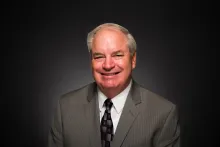
Robin Webber was born in Chicago, Illinois, in 1951, but has lived most of his life in California. He has been a part of the Church of God community since 1963. He attended Ambassador College in Pasadena from 1969-1973. He majored in theology and history.
Mr. Webber's interest remains in the study of history, socio-economics and literature. Over the years, he has offered his services to museums as a docent to share his enthusiasm and passions regarding these areas of expertise.
When time permits, he loves to go mountain biking on nearby ranch land and meet his wife as she hikes toward him.
