
Peter Eddington
This transcript was generated by AI and may contain errors. It is provided to assist those who may not be able to listen to the message.
The sermon today is going to be accompanied by a PowerPoint presentation. So, as we can put them on the TV monitors, it is titled, Lessons of the Curse Tablet at Mount Ebal, the Covenant of Blessings and Cursings. Go on to the next slide. One of the most important discoveries ever in Israel was made just very recently. They found a folded lead tablet from Mount Ebal. It should say March 2021, so I didn't catch that. It was about a year and a half ago that this was discovered. This was discovered right before COVID hit. After that, all the archaeological digs had to close down, but they found this tablet right before that time.
Go to the next slide. This is Dr. Scott Stripling, archaeologist who was in charge when they discovered the curse tablet. He spoke at the seminar I attended last week. We had some time to speak with him. He's a very nice Christian person, very dedicated. See if it's working properly here. Yes. Okay, going forward. We probably had 60 at that conference, and so it wasn't so big. We stayed at the same hotel.
We had a lot of time to get to know him. This is the place where the curse tablet, formerly known as a defixio, that's where these curse tablets throughout the biblical times were called. This is the area that it was found. As you can see, they've got the two large hills. To my left is Mount Gerizim, and to the right is Mount Ebal. And then they have the town of Shechem. Shechem is the way it's pronounced.
It later became common in Greek and Roman times to ask a petition of a god and have a little lead tablet and put your request and throw it into wells or caverns where they thought maybe the gods could hear them. But this is way before Roman times and basically even the Greek times. You're talking about 300 BC. Now here we're talking about 1400 BC.
So it's over a thousand years before the Greeks or the Romans used some of these tablets. Here we see how it looks today on Mount Ebal. As you can see, on the foreground is this altar that was excavated by archaeologists basically in the last 30 years. And there is an enclosure around it. Here is what Dr. Stripling, when they examined more closely this altar, as they dug underneath, they found an earlier altar which is rounded.
And the enclosure, how it would have looked like when you went to Mount Ebal to offer sacrifices, to recommit yourself to following God and His laws. It was a practice to write important messages on a lead tablet with an iron pen. If you notice Job 19 verse 24, I'll go ahead and read this. Book of Job 19 verse 24. Job said that they were engraved on a rock with an iron pen and lead forever. See, he said, oh, that my words were written. They would last. So when you used lead, which was very expensive to produce, and you wrote on it, and in this case, what you did was, it was like a little book.
And you wrote inside of it, and then you folded the lead tablet in two to make it into one. And that was the way you sealed the covenant with God that you were doing. In Jeremiah 17 verse 1, we see again how accurate the Bible is that it actually talks about writing in such a way. Jeremiah 17 verse 1. It says, the sin of Judah is written with a pen of iron. With the point of a diamond, it is engraved on the tablet of their heart and on the horns of your altar.
So this is something indelible. It doesn't wash out. This is something permanent. Their sin was that way that you wrote it with a pen of iron and on the tablet. In this case, in the hearts of the people. Israeli epigrapher Gershon Guy Lill says, Someone who knows how to write a text with a chiastic pattern like this can write anything, calling the writer a genius. This person was inspired by God. So a chiastic pattern is when you're writing poetically and you're using the first part and then reversing in the second part.
So for instance, the group, singing group Abba, that's chiastic because it's A, B, and then B, A. And so we're going to read this cursed tablet as it was discovered. And basically, this Gershon Golly said whoever wrote this could have written the entire books in the Old Testament. They already had an alphabet. There are 48 letters engraved in this tablet outside and also inside. And it says on the outside the curses if you disobey God and then inside is more developed. By the way, they had to use specialized laser penetrating radar on these to be able to look and see what were the writings. It took hundreds of hours to decipher all of this.
So as I was listening to all of this and taking notes down, it came to me that this cursed tablet, it sounds negative. But it really isn't. It is part of God's law that it has blessings if you obey, but you have cursings if you disobey. It's not a vacuum. You turn your back on God. It's not like life is going to be the same. No. There are going to be curses that will pursue you until repentance and forgiveness and the grace of God can wipe away those curses. But otherwise, it is going to come upon our heads. So let's look at six different covenants of blessings and cursings. This is the first one. The covenant in Eden comprised of blessings and cursings. So when God made that covenant with Adam and Eve, He said, here's the tree of life, which will give you life. This is my way of life. But I'm not going to force you into it. You also have the tree of the knowledge of good and evil. And that's going to give you independence from me. You will be able to determine what you think is good and evil on your own and with the help of Satan. But there were going to be blessings and cursings in this covenant. And we know that we have been suffering the curses of Adam and Eve's sins ever since in this fallen world. So people don't know why there are mosquitoes out there. We don't know why there are scorpions, why there are venomous snakes, why there are thorns and hurricanes and earthquakes and people get killed and all of these things. Well, these are the cursings that we are living in in a fallen world that has been cursed. And that we have all kinds of things happening to human beings. Now, in the Garden of Eden, there weren't hurricanes, there weren't earthquakes, there weren't thorns to prick your foot in. There weren't any poisonous animals. But now we live in this world. That's why we have to recognize the world that we live is still under Adam and Eve's curse. And we have babies that die and all of these awful things that happen and diseases that even in the youth are taken away. All of this is because we live in a fallen world.
And so, Adam and Eve did not take seriously the cursings of what would happen when they disobeyed God in the Garden. But we've been paying the consequences of it. So, there was a cursed tablet at the beginning. Now, God did not want for that to be applied. And the grace of God is still applied. So, there is forgiveness. There is a way to break the chain of sin that comes from our ancestors and continues to affect us even to this day. There is a way to break that.
I'm the first generation of my family that broke that. That from violating and breaking God's laws, which I realized I had done up to the tender age of 17 years old, when I realized I had broken all of God's commandments, if not physically, in my mind, in my carnal mind, I had broken them, and that these curses were upon me. And I said, no, I'm not going to go that way. And that's when the chain was broken. Now, I wasn't going to inherit the curses that come from the sins of my ancestors. Of course, there are sins that already affect you through heredity and everything else. We understand that. But at least now you're on God's side instead of Satan's side in this world. Let's go to the second covenant. And again, there's many others I could have used, but I'm limiting them to six right now, which was the covenant between God and Abraham also has blessings and cursings. Notice in Genesis 15, 8 through 10, Genesis 15, 8 through 10.
And he said, talking Abraham here, Lord God, how shall I know that I will inherit it? God is promising all of this inheritance that you can inherit the Promised Land.
And God answered. So he said to him, bring me a three-year-old heifer, a three-year-old female goat, a three-year-old ram or turtledove, and a young pigeon. Then he brought all these to them and cut them in two, down the middle, and placed each piece opposite the other, but he did not cut the birds in two. And when the vultures came down on the carcasses, Abraham drove them away. Now when the sun was going down, a deep sleep fell upon Abraham, and behold, horror and great darkness fell upon him. Then he said, talking God here, said to Abraham, now certainly, no certainly, that your descendants will be strangers in the land that is not theirs and will serve them and they will afflict them four hundred years. Talking about the time in Egypt.
And then, in verse 17, and it came to pass, when the sun went down and it was dark, that behold, there appeared a smoking oven and a burning torch that passed between those pieces. You see that burning torch? There wasn't anybody holding on to that. But it moved. That was God making a covenant with Abraham at this time that I am going to fulfill the promise. So, as I said, God can't swear above anybody higher than him. So, he committed himself, Abraham, what I have promised you, I will fulfill. And I will go down this path with the blood of the animals there. And basically, that's what is called in the Bible to cut a covenant, which means here that you cut these animals. And if you don't fulfill your end, may you end up as these cut up animals. So, God was saying, I am committing myself. And guess what? He gave his only begotten son as a sacrifice. So that these promises could be fulfilled. And then it says in verse 18, On the same day the Lord made a covenant, and it should be cut a covenant with Abraham, saying, To your descendants I have given this land, from the river of Egypt, that's the Nile River, to the great river, the river Euphrates, with all the different people that populated. So again, we see here the second time that there are blessings that are promised, but there are curses for forsaking the covenant with God. That you will be cut up to pieces. You will end up being cut off from God and his blessings. But again, you see in that torch, the grace of God. He's going to be with us. He's going to accompany us throughout our lives, and he will never abandon us. But we can abandon him. That's the problem. So let's go to the third covenant, which is the one that I mentioned originally, the renewal of the covenant on Mount Gerasim and Mount Ibal. This is the renewal of the covenant at Mount Gerasim and Mount Ibal. So let's go to Duraami 27. Get you a little bit of archaeology here as we go through the land itself and how the Bible describes what you are seeing. Duraami 27.
There's archaeological evidence for this. Verse 4.
Here, Moses was talking to them, and he says in verse 4, Moses was not going to cross over with them.
That's exactly what that round altar, that's about six feet across, and it has all these cut stones, but none of them have been done with a chisel. And they were built up, and later there was a larger altar placed on top of it. So we have two different levels, as you will see in a moment, of construction. And continuing on, it says verse 6, You shall build with whole stones the altar of the Lord your God, and offer burnt offerings on it to the Lord your God.
That's exactly what you see in that altar is made that way of very unpolished stones. You shall offer peace offerings and shall eat there, and rejoice before the Lord your God, and you shall write very plainly on the stones all the words of this law. So Moses could write, Joshua could write.
They were proficient because they were supposed to have these stones, and they were with plaster and all, so people could go and read. Now, if nobody could read, what was the use of that? So we see a pretty literate people at this time, or at least some that could read to others. And it says, Then Moses and the priests, the Levites, spoke to all Israel, saying, Take heed and listen, O Israel, this day you have become the people of the Lord your God. This was the covenant renewal that he's talking about when they had done it at Mount Sinai.
Therefore you shall obey the voice of the Lord your God, and observe His commandments and His statutes, which I command you today. And Moses commanded the people on the same day, saying, These shall stand on Mount Gerizim to bless the people when you have crossed over the Jordan. And then the different tribes he mentions, and these shall stand on Mount Ebal to curse. Reuben, Gad, Asher, Zebulon, Dan, and Naphtali.
And the Levites shall speak with a loud voice and say to all the men of Israel. So here you are going to read the curses, because people are stubborn. They need to be reminded of the consequences of breaking of God's laws. It says, It is the one who makes a carved or molded image, an abomination to the Lord, the work of the hands of the craftsmen, and sets it up in secret. And all the people shall answer and say, Amen.
That's why we don't use crosses. In this archaeological conference, one of the archaeologists mentioned that there is no historical account of anybody using the cross as an object of worship until the time of Constantine, the Great, which would have been around 325 there when he basically took over as the head of the Catholic Church, along with the bishops. But from then on, you see the worship of the cross. But there is no previous record. And I talked to him, I said, Well, what about some of these other evidence?
He said, No, what it was was the Egyptian letter of the T, which is the toth, or the Hebrew or other Babylonian, which was the letter tau. So you see the T, but it didn't have to do with the cross as a symbol. And so it says here, you are not to make a carved image. I don't care. Anything that has to do with it as a religious object is something that you put before you and God. You don't need that object to go before God.
He's there. You go in prayer. He doesn't need. The only mediator we have between God the Father and us is Jesus Christ. Not a cross, not a saint, not something that we put in place of. And I remember when I read the Ten Commandments booklet in our church. I was 17. And I went through and when I got to this second commandment, you shall not make graven images.
Guess what? I had a nice iron crucifix hanging on that wall. And actually it was one of the few things that we took when we came from Cuba. And I had it there and I looked at that and I said, God doesn't want me to have an object. I can adore Him in spirit and in truth. I'm doing it invisibly with Him. And so I took that, opened the window and threw it out the forest that was in the backyard.
Never saw it again. But it says, cursed be who makes a carved or molded image, an abomination to the Lord. It says you shouldn't even try to make images of God or imaginary images of how He or Christ look like. It says in verse 16, cursed is the one who treats his father or his mother with contempt.
So again, and all the people shall say Amen. So people are going to be respectful of their parents. They weren't going to treat them with contempt. Like today, some kids just say, I hate you or whatever. No, that's part of how you receive a curse from God.
And so you can read the rest of them, but they're all based on the Ten Commandments. Love God with all your heart and love your neighbor as yourself.
Then it goes on to say here in Joshua chapter 8, because remember, this was before they built the altar, but we actually have the building of the altar. In Joshua, when he crossed over, Joshua made an altar there on Mount Ebal. Joshua 8, verse 30, says, And there in the presence of the children of Israel, he wrote on the stones a copy of the law of Moses, which he had written. Then all Israel, with the elders and officers and judges, stood on either side of the ark before the priests, the Levites, who bore the ark of the covenant of the Lord, the stranger as well as he who was born among them.
Half of them were in front of Mount Gerasim, as you see here in the illustration, and on the other side. And afterward, he read all the words of the law, the blessings and the cursings, according to all that is written in the book of the law. There was not a word of all that Moses had commanded, which Joshua did not read before all the assembly of Israel, with the women, the little ones, talking about the children and the strangers who were living among them.
They had one common law, and in our church we should have one common law, which is the law of God expressed in the Bible. The entire, the Old Testament is the sound and solid foundation to build the New Testament church upon. And those who start with the New Testament church and don't consider the Old Testament as a foundation, Christ said, that is like the house built on sand.
It will not last in time. But God's laws continue, and the spiritual dimension is added to it. In the New Testament, and there are fulfillments, like Christ as our sacrifice. We don't have to be doing animal sacrifices. Christ is that way, but he fulfills and completes the meaning of the animal sacrifices. But God never made mistakes when he gave his law up until today. He hasn't done it. He won't do it ever. And so we see here how all of this happened.
Now we can go to see the tablet itself. The curse tablet on Mount Ibal has to do with the covenant renewal. The blessings of obeying God were mentioned on Mount Gerizim and the curses of disobeying God at Mount Ibal.
This tablet maybe was written by Joshua himself or a high priest in later times. But we know that the curses were given there, and since writing was already known, that this was a way of sealing that covenant with God. That the high priest or Joshua, who was representing the people, brought it and then read the words as Mount Ibal, which represented the cursings, the tree of the knowledge of good and evil.
The animals cut in part that if you violated, this was the end result. It says, Cursed by the God YHW, which is a short form of Yahweh. Now, in the Bible, in the Old Testament, you have certain ways of spelling Yahweh. Sometimes it's Yah, Y-A-H. Some of the hymns have Yah, which is a shortened way. This one is the three letters, and they are Y-H-W. That's a Yod in Hebrew, a Ha-Heh, which has to do with the H, and then the Wav, which has to do with the W. If you notice the one here to the left, it shows that the Yod is the Y. Then you have, it looks like a person, a human, which in the hieroglyphs, the Heh sound had to do with the human.
And it eventually became the H, with the two arms, the two feet, and the body. So it was like somebody praising God or something. The H eventually became that Hebrew letter. Okay, let's continue. This is the fourth example. The covenant renewal at the time of Nehemiah. Let's read Nehemiah 9. Starting in verse 34, remember, they came back from Babylon.
They were repentant. They'd been 70 years in Babylon. A new generation had risen up, and Nehemiah does a covenant renewal. Nehemiah 9.34. It says, Here we are servants today, and the land that you gave to our fathers to eat its fruit and its bounty.
Here we are servants in it, and it yields much increase to the kings you have set over us because of our sins. And they have dominion over our bodies and our cattle and their pleasure, and we are in great distress. Remember, they've been captured by the Babylonians, and then later the Persians took over.
He says, And because of all this, we make a sure covenant, and write it. Our leaders, our Levites, and our priests seal it. So you seal the deal, the covenant. And then in verse 1 of chapter 10, it says, Now those who placed their seal on the document, and it reads, Nehemiah the governor, he was the first that committed himself to obey God, for God to forgive all the sins of the past, and to now renew this covenant. And then he says in verse 28, And so, yes, it's not just blessings, because if we don't do it, there's going to be a curse.
There are consequences to leaving God behind, forsaking God's way. And so we come to the next, which is in the New Testament, the baptismal covenant. It is also a covenant that includes blessings and cursings. And it's more serious than the covenant renewed in Mount Ebal. We actually renew it at Passover every year. So when we do the baptismal ceremony, and the person is under the water, that's when Christ's sacrifice is applied to the person. And if a person's finger comes out of the water, we have to do it over, because it symbolizes some of the sins have not been covered.
So that's why you are covered with water, which is this type of symbol of all your past sins forgiven. And when you come out of the water, you're clean. No more curses. Nothing of the past is there to affect you, because all of that has been taken away. And so now we begin this new covenant with God, and then hands are laid on the person.
They're pure. They're clean. They're spotless in that moment. And so with the laying on of hands, God's Spirit is transmitted to that person and makes the connection. God the Father and Jesus Christ through the Holy Spirit and to the person and accompany them throughout their lives. So this baptismal ceremony is serious. We know we have God's grace of forgiveness, but it's nothing to be taken lightly. Notice in Hebrews 6. Hebrews 6. And here we are preparing ourselves for God's feast days and the Day of Atonement, which is symbolic of recognizing our sins and recognizing God's grace that we need.
Hebrews 6. And verse 1 says, Therefore, leaving the discussion of the elemental or elementary principles of Christ, let us go on to perfection, not laying again the foundation of repentance from dead works, which means repentance from works that produced death, the breaking of God's laws. That's what it means. And of faith toward God, which is the faith in the sacrifice of Jesus Christ, of the doctrine of baptisms. And it's plural because there's a baptism of water, there's a baptism of fire, and there is a baptism of spirit where a person will eventually be resurrected and be born into the kingdom of God as a new child of God.
So the personality is retained, but the body is changed, the mind is changed, no more carnal human nature there, and we are born into God's kingdom. So we're in a process right now. We're in an embryonic state right now. But that's what we're growing in grace and knowledge about. It says, of the laying on of hands. So this is a doctrine of the church. It's not a suggestion. And then it says, of the resurrection of the dead. We certainly believe in that, and of eternal judgment.
And this we will do if God permits, for it is impossible for those who were once enlightened and have tasted the heavenly gift and have become partakers of the Holy Spirit. No, as they were baptized, made this commitment, understood the blessings and cursings and the grace of God that accompanies it. He says, if they fall away, if they give their backs to God, they quit believing, quit obeying, quit following. It says, it is impossible to renew them again to repentance, since they crucify again for themselves the Son of God and put him to an open shame.
Yeah, Christ crucified himself once for us, but he's not coming down a second time to crucify twice himself. And if it says, for the earth which drinks... no, it says... yeah. They crucify and put him in an open shame. Then in chapter 10, verse 26, it says, For if we sin willfully... now this doesn't mean you slip up and everything. No, this is intentionally. I'm not interested in God's forgiveness. I'm not interested in following God anymore. I'm facing God and I am thumbing my nose to God and I don't want forgiveness.
If the person does it, after we have received the knowledge of the truth, there no longer remains a sacrifice for sins, but a certain fearful expectation of judgment and fiery indignation which will devour the adversaries. Anyone who has rejected Moses' law dies without mercy on the testimony of two or three witnesses.
Of how much worse punishment do you suppose will be? He. Will we, he be, through thought worthy, who has trampled the Son of God underfoot? Now, you notice this isn't a slip of some sin. No, this is trampling. This is stepping on God's sacrifice, what Christ did for us. Counted the blood of the covenant by which he was sanctified a common thing, something to be abhorred and rejected, and insulted the spirit of grace.
I don't want God's spirit in me anymore. For we know him who said vengeance is mine. I will repay, says the Lord. And again, the Lord will judge his people. Let's go real quickly to Hebrews 12 verse 18.
It says, For you have not come to the mountain that may be touched, and that burned with fire, and to blackness, and darkness, and tempest, and the sound of a trumpet, and the voice of words, so that those who heard it begged that the word should not be spoken to them anymore. And he says, verse 22, But you have come to Mount Zion. That's where the baptismal covenant is made with God the Father and Jesus Christ. And to the city of the living God, the heavenly Jerusalem, to an innumerable company of angels, to the General Assembly, and Church of the First Born, who are registered in heaven. Notice they're not in heaven, but their names are registered in heaven. To God, the judge of all, to the spirits of just men made perfect. They're awaiting that resurrection. But they returned, retain their personality. They're there waiting to be resurrected. They're unconscious, but they will be awakened. That's why they've already been made perfect, sins forgiven, but the resurrection, when Christ comes back, they will be part of it. To Jesus the Mediator, of the new covenant, and to the blood of sprinkling that speaks better things than that of Abel.
So we're coming to the end. Let's go to the sixth covenant, Renewal. And this is the one in Revelation 22, the last chapter of the Bible. And what do we find about that covenant renewal with God, the Father and Jesus Christ? It says here in verse 1, Notice it's there, this water and the presence of God the Father and Jesus Christ. In the middle of the street and on either side of the river was the tree of life, which bore twelve fruits. So who wins in the end? God does. The tree of life wins in the end. There's no more tree of the knowledge of evil. There's no more of this fallen world at that time. And then it says, verse 3, There won't be any need. Nobody's going to break God's laws ever again.
Yes, the covenant is sealed. You've got God's name on you that will never be removed. You are part of God's family now. And so, as we end, there will be no more curses, just blessings forevermore. So this cursed tablet is a powerful lesson for us and a reminder of our very serious covenant with God as we take the symbols of the Passover every year.
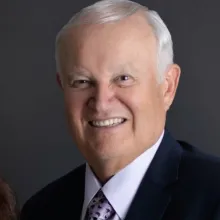
Mr. Seiglie was born in Havana, Cuba, and came to the United States when he was a child. He found out about the Church when he was 17 from a Church member in high school. He went to Ambassador College in Big Sandy, Texas, and in Pasadena, California, graduating with degrees in theology and Spanish. He serves as the pastor of the Garden Grove, CA UCG congregation and serves in the Spanish speaking areas of South America. He also writes for the Beyond Today magazine and currently serves on the UCG Council of Elders. He and his wife, Caty, have four grown daughters, and grandchildren.
