

Robin S Webber
This transcript was generated by AI and may contain errors. It is provided to assist those who may not be able to listen to the message.
Well, again, good afternoon, and certainly love the music that was just expressed. I think we all started getting a little Italian. We start to swaying, you know, to the Hebrew slave chorus. And of course, that has so much meaning during this time when you recognize when that was written in the middle of the 19th century that the composer was expressing the patriotism of the Italian republics as they were under the thumb of Austria at the time. So there's a lot of meaning behind that. I'm coming to understand more about Italians because several of our granddaughters are Italian, so we're trying to connect there with them.
Well, I want to say thank you to all of those that have worked behind the scenes during this spring festival season. I think all of us recognize that these things just don't happen. We've all been preparing for weeks and months to certainly have a time that really honors God, whether it's in Garden Grove or here in Los Angeles, Redlands, San Diego, Bakersfield, or over in Europe, down in South America, wherever the God's people certainly do understand the significance of the spring festivals. I know our pastors, our elders do, our support teams at work to really make these days very special down to the folks behind the scenes, those that are working on the choirs. It really is an entire family effort, and it's just awesome to see the family of God come together and really make this happen. And I would like to just say thank you very much to all of you, both in Garden Grove and Los Angeles, for doing your role in being able to honor God. We had a fantastic attendance this morning. They say there's actually more here in the afternoon, which is an anomaly. I guess they knew that Marcus was speaking, and they wanted to come hear him. And that's a blessing. They had a fantastic and a wonderful offering this morning. And we're finding that around the nation and around the world. And I think you know of where I speak, the support and the encouragement that we have, knowing that our brethren are behind what we're striving to do in preaching the gospel of Jesus Christ and the kingdom of God. And to recognize where we have been these past several years, as we have been going through our own Red Sea to a point to where the United Church of God can have a new chapter, a new lease, a new beginning, an expanded heart to truly serve God and to serve Jesus Christ. And to see you come every week, and then to see your generosity in prayer and your generosity in what you're giving and your ties and your offerings is, frankly, brethren, it's just very humbling. And it's very rewarding to see what all of you are doing. So thank you very, very much. But we're not here to just necessarily talk about the United Church of God today. We're here to talk about what God and what His Christ are doing on our behalf. And I'd like to begin this message by telling you a story. It goes back a couple of hundred years from now, just about 200 years ago, that one of the great confrontations in human history was occurring on the continent of Europe. It was in a place that would later on become the kingdom of Belgium, and it was on the plains just outside of a little town called Waterloo. And all of Europe was holding its breath. It knew that the armies of the earth were meeting there.
Everybody was, with bated breath, wondering what the outcome would be. England was particularly challenged and particularly worried every Englishman because it seems that they alone had been the ones to hold up as a country against the power of the Napoleonic Empire. So people were waiting for news, and of course they wanted to hear good news, any news, and there was a feverish pitch as to what was going on with all of that activity over on the continent. Finally, it said that the stories say that the ships began to come across the continent to the south coast of England, and the ships began to signal what had been occurring over on the continent. The flagmen were on the ship, and they were wig-wagging signals, and they were wig-wagging it to the tower of the Winchester Cathedral that was by the coast. And letter by letter and word by word began to come about, and they began to look and they began to focus at what was coming off that ship because all of human history was in the bay as to what would occur. And they began to spell, and they began to put words together, and it said, Wellington, defeat it, and then the fog came in.
And such gloom and such despair came over all of England. They were crushed, and you know how quickly news flies, whether good or whether bad. There was despair in Britannia, and they thought that all had been lost, everything that their young men had marched for and fought for for so many years during the Napoleonic Wars. And then the fog lifted, and those flagmen that were on those ships were still wig-wagging those signals, and the rest of the message came.
Wellington, defeat it, Napoleon. And there was such joy that went up, and the news spread over all of England, and where there had been doom and where there had been gloom, because only part of the story had been known. Now there was joy, and there was optimism, and there was a future.
I like to use that story to build upon another story, and it's not a story, it is reality that is shared with us by none other than God through His Holy Word. But I'd like to take you back more than 200 years, I'd like to take you back to 2000 years ago, to events that actually occurred during this, the days of Unleavened Bread.
Because there had been such optimism, there had been such fervor about what might be, and then seemingly a fog came upon a people that had hoped so much and lived so much and loved so much, and they thought all was lost. And what turned around, turned around during these days of Unleavened Bread nearly 2000 years ago. And I'd like you to take you to that story. We're going to move from Europe, and we're going to go to Judea.
And would you please turn to the Gospel of John, and John and chapter 20. And I'd like to share another story with you, like to tell you the story, and then I'd like to come to point, because I'm not just here as the minister of Jesus Christ to tell you simply a story, but I want to show you from this story that when the fog did lift from these people, they were challenged by none other than Jesus Christ.
To live a new life, to be a part of a new and a living way, as expressed by the author of the book of Hebrews. Now, during this time, we understand that, and over these days, we have been commemorating and observing and considering, beginning with the Festival of Passover, about the death of a precious one, of a precious life that was given by God, that came from God, that was no less than God in human form.
A sacrifice that was voluntary, given in incredible love. And we heard about that in the music this afternoon, that God so loved the world. But he had mentioned issues and items to his disciples all along the way as to what would occur. But because of who they were, where they were, and let's be frank, so much was new that he was doing that they weren't really able to connect the dots. And so when he died, they felt that he was like your dog, Rover, dead, all over, and was not going to be coming back up.
The fog had to send it, the one that they had loved and had given their life up for and followed. When he said, follow me, they followed him. And they gave up mother and father and wandered the roads of Judea and Galilee and Samaria for three and a half years. And now the fog of despair had to send it. And we pick up the story in verse one. Now on the first day of the week, which would have been Sunday, Mary Magdalene went to the tomb early, while it was still dark, and saw that the stone had been taken away from the tomb.
It's very interesting that the author here mentions that it was a woman that was the first one that had gone to the tomb. She was connected to Jesus. She probably knew him as Yeshua by his Hebraic name. And it was love that had drawn her to this tomb. Love because of what he had done for her. You see, this was a woman that had issues and had problems. In fact, had multiple demons that had been inside of her and had affected her life.
And then he came along and used her and showered God's love on her and freed her to a life of service, to a life of opportunity where she had been trapped and strangled and possessed by this spiritual world she now had a release. And she had recognized that whatever she had done, whatever her life had been, she was now forgiven. And those that are forgiven much come to love much. And it was love that drew her, an admiration that drew her to this tomb. And she noticed that the stone had been taken away.
And notice her action. Then she ran and came to Simon Peter and to the other disciple whom Jesus loved, which is code language for the Apostle John. And said to them, they have taken away the Lord out of the tomb, and we do not know where they had laid him.
They thought, she thought, this is an incredible desecration. This is either the Romans or the Jewish zealots, or maybe there are grave robbers. And it was like adding insult to injury, that here was the most perfect man that had ever lived. A beautiful man. A beauty that made everybody else so ugly. And now, this indignity.
They've taken our Lord out of the tomb, and we do not know where they have laid him. Peter therefore went out, and the other disciple, and we're going to the tomb. So they both ran together, and the other disciple outran Peter and came to the tomb first. When you see this scripture, there's a little humor in it. This is either telling you that John was younger, which he probably was, because he beat Peter in the foot race to the tomb, and or perhaps Peter was larger. We don't know. We'll find out one day. But nonetheless, they were running. And he, stooping down and looking in, saw the linen clothes lying there. Yet he did not go in. This is speaking of John. He looked through this stony entrance and looked in there and saw these linen clothes, and it was like a cocoon without the butterflies in it. It was just there. But he didn't go in. Then Simon Peter came, following him, and he went into the tomb, and he saw the linen clothes lying there. And the handkerchief that had been around his head, not lying with the linen clothes, but folded together in a place by itself. Now, it's interesting. Here is Mary. She is drawn because of her admiration and her love for Jesus Christ. That same love that had drawn her to that stake, to that cross on Golgotha, when men would not even dare to be there, that there was that bondentness, that desire that wherever the master was, that's where I want to be. It's kind of interesting. You see a personality difference between John and Peter, and I think you also see that in the writings where Peter was very bold, and you know, wherever Christ was dead or alive, he wanted to be as close as possible. Whether it was at a Passover service, whether it was walking on water or now in the tomb, wherever Christ was, he's going to rush in. Have you ever noticed that about Peter? Wherever Jesus Christ is, Peter wanted to be near. And sometimes, you know, and I know, our friend Peter would stumble along the way, but I think that Jesus Christ had a lot of smiles along the way, too. I think at times, Jesus Christ said, this guy is crazy about me. This guy wants it, gets it. He's going to stumble. He's going to falter. And you know what? Sometimes he's going to do things that might be a tad foolish, and we'll put those down for all times in Scripture. But I can work with that kind of individual. Give me time. Allow the process to happen, and Peter will be what is needed to be a leader in the church. You notice that he looked in. Everything was folded. So they recognized that grave robbers had not gotten in there, that there had not been a midnight sack, as it were, that something was happening here. Then notice verse 8.
Then the other disciple who came to the tomb first, speaking of John, went in also, and he saw, and he believed. It's very interesting that there begins to be a connection. And I want to try to sew this connection together with you so that you and I can proceed from the Days of Unleavened Bread 2011, and that God can fully use us. What drew Mary Magdalene to that tomb was love. What caused and allowed John to come to believe was love. Remember, this was the disciple upon whom Jesus loved and had a very special relationship. And not only that, but by reading John's writings, to where later on he would write that classical line, God is love. And love cast out fear, that when we love and when we experience the love of God in us, God not only opens up tombs in walls and hills of Judea, he begins to open up walls and tombs inside of us. And God can begin to do a work. It says, for as yet they did not know the Scripture, that he must rise again from the dead.
I would say a sense of this is that they had heard, perhaps they had read the prophecies of old. Jesus had certainly said that, you know, this temple will be raised in three days. He'd said that very early on in the book of John, very early on in his ministry. But it was a hard saying. They didn't fully understand it. The time was not then to understand. Have you ever noticed that about our own personal journey? That sometimes we read the book, we read the Scriptures, but the understanding isn't there then. It's a journey. It's a process. Sometimes maybe it's just our thick Dutch noggin. Or perhaps it's God's timing and God's way and God's purpose to bring us to perfection. For as yet they did not know the Scripture, that he must rise again from the dead. And then the disciples went again to their own homes. But now it's going to get interesting. We're going to personalize it some. Verse 11, but Mary stood outside by the tomb weeping. And as she wept, she stooped down and she looked into the tomb. Now she had not entered.
She had not entered. The stone had been rolled away. Let's understand something. I'm going to fast forward and we'll come back to it later. Let's understand that Jesus the Christ, now risen from the dead, did not need the stone to be rolled away so that he could get out. We do understand that. Are you with me? Just watch. That's where you're supposed to nod. Got it? Because we can't go any further in the story, do we? Got that? The stone being rolled away was not, I've got an angelic jailbreak. I'm out of here. Great. Let's go. No, it wasn't for God. It was for us.
During the days of Unleavened Bread to learn something very important, that there is no stone too heavy in our life that God cannot roll away. And where there is gloom and where there is doom and where there is despair, the light and the love of God can enter and create a new and a living way.
So she's there weeping, looking in the tomb, staring at the tomb, and she saw two angels in white sitting one at the head and the other at the feet. We're the body of Jesus at land. And then they said to her, woman, why are you weeping? And she said to them, because they've taken away my Lord, and I don't know where they have laid Him.
She was in despair. The fog of life had surrounded her. She wasn't able to understand the full message of what God was striving to convey during these, the days of Unleavened Bread. And now when she had said this, she turned around and saw Jesus standing there, and they did not know that it was Jesus. And Jesus said to her, woman, why are you weeping? Whom are you seeking? And she, supposing Him to be a gardener, said to him, sir, if you have carried Him away, tell me where you have laid Him, and I will take Him away.
And Jesus said to her, Mary, she turned and said, grab all my, which is to say, teacher. And Jesus said to her, do not cling to me, for I have not yet ascended to my Father, but I go to my brother and say to them, I am ascending to my Father and your Father and to my God and to your God.
Now, I want to pause here for a moment to help us understand some issues in the life of Mary that were happening outside of the tomb. This is going to be a one, two, three, so be ready for you that are note takers. Mary was doing marvelous things. She was also doing, are you with me? Human things. Let's understand some of the things. Number one, because Mary's story can be our story. We can learn from her story, so our story can be expanded and can be enriched and can be different, can be a new and a living way of which is this not what the days of 11 bread are about. Number one, Mary was seeking a dead Christ and not a living one. Mary was seeking a dead Christ and not a living one, not the one that is now risen in glory and power and in majesty, who serves as our Savior, who serves as our high priest, who serves as our advocate, who serves as our elder brother, who is more alive than you and me and more real than all those stars that we see up in the heavens at night, more real than the warmth of the sun that we feel during the day. Jesus is not myth. He is not legend. Neither is he dead. He is alive. And the Scriptures tell us that he is no longer in that empty tomb, but that he is inside of us, of which was his Father's plan all along. Number two, grief and tears are natural and needful and wonderful, but they can blind us from what God is doing. Tears are beautiful and wonderful, and God made them for a purpose. And there is a time to weep and there is a time to laugh, but also to recognize that when we understand during the days of Unleavened Bread that God sent his love gift to us, his Son, and then performed the most powerful miracle that ever occurred during this, the days of Unleavened Bread and resurrected one that was in human flesh to be our champion. That is where our focus needs to be. Number three, Christ came to her. She was in despair. She was sad. She was sorrowful. The fog all around her, in that sense, was getting chilly. Let's understand that the Good Shepherd in our life will come to us when it is coldest, when it is darkest, when we are despair, and we need to be waiting for him. It may not be in our time. Oh, indeed, it will be in his time, but he will come, for after all he is, indeed, the Good Shepherd. Point number four, she was looking for a dead Christ, also, but it is interesting she was looking in the wrong direction.
She was staring and looking at the tomb. She was focused on the tomb. She was focused on something dead, just like a pashal lamb under the Old Covenant, something that was spent and now dead.
She didn't recognize the fullness of what God was now doing under and with the New Covenant. Point number five, even as she established her focus, and this will be important for you, even as she established her focus, she at first did not see the Christ, but she saw a gardener.
Even as the tears began to dry and she looked up, the first thing that she saw was a gardener.
It wasn't until later that Christ identified himself. What is the power and the purpose of this point? Allow me to share it with you. A new and a living way. Representative of this, the days of Unleavened Bread, we must understand something, dear friends. Garden Grove, Los Angeles, those that are visiting with us today. A new and a living way and conversion is a process. It does not come all at once. There are times when God reveals himself to us, not all at once, because we couldn't handle it. We wouldn't know what to do with it. Even it landed on our the laps of our heart. God knows exactly what he is doing. Be prepared this coming year. Dear friends, for God to reveal himself, once those tears dry, once the eyes of your heart are open, God will come just as Christ came to Mary in that setting, but recognize what he reveals and accept it. What is interesting there, it says that he revealed something wonderful that he said, don't cling to me, for I have not ascended to my father, but go to my brethren, say to them, I am ascending to my father and your father. We share something in common, this heavenly father of ours, and to my God and to your God. Now, what's really interesting is to recognize what Jesus was speaking about here, went way back 1500 years before this time. And that for 1500 years from the time of Moses and Aaron forward, that on that Sunday between the Holy Days, that the the wave sheaf would be offered up, that the first fruit of the harvest would be dedicated by the priest and would be offered up to God. And that it was foreshadowing, a time that when his very son would come as the first fruit, but just a first fruit of the first fruits, because we understand what happens during the days of 11 bread, that there are trigger mechanisms that then what point to which and next holy day? The trigger me- go ahead, Marcus, nice and loud, you can say it, Pentecost, the trigger mechanism, because all of God's holy days are seamless. They come together and they point to each and every of the next holy days. And so he had not yet been offered up as this first fruit. And that's why it says, my father and your father, because he was but to be the first fruit of all the first fruits that were going to be able to say, Abba, father, our father, and have that same relationship with God Almighty as he did as the son. One thing I want to share with you that is very interesting here. And that is when we when we look at the verse here, verse 17, come back to me. Jesus said, do not cling to me, for I have not yet a sinner to my father, but go. Very important.
Go and say to them, when God begins to call us, when God begins to call us, he will give us a job.
He will give us a job. There will be an act of righteousness, as Mr. Garnett brought out. He will give us responsibility. He'll ask us to do something. And there was a story.
He said, go, and you tell them exactly what you've seen. That's our job as Christians in the 21st century. That when we have witnessed and experienced the life and the death and the resurrection of Jesus Christ, and we see his heart print and we see his hand print in our lives, we have a responsibility to share that. How do you bottle that up? How do you bottle up what God is doing with you and how God has blessed you? And how, when you go to Scripture, you find an answer. Well, you may not find all the answers, but you find the answer that you need then. And likewise, then, we point people to what God is doing and saying to the Bible, and to share the good news of what is occurring in our life. Very simple. Go and tell them.
Let's ask ourselves, as we look at where we were before Passover and where we are now on this side of Passover, 2011. Are we more willing? Are we more open? Are we more available to be a light, to be the salt of the earth, to be penetrating agents of the kingdom of God? Not often the future, but now, as God bids us away, gives us leave, gives us opportunity.
Or do we just keep it all inside of us? Kind of keep it in the cave of our lives, rather than sharing the goodness and the joy that has come, because the fog has lifted, not only over England, not only over a tomb side in Judea, but in our own lives, and that there is a joy that is unspoken, there is an understanding which is supreme, there is a thought that is divine, because God has visited us in this lifetime and revealed his Son to us. Mary Magdalene came and told the disciples that she had seen the Lord and that he had spoken these things to her. Then that same evening, the beginning of the first day of the week, when the doors were shut, where the disciples were assembled, for fear of the Jews, Jesus came and stood in their midst.
These poor guys, they'd been through a whole lot, and there they are, they are barricaded in. I bet you could hear a pin drop. Who's coming through the door? Well, we notice here, this is interesting, the doors were shut. This is a very tangible, sensual, the doors were shut. Jesus came and stood in the midst. He didn't use the door. Just like he didn't use opening up the stone in the tomb. He didn't need to. He just came through the wall. He appeared, and he said to them, notice this, peace be with you.
The first words that they heard from Jesus in that upper room or wherever they were was simply this, shalom, shalom.
I give to you. When we hear the word peace in America, totally different reference in the Middle East. When we hear the word peace, especially those that are, shall we say, in that baby boomer generation like I am, remember the 60s, make peace, not war. Peace has a different connotation.
In the Middle East, when shalom is mentioned as a blessing, it's a blessing that you give to people. It means not only that things that will be happy will be in your life, but in giving the blessing of shalom of peace, you're saying, I know that our God above will give you all the tools that you need on the journey. He will bless you, and the journey will have tumbles and stumbles and trips and falls. I wish you shalom. I wish you peace. That was the first time he said it.
So Jesus said to them again, excuse me, and when he had said this, he showed them his hands and side, and the disciples were glad when they saw the Lord. So Jesus said to them again, peace to you. As the Father has sent me, I also send you.
I bring you shalom. Likewise, you are to go forth with shalom, with peace, and allow others to know that they can have peace in a world that is not peaceful. They can have order in their hearts in a world that is disordered.
What a beautiful blessing.
It's nothing more beautiful than giving somebody a blessing. I love, as a pastor and as an elder, to bless people. It goes back thousands of years to the patriarchs that you give a blessing. God loves to bless. God loves to bless so much that he gave a formula for blessing to Moses, to Aaron, that when you bless them, bless them this way. And we know the words, the Lord be gracious unto you, and the Lord smile upon you, and the countenance. And by the way, he says, and remind them that when I bless them, I will do it.
Jesus is offering a blessing. And when he had said this, he breathed on them and said to them, receive the Holy Spirit. A new society was being created. New men were being developed. A new creation was coming into being. Remember how it says in the book of Genesis, how the breath of the Lord came upon and was given to Adam? Adam was the man of dust. Now there's new breath that is not coming to the man or the men or the people of dust, but those that God is developing into a spiritual creation. A spiritual creation. Sacred vessels, sacred instruments, called to the divine service of God Almighty, no longer tied down into simply this world of time and space and things that come and go and to be trapped into despair. But because that stone is rolled away and we come to recognize that there is no stone too heavy in our life. And I know I say this to you right now for some of you that are in financial dilemmas, some of you are in moral dilemmas, some of you are in family dilemmas, some of you are in health dilemmas unto death. And I'm here to remind you to bring you peace. Jesus said, go forth with peace. And I'm here to remind you today by a simple story in the Bible that when the fog lifts we are reminded that there is no stone too heavy. No weight that cannot be borne by the Spirit of God inside of us as we surrender ourselves to our Father and to His Christ. It says here that if you forgive the sins of any, they are forgiven them. If you retain the sins of any, they are retained. That forgiveness and repentance are the beginning of relationship with God and with one another. Now the other disciples therefore said, we have seen the Lord. Well, excuse me, verse 24. Now Thomas called the twin also known in the Greek by Didymus. One of the twelve was not with them.
He was not there when Jesus came. And the other disciples therefore said to Him, you won't believe what we saw. Hello! You won't believe it. We have seen the Lord. And so He said to them, unless I see in His hands the print of the nails and put my finger into the print of the nails and put my hand into His side, I will not believe. Pretty emphatic guy. Have you ever met somebody like that? Kind of plain spoken. It's just how it's going to be. Don't push me. This is how it'll be. Now let's understand something. For 2,000 years, this guy has been tagged with a nickname, hasn't he? We call him Doubting Thomas. But unfortunately, what we do is we freeze frame Thomas or Didymus. This is the same gentleman that in a sense was the, he's what I call a heroic pessimist. This was the same gentleman, let's be fair and share the whole story, is that this was the same guy that when they were going to go visit Mary and Martha. Remember when Lazarus died? Remember Lazarus died? And they also, you can't go up, you know, we'll all get killed. Who is the one man in that crowd of the dirty dozen, now known as the 12 apostles? And I'll throw myself in that lot until God began working with me. Who is the one guy that said, let's go up and die with him?
Thomas. Thomas just had issues just like you and me. When he was hot, he was hot, and when the fog came down, he was in despair. But God, through Christ, knew how to work with Thomas, just like he did with Mary Magdalene, just like he did with John the Apostle. And after eight days, the disciples were again inside and Thomas with them, and Jesus came and the doors being shut, there they are, they're shut again, and stood in the midst and said for the third time, shalom.
Shalom. And then he said to Thomas, reach your finger here, right here. Go ahead, reach your finger and look at my hands.
Are the holes big enough? Are they still fresh enough? And reach your hand here and put it into my side. Today we have a phrase for this. It's called up close and personal. It's called interactive.
Do not be unbelieving, but believing.
You see what's beautiful, and I see a crowd of about 300 people here. Let me share something with you. May I? God knows that we have all sorts of students of the gospel out here, and we all learn different ways. John was a bright guy. He's on the outside of the tomb. He's trying to put scriptures together. Can't quite get the right one to click yet, but you know John's working on it. John's a brain boy, but it's his love for the Christ that only made him the first one to understand that Jesus had been resurrected. Mary, she had her high highs and low lows, and Jesus Christ knew exactly how to deal with Mary and bring her along. You know, if he just revealed himself as the Christ immediately, she might have died of a heart attack. He wouldn't have a way to talk to. So he started being a gardener. He went from the gardener to being Christ in that sense. He knew patiently and perfectly as the master teacher, and I see Dan Salcedo down here, who understands teaching and how teachers have to deal with different students in different ways, don't you? If you try to deal with students all one way, you're going to lose all of the students. Oh, there might be a few bright ones. You're just born bright. But you're going to lose all the rest. And here's what I want to share with you and offer you this encouragement as one Christian to another. God the Father, through Jesus Christ and his Holy Spirit this year, is going to work with you exactly how you need to be worked with in this new and living way. He's going to work with you differently than he's going to work with me.
He's working with me in a different way, through different venues, different theaters of life, different chapters, different people. He's been doing a lot of homework with me personally as a council member over the last three years. He's been providing me almost on a daily basis humble pills to come to recognize that it's not about what a minister or a man might be able to do to serve a church, but that God will do it in his way and in his time and his place, and his perfection is always better than our human best. Let's understand, would we have given up on Thomas simply because of where he was for the moment? Freeze-framed him there, saying, bad! He can't be in the body. No, Jesus was patient. I want to encourage all of you this year, dear friends. Let's be strong in God's Word. Let's be strong in the faith of God.
But let's be a humble people and let's be a patient people with one another.
Because I want to share something with you as we begin to conclude. Now, as you go on to that story, join me if you would in Philippians 3 and verse 7. Philippians 3 and the Epistles.
Allow me to pick up the thought in verse 7. But what things were gained in me, these I have counted lost for Christ. Yet indeed I also count all things lost for the excellence of the knowledge of Christ Jesus, my Lord, for whom I have suffered the loss of all things and counted them as rubbish that I might gain Christ. Is that not what we did as we came up to Passover, as we renewed the covenant? That we said, Father above, we've been out there. We've been out there. Yes, we are that new people that you have breathed upon, but we have been tarnished and damaged this year as we've gone through this world. We've seen what's out there. There's nothing out there. And we're coming back by taking the bread and the wine. We are offering our life to you once again. We're putting everything behind us, everything that this world like Moses put behind him, the riches of Egypt and esteemed more the relationship with God than being the son of Pharaoh. And so therefore we partake of this Passover and we say, if we have any identity, our identity is in Christ. It's in that bread. It's in that wine, which represents his body, which represents his blood, that I might be found in him, not having my own righteousness, which is from the law, but that which is through faith in Christ, the righteousness which is from God by faith, as Mr. Garnett was bringing out this morning, that I might know him and the power of his resurrection and the fellowship of his suffering being conformed to his death. And you see, the spring festivals bring together the fellowship of his suffering surrounding the festival of Passover and now the power of his resurrection of that of that life that could not be held down, that was destined to rise from the dead, that we might have life. For we are in a sense redeemed by his death, but we are saved by his life. That's what the Apostle Paul brings out in the book of Romans 5 and verse 10.
And if by any means that I might attain to the resurrection from the dead, by any means, and the means is a new and a living way, allow me to begin to conclude this message, our final message, with all the very fine messages that all of our men have been bringing on Passover evening and our messages in Garden Grove and here, but allow me to give you some five points. They're going to be very quick. Number one, to help us with a new and a living way as we move out of Egypt towards the promise of God. Number one, take God at his word. Take God at his word. Jesus said that he would come back, and he did.
Jesus said that he would come back, and he did. Take God at his word in every matter, who be it the resurrection, who be it about his great love for us, whatever it might be, take God at his word. You know, brethren, that when we think of the power and the beauty of the resurrection, that story about Britannica during the Napoleonic Wars is paled in insignificance about the despair that was upon all of humanity until that moment, probably towards the evening of the Sabbath day, for it was three days and three nights, that something occurred that had never occurred before, that one was resurrected. The Latin literally means to stand. Now, others have been resurrected by Christ, but you know what happened is that later on they would die. Lazarus. You ever thought about Lazarus? He had to die twice. Dying once is hard enough.
It's kind of like Woody Allen. I don't mind dying. I just don't want to be there when it happens.
Are you with me? But Jesus stood, and then he ascended. Now he's at the right hand of God. Humanity is no longer headed towards despair.
Humanity is now because he is the first of the first fruits, and because he is the ultimate example of that wave sheaf, he now stands at the right hand of God. And thus, that when we say Father, and we come to him in that name that is above all other names, of which, upon no other name, can man be saved, God the Father literally turns his attention and says, Linda, Paul, Knut, Lauren, David, Greg, Ward, you're my child, and there's nothing, nothing between you and me. I'm all ears, and I remember what my son did, and I remember what I allowed to occur to him, because of my great love for you. This coming year, take God at his word. When the fog descends in your life, like off the shores of Dover, take God at his word. Point number two, grow in love. Grow in love. That will give you eyes to see as you draw to where God is. Grow in love.
1 Corinthians 13 says, above all things, there is faith, there is hope, but love. God can work with our foibles, he can work with our bad vision, he can work with our stumbles. When he understands that we are devoted and that we love him, and not only love him, but love the brethren, we can't just simply have passion towards God, it must be compassion. For Christianity is not simply vertical, it's also horizontal. It is not only up, it is out. Just read the whole book of 1 John. That'll create the whole picture for you. Grow in love, and as you do, I want to share something with you, God will reveal more to you.
You want to grow in grace and knowledge? You want to know more and connect those scriptures together? You want to know that Christ was not just simply a man and that you can talk about him, but you know about him, that you experience him, that he is your Lord, that he is your Savior, that he is your All. And that perhaps some of us have not had a relationship with our Father in this lifetime and on this earth, that as we ask God to share his love with us and to allow that seed of love to grow in us, that the richness of eternity can be ours. It's called a new and a living way. Point number three. Appreciate that such love is returned as Christ meets us where we are at. Christ will meet you this coming year, tonight, tomorrow, this week, where you are at. He will meet you because he loves you and his Father loves you. He will meet you looking into a tomb. You might be fact boy, scripture memorizer, like John the Apostle, but not able to connect the scriptures the way God intends to that point. But God will work with you and help you to believe. He will deal with you through tears like he did Mary Magdalene. And as those tears dry up, He will give us rivers of living water to abide by. And Thomas, what can I say? We've all been there.
We all saddle up to Thomas, as good as our God has been to us, as often as he's told us about his promises and his provisions and what he wants us to do. And just as I, Mr. Weber, right now, I'm telling you how to walk step by step in this noon, this living way. It will come and we will doubt, understand, God will understand that. And He'll come to you and He'll say, reach in, poke away. I get this. If I can handle those guys that were jeering at me on Golgotha, and they at that time were an enemy of the cross, I can understand that you at baptism said that you would carry your cross, but you've stumbled and you have doubt. I can work with that. I'm big enough for that. I'm here for you. I will not abandon you. I'll not forsake or leave you.
Understand that Christ will come to you and work with you where you're at. Number four, come to expect the unexpected. Come to expect the unexpected this year. Let's remember we worship a God who does not use doors.
He's not always going to come into our life the way that is expected. He doesn't use doors.
And He doesn't ask our permission, does He? He comes when the need is the greatest. And sometimes He'll come in a way that we least expect, just like Mary Magdalene.
Her relationship with the risen Savior started not with glory, but looking at Him as a gardener. Who is God going to bring into your life this year, friends, in this new and in this living way? That you least expect that is God's instrument to tool and to mold you and to shape you.
Number five, especially during the days of 11 bread, which are about life, about the new life and the new and the living way in us. Point number five, focus on the living Christ. Yes, we are to gaze into that tomb. Yes, we are to understand that God the Father loved us so very much that He gave us His Son, and His Son gave us His all, not somebody else's all. But He is alive. He is at the right hand of God. You know, it's interesting, there was a a Muslim that was talking to a Christian, and the Muslim said, you know, there's something different between you and me, your way and my way. That when my people go to Medina, we go to Medina and we go to a shrine. And when we go to that shrine, we see the coffin, and we know that the body of Muhammad is inside of that coffin, in that shrine in Medina.
When you as a Christian go to Jerusalem, when you go to a tomb, there's no body.
The Christian paused for a moment, smiled, because the smile was already in his heart, and he says, and he says, that is the eternal difference between what you believe in and what I believe in. When you go to Medina, you go to that shrine, and there is that coffin, and there is a body.
That is well and good, but the difference is this. There is no body, because he is risen.
And it is in that rising that creates the optimism that is in Christianity alone of all the ways that are out there. In this world of moral relativism, where I'm okay, you're okay, and there are many paths that lead to heaven or nirvana or whatever you want to call it, I say, no, no, no, not at all.
There is an incredible difference, for we are part of a way of life in which there is no stone that is too heavy, that will not be rolled away. And the champion of our cause, the leader of righteousness under the Father, is risen. And not only risen, but he is alive and well, and inside of us, those that have received the Holy Spirit. Let us conclude by going to 1 Corinthians, and thank you for your indulgence. Let me just conclude. Let's anchor ourselves in a scripture, dear friends, as we conclude the festivals of Passover and the days of Unleavened Bread of 2011. 1 Corinthians 15, sometimes known as the resurrection chapter. I began this message today by talking about one of the great battle victories of all time, in which Wellington won, and Napoleon did indeed have his Waterloo. In 1 Corinthians 15, and let's pick up the thought in verse 57, and as a congregation within the body of Christ on this, the second high day, a day that represents so much going back into history, whether it was the opening of the Red Sea, the tumbling of the walls of Jericho, or yes, in the past, in the reality of today, that the tomb is empty and he is risen. Verse 57, let us conclude and anchor ourselves, dedicate ourselves to this new living way. But thanks be to God, who gives us the victory through our Lord Jesus Christ. Therefore, my beloved brethren, be steadfast, immovable, and always abounding in the work of the Lord, knowing that your labor is not in vain in the Lord. Allow me to conclude by saying, Shalom.
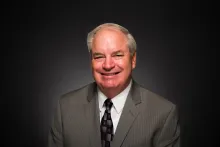
Robin Webber was born in Chicago, Illinois, in 1951, but has lived most of his life in California. He has been a part of the Church of God community since 1963. He attended Ambassador College in Pasadena from 1969-1973. He majored in theology and history.
Mr. Webber's interest remains in the study of history, socio-economics and literature. Over the years, he has offered his services to museums as a docent to share his enthusiasm and passions regarding these areas of expertise.
When time permits, he loves to go mountain biking on nearby ranch land and meet his wife as she hikes toward him.
