


Victor Kubik
This transcript was generated by AI and may contain errors. It is provided to assist those who may not be able to listen to the message.
I thought with the trip that we just finished, it would be good to have a PowerPoint presentation about this Latin America trip we just finished. And just as 1 Thessalonians 5, 12-13 says, And we beseech you, brethren, to know them which labor among you, and are over you in the Lord, and admonish you, and to esteem them very highly in love for their works' sake, and be at peace among yourselves. So God says that we should be reporting to the brethren, and also the brethren to rejoice every time we have an open door, as it has happened here over the past one and a half years in Latin America.
We serve 11 countries, Puerto Rico, Mexico, Guatemala, El Salvador, Belize, Panama, Colombia, Peru, Bolivia, Chile, and Argentina. We have what you call a skeleton crew because it's a very small group of ministers serving this entire area. And this past two weeks while I visited the church in Santiago, Chile, one of the reasons I took the trip was to visit this new group, which is in Misiones, Argentina. See it up here? This is called the Southern Cone Area because it's shaped like an ice cream cone.
And this is not one of the richer parts of Argentina by any means. It's a lot of farmland. This is the little area, it's like a finger that juts out from Argentina. And the people that we're visiting is in the region of, it says, Obera, which is the main city. And this is the region, which is actually the area of Posadas. And this is the state of Misiones. Right here is Brazil. This is the area of Paraguay.
And so we have a group there in Misiones. I'm going to tell you, I'm going to give you a little summary of it. Well, on January 12th through the 16th, 2017, Mario and Jaime Gallardo traveled from Chile to Argentina to meet with the church group in Misiones, Argentina.
On the Sabbath, Mario Sagli gave a Bible study in the morning where 80 members met. And then he gave a sermon in the afternoon where 60 attended. We were able to meet numerous families in their homes, or on Sunday where we had a barbecue lunch at the local German club.
Now, these people are European immigrants, so they're not the typical Spanish people that you would get to know. Here is the Ritter family. They originally came from Germany. As you can see, they're quite tall, blond, and they have their own farms. Mario Ritter is the head of the group, and this is the father and mother with the different children. This is in Misiones. This is Mario Ritter's wife, Liliana, with the two little children. Many of them build their own homes there.
Here is where they met, again, the whole family with a couple of other brethren. They no longer meet there, because once they decided to keep all of the feasts, they were expelled from church back a couple of years ago. So this past feast, we had the first FISA tabernacles sponsored by the United Church of God in the area of Misiones.
Jaime Gallardo, the pastor in Chile and Argentina, visited them during half of the feast. There were 12 brethren baptized by Mr. Gallardo. The province is surrounded by many rivers, among which, the best known, are the Parana, which serves as a boundary with Paraguay, the Parana River. Then Iguazu, famous for its waterfalls and the Uruguay River, are located to the north and east, respectively. Starting in 2014, a group of Christian Sabbath keepers made contact with the United Church of God in Chile through the Internet.
As of October 2015, Jaime Gallardo, the pastor from Chile and Argentina, has been visiting the families who requested personal contact. So it's been a little over a year and a half where they have contacted and then we've had the pastor visit them. The history of these families is quite interesting. Most are descendants of European immigrants of different nationalities. They came into contact with our doctrine at the time of the Plain Truth magazine.
That was back in the 1970s and still have some of those booklets in Spanish by Mr. Armstrong and others. In those years, they were part of the Seventh-Day Church of God that existed in the area since 1912. So the Seventh-Day Church of God is the church that Mr. Armstrong came across in the 1920s and he associated with them. But one of the reasons Mr. Armstrong did not continue with them was that they rejected keeping the annual feasts.
And when Mr. Armstrong realized that was something to be kept along with other teachings, he realized that they were not going to go along. And so he struck out and with 19 brethren over there in Eugene, Oregon, they started keeping all the seven feasts of God. That has been one of the main characteristics that makes us different from the Seventh-Day Church of God or Church of God's Seventh-Day.
Now, it's interesting that when they came across the reasons for the feasts and the group as a whole wanted to keep it, they, in Mexico, they sent one of the Church of God's Seventh-Day ministers to dissuade them from keeping those feasts. And he was so adamant that then they backed off. But one part eventually started keeping them. This is where the story continues. As time passed, a part of this Church adopted the long name Church of God, keeping the commandments and having the testimony of Jesus Christ.
See, they separated from the Church of God's Seventh-Day. They did not keep all the Holy Days, only keeping Passover and Pentecost. In the year 2013, that's four years ago, some families, after having studied in depth about the Holy Days, began to keep them, which was the reason why they were expelled from their congregation.
So this is when they sent the Seventh-Day Church of God minister from Mexico to keep at least a group in their fold. But another part said, no, we must keep all seven feasts. Being left without a pastor and not being organized, they began to consider the need to join some organization with similar beliefs. They met for some time with some local groups, and there was the Israelite Church of God, which is the Israelite of the New Covenant. These are groups that do keep the feasts, and they are very much Jewish-oriented.
So you see that church, it has a lot of the Jewish paraphernalia, the way they dress, the way they decorate things. And they did not consider this church to be what they were looking for. Then, searching on the Internet, after praying and fasting, they decided to write to the church in Chile, the United Church of God in Chile. At first, they hoped to have contact with the UCG group in southern Argentina.
We have a small group. But that did not go through, and they continued asking for the right contact. The answer to their request was finally made in a visit of Jaime Gallardo in October of 2015 that lasted four days. They considered that it had been a very short time and needed to talk about many subjects. This was the reason Jaime decided to return in December of 2015, accompanied by his wife, and they were there for eight days.
In total, there have been seven trips, the last one being on December 2016. And the eighth trip is the one I just took with Jaime Gallardo. The previous one was in December, where they drove with a church van all the way to Missiones and picked up five kids to take them to the Chilean youth camp. Those kids had never seen mountains or lakes in their life, because this is a very flat area.
It's a little rolling hills, but they had never seen something like the huge Andean mountains. And then they hadn't seen the Pacific Ocean. They had never seen lakes, because that southern part of Chile has volcanoes and lakes. And the kids had a blast.
They enjoyed themselves very much. They just had returned before we went on this trip, so I was able to meet these kids. During the visits that we have, we must travel from one place to another, and different families take us, because they're very long distances. It's not a small community. We go to one place, it's about an hour's drive, and then we go to another one. It's another hour's drive, so that's why they have to be centrally located when they meet, but from different parts.
The same members are in charge of transporting us, and the province doesn't have that big of a population, and not much urban development. So, people have their own farms, they cultivate tea, they cultivate wood, some of them even have sawmills. And the climate is quite warm, because it is in the middle of the summer. In that area, with the Atlantic Ocean, which is very warm, and so all of this humidity comes, and it just soaks you.
It was like 100 degrees with about 75 humidity. No air conditioning either, where we met. So, there they don't use coats and ties, because it is so hot. I would say it's similar to the Philippines during the summertime. And I just wore a shirt. I was going to wear the coat, but I said, no, I'm not going to.
And as I gave the sermon, I'm pretty good at resisting heat, but I tell you, all the pores in my body opened up.
And I was preaching, and when I read the scripture, I had to step back, because the drops would fall right off of my nose to the pulpit.
I don't know if you've ever seen Bob Hope's nose? They call it a ski nose. Well, I was having ski with drops just coming down, and there was no way to stop it there. I finally, with a handkerchief, stopped it with a Kleenex, actually, that they handed me.
And of course, they just have fans which blow the warm air back. There's no refreshing place at all. And you have to be careful with the mosquitoes. This is the area where it's very close to the tropics. And so just right across the frontier there, you have Brazil with the Iguazu.
And those mosquitoes, boy, they pulled out. Those things took out a good half-pine of blood, it seemed like.
So you have to be careful there. You've got to use a lot of insecticide and insect repellent.
So, continuing on, one of the questions, of course, they wanted to know, was their baptism valid or not?
Now, since they were, they had been from the Church of God Seventh Day, and they were keeping the feasts, and they had been properly baptized and hands laid on them, we mentioned to them that there would be a case where some would not need to be baptized, that we would accept their baptism. God is already working with them. They are keeping God's ways.
The majority of the group has accepted the 40 foundational doctrines that we have in our Constitution.
There is one thing that is a little bit different. Well, here's the barbecue. Argentinians love beef. They say that for every Argentinian, there are two cows, and so they really enjoy their beef. These are two members of the Church. Now, this is what they have. The women wear veils, because it's a church that has maintained itself very isolated. They're almost like the Mennonites or the Amish, but they use electricity and things like that.
But they do wear veils, so that's one of the things that we still need to clear up with them.
In the 2016 Passover ceremony where Jaime Gallardo was there, 23 people participated. In it, 12 men and 11 women. At the moment, they meet at a rented hall where I was there.
One of the members owns a radio station. It uses it to preach what our church literature teaches. It is financed by some voluntary offerings of the group. We went to that radio station this past Sunday.
He welcomed us to speak there. He has this radio station from 8 to 11 at night. Jaime and I were there. I spoke for two hours about the Holy Days and the key scriptures to know that they should be kept.
To us, we have it in our DNA. Give us a microphone. We can go on here. It just gets going and never stops.
This is a dynamic spirit that they are coming across.
It is noteworthy that this owner works there full-time in his livelihood. That of his family depends on these offerings of what the brethren give him.
As I mentioned, the brethren there are not rich at all. They mostly are farmers. Argentina is going through an economic crisis of vast proportions because of the mismanagement of the previous administration. They spent like a drunken sailor over there. Now they've got this huge hole they have to fill.
The president of Argentina has been going to all the world's capitals with a cap in hand, seeing who can help them. Because the deficit is so large. These brethren just have a very poor view of the government. High taxes. Do you know what the sales tax is in Argentina? 21%. Everything is graphed. The syndicates control a great part of the country. It's very inefficient. A lot of bribery is going on. Unfortunately, a country that is so rich is completely saddled and tied up by the majority of the politicians, which have been going on now on and off for 50 years. The same Peronist party has basically controlled the levers of power. It's very sad. The brethren there are very eager to be part of the United Church of God. There are just a couple of things that we need to clear up. I thought my visit was very important. I spent hours and hours over these subjects, and they're very encouraged.
They want to participate in a work of preaching the gospel. It's so wonderful to see their first love, because here they haven't kept the feasts for just until the last three or four years.
As they gather more understanding, they get so excited. They are so filled with enthusiasm. It's so enjoyable to have that first love again. We will see what God has in mind, but God has His Spirit there.
There is this affinity and harmony together.
So what are some of the lessons to be learned? Number one, how important it is to preserve that first love.
These people are coming to the knowledge that many of us have known for 50 or more years. It's O hat to people, but not to them. Let's go to Revelation 2. Revelation 2.
Here God is speaking to the different churches in Revelation 2. In verse 4, He says, Nevertheless, I have this against you, that you have left your first love. The church had gotten tired. It had gone through many tough times.
This first century church went through the expectations that Christ was going to come. He didn't come at that time. Then they had the martyrdom of the great majority of the apostles and the chief leaders. They were killed. All of a sudden, they didn't have that strong guidance anymore. Then they had false brethren infiltrate with the doctrines of a false grace. So people started getting more loose. They started compromising with the world. Even though they had great zeal in that first century to send out the gospel, they began to lose that first enthusiasm that they had had. And so Christ admonishes them. He says, Remember, therefore, from where you have fallen, repent and do the first works, or else I will come to you quickly and remove your lampstand from its place unless you repent. So here are three points that Christ gives them. First of all, look back and see how you had that zeal at one time, how you had that first flush and that enthusiasm for God's Word, for His truth, for God's work. And He's saying, Remember, because many times a person's not aware when they start sliding down, going down that slippery slope. And He says, Remember, from where you have fallen. And then He goes on to say, Repent. So that means, be willing to climb out of where you have fallen, be willing to make the effort and to be able to do that change. Make that change. Repent. And then He says, And do the first works. Go back. Restore that zeal for studying God's Word. He says, Or else I will come to you quickly and remove your lampstand from its place unless you repent. Christ wants us to correct ourselves. Or else He will do it. And when He does it, He does a painful and thorough deep cleaning, which is not pleasant at all. And so He warns the church about having that first love, regaining that great desire to be in the church, to grow, to look forward to being part of that kingdom one day. Notice in Revelation chapter 3, I get a chuckle out of this when I visit these different churches that go back to the time before Mr. Armstrong.
In this case, it was the Church of God's Seventh Day. Now, if you've ever read some of the old books, like History of the Two Churches, by two of these Seventh Day Church of God ministers, Duggar and Dodd, they explain their history. And Mr. Armstrong's name appears there as one of the seventy that had been chosen at that time. And there are some mentioned there from South America that these people trace their lineage back to some of these people that are mentioned in that book.
And like I mentioned, I get a chuckle because when people explain what this church is about, they say, oh, this is the spirit of the Sardis Church. Just like these people, now they come across the spirit of the Philadelphia Church, and they notice just this dynamic push forward.
Whereas they're all in little local groups, nothing is centralized. So each group, each pastor is the head. They just have a little work with the funds that most of them don't tithe. And so it's a very weak work. Notice in Revelation 3, verse 1, it says, And to the angel of the church in Sardis write, These things says he who has the seven spirits of God and the seven stars, I know your works, that you have a name, that you are alive, but you are dead. Yes, you have the truths, but as a church, you have not gone forward. You do not have the dynamic strength.
He says, Now this church at certain times in its history, it had kept some of the feasts. It never kept all of them, but some of them they did, just like this group with a Passover and Pentecost.
But they left behind the keeping of the whole seven feasts. And so this is a warning. You can't just keep part of God's laws. Verse 3, it says, Remember therefore how you have received and heard, Hold fast and repent. Therefore, if you will not watch, I will come upon you as a thief, and you will not know what hour I will come upon you. You have a few names, even in Sardis, who have not defiled their garments, and they shall walk with me in white, for they are worthy. And so there are some that are far more converted and dedicated than the rest.
And he says, He who overcomes shall be clothed in white garments, and I will not blout out his name from the Book of Life, but I will confess his name before my Father and before his angels. Now, I've had a chance to visit what is called the Israelite Church of God of the New Covenant. And these are part of the groups that back in the early 1900s, they had some of the missionaries.
It looks like it was from the Church of God's seventh day that went through Chile, Argentina, Mexico, Peru, and they gave them the truth of the Sabbath day, and not to keep pagan days, and to keep the biblical food laws. But these groups, instead of organizing themselves, they all have this independent spirit and independent organization. For instance, in Chile, they will meet, maybe the ministers there, once every two years. Cody, my wife, was part of the Israelite Church of the New Covenant, and she actually went to one of these congresses they had, which had to do with the youths at that time, but she says it was just chaos.
One would preach a certain thing, and then the other one would preach a certain thing. There was no guidance, and there was no unity. The tithes were just kept locally if they gave tithes, because that wasn't something that was enforced, and so it was a small little group. This is the same thing we found in Misiones as everywhere else, and my wife says that while she was part of that Israelite Church of God, she was always questioning why are they just so disorganized and not get their act together and preach the same thing? They actually had a little church that they met in her house.
Her father had set up benches, and they had a little place where they would meet, so she heard them during all that time, and then a group of them decided to be part of our church, which Cottie's family was one of them. They had Robert Flores from Pasadena, who was a Mexican minister born in the U.S.
but of Latin background, he went there and he pastored the church. And she always says how different it is. We take for granted. We pool all our resources into one, in a sense, common pot. And then those funds are distributed as they are needed, and so it's not just the U.S. that enjoys all of the good wealth and the good income, but we're able to send some of those things to support the different churches in Africa, in Latin America, in Asia, and many other places. But it's because it is all pooled together, and so all the needs are met.
That is not the way that Church of God Seventh Day has been organized. They just have a very loose affiliation, but there's no discipline. I just heard there in Michiones that the other group that is still guided by this Church of God Seventh Day, that already they're starting to water down the Sabbath. They're starting to say, well, if your boss insists on you working on the Sabbath, after all, that's not something that you are generating or causing, and so they're very alarmed. That's coming from the headquarters here in the United States. We've been watching that trend that the Church of God Seventh Day is just watering down the Sabbath more and more, and that's what happened over there in Michiones as well.
Now notice the next church over in Revelation 3, verse 7. It says, Now the key of David, if you go back to the Old Testament, it has to do with David's appointed caretaker of the palace and the temple grounds and many things. The key was to open and shut. So this is authority vested, and this was a church that was going to have certain authority vested in them, which other places did not have. He who opens and no one shuts and no one opens. I know your work. See, I have said before you an open door and no one can shut it, for you have a little strength and have kept my word and have not denied my name.
Indeed, I will make those of the synagogue of Satan who say they are Jews and are not. This is the false church. But lie. Indeed, I will make them come and worship before your feet and to know that I have loved you. Because you have kept my command to persevere, I also will keep you from the hour of trial, which shall come upon the whole world to test those who dwell on the earth. Behold, I am coming quickly. Hold fast what you have that no one may take your crown.
The Philadelphian spirit is one of getting the gospel out, going through all these doors. The final door that we see here that we have had open is the Internet. Some of the brethren there, Emisiones, said, well, how can you reach all of these people around the world? And it is through the Internet that we can reach the inner recesses of places like China, Mongolia. Everybody there is connected in the sense that they have phones, they can contact. And that's why it's so important to have our literature out there and our presence. We were about the fourteenth of all the religious organizations in the world. We are like the fourteenth in the United States that I recall that has the biggest Internet presence. And so that is opening up to us.
So this group wants to be part of that Philadelphia spirit. They don't just want to have their little local group which is dying out. The youths are leaving the church for the world. They can no longer keep their communities isolated. And so it's very sad. It's happening around the world. So again, we have to learn how important it is to preserve that first love, because the Philadelphia Church is known to have that dynamism. They are going forward just like that first century church had. But we cannot become discouraged like what happened to that first century church. Because of the expectation that Christ has not come, we went through a bit of a disappointment. We should never have set dates, but some did. And then comes that discouragement, that disappointment. The second thing was that the church also went through divisions, and that always is discouraging. Finally, we've had false brethren sow seeds of discontent and false teachings.
So we've gone through that. We don't have the same respect from the brethren that used to be the case. People are very lackadaisical and, okay, well, we just got to make it here in the church, and then let's go do our own thing outside.
Before, there was this very strong fervor in people to be part of the church and be part of the work. The second lesson is to remember that God has some people keeping His commandments that we don't know about. We are not the only group that God is working through at all. Even the churches of God that we know, that community. There are other groups out there that are doing things without us knowing about it. Remember what God told the prophet Elijah back in 1 Kings 19. 1 Kings 19, verse 17.
When Elijah flees, it says, It says, Elijah, there, if you read, thought he was the only one. And so we have people that God has been calling and working through without our knowledge. So let's not get haughty. Don't think everything is being done through our efforts because God has ways of carrying out His will. And then the final one is that it is the love of the truth that binds us together no matter where we live.
The love of the truth binds us together no matter where we live. In 2 Thessalonians, chapter 2, Apostle Paul talks about this point that we all share together. It says here in verse 9, Notice that it is not something that they generate themselves, but it is something they receive from God. The love of the truth. Through God's Spirit, we receive that love. We enjoy it. We want to have it more than anything else. The love of the truth. Notice it's not the love of truth like it's something general.
It is the truth, the biblical truths, which are called doctrines, which are teachings inspired in the Bible. Notice verse 11, We are bound to give thanks to God always for you, brethren, beloved by the Lord, because God from the beginning chose you for salvation through sanctification by the Spirit and belief in the truth. Here, three times in these three verses, it talks about the love of the truth. One of the things I prayed to God was to give me a spirit of discernment and see if God is calling these people.
Show me if these people are genuinely seeking your way, if they are converted or not. I checked them out, and they do have God's truths. They are being called to this spiritual body. In that sense, they already are part of the spiritual body. It doesn't matter that now we found ourselves, but it is the truth that unites us.
This isn't a group that's resisting it. They were so happy. They didn't want us to go. They wanted us to have Bible studies every day.
They just had that thirst and hunger for righteousness. Many times people have forgotten, have gotten lackadaisical, and it's sad. But everybody will come before Christ one day to give account to Him who has been given much. Much will be required, and accounting will be required. It's interesting that before the sermon, one of these men that you saw, his name is Ariel. In Acts 17, he read this. He said, Brethren, let us have this spirit when we hear the following message.
Acts 17, verse 10, to find out whether these things were so. Therefore, many of them believed, and also not a few of the Greeks, prominent women, as well as men. They had an open mind. God's spirit was guiding them. And God's spirit is a spirit that searches all things, that examines all things, that loves to grow in the knowledge and the grace of Jesus Christ. And so, brethren, that's part of the report that I have to give to you, that God is doing things many times, that we are not aware where He is working with God's people.
And we have an obligation to serve those anywhere they appear who want to be served by us. What a privilege it is to be able to serve these humble brethren. They don't have much as far as material wealth, but they still, they're not in Africa either.
They have nice cars, they have farms, they're able to get by with things, but certainly they're not up to the wages that you receive in the U.S. by any means. So, brethren, this is the report that I wanted to share with you, and later on I'll be able to talk more throughout the years or the months as I'm able to visit them again and keep you updated about this little group that God has placed His name there as well.
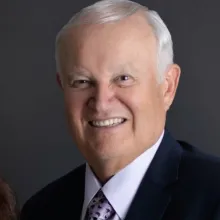
Mr. Seiglie was born in Havana, Cuba, and came to the United States when he was a child. He found out about the Church when he was 17 from a Church member in high school. He went to Ambassador College in Big Sandy, Texas, and in Pasadena, California, graduating with degrees in theology and Spanish. He serves as the pastor of the Garden Grove, CA UCG congregation and serves in the Spanish speaking areas of South America. He also writes for the Beyond Today magazine and currently serves on the UCG Council of Elders. He and his wife, Caty, have four grown daughters, and grandchildren.
