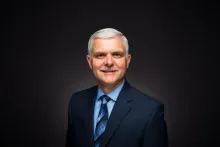



Paul Moody
This transcript was generated by AI and may contain errors. It is provided to assist those who may not be able to listen to the message.
Well, today we are meeting to keep the Feast of Unleavened Bread, excuse me, in obedience with God's instruction back in Leviticus 23. And we can, if you want to turn there, it's fine. I'm just going to be there real briefly. Leviticus 23, verse 6 through 8.
There we are told, on the fifteenth day of the same month is the Feast of Unleavened Bread to the Lord. Seven days you must eat unleavened bread, and on the first day, and that would be today, you shall have a holy convocation. You shall do no customary work on it, but you shall offer an offering made by fire to the Lord for seven days, and in the seventh day shall be a holy convocation. You shall do no customary work on it. And, of course, that is what we typically call the last day of unleavened bread. God established this Feast. If you turn with me to Exodus chapter 12, God established this Feast before the children of Israel left Egypt. And we can read about that, Exodus 12, verse 17 through 20. Exodus 12, 17 through 20. We're setting the foundation here of why we're here. Exodus 12, verse 17 through 20. So you shall observe the Feast of Unleavened Bread, for on the same day I will have brought your armies out of the land of Egypt. They hadn't even left Egypt yet when God established this day. Therefore you shall observe this day throughout your generations as an everlasting ordinance. In the first month of the fourteenth day of the month of the evening, you shall eat unleavened bread until the twenty-first day of the month at evening, the following seven days. For seven days no leaven shall be found in your house, since whoever eats what is leavened, that same person shall be cut off from the congregation of Israel. Whether he is a stranger or a native of the land, you shall eat nothing leavened. In all your dwellings, you shall eat unleavened bread. So don't eat anything leavened, but do eat what is unleavened.
Jesus Christ also observed God's Feast we know, and it was also the practice of the church. We even have Paul's instruction, as alluded to in the first message sermonette, 1 Corinthians 5, 7, 8. And it was mentioned also last the sermon from last Sabbath, 1 Corinthians 5, verse 7 through 8, that we are not just keeping what some would call an Old Testament holiday or Holy Day. It is that, but it's eternal. It's established by God. 1 Corinthians 5, 7, 8, therefore purge out the old leavened. Paul said that you may be a new lump, since you truly are unleavened. For indeed, Christ our Passover was sacrificed for us. Therefore, let us keep the Feast, not with old leaven, nor with the leaven of malice and wickedness, but with the unleavened bread of sincerity and truth. And so we are to keep the Feast with the very mindset and approach of Jesus Christ, which was that of sincerity and truth, the very essence of God's love.
And so we've been preparing ourselves for this day and this week, haven't we? We've been busy over the past few weeks, and the last several days wrapping it up, removing from our homes, our workplaces, our vehicles, and whatever else, wherever else we tend to habitate and leave crumbs and leavening behind, we've been getting rid of it. We've been removing yeast and baking soda and baking powder and other things like that, and also any food that contains leavening.
At least for me, and probably for you, we've tossed, we've swept, we've vacuumed, we've wiped away, we've donated, we've eaten leaven products as best we can. How many ice cream sandwiches did you eat at once this past week? You know? Yeah, we love the days of Unleavened Bread getting ready.
And of course, last night, before sunset, all our de-leavening was finished, unless we put a hand in a pocket somewhere and discover a package of saltines from the restaurant from who knows when, right? Well, as we know, leaven can be symbolic of sin's presence in our lives. Last Sabbath, Mr. Crane explained how leavening can be a symbol of sin, in that it permeates, just as leaven permeates bread dough and makes it puff up, by analogy, sin can permeate our lives and puff us up with pride and arrogance and rebelliousness in other self-willed ways, and especially contrary to God, against God. Well, God established the feast of Unleavened Bread so His people anciently, and also now today, would learn and remember vital lessons about God and also about ourselves. And so today, we'll consider three of those precious life-affirming lessons. And as we all know, there are many lessons possible from Scripture, from the occasions God has established. But we're going to look at three. Three life-affirming lessons, and they are, I'll tell them to you up front, God delivers, follow God, and choose life. God delivers, follow God, and choose life. These are precious life-affirming lessons, and we need to heed these lessons. And when we do, we will always have great cause for joy and for worship and for praise of our most merciful and loving God. And so I've entitled this message, Let Us Keep the Feast. Let us keep the feast.
And so let's go to the first lesson, lesson one. God delivers. And so we will begin, again, back in Exodus, Exodus chapter 13 this time, Exodus 13, and then we'll also read verses 7 through 10. Here, along with more instructions about eating unleavened bread, Moses made it clear that God delivered Israel from Egypt. I'm going to say that more slowly, that God delivered Israel from Egypt. Note the emphasis. Exodus 13, verse 3, and Moses said to the people, Remember this day in which you went out of Egypt, out of the house of bondage. For by strength of hand the Lord brought you out of this place. No leavened bread shall be eaten. Verse 7, as we read earlier, and leavened bread shall be eaten seven days, and no leavened bread shall be seen among you, nor shall leaven be seen among you in all your quarters. And you shall tell your son in that day, this is done because of what the Lord did for me when I came up from Egypt. Isn't that interesting? It wasn't just a communal reminder, but to make it personal that God delivered me.
And we can say the same thing today. Verse 9, It shall be assigned to you on your hand, and as a memorial between your eyes, that the Lord's law may be in your mouth, for with a strong hand the Lord has brought you out of Egypt, and you shall therefore keep this ordinance in its season from year to year. And again, that special emphasis here, and we read that, they are to instruct the children of Israel, they are to remember that God delivered from Egypt with a strong hand. Now, God's strong was manifested in the ten plagues that he poured out upon the Egyptians, culminating in that final plague, as we know, on the Abed 14, the night of Passover, that night when the firstborn of Egypt, of man and beast, were killed except for those who had put the blood of the lamb, that lamb on the side posts of their doors and across the top, the lintel.
Pharaoh relented after that plague, and he urged the children of Israel to essentially get out, get out quickly, get out of Egypt. Now, as we rehearsed a couple weeks ago, perhaps several millions in number left with their livestock on Abed 14, excuse me, Abed 15, beginning of the Feast of the Love and Bread, and what we observed as a night to be much observed. And so the Israelites were helpless.
They were helpless on their own to deliver themselves. They just couldn't do it. They could not deliver themselves from slavery in Egypt, but God did because He is merciful, and He is faithful, and He kept His promise to Abraham and his descendants. And so they, and now we, are to remember that God is faithful to deliver. King David understood this very well. He understood the history of Israel. He also understood how God was directly involved in His life. Let's turn to Psalm 34. We've been going to the Psalms a number of times already today, and that's a wonderful thing to do in a holy day.
These songs are praise. These psalms are also prayers. Psalm 34. David understood that God was faithful to deliver those who trust in Him. That's a meaning we have to take from this day to day. David knew that fact from God's Word, and he had personally experienced God's deliverance. And he wrote this Psalm, Psalm 34, inspired by God and with conviction that those who truly revere God can trust God totally to deliver them with a strong hand. Let's notice just a few verses here, verses 4 through 9. I sought the Lord, and he heard me, and delivered me from all my fears.
And they looked to him, and were radiant, and their faces were not ashamed. And this poor man, possibly speaking of himself, or any of us could be that poor man, and this poor man cried out, and the Lord heard him, and saved him out of all his troubles. And the angel of the Lord encamps all around those who fear him, and delivers them. O, taste and see that the Lord is good. I like that word, taste, such as what we're supposed to be doing during the days of unleavened bread.
O, taste and see that the Lord is good. Blessed is the man who trusts in him. O, fear the Lord, you saints, you his saints, revere him. There is no want, meaning no lack, to those who fear him, to those who revere and worship God. What a powerful, powerful statement of faith, and conviction in God. And then the final verses.
Let's look at a few of the final verses as well. They echo the earlier words of conviction, even to the point as to how God would deliver the righteous through a Redeemer. Verse 18, David's words here bear prophetic meaning as a due point to the Messiah or the Christ. Verse 18, the Lord is near to those who have a broken heart, and save such as have a contrite spirit. Humble, teachable, malleable, and submissive. Verse 19, many are the afflictions of the righteous, but the Lord delivers him out of them all.
He guards all his bones, not one of them is broken. Evil shall slay the wicked, and those who hate the righteous shall be condemned. The Lord redeems the soul of his servants, and none of those who trust in him shall be condemned. Aren't those very powerful and encouraging words? We can feel sometimes in the world, the society we live in, that the light is being turned out.
The light of God shall never be turned out, and the wicked will never take total control of this earth, this society. God will not allow it, and we know that with conviction and faith of God's word. God was faithful to sin to Israel, and then to the whole world, the Redeemer, who would deliver us from bondage to sin and death. And as we recalled, during the Passover service, Jesus Christ, the Lamb of God, took away the sin of the world by paying our death penalty for sin.
Reading over in Matthew chapter 20, verses 27 through 28.
Matthew 20, verses 27 through 28. Jesus made clear, here in other places, as recorded here in the Gospel of Matthew, he made clear that he came to pay the price for humanity's sin, Matthew 20, 27. And whoever desires to be first among you, let him be your slave, just as the Son of Man did not come to be served, but to serve and to give his life a ransom for many. Christ gave the ultimate service to humankind. And freely giving his perfect sinless life for us and all humanity, due to our sins, Jesus Christ fulfilled God's will. And he saved us in our helpless state of bondage to sin and death. We see this in Romans chapter 5, verses 6 through 8. Romans 5, verses 6 through 8.
Here Paul makes very clear, for when we were still without strength, in due time Christ died for the ungodly. For scarcely for a righteous man will one die, yet perhaps for a good man someone would even dare to die, but God demonstrates his own love towards us, and that while we were still sinners, Christ died for us. And that's one of the reasons we rejoice on these days, looking back to what Christ has done for us. Let's also look at Titus chapter 2, verses 11 through 14. Titus chapter 2, verses 11 through 14. Paul again, as he wrote in Romans, here in Titus, Paul again encourages us to remember with profound gratitude God's love towards us all through Christ's sacrifice. There. Titus 2, verses 11 through 14.
He paid for our sins, and that's what we're going to be reminded of. For the grace of God that brings salvation has appeared to all men, teaching us that denying ungodliness and worldly lust, which we could equate to the sin, which is a sort of type of leaven, which is a type of sin, teaching us that denying ungodliness and worldly lust, we should live soberly, righteously, and godly in this present age, looking for the blessed hope and glorious appearing of our great God and Savior Jesus Christ, who gave himself for us that he might redeem us from every lawless deed and purify for himself his own special people, zealous for good works. Now Paul's words here in verse 14, that he says that he might redeem us from every lawless deed and purify himself for himself, his own special people, zealous for good works. That's pointing to the reason why we've been called. It's pointing to the reason, for whatever reason, God called us. We know it's not because of anything we did, because we're weak.
We have no strength of our own, but God called us. God delivered us from sin and death, as he has everyone else, but they don't know it yet. Neither did we know it, until God opened our minds to understand God delivered us from sin and death, from spiritual Egypt, as it were. And he wants us and all who will willingly submit to him to be his own special people. We have a special purpose. Now we do have our own part to play in God's delivering us from sin, if we will accept it. It's not a passive thing we do. We have our part to play. Just as Israel had to busy themselves, they had to hurry, gather the things together, be ready to walk out of Egypt that night, headed out towards the Promised Land. So must we busy ourselves daily in aligning ourselves with God in his way? We must do as God would have us do. We must do as God would have us do. Let's note 1 Peter chapter 1. 1 Peter chapter 1 verse 13 through 19. Peter's admonition here is that we recognize the profoundness, the profoundness of what God has done for us through Jesus Christ. Now this opening metaphor seems a little odd. Perhaps Peter writes, therefore gird up the loins of your mind. It seems a little odd. What he's talking about in so many ways, get yourself ready. If you're wearing a robe way back then, you need it to tuck up your robe and get ready to move. Get ready for action. Get ready to get busy and get to work. And that's the idea of this. We have to get our minds set on this. This needs to be our focus. We need to be active and diligent and eager to get to work, to change ourselves with God's help, to repent of sin, to get rid of the sin. And as we're going to remind ourselves here in a bit, we need to be putting on Christ. So Peter writes here, therefore gird up the loins of your mind, be sober, and rest your hope fully upon the grace that is to be brought to you at the revelation of Jesus Christ. Christ returns, and those that are His will be lifted up, become immortal, take on His beautiful glory that is to be brought to you at the revelation of Jesus Christ. Verse 14, continuing, as obedient children, not conforming yourselves—this is what we're not supposed to be doing anymore—not conforming yourselves to the former lust, as in your ignorance, and we didn't know any better. But as He who has called you His holy, you also be holy in all your conduct. Is there some place we don't have to be holy? Can we not do it on this day or in this way? No. We have to be striving to be totally holy in everything we do. Because it is written, Be holy for I am holy. And if you call on the Father, who without partiality judges according to each one's work, will conduct yourselves throughout the time of your stay—stay in life or existence—throughout your time of your stay here in fear, knowing that you are not redeemed with corruptible things like silver or gold from your aimless conduct received by tradition from your fathers, but with the precious blood of Christ as a lamb without blemish and without spot.
And so what is the significance for us of Christ's redemption or our deliverance from sin? What does it mean for us? In part, it means that we are meant to reign as kings and priests in the kingdom of God. Of course, you're saying, oh, that's what we talked about in the last Holy Day. No, that's what we talk about all the time. Seek ye first the kingdom of God. We're to be focused on this. That's part of what we're girding our minds up to remember. It means we are meant to reign as kings and priests in the kingdom of God. We're to be in the family of God. Let's turn back to Revelation chapter 1. Revelation chapter 1, 5 through 6. Here's the promise we look forward to receiving at that time. Revelation 5 verse 1 through 6, breaking into the thought. From Jesus Christ, the faithful witness, the first born from the dead. He's resurrected. He was first, but he will not be the last. The first born from the dead and the ruler over the kings of the earth, to him who loved us and washed us from our sins in his own blood, and has made us kings and priests to his God and Father. To him be glory and dominion forever and ever. Amen. You almost want to sing that part with joy. Let's also read Revelation 5 verse 9 through 10. Revelation 5 verse 9 through 10. Here's a song. Here's going to be a beautiful song. That will be sung. Revelation 5 verse 9 through 10. And they sang a new song, saying, You are worthy to take the scroll, speaking of Christ, and to open its seals, for you were slain and have redeemed us to God by your blood, out of every tribe and tongue and people and nation, and have made us kings and priests to our God, and we shall reign on the earth.
It's amazing. Wonderful. I can't quite understand it all. It's just too much.
But I believe it. That's where faith steps in. I believe it.
God is most gracious to us. The Father and Christ have delivered us with a strong hand, from the power of sin, the power of death, the power before which we are absolutely helpless.
Without Christ, we can do nothing, and we have no hope.
But with Christ, we can conquer sin. We can conquer the world.
The Father gave his only begotten Son, and Jesus Christ willingly laid down his life, becoming the Redeemer of all humanity, delivering us from all suffering and troubles and death due to sin, delivering us to that precious hope of eternal life and the kingdom of God.
And this brings us then to the next precious lesson this feast teaches us.
Follow God. Follow God. Let's go back to Exodus 13, please. Exodus 13. Israel followed God out of Egypt. They became a type of foreshadowing of what we are to be doing.
Exodus 13, this time, verses 17 through 18. Exodus 13 verse 17. And then it came to pass when Pharaoh had let the people go, that God did not lead them by the way of the Philistines, although that was near. God had compassion. He understood what his people, what those people were like, even as he understands what we're like today. He didn't take them that way, although that was near. For God said, lest perhaps the people change their minds when they see war and return to Egypt. So God led the people around by the way of the wilderness of the Red Sea, and the children of Israel went up in orderly ranks out to the land of Egypt. Verse 20. And so they took their journey from Sukkoth and Campton Ethem at the edge of the wilderness. And the Lord went before them by day in a pillar of cloud to lead the way, and by night in a pillar of fire to give them light, so as to go by day and night, 24-7. He did not take away the pillar of cloud by day, or the pillar of fire by night from before the people. You know, I try to think about that and wonder to myself just how amazing it must have been to see and to know that God was right there. You could see his presence obviously right there. Never seen a cloud move with a group of people before. Never seen a pillar of fire like that before. They could see and they knew with conviction that was their God. He was directly involved in their lives. He was leading them out of slavery into the promised land. And so then it may seem questionable to us why, but Scripture tells us that the children of Israel were not always compliant, were they? We know that. We've read the story. We've read the account, the history. They were not always compliant. Despite God's mercy and love for them, they were not always willing to follow God. We're in the book of Nehemiah a few minutes ago. Let's go back there again. This time Nehemiah chapter 9. Nehemiah chapter 9. Here, Nehemiah gives us a summary. He summarizes what God was doing for them back then. He also summarizes their resistance and aversion to submitting to him. Nehemiah 9 verse 12.
And this is Nehemiah talking to God, and so we're listening in. It's recorded. Nehemiah 9 verse 12, Nehemiah 9 verse 12, Nehemiah says, Moreover, you, God, led them by day with a cloudy pillar, and by night with a pillar of fire, to give them light on the road which they should travel. Think about that image. God gave them light on the road in which they should travel. That has meaning for us. Verse 16, But they and our fathers acted proudly, we could say they got puffed up, hardened by their necks, hardened—excuse me, I can read that again. But they and our fathers acted proudly, hardened their necks, and did not heed your commandments. Verse 18, Even when they made a molded calf for themselves, and said, This is your God that brought you out of Egypt, and worked great provocations, even then, Nehemiah says to God, Yet in your manifold mercies you did not forsake them in the wilderness. He was still compassionate. He was still merciful to them. Now they got punished, but he never abandoned them. Yet in your manifold mercies you did not forsake them in the wilderness. The pillar of the cloud did not depart from them by day to lead them on the road, nor the pillar of fire by night to show them the light and the way that they should go.
We can know that God will never abandon us, even though we slip up, even though our necks get a little stiffer than they ever should be. God will never abandon us, either. He is merciful. Of course, we want to repent. Unlike the Israelites, we must choose to remain humble and submissive to God, always willing to put away our stubborn pride, to put away our self-will, get rid of any puffed-up-ness in us.
In essence, what God was doing for Israel at that time, it's conveyed in this little phrase that Jesus told his disciples to follow me. Remember that? Jesus says, follow me. Let's turn to Luke 9. Let's look at that. Luke 9, verses 23-25. Luke 9, chapter 23-25. Of course, we know John chapter 1. John was inspired to describe to us and explain how Jesus Christ is the light, but the darkness of men. Men did not go to the light. They did not like the light. They don't want the light. One day they will. Jesus Christ is the light that leads us through this darkened world and unto salvation, as we read previously. Jesus tells us to follow him, and here we read Luke 9. 23. And then he said to them all, if anyone desires to come after me, let him deny himself and take up his cross daily and follow me. For whoever desires to save his life will lose it, but whoever loses his life for my sake will save it. For what profit is it to a man if he gains the whole world and is himself destroyed or lost? The world offers nothing in comparison to what God offers us.
And so to follow Christ, he says, we must deny ourselves. To deny ourselves means we must deny our will. We must deny our way when it conflicts with the way of God. What we want to achieve with God's help is that God's way becomes our way. That's what we're aiming for.
We must deny our will in our way when it conflicts with the way of God, with his laws, with his instructions, with God's way of love. We don't get to define what love means. God's Bible does it. The entire Bible defines how we are to live.
And then we are also says to take up his cross daily. That means, like Christ, we must be willing to accept the rejection and the hatred of the world.
We must be willing to be rejected even by our family and friends, just as Christ was. We know about that. We read it. We must be willing to do that so that we follow Christ.
Our focus must be first and foremost on Christ, on God.
And so to follow Christ requires faith. It requires trusting God no matter what happens, no matter what happens. Following Christ does mean rejection of the world and its values. And it also means being rejected and hated and despised and looked down upon and ridiculed and bullied and spit upon and kicked by the world. Any other verb you want to put in there?
And we've met a number of us. I think we've all had to deal with some of that.
And it'll continue to happen as long as we follow Christ. And that's not a bad thing. That is a joyous thing. A joyous thing. And so to follow Christ requires faith, requires trusting God no matter what happens, no matter what happens. One who is willing to risk rejection by the world, by others, because they follow Christ, they will respond and keep following Christ. And by so doing, that person will find true life that God and Christ offer. They'll find salvation. And that's what the children of Israel needed to learn. They needed to learn to keep following God. And some learned that, and it's recorded for us. It's been recorded for millennia now that that's what God wants of us. Let's turn to 1 Corinthians 10. Paul takes up that point. Paul develops that lesson for us, for us in the church, the body of Christ. 1 Corinthians 10.
Let's read 1 Corinthians 10 1 through 13.
Paul describes your God's never-ending love then and now, and how we must be choosing to remain faithful to God. 1 Corinthians 10 verse 1. Moreover, brethren, I do not want you to be unaware that all our fathers were under the cloud, all passed through the sea, referring to the Red Sea. The tradition is they would cross the Red Sea on the seventh day of that first feast of Unleavened Bread. All our fathers were under the cloud, all passed through the sea. Verse 2, all were baptized into Moses in the cloud and in the sea. All ate the same spiritual food and all drank that same spiritual drink. For they drank of that spiritual rock that followed them, or it could be accompanied them, and that rock was Christ. That rock was Christ. Verse 5, but with most of them God was not well pleased, and for their bodies were scattered in the wilderness. Now these things, that history, these things became our examples to the intent that we should not lust after evil things as they lusted. They turned away their eyes from following God their minds. So we must be diligent to put down our pride, which would have us do what we want to do when God tells us to be doing something different. Verse 7, do not become adulterers, for example, as some of them were.
As it is written, the people sat down to eat and drank and rose up to play.
Even today, our society individuals are essentially telling us that they are God.
In fact, they're creating, recreating humanity in their own image. They're saying there's no such thing as male and female. We're going to recreate humanity in our image, in absolute defiance of our true creator, our creator, God.
Verse 8, nor let us commit sexual immorality. We hear a lot about that in our world today. Nor let us commit sexual immorality, as some of them did, and in one day 23,000 fell. Nor let us tempt Christ, as some of them also tempted, and were destroyed by serpents. Nor complain, as some of them also complained, and were destroyed by the destroyer. I think we're seeing a pattern here. Paul's making a clear picture. Don't follow their pattern.
Now, we're just as human as Israelites were, and we're to resist such attitudes, and we can. We can when we stay near to God. We stay near to God. We study His Word. We put His Word into practice. We stay yielded to God's Holy Spirit, His Spirit that dwells in us. It gives us the will, the ability, the strength to do what God commands. We can do what the ancient Israelites were not capable of doing at that time, not in the way that we can do it now. Verse 11, now all these things, Paul says, now all these things happened to them as examples, and they were written for our admonition upon the church, upon whom the ends of the ages have come. Therefore, let him who thinks he stands take heed lest he fall. In other words, don't get cocky. Don't get puffed up. Think, oh, I would never do that. Not so, Paul says. And then verse 13, he says, no temptation is overtaken you except such as it's common to man.
But God is faithful, who will not allow you to be tempted beyond what you are able. Just as we think we can't handle whatever life is thrown at us, one minute longer, God gives us the strength to do it, or He gives us a way out. What's that old saying? He opens a door or a window, and there's a way. God is faithful. But with the temptation, He will also make the way of escape that you may be able to bear. Now let's turn to 1 John 2. And so as we live and walk in this world, it becomes clear through Scripture that we must stay close to God in Christ. We must stay close to God in Christ. We cannot do otherwise, or else we'll become like the sin-sick world. A sin-sick world. A world sick of sin, and they don't even know it.
We must not neglect 1 John 2, verse 15 through 17, John's admonition to all those who would follow Christ. He says, Do not, do not love the world or the things in the world. If anyone loves the world, the love of the Father is not in him. For all that is in the world, the lust of the flesh, the lust of the eyes, and the pride of life is not of the Father, but it is of the world. And the world is passing away, and the lust of it. But he who does the will of God abides forever. That's what Christ redeemed us for. That's where we're headed.
The world is just temporary. I know it looks cool sometimes, and it looks neat.
Trying to remember what it was called way back when. Nifty? Sorry, don't mean to offend anybody. I don't even know what the slang is nowadays for cool. Cool is near, well, cool is over 100 years old now. The world is temporary, and as attractive as it looks, it's passing away. In fact, I hope you can recognize that we are witnessing that fact the world is temporary passing away more and more in our lifetime. What we're watching is a moral decomposing, moral decomposition of society. It's rotten, and it's getting more rotten. In a sense, if you want to know what death can look like, look what's going on in our society, morally, spiritually. But the good news is, and this is where we must keep our hearts and minds and focus so our joy may be full. Keep it focused on God and Christ. Keep it full knowing that as the world passes away, the kingdom of God, our salvation, is drawing ever nearer. It's closer than it was yesterday. It's going to be even closer tomorrow.
We must persevere in following God and Christ, our rock, our pillar, our promise of salvation through the spiritual wilderness of this world.
Now for our third lesson of this feast. Choose life. Choose life. Our observance of the days of Unleavened Bread helps us realize our crucial need for God's help to deliver us from sin and death. We have to realize we're lost spiritually unless we're following Christ. In God's use of leaven and unleavened bread, the very staff of life, it's no accident. It was no accident that Jesus Christ expanded its meaning, as we can see he did in Matthew 16. Let's turn Matthew 16 verse... well, we'll begin reading verse 6. Matthew 16 verse 6.
Matthew 16 verse 6. I hear an echo in the room.
I apologize if I'm speaking at times a little too quick. And so, as you read, the background of verse 6 is that we learned that one day the disciples had forgotten to bring bread along to eat. Okay, I'm sure that may have been part of your Bible reading and preparation for these days. And then reading verse 6, Jesus said to them, as disciples, take heed and beware of the leaven of the Pharisees and the Sadducees. And they reasoned among themselves. I don't know why they just didn't ask him outright.
They're human. I probably wouldn't have either. And they reasoned among themselves, saying, it's because we haven't taken... it is because we have taken no bread. Yeah, yeah, that's it.
Now, Jesus was not talking about physical bread. He was using that occasion to teach them about sin by using the symbolism of leaven. And that was rehearsed for his last Sabbath in the sermon. And so Christ asked them, verse 11, How is it you do not understand that I did not speak to you concerning bread, but to beware of the leaven of the Pharisees and Sadducees? And then they go, oh!
Verse 12, Then they understood that he did not tell them to beware of the leaven of bread, but of the doctrine of the Pharisees and Sadducees.
The Pharisees and Sadducees, we understand, taught their own doctrines. They taught their own traditions, some of which were contrary... outrightly contrary to God's law. And that's what we see again and again. Jesus Christ was having to nail them on it. Well, that's my expression. He's having to correct them. They should have known better. They are the spiritual leaders and guides of society at that time, but they were blind guides. They are leading their people into ditches.
And that's not what Christ wants for his people. Their doctrines had puffed them up with pride and arrogance. Oh, we're right! And they're very self-righteous about it. Let's read what Jesus said of them also in Matthew 15, verses 6 through 9. Matthew 15, 6 through 9.
Let's see. Oh, it helps how I get in the right chapter. Matthew 16. No, I got that right the first time.
Matthew 15, 6 through 9. Thus you have made the commandment of God no effect by tradition, hypocrites. Well did Isaiah prophesy about you, saying, These people draw near to me with their mouth and honor me with their lips. But their heart is far from me, and in vain they worship me, teaching his doctrines the commandments of men. And so Jesus was using leaven to teach a spiritual lesson about avoiding sin, such as pride and arrogance. Be careful of thinking we know all the answers without really studying and scrutinizing what it is God is teaching. Now let's go to 1 Corinthians 5. 1 Corinthians 5. Years later and during the Feast of the Unleavened Bread, Dr. Baker referred to this in his sermonette.
Paul taught the Corinthians using the same imagery of leaven that Jesus had used. And again, as Jesus did, Paul is referring to leaven in this place, in this case as related to sin, a type of sin. And he was, yes, he was correcting the Corinthian congregation. They had a huge problem with being divisive and factional and early self-thinking. It's something any congregation could slip into, anybody could slip into, unless we stay close to God and judge ourselves and correct ourselves. 1 Corinthians 5, verse 1 through 2, Paul says it is actually reported—Paul sounds like it's incredulous, but it's actually reported—that there is sexual immorality among you, and such sexual immorality as it is not even named among the Gentiles, that a man has his father's wife. Terrible. And you are puffed up. You feel like this is okay, and have not rather mourned, that he who has done this deed might be taken away from among you.
And so what the Corinthians were doing, many of them it seems, they thought that they were actually being righteous. They thought they were being righteous and loving and kind and being tolerant for this person's horrendous sin before God. We hear about tolerance a lot, and yes, there is much we can be tolerant about, but not blatant sin, and not among people like ourselves who know the difference between right and wrong. Yes, we must love people, and Paul never tells him to hate this person. What does he tell them? You have to hate the sin, unless this person repents. You can't let him associate with you. And maybe by doing this, he'll turn around. Life will become so miserable because of his sin. He'll receive the light, and he'll turn around, and he'll come back. And that's always the case when we need to be correct, and sometimes the correction has to be done by ourselves. And so they thought they were being righteous and their tolerance for sin. Though they kept the Passover and the peace and love and bread, best they knew how it seems, their hearts and attitudes weren't right with God. So Paul warns in verse 6 to 8, he tells him, Your glorying, meaning your boasting, your pride, is not good. Do you not know that a little leaven leavens the whole lump? Therefore, that's the backstory for these verses we've read, therefore purge out the old leaven that you may be a new lump since you truly are unleaven. For indeed Christ our Passover sacrificed for us. Therefore let us keep the feast not with old leaven sin, nor with the leaven of malice and wickedness, but with the unleavened bread of sincerity and truth. And so yes, they thought they were keeping the feast the right way, and they thought everything was right before them and God, but they were failing to grasp the deeper spiritual significance of these days. And we don't want to make that mistake either. It's probable that they were removing leaven from their homes, but they still hadn't removed it from their hearts, as they should have. And that's a lesson we can all relate to. And so Paul did urge them to examine themselves more stringently, more diligently, for the spiritual leaven of pride, that touch of self-righteousness that can permeate us. Because sins that we allow to ferment and us grow can bring about death, because if we don't repent, that's what's going to happen. We'll be cut off, not just from the congregation, we'll be cut off from God because of unrepentant sin—sin that we know to repent of, but we don't repent of. Sin cuts us off from God. It destroys us spiritually. But repentance, casting out the leaven of sin, is key when choosing life—choosing life to live by every word that proceeds from the mouth of God. And so just as physical leaven—this is the parallel we make every year—just as removing physical leaven from our homes takes effort, and it's not always convenient, and it's hard, so does removing sin from our hearts and minds.
Striving to live without leaven for seven days reminds us that we can't do it without the guidance and intervention of God, without His direction and help, without Jesus Christ in us helping us along the way and God's Spirit. And it's only through the shed blood of Christ that we can be cleansed from sin and have that right relationship with God we so desperately want and want to retain and keep. God's instruction in Exodus 20 was clear. He says, "'You shall eat nothing leavened, and all your dwellings you shall eat unleavened bread.'" In 1 Corinthians 5, we just read that we need to partake of the unleavened bread of sincerity truth, and we know what that means. It means we must eat of the bread of life. We must eat of the bread of life, which is Jesus Christ.
Let's rehearse a few lines. Not all of us were here for Passover. John 6, verse 27. John 6, verse 27. And then a few other verses here from John 6. Of course, we read many of these verses during the Passover service. John 6, 27, Jesus urges us not to be overly focused on the things of this fleshly life, things of this world, but on the things that will last. He says, John 6, 27, Do not labor for the food which parishes, but the food which endures.
It's never going to go bad. You don't have to worry about an expiration date on this one. Boy, have we been doing that lately. This is never going to expire.
But labor for the food which endures to everlasting life, which the Son of Man will give you, because God the Father has set his seal on him.
Jesus Christ, of course, is that food. He's the unleavened bread we must be eating. Look at verse 51. Jesus said, Verse 57, Christ is the true bread. God's provided. Christ will satisfy that deep spiritual hunger. Sometimes we feel like something's missing in life. Sometimes we feel like I need a home. I need a place to belong. Something's wrong. Something's not right.
We need Christ. And the whole world does.
But it doesn't know it yet, just like we didn't know it, until God calls us and opens our understanding. Just as physical bread is essential for physical life, so is Jesus Christ, the bread of life. He's essential for our spiritual and eternal life. Without him, we do not have and cannot have eternal life. We must partake of this bread every day as well. And again, this is where we have to, going back to that metaphor, we have to gird up our minds. We have to make the right choices. We have to quit saying, I'm going to read the Bible every day this year, and actually do it. We have to move from the mind to the hand in the action. And so we need to continually repent whenever we find sin in us, and sense the days of unleavened bread every day is the day of unleavened bread. We need to build and retain a close relationship with God every day through prayer and Bible study. We know these things. Happy are we when we do it. We need to trust God and do what he says. If it doesn't make sense, you do it anyway, because it will make sense. I'm not going to tell you when, but it will make sense in time. We need to spend more time loving and forgiving others, just as God has forgiven us. We need to spend more time thinking about God, his way of life, and less time with so many distractions of the world we live with. So much of my time, if I sit down and probably know it, I've spent... I'm not going to tell you because I feel guilty about it sometimes. How many minutes? There are multiple. Just surfing. That's not anything really helpful. I'm addicted at times. Are you addicted to anything? I'm not going to look.
I did see a few nodding heads. And of course, the world just keeps coughing up more and more. Things distract us and our children. It was bad enough having to keep them away from television.
But now, what was it? Did I not read their suggesting that don't let your kids have an iPhone to age six now? They are finding physical, psychological, emotional, mental reasons not to do this.
My kids didn't grow up with an iPhone, but yeah, they're going to have fun if and when they have children. And so we have to make God's will and authority more important in our lives. We have to be very willing to surrender our will to His, not our will be done by God's. Now, upon believing and accepting Jesus Christ, our Savior, who shed blood, cleanses us. It's His blood that cleanses us of our sin. It's His life and our place of our life that removes from us the penalty of death. He did that so we might have that right relationship with God, our Father. And that occurs when we make that commitment at baptism and receive God's Holy Spirit, the land on of hands by God's ministers. Our commitment to God at baptism is likened to burying our old sinful self, our old sinful, dirty, raggedy old self, the watery grave of baptism. And when we come up, we're a new creation spiritually. We have that. Look at Romans 6, verse 4. Let's just read it. Romans 6, verse 4. All this and so much more ties together.
It becomes very challenging, as anyone who has spoken here knows, to save everything you think you should say in the amount of time you have to say it. Romans 6, verse 4. Therefore we were buried with him through baptism into death, that just as Christ was raised from the dead by the glory of the Father through that resurrection, that after three days and three nights in the grave in the tomb, he was resurrected. So will we be one day? We've done it through baptism. The promise is coming.
Just as Christ is raised from the dead by the glory of the Father, even so, we also should walk in newness of life. We have to walk differently than before. Let's look at Colossians 3. Colossians 3, Paul elaborates further on the new life we are to live in Christ. Colossians 3, verses 1 through 4. Again, this parallel between past and present, old, new, leavened, verses unleavened. Colossians 3, verse 1. He elaborates the new life we are to live in Christ. If then you were raised with Christ, seek those things which are above, for Christ is sitting at the right hand of God. Set your mind on the things above, not the things on the earth. If you get sick of watching the news, good. It's because that good that is in you, you're making it sick. Stop watching it. Start focusing yourselves on God. Do not set your mind of things... excuse me, set your mind of things above, not on the things on the earth, for you died, and your life is hidden with Christ in God. When Christ, who is our life, appears, then you also will appear with Him in glory. And so Paul reminds us of our calling, and we're Christ is leading us as we follow along through repentance and faithful submission as we keep choosing the way of life, keep choosing to eat of that bread of life. Verse 5, therefore put to death your members which are on the earth. And here's a list, one of many in the Bible. Fornication, uncleanness, passion, evil desire, covetousness, which is idolatry. You call it greediness. Verse 6, because of these things, the wrath of God. This is not fiction. This is real. Maybe we need to ask God to scare us enough to take this seriously at times, because again, we need to get our minds ready for this.
Believe it. His wrath is coming upon the sons of disobedience in which you yourselves once walked. We don't want to go back when you lived in them. But now you yourselves are to put off all these anger, wrath, malice, blasphemy, filthy language out of your mouth.
That's all we hear. Any movie. I can't even know if they have G movies anymore. G-rated movies. Do not lie to one another, since you have put off the old man with his deeds, and have put on the new man who is renewed in knowledge according to the image of him who created him, where there is neither Greek nor Jew, circumcised or uncircumcised, barbarian, Scythian, slave, nor free, but Christ is all in and all. The world wants to keep chopping us up into factions and groups, and they're telling us we have to hate one another.
We have to look at each other and say, I hate you because of how you look. It's ridiculous. That's an affront to God and all he stands for in his love. We mustn't fall for that.
Our world is increasing with sexual perversion, promiscuity, pornography, lust, greed, violence, bigotry, outright hatred, drug abuse, cruelty, corruption. Here's my list based on Paul's. And yes, greed. They've all long existed in our midst in human societies.
But now society is rapidly deteriorating into a moral wasteland. Our society is becoming a spiritual badland. If you don't know what badlands are, go up to South Dakota, go up to parts of Utah, other parts across this world. There are places where nothing thrives. It's desert. In this leaven of sin and wickedness, I'm describing, it's spreading. You feel it too, don't you? We see it. It's spreading just like what? Just like leaven. And it's permeating every aspect of our society. Parents are having to think, what am I going to do with my kids? How am I going to get them educated? What are we going to have to do? Christ tells us, He makes sacrifices. You lay down your life for your children. You do what it takes. You teach them God's way of life. You teach them right from wrong. You teach them to love people, but not necessarily to love what they do. The world doesn't want us to know that there's, that, well, they don't want us to believe in right and wrong. That's why we have to stick with the Bible. We cannot trust human minds. We cannot trust ourselves. We have to trust what God's word says. And aren't we grateful for God's word?
It's all this leaven of sin and wickedness is spreading, quickly permeating to all aspects of our society, attempting to insert itself into our hearts and our lives and families we love so much. And it's doing so as never before seen in our lifetime. I'm not nearly as old as some of you. What I've seen is just absolutely unbelievable. I'm really, I shouldn't be that old to have to say that. But that's how quickly you get my point. That's how quickly things are changing. You're 27 years old. You can see it, too, if you really look. We must resist the sinful temptations of the flesh, our flesh, and the ways of Satan and his world. Yes, as Paul says, we must put off the spiritual leaven of sin and not partake of it anymore. Instead, as God's feast reminds us, we must be eating that bread of life, putting on Christ, letting Christ live in us, and as we walk in newness of life. Finally, verse 12 here, therefore, as the elect of God, holy and beloved, Paul says, put on tender mercies. This is part of what we're eating when we're partaking of Christ, his very mindset. Put on tender mercies, kindness, humility. Oh, this list feels so much better to read. Meekness, long suffering, bearing with one another, and forgiving one another. And if anyone has a complaint against another, even as Christ forgave you, you must also do. Yeah, that takes sacrifice sometimes. But above all these, put on love, which is, is the bond of perfection. That's the building of unity we heard about in the sermon at today. As individuals and as the ecclesia of the body of Christ, we must always be wary of the leaven of sin. We must be putting it out and off, putting out and off that spiritual leaven. It's contrary to God and his way of love, his acape. We must be diligent, put off sin in the ways of the world, putting on love, being reconciled, having the very mindset and way of God through Jesus Christ. You know, we're not called to be individual members. Individual bodies in the church, in the church, can't even say it that way. We're called to be one body.
We are called, as it were, to be organs that work together as a whole through Christ in us, his Spirit in us, God's Spirit in us. And so keeping the peace teaches us how to live out our new lives in Christ. We must keep yielding ourselves to the indwelling of God's Spirit through the process of conversion. We must choose life. We must eat daily that precious bread. Without Jesus Christ in our lives, what are we? We're dead. We are dead. I don't want to be dead. None of us do. And so the days of Unleavened Bread, the days, the feasts of Unleavened Bread remind us that God delivers us from sin and death and unto salvation. We look forward to that. And we look to the fulfillment of God's promise when Christ returns to establish God's kingdom on earth. In these days, urges onward to keep rejecting sin, to keep choosing life. And always we must follow Christ, follow His instructions, which come from God our Father, come from God our Father, and follow His example of selfless service. When we remember these three lessons today and apply them faithfully as best we can through the help of God, the help of God and His Word and His Holy Spirit, then we will be worthy in God's eyes of that so great a salvation that God has promised to His faithful ones, which is everlasting life in the kingdom of God. So, brethren, I know I've given us a lot to think about, and I hope I fired us all up. I feel fired up.
And with the message we heard earlier about the true joy we need, I hope we will all listen to think about that during this week ahead. We've been given some good food from God today in His Word. Let's live these precious lessons about the seven days of the Feast of Unleavened Bread. And so, may we all have a wonderful feast, and I'll see you in a few days, two days, from the Sabbath.
