

Robin S Webber
This transcript was generated by AI and may contain errors. It is provided to assist those who may not be able to listen to the message.
Well, I'd like to say good afternoon to everybody once again as we go into the second message, and I'd like to give you my title right up front so you'll know what I am planning to address with our church family here and those that'll be listening to this in the future. It's simply this. Let's ask God, how do you want to be worshipped? I'll repeat it for a fact in case you didn't get down the first time, but let's ask God, how do you want to be worshipped?
You know, it's interesting there's a geometric theorem that the shortest distance between two dots is a straight line. So we're gonna ask him today through this message exactly how do you want to be worshipped? There's a purpose and a reason why I'm giving this message because during this time of the year there is a significant contrast as to how we in the Church of God community worship God and how those in the world around us worship God.
Allow me to draw your attention to a sequence of thoughts that are very important for each and every one of us. I'm gonna go slow for a moment because each of them build upon one another and ultimately whether you will be with the message that we just heard on target, not just simply down here below, but with our Heavenly Father above.
For one that believes in the Word of the Living God. All those words are very important. Number two, and takes God at His Word. And number three, lives by and within it, this can indeed, especially November to December, in a sense be a lonely time of year for all of us as the world goes along with the traditions of the holidays that are coming forward at the end of December.
Here we find that we have people that are in many, many ways already caught up. The stores are full, the freeways are full, the lights are on, and everything is happening around us around what we might call the Christmas season.
We can in one sense as people, because that's what we are. And we have families, and we have neighbors, co-workers, fellow students, and everybody is doing something that you and I are not doing of and by ourselves. And I haven't explored this with you for some years, and that's why I'm going back to it, because I think it is important always to recognize why we do what we do. Not everybody is doing it, even though it seems like everybody is doing it.
And I want to harken for a moment. Remember when we were growing up, and maybe you had an itch to do something, and you went to your folks, and you said, well, the kids down the road are doing it. Why can't we do that? The Smiths are doing it. The Jones are doing it. Why aren't we doing it? And then my folks always say, because we're the Weber's, and we're a family, and this is how we're going to do it. And that's exactly what our Heavenly Father does. We are all children of the Father. And it's not looking down the street of life and worrying about this person and that person and what they're doing, but what we're doing on behalf of our Heavenly Father who has elected us to be His children.
So one of the reasons why we want to look at this is to recognize that, even though it seems like everybody is doing it, to recognize that some people haven't done it, especially down through the years in the Scriptures. We think of Abram. Abram was not a crowd pleaser. He was a child of God. We think of, again, we think of Daniel. Daniel himself, who was not concerned about the crowd but was going to follow God and make us stand as he did there in Daniel 1 and in Daniel 2. We think of Caleb, and we think of Joshua, with the issues that are mentioned in the book of Numbers.
And they stood. They were not looking at the crowd and they were not looking what everybody else was doing but having confidence that God was true to His promises and it was going to be God that they were going to serve and not their fears.
Another one that we could throw in there, of course, is a Meshach, Shadrach, and Abednego. While everybody else was not only bowing their knees and bowing their hearts, their heart stood still and they looked to God because they knew how God wanted to be worshiped. They'd already answered that question. They'd asked that question of God in the very dynamic time that they lived in and they stood tall. So look forward to giving this message to you.
I want to share something with you and that is it's going to be very basic. We're going to read a lot of Bible. It's going to be principle-based. I don't want to confuse you. I'm coming alongside all of us to give us encouragement as to how God tells us how He wants to be worshiped.
Because it's not simply enough to stand out or to stand alone simply to be different. We need to be able to stand out. We need to be able to step up. We need to stand up for someone and something because it is the right thing to do. And therein lies the challenge. The bottom line I want to share with all of you is that God is not in the business of calling crowds in this day and age.
He is calling individuals that He is personally calling. And therein lies the challenge. To be aware, to know, and not just do something because it's different, but because to do something because it's holy. And that's where He wants to go. Sometimes we can think that we're making progress. We think we can be doing the right thing. I know that we have some sincere people out there, religious folk, and you'll know the phrase that I'm talking about, that we need to get back to the reason for the season.
We need to put Christ back into Christmas. And I'm not saying that they're not sincere. My point today is not to talk about sincerity. My talk is about revelation and our responsibility. Because sometimes you think that you're going somewhere, but you're not. You're really standing still. It's like the story of the party that was going, hacking through the jungle over in Africa, and they were slashing and cutting and going through the underbrush.
But it didn't seem like they were really going anywhere. They weren't making progress. So one of the individuals shimmied up a palm tree, and he started looking around like this, and he was looking around and wondering. And then he said, Hey, everybody down there? Looking around, guess what? We're in the wrong jungle. So he waited for the reply coming up. And then they said, Oh, come on down.
We're making progress anyway. And that's sometimes in our life. We've been in those crowds down below, and we think we're making progress, but we're not really going anywhere, and we're only making it more difficult for ourselves. So again, we look at this and to recognize that the fact of the matter is God plainly states in the Bible exactly how He chooses to be worshipped and honored. That's what worship is. It's giving honor to God, giving Him dignity, giving Him reverence, giving Him worship, which is an old Anglo-Saxon, Middle Europe kind of Middle English time word.
That means to give Him His worthship, and to recognize is that there's nowhere in Scripture at all where it mentions that we are to observe the birth of Christ. I'm going to talk about that later. Don't hang. I'm going to actually fill that in towards into this message.
There's something very special in this. But if you do not believe, you know, I remember many, many years ago on the radio broadcast, it used to be challenged, I will give you a million dollars if you can show me Christmas in the Bible.
And if you want to go to your concordances, you will not find the term Christmas in Scripture. That's just kind of where we begin with. So what I want to do here, again as I mentioned, is to give sincere, open-hearted students of the Scriptures some approaches.
And I want to do it in a very principled manner that shows exactly how God desires to be worshiped. And rather than giving a litany of everything about this and that, I'll touch on that a little bit later as we go through this message, I'm really going to be dealing with these big principles based on Scripture for how you, you and myself personally, are to worship God. And no matter what confronts us, that we will abide, that we will dwell in the living Word of God.
Otherwise, like I said, begins with belief that there is a God, that there is a Creator, that's someone that is calling you. And then there comes to the belief, living belief, growing belief, that these words that I'm holding up in front of all of us right now literally are the God-breathed words of God as written in the Pauline Epistles.
And then number three, that we have surrendered ourselves to this living God and this Word which is living, and we are living, and we are going to come into harmony with it, or we are not. You are either in harmony and we're not. So that's why we're going to go through these principles. So here we go. Number one, it's going to be just three, not seven, just three. Going to keep it simple. Number one, we are to live by every word of God. We are to live by every word of God.
Join me if you would in Matthew 4.4. The Gospel of Matthew. And let's pick up the thought here. This is in the confrontation with the adversary in the wilderness. And then notice what Jesus says here in Matthew 4.4. But he, and that's Christ, answered and said, It is written, Man shall not live by bread alone, but by every word that proceeds from the mouth of God.
By every word. We need to remember that Holy Scripture is not akin to the soup plantation. When the soup plantation did exist in Southern California, it went the way of the dinosaur during COVID. But for any of you, did you ever go to the soup plantation or go to the sizzler where they have the salad bar? You know, you go to the sizzler. I like that. I don't like that. I think when I move down here and I like that. And I can't wait to get over here.
You don't skip when it comes to the living word of God. Say, God, sorry. No. No. Just going to do it. Because I want to do it. No. It's living by every word of God. So what does the Bible say or not say about worshiping God again? Before going any further, let's ponder a pivotal consideration. This is pivotal. Wouldn't you think that the same God that gave specific and intricate instructions on the designing of the ark, the tabernacle in the wilderness, the layout of the camp of Israel, and vividly describes multifaceted glory of His throne in Revelation 4 and 5, and the multidimensional glory that we can only begin to imagine of the New Jerusalem in Revelation 21 and 22?
Wouldn't that same God share how He wants to be worshipped in dignity, in honor, in glory, and in cooperation? Let's go to another pivotal scripture in 1 Peter 1. Jeremy, if you would there, please. Just really going to follow the Bible and let the Bible speak to all of us today. 1 Peter 1, and picking up the thought in verse 15. But as He who called you is holy, you also be holy in all of your conduct, because as it is written, be holy for I am holy.
Now it's interesting not only to know that God is holy, not only to believe in God. Even Satan and his demons know that there's a God and believe in God, but they don't do what he says to be done, because it is written, be holy.
And notice the the emphasis, and you also be holy. You have an opportunity to come and participate with God by His invitation to be holy and notice all your conduct. Words have meaning. Words have meaning. All of your conduct. And not all your conduct in the dark, but a God that looks down and seeing what we're doing, which is very, very important. Join me if you would in Exodus 3. Again, our fingers are going to walk through the Bible a lot here today in Exodus 3, and this is the story of Moses encountering God in the mountains of Sinai in Exodus 3.
I'm actually going to pick it up here in verse 3 just to give some sequence. Then Moses said, I will now turn aside and see this great sight why the bush does not burn. God got His attention. There was an interruption by the Almighty in this man's life. So when the Lord saw that He had turned aside to look, God called to Him from the midst of the bush and said, Moses, Moses. And He said, Here I am.
And then He said, Do not draw near this place. Take your sandals off your feet. For the place where you stand is holy ground. Moreover, He said, I am the God of your father, the God of Abraham, the God of Isaac, and the God of Jacob. And Moses hid his face, for He was afraid to look upon God. Now, what we want to notice here are two things that are going to come together.
And we find this in Exodus 3. Moses was told to take off his sandals. The lesson that we learn from this is that how we approach God is important to His faith upon His interruptions and His interventions in our life. How we, how I, not Susan, even though we're together as a married couple, but how we each individually approach God and in that proverbial sense, take off our sandals.
Extremely important. He notices that we honor Him. But number two, now, number two in that sequence, kind of one-two. It is now equally important as to how we walk with God once He has revealed Himself. There is an approach. There is an experience. And then there is a change. Join me if you would in Psalm 37, verse 23. Psalm 37, verse 23.
In Psalm 37, verse 23, it says this. Notice, very interesting, the way this is spelled out. The steps of a good man are ordered by the Lord, and he delights in his way. And though he fall, he shall not be utterly cast down, but notice for the Lord upholds him with his hand. Again, let's break the steps, the walk, not only when we walk towards God at His first calling, but as we leave His presence, but have been given instructions that have been ordered by the Lord, that there is a delight that comes about by that. It doesn't mean it's going to be easy. Some of the things that God asks us to do.
But there comes a delight. And even with the challenges that are before us, for the Lord upholds him with his hand. Let's go to Revelation 18. Revelation 18.
We have some loud and clear admonition.
It says this, and I heard another voice from heaven, saying, Come out of her, my people, lest you should share in her sins, and lest you receive of her plagues, for her sins have reached to heaven, and God has remembered her iniquities.
Now, this is a verse that is not a stranger to any of us.
So, he's saying, well, Robin, why are you giving this message today, not only to all of you that are simple, but those that will listen down through the weeks? Because we live in this environment, and there is an atmosphere, there is a spirit that is in the air. It just simply is.
Now, many of you faced this challenge years and years ago, in the late 1950s or the 60s, like Susan's and my family's did, and all of you since. But we need to go back to the basics. We need to know why we're doing what we're doing, and it's only going to get lonelier.
It's not going to get more crowded, and we have to know what we're about. And I'm challenging right now, if I can make a comment, just to kind of, I'm always interested that on December 24th, or on December 25th, that's when Christmas falls, the person gets up then and speaks about Christmas. Well, hello. I like to be forewarned. I like to be forearmed, because in this world, not only with religionists, not only with the atheists, not only with the secularists, not only the Jews with their Hanukkah bush, we need to be geared every day because it's in the air, it's in the lights, it's in the music. And it's counterfeit. I'm sorry, it is counterfeit, ultimately, to what God wants us to experience with His festival days. And so that's why we are to come out of that. Join me if you wouldn't let Leviticus 18. In Leviticus 18, this is in the Old Testament, and picking up the thought in verse 1, Not what your parents did, not what your grandparents did, not what everybody else is doing. I am the Lord your God, saying, speak to the children of Israel in saying this, according to the doings of the hand of Egypt, where you dwell, you shall not do. You shall not do. You shall not do. You shall not do. You shall not do. You shall not do. You shall not do. You shall not do.
It's hard to erase culture off of you when your people have been there for two or three hundred years and will be addressing that.
You shall not do. And according to the doings in the land of Canaan, where I am bringing you, you shall not do, nor shall you walk in their ordinances.
Don't go there. Don't don't do that.
No. And you shall observe my judgments and keep my command ordinances to walk in them.
I am the Lord your God.
So we take a look at this, and we recognize that God said, don't be like where you came from, and don't be like the neighborhood that I'm putting you into.
You don't worry about the smiths. Sorry, Paul. Don't worry about the smiths.
Don't worry about the Jones. And why am I even doing this? Why?
You've just left Egypt on the other side of the pond, and now I'm putting you in little Egypt, which was like Egypt on on steroids, right in the middle of them.
He didn't put them up in the North Pole. He didn't put them down the South Pole with the penguins, because they were to be alike. They were to be assault.
They were to, as it says in Deuteronomy, that the people might at least be dazed and wonder what is it about these people that there is such a great law that has been given by such a great God?
What makes them tick? That was the reason.
That was the reason. Now, just to make sure we understand what's going on here, join me if you would in 1 Peter—no, not 1 Peter, excuse me, I'm taking a look down here—in Matthew 6 and verse 8, which we've been going through. And those that have been our students on that study will know where we're going through this. Because in the Old Testament, God was saying, don't be like the pagans in Egypt or like in Canaan. But now Jesus is that second Moses, that greater Moses, gives instructions to his disciples that they're starting out. And he's saying this, therefore do not be like them, for your father knows the things that you have need of before you ask him. Now, the difference between the Old Testament and the New Testament and Jesus giving this instruction is he's not only dealing with the Roman world, he's not only dealing with the Greek world, like Moses dealt with Egypt and did with Canaan, he's dealing with the religious world around him. People that are openly stating and espousing God and interpreting how people should live that are to be godly at that time in that community that surrounded him. So the difference between the Sermon on the Mount and looking at the the Old Testament, it's the same story. It's not a different story. We're not dealing with a different God, but we have a wider audience now. Because Jesus knows that his disciples are going to go to the ends of the earth and they're going to be exposed to the Hellenistic world, the Parthian world to the East. They're going to be exposed to the Latin world in Western Europe, and they are going to be amongst people and ideas that may seduce them. And Jesus just puts it plain out there, if you're going to be my disciple, do not be like them. Not just to be different for different's sake. Let's understand that, please. But to do that, because this is how God wants to be worshiped.
Very important. First principle, then. We shall live by every word of God.
And the last word we just read was, do not be like them in religious practice. Point number two, don't add or subtract from God's word. Do not add and do not subtract. Well, I haven't subtracted it. No, but maybe we're on the add side. There's always something where you're trying to, you know, I'm looking up here. Let's look at it. I hope this stays in one piece, where this is the prop. So, you know, I think I'm going to move it over here, and then I think that'll be good.
And then some people, they kind of, yeah, I think it needs to kind of be, you know, or, you know, we're just gonna, well, that's what people do with God's word. They set it towards their own vision, towards their own idea, towards their own setting. That's not what God says. Do it around me 12. Join me if you wouldn't do it around me 12, and let's pick up the thought in verse 29.
I want to set the stage by going back here a little bit. Do you want to be 12?
Okay, verse 29. I'm actually going to go to verse 28.
The book of Deuteronomy is written as the second giving of the law and a statement. They've been wandering for 40 years. They've been a pilgrim people. They are now about to become stationary and placed by God into the Promised Land. And so there's a restatement of what is really important, recognizing what can happen. Now notice verse 31. You shall not worship the Lord your God in that way. Every abomination of the Lord which he hates they have done to their gods, for they burn even their sons and daughters in the fire to their gods. Now the prime principle now, verse 32, notice, whatever I command you, be careful to observe it. You shall not add to it, neither shall you take away from it. Very important. The bottom line is God does not appreciate mankind adding or subtracting from what he alone as the Holy God can make holy.
It's not about feelings. It's about obeying God. I'm going to make that very clear, especially in this season of feelings that are all around us with smells and lights and music. And happy people for a moment really worrying about how they're going to afford all the Christmas presents that they're sending to people that they don't even know. Christmas in general, in the world around us, is about feelings. It's not about worshiping God. One time I was on a line, it was probably being a little bit naughty. It was a long line of about 15 people, and it was December 24th, and I said something loud enough just to kind of have fun. I said, I wonder if this is what Bethlehem was all about? Just to, you know, kind of whisper it for a moment. Not to let Susan's look at me. It was not a loud whisper, honey. But it's crazy. And it's about feelings and trying to keep up with the Smiths, keeping up with the Joneses, keeping up with society. And the only thing that God's called us to be is to be keeping up with Him and Jesus Christ and how they want to be worshiped.
In Exodus 20—join me if you would, please, in Exodus 20—who do we worship? Notice what it says here. And God spake these words, verse 1, I am the Lord your God who brought you out of the land of Egypt, out of the house of bondage, and you shall have no other gods before Me.
And you're not going to make graven images, likenesses of things that are down here below. I think it is so important when we're teaching our young people the commandments to teach them long form. Because what God does, you know, often, you know, we'll just say, what's the first commandment? You shall have no other gods before Me. Okay. But God identifies Himself.
I am the name of God. I am the Lord. And He personalizes it in relationship. You're God.
I'm the one. Nobody else. Nada. How am I doing, Bertha? Nada. None other brought you out of the land of Egypt and out of your slavery and out of your bondage.
I am it. You shall have no other gods before Me. And by the way, remember what we've covered already? In all the words that I say, you have to live by every word. And also, you shall not add and you shall not diminish.
I'm giving you these principles, hopefully, to buck us up during this time and to realize why we do what we do, which is so important.
We know the story in Genesis 1, where God gave Adam and Eve a wonderful opportunity to start out in paradise. That's what Eden means. It means paradise. And we know the story. I'm just going to bring it down to microcosm. We recognize that they made the wrong choice. They chose the tree of good and evil. You know, they chose the tree of good and evil. If you had a bunch of kids, you go, boo! You know, the tree of good and evil. Ugly. Boo! Boo! No. The tree of good and evil did not look like a cactus. That's not what the tree of good and evil looked like. It wasn't bordering on ugly. Or like it should have died yesterday. No, it was beautiful. It was wonderful. It had all the senses. It had all the smells. It had all the... this is going to make me feel good. It's going to make me feel wise. I'm going to be beautiful. It's going to be wonderful. And I get to make my own rules. I don't have to even... even though it's not written yet, I don't have to abide by Matthew 4, 4, Deuteronomy 12, 32, or Jeremiah 1, or whatever Jeremiah 10. No. The bottom line is, but it didn't have any roots. Only the tree of life that God gives us has roots that you can really sink down to and have a full life. That's the things that we need to remember and learn.
Point number three. Don't mix or mingle.
The word of God. Don't mix or mingle the word of God. That is so incredibly important.
You know, when we were in school, if I'm right, I know I have some school teachers out here. It's been a long time. It wasn't at that when you mixed. I'm going to be careful here.
Red with brown. That you got orange.
You're as old as I am. I can tell. You know, you took two colors and you got the middle color.
God doesn't want us to mix colors with his word. There's a fancy Greek word, if you want to sound astute, and that is syncretize. Syncretizing is where you take two philosophies, two ways of thoughts and two religions, and you put them together. Just like maybe we took red and we took brown and we put it together and we got an orange. We got a different color. God says, are you with me? Keep your hands off of my word. Don't add. Don't diminish. It is whole.
It is holy. It comes from me. And don't mix or don't mingle. How does that work? Join me if you would in Jeremiah 10. In Jeremiah 10.
And let's pick up the thought in verse one. We're going to actually read about 10 verses of Jeremiah 10. Hear the word which the Lord speaks to you, O house of Israel. Thus says the Lord, the living God, our Father. Do not learn the way of the Gentiles. Do not be dismayed at the signs of heaven. For the Gentiles are dismayed at them. For the customs of the people are futile. For one cuts a tree from the forest, the work of the hands of the workmen with the axe. They decorate it with silver and gold. They fasten it with nails and hammers so that it will not topple. There is an upright like a palm tree, and they cannot speak. They must be carried because they cannot go by themselves. Don't be afraid of them, for they cannot do evil. Nor can they do any good inasmuch as there is none like you, O Lord. You are great. Your name is great. And might. Who would not fear you, O King of the nations? For this is your rightful due for among all the wise men of the nations and in all their kingdoms. There is none like you.
But they are altogether dull-hearted and foolish. And it goes down the line.
And then at the very end of verse 10, but the Lord is the true God. He is the living God, the everlasting King. And that's who we worship, brethren, and we need to remember that.
How does this work out? This is mentioned again. You say, okay, well, wow, you know, God gave instruction in Exodus, and He gave instruction in, you know, here in Jeremiah.
How does that work in the Old Testament? I'm just going to bring to light. I'm going to allow you and those that are listening in the audience, jot down Exodus 32, 4 through 6. Exodus 32, 4 through 6. I'm going to share another one. Please jot it down now. Be good students out there. Here we go. 1 Kings 12, 25 through 33. I'm going to try to keep this a little bit shorter so I don't press your conversion and go too long today. How about the golden calf? How'd that work out?
Moses is away for 40 days up there on the Mount. And what is Israel doing? We're getting lonely down here. We've been abandoned! And so they go to, see, they don't have Moses. They go to Aaron and say, make us a calf. Make us a calf. We're kind of leaning back towards Egypt. Make us a calf. Make us a calf. Let's make it out. We'll collect all the treasures, all the loot that we took out of Egypt, and you make us a calf. And then we'll feel... Did I say that word? Then we'll feel like we're in now with God. When Aaron made that, you know what they said?
He dedicated it as a feast to the Eternal.
Are you with me? The same one that brought them out of the land of Egypt, he had the chutzpah back then to call it a feast to the Eternal. He'd say, will we ever learn?
Mm-mm-mm. Will we ever learn? Maybe we're not familiar with the story of Rehoboam, David, then Solomon. Then there was Rehoboam, and then God said, okay, we're going to have to sever the kingdom, and we're going to have a northern kingdom, we're going to have a southern kingdom. And so he chose Jeroboam to head up the northern kingdom. What did Jeroboam do? Once God actually called him to be a part of the solution. Jeroboam, because he's worried about his population going back down to Jerusalem to worship, he sets his own worship center, and he makes—this is in around 900 B.C., and this is 500 years after the golden calf that you and I know what's he doing as the king of Israel? God's people? He makes two golden calves.
One isn't enough. Changes the dates of the feast. Changes the sight of the feast.
I have a question for you. This will not be hard. This is not like going to the DMV, okay?
Don't be scared. Quickly what we've learned. Is he living—number one—is he living by every word of God so far? Which way? Which way are your heads going? Let's have fun. Which way? Is he doing it? Is he living by—okay. Is he adding or is he diminishing? I'm sorry. Both. Is he mixing and mingling? And we're not talking about a singles outing. No. This can become an influence on the people of God over the generations. And that's why we have that loud, clear voice out of Revelation saying, come out of her, my people, and do not be a part of her sins. Join me if you would in Matthew—well, yeah, Matthew 7. In Matthew 7 and verse 6.
And maybe that's not what I want here. Oh, you know, I'm so sorry. Mark, Mark, Mark. Let's go to Mark. Mark 7. Mark 7, verse 6. And he answered and said to them, Well, did Isaiah prophesy of you, hypocrites, as it is written, this people honor me with their lips. But their heart is far from me, and in vain they worship me, teaching as doctrines the commandments of men.
In vain. Now, again, we recognize that what was happening here was he was speaking of the religious community at that time in Judaism. But then join me now and let's understand how the Apostle Paul builds upon this as Christianity spreads around the world in 2 Corinthians 4. In 2 Corinthians 6, and 2 Corinthians 6.
Let's pick up the thought in verse 14. Notice the contrast. Not syncretism. No, there's a contrast between light and dark.
Old Testament.
New Testament. One expanding revelation. God never ever changes his mind as to what ought to be done.
Now, just in brief, with what is coming up in December 25th, I realize a lot of you are familiar with this. In Jeremiah 10 in verse 2, it talks about, don't be adverse, you know, the signs of heaven. Let's talk about this time period at the end of December. What we call the Saturnalia. Saturnalia. Now, if I spelled it and I underlined the first two syllables, you might understand where this is coming from. Saturnalia. It was a Latin celebration of the winter solstice, which is from December 17th through the 23rd. It's the turning of darkness to light as the winter solstice arrives. It's the darkest, and then it's going to get lighter and lighter afterwards. What was happening in the streets of Rome, say, during the time of Julius Caesar, half a century before Jesus Christ? Because I thought this was all supposed to be about Jesus Christ. There was private gift-giving in this. They called the Festivals of Light. Have you noticed how many communities will have Festival of Light celebrations? Oh, come and enjoy the evening. Come see the Festivals of Lights. There was a carnival atmosphere. There was continual partying. And masters provided table service for their slaves. That was the first annual Christmas party. Got it? Inviting the employees, even though they were enslaved, to a meal.
And the poet, Catalyst, called it the best of days. Another source here said, the renewal of light in the coming of the new year. Oh, new year, too.
This is all part of the package. Was celebrated in the latter Roman Empire as these, Natales, Solis, and Vic Dei. That's the birthday of the unconquerable son on December 25th. Constantine had been a devotee of this cult, of this cult of the unconquered son. And you can see where the syncretism and the melting came in, that you had the the unconquerable son, meaning the sun god, or the sun that was also pulled across the heavens by Apollos in his charioteer, to the son of god, S-O-N. You can see the beginning of the syncretism, the melting, the coming together of the red, the brown, to create the orange and to move this forward.
I want to share another thing, though, out of this. I'm skipping a lot here. I want to go, okay, that was Constantine, and we know about most of us understand Constantine, very complex politician in the early fourth century, trying to play one end against the other, because most of Rome was continuing to remain pagan, especially the army. But let me talk about Pope Gregory I of the sixth century AD. So we're in the 580s, the 590s, and there AD. And it came to about, well, what are we going to do with the people of the north as our missionaries begin to go up into what is today modern-day France, etc. How are we going to deal with them? And also in Germany. And he said, in dealing with the Germanic and Celtic people of England, thus, if they aren't deprived of all exterior joy, they will more easily embrace the interior ones. Don't make it too hard for them to slide into church. That's modern-day jargon, okay? Don't get into their face about these things. They will more easily embrace the interior ones in dealing with traditions in the times of sacrificing oxen and feasting. So what they did, rather than addressing these things, rather than looking at the Bible as a whole, they leaned on the Druidic or the Druid teachings, that priestly class in ancient Celtic society, where they celebrated the Alban-Uthrian, which also is a four-letter word which you and I would know as eul.
That's where the eulogues come from. It was on this day they ceremoniously also gathered mistletoe from oak trees, a practice described in the writings of the Roman history Pliny the Elder, Gaius Plinyus Susantis, around ADAD. So when celebrating Christmas, the traditional trappings that go with this festive season have roots in Celtic history. The mistletoe gathered by the Druids for its magical and health-giving properties, the eulog burnt by the Celts to encounter the darkness of midwinter when they thought the sun stood still for, oh, for twelve days, on the twelfth day of...
Hello.
Red.
Brown.
Synchrotized orange.
You know, one thing about our God, I'll just... I'm going to wind up here within five minutes.
You know, one thing about our God, like a lot of you ladies, when you're in the store anymore, more because of the health situation, we go for what's organic. We go down to say, you hope it's organic. We know how... Can we talk? We kind of know how the companies kind of work all around that.
But in our heart, we want to get down to the root. We don't need all the pres... all this and all that and all this and... You know, I just want it from the cow. Give me some milk from the cow. Give me some veggies from the ground that have been sprayed to death.
Now, I'm not a big health food person. Please understand. I'm just saying, but...
See, God's Word is organic. And what God is doing down here is He's creating a harvest, to be harvested, of people that know He is the living God. He is the one that has given us the living Word. And it's not enough just how we approach God and approach that Word, but how we walk away with it and we internalize it in ourselves. Join me, if you would, in Isaiah 42 and verse 8. Isaiah 42 and verse 8. We might say, you know, I'm talking about some of our people, even though we know what we're doing and what we ought to be doing and we're striving, we get feelings. We get lonely. We might remember our childhood. We might remember going over to Grandma's on Christmas Eve. We might see everybody else and they have cheer for the moment. In a world—I hate to break it to you—that is not too cheery right now. And in America, that is not too cheery because they've forgotten what is minted on every coin of ours in God we trust.
Notice what it says in Isaiah 42 and verse 8. I am the Lord, that is my name, and my glory. I will not give to another. Neither will I give praise to carved images. Behold, the former things have come to pass, and new things I declare before they spring forth, I tell you of them. Notice what our Father and his Christ say. I will not give my glory to another.
To the Son that I created. To mistletoe that I created. To wood that become logs that I created. To dates that I never set apart. I'm not going to give my glory. I'm not going to put my name on that. And that's where you were when God called you and you began to understand the importance of following God. And just like modern day, a-brahms. And a-brahm-a-s-s-s-s-s, those are the ladies. You turned your back on the world that God was calling you from. You had to make that phone call to your parents and say, I'm not going to be over this Christmas Eve. How'd that go over? How'd that go over? No, and by the way, you're not getting a present either this year.
Just wanted to break it to you now. That took courage.
That took something that came into our life and recognized God's talking to me.
And I've got to do something about this. And it's going to be just downright hard.
I've never, I've never swum to this ocean before. I've never climbed this mountain before.
But I'm going to do it because God is calling me to worship Him as He wants to be worshiped.
Exodus 34 verse 10.
And He said, Behold, I make a covenant before all your people. I will do marvels such as have not been done in the earth nor in any nation. And all the people among you shall see the work of the Lord, for it is an awesome thing that I do with you. Observe what I command you this day. And He talks about driving out all of these different Canaanite tribes. Verse 12. Take heed to yourself, lest you make a covenant with the inhabitants of the land where you are going, lest you be a snare in your midst. You shall destroy their altars. You shall break down their sacred pillars. And you shall cut down their wood images.
For you shall worship no other God, for the Lord, whose name is Jealous, is a jealous God.
And He will not give His glory to another, as we've already talked about.
I'm going to share a story with you. A beautiful story about a beautiful man, the father of the faithful, Abram. And when God called him out, later on he'd get a name change, it would be Abraham, that wherever he went, he simply had two things. He had a tent. He had his wife, too. Okay, that's good. But I'm saying in general, his lifestyle. What was his lifestyle? Number one, he had a tent. He was a pilgrim. He was headed in a direction that only God knew and was taking him to at that time. Number two, wherever he went, he was known to have his own personal altar. Abram never sacrificed to God on another altar.
I want you to think about that. That's really important. He had a tent.
And God often would say, get up, get out, get gone. We've done it here. There's more lessons further down the road. And number two, he never sacrificed. Now, why is that important?
There is a thought in early Christianity, especially even after Constantine, where Christianity as a whole began to expand. That if there had been a pagan shrine, that if there had been a pagan shrine, they built upon it. If there was a pagan temple, they built upon it. This is called, if you want to join, here's the term that we have used, triumphalism, a triumph. But the foundation that they built upon had been pagan. I want you to think about that. It had been pagan. And that was absorbed almost in the roots, underneath the foundation that came up through what they were doing and secretized.
Our triumph comes from God, not what others have done before us that we try to build upon. We build upon the living, living, or God. Think about that through. You'll find that when you read history books. It's called triumphalism. Well, you know, kind of like the Alpha male. Well, you know, you're here. I'm here. I'm here. I built last. Now I'm going to put a cross on this, and it's going to be okay. Now, Abram was always—this is really important—he had his tent, and he always built his own altar, which was actually God's altar to be sacrificed on. Are you willing to be a child of Abram and of our Heavenly Father, and that our worship only goes to him without any paint, without any color, without any mixing, without any mingling, but by every living word of God? I'll share a thought with you. We in the community of the Church of God, we do not want to divorce ourselves from the great miracles that are mentioned in the Gospels about the birth of Christ, about the courage of Mary, about the wisdom and the kindness of Joseph, of the bravado of the wise men that would come later and would come and worship the King, of the humble beginnings that Messiah had as he was born in Bethlehem, where there was no room for the end, that he actually did come down and dwell with us.
The churches of this world have tried to kidnap the birth of Christ.
And we need to bring it right back in and be willing to speak about it.
That birth does not need to be assigned to a pagan day, but that birth of his should be every day of our life because he came, he was, he came, he is, he's now exalted, and he dwelled in this flesh.
The birth of Christ needs to be spoken about in our churches, just as much as the resurrection with what the world has done. This is the gospel. This is the good news. Jesus came amongst us. Jesus was taken from us and exalted to the throne of God today.
So just because they're all doing that out there, we need to say it all the more correctly here and always talk in our language and understanding about the birth of Christ, not to shy away from it, but to embrace it, to recognize that God gave it to his church.
That's very important. I'll share another thing is that sometimes I'll be asked by somebody, well, how did your Christmas go? Just love that question. They'll say, well, how did your Christmas go? Or what are you doing for Christmas? And I'll just simply say, well, again, I'll just say, well, thank you. No, it's out of concern. You know, kind of, you know, bantering back and forth. And I just say, well, thank you very much for asking that question. I don't know if they'll be thankful. I forget my answer, but I say, thank you for asking that. I'm a Christian that doesn't observe Christmas. That's all. No sting. No sting. But I am not going to be dismissed because I don't keep a pagan holiday. You always put Christ up front. That's where our father would want him to be placed. Say, I'm a Christian. I just don't observe Christmas. Now, if that becomes a conversation, that's up to the other party. I don't go any further than that. I just kind of like to tweak their curiosity and to state who I am. And then we proceed from there.
Rather than this has been rather basic, but you know what? It's the basics that get us through.
Not the things that are not loud and clear. As I get older and older, I go back and back through what I was first taught. And it's very loud and clear when we ask God how he wants to be worshiped.
He will not give his glory to another. He is a jealous God. He's also a loving Heavenly Father, and he just asks us in faith to do exactly what he asked us to do.
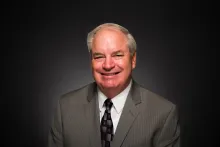
Robin Webber was born in Chicago, Illinois, in 1951, but has lived most of his life in California. He has been a part of the Church of God community since 1963. He attended Ambassador College in Pasadena from 1969-1973. He majored in theology and history.
Mr. Webber's interest remains in the study of history, socio-economics and literature. Over the years, he has offered his services to museums as a docent to share his enthusiasm and passions regarding these areas of expertise.
When time permits, he loves to go mountain biking on nearby ranch land and meet his wife as she hikes toward him.
