
Steve Shafer
This transcript was generated by AI and may contain errors. It is provided to assist those who may not be able to listen to the message.
Well, good afternoon, everyone. It's great to be back here with you again. As you might remember, the last time I spoke a few weeks ago, I began what I plan on having make me a four-part series on the life of Abraham. And so last time in part one, we looked at the very early years of Abraham, at who he would have known and been acquainted with. And we saw that accurate firsthand information going all the way back to God and Adam and Eve in the Garden of Eden would have been passed down to Abraham. So he would have had information going all the way back to the creation of Adam and Eve. We also saw Abraham's father, Terah, worshiped idols and, quote, other gods, as it says, while still living in the city of Ur. And we saw that Abraham was raised in the city of Ur and the city of Ur back at that time, the time of Abraham. It was the largest and wealthiest city in the world. Population probably somewhere, they estimated, over 50,000. And very, very wealthy, very prosperous city. We also saw that archaeological discoveries reveal that the city of Ur, oh, I admit that was a great and wealthy city with many wealthy inhabitants. But we also saw how Terah, Abraham's father, was appointed to be the chief general of the armed forces of the king of Babylon. Now, who was the king of Babylon who pointed Terah to that position? Extrabiblical sources say it was Nimrod, the mighty one, as it says in Genesis 10, verse 8. How did Nimrod become the king of Babylon?
Did Nimrod become a builder? What did he build? Did he build tall buildings? What was the first tall building he built? And why did he build it? And what was he really trying to build? And does what he was really trying to build tie into what we see happening today right here in the United States of America? Does all this tie together? Can we go back there to that time and actually see how it's relevant for us today? That's what we'll look at today in part two of this four-part series. The title is The Life of Abraham, part two, The Tower of Babel. That's what we'll look at today, The Tower of Babel. First question then is, what was the situation as we left off last time in part one? As we left off last time, we have Abraham still in the city of Ur with his father, Terah also still living there with Abraham, Ur being again the largest, the oldest, most prosperous city in the world at that time. We also have Nimrod being the king of Ur and the king of the entire southern region of Mesopotamia.
Over what Micah 5 6 calls the land of Nimrod, he was so influential and had so much control over that land, they actually was called at that time the land of Nimrod, as pointed out by Micah 5 verse 6. And as I mentioned last time, Nimrod was essentially the king of the south at that time. Now also according to the Midrashim, that is according to the Jewish commentary on the Hebrew scriptures, we have Terah having been appointed by Nimrod to be the chief general of the armed forces of Babylon, or the chief general of the kingdom of the south under Nimrod. So that was the situation as we left off last time in part one. So here's the first question then. What happened that would have caused Terah and Abraham and their families to leave Ur to head north to the city of Haran? Did God have anything to do with that? Did God appear to Abraham and did he tell Abraham then to leave Mesopotamia? Most of our Bibles have maps on the back pages, and I have one in my Bible. Most of you have those. You go to what should be the first map and the maps at the back of your Bibles. Most of them have this. Maybe not all you do, but most do. The first map you'll see there in the back is titled, World of the Patriarchs. I have it here in my Bible, the World of the Patriarchs. I guess I'm not upside down to be that way. It's in color in my Bible. It's called the World of Patriarchs. But there you can see where the city of Ur is located. I was going to do a PowerPoint, but I thought, no, it's easier just to go to your maps in your Bibles and see it for yourself. It's easier. But you can go there to see where the city of Ur is located in relation to the city of Babylon and also the city of Heron, which is far to the north. Ur is right at the south, the city of Heron is right at the north part of the map. You can see Babylon's little ways up from there. You'll also see the Tigris and Euphrates rivers on that map. The Euphrates being the route that Abraham would have taken to go from Ur to Heron. Now, that map will not show the Tower of Babel, but the Tower of Babel was located just a short ways northwest of the city of Ur. So now we come back to Genesis 12.1. To where the Lord had said, had said, past tense, as I mentioned last time, to where the Lord had said to Abram, Get out of your country, from your family, from your father's house, to a land I will show you. Now, as I briefly asked, when did God first say this to Abram? And where was he when God said this to him? Now, the answer is actually given to us in Scripture. The answer is given to us in the book of Acts. This is where Stephen is called by the high priest to testify before the consul, but let's just go there and see what it says in Acts 7, the first four verses. Turn to Acts 7, beginning in verse 1.
Then the high priest said, Are these things so? And he said, Brethren and fathers, listen, the God of glory appeared to our father Abraham when he was in Mesopotamia before he dwelt in Heron. That would be while he was still dwelt in Erner. And he said to him, he said to the record, well, God said to Abram back at that time. And he said to him, Get out of your country and from your relatives and come to a land that I will show you.
Then he came out of the land of the Chaldeans and dwelt in Heron. So God appeared to Abram and told him, Look out and leave her, and you've got to head north and go to Heron. So, Abram left Er the Chaldeans in Mesopotamia before he dwelt in Heron. Why? Because the God of glory appeared to our father Abraham. And he left because God appeared to him and told him to leave. Now, that brings up a question. Why would God do that? Why would God have told Abraham, or Abram in this case, his name was still Abram at that time, why would he have told him to leave Er and to head way north to Heron, which is over 500 miles distance?
Was his life in danger from Nimrod? And if that's the case, why would Nimrod want to kill Abram? Now he comes to the main subject I want to cover today in the Life of Abraham Part 2. Now he comes to the Tower of Babel, which plays an extremely important role in all of this. Now, keep in mind, as we look at the Tower of Babel, keep in mind two things we have now established as we go through Genesis 11.
Genesis 11, those nine verses talk all about the Tower of Babel. So, as you go through that, keep in mind two things. One, the Tower of Babel was built by Nimrod, and two, that Abraham was a young man at this time and was living in Er, which is in close proximity to where the Tower of Babel was built, only a few miles distance. So let's go to Genesis 11, which is a chapter that talks about the Tower of Babel.
We're going through this entire chapter, but we're going to be commenting on various verses as we go. In Genesis 11, verse 1, Now the whole earth had one language and one speech. Now, you might read that and not think too much about it. You didn't question anything what it says there.
But actually, if you think about that scripture and you think about what it says in chapter 10 before that, this raises two questions that need comment. First, in saying here that the whole earth had one language and one speech, does that contradict what we are told in Genesis chapter 10, as given in the New King James Version? Notice the following verses in Genesis 10 of the New King James Version, which gives us a genealogy of the Son of Noah, which gives us the genealogy of Shem, Ham, and Japheth. So let's go right across the page of my Bible back to Genesis 10, verse 5, which says, From these, and let's talk about the sons of Japheth, the coastlands peoples of the Gentiles were separated into their lands, everyone according to his language, according to their families, into their nations.
So it says here, the sons of Japheth were separated, everyone according to their language. Then speaking of the sons of Ham, it says in verse 20, These were the sons of Ham, according to their families, according to their languages, in their lands and in their nations. So again, it says here, these were the sons of Ham, according to their languages. And then speaking of the sons of Shem, it says in verse 31, These were the sons of Shem, according to their families, according to their languages, in their lands, according to their nations.
Again, it says these were the sons of Shem, according to their families, according to their languages. They're separated according to their languages. But wait a minute. You know, there's just a 10 here. In New King James, it says, All these descendants were divided into many nations, according to their languages. So how did they're all divided into different nations according to their languages?
How then could the whole earth have been of one language and one speech? As we were told in justes 11, verse 1. Is that a contradiction? Is the Bible contradicting itself? The Hebrew word translated language or languages in Genesis 10, of the New King James Version, is a different word than that of Genesis 11.1. The Hebrew word translated language in Genesis 10 literally means the tongue, which is how it's correctly translated in the Old King James.
It's translated tongue. On the other hand, the Hebrew word translated language in Genesis 11.1 literally means the lip. So what's the difference? What's the difference between the tongue and the lip? The tongue can form different dialects of the same language. For example, southern English can be different than English spoken in the Midwest, or such as spoken in London, England. It has different dialects. It's all English, and you can understand it, kind of. Sometimes a little hard because of the different dialects, but it's all the same language.
You can still understand what is being said because it's only different dialects of the same language. That is what is taking place as recorded in Genesis 10. They were all speaking the same language, but they were speaking the same language. They were all speaking the same language, but with different dialects as formed by the use of the tongue. In Genesis 11.1, the lip is what we use to form our words, the words of our basic languages, like English, French, German, and so on.
Also indicated by saying that the whole earth was of one speech. So the Hebrew word translated as speech slowly means words, and is referring to the words of the basic overall language that was being spoken. So that's the explanation for that. But at least another question. An interesting question to ask. What language might that have probably been, that one language? What might that have been? Before answering what language that may have been when the whole earth had one language and one speech, first I want to say something about a certain individual by the name of William Bradford.
A lot of you have heard of William Bradford? Amazing individual. He left England on the Mayflower on September 16, 1620, with 120 passengers on board the Mayflower. He stayed across the Atlantic Ocean at that time to come to America. They arrived in America on December 20, 1620. And they began building their first building, their first house, on December 25, 1620. They began building it on Christmas Day.
Now here's an interesting thing. William Bradford, as you'll see, you go read about him. He was very religious, extremely religious. But he didn't observe Christmas because he knew it had pagan origins. But why did William Bradford and the original pilgrims leave England? Why did they leave? Why did they hazard all that distance across the ocean? Back in the early 1600s, that was a very dangerous voyage. And once they severed themselves from England, they were severed from England.
You can't just decide to go back. You're cutting yourself off from your family and everything permanently, pretty much, for a long time. Why did they leave? Why was it so important for them to leave England, to venture off to America, to none-no land, and to none-know what they were going to run into, what was going to happen, whether they'd even live to make the voyage or not?
Why did they leave England? They left England in order to escape religious persecution from King James I, who was the king of England at that time.
They came to America to establish religious freedom. Something that's so important we have in this country today. Not all countries have religious freedom. America's an exception. But here's the irony of all this. Exactly 400 years ago, December of 1620, William Bradford suffered tremendous hardships and trials and losses.
Loss of life, even. He lost his wife, Dorothy. He married his wife, Dorothy, in 1613.
They were married for seven years. She decided to go with him. They had a son, John, together. And they let the son John, John was only, their son John born about 1617, was only about three years old, so they left him with a relative. Because he was too young to venture across the ocean, and it's kind of a venture. But Dorothy, William Bradford's wife, came with him, met their son John in the Netherlands, I think it was, in Holland.
They thought when he grows up, he gets older, he can come over and join them later.
But when she left that day with William Bradford, that was the last time she ever saw her son.
And that son never saw his mother.
As I say, William Bradford suffered tremendous hardships, trials, and loss of life.
He lost his wife, Dorothy, who mysteriously fell overboard from the Mayflower while it was anchored off the coast of Massachusetts. She fell overboard and drowned, and they never recovered her body.
He also lost many members of his congregation who sailed with him.
Think of this, what they're doing, what he risks, what they risk, in order to come to America to establish religious freedom.
That's how important religious freedom was to them.
47 of the 102 passengers who sailed on the Mayflower either died during the voyage or during that first winter of 1620-1621, which is an extremely harsh winter.
And after suffering tremendous hardships and losses, he helped establish religious freedom in America.
Here is the irony.
Now, exactly 400 years later, in January of 2021, we are now in grave danger of losing our religious freedom, which we have enjoyed for the past 400 years.
John Copper was the first governor of Plymouth Colony, but he only was governor for a short time because he died in 1621.
And after he died, William Bradford became the governor. He was their governor until he died in 1657.
But here's an interesting question.
What language did William Bradford think was the original language that God gave to mankind?
Before he died, William Bradford wrote a history book. He wrote the History of Plymouth Plantation, which you can still get available online.
Also, before he died, he decided to take up the study of Hebrew.
The first 20 pages of his History of Plymouth Plantation were originally written in Hebrew in his own handwriting.
He introduced those first 20 Hebrew pages by writing this.
He said, though I am grown aged, is right toward the end of his life, yet I am grown aged and I have a longing desire to see with my own eyes something of that most ancient language and holy tongue in which the law and oracles of God were writ.
He's writing in Old English.
In which God and angels spake to the holy patriarchs of old time, and what names were given to those things from creation.
So, William Bradford firmly believed that Hebrew was the original language that God gave to Adam and Eve, the creation.
I've given some Bible studies in the past about Hebrew. It's an amazing language.
The more you learn about Hebrew, the more convinced you become that that was probably the case.
It probably was the original language that God gave to Adam and Eve, because it's an amazing language with an amazing history.
It's just now been revived. It has now been revived to be the official language of the nation of Israel.
It is also, of course, the original language of God's words, the original language of the Old Testament.
So that then addresses my two questions concerning the statement that the whole earth had one language and one speech.
Let's go back now to Genesis 11, verses 2 and 3.
Genesis 11, verse 2, When it came to pass, as they journeyed from the east, that they found a plain in the land of Shinar, and they dwelt there.
Then they said to one another, Come, let us make bricks and bake them thoroughly.
They had brick for stone, and they had asphalt for mortar.
They had brick for stone.
You read that and say, well, that's nice. Is that important? Oh, it's very important. There's a lot of meaning there.
See, this actually says something very significant regarding Nimrod, who built the Tower of Babel, as it was talking about.
So it says something very significant regarding Nimrod and his use of brick for stone.
Why would you use brick instead of stone? What'd they do back there? If they wanted you to build something back at that time, and you had a plot of land, what was the first thing you had to do with that land before you could build on it? You had to clear it.
And what'd you clear it of? You had to clear it of stones.
They had to clear it of stones, which were then piled up and were then often used to build a stone fence around the property.
In fact, they still do that in some parts of England today. Still go there and see that, where they cleared their land, and they take all the stones that they gathered, and they used mortar and put together, and they build a fence around their property with those stones.
Why is it significant that Nimrod used brick for stone? What are the differences?
There's actually two major differences. What are the two major differences between brick and stone?
Well, one, bricks are made by man, and stones are made by God.
And two, bricks are all the same. They're identical.
Well, no two stones are exactly the same. They're all different. Every stone is unique. There are no two stones exactly alike.
Does the use of bricks for anything connected with worship does that displease God?
Does the use of bricks for building altars to God?
Does the use of bricks for building altars to God, the debt, provoke God to anger? God to anger. And you have to look at that. Wait a minute. Why would that be? Does it say that in Scripture? Yes, it does. Let's turn to Isaiah 65. Isaiah 65, just two verses. Isaiah 65, verses 2 and 3. Isaiah 65, 2. I have stretched out my hands all day long to rebellious people who walk in a way that is not good, according to their own thoughts. A people who provoked me to anger continually to my face, who sacrifice in gardens and burn incense on altars of brick. Why would it provoke God to anger, to burn incense? There's just incense to God, but people with a zero. Why would it provoke God to anger, to burn incense on altars of brick? What did God instruct them to use instead when they entered the Promised Land? Let's go to Deuteronomy 27. Deuteronomy 27 and begin in verse 2. And it should be on the day when you cross over the Jordan, the land which the Lord your God has given you, that you should set up for yourselves large stones and whitewash them with lime. You shall write on them all the words of this law when you have crossed over, that you may enter the land which the Lord your God has given you, a land flowing with milk and honey, just as the Lord your God, the Lord God of your fathers promised you. Therefore it should be when you have crossed over the Jordan that on Mount Ebo you shall set up these stones which I command you today, and you shall whitewash them with lime. And there you shall build an altar to the Lord your God, an altar of stones. You shall not use an iron tool on them. You shall build with whole stones, build with whole stones the altar to the Lord your God, and offer burnt offerings to the Lord your God.
So why is that?
Why did it have to be with whole or uncut stones?
Had to make sure they used stones. Why?
What is Christ likened to in Nebuchadnezzar's dream as revealed to Nebuchadnezzar by Daniel?
What's Christ likened to? Let's go back there and read it. Let's go back to Daniel chapter 2.
Daniel chapter 2, and let's begin in verse 34.
You watch while a stone was cut out without hands. He's telling Nebuchadnezzar his dream.
You watch while a stone was cut out without hands, was struck the image on its feet of iron and clay, and broke them in pieces. And then the iron, the clay, and the bronze, the silver, and the gold were crushed together and became like shaft from the summer, thrashing floors. And the wind carried them away so that no trace of them was found.
Dropping down to verse 44. In the days of these kings, the God of heaven will set up a kingdom which will never be destroyed, and the kingdom shall not be left to other people. It shall break in pieces and consume all these kingdoms, and it shall stand forever. And in as much, verse 45, as you saw the stone was cut out of the mountain without hands, and that it broke in pieces the iron, the bronze, the clay, and the silver, and the gold, the great God has made known to the king what will come to pass after this. The dream is certain, and its interpretation is sure. So here, Christ is likened to a stone cut out without hands, who will set up a kingdom which will never be destroyed, in which will break in pieces and consume all these kingdoms. So he's likened to a stone.
Did the apostle Peter liken Christ to a living stone?
And did Peter also liken all of us as followers of Christ to living stones?
Let's go to 1 Peter, chapter 2.
1 Peter, chapter 2, we read verses 4 and 5. For 1 Peter, chapter 2, verse 4, coming to him, coming to Christ as to a living stone rejected by men but chosen by God and precious. And then he says, you also as living stones are being built on the spirit of his followers, followers of Christ. You also as living stones are being built on the spiritual house, a holy priesthood to offer up spiritual sacrifices acceptable to God through Jesus Christ.
So why is Christ and why are all of us likened to stones?
And why the use of bricks forbidding altars provoke God to anger? And he just tells us something extremely important that directly ties into what we are seeing taking place before our very eyes right now here in the United States of America and around the world. Before getting to that, let's see what Nimrod and his followers said next. Let's go back to Genesis 11. Back to just 11, the Tower of Babel.
Genesis 11 verse 4. And they said, Come, let us build ourselves a city, and the tower, whose top is in the heavens. Let us make a name for ourselves, lest we scatter abroad over the face of the whole earth. You can read that verse we just did, and we'll go on to the next verse, but you shouldn't. We should stop, because this one verse is jam-packed with information.
Let's break it down into four segments. First, they said, Come, let us build ourselves a city.
It's interesting to go to our United Church of God Bible Reading Program in this section and look at what it says. Our United Bible Reading Program says this in regards to this statement, when they came to Shinaw or Mesopotamia, that people made a faithful decision.
It says, they decided, this is the United saying this, they made a faithful decision, they decided to gather together to build large cities, contrary to God's original intent.
What was God's original intent? What did God say to Noah immediately after the flood?
It says, God blessed Noah and his sons and said to them, Be provable and multiply and fill the earth! Go over the whole earth, fill the entire earth! Don't concentrate into one place, fill the earth!
They were to spread out to settle with their various clans and tribes.
Why? What would that mean? It would mean that they couldn't develop too fast, technologically speaking.
You don't see too much technological development within the tribes of Africa.
If you have one overall major language and everyone is gathered together where they can pull their information together technologically and grow that way, they can potentially develop very rapidly technologically. Now, if everyone is righteous, that's not a problem. But if you have a Nimrod who wants to lead society a direction away from God, then there is a problem, which we'll witness with the rise of Adolf Hitler. The second they said, Let us build a tower whose top is in the heavens, indicating that Nimrod wanted to build a tower tall enough so the flood waters would not supposedly reach the top should God decide to bring on another worldwide flood.
Which is a pretty stupid assumption if you think about it. But our Bible reading program adds this here at this point in the Scripture. The choice of a tower whose top is in the heavens may indicate a deliberate disbelief in God's promise to not send another great flood, effectively calling God a liar. Then our Bible reading program says this. Designed to build a tower, probably some type of ziggurat or pyramid, indicates that concentration of population would be achieved through highly organized governmental projects. History provides evidence of a centralization of religious authority as well.
And third, they say here, Let us make a name for ourselves. All this is in this one verse. And through this, let us make a name for ourselves. Again, as noted in our Bible reading program, this is, quote, an idiomatic way of saying, Let us get power over others.
Then we add in our Bible reading program, it appears the leaders of this effort, the leader of this effort was Nimrod, who built an empire from here. Jesus 10, verses 8 to 10.
Fourth, they conclude by saying, lest we be scattered abroad over the face of the whole earth, as God originally intended for that particular time, as indicated in Genesis 9.1.
Let's continue in just 11 verse 5. For the Lord came down to see the city and the tower which the sons of men had built. And the Lord said, indeed, the people are one, and they all have one language.
And this is what they begin to do. And now nothing that they propose to do will be withheld from them.
See, God knew what they were up to. And when it says the Lord came down to see the city and the tower, besides this literal meaning, it also indicates something else.
When God comes down to do something, it also indicates God is about to bring judgment on what man is doing. A couple of scriptures illustrate that.
Just before God's judgment on Sodom, God said, I will go down now and see what they have done altogether according to the outcry against it that has come to me. Genesis 18 verse 21.
And in proclaiming judgment against Jerusalem just before the fall of Judah, God said, Behold, I am against you, all that happens to the valley and rock of the plain, who say, Who shall now come down against us? Or who shall enter our dwellings?
But I will punish you according to the food of your doings. I will kindle a fire in its forest, and ye shall devour all things around it. Jeremiah 21 verses 13 and 14.
But God can also come down in a favorable way. He can come down in a favorable way to fight for his people, as it says in Isaiah. Isaiah says, the Lord of hosts will come down to fight for Mount Zion and for its heel, meaning for its people, for the people of God. That's in Isaiah 31 verse 4.
So God can come down in a favorable way.
So you have to ask yourself right now, and you see what's going on in the world, and what's going on right here in our own country.
Does God know what's taking place? Is he noticing?
Is he about to come down in judgment against the leaders of this world?
And is he maybe about to come down also in favor of his people who are following him and remaining faithful?
Finally, in regards to this section of scripture of the Torah of Battle, what did God do to prevent Nimrod and his followers from carrying out their plans to make a name for themselves so they could gain absolute power and control over the people?
Genesis 11 verses 7 to 9.
Genesis 11 verse 7, Come, let us go down, and there confuse their language that they may not understand one another's speech. So the Lord scattered them abroad from there over the face of the whole earth, and they ceased building the city. Therefore, its name is called Babel, because there the Lord confused the language of all the earth, and from there the Lord scattered them abroad over the face of all the earth. So God confused their lips, confused their words, and he scattered them abroad from there over the face of the whole earth. And it says, they ceased building the city.
They also would have had to cease building the Tower of Babel.
Hadn't completed it yet. They had to cease building the Tower of Babel as well.
But the Tower of Babel was never completed. This is fascinating. That is why a man by the name of Peter Bruegel, B-R-U-E-G-E-L, Peter broke... He did a painting back in 1563, and as many as he did, he depicted his depiction of the Tower of Babel. And what did he do in that painting? He left the top unfinished, because he knew he never got completed. He knew Nymah built the Tower of Babel, so he included a depiction of Nymah and his followers at the bottom left-hand corner of his painting. I know you won't be able to see it here, and I don't have a color print, which is black and white, but you can go online. In fact, all you have to do is go on your computer, or you can browse the internet, and ask the question, why is the Strasbourg parliament based on the Tower of Babel? Strasbourg is a city in France, where the United Nations Parliament Building is. Strasbourg is T-R-A-S-B-O-U-R-G. Here's a... That shows... You can't see it very well there, but that's... It's a black and white, because I don't have the color printer, but that's his drawing that he did back in 1563 of the Tower of Babel.
So you can go to your search engine and search for, why is Strasbourg... Why is the Strasbourg parliament based on the Tower of Babel? Strasbourg is a city in France, which is where the parliament building for the United Nations is. So there you can see the depiction of the painting of the Tower of Babel. And you can't see it here, but in this bottom left-hand corner here, it shows a man and other individuals. This man down here in the painting is... He's supposed to depict Nimrod and his followers. As you scroll down, if you don't find this page, you go there and you find this on the internet. You scroll down, you find another page. On page two, you see two more pictures. This is a picture of the United Nations parliament building in Strasbourg, France. And you look at it, if you can see it closely, you'll see it's designed so it's not completed. It is completed, but it's made to look like the top is not finished. Here's the top up here. It looks like that part finished. This part's left to look unfinished because it's how Babel was never finished. So they made this parliament building. They wanted to flash it after the Tower of Babel, so they made it look like the top was not completed. Very interesting. You can also Google this. You can go on the internet. You can Google David Hathaway, the name of David Hathaway, Tower of Babel. He's got about an hour and 20 minute documentary showing all the ways in which that parliament building in Strasbourg, France is patterned after the Tower of Babel. Very interesting hour and 20 minute documentary.
Why all this connection of the European Union parliament building with Nimrod and the Tower of Babel? What's that all about? A Strasbourg-born journalist said this. She said, the purpose of the European Union was to finish what Nimrod and the people together had failed to do some 3500 years ago. What was that? What did Nimrod and his followers fail to do 3500 years ago that now needs to be finished before Christ returns?
And is the world now in a position to do that? When it comes to God confusing their language, those language barriers have now basically been broken down. And today, nearly the entire world can communicate with one another by one means or another. There aren't no language barriers anymore. As a result of that, what happened in the 20th century? Did what it says at the end of verse 6 become a reality?
In the 20th century, do we come advanced to where now nothing they were supposed to do will be withheld from them? What happened in World War II? Well, we learned how to harness the atom, didn't we? Then for the first time, man had advanced to where all life could be eradicated from the face of the earth, to where now nothing they were supposed to do will be withheld from them.
And the only way it can be withheld is for God to intervene, and for Christ to return instead of God's kingdom.
So that ends the story of the Tower of Babel built by Nimrod and his followers during the early life of Abraham. Jewish commentary say that Abraham was about 48 years old when Nimrod built the Tower of Babel. That now leads to this question, because Nimrod was up to something much more sinister.
What was Nimrod really trying to build?
He wasn't just trying to build a tower to supposedly protect him from possible flood waters.
He had something much more sinister in mind.
As our Bible reading program says, Matt had once again decided to use his intellect and energies to live contrary to God. We then had this in our Bible reading program.
The last century bore stark witness to what human beings working together can do.
Without God, evil permeates. And among wonderful technological advances comes also the ability to destroy the world.
What was Nimrod really trying to build?
He was really trying to build a civilization apart from God and apart from the laws of God.
That's what he was trying to do. He wanted a citizen who would have nothing to do with God, nothing to do with God's Word, nothing to do with the laws of God.
Does what Nimrod was really trying to build relate to what we see happening today?
To what we see happening today, not only around the world, but even right here now in the United States of America.
Yes, it does. Absolutely.
But first, before going further, let's answer some questions I posed earlier.
A. Why did God tell Abraham to leave Ur?
Was his life in danger?
And why would Nimrod want to kill Abraham?
I can actually answer that with another question.
A. Why did Satan influence Herod to want to locate and kill Christ right after he was born?
A. Because he knew Christ was to become the king of the Jews and the place of Herod.
A. So what did Joseph and Mary then do? They fled to Egypt.
A. Nimrod knew that Abraham was a rightful heir of the promise, A. When Abraham's father, Terah, came to realize that Nimrod would probably want to kill his son, Abraham, and after Abraham told his father that God had told him to leave Ur, A. Terah then realized that both of their lives could be in danger, A. Which is why they then fled north to Haran.
A. There are some additional answer questions I posed. A. Why is Christ and why are all of us likened to stones, as we've seen? As we've seen.
A. And why did the use of bricks provoke God to anger?
What's that all about?
A. Well, as the related stones are made by God and are unique, A. For bricks are made by man and are all identical.
A. As you also know, that God is also now making all of us into a spiritual image of liveness so we can become a part of his family.
Does God want us all to be the same?
Or do you make it so every single individual who has ever been born is unique?
Do you realize that every human being... There have been billions. I don't know how many billions of people have been born and lived.
There are no two people who have ever been born who are exactly the same in every way. Every human being is unique.
I mean, here's an astonishing fact that science has never been able to answer.
There have never been two individuals who are 100% identical.
Not even identical twins are identical, even though they both have the same DNA.
Now, if they have the same DNA, why aren't they exactly the same in every way?
Science doesn't really know. They can't answer that. Identical twins result from the fertilization of one egg that then splits in two.
So they share all their genes, and they're always the same sex.
They're identical. I believe they're pure identical, but both, of course, have different personalities.
Also, they are not entirely identical in that they can have a different number of copies of the same gene.
Or one twin can be missing a copy of a gene the other twin has. Which can then make one twin more susceptible to a certain disease, like leukemia.
However, that would not really be detectable by outward appearances. You couldn't tell that by looking at the person.
But there's one area where they will differ.
This is amazing fact!
No scientist has ever been able to figure this out. Why this is? Because they both have the same DNA. Why then is this different?
There's one area where they always will differ.
They will each have their own unique fingerprint.
It can be absolutely identical in every way, but their fingerprints will not be the same. If there's the same DNA, why are the fingerprints different?
Also, identical twins can have differing retinas. They can have different retinas. So one twin's eyesight could differ from the other twin's eyesight.
But the bottom line here is that every individual who's ever been born is unique.
Even in the case of identical twins.
And as our Creator, God planned to mate it that way. God made it that way. He wants each person in his family to be unique. He doesn't want any two people to be identical.
Which is why we are liking the stones instead of bricks, because stones are all unique. There are no two stones alike.
He likes us to stone. He wants us to be unique, just like stones are unique. He doesn't want us to be bricks, like Nimrod wanted to use. Doesn't want people to be the same.
Now let me get back to my original questions.
Does what Nimrod was really trying to build relate to what we see happening today?
To what we see happening right here in the United States.
Of America.
Let's just think about what's happening. What system encourages freedom, personal responsibility, and free enterprise? And what system dictates governmental control, enslavement, and lack of free enterprise?
See what we have here are two very polar opposite systems.
What we have here is capitalism versus socialism.
Or we could say that what we have here is stones, representing capitalism, versus bricks, representing socialism.
Nimrod, in using bricks for building the Tower of Babel, was trying to impose a form of socialism on his followers, which is a system where a few are on the top, and everyone else is below them and subservient to them. You know, right now, it appears we'll be having that form of governance over all of us, for a short time, at least anyway.
So the question then becomes, how will that affect all of us going forward from here, right now?
I want to bring your attention to an article that was in Gone Today magazine. It's entitled, An Unrecognizable America.
In our November-December Beyond Today magazine, Scott Ashley, as the managing editor, has an editorial on page 3 titled, An Unrecognizable America.
If you haven't read it, you should.
It's a great editorial.
It tells exactly what's happening, that we all need to be aware of.
I'm going to give you a little bit of a quick introduction to the story. It's an ill in the head when it comes to what's happening right now in America.
Here's just a portion of what he wrote.
It's quoted from Scott Ashley's article on An Unrecognizable America's editorial article. And again, in November-December Beyond Today magazine. Around the time many of you received this issue, the United States will be holding elections that will determine the nation's future. Beyond Today does not endorse any political party, but we are compelled to address the reality of where the nation is at the moment.
The stakes are high, because what does it play is the survival of our nation as we know it. He then explains why he says that and why this election is different than those in the past. Mr. Ashley then talks about tipping points, where one political party gains enough leverage to wield control over everything within their power. Which is precisely what Nimrod was trying to do at the Tower of Babel.
Scott Ashley then articulates the steps this party openly proposes, which if implemented, would totally transform our nation into something none of us have ever seen or experienced before. He then says this. These are the words of Scott Ashley in the editorial. With these steps in place, the America we know would soon be no more. And the entire world would permanently change. Because the United States of America has had a great influence on the entire world.
Because of God's blessings to Abraham and keeping those promised blessings that God gave to Abraham, the entire world would permanently change. What about all of us? What about the freedom of religion we all now enjoy and take for granted, maybe sometimes? Here is Scott Ashley's response to that question. Make no mistake, this party's many surrogates controlling social media outlets and controlling the mainstream media are hard at work marginalizing and removing the diminishing number of concerns.
They are trying to remove the conservative and Bible-supporting voice. He then concludes by saying this. Pay close attention. He says, these are dangerous times. The ground is shifting beneath our feet. Prophecies of a far different world, one in which the United States no longer exists as a viable nation, those prophecies are lining up. He then asks, what should you do? He says, pray. Draw close to God. Prepare yourself spiritually for what lies ahead. You better all make sure that our relationship with God and Jesus Christ is very strong.
We better be grounded in God's Word, grounded in what it says, grounded in our relationship with God, the Father and Jesus Christ. In conclusion, what we now see is basically the way of Satan versus the way of God.
Abraham is representative of the way of God, and Nimrod in the Tower of Babel is representative of the way of Satan. See, Nimrod at the Tower of Babel was trying to build a society that excluded God and that excluded the laws of God. He was trying to build a society based on the concept of socialism with himself as the head. Abraham made a decision to follow God and to follow the laws of God based on faith.
And that decision put his life in danger. That was why God appeared to Abraham and said to him, Get out of your country from your family, from your father's house to a land that I will show you. We can't do that. We can't leave. We have to just be close to God and depend on God to protect us, to whatever we might have to go through in the years ahead. But when Abraham's father, Terah, also came to realize that his son Abraham's life was in danger, he also decided to leave her with his son and with their families. So that thing concludes my two sermons on the early years of Abraham.
That thing concludes this sermon on the life of Abraham, part two, the Tower of Babel. So next time then, in part three, we'll look at the formative years in the life of Abraham. We'll look at how Abraham began to grow in faith after God called him out of the Chaldeans.
It's always very interesting to look at his life because as we look at that, we'll see that he had to go through just like we do. He had to go through many trials and tests, even though all of us do today. And we'll also see something else about Abraham. At times, he passed those tests, sometimes with flying colors. At other times, he had to learn the hard way. He didn't do so well. As we just see, it's not always easy to follow God. It requires many trials and tests along the way to help us grow in faith.
You have to grow in faith. Sometimes you're going to not quite make it. You're going to have a little bit to go backwards. You have to go forward. You have to keep passing tests. There will be more tests. They're all in the tent of helping us to become more like God, the Father, and Jesus Christ.
But you're not going to pass every test with flying colors. Sometimes you'll not quite live up to what you want to, but then you'll grow. Next time, you'll have another one, and you'll pass that one. We have to grow in faith. Go through many trials and tests, sometimes going forward and sometimes a little bit backwards and going forward.
But it takes a lot of trials so we can become like Jesus Christ and become like Abraham.
So we'll look further into the life of Abraham next time when we look at the life of Abraham, part three, his formative years.
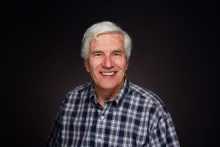
Steve Shafer was born and raised in Seattle. He graduated from Queen Anne High School in 1959 and later graduated from Ambassador College, Big Sandy, Texas in 1967, receiving a degree in Theology. He has been an ordained Elder of the Church of God for 34 years and has pastored congregations in Michigan and Washington State. He and his wife Evelyn have been married for over 48 years and have three children and ten grandchildren.
