
Rick Shabi
This transcript was generated by AI and may contain errors. It is provided to assist those who may not be able to listen to the message.
Good morning, everybody! I think it's morning up here. Good morning, everyone, to all of you online. Good to have all of you online. I wish you could see you all in person, but it's great that we have this kind of technology where you can view things online and be receiving the sermon information and being with us as well in that way. So today, then, I want to continue my series of sermons that I'm doing on the life of Abraham.
I'm going to show you an amazing story, amazing examples that you can glean from his story. So today is part four. I think last time I gave part three up here, so this will be part four. And it will end up being a total of six parts. I have one more part kind of on his formative years, and then we'll get into a major event that occurs that changes his whole perspective on life, and that will be the final one.
And that will be after his wife, Sarah, dies. But today I want to continue that series, and in parts one and two, we looked at the very early years of Abraham growing up in Ur, and then moving to Heron, and so on. And last time in part three, we began looking at his formative years. We can look at the years which, for Abraham, he really formed and chaped into what he became after he left Heron at the age of 75.
And we looked at the amazing three covenant promise that God made to him. It's recorded in chapter 12, verses 1-3. I won't go over that again, but I covered that before. Amazing covenant promise. It's an unconditional covenant promise that is to send us to be blessed nationally and internationally. You have a personal blessing, it would be a national blessing, and also an international blessing, where it says that in you, God said, in you all the families of the earth are going to be blessed, because of you and your descendants are going to bless everybody on the whole face of the earth. It was going to be international.
That promise was fulfilled by and through both Great Britain and especially by the United States of America. You look at our nation, the United States of America, and no nation in the history of the world has ever been a blessing to the whole world, to all nations of the world, as has the United States of America. Our United Bible reading program, which is very, very good if you ever go in there and study it, our United Bible reading program adds this.
From this one promise that was made to Abraham springs all the rest of Scriptures. From this foundational covenant called the Abrahamic Covenant contains a seed from which grows all the history of Israel and the work of Christ. The statement, In you all the families of the earth will be blessed, was primarily spiritual, fulfilled in the Messiah, a descendant of Abram, through whom salvation will be offered to all men, as also the blessing of the Bible itself eventually being produced and widely distributed through Abram's offspring.
So it was an amazing promise that has been fulfilled. And we saw also last time how Abraham followed his own instincts by going down to Egypt. He had that choice. He decided to follow his instincts. He went down to Egypt when a famine struck, rather than fully relying on God.
We then saw how he told what could be considered to be kind of a white lie. In order to protect himself, actually, it endangered the life of his wife Sarah when he said that. But then God intervened to bail him out by sending plagues on Pharaoh and his household. And that brings out the lesson of a very important proverb, which I'm going to state. That's Proverbs 16.9. I'm just going to read it.
Proverbs 16.9 says, Now, if you really think about that proverb, that has both a positive and a negative aspect to it. In this case, because Abram is a righteous man, God directed his steps in a positive way by sending plagues on Pharaoh. So he could continue to work out his plan and God could continue to work out his plan and his promise through Abraham.
But that can work the other way as well. A man can plan evil, and God could intervene to follow his plans. And stop that evil. That can happen as well. Well, I'm going to pick up the story from there. Today I want to continue our journey of faith with Abraham by going through the events in chapters 13 and 14 of Genesis, Genesis 13 and 14.
If you look at those chapters and you glance at them, you probably will have all of those friends many times. But if you just look at those, you may not think there's a great deal to learn from those chapters. But if you thought that, you would be wrong in assuming that, because Genesis 13 and 14 are jam-packed with many valuable lessons.
Today in Part 4 of this series, we're going to cover those events in Genesis 13 and 14. So that's primarily what we're going to be. You won't have to be flipping around a lot in the Bible. So the title of my sermon this morning is, The Life of Abraham Part 4, His Formative Years Continued. I want to begin by asking this question. You know, you ask this question, you probably would automatically think of what you think is the right answer. But is it really? Which is more dangerous? Prosperity or adversity? What's more dangerous?
When it comes to threatening your faith and threatening your reliance on God. The Scottish historian Thomas Carlyle, C-A-R-L-Y-L-E, he wrote this, Adversity is sometimes hard on a man, but for one man who can stand prosperity, there will be a hundred that will stand adversity. A lot more can stand adversity than prosperity. Wow, really? How's that? He says, most of us rise to meet adversity with our best character. However, our true character comes out when things go really well. It's easy to become arrogant, self-sustaining, conceited, greedy, and condescending at such times when you get a lot of prosperity. It's good to think you're better than everybody else, and you can kind of look down on other people. That's a danger of prosperity. You can get to think things for granted. Prosperity can be more dangerous than adversity for most of us. God wants us all to be prosperous, doesn't he? He wants us to be prosperous, so then we have to learn how to deal with that. We have to have the character to deal with that first. Now, last time we left off with Genesis 13, verse 1. We might turn to Genesis 13.
We left out there in verse 1 of Genesis 13, but what does the next verse tell us in regards to Abraham's prosperity? And yet that's the question. Will this become a test of faith for Abraham? Will it help him grow in faith and will it help him to become more like God? It's going to be a test for Abraham. Will he pass the test? What about his nephew Lot? Will Lot pass the test? As we'll also soon see, Lot is also very wealthy. But notice chapter 13 of Genesis, verse 2. It says, Abraham was very rich. He was very wealthy. Wow! You don't have too many people of God that are wealthy, do you? Abraham was very rich in livestock and, it says, in silver and gold. He has a lot of monetary wealth as well, not just livestock and that sort of thing, very much a sign of your wealth back in those days especially. But it says he also was very wealthy in silver and gold. He had a lot of monetary wealth.
Where does he go after leaving Egypt? Verse 3. And he went on his journey from the south, it says, as far as... Now notice the interesting thing about the word south, it's capitalized. Why is it capitalized? You know, you wouldn't think a direction like north or south would be capitalized. There's a reason for it. As he went on his journey from the south as far as Bethel, to the place where his tent had been in the beginning between Bethel and I, let's look at the word south for a second to see what it's really saying. Because it's not really saying... it's not indicating a direction here. That's not what it's talking about. In fact, I covered that last time. The Hebrew word translated south here is negev, N-E-G-E-V, which was a dry desert wasteland area located just southeast of Egypt. If you look on a map and you look in there, you'll see it. We'll say the negev, south of where Jerusalem is in that southern area. It's like a desert area. What about Lot? Isn't that a lot? Is Lot also very prosperous? Verse 5, Lot also went with the Brahm. He had flocks and herds and tents. He had quite a bit of material goods there. He had a lot of flocks and herds and tents.
Verse 6, Now the Lamb was not able to even support them, that they might dwell together, for the possessions were so great that they could not dwell together. Now what happens when you've got two people very wealthy, you've got tons of lots, all kinds of livestock and herds that need grazing land, they need water, they need to be attended to, they need feed, and you've got two of them in the same area, which is a dry desert wasteland area, and they're competing for whatever little bit of water and food you have. What is that going to lead to?
It led to strife. Verse 7, It led to strife between the herdsmen, because they're all trying to share the little resources they had in the same spot.
Was there another negative factor that Abraham and Lot had to deal with? Yes, there was. What was that? It says, among the latter part of this verse, that Canaanite and the parasites then dwelled in the land. Not only were they trying to share this land, the very scarce resources, there were enemies there. There were enemies in the land that could try to steal what possessions they had. That even could potentially kill them, to take their wives. A lot of times those leaders would do. As a result of all this, their herdsmen began to clash, because now they had to share very limited resources. Those that are used, that are wealthy, have a lot of possessions, that are used to having an abundance. People normally do not respond very well to adversity and scarcity. It's not a very good combination.
You know, we now live in a nation that has more abundance of any nation in the history of the world. There's never been a nation with the type of prosperity that we have today here in the United States. It's likely we'll now begin looking, excuse me, I meant to say we're now probably going to begin losing that now. It looks that way, doesn't it? The way things are going. It's likely now that goods and services will become more scarce. In fact, in some areas they already are becoming more scarce because of COVID-19. So as they become more scarce, here right in our own country, it's more difficult to get goods. As you go to the grocery store, they become more expensive, and maybe some of the things on the shelf are not there. What if there becomes a scarcity of some things? How would you and I handle that? See, adversity can either bring out the best in us or can bring out the worst in us. So this situation that we're reading about here, in Genesis 13, as we will now see, it's going to bring out the best in Abraham as he will learn a major lesson in his journey of faith, and learn to live by faith, and Abraham's going to rise to the occasion. But Lot's going to falter.
What did Abraham say next? Verse 8, Genesis 13. So, Brahm said to Lot, Please let there be no stripe between you and me. Here we are, we're relatives. You're my nephew.
Or between my herdsmen and your herdsmen. For we're brothers. Is not the whole land before you, Abraham tells Lot? So let's separate ourselves from one another. So you can have your area and I'll have my area. We won't have to get rid of this strife. It doesn't do any good to the strife of the destroyed families. We've got to solve this. Please separate from me. And then notice, for the latter part, it means this is amazing. You talk about Abraham being living by faith, in this example, think about this example you're reading right here. He said, if you take the left, then I'll go to the right. If you take the right, then I'll go to the left.
You know, what a tremendous example of living by faith. Abraham, in giving Lot the first choice, is totally trusting in God to work out his future. So it doesn't matter. You go the other way. I know that God can take care of me one way or another, because I know God is the one who provides. He'll take care of me. You take what you think is best for you. Go ahead and take what you think is best. So Abraham is trusting in God that he's going to work out his future regardless of what choice Lot makes, and regardless of what happens next. Fantastic example. Go ahead and ask this question. Why did Abraham do that? Why did Abraham give Lot the first choice?
Well, he gave it up in order to have harmony with his nephew Lot. Think about that. He gave it up to have harmony, to eliminate strife and division within his family. In other words, what he did, he gave up that choice in order to save the family relationship. How many families will do that today? Get a problem in the family. So I tell you what, you do what you think is best. I'll go the other way. The family relationship, preserving that, is more important than what happens. By taking a choice, it doesn't work out so well. I know God can make it up anyway. So here Abraham is putting his family relationship ahead of striving for what might be best for himself. He's putting his family before himself. Even as Christ did by dying for all of us. He wasn't thinking about himself, was he? He was thinking about saving mankind. Shouldn't all of us try to follow that example in our own family relationships? See, he asked this question, which is better, to win an argument and have strife and hurt feelings, or to lose the argument and have peace and harmony? I'd rather lose the argument and have peace and harmony. That's a far better choice.
Abraham gave his nephew a lot of first choice to avoid any strife or contention between the two of them. Several Proverbs come to mind here. I'm just going to read them. One is, Better a dry morsel with quietness and peace than a house with feasting and strife. Proverbs 17, verse 1.
Another proverb, The beginning of strife is like releasing water, or like irritating drops of water. Do you have that one? A faucet drips? Drip, drip, drip. Gets irritating, doesn't it?
Therefore, stop contention before a quarrel starts. Proverbs 17, verse 14. And three, A brother offended is harder to win than a strong city, and contentions are like the bars of a castle. Proverbs 18-19. Why are contentions like the bar of a castle? Because the bars of a castle put up a barrier between relationships, and contentions put up a barrier between relationships. But now, back to our first overall question. Which is more dangerous, prosperity, or adversity? Well, the answer is, prosperity is more dangerous, spiritually speaking, than adversity is. That then leads to this, the danger of greed. And by that, I mean the danger of wanting what is best for ourselves, rather than wanting what is best for someone else. Abraham chose the latter, while Lot chose the former. Lot chose what he thought would be best for himself.
What did Christ say, as recorded by Luke in the book of Acts? Luke wrote, Remember the words of the Lord Jesus, that he said, It's more blessed to give than to receive. More blessed to give than to receive. Acts 20, verse 35. So Abraham, by giving Lot the first choice, was practicing the way of give. As a result, he was greatly blessed. In contrast, Lot chose the way of get. And as we're going to see, this slide leads to a world of trouble for Lot, a world of trouble. And guess who has to bail him out of the trouble? So we can now learn a valuable lesson from Lot's example as well. In this case, it will not be a good example. In fact, as we'll see, in choosing the way he thought would be best for himself, that would eventually lead Lot to finding his life in total shame. It's a great example. It's an amazing story.
In Genesis 13, verse 8 again, again, just to lead into it, we'll read this again. Abraham said to Lot, Please let there be no strife between us, to our herdsmen, for our brethren, is not the whole land before you. Please separate it from me. If you take this way, I'll go the other way. You take what you think is best for you. You choose what you think would be best. What choice did Lot make? And why did he make that choice? And also, you have to ask the question, here if you look at this, we'll have to say, if you and I had been in Lot's shoes at that time, would we not have all probably made the same choice Lot made? I think so. I think I would have. We'll see in a minute. Genesis 13, verse 10, And Lot lifted up his eyes, and saw all the plains of Jordan. And he saw all that. He says, Well, hey, there's where you can have water. It's a well-watered land over there. It was well-watered everywhere before God had destroyed Sodom and Gomorrah. It was like the Garden of Eden, like the Garden of the Lord, and like the land of Egypt back at that time, which was extremely prosperous, as you go towards Zohar. And then Lot chose for you for himself what he thought was best. He chose all the plain of Jordan. So Lot journeyed east, and they separated from each other. Now, if you had that choice, if you looked out over there and you said, Well, you know, I can't, I don't know what this is going to be here. It looks pretty barren and dry, and there's enemies there. But over here, while this is well-watered and prosperous and it's getting down towards Egypt, and that's prosperous, wow, wouldn't that be like the logical choice you'd want to make? There's well-watered, and you'd have plenty of water for your herds and so on.
So Lot made the choice that nearly all of us would have made, because it appeared to be the logical choice. What should Lot have said to his older uncle instead? He just should have said to Abram something like this, Uncle Abram, I owe you everything. You didn't have to bring me with you. You could have left me in her. You didn't have to bring me with you. But you did. You allowed me to come with you. But you could have left me out back in her. And today, you know, I'm a wealthy man because of you, because of you bringing me along with you and sharing what you had. And my herds have multiplied due to your generosity towards me.
You should take the lead. You should take the lead. You should make the first choice, Abram. Because I know God can take care of me either way. That would have been the attitude and the approach that Lot should have had. But he didn't.
That would have been the honorable thing for Lot to have said. But instead, he was driven by greed. What was the result of that decision? Genesis 13, verse 12. Abram dwelt in the land of Canaan. And where did Lot dwell? It says, he dwelt in the cities, in the plain, and pitched his tent even as far as Sodom.
Or, as the old King James has, it's interesting too, another take on it, says he pitched his tent toward Sodom. As we'll see, that would become a faithful decision that would lead toward something else. It would lead toward the unraveling of his life. It would lead to Lot losing everything that was near and dear to him. Everything. Would this become a faithful decision? See, what was the situation in Sodom that Lot was completely unaware of? How was unaware of this? What was the situation in Sodom? Verse 13. But the men of Sodom were exceedingly wicked and sinful against the Eternal.
You think about a lesson that you see among many people. Once we begin heading in a wrong direction in our lives, and you've seen a lot of people that have happened to them, you begin heading in a wrong direction. When people begin heading in the wrong direction, where do they usually end up? They usually end up where they're heading.
Where was Lot headed? He was headed toward Sodom, which is where he ended up. And where we find him dwelling is recorded in Genesis 14, verse 12. It says he was dwelling in Sodom.
But here in verse 13, the Hebrew word translated wicked here is ram, r-a-i-m, which is derived from the word ra, r-a, which means to break in pieces, destroy, or afflict, meaning persons who broke the established order of things, and who destroyed the distinctions between right and wrong, thus afflicting and tormenting both themselves and others. You know, to a degree, that's what we also see happening now in our world, isn't it? With one side breaking the established order of things and destroying the distinctions between right and wrong. Those distinctions between right and wrong are being destroyed by many. I want to go to another place we're going to look at today, and that's 2 Peter. 2 Peter 2 talks about the days of Noah, but it also talks about Lot. It also talks about Lot and the city of Sodom. I'll get to that in a moment, but first, what happened to Lot after he departed from a ram? How did his life go as he headed toward Sodom? Did it go from bad to worse? I'm not going to read the description, I'm just going to summarize it for you. He becomes corrupted to the point of even participating in Sodom's government. It's in Genesis 19, verse 1, where we find Lot sitting in the gate of Sodom. When it says he was sitting in the gate of Sodom, that means he was in a leadership position. He was a part of the government established order. You sit at the gate, that means you're part of the leadership, part of the government.
Meaning he had a signed position as a part of their government. What else happened? He was corrupted by the depravity of Sodom. He was deprupted by it. That happens to a lot of people. You go into a city in a mild area, you get corrupted by what you see around you and by what happens. He became corrupted by their depravity to the point of even offering two of his daughters to be sexually assaulted. Genesis 19, verse 8. How you can't get much more depraved than that. How could that happen? Because it was a common thing in the city of Sodom. That was part of their way of life.
He also lost his wife, who longingly looked back to Sodom. He was being destroyed and became a pillar of salt. Genesis 19, verse 26.
But you know, if you think about Lot's wife looking back, you can't be too hard on her because... You know, she looked back and saw her being destroyed, but she audibly had family members who were still there. They were living there. They didn't leave. And she realized all her family members who were still there were all being destroyed. They're all going to be gone.
It's also interesting that salt is a preservative, indicating that all their lives will be preserved for our future resurrection, as we know God is going to do. Lot also lost his son-in-law and at least two or more sons and two daughters who remained behind in Sodom after being told to leave. And you can read all that in Genesis 19, verses 12-14. So he lost his family.
So when it comes to going from bad to worse, you can't get much worse than that. Lot lost everything near and dear to him. What did Peter say about Lot in the city of Sodom? Let's go to 2 Peter, chapter 2. Begin in verse 1.
Verse 6.
That's what happened. In the end, did God deliver Lot? And if so, why did God deliver Lot? 2 Peter 2, verse 7. And he delivered righteous Lot. He delivered Lot. God delivered Lot. Now you've got to stop and think here. Wait a minute. Hold on. What did it mean, righteous Lot? We just talked about what he did. How could he be called righteous? My God. After everything we just read about Lot, why would God call him righteous? Why would he call him that righteous man as he does in verse 8?
Well, God doesn't see as we do.
God looks what? He looks at the heart, doesn't he? The Lord does not see as man sees. For man looks at the outward appearance, but the Lord looks at the heart. 2 Samuel 16, verse 7. What are we told? God looked at Lot's heart. What are we told about Lot's heart? 2 Peter 2, verse 7. He delivered righteous Lot, who was oppressed by the filthy conduct of the wicked. Here he is living in the midst of it. He looks rather... Why did I make this choice? Why didn't I listen to my uncle? And he was oppressed by what he saw going on around him. Verse 8. For that righteous man, who was dwelling among all that depravity and wickedness, he was tormented by it. It tormented his righteous soul. And he tormented his righteous soul from day to day by seeing and hearing their lawless deeds all around them. So Lot was greatly oppressed and greatly tormented by their conduct, as he saw and heard their lawless deeds firsthand, day after day. Now you think about what's happening in our society today. What we see going on all around us. You can't hardly want to listen to the news so bad, what's happening to some people, what they're going through. Do we feel like Lot failed? Are we tormented by it? Does it make us really want God's kingdom to be here? Are we greatly oppressed and tormented by the lawless deeds we see in here all around us day after day? Do things cause us to love God in God's ways even more each day? Remember what Peter wrote in 1 Peter 4.8, and I'll just quote it, 1 Peter 4.8. And above all things, have fervent love for one another, for love will cover a multitude of sins.
What happens is the result of Lot being oppressed and tormented by the filthy conduct of the wicked. Back to 2 Peter 2, 2 Peter 2 verse 9. The Lord knows how to deliver the godly out of temptations and to reserve the unjust under punishment for the day of judgment. So Lot came to see his mistake, and it changed his heart, changed his behavior. And when his heart changed, God delivered him, just as he were all of us whose hearts were right before God.
We'll see from what and how God delivered him in Genesis 14. But that example that we just read then shows the danger of greed. Now what did God say to Abram after Lot separated from him? Let's go back now to Genesis 13.
What did God say to Abram after Lot separated from him? Genesis 13 verse 14. And the Lord said to Abram after Lot had separated from him, lift up your eyes now and look from the place where you are. Why don't you look out from where you are? As far as you can see, northward and southward and eastward and westward. Look out! That's all this land you see over there. You see all that land? You see how beautiful it is? All those directions? For all that land which you see, I'm giving to you and your descendants. Abram, it's going to all be yours. I'm going to give it to you. You're not going to necessarily inherit it, but your descendants will. I'm giving it to you and all your descendants after you. Wow. Verse 15. For all the land which you see I will give to you and your descendants forever. It's going to be their land. And there's nobody's ever going to remove them from it.
And I will make your descendants, verse 16, as the dust of the earth, so that if a man could number the dust of the earth, then your descendants also could be numbered. Here God is speaking directly to Abram, making a monumental covenant promise to him. He is now in a mountainous area. You go back and look where he is. He's in a mountainous area between Bethel and I, verse 3. And he is in a foreign land. He's in the land of the Canaanites, in the parasites, verse 7. And from where they are standing Abram has a sweeping view of all the land of Canaan. And God tells him that all that land as far as his eye can see and beyond will be given to him and to his descendants after him. And how would you and I like to receive a promise like that, directly from God himself? Well, the truth is we have. We have to receive the promise like that.
And God does speak directly to us today through his word and through his Holy Spirit, and he's given us even more monumental promise than even that. He's also promised us land as far as the eye can see and beyond, but he's also promised us heaven as far as the eye can see and belong. Genesis 22, 7, Jesus, I will multiply your descendants as the stars of heaven. Look up at the stars. Look up at the heavens. See all those stars? I'm going to make your descendants as numerous as the stars. You can't even count them all. You're not going to count all your descendants. And also, notice Psalm 8. Psalm 8 is an amazing Psalm. I'm just going to turn there quickly. If I have it here, yes. Psalm 8.
Out of mouth and babes, nursing the infants, you have ordained strength because of your enemies. Verse 2, that you may make silence the enemy and the avenger. Verse 3, when I consider your heavens, the work of your fingers, when I consider the moon, the star, what you have ordained, what is man that you are mindful of him? That's some man that you visit him. You've made him a little lower than the angels. You have crowned him with glory and honor. You made him, verse 6. This is destiny. We have. It's far greater than that of Abraham. I mean, as far as the heavens can see. You have made him to have dominion over the works of your hands. What works are those? What? You read in verse 3. The moon, the stars, all the heavens, the universe. I'm going to give you dominion over all of that. All the works of your hands. You have put all things under man's feet. Those who follow you and obey you. So God has given us far more greater promise than Abraham. He's given us not only the earth as far as the eye can see as he did with Abraham. And his descendants, he said, I'm going to give you the heavens as far as the eye can see and beyond. Spiritual promise as well.
And there are going to be two numerous accounts. I'd even like the dust of the earth. Genesis 13, verse 18.
Then Abram moved his tent and he wept, or excuse me, not he went, he moved his tent and went and dwelt by the terebinth trees of Mamre, where it's in Hebron, and he built an altar there to the eternal. This is an extremely moving story when you think about it.
Back to soul moving, it's hard to even relate it when you think about it.
So Abram then responds by relocating to Hebron.
Or he'd spend most of the remaining years of his life. And what did he do there? He built an altar to the eternal. In other words, what he did, he built a stone monument to memorialize his faith in the true God. He built a memorial that's dedicated to the true God. To memorialize his faith and his trust in the true God. And this monument, it says, was placed in the terebinth trees of Mamre. You can read that and say, well, yeah, okay, that's nice. There was a terebinth tree there, and he put it there. What significance is that? Oh, tremendous significance. Why is it significant? Because a terebinth tree is like an old tree. It's a terebinth tree. Why is it significant? Because a terebinth tree is like an oak tree. And it was in a grove of oak trees that pagan altars were always erected. A brahm here is placed in a monument to the true God in place of what, undoubtedly, was a monument to the false God. That's what it would have been, to Baal. He's getting rid of that one. He's placed with an altar that's dedicating this to the true God. He's showing the world. Every time I've ever passed this monument, this is dedicated to the true God, He's showing the world that His God is the true Creator God, who made the heavens and the earth, and that His God is the God who keeps all of His promises. Not like the other gods. Don't keep it. They can't do anything. So now when everybody goes through here, they'd know that the God of Abraham is the true God. That brings us to Genesis 14 to another chapter that is jam-packed. In this chapter, we'll see another amazing side of the life of Abraham, one that many Christians are unaware of. Here we'll see a bomb has an army of fighting men. He has an army of fighting men as we get to Genesis 14. And they're not just any fighting men. They're fighting men who have a reputation of being the greatest army of fighting men known at that time. I bet most of them think I don't even think about that. He had an army of fighting men.
And they were known. They had a reputation. They were forced to fight men who were not afraid to take on other kingdoms in order to protect their prince and their leader, who was Abraham. Here at the beginning of chapter 14, a bomb is heading directly into war. Now he's heading into war. The story is intensifying. And it's not just any war. It's a major war between groups of nations. Genesis 14, verse 1, It came to pass in the days of Amaphil, king of Shinar, and then mentioned these other kings, Eleazar, Shederliomer, king of Elam, title, king of nations. So one of their kings is the king of nations.
Guess who one of the other kings is that they're making war against?
Verse 2, And they made war with Barah, the king of Sodom, and Adam, the king of Gomorrah, or, excuse me, Bersha, the king of Gomorrah, and so on, and these other kings. So one of the kings is Barah, the king of Sodom. Why is that significant? It's significant because that's where his nephew Lot resides. Remember, he's in Sodom. That's where he ends up. Unless we enter Chapter 14, the drama intensifies. Will Lot be killed or taken captive? Who's going to rescue him? What kind of an armory will it take to conquer the other kings who are warring against the king of Sodom? Because you're going to have to get them. In order to help the king of Sodom and to get Lot, he's going to have to defeat those other kings. Before getting to that, where does this battle of these various kings take place? Genesis 14, verse 3, And all these join together in the valley of Sodom, that is, in the salt sea.
Just prior to this, the problem was looking out from a high vantage point to view the land of Canaan. Now you'll have to go to the valley of Sodom, or the salt sea, where this battle is going to take place.
And when it says valley, that's an understatement.
The salt sea is the lowest place on the face of the earth. The salt sea is 1,380 feet below sea level.
It's actually a lake rather than a sea, as it's actually an inland body of water. Why is it called the salt sea? Because the salt content is 30%. 30%! Too high to support sea life. Which is why it's also called the Dead Sea. Because nothing can live in it, because of salt content. It also has great biblical significance. Anybody know what the significance is? Bibliothoracian modern days? Because it's near here that a shepherd boy accidentally discovered the Dead Sea Scrolls in the 1950s in a cave by the Dead Sea. Over 1,000 scrolls were found. 75% of them were written in an ancient form of Hebrew, the oldest form of Hebrew ever found. And Abraham, as mentioned in Dead Sea Scrolls, confirmed his writings and confirmed the book of Genesis. And it was here in this area where the battle of these kings takes place, which will now involve Abraham. The next verse, verse 4, of Genesis 14, says that initially the kings aligned with Shetoliomir, defeated the other kings whom Abram became aligned with, and that they then served or were slaves of Shetoliomir for twelve years. And then it says, in the thirteenth year, the kings of Sodom and Gomorrah, and the other kings they were aligned with, rebelled and attacked Shetoliomir and were defeated.
They attacked them on their own turf. They attacked them there in the valley of Sidom, which was full of asphalt pits. Some fell there and their manure fled to the mountains. There was a new living translation. As it happened, the valley was filled with tar pits, and as the army of the kings of Sodom and Gomorrah fled, some slipped into the tar pits, while the rest escaped into the mountains. The victorious kings implanted all their goods and went home. And then it says, in verse 12 here, of Genesis 14, they also took a lot of Abram's brother's son who dwelt in Sodom, and they took all of his goods. Again, verse 12. Now when they took a lot and all of his goods, that turned out for these kings. It did that. It turned out to be a big mistake.
It became a big mistake because of what we read next in verse 13. Genesis 14, verse 13. Then one who had escaped came and told Abram the Hebrew, for he dwelt by the teremonthries of Mamre, the Amorite, Brother Heshkal and Brother Anor, and so on, and they were allies with Abram.
In the center of this is the first place in Scripture where the word Hebrew is used. Probably traces back to Abram being the descendant of Iber, who was the son of Shem and the grandson of Noah, Genesis 10.1 and Genesis 10.21. But why did taking a lot turn out to be a big mistake?
Because one person who had escaped capture, verse one person who had escaped capture, came and told Abram. Remember that Abram was a mighty prince. You can read that in Genesis 23.6. He was a mighty prince, and he had a mighty army of men he was commanding. He was also skilled in warfare. He was skilled in warfare and had an army.
What then did Abram do when he learned that a lot had been taken captive? Genesis 14, verse 14. When Abram heard that his brother was taken captive, he armed his 318 trained servants, who were born in his own house, and he went in pursuit as far as Dan. The Hebrew word translated brother here actually means kindred. Because other scriptures tell us a lot. He was the son of Abram's brother Nahor. That was Abram's nephew, not his brother. But the interesting point here is that Abram had an army of 318. It says, trained servants who were born in his own house. Thus they weren't slaves. They were trained servants. They were compensated. They were members of his extended family. He had a huge extended family. They were part of his extended family. They weren't slaves. What were they trained in? What appeared to be they were trained in warfare. What here indicates that? What indicates that is the fact that he armed them. You don't even arm some people if they're not trained in warfare.
He prepared them for warfare. He armed them. Why would Abram have 318 trained servants who were trained and skilled for warfare? Why would he have that? Because traveling at that time was very dangerous. There were bandits everywhere and enemies everywhere who could attack you and take your possessions or take your wives and your family members. And remember, Abram was very wealthy. So he was a prime target. He was a prime target to be attacked. So he had to have an army member to protect him when he traveled.
The interest to me is that it gives us the exact number. I don't know why, but it gives us the... It doesn't say he had a large group. He had over 100. It says he had 318. And you have to ask, well, why does it give the exact number? Somebody counted him and recorded that and it's in the Bible? He had not 315 or 330, but 318. Why does it give us the exact number? Well, we don't know. It doesn't tell us. Maybe they each had a reputation of their own as being especially courageous and brave in warfare. Maybe they were known as Abraham's regiment of 318 fighting men, kind of like Patton's Third Army. It's also apparent from the next verse that Abram was killed in the art of warfare, verse 15. Because... why would we know he was killed in warfare? Because it says he divided his forces against him. He knew what he was doing. He had a strategy. He knew his number, but he had a strategy. He could rely on God, but he had a strategy as well. So he divided his forces against him by night. He said, I want to do a night attack. We're not expecting it. I'll attack them by night, and I'll use them. I've got a strategy. I'll divide them up. I'll have them come from all directions at once at night. They won't know what's happening. They get confused. He had a strategy. He was killed in warfare. He divided his forces against him by night, and he and his servants attacked them and pursued them as far as Hobah, which is north of Damascus, verse 15. So he organized a surprise night attack when they would have been asleep, when they would have least expected it. He divided his forces against him. He divided his forces into several directions, attacked them from all different directions at the same time. They were druggy. They were half asleep. They didn't know what happened. They would have been very confused, with no way for them to escape. It was as if the enemy ended up being sorely defeated. The author of the book of Hebrews says, "'ISMEL KIZADIK' met Abraham returning from the slaughter of the kings." Use that phraseology. That's in Hebrews 7, verse 1. It calls the slaughter of the kings. Abraham's army sorely defeated him. So his superior skill in the art of warfare made up for much of the disadvantage he had in Numbers. And he didn't stop there. It says, "'He pursued them as far as Hobah, which is north of Damascus.'" Damascus now... At that time, Damascus was the oldest city in the world, still populated outside of Jerusalem. Jerusalem is the oldest city in the world, still populated. Damascus is the second oldest, still populated. What was the result of this surprise attack? Verse 16, "'So he ended up bringing back all the goods, and also brought back his brother Lot and all his goods, as well as the women and the people.' The result of this surprise attack was that Abraham rescued Lot and then recovered all of Lot's goods that had been confiscated, as well as all of his family." What happened then? Verse 17, "'And the king of Sodom went out to meet him at the valley of Shavah, that is, the king's valley, after his return from the defeat of Shillai Omer, and the kings who were with him.'" The valley of Shavah, the king's valley, is very near Jerusalem. The king of Sodom probably went out to thank him for defeating their common enemies. What happens next? Genesis 14, verse 18, "'Then we are introduced to Melchizedek. Then Melchizedek, king of Salem, brought out bread and wine, and he was the priest of God Most High.' And he blessed him, he blessed Abram, in other words, Melchizedek blessed Abram. And he said, blessed be Abram of God Most High, possessor of heaven and earth. And blessed be God Most High, who has delivered your enemies into your hand." Verse 20. Verse 20.
See, Abram, notice, God who delivered them into your hand, he says. So Abram may have been skilled in warfare, and he may have had a great well-trained army of men, but his victory was assured because God Most High, possessor of heaven and earth, delivered Abram's enemy into his hand. It was God who gave him the victory. And of course, Abram had that faith to fly on God to give the victory, but Abram knew that. He knew no matter how trained his men, he knew his part. He was a wise attack by night and all this, but he knew it would have to be God who would give him the victory.
See, with God fighting our battles for us, those who are against us don't stand a chance. God is on our side. I just want to make sure we're all got God on our side. Who was Melchizedek? Well, it says he was a priest-king. A priest-king of whom? He was a priest-king of God Most High. Was Melchizedek the one who became Jesus the Messiah? How does the Apostle Paul describe him? Apostle Paul describes him as being without father, without mother, without genealogy, having neither beginning of days nor end of life, but made like the Son of God. Hebrew 7, verse 3. So it's obvious to me that the author of Hebrews, at least, considered Melchizedek to be the one who became Jesus the Messiah.
Hebrew 7 too also says, Melchizedek, as the king of Sam, was called the king of peace. The Hebrew word for peace is shalom, as probably most of you know. For Salem, as it is rendered in English. Of course, in Jerusalem we have Jerusalem shalom, Jerusalem shalom. So Jerusalem means city of peace. Jerusalem shalom, city of peace. Here in Genesis 14, Melchizedek, the king of Salem, or king of peace, and as the king of righteous and the king of peace, Hebrew 7, verses 2 and 3, he leads Abram into this slaughter of the kings. That brings back one final, very important lesson. See, how could a king of righteousness and a king of peace, as the overall commander of Abram, lead him into slaughtering those who are against him? So stop and ask the question, what does the world need now more than anything? It needs peace. How is that peace going to be achieved? What will it take for the world to finally have peace? Here's where an understanding of ancient Hebrew comes in. Ancient Hebrew was a word-picture language, as I've covered in the past. Each Hebrew letter was drawn to picture something, and each Hebrew word thus has a word-picture meaning. The word-picture meaning for shalom, the Hebrew word for peace, tells us what it's going to take to achieve peace. If you know the word-picture meaning of the ancient Hebrew word peace, you know how the chief can only be achieved. The word-picture meaning of the Hebrew word shalom for peace means destroy the authority that establishes chaos. You have to destroy those that are not allowing peace, that disrupt peace. They've got to be destroyed. It's the only way. You've got to destroy them and get rid of them. The only way you ever have peace. And that's the only way the world will finally have peace. When Christ returns, He will have to destroy all those who want to make war. And that's exactly what He's going to do. What's He going to do when He returns? He's going to return, riding on a white horse with what? With a sharp sword in His mouth. What's He going to do? He's going to strike the nations. And He then will be wearing a robe dipped in blood. And He will then judge and make war in righteousness. You can read all that in Revelation 19, verses 11 to 15. Christ can establish world peace by slaughtering all those who make war, even as Abraham did in the Valley of the Kings. And to show His loyalty and appreciation, the Brahmin gave Him Melchizedek a tithe of all. As it says there in the latter part of verse 20 that we just read.
I'll conclude here for now, and we'll pick it up next time in part 4 in verse 21, which gives us another important lesson for the life of Abraham. Also next time we'll begin looking at a deeper meaning of Melchizedek bringing out bread and wine, as I said there, we just read. And how this all ties into the Passover of the New Testament. In relation to something that's very bizarre, you're going to read the next chapter. The very bizarre incident happens in the next chapter, in chapter 15. We'll go through all that next time in part 5 in the life of Abraham, which is scheduled to be here. I would give here on June 12. So I'll actually give it here first before I give it in flint, but I'll give it back on June 12. This is now scheduled. So thank you all very much. And again, we just really, really enjoy being up here with all of you. It's a wonderful congregation, and I appreciate very much being able to share our time with you here on this Sabbath.
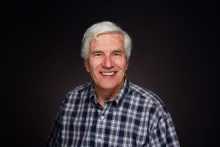
Steve Shafer was born and raised in Seattle. He graduated from Queen Anne High School in 1959 and later graduated from Ambassador College, Big Sandy, Texas in 1967, receiving a degree in Theology. He has been an ordained Elder of the Church of God for 34 years and has pastored congregations in Michigan and Washington State. He and his wife Evelyn have been married for over 48 years and have three children and ten grandchildren.
