
Joe Dobson
This transcript was generated by AI and may contain errors. It is provided to assist those who may not be able to listen to the message.
Today I want to continue, or I want to conclude, I should say, not continue, but conclude. To continue and conclude. It's a six-part series of sermons on the life of Abraham. Abraham's life was a remarkable life. In many ups and downs. In many twists and turns, many trials, even as our lives do. It has not been a perfect life. Both Abraham and Sarah made mistakes. At least we made mistakes from time to time. From which they had to learn some valuable lessons, even as all of us do. So theirs, like ours, was a journey of learning to grow in faith, by and through the many trials they went through. Today then we will conclude this series by looking at the final years in the life of Abraham, and we'll look at some of the lessons he learned after his wife Sarah died. So the title for my sermon here this afternoon, or this morning, I should say, still mine, is the life of Abraham, part six, is finally here, and the legacy he left for all of us to follow. I want to talk about another couple I start with, who most of us have never heard of. Most of us have never heard of a couple by the name of Herbert and Zalayra Fisher. Their marriage came to an end 10 years ago, back in 2011, when Herbert died. But here's the thing that's amazing. They got married in 1924. Way back, they got married, didn't know him. He didn't marry in 1924, back when Calvin Coolidge was president. Their marriage lasted to the Great Depression, during which Herbert earned less than a dollar a day. And they had five children to support. And they reared during World War II on ration supplies. When they had Rashi in World War II, they reared five children on ration supplies during World War II. They witnessed the Korean War, Vietnam, and all the other 20th century events, including the assassination of Martin Luther King Jr., which they watched with great personal interest as a black couple living in North Carolina. Their marriage lasted through the passing of 15 presidents, if you can imagine that. When Herbert finally died, they had been married for 86 years. 86 years of marriage.
When asked what the secret to their long marriage was back about 10 years ago, tomorrow replied, there isn't any secret. It was only God who kept us together. So they had their struggles. But obviously, they had made it an unconditional covenant at the time they were married, and they were not about to ever break that covenant, and they didn't. So that now brings us to the final years in the life of Abraham, which begins in Genesis 23, verse 1. So let's begin by turning to Genesis. Let's begin by turning to Genesis 23, 24, 25 today. So we want to be turning around in our church, and then turn to the church. Turn to the church. Genesis 23, verse 1. It came to pass after these things that God tested Abraham. So Abraham, you can see, well, here I am. Then God said to Abraham, verse 2, You take now your son, your only son Isaac, whom you love, and go to the land of Moriah, and offer him there as a burnt offering on one of the mountains on which I shall tell you. Well, excuse me. Now that was verse 1. I want to start there. Excuse me. I want to start in chapter 23. So excuse me. I've got the best start there. Chapter 23, verses 1 and 2. Chapter 23. Sarah lived 127 years, and these were the years of the life of Sarah. Like I said, I'm talking about Abraham now after Sarah died. 127 years, and these were the years of the life of Sarah. So Sarah died in Kirdar-Arbagh, that is, in Hebron, in the land of Canaan, and Abraham came to mourn for Sarah and to weep for her. How long had their marriage endured? We just talked about this couple of what? Mary lasted 86 years. Well, it was difficult back at the time of Abraham for girls to marry by age 15. We don't know how old she was when she married Abraham, but if she had been married at age 15 and then died at the age of 127, as it says here, then their marriage had lasted for 112 years, which is very possible. And it lasted too many severe trials, including one of the most severe trials of all, that being that God telling Abraham to sacrifice his only son Isaac, who had been 37 years old, his mother died, as we just read.
Now, Abraham was not a perfect husband. Twice, on two different occasions, he put Sarah's life in jeopardy to protect himself by calling her his sister instead of his wife. Because he was afraid of him telling her his wife that something might happen to him, that they might take her and protect herself. First, he said that with Pharaoh and then with Abimelech. Both times, God had to bail him out by giving him troubling dreams. Sarah was also not a perfect wife. She coerced Abraham to have a child by her hand made Hagar, which literally led to a world of trouble, which still is troubling us today. But they worked through their problems and stayed together for 112 years. That's a long time. So now, let's look at the final years of Abraham's life beginning in Genesis 23, verse 3. Then Abraham stood up before his dead, except for Sarah died now, and spoke to the sons of Hec, saying, verse 4, I am a foreigner and a visitor among you. Give me property for a barrier place among you, that I may bury my dead out of my sight. Now, when you stop and think about it, just read this, and it's kind of amazing, actually. And we stop to think about it. Because as we've learned in the previous sermons on Abraham, Abraham was very wealthy in silver and gold. And he was a mighty prince. A mighty prince and very wealthy. Yeah, here's the end of his life. Sarah dies, the end of his life. And he didn't own any property. Didn't have a place to bury. Didn't have a place, property that he owned, but to bury her. And he's still a foreigner in a foreign land. Even as we are foreigners in a foreign land, spiritually speaking. So what did he do then? Genesis 23, verse 4. Then on the third day, chapter 23, verse 4, he said, I am a foreigner and a visitor among you. Give me property for a buried place among you that I may bury my dead out of my sight. And the sons of Athens answered Abraham and said to him, Hear us, my lord, you are a mighty prince among us. Bury your dead in the choices of our burial places.
None of us will hold from you his burial place, that you may bury your dead. There, one of our burial places. Then Abraham stood up and bound himself to the people who were armed to the sons of Athens. And he spoke to them, verse 8, saying, If it is your wish that I may bury my dead out of my sight, hear me and meet with Ephraim, the son of Zor, for me, that he may give me the cave of Machpila, verse 9, which he has, which is at the end of his field. And let him give it to me at the full price as property for a burial place among you.
Abraham now had a need for family gravesite, which he insisted on purchasing from the sons of Athens. He didn't want to use theirs. He wanted to purchase one of his own land that he could have, that he could own from that family burial site. And they wanted to purchase from the sons of Heth. The sons of Heth were Hittites, as they tell us in verse 10. Now, I may not seem significant, but if you do a little background research, it's quite significant, actually. Because for many years, archaeologists and historians could find no trace of Hittites outside of the Bible. They'd spread the Bible and say, hey, there are many people that have never existed. We can't find any trace of people who buy that. So in their reason, they'd just spread the Bible and made it a book of fiction. But more recently, they have found cuneiform tablets detailing many businesses that were conducted by Hittites. And about detailing their transactions and their sale of property. And one of those transactions, when these cuneiform tablets detail the property being sold, not to every habit, somebody else, but the property being sold as having many trees.
Described on the property that was sold. It's also here, but then recently, it's having many trees. Now, here's why it's significant. Because that's also described in the property that Hittites sold to Abraham. Jesus 23 verse 17.
So the field of Ephraim, which was in Machpila, which was before Monterey, the field in the cave which was in that field, in that field, the cave, because the field was on the edge of a mountain, there was a cave in the mountain, a part of that property. And all the trees that were in the field, which were within all the surrounding borders, were geded. They were geded to Abraham. All the trees! So it talks about this property having trees.
Deeded to Abraham is a possession of, in the presence of the sons of Hitt, verse 18, before all who went in the gate of the city. And after this, Abraham buried Sarah his wife in the cave of the field of Machpila, before Monterey, that is, Hebron, the land of Canaan. So he fled, excuse me, so the field, verse 20, the field and the cave that is in it, were geded to Abraham by the sons of Hitt as property for a burial place. It talks about trees. Now, you go over to that area today, there aren't any trees. That's how Abraham were trees. You know, it's amazing how the Bible has proven to be accurate down to my new details. Because this land today doesn't have trees, but it did back to the time of Abraham, it's confirmed that right here, as we just read, even though there's no trees today. But there were then. There were trees. Come back at that time of, family would buy a property near a mountain that had a cave. It's a family burial site. That's what they did. They buried, they did in a cave. They sealed the cave. Here's what Abraham did here.
But in one sense, this is also very remarkable. Why? Because Abraham was a mighty prince, and he was very rich in silver and gold, as we previously read. And yet, all that God promised him, this was the only land the Bible records him personally owning in his entire lifetime. The only land he owned, he purchased this property, included in this cave, is a burial place for his family. He was a soldier and earned a foreign land. He never owned a home of his own to settle in. Now, here's how Genesis 24 begins. Verse 1. Abraham was old. He was well advanced in age, and the eternal had blessed Abraham in all things. How old was he? Well, he's now 140 years old. And his son Isaac, by this time now, was 40 years old. Put it all together. And Isaac, at age 40, he's still single, he's not married. His only son was not married. So it's time now for Abraham to find a wife for his son, because back at that time marriages were arranged to ensure that continued civility and prosperity of the family. And Abraham didn't want the nation that God promised that he would become, to be mixed into the Canaanite melting pot. So, as Abraham is getting older now, what does he do? He's got to find a wife for his son. So he says, this long time, most trucks the servant to find a wife for Isaac from among his brethren. He says, I've got to find him among my brethren. I don't want to find him among Canaanites. He's got to find a wife among my brethren. This servant is identified as the oldest servant of his house, who rule over all that he had, who was probably Eliezer. I've got to go back a little bit to find out where Eliezer comes into the story, but on his journey from earth and land of Canaan, he passed through Damascus, where Eliezer joined his caravan and signed on as his servant. You can read that back in Genesis 15, verse 2. So everyone who sent you the oldest servant of his house, who ruled over all that he had, please put your hand into my thigh, and I will make you swear by the eternal, the God of heaven and the God of the earth, that you will not take a wife for my son from the daughters of the Canaanites, among whom I dwell. Who is Sarah now, dad? Who is Sarah now, dad? The neighbor I'm now being a widower. His attention stopped focused on finding a wife for his son Isaac. Turn to Abraham and tell his trusted servant to go and looking for a wife for Isaac. This is 24, verse 4. But you should go to my country. I want you to go to my family and take a wife for my son, Isaac. Now, if you read that, you've got to stop and think of the geography. This was no simple task.
How far was it from where Abraham lived to where his family lived? How long an attorney would that have been? It was a distance of over 500 miles. Now, it may not seem too far today, but it may be up in the car. It may be 500 miles, probably in one day. I drive all day, 14, 15 hours. But back then, they didn't have that kind of transportation. You couldn't get your plane or bus or private car. You had to walk or ride a donkey or a horse. It was a long trek, 500 miles. He's going to send his servant 500 miles back to where his family is living to find a wife for his son. So, naturally, then, the servant raised a very logical question. Verse 5. And the servant sent to him, Well, what if I make that trip and I go 500 miles and perhaps the woman's not willing to follow me to this land. Maybe she doesn't want to go travel 500 miles away from her family to the land of the Canaanites. To a foreign land. So, he said, maybe it would be a good idea if I take Isaac back with me. So, he said, must I take your son back to the land from which you came? So, I take Isaac with me.
So, again, asking that question was a very legitimate question. See, how many wives, how many women would be willing to do that? To travel 500 miles to a land she's foreign land away from her family to a man she's never seen? To meet herself, to marry this person she's never met, doesn't know. What kind of a woman would it take to do that? You know, I have to take back in my own life and no different circumstances, not quite the same, but I'm also married to a woman who just did that. You know, other than I were attending Big Sandy, Texas at the time I was, I graduated Big Sandy, Texas. She went and just finished her sophomore year. And back then, that time is amazing, but back that time, both Bachelor, Bachelor, though they had one in Pasadena, they had Texas, where they had one in England, but I think just that Big Sandy in Pasadena at that time. But every student who graduated, men and women, they were all hired full-time by the church at that time.
So when I graduated, I was hired full-time, but they told me I didn't want me to stay in Big Sandy. They were going to send me to California to work out in Pasadena, Texas. So we had just started getting seriously just before I graduated, and I knew she was the one. But I was going to be going to Big Sandy. I mean, I was going to Pasadena, and she'd be at Big Sandy. So I thought, well, you know, that's not going to work. I didn't want to have to go out there for a year. So I asked everyone, got in our day one night, and she was living in one of the faculty homes that for the summer. Some of the girls who were living in faculty homes during the summer, I think it was Mr. Nelson's home. She was asked, so I said, asking her, marry me? I said, would you go with me to Pasadena? Will you go with me? And she said she'd be willing to go with me to Pasadena, again, where I had been assigned to work. Of course, she knew that would entail marrying me to do that. So Evelyn has said, I will go, as Rebecca says, we'll see shortly.
And, you know, she said that even though she realized it'd be a long way from her home in Arkansas, but not in California. And she knew if she married me and went to California, it'd be a long time. Of course, you'd probably see her family again.
Back to our story of Abraham's servant. Then the servant asked Abraham if he should take Isaac with him, which again is a normal way of response. Would I take Isaac with me? What does Abraham's response to that question? Genesis 24 verse 6. But Abraham said to him, Be aware that you do not take my son back there. So this question struck a nerve with Abraham. And his response, according to the original Hebrew, is, watch yourself. Watch yourself. Do not take my son back with you.
So Abraham saw danger in that suggestion that this trust the servant made. So the question, because why would Abraham respond in such a harsh way, to such a seeming like a general question, or not told? But in my opinion, Abraham wanted to make sure Isaac's wife had certain qualities.
And he wanted to live by faith that whatever happened would be God's doing. And he also, I think, didn't want his son Isaac to possibly go back there and then reject God's choice. Not be God's choice. The wife is going to be God's choice. And what if Isaac, for some reason, wants to reject him? You don't take that chance. You want to put trusting totally in God and in this trust and servant. So Abraham, by not allowing Isaac to go with the servant, was totally putting the outcome into God's hands. As indicated by Abraham saying this, as recorded in verse 7 in chapter 24, he will send his angel before you. In other words, God is going to give you, he's telling his servant, his God will give you his divine guidance. You need to take Isaac's God will give you divine guidance. He had total faith in God or God, the servant, to find the right person. Again, where was Abraham's family living? Where they were living were his surviving brother, Nahor, and so on. Where was that? Genesis 24, verse 10. Then the servant took ten of his master's camels and departed. For all his master's goods were in his hand, and he rose and went to Mesopotamia. He went to the city of Nahor. We were Nahor and his brother's brother. Nahor had settled in this area, which later became a city, which was then named after Nahor, who was its founder. That seems to be the obvious location. Again, but that was about 500 miles north of where Abraham lived. 500 miles away. What did Abraham's servant then do? Verse 11. He arose and went to Mesopotamia to the city of Nahor.
And he made his camels kneel down outside the city of the well water at any time, the time when women go out to draw up water. So a strategic position was somewhere where he would observe eligible women coming out to get water at this well. Then what did he do? He did what all of us should always do before making a major decision. He asked for God's guidance and for God's blessing. Which is why I'm sure he was one of Abraham's most trusted servants. Verse 12. Then he said, the servant said, O Lord God of my master Abraham.
Please give me success this day and show kindness to my master Abraham. Then he asked for a sign from God. He wanted to make sure this is God's doing. So he asked God for a sign so he would know who God's choice was. Amazing sign that he asked for. He said, through verse 13, Behold, here I stand by the well of water and the daughters of the men of the city are coming out to draw water. So say, I'd like to have a sign, God, so I know who the right person is. Who your choice is to be a wife by his name. Now let it be that the young woman to whom I say, please let me let down your picture to this well drop water that I may drink. And if she says, drink and I will also give your camels drink because they traveled there with my camel. Let her be the one you have appointed for your servant Isaac. And by this I will know that you have shown kindness to my master. Now I used to just read that, it didn't seem like so much, but it's an amazing request when you stop to think about it. There were 10 camels, it was a television verse 10, there were 10 camels through the other men camp traveling with him, and there were 10 camels. How much water would it take to potentially water 10 camels? How much water can a camel drink and store? A camel, one camel can drink up to 50 gallons of water. And there's 10 camels, that's potentially up to 500 gallons of water. She would have to draw from this well to give to those camels, to water the camels. It could require, how long do I have, 500 gallons of water? You can order water 50 camels, no easy task. If she could haul five gallons at a time, and you're trying to carry five gallons of water, water's pretty heavy. Five gallons would be heavy. That way, if she could handle five gallons at a time, 500 gallons would require 100 trips, 100 hauls of water, to water 500 camels. It would take about two hours of back-breaking work. Genesis 24, verse 15. It happened before he had finished speaking that behold, Rebecca, who was born to Bethuel, son of Melchor, the wife of Naor, Abraham's brother, came out with her picture on her shoulder. Though the young one was very beautiful to behold, and virgin no man had known her, and she went down to the well, filled her picture, and came up. And the servant went out to meet her, and he said, please let me drink a little water from your picture. Verse 18, she said, drink, my lord. Then she quickly let her picture down to her hand, and gave him a drink. Verse 19. And when she had finished giving him a drink, she said, I will draw water for you, excuse me, I will draw water for your camels also, until they have finished drinking. Wow! What a sign! He's asking for a sign. There it is. Then she quickly had to get her picture into the trial, ran back to the well, draw water, and drew for all of his camels, for all ten of his camels.
When did Abraham's servant do as he silently observed? You must have been in Oz. He observed this. He observed it. Verse 21. In the man, servant, who was there to find the wife for Isaac, wandering in her, I would say he was amazed at her. He was probably amazed. He remained silent. He was kind of stunned. I think he was just stunned. He watched this. I can't believe how he seemed. He remained silent so as to know whether the Lord had made his journey prosperous or not. Again, I'm sure he's amazed at what he saw. Rebecca had passed the first sign to find colors. This was truly an amazing woman. She was beautiful to boot. However, if she was to become his wife, or to become the wife of a wealthy prince as Isaac would become, she would become the wife of a wealthy prince. She would have to have an additional quality. So after giving her some very valuable gifts, what an Abraham servant then asked her. Verse 23, so was when the camel said, finished drinking. Excuse me, verse 23. Verse 23. And she said, and he said, whose daughter are you? Tell me, please, is there room for your father's room in your father's house for us to watch? Verse 23. He said, is there room, we're going to need to stay the night, is there room for us, not me? He had, what, 10 camels? So he had at least 10 people traveling with him. Or at least nine people traveling with him, one for himself and the other for himself. He said, is there room for us to watch? Not for me to watch. In other words, can you put all of us up for the night? Why is that significant? Because he undoubtedly traveled, again, as we said, with other servants, he had at least nine others. He had 10 camels, so at least nine those besides Isaac, or besides, excuse me, besides this servant. But to give logic to this servant and all those who are with him would not only acquire an attitude of tremendous hospitality on the part of Rebecca, but also on the part of her entire family. Remember, when you marry someone, you, in essence, are also marrying into her family, so you better know family what kind of values that family has. Obviously, his family had great values when it comes to hospitality. Jesus 24, verse 24, she said to him, I am the daughter of Bethuel, Milka's son, whom she bore to Nahor.
Verse 25, nor were she said to him, we have both straw and feed enough for all your camels, and free for all your friends who are with you, and room for all of you to watch. Verse 25. Now, how could she say that? How could she just, because Rebecca's one that's out there saying this, how could she say, we have room to watch, meaning we have both house and feed all of you. How could she say that without first checking with her parents and other family members? Wouldn't you think we want to go ask them first? Just walk into heck, got ten people here and ten camels, let's take care of them all for the night. She could say that because she knew her family values. She knew her family would offer hospitality to someone in need, regardless of how inconvenient it might be. So, Rebecca's not only an amazing woman, but her entire family is an amazing family when you stop and analyze it. So then, Rebecca's brother, Laban, went out to greet Abraham, Abraham's servant, and he said this beginning in verse 31. He said, come in, O blessed of the Lord. Why do you stand outside? Do I have prepared the house and a place for the camels? Then the men came to the house and unloaded the camels and provided straw and feed for all the camels and water to wash his feet and the feet of the men who were with him. Because they did a dusty travel, so they would go off to tell him to come to somebody's house and wash their feet. In verse 33, food was sent before him to eat, and he said, I will not eat until I have told about my errands. So he said, speak on. The servant then told Rebecca's family what had happened to the well, widened and sent there by his master. They had been sent there to find the wife, Abraham's son Isaac. He also took the nis in verse 37. Now my master made me swear, saying, you shall not take a wife or my son from the daughters of the Canaanites. And then underline this, in whose land I dwell. He told them here, Abraham and Isaac, I live in the land of the Canaanites.
So he told them he and his master lived in the land of the Canaanites. He stopped to think about that. At that time, that's about the last place. He's talking to Rebecca's family. At that time, that is the last place in the world. You would want your daughter to go to find your husband.
That's about the last place you'd want your daughter to live, to go to live. It was not only far away, or 500 miles away. It was a dangerous place to go as well. Because it was the land of the Canaanites, the land, the worshiped idols and pagan gods. Which is why the sermon added this, verse 39.
And I said to my master, perhaps this woman will not follow me. Yeah. Perhaps she's not going to be willing to leave her family, never see her family again, go 500 miles away to a land that's worshiped pagan gods and idols, to marry a man that she's never seen and doesn't know. What if she doesn't want to know? That's pretty legitimate question.
Perhaps someone will not follow me. But he said to me, verse 40, the eternal before whom I walk will send his... He's telling again this, the sermon what? The Lord, the sermon is what it said. He said, the Lord before whom I walk, the sermon says, will send his angel with me. And Matthew tells him, this is he who leaves, and prosper your way, and you should take a wife from my son, from my family, from my family's house. Verse 41. And you'll be clear from this oath to go there and get a wife from my son Isaac. You'll be clear of this oath when you arrive among my family, if they will not give her to you. Then you'll be released from my oath. I hope. Because, you know, he realized a good chance she's not going to want to do that.
Maybe she won't go. It's also just what? A game, a way out for Rebecca and her family. Yeah, you know, he might not want to go. He said, she might not want to go. That's very little, too. Possibility. Verse 42, Genesis 24. Verse 42. And this day I came to the well, and I said, oh Lord, of my master Abraham, if you will now prosper the way in which I go, behold, I stand by the well of water, and it shall come to pass, that when the virgin comes out to draw water, and I say to her, please give me a little water from your pitcher to drink, and if she says, drink, and I will draw your candles also, let her be the woman. The Lord has appointed for my master's son.
It's interesting, verse 43, he says, when the virgin comes out to make water, how would she, how would you know she was a virgin? Simply by reputation, or was there another way? It's interesting, if you dig a little deeper, that the Hebrew word translated virgin here is alma h-a-a-l-m-a-h, in English, which is from the Hebrew word alam, a-l-a-m, which means to hide, to cover, or to conceal. Back in the time of Abraham, a young woman, who was still a virgin, wore a veil. He said the remover veil and tis you became married, even as some women in the middle of the east still do today. Then, after relating the sign he had asked for from God, he then asked if they would allow Rebekah to return with them so he could marry Isaac, so she could marry Isaac. How did her father and her brother respond to that question? Genesis 24, verse 50. Then Laban and Methuah answered and said, The thing comes from God, comes from the eternal. We cannot speak to you either bad or good. Here is Rebekah before you. Take her and go, and let her be your master's son's wife, as the Lord has spoken. The servant then bought himself in a prayer of thanks, and gave many precious gifts to Rebekah, and to her brother and mother, as you can read here. He then had a meal with her family and saved the mother.
The next morning, the arose, and Abraham and the servant said this. It's recorded in verse 54. Send me away to my master. Then dropping down to verse 55. But her brother and her mother said, Let the young woman stay with us a few more days. You know, we may never see her again. She goes with you 500 miles away. This may be the last time we'll ever see her. Why not stay for 10 more days? At least 10. And after that, she may go. It's a very reasonable request. Since they didn't know if they'd ever see her again, as we just said. Now, how did Abraham's servant respond to that request? It's a very strange response. Verse 56. And he said to them, Do not hinder me. Or as my Martinist says, Do not delay me. No, don't. Don't delay me. Don't have me on the other way in 10 days. She's to leave, we need to leave right now. Do not hinder me or delay me, since the Lord has proffered my way. Send me away so that I may go to my master. So why would the servant not grant them their request? Just let her stay for another 10 days. All they say is they're your buys. Well, maybe they would change their minds if she waited. You never know. You might think about it, but wait a minute. I'm not going to let you go over there to land in a cane ice 500 miles away. You might, you might, you know it will happen to you. Those are dangerous people. So they might change their mind if they're given time to think about it. What did they then say? Verse 57. So they said, we will call the young woman and ask her personally. Well, that's a good idea. Yeah, maybe Rebecca should have some say in this. We'll call the young woman and ask her personally. Then they called Rebecca and said, well, you go with this man. So they asked Rebecca, would you go with this man 500 miles to the land of Canaan to marry this son of Abraham Isaac who you've never seen? You don't know. You may never see you again, but would you go? And what is her answer? She says, I will go. Wow! Really? Not, I'd like to have some time to think about it. Let me have some time to think about it. She said, I will go. She said, I will go.
What an amazing and immediate response. So she gives an amazing response. By giving this kind of response, she's basically displaying the absolute faith and confidence in God. That God's going to direct her life. She has faith. This is all God's doing. And God's going to direct her life and bless her. This is all God's doing. So her faith is such here that she views her home forever to marry a man she has never seen or personally met. Amazing. However, like all of us, she was not perfect either. She had faults. After being barren for the first 20 years of their marriage, she gives birth, I'm talking about Rebecca now, she gives birth to twin sons, Esau and Jacob. Well, Esau being the firstborn, but Jacob grasping his heels, they're being born as if, typically to be born first. That means just a plant, Esau. As we just read, she then played favorites with her twin sons, favoring Jacob over Esau. And would not fully trust God to fulfill his promises. And it looked like Isaac would, this is later on now, of course, it looked like Isaac was going to get the firstborn blessing to Esau, racial disguise Jacob in order to trick her husband into bestowing that blessing on Jacob. Rather than trusting God to work things out, according to his will. Of course, I'll just do the following chapter if you can read all this story. I'm not going to go through that. But later, of course, as we know, when you read the whole story, there was so much contention and hatred toward Esau and Jacob, or I should say between Esau and Jacob. But Jacob finally fled from home, being afraid that Esau might murder him. Rebecca then had great sorrow, and she would never see her favorite son Jacob again after that. And if you read that whole story, it parallels the prophecies of Jeremiah 31-15 and Matthew 2-18. Parallels, it's not the same story, but it's a parallel to it. Where it says, a voice was heard in Rama, which was a city in the tribe of Benjamin. Lamentation and weeping and great mourning, racial weeping for her children, refusing to be comforted because they are no more. But Rebecca's story parallels that of racial. After Jacob left, Rebecca would never again see her two sons together. And she spent the rest of her life weeping and mourning for her favorite son Jacob, because once Jacob left, she wouldn't see him again. She died before he, she never got you, never got you to see him again. But you know, how many mothers you think about, how many mothers in the 20th century would relate to that story? Having sent a son off to war, they would never see him return. How many mothers ended up weeping in the morning for their children due to the ravages of war? In the 20th century, many did. In fact, I would say thousands and maybe tens of thousands of mothers could relate to Rebecca's story, because prophesied right here in the next two verses.
Tenses 24 verses 59 and 60. So they sent Rebecca, their sister, with her nurse, and Abraham's servant and his men. And they bused Rebecca and they said to her, and before she lapsed, our sister, may you become the mother of thousands of ten thousands, and may your descendants possess the gates of those who hate them.
You know, that's amazing that that prophecy, if you will, was bestowed on her as she left, because that has taken place just as we're told here. When Rebecca's resurrected, she will not only be reunited with her son Jacob. She will also find she has become the mother of thousands of ten thousands, who also possess the gates of those who hate them. Never doubt God. Never doubt that God could work out his purpose through all of us, regardless of maybe faults and shortcomings that we may have. Then Rebecca and her maidservants, with all their belongings, loaded on camels, they departed following Abraham's servant. Then one evening, while Isaac was meditating, or likely praying in a field by Ouel, Isaac spots a caravan of camels coming toward him, Jesus 24, verse 63. And Isaac went out to meditate in the field in the evening, and he looked at his eyes and looked, and there the camels were coming. From where exactly had Isaac just come from? Verse 62. 62, going back one verse, verse 62. Now Isaac came from the way of Beer-La-Hay-Roy, for he dwelt in the south.
Why are we told that? What does that mean? What does that mean? Read that, see what's that? Where's that? Why is that in the story? Why is that important? Why are we told that he came from the way of Beer-La-Hay-Roy? What does that mean? And where have we read that before? We read that before in the story of Abraham. Where? We read that back in Genesis 16, verse 14. Where God appeared to Hagar to tell her that she would have a son as she was slain from Sarah. Then she aimed the place, Beer-La-Hay-Roy, which means well of the one who lives and sees. Well of the one who lives and sees. That's what that means. Why did Hagar name it that? Because she became afflicted, and God had seen her to her affliction. So she named it well of the one who lives and sees, as God had seen Hagar's affliction. Do you have to ask, does that still true today? Does God, does Christ still hear and see our afflictions? Especially mothers who've lost a child, or been abandoned, who are facing a many turning point in their life. Where was she? She was 13, 8, 6. Is Jesus Christ the same yesterday, today, and forever?
So then when the red sign man walked her toward her, she asked who it was. What told was Isaac says she took a veil and covered herself, verse 65. What did that indicate? She took a veil and covered herself. Why is that important? Why didn't it indicate? And why did Isaac meet me after that? It says he took her into his mother's tent so she could become his wife. See, back at the time of Abraham, when a woman put on a veil and indicated she was accepting his offer to make her his wife. That's what some commentary say. By putting on a veil, Rebecca was indicating to Isaac she would become his wife. She then became his wife by going into the tent with him. So Isaac was comforted after his mother's death. And before going into Genesis 25, it's interesting you note some parallels between the suction of Isaac's wife and the suction of the wife for Jesus Christ, which you can read, and we read in Ephesians 5, verses 22 to 33. See, Abraham was the type of the father being called the father of us all, Romans 4, 16. Isaac is the type of Christ who was a son born according to the promise, whose birth was not beforehand, and whose conception was miraculous. So, Abraham's servant, Eliezer, who helped Abraham find a bride for his son Isaac, and whose name means, God is my help.
Can be seen as the type of the Holy Spirit, which in John 14, 26, is called the helper, whom the father will send. Thus, we have the father sending his spirit to select out and prepare a bride for his son. The bride then receives gifts from this agent of the father, Romans 12, verses 6 to 17. Even Israel's family received gifts from Abraham. Then she agrees to marry someone she has never seen, even as all of us have agreed to marry Christ, whom we have never personally seen. She then agrees to go on a journey with this agent, guiding her to a destination, which is all of us who are going on a journey toward the kingdom of God, with God's Spirit, the Holy Spirit guiding us. So, this story, in many aspects, directly applies to all of us. There are analogies there and parallels. But then it brings us to Genesis 25, and to a new chapter in Abraham's life. See, Abraham was 38 years after Sarah died. I'm sure Abraham remained a widower. It doesn't say how long, but probably he remained a widower for a number of years before he met and then he married Katura. Genesis 25, 1. Abraham again took a wife, and her name was Katura. You know, this gives an important lesson, which many children have a difficulty with, understandably. So, when you lose a lifetime partner in marriage, it can be very difficult, adjustment for most, be very difficult adjustment, regardless of what happens after that, because you suddenly find yourself living alone. Big adjustment. And many, probably most, would never want to marry again. But others might find a need for companionship. So, sometime after Sarah died, Abraham married again. Various commentaries say it was probably somewhere between three to nine years after Sarah died that Abraham married Katura, although it doesn't tell us. The name Katura came to mean incense, which was a very valuable commodity. She must have been considerably younger than Abraham, as she ended up burying six children. They were also named in 1 Chronicles 1.32, where it says, they were the sons born to Katura, Abraham's concubine. But the Abraham were translated concubine. You need to understand that Hebrew word. It actually can mean a secondary wife, or one without the full privileges of a primary wife. Meaning that, at his death, Abraham's wealth and genealogy would then be passed down to Isaac and do Isaac's descendants, and not to his descendants who might be born through Katura. Which is why it says this in Genesis 25, verse 5. And Abraham, we've already had to Isaac, because he's the one who might be the son of Katura. But Abraham had a generous heart, as indicated by what? As indicated by what? The next verse here in Genesis 25, verse 6, Genesis 25 says. But Abraham gave gifts to the sons of the concubines, or actually the sons of a secondary wife, which Abraham had had the Katura. And while he was still living, he sent them eastward away from Isaac and his son to the country of the east. The sons of Katura would be included because, as the sons of Abraham's secondary wife, they were not entitled to receive Abraham's inheritance, according to the culture of that time. But Abraham was a very generous person to him, and he undoubtedly gave them very generous gifts, as he was very wealthy and he had a generous heart. And then it says, while he was still living, he sent them eastward away from his son Isaac. He did that before he died, so there would be no conflicts after he died. Because this guaranteed, his eyes could clearly be his sole heir. It's indicated in verse 5, it says he gave all that he had to Isaac. One eyes could be the sole heir. It also clearly indicated that Isaac was Abraham's special son, through whom all of God's promises to Abraham and his descendants would be fulfilled. It would be fulfilled through Abraham's sons Isaac, not through Katura, the sons he had by her.
All the promises, including the promise to make Abraham the father of many nations, would be fulfilled through Isaac's descendants, Genesis 17.5. It said he would be the father of many nations, and he once became the father of many nations. Amazing. Minyan became the father of the Minyanites, who became a mighty nation. Today, we most likely, we don't know if we're the most likely people of Saudi Arabia, which is a very wealthy, all rich nation. Thus, it is amazing that so many of today's prominent nations and people descended from one man. Israel became the nation of Israel, who today have become the peoples of the United States, Great Britain, Europe, Australia, and New Zealand. Judah became the nation of Judah, which today is the nation of Israel. Thus, they are also prominent Jews, people of Judah, prominent positions in many nations around the world. Israel became a part of the many Arab nations, the nation of the Middle East, as did Esau. It is amazing that Jews and Arabs and Christians all venerate Abraham as a father, in a sense, in some respect. Many of them trace their physical ancestry back to Abraham. In more than half of the world has judged him as being a great man. Genesis 25, verses 7 and 8. That's two verses here. This is some of the years of Abraham's life which he lived, 175 years. Then Abraham breathed his last, and he died in the good old age. An old man, full of years, who had gathered to his people. He was then placed with his wife Sarah in the family cave of Mepila, which he had purchased from Ephron, the Hittite many years before, and which is the only plot of ground he ever actually owned. According to the edition, along with Abraham and Sarah and Isaac and Jacob were their wives, according to the edition of Rebecca Lee were also very dear. So in conclusion then, one individual summed up Abraham's wife by saying that No doubt he was one of the greatest men in Bible history, and therefore one of the greatest men in history of the world. Few men have as much record about their lives in the Bible, surely none have received greater personal promises directed especially to himself than did Abraham. And few are referred to again so frequently through Bible history after their lives have ended. We could also say of Abraham that his legacy could be summed up by the words of the Apostle Paul as recorded in 2 Timothy 4, verse 7 and 8, where Paul said this, I have fought the good fight, I have finished the race, I have kept the faith. Finally there is laid up for me the crown of righteous which the Lord, the righteous judge, will give me on that day, and not to me only but also to all who have loved his appearing. And I could say that there is also a crown of righteousness to all who have exercised and lived by the faith of Abraham. But there is here then one final lesson we can all learn from the life of Abraham. God has offered all of us an even greater promise than he did to Abraham. Through the sacrifice of Christ, he has offered all of us a gift of eternal life to be part of his very family and to reign with him forever. So to receive that gift of eternal life and to be a part of God's family and reign with Christ forever, exercise the faith of Abraham who is the Father of us all.
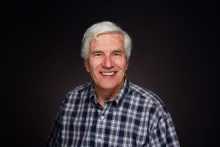
Steve Shafer was born and raised in Seattle. He graduated from Queen Anne High School in 1959 and later graduated from Ambassador College, Big Sandy, Texas in 1967, receiving a degree in Theology. He has been an ordained Elder of the Church of God for 34 years and has pastored congregations in Michigan and Washington State. He and his wife Evelyn have been married for over 48 years and have three children and ten grandchildren.
