
Jorge de Campos
This transcript was generated by AI and may contain errors. It is provided to assist those who may not be able to listen to the message.
I want to give a sermon that hopefully will tie in directly with the Day of Pentecost, which occurs tonight. Most of us as speakers, preachers, do not get the opportunity to speak on Sunday. And there are only a couple of times a year that that occurs. And this tomorrow will be one of them. This happens to be one of those unique situations where we have one Sabbath that as it ends, another Sabbath begins. So there's not a second there that you can go out and do your own thing. We still have to obey God for that that whole period of time. But again, looking forward to spending time with you here, not only today but also tomorrow.
What is God's great purpose for the human race? The holy days of God show us how He's going to eventually extend salvation to all mankind. We understand that Pentecost pictures the calling of the firstfruits, that God is not trying to convert everybody today, that He's only working with a small handful of people, those that He calls the firstfruits. Is there one word that you can think of that would summarize the purpose that God has for humanity?
Now, if you were asked a question, which I'm asking, what one word would summarize God's purpose for humanity? Would you say love, reproduction, create, family, unity, harmony, salvation? Well, all of these apply, but I don't think they're the focal point of what the Bible reveals. Or at least they're not what I've selected to cover in the sermon. Maybe it might be a better way of putting that. Let's see what God focuses on and has focused on from the very beginning to the end of the Bible. In Genesis 2 and verse 7, we'll go back to the very beginning. And I want you to notice here what God did. Genesis 2 and verse 7. The Lord God formed man of the dust to the ground and breathed into his nostrils the breath of life. God created the man. He was lying there, but nothing was going on. So he started his lungs going, and he started breathing, and man became a living being. Now, I want you to notice God's great gift to man was obviously to create him, but to give to him life. Give man life. Man could not have a relationship with God unless he were alive. The Bible says when you're dead, you don't know anything. You're like Rover. You're dead all over. There is no consciousness at that time. Without our minds, we would not be able to have contact with God. So it is through the mind that God is able to make contact with us. God doesn't speak to your elbow. He doesn't speak to your big toe or your ankle. God communicates, and he's able to put thoughts into our mind. We need to realize how much our very being is dependent upon God, how much our whole life is dependent upon him. In 1 Corinthians 6, I want you to notice 1 Corinthians 6, verse 3. How the Bible describes our life now.
Verse 3, 1 Corinthians 6, says, do you not know that we shall judge angels in the future? We will have the responsibility of judging angels. How much more things that pertain to this life. I want you to notice the Bible describes our present life as it calls it this life, the physical realm, the physical life that you and I live. The Greek word means relating to the present existence. You and I are alive today in this present world, but we are physical, and we know that at the end of our lives, we die. And man doesn't go on living forever as a physical human being. God has given us physical life, and that physical life is temporary, is what the Bible reveals. As the Bible states, the soul that sins, it shall die. That's our present existence. That's what 1 Corinthians 6.3 is talking about, the present life, physical existence. James 4.14 describes our present life. James 4.14, you can just jot that down, it says, our life is like a vapor that vanishes away. It's like fog in the morning or due on the ground. And when the sun comes out, it burns off, and boom, it's gone. That's the way our life is. It emphasizes the fact that our life is temporary, that it is not permanent. We are mortal. You know, the word mortal in the Bible, I should say, means simply, liable to die. You and I die. That's what we have to look forward to. Unless God does something else for us. Man would not have a mind, would not have life, except God has given us life. We would not have a mind, except God has placed a spirit in us that combines with our brain and gives us the ability to think, to reason, to remember, to plan, to devise, to create. We have what's called the spirit in man. I think many of you may remember this, but I remember my wife and I were at Ambassador College back in the late 50s, early 60s, and it was sometime around 62 or 3 that Mr. Armstrong began to talk about the spirit in man. I happened to sit in on a ministry conference as a senior that would have been 1963 in January. Mr. Armstrong laid this out to all of the ministry, and I remember to this day that after he got through explaining it, hands went up. But, you know, one evangelist after another, but Mr. Armstrong, but Mr. Armstrong, he said, wait a minute, he said, I can't answer all of your questions. I don't have all of those answers, but I know it's in the Bible. And over the years, you know, Mr. Armstrong got ahold of something. He was, you know, he was like a bulldog, so to speak. He never gave up. He never quit. And for the next few years, that's what he spoke on. And every time he spoke, he would add a little more information, a little more knowledge, a little more understanding to it. And so what we find is that man has a brain. And it's through the five senses that we gather knowledge. But God places in that brain a spirit essence called the spirit in man. And the spirit in man makes it possible for us to think, have a memory, to reason, to be creative, to have some of the abilities that God has. And we can know the things of a man because of the spirit in man that's within us. It also allows the spirit of God to make contact with us. Again, where does the spirit of God come when we're begotten by the spirit of God? Well, it unites with the spirit in man. And it allows us to have contact with God. Man can begin to know the things of God and to have a relationship with God because of the spirit of God. In 1 Corinthians, back up just two or three chapters. Chapter 2. 1 Corinthians 2 and verse 10.
Well, let's back up to verse 9. As it is written, I is not seen nor ear heard, nor is entered into the heart of man the things which God has prepared for those who love Him. But now God has revealed them to us through His Spirit. For the Spirit searches all things. Yes, the deep things of God. So what you find is the Spirit of God reveals spiritual knowledge. Spiritual knowledge is not discerned by the five senses. I have read, in fact, I've got a Bible program, the Logos program, that has about 450 books on it. It's got all kinds of Bibles, commentaries, dictionaries, everything you can think of. Written by men who have some of the my-cues, I'm sure, of around 200. Double my IQ. Double most of us. But they are totally ignorant of the purpose of mankind. Now, they may understand Hebrew and Greek. They may understand Aramaic. They may know everything. They may have photographic memories, but they do not understand spiritual. Why? Because it has to be revealed. That's why. It's revealed knowledge. As we go on to see here in verse 11, it says, What man knows the things of a man except the spirit of a man, which is in him? See, we can know the things of another man. You can pick up a book and read about China. You can read about another part of the world. You can know about that. You can know what another human being goes through. We know what other people go through because we experience life also. And so, therefore, we know what pain, suffering is like, trials are like. We know what joy, happiness, having families, and so on because we've experienced it. Does a chicken know the things of a man? Does a hog know the things of a man or a bird? No, they know the things of a bird, but they don't know the things of a man because they don't have the spirit in man and they lack a few other things, but they certainly don't have the spirit in man. Notice, it says, even so, just the same way, even so, no one knows the things of God except the Spirit of God. So you've got to have the Spirit of God to know the things of God. It either has to be working with you and all of you young people out there. You may not have been baptized yet, but God's Spirit is with you. Your parents, or one of your parents in the church, God works with you. After baptism, God is in you. As verse 12 says, now we have received not the Spirit of the world, so there is another Spirit in its of this world, but the Spirit who is from God, that we might know the things that have been freely given to us. You see, it's not something you have to pay for. God freely gives us understanding. It's by His grace and His mercy that it's extended. So the truth of the matter is that all life comes from God. All life. There is no existence without God. There are different levels of existence. God's orderly creation is composed, I've written down, of six established kingdoms that we know of. Someone last, I gave this sermon last week told me, well, I think there's a seventh one. I made a point that I thought maybe there's a seventh one because seven is a complete number.
But I'll give you my six, and if you know the seventh one, please let me know. In the material world, you have a mineral, plant, animal, and human kingdom. And then in the spirit world, there is the angelic kingdom, and there is the God kingdom. Now, the other person came up with the bacteria and microbe kingdom.
I'm not so sure about that one, but I do know that at least four physical things are recognized by most scientists. Now, God has had a master purpose planned out before the physical creation. In Matthew chapter 25 and verse 34, Matthew chapter 25 verse 34, Notice, then the king will say to those on his right hand, Come, you blessed of my father. Inherit the kingdom prepared for you from the foundation of the world.
So before the foundation of the world, God has been in the process of preparing a kingdom for us. Remember Revelation 13.8? Revelation 13.8 says that Jesus Christ was slain from the foundation of the world. This implies that from the very beginning that God knew the man would probably sin. Do you think when Adam sinned that Christ went back to the father and said, Oh, guess what? He sinned! We never expected that this would ever happen. We hoped to create billions of human beings, and they would never sin. God knew that man would sin. I mean, the likelihood of that, I think, was almost a certainty. And so from the very beginning, before the physical creation, God planned a way for man to be forgiven and to be a part of the kingdom of God. Before God gave spiritual life, or before God can give spiritual life, I should say, there must be death. And what you find, Christ died, so our sins could be forgiven. You and I have to die also. You realize that it's a point in all men wants to die, but unless you die twice, you will not live.
And what I mean by that is that our old man must die. The old way of life must die, so that there can be a new creation take place. Colossians 3 gives a very interesting scripture that you may have read many times and just sort of skipped right over. Colossians 3, 3.
Colossians 3 says, For you died, so you and I spiritually, in a sense, die. The old man, the old way of life, has to die.
You died, and your life is hidden with Christ in God. So we're dead, and our lives are hidden with Christ. The old way is hidden. It's covered. It's covered by Christ's blood, by His sacrifice. And when Christ, notice verse 4, who is our life? Christ is now our life appears, then you also will appear with Him in glory. So Christ then lives in us today. Galatians 2, 20, remember, I am crucified with Christ. Nevertheless, I live, yet not I, but Christ lives in me. So where does this new life come from? It comes through the Holy Spirit, and it comes through the fact that Jesus Christ lives within us. So Christ is now our life. That is a new spiritual life, spirit life that takes place. In Titus 1, in verse 2, has this to say, Titus chapter 1, in verse 2, it says, in hope of eternal life, that's our hope. That's what we look forward to. You and I, one day, can have eternal life. In hope of eternal life, which God, who cannot lie, promised before time began.
Now, notice, before time began, God promised eternal life. The hope of eternal life is something that God has held out even before the physical creation. Time is a function of the physical creation of the material universe. Before there was anything, there was God the Father, the one we know as the Father, and the one we know as Christ. They have always existed, and they didn't exist in what we call time. They existed in eternity, and God didn't just count time. He just lived in eternity. But you and I live in a material world. We have a sun. We have a moon. We live on this earth, and we measure time. How? By a day. What is a day? It's the earth rotating on its axis once. We have a week. What's a week? Well, seven of those. We have a month. We have a year. You know, the earth rotating around the sun, and we have a year's time. And so we count time. So God very clearly says here that the hope of eternal life was something that He promised before time began. So I think that's a very clear scripture that shows that God's purpose was to give eternal life even before the physical universe. And part of that was that there would be a need for a Savior and that God began to plan and prepare that kingdom long before the first human being came along. Now again, back in Genesis chapter 2 and verse 9, when God created Adam and even put them in the garden, He put two trees there, and God gave man the opportunity to partake of what? What was it called? The tree of life.
God said, eat of it, the tree of life. This was a different life than they possessed. Man had physical life. God wasn't saying, eat of this tree and you'll have physical life because they were already alive. No, God was offering them eternal life, something that they did not possess. God was offering him something superior. God was offering him the opportunity to be in his family. Now, when you look at it, from what I can tell, there are different levels of spirit, different levels of spirit. Angels are spirit beings, but they're not on the same level as God, nor do they possess the exact same essence as God. How do I know that? What's obvious is they're not because if they did, they'd be God. And they're not God, they're angels. So therefore, they are not on the same level that God is. So they're spirits, but they're not on the same level. Man is physical, but he has a spirit essence that again gives us a mind. The spirit of man cannot function without the brain. It is a spirit essence that God places within the brain of a man. God exists on a totally different plane than human beings do, and angels. You and I exist in the physical dimension. God exists in a different dimension. Now, it's hard for us to understand that, but he's more real than we are. The physical is not real. The physical will disappear or can be destroyed, but God cannot. In 1 Timothy 6, 16, we find out something about God that is unique to him. 1 Timothy 6 and verse 16.
I'll back up to verse 15, give you a little context. We read here, so we find that God dwells in brilliance, in light, in power, in energy that just radiates out from him, his very being. The Bible calls that glory.
But notice it says, only God has immortality. That means only God has immortality. Now, that should be self-evident, but there are a lot of people who say otherwise. There are those who claim that human beings have an immortal soul. What does the Bible say? Only God has immortality. So, human beings are not immortal. There's not an immortal thing within us. If you look this up in Strong's, it's number 110. It's used three times in the New Testament. It is the Greek word, ethnia. That's my southern attempt to pronounce Greek. And it means underlying immortality or everlasting. It means that God is everlasting. The Old Testament, what was the term Miss Armstrong chose to represent the word Yahweh or Yahweh? Remember? The Eternal. That's what this describes. The one who exists that has always existed, the one who presently exists, and who will always exist. The I AM. And so, you find that the Bible indicates that only God has this. Man doesn't have it. Angels don't have it. Birds don't have it. Dogs don't have it. Anything you want to think of doesn't have it. Now, in 1 Timothy 1, verse 17, if you'll back up, 1 Timothy 1, 17, it says, Now to the King, Eternal, Immortal, Invisible, to God, who alone is wise, be honor and glory forever and ever. Amen. Now, the word immortal here is different. If you look it up in Strongs, it's 862. And it means, or actually the word is ethartos, and it means incorruptible. It means do not decay, incorruptible. So, it has a different meaning. As I said, the first word is only used three times. This word, ethartos, is used several times along with the derivation of it. Now, in Colossians 1, verse 15, you find that the apostle Paul, when he wrote the book of Colossians, we'll go to Colossians chapter 1, verse 15, was fighting a heresy. It was a heresy of Gnosticism. Gnostics believed that Christ was only a created being. He was maybe superior to most angels, but they thought he was a created being. Now, Paul in Colossians 1 and 2 especially shows that Christ is superior to all the angels. And he begins to dramatize that, beginning here in verse 15, when he says, he is the image of the invisible God, the firstborn over all creation.
For by him all things were created. So, everything created was created by Christ.
All things were created that are in heaven, that are on the earth, visible and invisible. Okay, we can see the visible, right? You see mountains and waters and lakes and trees and streams and the heavens, you know, stars and so on. But even the invisible things, are angels invisible? Yes. Since he created all things, did he create angels? And the answer is yes. You know, just some of these logical conclusions that you can come to. He also created walls. You know, you and I don't know what gravity is or centrifugal force or laws of inertia. We can categorize them, but have you ever seen gravity? I know if I throw it up, it comes down. But I don't know what it is. One of these days, when we're in the kingdom, we'll be able to look and say, oh, that's gravity. So that's what a wall is. So that's how a wall functions. That's how you sustain it or uphold it or whatever. But today, we don't. The point being that he created everything, visible and invisible, whether thrones or dominions or principalities or powers, all things were created through him and for him. And he is before all things, and in him all things consist. The word means subsist. He is the one who sustains them and keeps them operating. So there was one time that the logos spoke and angels were created. Every angel was a separate creation. They were separately created. As created spirit beings, their essence is not on the same level as God. And the word, as I said, they're not God. We know that only God was not created and has always existed and will never cease to exist. He is the Eternal, so therefore he possesses immortality. Humans are not mortal. Animals are not mortal. Plants are not immortal, I should say. We are immortal. We're not immortal. Plants are not immortal. Animals are not immortal. Trees are not immortal. And angels are not immortal beings either. They were created. God has always existed. They're not on the same level as God. They worship God. He is superior to them. Remember when some of the prophets and servants of God fell down before angels and they say, hey, don't worship us, worship God. Well, that shows that they're not God and that they recognize and pointed out the superiority of God. So they are of a different essence and never have been offered what you and I are being offered. What is it that God is offering us? What is the great purpose of human life, as I asked to begin with? Hebrews 1 and verse 3.
Hebrews 1 and verse 3. Let's notice that angels are not given an opportunity that God is going to extend to us. In verse 2, it says, He has in these last days spoken to us by His Son, whom He has appointed heir of all things, through whom also He made the world, who being the brightness of His glory and the express image of His person, and upholding all things by the word of His power, when He had by Himself purged our sins, He set down at the right hand of the majesty on high. This is talking about Christ, having become so much better than the angels, as He has by an inheritance obtained a more excellent name than they. For to which of the angels did He ever say, You are my Son, this day have I begotten You? And again, I will be to Him a Father, and He shall be to me a Son. But when He again brings the firstborn into the world, He says, Let all the angels of God worship Him of the angels, He said, who made His angel spirits and His ministers a flame of fire. What I'm bringing out is that they are not being offered the same opportunity that you and I are to become the sons and daughters of God, to receive the Holy Spirit, to go through a begettle process and a birth process. They can never be the brothers of Jesus Christ in the sense that you and I can't. He refers to us, as you go on and read the rest of the chapter, that we are His brothers, that we are His family. Christ, as an heir of God, is offering to us the opportunity of entrance into the family of God, into the kingdom of God. Angels have never been offered that opportunity. They are created beings and they've never been offered and extended the same opportunity that we have. You find, verse 14 says, Are they not all ministering spirits sent forth to minister for those who will inherit salvation? They have a completely different function. They were created to be servants and to help us into the kingdom. God has placed them there for that. Now, John 4.24 says this about God. The God is Spirit.
So, Spirit is the essence of God. Now, what Spirit? It's called the Holy Spirit. It's called the Holy Spirit. God is Holy. He is composed of that Spirit. That Spirit is a tremendous power. God, well, I don't want to get into that because we'll cover that tomorrow. Justifies it to say that God is Spirit. It says those who worship Him must worship Him in spirit and in truth. Now, according to John 1, verse 1, both God and the Word are uncreated and co-eternal.
That means this. In the beginning was the Word, and the Word was with God, and the Word was God. All things were made by Him, without Him, was not anything made that was made. So, what we find is they have always existed. Now, you know, people say, how's that possible? Well, I don't know how it's possible you could ask the question, if it's not the way it is, where did they come from? You know, how did it just sort of happen? Now, they have always existed, and they are co-eternal, and they share the same spiritual essence, same spirit level, and we find that they're willing to share that with us.
Now, when you begin to realize the awesome calling out of over six billion people on the face of the earth today, how many few thousand are there whom God has reached down and said, I want you, I want you to be in my family, to be a part of the firstfruits. In 1 Corinthians 12 and verse 13, 1 Corinthians 12 and verse 13, let's notice, talks here about God's Spirit.
We read, for by one spirit we were all baptized into one body. Okay, what puts us into the church? It is the Spirit of God. Are there multiple spirits? Well, it says there is one spirit. The Spirit of God is what begets us. Ephesians 4, 4 says the same thing. There's one body, one spirit, just as you were called, and one hope of your calling. One Lord, one faith, one baptism, one God and Father. The same spirit that is in the Father is in the Son. And the same spirit that is in the Father is the same spirit that is in the Christ is the same spirit that is in you and me. The same spirit that has begotten us as his sons and daughters. What is it called when you and I have the laying on of hands after we've been, you know, repented, been baptized, we have hands laid on us, for what purpose? For the receiving of the Holy Spirit. That describes God's very nature. He is holy, and the spirit that comes from him is holy, and it defines who he is.
Remember the Logos had to empty himself of his glory, as Philippians 2, 5, 6, 7 says. He took on him the form of a man in order to begin the beghetto process and the birth process so that human beings could become very sons of God, daughters of God in his family. Is it possible for human beings who are mortal to become immortal? Is that possible? And how is that possible if only God is immortal? In 2 Timothy 1.10, Timothy had a lot to say about this, but let's notice 2 Timothy chapter 1 verse 10. We're told here, but has now been revealed by the appearing of our Savior Jesus Christ, who's abolished death and brought life and immortality to life through the gospel.
Now, the word immortality again in the Greek is 862, according to Strongs, which is again, which means incorruptible or not subject to decay. It's not the word again that's used, as I mentioned, for God where it says he only possesses immortality. But I want you to notice he has brought life. What kind of life are we talking about here? Eternal life. God wants to share eternal life, his existence, with us.
Now, in Romans 2 verses 6 through 7, we find that we are told to seek for immortality. Again, that means to become incorruptible, 862 and Strongs, to become incorruptible, where we would not decay. You and I decay. What happens if I were to die, unless I'm embalmed, I will start decaying very quickly. You throw me in a hole in the ground, and the first thing you know, I'll rot. And, you know, the body, the human body decays. That's the way we're made. Now, how are we going to live forever and not be subject to decay? How can we have eternal life? See, that's the $64,000 question, so to speak.
On Hebrews 2 verses 5 through 10, we find that God very clearly reveals that human beings were created for a reason, for a purpose. We were made physical. We were made human. And it's through Christ that He's made it possible for us to be begotten with the same essence that God has. Let's notice the beginning in verse 5. Hebrews 2 says, For He has not put the world to come, of which He speaks in subjection to angels. Angels are not going to be in charge in the world tomorrow.
That's the world to come. But one testified in a certain place, saying, What is man that you're mindful of him, or the Son of man, that you take care of him? You made him a little lower than the angels. Actually, the better translation is, you made him a little wild inferior to the angels. You crowned him with glory and honor. You set him over the works of your hands, and you put all things in subjection under his feet. So all things have been put under our feet. For in that he put all in subjection under him, he left nothing that is not put under him, but now we do not yet see all things put under him.
Everything is not put under us yet. There will come a time when that yet will be fulfilled, and all things will be put under us. But what do we see now? Well, we see Jesus, who was made a little lower than the angels for the suffering of death, crowned with glory and honor that he, by the grace of God, might taste death for everyone. For it was fitting for him for whom are all things, and by whom are all things, in bringing many sons to glory. God wants to bring us to glory, that we would be glorified spirit beings in his family.
So through Christ, what he did, we have had the Holy Spirit placed within us. And do you know what the Holy Spirit does for us? One of the most exciting verses in the Bible is found in 2 Peter 1, verses 3 and 4. 2 Peter 1, verses 3 and 4. Maybe I should say verses instead of one verse.
But notice verse 3. It says, as his divine power, what is the divine power of God? That's the Holy Spirit. What did we read back in the book of Acts? Chapter 1, he said, wait in Jerusalem until you receive power from on high.
And what happened? Well, the Holy Spirit came on them. The divine power of God is his Spirit. As his divine power has given to us all things that pertain to life and godliness through the knowledge of him who's called us by glory and virtue, by which have been given to us exceeding great and precious promises, that through these you may be partakers of the divine nature, having escaped corruption that is in the world through lust.
So God has given to us presently his divine nature that's been placed within us.
We have human nature, but God has placed another nature within us, and that is a new creation. It is a divine nature, and as verse 3 says, that that divine power has given us all things that pertain to life and godliness.
Everything that we need for eternal life and to live a godly life, you have dwelling within you, and God has made it possible for us to have. We're not yet on God's level, but we do have his nature dwelling within us. We enter into a family relationship. When you receive the Spirit of God, God is your Father. Christ is our elder brother. We become his sons and daughters. We can be a part of the kingdom of God, the family of God. So is it possible for us to be made immortal, and what does that mean? 1 Corinthians 15 and verse 50. The resurrection chapter discusses this. 1 Corinthians 15 verse 50.
It says, Now this I say, brethren, that flesh and blood cannot inherit the kingdom of God, nor does corruption inherit incorruption. 2 And behold, I show you a mystery. We shall not all sleep, but we shall all be changed. In a moment, in the twinkling of an eye at the last trump, the trumpet shall sound, and the dead will be raised incorruptible, and we shall be changed. Now the word incorruptible here is 862 in Strong's Concordance. And in the New American Standard Bible, it translates it as imperishable. That you and I will not perish. It's still not the same word that's used of God, that he is immortal alone. But we're coming to that. Verse 53. For this corruptible must put on incorruption, and this mortal must put on immortality.
Okay. The New American Standard Bible translates this perishable must put on imperishableness. The immortal means liable to die. The immortal, or excuse me, immortality here in this particular verse. Let's go back and read it again. It says, this mortal must put on immortality, is 110 in Strong's Concordance, meaning underlying immortality everlasting. And it is used of God, again, in Timothy, where it says, He alone has immortality. Now, I want you to try to wrap your mind around this. What does this mean? It means that God is going to give us immortality also. He didn't offer it to the animals or to the angels, but He's offering it to us. What does that mean? Well, it means that we are going to be offered life on His level, that we will be given a glorified body, and we will live forever, as verse 54 goes on to say. So when this corruptible has put on incorruption and this mortal shall have put on immortality, then shall be brought to pass as saying that as written, death is swallowed up in victory. So we will finally get the victory over death. Whatever immortality implies, and I don't claim to know everything about immortality, whatever it is, God is willing to share it with His family so that we can have it. And He's not sharing it with every other critter that comes along, but He is with the human family, with those who will make it into the resurrection.
What this means is that we will have the same essence as God, be on the same level, not the same power and authority in all. Remember in Philippians 3.21, Philippians 3.21 says, who will transform our lowly body, that it may be conformed to His glorious body, according to the working by which He is able even to subdue all things to Himself. The word here to conform to His glorious body in the Greek means to have the same form as another. Jesus Christ, when He prayed to His Father in John 17, what did He say? He said, glorify Me with the glory that I had with you, you from the beginning. Okay, God in the resurrection gave Jesus Christ a glorified body. Whatever body Christ came out of that grave with is the same body that you and I will have, because it says here, He will transform our lowly body, that it may be conformed to His glorious body. So you and I will have that glorious body. 1 John 3.2, 1 John 3.2 says, beloved, now we are the children of God, and it has not yet been revealed what we shall be, but we know that when He is revealed that we shall be like Him, for we shall see Him as He is. Nobody is seeing God as He is, not in person. So we will see God as He is. The word like, it says we will be like Him means similar, resembling, corresponding to a thing. We will correspond to Him. We'll be like Him. We will be a member of the family of God, and we will have that glorified body. Now, with all of this in mind, let's shift gears just a little bit. Let me just mention something. What do all of these words or phrases have in common? Life, tree of life, book of life, eternal life. Life. I ask you to start with, what is the one word that the Bible is focused on from the beginning to the end? I think it focuses on life.
God began by giving man physical life. God has used different terms, but He has constantly reminded man of His purpose. God's purpose is to give man life, first physical life and eternal life. He has demonstrated that from the very beginning of the Bible. It was symbolized by the tree of life, a tree that showed that God wanted man to have eternal life. But man had to do what? He had to choose. He had to make a choice. And man chose badly. Wrong bad words, but man chose wrong. He didn't choose right. Deuteronomy 30, 19, we are told, choose life. We are told what to choose. Choose life that man chose wrongly.
Revelation 2, 7 says, He who overcomes will eat of the tree of life that is in the midst of the paradise of God. That tree of life and the paradise of God is symbolic of eternal life. We've always understood that if Adam and Eve had taken of the tree of life, God would have given them the Holy Spirit. I don't think that means that they would have never sinned or never have committed error, but they would have had God dwelling within them. And they would have started out living just like we have, but without all of the influences. Probably Satan would have been banished, and then they would have been able to live without Satan being around. Well, we know in the millennium that human beings will live without Satan being around. Will they sin?
Of course they will. But will the world be as depraved, perverted, twisted, corrupted, as it is today? Absolutely not. So we know once his influence is removed, you don't have some of the same problems. They would have gone through the same process we do, begettle, grow, overcome, finally be born into the family of God. So here is the eating of a tree in the future, and the paradise of God is on the earth that symbolizes that we will have eternal life. Let's go over to Revelation 22.2, and you read about that tree of life, Revelation chapter 22.2.
In the middle of the street and on either side of the river was the tree of life which bore 12 fruits. Each tree yielding its fruit every month, and the leaves of the trees were for the healing of the nations. And there were no more curses.
What does that mean? But there are no more curses, there's no more sin. Sin brings curses.
Obedience brings blessings, but sin brings curses. One thing you find missing in the new heaven and the new earth, and that is there is no tree of the knowledge good and evil, only the tree of life. At this time, God will offer life. And I want you to notice in verse 17 here, verse 17, it says, The Spirit and the bribes say, Come, and let him who hears say, Come, and let him who thirst come, and whoever desires let him take of the water of life freely. So again, life being mentioned, the water of life being offered freely. So what you find, you and I are first fruits. As the first fruits, we are going to have the opportunity to help add members to the family of God in the millennium and the white throne judgment. We are going to come and say, Come freely and partake of this. Now, there is something else that you find that God throughout both the Old Testament and the New Testament mentioned that showed that his emphasis was on life. And that is called the book of life. The book of life. The book of life is given to show God's faithfulness. He will not forget his people. Our names are recorded in the book of life. What if the resurrection takes place? And your mate, who was as converted of a Christian as ever walked the earth, and you knew, so it was not there. And you go to God and you say, Well, where's my ex-wife? Didn't she make it? And God looks through the book, looks around, says, Well, I don't have any record of her. Did she exist? Sure, she existed. You know, I was married to her. We see, first of all, God never forgets. But secondarily, he has a book, and he's written our name in that book. And he is absolutely faithful. Unless we erase our name, we will be in the kingdom. Once your name is entered into that book, you will have eternal life unless you do something to remove your name from that book. In Philippians 4.3, there, I could give you a whole sermon on this. We don't have time to just go through this. But in Philippians 4.3, notice, I urge you also, true companion, help those women who labored with me in the gospel, with Clement also, and the rest of my fellow workers, whose names are in the book of life. Apparently, when you receive the Holy Spirit, your name is added to that book of life. Now, your name can also be removed from the book of life, as the Bible talks about. In Malachi, you might remember Malachi 3, 16 through 18. God has a book of remembrance. He will not forget our good deeds, our works. And those who are in that book of remembrance, you might remember it, describes them there. They fear the Lord. They spoke to one another. God listened and heard. They meditate on God's name. God says, they shall be mine and I will spare them.
God remembers us.
In Exodus 32, we'll go back there because, evidently, Moses understood about this book. Exodus 32, verse 30.
You wonder, how did he know about it? Undoubtedly, God revealed it to him. Exodus 32, 30. And it came to pass on the next day that Moses said to the people, You have sinned a great sin.
So I will go up to the Lord. Perhaps I can make atonement for your sins. Then Moses returned to the Lord and said, Oh, these people have sinned a great sin and made for themselves a God of gold. Yet now, if you will forgive their sins, but if not, I pray blot out of your book, which you have written, or blot me out of your book. The Lord said to Moses, Whoever has sinned against me, I will blot him out of my book. But I'm not going to blot your name out, he told Moses. So Moses understood that his name was written in a book. And how's your name blotted out? If you sinned, what we call the unpardonable sin, for you turn your back on God. You completely. God obviously had revealed this to Moses. There are a lot of things that God revealed to Moses that aren't necessarily just written down. So God talked about the book of life, and it's in the Old Testament, it's in the New Testament, because God wants us to know that we can have life. Then in Mark 10.30, Mark 10.30, we find this mention.
Mark 10.30. He's talking about those who have had to give up things to be a Christian.
If we've had to give up father, mother, sister, brother, whatever. He says, who shall not receive a hundredfold now in this life? Because we will receive fathers and mothers and brothers and sisters. I can go almost anywhere in the world into a church of God. And there are my brothers, my sisters, my mothers, my fathers, right there. And this is what Christ is talking about. And houses and brothers and sisters and mothers and children, and lands with persecution. And in the age to come, eternal life. So when is God going to give us that eternal life? In the age to come. What we know again as the world tomorrow.
So how is that possible? Well, John 5.26. John 5.26. We read, for as the Father has life in Himself, God has inherent life within Himself. So He is granted to the Son to have life in Himself. So He's given to the Son to have life in Him. Only God has life in Himself from eternity. And then in John 6.63, we read, It is the Spirit who gives life. The flesh profits nothing. The words that I speak to you are spirit and they are life. These words that I'm speaking that we're reading, these words have life. They are life. Their principles, yes, they're written down on the pages here. The pages here. But they give life. And so the Spirit gives life. And you and I have the Spirit of God dwelling within us. And as a result of that, God gives us life. So, brethren, we can have eternal life. So what has been God's focus from the very beginning, even before the world began? Well, we find it was hope of eternal life. To give life, first God created angels out of spirit. But they were not on the same level as God. God then created the physical universe and created man physical. First man was made mortal. God gave him human life. God wanted to share, though, his existence with mankind. And to give him something far superior to that, which is eternal life. God has revealed his desire to man from the beginning by giving man the opportunity to partake from the very beginning of the tree of life. In both the Old Testament and the New Testament, God spoke about the book of life. He spoke about choosing life. And the book of life is a book that records those who will have eternal life, who can ultimately partake of the tree of life. Life eternal has been God's focus and purpose for man from the very beginning. In these holy days, we're about to observe one of them, the day of Pentecost, pictures how God will give all mankind, not only us, the first fruits, but all humanity, ultimately, the opportunity to live forever. So, brethren, truly, God is wonderful and marvelous when you understand his plan, his purpose, and what he is doing for us. That he wants to share himself, his existence, eternal life with us so that we can live with him forever.
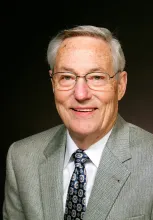
At the time of his retirement in 2016, Roy Holladay was serving the Operation Manager for Ministerial and Member Services of the United Church of God. Mr. and Mrs. Holladay have served in Pittsburgh, Akron, Toledo, Wheeling, Charleston, Uniontown, San Antonio, Austin, Corpus Christi, Uvalde, the Rio Grand Valley, Richmond, Norfolk, Arlington, Hinsdale, Chicago North, St. Petersburg, New Port Richey, Fort Myers, Miami, West Palm Beach, Big Sandy, Texarkana, Chattanooga and Rome congregations.
Roy Holladay was instrumental in the founding of the United Church of God, serving on the transitional board and later on the Council of Elders for nine years (acting as chairman for four-plus years). Mr. Holladay was the United Church of God president for three years (May 2002-July 2005). Over the years he was an instructor at Ambassador Bible College and was a festival coordinator for nine years.
