

Paul Moody
[Paul Moody] It's very much in line, brethren, really, with what it is I'd like to talk about today. Because today is the first day of Unleavened Bread. We're starting into the Holy Day cycle again for this year. It's reflective of God's plan of salvation for all of mankind. And so, this day has been set apart for our observance by God. You know, when you go to the Scripture and you read about God's Holy Days, they don't say, these are your feasts. God says, they're my feasts. They're mine. And you will come and you will observe them before me. And so, this is a very special occasion for us because we come by the direct invitation of God to worship before Him on these days and to learn what it is that He would have us to learn as His people.
So, coming up to this point now, this year, we've walked through the Passover, which symbolizes God's deliverance from bondage. And personally, in our lives, it's been deliverance from the bondage of sin and death through the sacrifice of His Son, Jesus Christ. We've walked through that Passover service here just a couple of nights ago. And now, we're coming up to entering in now the first day of the Days of Unleavened Bread. So, we've walked through a process in preparation for this as well. We've deleavened our homes, as is the command pertaining to this Holy Day season. That leaven, which represents sin, we looked for it, we hunted for it, cleaned it out from under our refrigerators, maybe under, in the drawers. You know, you pull the couch cushions out, you know, see what's there. And it's one of those things that we understand there's lessons we learn through the process of seeking out leaven. It helps us to be reflective of seeking out the leaven of sin in our own lives in order to set that aside.
So, it's a very special and very unique exercise that God allows us to walk through in this way. We've come up to this time period now of the first day that has been set aside, that has been put out, and we're now understanding what it means even more to live unleavened lives before God under the sacrifice of His Son and in a covenant relationship directly with Him. And it's a blessing.
We've also looked at scriptures over the last several days pertaining to Israel's exodus from bondage in Egypt and the miraculous means by which God brought them out by strength of hand, where He sent Moses and called on the Pharaoh and said, Let my people go. And upon Pharaoh's refusal, God intervened in a very dramatic way, and with strength of hand brought His people out of Israel. Today, now, we come to the point where we're evaluating this process. Last night, we kept the night to be much observed, the night that Israel walked out of bondage. And today, we're evaluating where we go from here, how we lived unleavened lives, how it is that we're to trust fully in God's lead, no matter where He takes us, knowing that He knows what's best and that He indeed is leading and guiding our steps.
When God freed His people from slavery to Pharaoh, they rejoiced in their freedom. You know, I imagine the Night to be Observed, even though it was a night of solemn observance to the Lord, there was great rejoicing as they recognized they'd been given their freedom from bondage. They were walking out of the land, and what lay ahead of them was the opportunity to receive the land of their own possession, the promise that God had declared to their forefathers. And now, He was bringing them out, and He was going to fulfill that process.
So this was a time of great rejoicing, but as we know the story, that jubilation was very short-lived. And I'm going to kind of just speak as an overview of the Exodus count and Israel's timing up to the Promised Land, but what we realized was their jubilation was short-lived, because time and time again, whenever Israel were confronted by obstacles or hardships, the waters of Miraba were sour, they could not drink those, and at times that they had to look to God for His deliverance, you kind of began to see the shortcomings of the people in terms of their faith and trust in Him. And they would cry out to God, and they'd cry out to Moses, but not necessarily in a way that was pleasing to God. Again, we are to cry out to Him in our distress, but the tone and how it is we do so is important.
So many times in Israel's outcry, it was one of not trusting God. It was one of doubt, of fear, of rejection in some ways, and even outright rebellion. You know, let us select a leader and return to Egypt. You know, why have we been brought out here to die in this wilderness? Why would God have us go into this promised land and face these giants only to be slaughtered? You know, cities walled up to heaven. Let us turn back and turn back into where in their mind was a better option than what God was leading them to. And to us, we might wonder, how could they even come up with a mindset such as that? But if we're not cautious, brethren, we could enter into the same thing ourselves. Again, they said, let us select a leader and return to Egypt.
Now, Israel wanted the promise that God held out to them. They wanted their land. They wanted that promise to be fulfilled to their nation, but the majority didn't seem to have what it takes to endure faithfully unto receiving that promise. Even after all that God had done in Egypt, the miraculous wonders, the signs, again, by strength in hand by which He had brought them out of the land, most didn't fully trust in Him to bring them into the inheritance that awaited them. And the question, brethren, that I think is important for us to consider today on this first Day of Unleavened Bread is, do we trust God? Do we look to Him and believe that, yes, He indeed will fulfill what He has promised in our lives? When things get tough, when we face obstacles or trials, maybe it's financial or health or whatever it might be, do we cry out to God in faith and trust? Or do we cry out to Him in anger and frustration and, you know, God, why didn't you?
It's an important question for us to consider as we consider the example of Israel. After all, you and I have heeded God's call. We've come this far, just as God brought Israel out of Egypt, and they came up to a point, and they rejoiced in God up to a point. But when things got tough, their perspective changed. God has brought us this far, brethren, by strength of hand, by His calling, by the sacrifice of His Son that we've come under, by the covenant He's laid before us a vision and a promise, and He's brought us this far. How do we respond in the face of adversity?
Do you ever become discouraged like Israel did? Again, do you ever look at obstacles in your life and consider, well, maybe a positive outcome isn't going to be the result of this. Or, you know, I know God is powerful, but this is a huge challenge. Do we ever begin to doubt? Do we ever become discouraged? Well, brethren, I would hope we never do, but as this physical flesh is, and as this carnal nature is, it's easy to become such. And we have God's Spirit, and we supposedly have buried the carnal man, and yet we still struggle sometimes. We still wrestle with these things. Does our confidence ever falter? Do we ever hesitate in our trust, in our faith in God?
Again, indeed we should not, but these are important questions for us to consider as we keep the days of Unleavened Bread. Because if we're not focused on God in faith, you know what? Our outcome is going to be similar to the majority of that generation of Israel who walked out of Egypt. And apart from looking to God, you and I as well may not make it through this spiritual wilderness.
Today I want to focus on a particular event that took place shortly after Israel's departure from Egypt. And by the calculation of timing and distance, it's generally accepted that this event took place on the last day of Unleavened Bread. And I'm of course referring to Israel's crossing of the Red Sea, where God divided the waters and Israel walked across on dry waters, and the armies of Egypt which pursued were drowned in the sea. It was a miraculous event, a monumental event, so significant, in fact, that it was remembered 40 years later by the inhabitants of Jericho in Canaan as Israel came across the Jordan up into the Promised Land. But God's action of opening the sea, it should have impressed on Israel the absolute power and dedication of their God to bring His purpose for them to pass. No matter the obstacle, no matter what the challenge might be, they should have had it absolutely cemented in their mind that God will take you where He is taking you, and nothing will stand in your way. But unfortunately, again, time and time again, that wasn't always their mindset. They would rejoice for a period and then lose focus once again.
1 Corinthians 10 tells us that the account of God opening the Red Sea as well as Israel's wanderings, they're recorded for our admonition, for our learning upon whom the ends of the ages have come. That we would look at their example, how God interacted with them, how they responded, and that we would learn the important lessons that we need today for the relationship we have with God and the faith and trust we place in Him.
And so the title for today's message is Looking to God Who Opens the Way.
That's the lesson I want us to take from today's message, Looking to God Who Opens the Way. Looking to Him in faith, in trust, and absolute confidence that God opens the way to bring His people where it is He is taking them. I want to begin today in Exodus 13. We'll walk through basically the majority of Exodus 14, some of Exodus 13, and we'll consider the number of lessons we can learn as Israel came up against the Red Sea and God brought them through. Exodus 13, and we'll begin in verse 17 today.
Exodus 13:17-22 It says, “Then it came the past when Pharaoh had let the people go, that God did not lead them by the way of the Philistines, although that was near. For God said, ‘Lest perhaps the people change their minds when they see war, and they return to Egypt.’ And so God led the people around by the way of the wilderness of the Red Sea. And the children of Israel went up and orderly ranks out of the land of Egypt.” They orderly ranks, they assembled by tribes, and they moved by tribe out of the land of Egypt. Verse 19, “And Moses took the bones of Joseph with them, for he had placed the children of Israel under solemn oath, saying, God will surely visit you, and shew shall carry my bones from here with you. So they took their journey from Succoth, and they camped in Etham at the edge of the wilderness. And the Lord went before them by day, and a pillar of cloud to lead the way, and by night in a pillar of fire, to give them light, so as to go by day and by night. And he did not take away the pillar of cloud by day, or the pillar of fire by night, from before the people.
And so straight out of the land of Egypt, Israel is now witnessing another miracle. Apart from the plagues, and then the deliverance to the Passover, and all the miraculous things God had done, even as he brought them out, there was another miracle here taking place. God was leading them by a pillar of cloud during the day, which was a blessing of itself. You know, it wasn't that it only gave them direction, but you think about they were walking out of Egypt into the desert, and that cloud provided shade. It provided comfort. It kept them from cooking in the desert sun as they walked about during the day. But it says also he brought them by a pillar of fire during the night. And again, that did lead the way, but in the desert, the temperature is dramatic. It drops almost as quickly as it heats up. And so that pillar of fire by night gave them heat and warmth, and it gave them light to illuminate the way again so they could travel by day and by night. But even through that miracle, and even though God was leading them, he was taking them in a way that really didn't seem to make a lot of sense, maybe to some who knew the area at least. He took them off in the most, not the most direct way.
If you wanted to go to Canaan, and there was a superhighway essentially of the day that they could have taken, which would have been the fastest route, but God was taking them essentially down a side path, as it said, out to the wilderness of the Red Sea, a hot, dry, barren wasteland. Ultimately, as we know the story, it would lead them into a box canyon backed up against the Red Sea with the mountains around, which seemed to be a dead end. At least by human eyes, at least by logical reasoning, no one would pick up a map and take them to Canaan that way. And some may have even wondered as they walked, what is God doing? Where is He taking us? He doesn't even know where this path leads. I mean, if He had asked me, I could have told Him the best way to guide and direct His people.
And yet, God had a purpose. And it's important to remember that in everything He does, God has a reason. He has a purpose for accomplishing what it is He wants to accomplish in His people. And sometimes, the path that we think is the most direct, the straightest, the widest, the safest, isn't necessarily the path that God is taking us down because He wants us to learn some things along the way as well. So God tells us, this is the way, walk in it. Right? This is the way, walk in it. And through our obedience to Him, we then pick up and we go. Wherever God leads, we don't have that pillar of cloud or fire that we follow behind today, but we have God's Spirit that leads us. And God says, this is the way, walk in it. And sometimes there's going to be obstacles, and sometimes we may not even understand why God is leading us, where He is leading us. But again, we're coming back to the trust and the faith in Him. Do we have it? And how strong is it, really? So God brought Israel out and He took them down this path. I'll remind us of…
Proverbs 16:9 Which says, “A man's heart plans his way.” This is the way I'm going. Right? This way makes sense to me, “But it says the Lord directs His steps.”
So who are you going to submit to? Your own heart or the lead of God? And this is what Israel would have to confront right out of the gate of Egypt as they're heading to the Promised Land. Israel would need to learn the lesson that God knows what He is doing and God's way is perfect. And that God sees the big picture. He sees the complete landscape. And so many times we just see a small portion. And we need the trust that He knows what He is doing with our hopes, our aspirations, but what He is doing in our life to bring us to His kingdom. He sees the big picture and He directs us according to His purpose.
Exodus 14:1-3 Says, “Now the Lord spoke to Moses, saying: ‘Speak to the children of Israel, that they turn and camp before Pi Hahiroth, between Migdol and the sea, opposite Baal Zephon; you shall camp before it by the sea. For Pharaoh will say of the children of Israel, ‘They are bewildered by the land; the wilderness has closed them in.’”
It reminds me of the Ten Commandments movie that we watch almost every year. And in that movie, you know, Pharaoh comes up on his chariot and Israel is down here backed up against the sea. And Pharaoh says something to the effect of this God of Moses is a poor general.
Again, by human reasoning and standard, this was not the place to lead a group of people. You led them into a box canyon and into vulnerability and seemingly right into Pharaoh's hand. But God knows what He's doing and He had a purpose. He was working out.
Exodus 14:4 “God says, ‘Then I will harden Pharaoh's heart, so that he will pursue them, and I will gain honor over Pharaoh and over all his army, that the Egyptians may know that I am the Lord,’ and they did so.”
And so we find that the point in all of this, brethren, is that God would be glorified. The Egyptians would come to acknowledge Him as God. And in fact, if you go back to the plagues of Egypt, again, the purpose was that they may know that I am the Lord, that God is the Most High over all, and that no so-called God would stand against Him, and not even Pharaoh, who the people worshipped as God. That would be brought to an acknowledgement of the Egyptians, but this principle would also be reinforced among the Israelites. Look to God. Trust in Him.
He is in all control. Hopefully for us, brethren, wherever we see the divine intervention of God in our lives, we too acknowledge His magnificence. Sometimes it's in 20/20 hindsight, when we turn back and we see, wow, God really intervened, and even at a point in a way that I couldn't see at the time walking through it. But hopefully, as we acknowledge these things, it reinforces in our mind the magnificence of the God who leads us. And hopefully those experiences lead us to trusting Him more and more, looking to Him, following His lead, never desiring to turn away.
Exodus 14:5 It says, “Now it was told the king of Egypt that the people had fled, and the heart of Pharaoh and his servants turned against the people. And they said, ‘Why have we done this, that we have let Israel go from serving us?’”
You know, they were our slave builders, and we've built up this whole land, and we've just let them slip through our fingers.
Exodus 14:6-8 “So he made ready his chariot, he took his people with them. Also, he took six hundred choice chariots, and all the chariots of Egypt with captains over every one of them. And Pharaoh, and the Lord hardened the heart of Pharaoh, king of Egypt. And he pursued the children of Israel, and the children of Israel went out with boldness.”
It's important we understand here that when it says God hardened Pharaoh's heart, it isn't that God overrode Pharaoh's free will. Pharaoh's heart was already hard. He was already set in and disdain for Israel in his heart. God, in that sense, just kind of came in and gave him a little nudge in the direction he was already going. And it didn't take much. And Pharaoh was off to the races, and he was going to overcome these people in a place where they seemed most vulnerable.
Exodus 14:9 Says, “So the Egyptians pursued them, all the horses and chariots of Pharaoh, his horsemen, his army, and they overtook them camping by the sea besides Pihy-Roth before Baal-Zephrion.”
So, Israel, as you can imagine, they're kind of in this canyon. They're their backs to the sea, and, you know, 600 chariots with iron wheels. Maybe they even start to hear some rumbling. Maybe they see a dust cloud rising up in the distance. You know, Pharaoh is coming. He's charging with his world-renowned battle-hardened army. He's coming after this ragtag group of slaves. And if you think about the Israelites, they knew about this army. They would have seen armies of Pharaoh coming and going. The conquests were world-known. Wherever they went, they were victorious virtually in this day and age, and now this army was coming for them. Defenseless people who are on their feet, no horses, no chariots. They're, by human eyes, they know what they're facing, and they cry out.
It's important, brethren, we remember that God's people, both then and now, have always had an enemy that does not want to see them escape from bondage. An adversary who does not want to let the people of God go. Pharaoh is a type of the adversary, Satan the devil. And in our lives, as well, we have this adversary who would love nothing better than to drag all of us back into the bondage, the spiritual bondage of Egypt, in that sense, and to enslave us once again. And so, in type here, Pharaoh coming out after God's people is certainly what we come to see, as well, as the adversary in our life seeks to pull us away from God. But the lesson, recorded for our admonition, is how will you respond? And who will you look to in faith? Are you going to look at the charging horses and the chariots, and have faith and confidence in their power? Or are you going to look to the power of God, the one who holds the universe together and has the ability to intervene most directly for you? This is the choice that Israel had.
Just like Pharaoh was to Israel, he was more powerful than them. Satan is more powerful than us, apart from God. And we would be foolish to go it alone, apart from God. We never want to try to stand against him on our own. If God be with us, who can be against us? All right? That's a scripture that we quote just right off the top of our head. And sometimes we maybe use it a little more casually than we ought to. But it's true. If God be with us, who or what can stand against us?
1 John 4:4 Reminds us that, "He who is with you is greater than he who is in the world."
But Israel forgets that point for a moment. Again, when they see the armies of Pharaoh and they envision vividly in their mind the destructive power of him and what he could do to them in short order, they forgot God. We must not. We must look to him in confidence and faith.
Exodus 14:10-11 It says, "And when Pharaoh drew near, the children of Israel lifted up their eyes. Behold, the Egyptians marched after them. So they were very afraid, and the children of Israel cried out to the Lord." Probably a little different tone, though, than God would have desired to hear from his people. Verse 11, "...then they said to Moses, because there were no graves in Egypt, have you taken us away to die in the wilderness? Why have you so dealt with us to bring us up out of Egypt?"
I mean, can you even imagine? You know, you would think after witnessing all the incredible signs, the wonders, the miracles by the hand of God by which he brought them out in the first place, they would have begun to show now at this point evidence of their faith, evidence of their trust in God that they looked to him, but instead they cried out, and they had a mindset of complaining and murmuring in light of the present circumstances. Why didn't you just leave us alone? Why did you bring us out here to die in a horrible way? Life was pretty good. I mean, it wasn't what we would have custom ordered for ourselves, but I guess being a slave wasn't so bad compared to this. Why didn't you just leave us alone, Moses? And can you even imagine, brethren, ever considering or asking God why he even called you out of this world in the first place? When we're faced with trial, when we're faced with trouble, our response must be better than that.
Something important that the people of Israel were forgetting is that the God who declares the end from the beginning had made a promise. And that's something that we must never lose sight of. The God who declares the end from the beginning had made a promise, and he would deliver on that promise. And brethren, it's an important principle for not only Israel, what they should have kept in their forefront of their mind, but what you and I must remember at all times as well.
Numbers 23:9 Says that, “God is not a man that he should lie, nor see the Son of man that he should repent. Has he said, and will he not do? Or has he spoken, and will he not make good?”
Again, when God says he will do something, he does it. He declares the end from the beginning, and he has the will and the power to bring it to pass. And brethren, we have to have absolute confidence in that, that what God has promised he will fulfill. No obstacle will stand in his way. No army. Nothing will prevent God from delivering what he has promised unless the people themselves turn away from that promise.
I want to just look at a few brief passages that remind us of the promise that God was fulfilling for Israel through these actions. Because this was, this wasn't the beginning of the plan. This was actually down the line a number of generations from when God first made promises. And this was a fulfillment of what God was bringing to pass for them. We'll be back to Exodus, but let's go to Genesis 12. Genesis 12, we'll see where God first made promise to Abraham and what it is he is now fulfilling in the time of Israel's Exodus.
Genesis 12:4-7 Says, “So Abram departed as the Lord had spoken to him.” This is, God had just called him. He said, get out of your country from your father's house to a land that I'll show you. And he just picked up and he went. “And Abram departed as the Lord had spoken to him and Lot went with him. And Abram was 75 years old when he departed from Haran. Abram took Sarai, his wife, and Lot his brother's son, and all their possessions that they had gathered and the people whom they had acquired in Haran. And they departed to go to the land of Canaan so that they came to the land of Canaan. Abram passed through the land of the place of Shechem as far as the terribence tree of Morah. And the Canaanites were there in the land. Notice verse 7 it says, “Then the Lord appeared to Abram. And he said, to your descendants I will give this land. And there he built an altar to the Lord who had appeared to him.’
And so this was a promise of an inheritance that God gave to Abraham for his descendants. And this is something that plays out not only in the time of Israel from the exodus, but this is also prophetic forward even from our time. But God had made a promise, and this would be an inheritance, and he would fulfill what he had promised. God confirms this again in Genesis 13. Genesis 13. We'll look at verse 14 and 15.
Genesis 13:14-15 It says, “And the Lord said to Abram, after Lot had departed from him, he says, ‘lift your eyes now and look from the place where you are. Northward, southward, eastward, and westward.’” You know, look around as far as the eye can see. “He says, ‘for all the land which you see I give to you and your descendants forever.’”
So again, we have the confirmation of the promise. It would be an inherited land by the children of Abraham. This promise was passed through Isaac, through Jacob, and now the 12 tribes coming out of Egypt were slated to be the recipients of this, at least in the physical settling of the promised land at that time. What we find as we jump forward to the time of Moses is that God intended the people of Israel at that specific time to take possession of the land.
Exodus 3:16-17 God speaking to Moses, he says, go “And gather the elders of Israel together and say to them the Lord God of your fathers, the God of Abraham, the God of Isaac, the God of Jacob, appeared to me saying, ‘I have surely visited you and seen what is done in Egypt, and I have said I will bring you up out of the affliction of Egypt to the land of the Canaanites, the Hittites, the Amorites, the Parazites, and the Hivites, and the Jebusites, to a land flowing with milk and honey.’”
God's deliverance from Egypt was the active fulfillment of repeated promises that he'd made to Israel's forefathers. Abraham, Isaac, Jacob, this was the same God that was bringing them out of Egypt unto this land, and he would fulfill those things. Again, these are written for our admonition, lessons that we would take and live by, and the lesson here is that the God who promises is the God who delivers. When he says, I will fulfill this, indeed it will be fulfilled.
The weak link is you and I, if we are to turn back, if we're to doubt, if we're to turn aside from God out of a lack of faith. Now, unfortunately, Israel lost sight of that fact as they saw the army, as they saw Pharaoh and the chariots coming over the hill, and the dust rising in the air, and they thought of the power of the army of Pharaoh.
They lost sight of the promise of God. And you and I must not. You and I must believe, no matter what obstacle we face, that the God we worship, which is the same God of our fathers, is the God who has the power and the ability to deliver what he has promised. And he has made specific promises to you and me as well. You see, Israel didn't do that. Israel cried out. They saw the power of Pharaoh, and they forgot the promises of God. I want to share with you now just a few scriptures.
I've covered this in a sermon before, going back a few months, but just a few scriptures that remind us of the promise that God has made to us as his people today. When he calls us and we submit to him and come in covenant with him through baptism, what is the promise that will be fulfilled by God in our lives? We won't turn there, but I'll reference three scriptures for you. Luke 12, verse 32.
Luke 12:32 Jesus Christ said, “Do not fear, little flock, for it is your Father's good pleasure to give you the kingdom.”
That's the promise, the kingdom of God, inheritance of eternal life as part of the family of God. So, in light of all the struggles and trials that we might walk through, all the obstacles, maybe a Red Sea moment that is so insurmountable in our own life, where you're backed up against Pharaoh's chariots and the water, God has made you a promise. And God will deliver on that promise. And it's great comfort when Christ says, Do not fear, because it's his pleasure to fulfill that for you. And we can trust that indeed he will.
Philippians 1:6. The Apostle Paul, he says, “Being confident of this very thing that he who has begun a good work in you will complete it until the day of Jesus Christ.”
He says, You can be confident of that. You can take it to the bank that what it is that God has started will not be left undone. He will bring it to completion as long as you don't turn, as long as you don't falter in your faith and trust in him. So we must never take our eyes off of God. Never take our eyes off of the promise. If you're feeling doubtful, if you're struggling in your faith, if you're seeing some obstacle that threatens to overwhelm you, remember God has promised he will fulfill what he has promised.
The God who declares the end from the beginning has both the will and the power to bring to pass that which he has promised. And we never can afford to be distracted by what might seem to be an obstacle so large that it threatens to overwhelm us. Keep your eyes on God. These lessons are for our admonition. So here we have Israel, once again, up against the Red Sea. And they've kind of forgotten this point. They've forgotten about the promises of God, where he's taken them. Oh, they kind of like to be there, but we've got a problem. And now maybe it would have just been better to stay in Egypt. That's not the cry that God wants to hear. Exodus 14. Back to that chapter.
Exodus 14:13-14 “And Moses said to the people, ‘Do not be afraid.’ He said, ‘Stand still and see the salvation of the Lord, which he will accomplish for you today. For the Egyptians, whom you see today, you shall see again no more forever. For the Lord will fight for you, and you shall hold your peace.’”
A couple important lessons that we can take just from these two verses here. First off, Moses told the people, Do not be afraid. You see the challenge? You see the army coming to destroy you? Don't fear. Don't be afraid. It's a lot like Jesus Christ's words when he said, Fear not, little flock. Because you see, fear is an enemy of faith. Doubt and fear undermines our faith and our confidence in God. And it causes us to take our eyes off him and put it somewhere else.
Pharaoh was coming over the hill, and Israel was looking to the might and the power of Pharaoh's army out of fear. Rather than looking to the power of God and the deliverance that he had promised. Moses' admonition was for them to put that fear away, to look at something else. He said, See the salvation of the Lord. Watch the saving grace that God is about to pour out upon you.
Secondly, Moses told them to stand still. Stand still! He just said, Stand still and see the salvation of the Lord. He said, The Lord will fight for you and you shall hold your peace. You know, there are times in our life when we simply have to stand still. Just breathe. Just relax. Get your wits about you for a moment. Calm yourself. Look to God for his perfect deliverance. Well, I've got to fight. I've got to pick up a stick. I've got to pick up a rock. I've got to defend myself. Yes, there are times where you have to take action. But if you're standing before the army of Pharaoh, what option do you have really? Stand still and see the salvation of the Lord.
Psalm 46:10 Tells us, “Be still and know that I am God.”
Know it's true. Okay, this isn't just an intellectual exercise that, you know, it looks good on paper and it sounds good, but once it's put to the test, you know, it all falls apart. No, this is, you know God is God. You know his power. You know his will. And you've submitted yourself to that. Again, Psalm 46:10. “Be still and know that I am the Lord. I will be exalted among the nations. I will be exalted in the earth.” You know, pause the panic. Pause the drama. Stand still. Take a breath. Submit yourself to God and allow his purpose to be fulfilled.
Exodus 14:14 Says, “The Lord will fight for you and you will hold your peace. And the Lord said to Moses, ‘Why do you cry to me? Tell the children of Israel to go forward.’”
And so we have another useful lesson as well, because just as times come where we need to learn to just stand still and look to God, there also comes the time when God opens the way and it's time to move, to go forward. Don't hesitate and drag your feet or, you know, second guess. God has opened the door. Step through it and move forward.
Exodus 14:16-29 He says, “‘But lift up your rod, Moses, and stretch out your hand over the sea and divide it. And the children of Israel shall go on dry ground through the midst of the sea. And I indeed will harden the hearts of the Egyptians, and they shall follow them. So I will gain honor over Pharaoh and over his armies, his chariots, and his horsemen. And the Egyptians shall know that I am the Lord, when I have gained honor for myself over Pharaoh and his chariots and his horsemen.’ And the angel of God, who went before the camp at Israel, moved and went behind them. And the pillar of cloud went from before them and stood behind them. And so it came between the camp of the Egyptians and the camp of the Israelites. Thus it was a cloud and darkness to the one, and it gave light by night to the other, so that the one did not come near the other all that night. Then Moses stretched out his hand over the sea, and the Lord caused the sea to go back by a strong east wind, that all that night. And he made the sea into dry land, and the waters were divided. So the children of Isreal went into the midst of the sea on the dry ground, and the waters were a wall to them on their right hand and on their left.
What could they do? Submit to God, look to his power, and go forward. And God opened the way before Israel in a manner that only he could. It is an incredible concept for us to consider, brethren. Again, be still. Know that I am God, the God who brings his power to bear for the sake of his people. This is the lesson, and a lesson for you and I that we must always remember is that the God we worship is a God who opens the sea before us miraculously. And you know what? In his timing, he shuts the door as well to his glory. He says that they may know that I am the Lord. God is always glorified. He opens the way, he shuts it behind according to his purpose, and the glory goes to him.
I haven't told you much since returning from Africa about the travels Ben Light and I had over there, and I may just take a couple moments to relay a few thoughts to you concerning some of the events that took place in our travels. West Africa is a unique place, and it's quite different than where we live here.
And seasonal shifts, you know, people ask about summer or winter. The truth is it's either it's hot all the time, but it's either hot and wet or it's hot and dry. And this time of the year, as we took our trip leaving in February, we were coming right off now onto the end of the dry season. And what is called the harmaton was in full effect. And essentially what the harmaton is is it's trade winds that come down off the north across the Sahara Desert. Very hot, dry winds, and it picks up very fine particulates, very small microns of dirt, dust, and it carries them into the air across West Africa. So just imagine maybe like we get up in the morning in some mornings and there's fog outside, imagine a light fog that is brown, and it's just a haze over everything.
This is that suspended dirt that's been picked up and carried through the air. And as we're coming up on our travels to Nigeria first and then to Ghana, the harmaton this year, Dari said it is the worst he has seen it in years. People were having respiratory troubles. It was just a blanket of dirt across the whole area. Flights were getting grounded, flights were getting redirected around Nigeria specifically, and about a week before our trip, Dari emailed and he said, I hope you can make it. You know, there's, you know, this the harmaton is set in and it's not breaking loose. And our plan was to travel and visit the congregations throughout Nigeria by hopper flight back and forth so that we could fit that into our schedule. And Dari just said, they're, you know, diverting flights everywhere. I hope we can do this. And I just said, well, we'll plan for it and we'll put it in God's hands. And so Ben and I were making our preparation. We came up about two days now before our travel and I sent out an email like I do every time before I leave.
I send it to those who I communicate and answer to in the ministry for those responsibilities. So I sent an email to to Aaron Dean and to Mark Welch, Mr. Cubic, and a couple of others. And I just said, Ben Light and I are getting ready to take this trip and yet, you know, there's threat that the whole thing could be a non-starter, basically, simply due to the harmaton, which you just, would you pray for God to clear the air and allow us to have free course throughout our travels? And that was two days before we left on our trip. And we arrived then in Legos as we're coming in by air. Look out the plane window and the sky is generally clear. And I took a video of it because it was amazing. I looked down, all the house roofs are covered with a layer of dust. I mean, everything is just brown. There's just dirt on everything.
And we come in and we land and Dari meets us at the airport and he says, you know, it's pretty amazing. He said, this this hamaton was set in and it broke two days ago. He said, the winds shifted, they changed, and it cleared out. He says, you couldn't even have landed two days ago. And it just, it blew clear. You know, God, who opens the sea, can part the dust storm, can do what it is that he's going to do for his people and for his purpose. And so we were in Nigeria for, I think, almost 10 days. And we were able to catch all our hopper flights back and forth to Benin City and to Owari. We had four baptisms that we conducted while we were there. We were able to meet with all the leadership and God gave us free course to go about taking care of what it is that we needed to do in a way that wasn't available simply just a couple days earlier.
And yet, I had sent this email out and I said, would you all pray that this opening would come? I need to be home with the brethren for the spring holy days. And that's why my trip was in February. Mid trip, which would have brought us into the first week of March, then Benin and I caught a flight from Legos over to La Croix, Ghana. And that was on a Sunday. We hit the ground running on Monday. We went up to Kumasi in the central part of Ghana. And leadership from the north came down and met us in Kumasi. And we were having a leadership workshop.
On our way up there, though, it's about a five and a half hour trip by car. And you start to wind through some pretty lonely, deserted areas. Beautiful tropical drive through the mountains. But we're in Henry's car. We're driving along, again, a remote area. You pass through an occasional sparse village. And as we're coming, we end up hitting a spot where suddenly, just out of nowhere, we hear the screeching. And coming from the front of the car, and Henry pulls over, and we get out. And we're looking at the tire. We're trying to figure out where the sound's coming from. And so he's starting to drive, and Benin and I are walking alongside the car listening. I said, I think it's that front wheel bearing. It just, the bearings had just shattered in the front passenger side of the vehicle.
And we're stuck. We're down. And Henry looked, and he says, there's a mechanic right there. As in, we had just driven the last hour through nothingness. And right at the moment that that wheel bearing went out, we were 50 yards from a mechanic that we could just limp off the side of the road. And he had the parts, and he changed it out. And you might say, well that was lucky timing. I don't believe in that. I believe by God's blessing, he opens the way for us and provides so that his purpose will be done. Henry was there as they were repairing the car, and Benin and I looked around, and there was, you had the mechanic, a gas station, and a small hotel type complex in this village.
And we walked up to the gas station about a quarter mile away, walked in the door, and there was cold Guinness waiting in the refrigerator for us. So, you know, we knew then that this was God's hand. We would have been hitchhiking. We would have been walking. Said we were in the shade drinking cool Guinness for two hours. Well, we were in the shade for two hours until the car was repaired. And it was a blessing, and we were on our way. We conducted the workshop in Kumasi. We made our way over then to Winnebuh, where we conducted a workshop with the brethren there, the leadership, and then made our way back around to Accra.
Thursday night, before our final Sabbath in Accra, I received the email that church services had been suspended worldwide. And I emailed Mark Welch, he's the head of Ministerial Services, and I said, I understand the process here. I said, but we have one more stop, and our travels here will be in Accra on the Sabbath. It's our last visit, and the risk is low. Can we have permission to continue with services there? He says, your call, if you assess the risk to be low, go ahead. So on the Sabbath, Ben and I, we held Sabbath services in Accra with the brethren. It was great rejoicing to be together on the Sabbath day. And that night, about 10:30 at night, Saturday evening, we flew out back for the U.S. And our hopes were that we could just kind of slip on through, which without much hang up. So as we come into land in the United States, and my phone's back on, I received a message from Henry Aikens in Ghana.
This is Sunday morning now, and he said, the president just dispersed all assemblies, all weddings, all church services in Ghana were shut down. That window had closed. And you can call it coincidence. You can call it lucky timing. Okay, some would call it that. But I believe, brethren, that it is a God who opens the sea before us, allows us to pass through in service to Him. And then when that time is gone, He closes the window behind. And the message and the blessing that we see from the book of Exodus and what Israel would learn is that God will do what He will do for His purpose. And it really doesn't matter what the obstacles are. He opens the way, and He leads His people.
You and I worship an incredible God, an all-powerful God who sits on His throne in heaven, directing our lives according to His perfect will. And the God who declares the end from the beginning has both the power and will to bring those things to pass for His good purpose. Our job is to submit ourselves to Him in trust, in faith, and follow His lead. That's what Israel was given to do. That is what you and I are given to do today. And it's part of the incredible lesson of these holy days that we learn to look to God and not the obstacle, having faith and trust that He does fulfill His promises. He brings things to the past by the power of His hand.
Exodus 14:22-25 It says, “So the children of Israel went into the midst of the sea on the dry ground, and the waters were a wall to them on their right hand and on their left. And the Egyptians pursued and went in after them into the midst of the sea, all of Pharaoh's horses and his chariots and his horsemen. Now it came to pass in the morning watch that the Lord looked down upon the army of the Egyptians through the pillar of fire and cloud, and He troubled the armies of the Egyptians. He took off their chariot wheels so that they drove them with difficulty.” I imagine that they did. He says, “And the Egyptians said, ‘Let us flee from the face of the Lord, for the Lord fights for them against the Egyptians.’”
Again, that's the God that we serve. The one that opens the way, the one that says, Follow me, go forward, the one that fights for His people against the adversary. That is the God that we serve, and we submit to His lead in our life.
Exodus 14:26-28 It says, “Then the Lord said to Moses, ‘Stretch out your hand over the sea, that the waters may come back upon the Egyptians and on their chariots and on their horsemen.’ And Moses stretched out his hand over the sea. And when the morning appeared, the sea returned to its full depth, while the Egyptians were fleeing into it. And so the Lord overthrew the Egyptians in the midst of the sea. Then the waters returned and covered the chariots, the horsemen, all the army of Pharaoh that came into the sea after them, not so much as one of them remained.”
It was a complete and total victory by the power of God. Again, the God who opens the sea for His people closed it upon the enemy for His people as well. And again, it's incredible to me as I think back on the trip that Ben and I were able to take to West Africa because I wanted to have the opportunity to be here with you for the spring holy days, which is why I booked the trip for then and not now. And the window was, you're in, it opens, you're in, you're out, and it closes. And now that I'm here, I could not have gone there to see them if I wanted to anyway. And yet here we are together. Maybe not in the same room, but together in spirit assembled by this technology, observing this holy day before God. What an incredible blessing this is, brethren. God who opens the sea before His people is the God that we worship.
Exodus 14:29-31 Says, “But the children of Israel had walked on dry land in the midst of the sea, and the waters were a wall to them on their right hand and on their left. So the Lord saved Israel that day out of the hand of the Egyptians, and Israel saw the Egyptians dead on the seashore. Thus Israel saw the great work which the Lord had done in Egypt. And so the people feared the Lord and believed the Lord and His servant Moses.”
This is another high point in Israel's history, another point of celebration and jubilation as they look to God. Unfortunately, we know the story, it didn't last. You read on in the account, it was only three days later they came to Miraba and they once again complained against Moses and against God.
Brethren, God has called us to have a different attitude than the people of Israel. He sent His Son, Jesus Christ, He sent His Spirit and put that in us so that we might remember that the God who opened the sea before Israel is the same God who opens the way unto salvation in our lives today. The majority of that generation that came out of Egypt wanted the promise. They desired to receive it, but most of them did not have what it takes in terms of their faith and trust to look to God and not to the obstacle. God has called us to do better, brethren. He's called to submit to Him and put Him first. Submit your life to His lead. Never doubt, never complain. Stand still and see the salvation of the Lord.
Brethren, as we keep these holy days of unleavened bread, let's do so this year. Not with the old leaven. Again, we gathered all that up. We put it out physically. Hopefully we're doing so spiritually as well. Let us keep these feasts, not with the old leaven, nor with the leaven of malice and wickedness, and I would say, nor with the leaven of a heart of unbelief. But rather, let us look to God and let us keep these days with the unleavened bread of sincerity and truth, acknowledging and having full faith in God our Father who opens the way before us.
I considered concluding by reading Exodus 15. This is the song of Moses, which he wrote following Israel's passing through the Red Sea and the destruction of the Egyptians. But I thought we would actually sing it as well. So if you have your hymnals there, brethren, please grab them and stand and turn to page number 174. Page number 174. We're going to sing Moses' new song. And as we do, think about the deliverance that God has provided historically for his people and the deliverance that he continues to provide today as we submit our life to him.
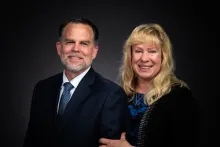
Paul serves as Pastor for the United Church of God congregations in Spokane, Kennewick and Kettle Falls, Washington, and Lewiston, Idaho.
Paul grew up in the Church of God from a young age. He attended Ambassador College in Big Sandy, Texas from 1991-93. He and his wife, Darla, were married in 1994 and have two children, all residing in Spokane.
After college, Paul started a landscape maintenance business, which he and Darla ran for 22 years. He served as the Assistant Pastor of his current congregations for six years before becoming the Pastor in January of 2018.
Paul’s hobbies include backpacking, camping and social events with his family and friends. He assists Darla in her business of raising and training Icelandic horses at their ranch. Mowing the field on his tractor is a favorite pastime.
Paul also serves as Senior Pastor for the English-speaking congregations in West Africa, making 3-4 trips a year to visit brethren in Nigeria and Ghana.
