
Robin S Webber
This transcript was generated by AI and may contain errors. It is provided to assist those who may not be able to listen to the message.
Well, thank you, Mr. Smith. And thank you, David.
We'll be looking forward to seeing everybody next week. We have some people that are missing today. Mr. Star Wars had to be taken to the airport because she's needing to go visit her ailing mother over in Canada, back in Canada, up in Canada. And so, Dennis may be joining us for the end of services. Today, the title of my message to wake you up is simply this. Lover or prostitute? Lover or prostitute?
David Reeser is a preacher, and he's an author. And he mentioned how, a number of years ago, he was striving to make his students aware of the richness of a relationship with God that could truly be theirs. As any good professor who desires to challenge his students, he tried to gain their attention by offering an explanation of what Christianity had developed into over 2,000 years. To be able to do this, he quoted Sam Roscoe, who is an Anglican theologian who basically has wrapped up the progression of Christianity over 2,000 years with this summation. Christianity started in Palestine as a fellowship. It moved to Greece, and it became a philosophy. It moved to Italy, and it became an institution. It moved to Europe, and it became a culture. It came to America, and it became an enterprise.
Reeser then, after stating that, described his next step. He recognized that because of the youthfulness of some of the students that were in his class, many of them being 18 or 19 years of age, and not being spiritually experienced, he thought that more definitions were needed to help them appreciate the import of that last line, that it had come to America and it had become an enterprise. So he clarified by adding an enterprise, that's a business.
Well, he thought it was all said and done, and then Reeser went on to comment. After a few moments, Martha, who happened to be the youngest student in the class, raised her hand. You know, there's always one out there that will raise their hands. And Reeser said to himself in the writing that he couldn't imagine why she would raise her hands. What more was there to say? He thought that that was actually a pretty good quote and kind of, what else is there to say? Nevertheless, he acknowledged Martha, raising her hand, and he said, yes, Martha. And then Martha simply asked a very simple question. A business? But isn't it the church supposed to be a body? Well, Reeser readily admitted that he could not envision where this line of questioning was going. And he could only respond, yes, an enterprise is a business. But Martha wasn't through. Martha then simply said, but when a body becomes a business, isn't that a prostitute?
The room went dead, just as some of you are looking at me right now, stunned into silence. Reeser himself was stunned. He said to himself, wow, I should have thought of that. But he didn't have the courage to put that thought together before his student body. But Martha, the young lady, had.
In his article, Reeser went on to say that Martha's question changed his life. He went on to write that for six months. He thought about that question at least once every day. When a body becomes a business, isn't that a prostitute? There's only one answer to her question, and the answer was yes. He went on to conclude the enterprising nature of the professing Christian church as a whole tragically is heavily populated by people who experience God in an enterprising fashion of basically get and gain. With that spoken then, and with that background, what is the specific purpose of our discussion this morning? The question formally said, the question formally based in the classroom now moves to church, our church, our lives, our ears, our hearts, to ask us a very primal question. How do you and I experience God? Do we do it in fellowship? Is it as a philosophy? Is it simply institutionalized? Is it a culture? Or is it an enterprise based upon supply and demand? We demand, and thus, God supplies.
Perhaps, as we begin to think about it, A, B, C, all of the above, some of the above, none of the above. Remember those questions in school days? Perhaps it's a little of all. I don't know. You don't know about me? Only you can answer that. The bottom line question, friends, in San Diego, simply this, is do we approach God in a love-based relationship for what He is, and or only what He can give if He supplies this and this and this by the down payment of our desires and our neediness? A very important question as to how we experience God.
Are we just simply desiring to be a satisfied spiritual consumer? And or are we bonded in a relationship that enriches our life by the divine acquaintance of what He wants us and how He wants us to experience Him? Join me, if you would, for a moment in Philippians 3, somewhat of a Hallmark verse to anchor us today. Paul came to a statement. We're going to come back to this statement later, but let's just, shall we say, eyeball it or heartball it here for a moment to kind of anchor us to where we're going to be going today. Philippians, the epistle thereof. Philippians 3, and let's begin.
In verse 10.
That I may know Him and the power of His resurrection and the fellowship. Remember how I mentioned that word about five minutes ago? That that's how this church started as a what? A fellowship of His sufferings being conformed to His death.
The big and the great question is, can we know God? And can we come to know God, experience God, as He desires to be known? This is a great question of life. This is the great opportunity in Christianity. The purpose of today's message is to help us move from relating to God simply as an enterprise towards the richness of the fellowship that He intended from the beginning. In other words, friends, to truly know Him. With that said, then, and now that you know where we're going, for a moment, let's ask ourselves what we know about God and how did we arrive at that understanding?
And thus, what have we derived? For as we approach God, hear me please, as we approach God, and as we arrive to God, is what we will derive from God in return. Our arrival matches the arrival of what we receive from God and understand Him.
Let's appreciate, as research has deduced, and I think rightfully so, that our understanding of knowing and knowledge, gnosis, gnosis knowledge, that our understanding of knowing and knowledge stems from our Western culture. Remember how we went through Greece, and we went through Rome, and got over to America through Europe?
That our understanding of knowing and knowledge stems from our Western culture, which is, after all, based in ancient Greek philosophical thought. Now, we believe we have knowledge and thereby extension wisdom. When we have done what? When we have collected information. But is information a relationship with God? Is just the knowing, just the knowledge, just having the facts, ma'am, and nothing but the facts enough to experience God? That may be where we started, but that is not where God wants us to wind up. Allow me to use myself as an example. Maybe yourself. You can throw yourself into this.
Remember how excited we were when God began opening up the privilege and the opportunity to come into this way? And we said, I've got to have that booklet, and I've got to have that booklet, and this booklet looks interesting, and this booklet looks interesting, and look at the facts here, look at the information here. It's like that table that's out there. You know this, and I know that, that sometimes those that are hungering and thirsting, they go to that table with their booklets on it. It's like so much eye candy. Boom, boom, boom, boom. And if I can know this and this and this and this day and that day, and this and this and this word in Greek and Hebrew, well, what is that?
That's information, and that's knowledge. Now, please understand that's a part of the process, but it can't end there. If it is, we've only collected information. But consider this, a collection of information is not the same thing as knowledge, especially in the culture of the Bible, which is Oriental and or Near Eastern or Middle Eastern. It is of the, what we call, the non-Greek culture.
Remember, it was of the fellowship. In the Eastern culture, all knowledge is experiential. All knowledge is experiential. It is the information that you are experiencing. It is the life and the journey that you are going through. Your commencement is not the conclusion, but the beginning of understanding of what God is doing with us. It's not what we know, but what we come to know in life's journey. Allow me to share a thought with you. I'm going to borrow from research for a moment. Going to be a little deep. So put on your seatbelts, airbags deployed, stay with me for a second.
This is not complex, but it shows us sometimes how we approach things in our Western culture. It's simply this. Allow me to use an example of the difference between information, which we think of as knowledge devoid of experience. Let's suppose a question is based upon the following two premises. First, that wheat does not grow in a cold climate. And second, that England has a cold climate. The question then, does wheat grow in England?
Now, the vast majority of people from the Western Greek culture would answer, no! If wheat does not grow in a cold climate, and if England has a cold climate, then it follows that wheat does not grow in England. In the Eastern culture, the culture that came up, the culture that Jesus was exposed to, etc., etc., in the Eastern culture, the answer to the same question is not different.
The question is the same. The answer to the same question, based on the same premises, is this. Most likely to be, I don't know. I've never been to England. Now, we might laugh at this thinking, but when posed the question to people that are in England, their answer would be, yes, of course wheat grows in England. We're from there, and we know that wheat grows there. Now, they overcame their cultural way of thinking because of what?
Because of their life experience, about wheat, and about cold, and about England. They experienced it, and from the information and the experience, they came to their determination. What does this mean for you? What does this mean for me? What am I trying to get across to you today? Experience trumps information when it comes to knowledge. Experience trumps information when it comes to knowledge. Allow me, if you would, to join it. Let's go to the book of Job, Job 42.
In the book of Job, this is again, remember what I said that when you go to the near east, the Orient of that day, Job is the most ancient writing that we have in the Bible. Job 42 puts this all together, wheat, England, God, the Bible, you and me, and let's throw in our friend Job. Job 42 and verse 5. You'll know the Scripture. It's a famous one that comes out of the Bible. Job 42 and verse 5. I have heard of you by the hearing of the ear. Oh yeah, he knew who God was. He was the God of his forefathers. He had an informational, he had an intellectual understanding of who God was. But now my eye sees you, and therefore I abhor myself and repent in dust and ashes. Job had traveled down the road and landed in the England of his day. I say that in an allegorical sense. He thought he knew. He thought he could deduce the answer from where he was, but God, in his mercy and grace, took him somewhere else to have a more complete answer. It's like the famous question that sometimes comes up. Was Job ever converted? And the answer comes back, yes. But it took 42 chapters. He had to walk the road, as it were, from his home to God's place for him to understand of who God was and who he was. I say that not being hard on Job. I can't wait to meet him. Boilless. Job's journey is our journey. It is our journey from knowledge to experience in God and recognizing that even in the book of Job, God is in the beginning, God is in the end. He does not forsake Job. God is the great book in force and effect of the book of Job. But Job had some traveling to do. He had homework, he had heart work to understand the experiences that God had in store for him. Here's a similar challenge. Let me throw one out. Did you get through the weight in England? Can we go for one more? That's when you're supposed to nod. Because it's going to take you deeper. You came and say, okay. Here's a similar problem when it comes to the concept of belief. We say we believe something or someone apart from personal experience. This definition of belief is not necessarily, though, extended to our stockbroker, however. Let's set up the situation. Suppose your stockbroker asks you and says, I have a hot tip on a stock that is going to triple in price within the next week. Now, let's not go into insider information. You want to join me in jail? No, okay. No, no, no, no, no. I have a hot tip on a stock that is going to triple in price within the next week, and I want your permission to transfer $10,000 from your cash account and buy this stock. Well, you come back and say, $10,000 grand. That's a lot of money for me. So then you ask, do you really believe this stock is going to triple in price and so quickly? And, of course, the stockbroker comes back, oh, yeah, absolutely. I'm sure it's going to. Sounds great. Sounds exciting. Let me ask you a question, Mr. Stockbroker or Mrs. Stockbroker. How much of your own money have you invested in this stock? Well, here she comes back and says, none.
I have a question. Does the stockbroker truly believe in what they're trying to sell? I don't think so. I don't think you think so. I don't think so. With that thought, then, how can we be so discerning sometimes in the things of the world that you wouldn't trip up on a stockbroker? Things of the world when it involves money and not yet relate that to spiritual matters. The fact is, we do not know or believe apart from being involved in the experience. The Bible was written to people, I believe then as well as now, that would not understand the concept simply of knowledge, belief, and faith apart from experience. Let's go through that again because church is not just for inspiration, but it's also a classroom. I want to make sure that you get down the terms. Hear me again. The Bible was not written to people who would not understand the concept that knowledge and belief and faith are somehow apart from experience. In other words, Christianity is not just simply classroom, it's lab work. It's going in and mixing with the chemicals of life to see what is produced. I think that's how God wanted it all along. In fact, Jesus Christ Himself is the full expression of all of that information, knowledge, and experience. Join me if you would in Philippians 2, thinking of our friend the stockbroker. Philippians 2 and verse 5. Again, I might say a familiar scripture, but it never ceases to be powerful. Thus, we honor God by opening up and looking what our Savior did for us. Not the stockbroker, but the head of the church. Philippians 2 and verse 5. Let's notice what it says. Let this mind be in you, which was also in Christ Jesus, who, being in the form of God, did not consider it robbery to be equal with God, not something to hold onto as it is better translated, not to kind of just hold, hold, hold, and not let go of, but made Himself of no reputation, taking the form of a bondservant, and coming in the likeness of men, and being found in appearance as a man He humbled Himself, becoming obedient to the point of death, even the death of the cross. He gave, remember, lover and or prostitute, the title of the message, He gave His own body, freely, freely, and without reservation. And He believed in the investment that He was making, so much so that one of the last words He said in the belief towards His Heavenly Father, to you, Father, I commit my spirit, having gone through the death on Golgotha, in that belief. Not only the knowledge of this prophecy, this prophecy, and this prophecy, and this prophecy, He had to come to fulfillment, but had sheer, unadulterated, pure and beautiful belief in the investment that He was making. But He had to go through the experience. Why is that? Join me if you would in Hebrews 5 and verse 8. Hebrews 5 and verse 8, there is a reason.
Because God Himself chooses to be experiential.
Though He was a son, and could have in that sense taken Himself out of the investment, and not stepped into the fire, though He was a son, yet He learned obedience by the things which He suffered. Let's just put in the word by that which He experienced.
Why? A few chapters over in Hebrews 4. Let's look at it. The experience was towards the journey that God undertook on our behalf. Seeing then that we have a great priest, high priest, who has passed through the heavens, Jesus the Son of God, let us hold fast our confession. Let's be willing to invest. Let's move beyond information, knowledge, no sith, and let's commit. Let's invest. It is only in the commitment and the investing that the transformation truly begins to come about. But why? For we do not have a high priest who cannot sympathize with our weakness, but was in all points tempted as we were, and yet without sin. The reason why God chose not to hold on to being God coming to this earth was for a very specific reason. So that man might be able to touch God in the flesh. And through the experience that individual within the God family went through, thus in turn God could be touched by our experiences. Jesus became the spirit of experience. As Shakespeare said long ago, now near 400 years, he just had scars that never felt the wounds.
Now, yes, if we're truly honest, most of us came to God because of what we were told he would do for us. We were promised that he would bless us in life and early on, maybe in our spiritual experience, take us to heaven after death. And then when we came into the full revelation of what the Bible tells us, we understood that there was millennium or the kingdom of God that waited ahead of us. We said, now we've got the right facts. Now we've got good understanding, and that will do just fine. But if that's our approach, we are missing the experience. If we simply stick to facts and information and simply focus on the destination rather than to journey, we miss what God intends us to understand. Jesus was very plain in the experience that we would undergo as his followers. Join me if you would in Matthew 8. In Matthew 8.
Verse 18. And when Jesus saw great multitudes about him, he gave a command to depart to the other side. Oh, all sorts of people were following Christ! They heard that this guy was great, and not only that, but he would throw in a meal sometimes. The Jewish community loved a good rabbi, loved a new thought, like the old expression, two Jews, three opinions. Just fill in the blanks that can also relate to Bulgarians, Romanians, and people from Zimbabwe. It's just a part of human nature. There are a lot of information seekers, a lot of people that want a little bit more knowledge to tuck into their pocket to wow somebody else. But he commanded to depart, and then a certain scribe came and said, teacher, I will follow you wherever you go. You've got the facts, man!
And Jesus said to him, foxes have holes, and birds of the air have nest. But the son of man has no where to lay his head. Do you want to join the experience? Do you want to be a part of the journey? Then another of his disciples said, Lord, let me first go and bury my father. But Jesus said to him, follow me, and let the dead bury their own dead. Now, this is given further implication in the parallel commentary in Luke. Jesus said, follow me. Don't just simply follow the facts. Don't just simply follow the information. But if you're going to have to follow, you're going to have to come to the point where I am and be willing to give everything away without return. To be blunt, we, you might say, we married him for his money.
Speaking of God, speaking of Christ, and we don't care if he lives or dies as long as we can get his stuff. You fill in the money. You fill in the money. You fill in the money. And we don't care if he lives or dies as long as we can get his stuff. You fill in the stuff.
Now, that may seem blunt, but allow me to explain. When we sin or when we turn away, either by commission or omission, which means what we don't do, when we stop giving ourselves away to others day by day, need by need, deed by deed, and get out of ourselves and get into the lives of others without expecting gain, when we become that living sacrifice spoken in Romans 12 and verse 1 that is to be holy and acceptable, which means that then we follow the great commandment of the love God above all, and to love our neighbor as ourself, which later on Jesus said means truly that you love your neighbor as I have loved you, which means that it is no longer I will love him as he loves me, but I will love him completely without anything coming back to me.
Wow. Well, we have now left the information zone. We are not in the twilight zone. We now begin to move into the transformation zone of experiential experience with God, to be as Christ was, to give it all away, to commit ourselves to God, knowing that we have put our life into his hands and that the Father above knows best.
If I can be frank and truthful sometimes as human beings stuck in this human tent, we can want the goodies, but not desire to walk in the footsteps of holiness. When we do that, friends, we then rather admit to God and to those that are spiritually discerning around us that our eyes are set on the destination, but our eyes are not on the journey, and that you and I have not simply been called to focus on the kingdom. That's a destination. But to experience it day by day, need by need, deed by deed, in the here and in the now, because it is in the journey that God is looking to see what we will do. And there is a profound difference between simply setting your eyes on the destination, which is well and good. God says, seek ye first the kingdom of God.
But if we're not looking at our footsteps today of walking in holiness, those are two different journeys, two different outcomes. Join me if you wouldn't flip you into three. Philippians 3. Going back to where we first started with the verse.
Philippians, pardon me, Galatians, Ephesians, Philippians. Philippians 3 and verse 7. Notice what it says here. But what things were gained to me, these I have kind of lost for Christ. Oh, Paul had it all. He had the information. He had the knowledge. He had the gnosis. He even used that word because he could speak the Greek tongue. He had sat at the feet of Gomelio. I mean, this guy was, how do we say it? Load it. Like a car on the parking lot, ready to be sold fully. Load it. With leather seats. That's how Paul's mind was. But I have counted all loss for Christ, yet indeed I also count all things lost for the excellence of the knowledge of Christ, Jesus, my Lord. Having knowledge of Christ is wonderful. It is fantastic. It is incredible. But he does not leave it at knowledge. For whom I have suffered the loss of all things, and count them as rubbish that I might gain Christ, and be found in him not having my own righteousness, which is from the law, but that which is through faith in Christ, the righteousness which is from God by faith, by committing, by investment, by practicing what we preach, by practicing what the Master himself did. It is that step that takes us from information to transformation, and not only knowing Christ, not only walking with Christ, but having Christ walk inside of us. You say, well, yeah, it sounds like so many words. No, there's a tremendous difference. How do I know that? You can read about it. The 12, the disciples, walked with Christ for three and a half years. What good did that do them until God took them to the next step? They forsook him. They did not invest when they needed to invest the most, because it says, all forsook him. There is a tremendous difference between walking with Christ and having Christ walking with you. The same one, unlike the stockbroker, that invested completely and gave himself away without any return. Now, this can seem like so much theory, but let's explore another part of Paul's words, Romans 9. Join me there. Romans 9. Romans 9. Talk is cheap. We all agree on that? Did our parents, did our grandparents, did some uncle teach us that? Talk is cheap. The great reality of the Christian experience through antiquity is simply this, that it is in Christianity that precept and practice must come together and or does not Christianity. Romans 9, verse 1, I tell the truth in Christ, I am not lying, my conscience also bearing me witness in the Holy Spirit. It's like having a hand on the Bible times three. Just read those words. That I have great sorrow and continual grief in my heart, for I could wish that I myself were accursed from Christ. A Jew knew what those words meant. That was like a double no-no. There was no way back. There was no return. There was no future. You are apart from God now and forever. I wish myself accursed for my brethren, my countrymen, according to the flesh, who are Israelites, to whom pertain the adoption, the glory, the covenants, the giving of the law, the service of God, and the promises, and on and on. And Paul's plea and Paul's prayer is that I would be willing to give myself away without any thought of return if my people could come to the understanding and the experience of Christ. I have a question for you. Was Paul a lover? Or was he a spiritual prostitute?
Pretty powerful stuff, which brings you and me back to how we experience God, or should I say, know Him. Again, is it in fellowship? Is it in philosophy? Is it simply an intellectual activity? Institutionalized settings, as in Rome? Or just out-and-out enterprising supply and demand partnership. God, you give, and I'll do whatever you want.
Let's understand what God has called you and me to as members in the body of Christ here in San Diego. Join me if you wouldn't first, John 1.
Verse 1, that which was from the beginning, which we have heard, which we have seen with our eyes, which we have looked upon, and our hands have handled concerning the Word of Life. The Apostle John, 60 years down the line, was going to supply some eyewitness information. He had been there. He had touched. He had felt. He had smelled. He had heard the Word. The life was manifested, and we have seen and bear witness and declare to you that eternal life, which was with the Father and was manifested to us. That which we have seen and heard, we declare to you, that you may have fellowship, communion, fellowship with us.
Well, that sounds like a gathering. That sounds like an institution. Maybe Rome is right. Maybe just having facts that are institutionalized are okay. No. And truly, our fellowship is with the Father and with the Son Jesus Christ. And these things we write to you that your joy might be fulfilled. I suggest that John backs up Paschow's initial comment, that God from the beginning, as Christ came to found the church, did not want it simply to be a philosophy or an institution or an enterprise, but to be a holy, sacred fellowship. And the fellowship means the only way that you get in is not with what you know but what you go through, just as the head of the fellowship, Jesus Christ. Now, let's begin to conclude. As we begin to conclude, consider for a moment that Scripture refers to those who are in fellowship with God as the bride of Christ. You can look it up later, please, this afternoon, Revelation 21, 2, and 9. And there are other multiple verses that refer to the church, the elect, the flock, to be the bride of Christ. That's pretty intimate stuff. When we get talking about marriage and we start talking about brides, you might even say that we are supposed to be His lovers. You say, well, that's kind of daring. No, it's not. It's biblical. All you have to go is to the Song of Solomon and recognize that one of the ways, one of the facets that you can look at the Song of Solomon is an adversement of what would come through Christ and the relationship of Christ to the bride and the sacred romance thereof. How can we love someone we don't even know or experience or live as He did if we simply stay stuck with information and institutions? Even if we do know someone, is that a guarantee that you and I truly love them? The question comes back, then, friends. Are we lovers and or are we prostitutes? Let's bring the student back, named Martha, one more time and focus on her question. What is the difference between a lover and a prostitute? I will not be graphic, but I will be blunt for a moment. Church blunt. But for a moment, lover and prostitute both do many of the same things, but a lover does what she does because what? Because she loves.
On the other hand, a prostitute pretends to love, but only as long as what? You pay. Then comes the big question. What would happen if God stopped paying me? Wonder if God, for the moment, seemed to withdraw from me. Stop blessing me. The Apostle Paul answered that question. Do help us along in the journey. Join me if you would in 2 Corinthians 12 and verse 9. 2 Corinthians 12 and verse 9.
Paul's life is before us because it's very experiential. It's about experience. It is not simply about information. It is not simply about knowledge. Here's the guy that had gone around the world speaking of the King of Glory, speaking about God's blessings, speaking about everything that God had in store. And then he goes to God here, and he's got a problem. He'd had this thorn in the flesh in verse 7. And concerning this in verse 8, I plead it with the Lord three times that it might depart from me. I think we've all been there at one time or another, haven't we? We know that God is our banner. He's our shield. He is our healer. Christ is the great intercessor. And so, boy, do we take full advantage of that, especially when we say in Jesus' name. But what happens when the answer doesn't come our way? What happens when all of a sudden it seems as if the supply and demand lines are somehow cut off? Let's remember what Paul says in verse 9. And he said to me, My grace is sufficient for you, for my strength is made perfect in your weakness. Simply to know me. Simply to have understood that the divine one has entered your life and prepared and entertained a destiny for you as you pass through this physical world.
And that I've given my son, who did not think it robbery to be equal with God, but gave him to you. And he committed himself to me in that moment of death, not thinking that somehow I had abandoned him. This, too, if you're on the journey, will tell me whether you are a lover or a prostitute.
Now, let's do some homework or some hard work. Because some of this I want you to go home and I want you to think about. Just like research. This concept just doesn't simply slip out of your mind. And what we need to ask ourselves is not with the information that we're dealing with, because the information is fine and it's wonderful. And we need to understand that. Let's fully understand that God does tell us about his incredible and sure promises and the blessings of following him, the blessings of acting upon his law, the blessings of knowing what his provisions are, and on and on and on. The issue here is not whether God blesses his children. The issue is the condition of your heart to receive them and understand what God is doing. In other words, why do I serve God? Is it totally outflowing, outgoing concern and desire away from self, or do I expect a payment? That's a very, very important question.
In other words, do I love God without any conditions? You know, really what we've been talking about here this morning, friends, is simply that Greek word about love, agape. As we explore this question and do some homework and some hard work, I want to share something with you that what we're talking about is not an event. It will not come to you all at once in a day or an hour. It's an experience. It's a part of being a part of the fellowship. Just ask Job, and it will take time to work through these questions. I know that at times, and I think you know at times, that we all fall short in this regard, and that our love for God and our stated desire to be a part of that sacred romance will indeed fall short because you and I are still in this human tent, and we understand that. And there are times that you and I will become disappointed with God because we will get back into the supply and demand mentality. We will want to be institutionalized. We will want to go back to the world of the Greek because it's, well, just second nature. But I believe that it can be further and further resolved in this human tent. Let's conclude. So what is it going to be? Are you going to be a lover, or are you going to be a prostitute? When you think about this, stay with me for one minute, there will be no spiritually practicing prostitutes in the kingdom of God. But there will be at least one former practicing earthly prostitute in its citizenship's roles. Just start with who? Just start with Rahab. Who believed? Who invested? And who gave herself away? I think that's kind of neat. Why this message? Why do you? Why today? One last scripture, Matthew 7.
Verse 21. Not everyone who says to me, Lord, Lord, shall enter the kingdom of heaven, but he who does the will of my Father in heaven. And many will say to me in that day, Lord, Lord. They've even got the right title. They've got the information. They may even think they're in the culture. They're a part of the institution. But they've never been a part of the fellowship. They've never been a part of that divine and sacred romance that God wants to have with us of giving ourself away. And there will be all sorts of things that they did. They cast out demons. They did many wonders in your name. And then I will declare to them, I never knew you. Depart from me, you who practice. And you fill in the blank. I hope this message has been encouraging to you today. I hope you realize that I speak to you. I certainly speak to myself. And what is an honor to be to be in the fellowship of God and with you in communion? To recognize that the journey is not an event, but it's an existence. Something to really think about. Just keep on asking yourself for the question. As Mr. Smith comes up, we're going to take a five-minute break. We're going to come back. It's going to be about a 15-minute meeting just to tell you a little bit about the COE. There are some very major items of news I'd like to share with you. And Susan and I are going to have to run about 1230 up to Redlands. Thank you.
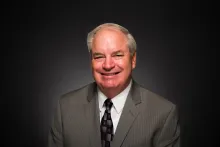
Robin Webber was born in Chicago, Illinois, in 1951, but has lived most of his life in California. He has been a part of the Church of God community since 1963. He attended Ambassador College in Pasadena from 1969-1973. He majored in theology and history.
Mr. Webber's interest remains in the study of history, socio-economics and literature. Over the years, he has offered his services to museums as a docent to share his enthusiasm and passions regarding these areas of expertise.
When time permits, he loves to go mountain biking on nearby ranch land and meet his wife as she hikes toward him.
