
Darris McNeely
Hello, everyone. I'm going to ask for your help today because I'm not going to give you all the scriptures you'll need. You're going to have to look up some on your own. Two reasons for that. One it's easier to remember when you look it up and number two, I didn't get around to looking them all up so that will be helpful if you can do that for me.
Today, I want to discuss a commandment or a portion of a commandment that's rarely talked about. It's rarely covered or explained and when it's discussed it's often misunderstood. This commandment is ever before us throughout the Bible. We often discuss the importance of loving God and loving your neighbor -- and this is right and good. It's not only good -- it's a commandment from God. Jesus Christ summarized the Ten Commandments by explaining their essence. I'm titling this message: " Loving Yourself" . Christ was being questioned about what is the greatest commandment. Luke 10:27 So he answered and said, “ ‘You shall love the Lord your God with all your heart, with all your soul, with all your strength, and with all your mind,’ and ‘your neighbor as yourself.’” Notice the priority level assigned to these two basic commandments -- first we're to love God and to love God wholeheartedly. By placing our focus on God, everything else comes into perspective. Then the commandment continues -- that we're to love our neighbor. But each time we read this commandment there are two words tacked onto the phrase 'love your neighbor'. The commandment doesn't simply stop with 'love your neighbor' it continues on with two words : AS YOURSELF. We're to love our neighbors AS we love ourselves. This particular verse in Luke is mirrored in two other gospels.
Matt. 22:39 And the second is like it: ‘You shall love your neighbor as yourself.’ That's the second witness in Matthew and there are those two words again. They just keep popping up. Here's another witness to the words of Christ. Mark 12:31 And the second, like it, is this: ‘You shall love your neighbor as yourself.’ There is no other commandment greater than these.” The first is love God and the second love your neighbor as yourself.. so the wording is consistent. We're to place our first priority on loving God and then our second priority is to love our neighbor as ourselves. These three verses do not say love our neighbors more than self and these verses do not command that we love our neighbors less than self. Instead, we are individually instructed to 'love your neighbor as yourself'. In fact, this command is said nine times throughout the Bible. It is in both the Old Testament and the New Testament. Every time we're instructed to love our neighbors, we're instructed to love our neighbors as ourselves. It's never simply written the three words "Love your neighbor". There's a condition to the love -- the condition is to love our neighbors in a certain way. That special condition is to love ourselves in order to be able to love our neighbor. We're not to love our neighbor instead of ourselves -- we're to love our neighbor as ourselves. This leaves open then the question, "Why are we then to love ourselves?" After all aren't humans bad? Aren't we all sinners? Haven't we all broken God's Commandments? We all fall short of the glory of God. Aren't we all worthy of death? Jer. 17:9 The heart is deceitful above all things and desperately wicked. Who can know it?
During these weeks prior to Passover, we take pains to examine ourselves to prepare us to repent of sins so that we might be worthy to take the Passover meal. This personal introspection, this examination of ourselves intensifies as we approach the Days of Unleavened Bread and during the week of Unleavened Bread. During that week, we actively thrust leaven out of our homes as we recognize the parallels between leaven and sin. We more fully come to realize the constant challenges to put sin out of our lives and keep sin out of our lives. It seems to be a never-ending battle. How well are we doing in that battle? Rom. 3:23 For all have sinned and fall short of the glory of God.
Rom. 3:10 As it is written:
“There is none righteous, no, not one;
How is it then that we can love ourselves? After all, if we are at the core rotten, sinful people how can we love ourselves much less our neighbors? Yet, there is this commandment that expects us to love ourselves in order to love our neighbors. Well, there does seem to be hope for us.
1 Peter 4:18 Now
“If the righteous one is scarcely saved,
Where will the ungodly and the sinner appear?
Notice, first we're told that no one is righteous and all have sinned, but then we read that those who are righteous can be saved .. but just barely. This is where the sacrifice of Jesus Christ comes in. The death of Jesus Christ covers our sins and that's why the verse 'if the righteous can scarcely be saved'.
That still leaves open the question, "Exactly how are we to love ourselves?"
1) EXAMINE YOURSELF 1 Cor. 11:27-28 Therefore whoever eats this bread or drinks this cup of the Lord in an unworthy manner will be guilty of the body and blood of the Lord. 28 But let a man examine himself, and so let him eat of the bread and drink of the cup. As a result of this examination, understanding that all have sinned and all are worthy of death -- there's an insertion, a place for the sacrifice of Jesus Christ which covers our sins and that allows us to take the elements of the Passover. 2 Cor. 13:5 Examine yourselves as to whether you are in the faith. Test yourselves. Do you not know yourselves, that Jesus Christ is in you?—unless indeed you are disqualified. Paul is writing to the Corinthians, urging them to look within, to look at themselves, to examine themselves. Gal. 6:4 But let each one examine his own work, and then he will have rejoicing in himself alone, and not in another. That's interesting because how easy it is to examine someone else, but what we're told to do here is to examine our own work. It's a self look -- an inward look. We can have knowledge secure that the blood of Christ has covered our sins and that we've accepted Him as our Savior and indeed are part of his family. Examining ourselves is a very important first step and that's a process that we're doing now in the run up before the Passover and over into the Days of Unleavened Bread.
2) BE DILIGENT
2 Tim. 2:15 Be diligent to present yourself approved to God, a worker who does not need to be ashamed, rightly dividing the word of truth. That's the NKJ. The original one I learned back when I was eight years old was a little different. It was 'study to show yourself approved to God. A workman need not be ashamed. Rightly handling the word of truth'. In some translations it says 'be diligent' in some it says 'study'. I think both of those are appropriate words depending on how we're looking at it. To be diligent or to study to present yourself. Does it say to be diligent or study so you can present other people before God? No, it says to present yourself before God. There's no shame in being diligent. There's no shame in studying. We must do this to show that we're believers in God's word and we're actually diligent to do that.
About this time you're probably sitting there and wondering , "What about these other verses that come up about 'self'?" There's a common misunderstanding that is often used that says that when someone loves himself or herself, there's a problem with that.. because so often we think that person is selfish or self centered. We might even say that the person is narcissistic .. a person who acts as if the whole world revolves around him or her. We all know people that are that way. The whole world seems to revolve around them. Television is loaded with those kinds of characters. There was an interesting seminar during Presidents Day Weekend by Dr. Baker about narcissism and how our society seems to be taken over by that kind of self-centeredness. That's not what we're talking about today. We're not talking about selfishness. We're not talking about bathing oneself in concern for oneself to the exclusion of all others because after all we're to love our neighbors as our self and if we exclude all others, then we're not following the commandment.
Phil. 2:1-4 Therefore if there is any consolation in Christ, if any comfort of love, if any fellowship of the Spirit, if any affection and mercy, 2 fulfill my joy by being like-minded, having the same love, being of one accord, of one mind. 3 Let nothing be done through selfish ambition or conceit, but in lowliness of mind let each esteem others better than himself. (Be careful when we use this verse.) 4 Let each of you look out not only for his own interests, but also for the interests of others.
I'm going to take on several ways that we can look at this because people usually lift one verse out. If we take a look at the word "esteem", in Strong's Concordance it's word 2233. It appears thirty times in twenty-seven verses. It's a verb denoting action. It has a number of meanings -- it's not just one single meaning so we have to use the context to understand the meaning of "esteem". It can mean to lead or go before or to be a leader or to rule or command -- have authority over. It could be referring to a prince or a regal power or a governor or a viceroy, a chief -- someone who is controlling in their council or an overseer or leaders of churches. It could refer to any kind of leader, chief or spokesman. That's the first definition. Then there's the second definition which is to consider, account or think. So, I took a look at the verses -- remember there are thirty uses of this word in twenty-seven verses and there are a number of different ways that they are translated. They don't all come out "esteem". Take a look at the words in context in some of those verses.
Phil. 2:6 Who, being in the form of God, thought it not robbery to be equal with God: "Thought it" is also the same 2233 in Strong's -- in other words, it's in the mind. We're looking at some action in the mind, some action or consideration. Phil. 2:25 Yet I supposed it necessary to send to you Epaphroditus, my brother, and companion in labour, and fellow soldier, but your messenger, and he that ministered to my wants. The word "supposed" is the same word "esteemed". In other words, he is thinking about it. It's how you're thinking of others. [These are all words used by the same author, but they're all being translated a little differently.] Phil. 3:7 But what things were gain to me, those I counted loss for Christ. "I counted" is the same word, 2233 in Strong's. You have "I suppose", "I counted", "esteemed", and "thought". Phil. 3:8 Yea doubtless, and I count all things but loss for the excellency of the knowledge of Christ Jesus my Lord: for whom I have suffered the loss of all things, and do count them but dung, that I may win Christ, The words "I count", also the same word ..2233. Frequently it's using the term count as Paul uses it here and it's that way in Titus and Hebrews and so forth. Sometimes it's counted, sometimes it's judged, etc.. in other words -- it's a thought. It's not just those who have the rule -- I mention that because sometimes we get carried away with one meaning rather than look at the full spectrum of meaning and how the author may have intended it. It's certainly important to show deference to others -- in fact it's common courtesy to hold the door open for someone or to help someone if it's within your power to do so. If two people are walking down a narrow sidewalk, generally both persons will adjust slightly so they might pass by each other. Perhaps one person will graciously step aside so the other person can pass. Someone who barrels down the middle of the sidewalk with no regard for others is certainly not esteeming others as better than themselves or showing deference to others. English does not have the word for it, but when you meet somebody in an aisle or an alley and one goes one way and the other another way -- we don't have one word that describes that juxtaposition where we go back and forth. I think other languages have a word for that but I don't know that English has that kind of word.
[Luke 18:2 talks about a judge whose job it was to make decisions and he didn't think very well of anybody.]
Luke 18:1-2 And he (Christ) spake a parable unto them to this end, that men ought always to pray, and not to faint;
2 Saying, There was in a city a judge, which feared not God, neither regarded man:
The parable goes on about the importunate widow who persisted. The key here that I wanted to look at is that the judge didn't regard anybody. He didn't consider God nor man. He in his own mind counted himself as supreme authority. That doesn't fit with what God expects of us. We've read that first we're to love God and then we're to love our neighbors as ourselves. We've already covered Jeremiah seventeen verse nine about having a wicked heart and sometimes we'll talk about 'the fall' meaning of Adam and Eve who in Genesis did not take care of the responsibilities that God had provided for them. What did Satan want to do? What did he do in the Garden of Eden and what does Satan want to do now? We can read in the history of mankind throughout the Bible and since the Bible was penned that Satan wants to depreciate the value of mankind -- to knock them down so that they are worth nothing so that they cannot inherit eternal life in the family of God. He has many tools that he uses to do so. If we devalue the self are we playing into Satan's clutches? Are we playing into it that "there's no hope for us" or "poor wretches .. we are nothing"?
And yet, God says we are to love our neighbors as ourselves. If you consider the good Samaritan --he was helping others. Yet, what if he was not able to help someone else? What if he hadn't taken care of his own affairs well enough? What if he didn't have the substance to do so? He took care of the man. He bound up his wounds. He took him and delivered him to an innkeeper -- he paid the bill for him. [We understand that that's an example of Christ paying the bill for us at Passover.] What if it's in our power to help someone, to show them the love? But what if we're unprepared and therefore unable to do so? That's where loving ourselves comes in. The good Samaritan took care of himself in order that he might be in a position to take care of others.
We have some other examples in Luke in the parable of the treasure in the field. I'm not going to go through all the parables, but there's also the one about the pearl of great price. Each of those was in a position to act when needed. The man in the parable of the treasure in the field was not looking for the treasure, but when he stumbled across it he saw the value there. Who was the value for? For him. He recognized the value that he could profit from and that he could take advantage of this knowledge, this information that would be a great treasure to him-- that he could make good use of in his life. Isn't that what the truth is like when we come across it -- even if we stumbled across it? We all have our own story of how we came into contact with the truth, how we came into the knowledge of God. Some of us just stumbled across it .. we weren't searching. I wasn't searching --it happened. I stumbled across it. I stumbled across the 'treasure in the field'. I can identify with this -- this is a value, a value to me -- I have a certain level of self-interest. It's not wrong for me to have this self-interest. Christ gave this parable for the very purpose to show this man seeks to fulfill his own self-interest in this case and He gave it as a spiritual example. We're to have self-interest in our own salvation.
He went on to give the example of the "Pearl of Great Price" where a merchant who was dealing in pearls came across the pearl of great price and found and realized that this was a value. Who was it a value to? It was a value to him. He recognized it and he wanted to take advantage of that opportunity. The same is true of us today, we have certain spiritual opportunities..to become priests and kings in God's Kingdom in the world tomorrow.
There are situations that we can look at today and can say that there are people who don't value themselves. What are examples of those that don't do it? The body is the temple -- our bodies are the temple of God's Holy Spirit ( 1 Cor. 6:19). God gave us his Spirit. We are to use it as best we can. We are to take care of ourselves. But, we can take a look at all the circumstances in life that people do to themselves and they don't take care of themselves. We've got body piercings, psychedelic drugs -- we've got everything from methamphetamine to cocaine to heroine to PCP to marijuana to prescription pain killers to cough syrup to bath salts. If there's a way to put something into their bodies, some people will find a way and make life difficult for themselves. Some people aren't into that -- they're into other things that put their lives at high risk. I used to live in Oregon. One of the highest risk occupations out there was a 'tree faller', a lumberjack. They would climb up one hundred and fifty feet in a tree with a chainsaw and a belt and cut the top of it off and sometimes they came down with the tree -- that made it a high risk occupation. A friend of mine has a relative who came down out of more than one tree over the years and he has all kinds of bolts and plates in his body, but he kept climbing up and doing it again. Miners have a high risk occupation and if they don't take the appropriate safety precautions -- that's not loving yourself. Deep sea diving .. better have a friend who's versed in how to save you. My old boss from years ago was a wealthy man who owned a whole family of companies and lived in Chicago in a penthouse suite along Lake Michigan and he loved to go deep sea diving. He went with a couple of his buddies and he got tangled up and got caught and got stuck under water without air and one of his buddies managed to get him untangled and shared the oxygen with him and brought him back. The one who saved him was a low life employee as it were .. in the corporate chain, but it was common knowledge in the company that that man would always have a job because he had saved the boss. It was just understood. It didn't matter what he did .. and he was a good-hearted fellow who worked hard -- not the brightest bulb on the tree, but he knew enough about deep sea diving to save the boss. We all knew that we'd all go before he did. Then there are suicide jockeys. Those are people who drive tank trucks for petroleum products. I have a friend who has done that for forty years but all it takes is one tiny mistake. You must follow the safety protocols, you must follow it through.
The most dangerous occupation in America (I don't know about other countries), but because of our technology ..is farmers. .at the highest rate of occupational hazard.When I grew up almost every family had somebody who was missing body parts -- there were fingers and various things missing that had occurred because of accidents. I remember my mother's father, my grandfather -- on an old hammer mill with a long belt from a tractor to a grain mill-- was wearing an old overcoat, which fortunately he didn't have buttoned up in the front -- and the sleeve caught and pulled him in but he twisted his body and it just ripped the coat right off his body. He was just standing there in the cold but very thankful to be cold right then. There are other stories that I'm not going to tell you about neighbors who weren't so lucky, who didn't escape that fate. I've been fortunate to never have been a hospital patient not because I haven't had an accident, but that I was fortunate enough to not have suffered too greatly. I got bucked off by a horse and they x-rayed my tailbone, but I survived that one.
I remember one time many years ago that I thought, "I'm courting my wife, Linda so maybe I should be a little bit more careful in life ", so on the farm, I started counting the number of times I was in an at risk situation and made a wrong step or a little wrong move. I counted over fifty times and that was before noon one day and so I said, "It's probably not a good idea for me to focus too much on this. Although, there was a time when I slipped coming out the big tractor and my foot went in the ladder of the tractor and I was hanging upside down with my leg in the step. The leg should have broken but fortunately I was close enough to the ground when I went over backwards that the shoulders banged all the wind out of me on the ground and I'm sitting out there in the field hanging from the tractor-- and you'd think a person would learn from that. That's logical ..right? So the next year, I think I'm never going to make that mistake again and I never did -- I never went forward down the ladder again. I always turned around and made sure I was all careful except another time I was to fold the wings up on a big piece of utility equipment. You fold the wings up hydraulically and for road work you put safety pins in so you can take this utility equipment on the highway because it has to be narrow. I was very proud -- I had folded it all up, walked way around -- you don't want to walk close to one because if the hydraulics release, you get skewered. I climbed up in the back and I put the pins in and I was so proud I had been so efficient. I had done it well and I was ready to go on the road. I took one step back, thinking I was stepping to the ground and I slipped again. My leg went in between the bars of the utility equipment and once again over backwards and it took all the air out of me and I'm thinking, "I'd better not tell the future wife about this." And there I am. I couldn't get out of it. I am wedged with my leg in the air lying on the ground. "They'll find me in a day or two I'm sure." My leg didn't break and I lucked out and I'm thinking I've got to take more precautions here -- surely she'll never find out about this if I never say anything.. no need to get her worried.
People do things without thought of loving themselves because of the affect it's going to have on others. How could I take care of my wife and family if I didn't take better care of myself? So, I started paying a little bit more attention to this. If I'm going to be married, I don't want her to be a widow too soon.
There are other ways that people need to take care of themselves besides occupational. There's the exposure to illness. We have a daughter in Japan and so upon occasion when we've visited there we'll see people wearing the little face mask so they don't trade germs with everyone else. It's a cultural thing ..it's just what they do. In the schools, when they have a flu epidemic they have these little sanitizer dispensers in every classroom so you can sanitize and the janitors go around and wipe off all the doorknobs between classes. People have the opportunity to use the sanitizer and lessen the spread of the flu. There's a hygiene issue also in hospitals and in dentists' offices .. the rubber gloves and all that and they're not doing it just for you, you know. They're doing it to protect themselves.. the medical professionals. It's important not be "typhoid Mary" and spread it everywhere but they're also protecting themselves.
And then there's the opportunity that people either take or don't take in regard to personal hygiene --whether it's bathing or teeth. Many years ago I had an employee and he was a reasonable employee and he came to work every day, but there was a problem. His hygiene appeared to deteriorate over days and it was very difficult. How do you talk to a grown adult about hygiene? But, since I was the boss I automatically got the job because other people were complaining and I had to do something about it. Hygiene can sometimes affect ones health -- particularly if it has to do with your teeth or other activities.
Then there's the high risk behavior that we see everyday and I'll bet all of you have seen it today coming here to church and that's driving too closely on the highway or the freeway. You're loving yourself if you put a reasonable distance between you and another vehicle. They taught us in Driver's Ed to put one car length for every ten miles per hour. We don't see a lot of loving people out there on the freeway. Either they never knew the rule or they have a very short memory or they're really really hostile. I don't know what it is, but they're just not giving much space out there and sometimes it's safer to just take alternate routes. If they were loving themselves, they by extension would love the next guy down the road by leaving some space. Then we've seen people who drive too tired and they weave all over the road. We don't know if they're tired or if they've been drinking or they have poorly inflated tires. I've seen all these things. Some people fail to maintain their vehicle. We have a corner (or a curve) where I grew up between the local town and the farm that we call dead man's curve. I never knew anybody to die on it -- it's just that the curve isn't real steep going off of it but a lot of people just drove off the curve because they weren't paying attention. It could have been a tough situation. My dad went off the outside of the curve -- well he didn't technically go off the curve..he had a baler that was hooked to the back of a pickup and the pin came out and the baler shot off the end of the curve. The baler goes off into the ditch and goes up into the air and it teeters way up in the air and 'which way is it going to go?' and then 'boom!' it flopped upside down in the ditch. The only thing wrong with it was that it emptied the tool box -- everything else turned out fine. That same curve, I remember..one of my brothers who shall remain nameless came home one day after he had taken the family car to town to get parts. My dad and other brothers were busy cleaning out calf pens from what accumulates in calf pens over time and we're pitching away and my brother comes up and says, "Dad, I drove the car in the ditch. I had an accident, but the car is okay-- I did clip a telephone pole, but the car is okay." It's the only time I ever saw my dad take his cap off and throw it on the ground and said, "What do you mean - 'it's okay?'" But, indeed it was pretty much okay. He happened to go off the inside of dead man's curve and the bumper on the car was lined up with the pole and the pole was old and weak so the pole flipped right up into the air and he went right on driving by and the pole went up. You could look at the car and there was no damage -- but it broke the tie rod underneath so he couldn't drive it home so we had to spend twenty bucks and get a new part and the car was fine.
Loving oneself means taking care of the little things like how we drive -- not just personal hygiene -- not just occupations. It also includes acting in self defense. Do we walk down a dark alley on a weekend? How well do we defend our own self-interests? Can we properly love our family by disregarding what is in our own best interest to do in regard to physical protection? Do we leave our engine running and the windows down in the parking lot when we go shopping? Or do we tend to close the doors and roll up the windows and shut the car off and take out the keys?
My dad did have an old truck one time that he was wanting to replace -- the old farm pickup-- a '54 GMC with the narrow box. He said, "I've tried everything." I asked, "What do you mean?" He said, "I would drive it to town and leave the windows down, but nobody would steal it." He said, "I drove it to town and left the windows down and the doors open and nobody stole it." He said, "I drove it to town and left the windows down and the doors open and the engine running but nobody would steal it."
Planning for your own self interest is what we're talking about. It's part of loving yourself.
There's another kind of self-interest that we can do and that's making provisions for our own estate planning. My grandfather did not do that and when he died he left a twenty-three year old widow with two little children and all kinds of complications because he didn't make the plans and the family has never forgotten that and now they make lots of careful plans. If you talk to any one of the brothers or the other relatives -- the Martens family makes lots of plans so that sort of thing will never happen again. That's part of loving yourself so that you can take care of others -- so that you'll be able to love others.
Well, how to love ourselves -- what must come first? First of all we must understand who we are. King David speaks very strongly about human life prior to birth. Psa. 139:13-16
13 For You formed my inward parts;
You covered me in my mother’s womb.
14 I will praise You, for I am fearfully and wonderfully made;
Marvelous are Your works,
And that my soul knows very well.
15 My frame was not hidden from You,
When I was made in secret,
And skillfully wrought in the lowest parts of the earth.
16 Your eyes saw my substance, being yet unformed.
And in Your book they all were written,
The days fashioned for me,
When as yet there were none of them.
King David understood and thanked God that God understood him and he knew his part in God's plan -- the understanding of hope and destiny.
Psa. 8:1-9 Lord, our Lord,
how majestic is your name in all the earth!
You have set your glory
in the heavens.
2 Through the praise of children and infants
you have established a stronghold against your enemies,
to silence the foe and the avenger.
3 When I consider your heavens,
the work of your fingers,
the moon and the stars,
which you have set in place,
4 what is mankind that you are mindful of them,
human beings that you care for them?
5 You have made them a little lower than the angels
and crowned them with glory and honor.
6 You made them rulers over the works of your hands;
you put everything under their feet:
7 all flocks and herds,
and the animals of the wild,
8 the birds in the sky,
and the fish in the sea,
all that swim the paths of the seas.
9 Lord, our Lord,
how majestic is your name in all the earth!
Does that look like you're worth nothing? What does God think of you? God expects you to love his creation so that you can fulfill his purpose. Psalm eight is actually a marching song so that when the king's men or other people moved from place to place or an army moved -- this is a marching song that they would use. "Oh Lord, our Lord -- How excellent is thy name in all the earth. Who has set your glory far above the heavens." That's a great hope and opportunity for man. That's not a slug. That's opportunity that God has planned for us to be part of his family.
Part of that expectation we find in 1 Peter 2:21 For even hereunto were ye called: because Christ also suffered for us, leaving us an example, that ye should follow his steps: We know our hope and our destiny -- God gives us that. So, what is our function? We must follow in Christ's steps-- that's our job, that's our function to do what Christ said to do-- to follow Him.
A question is: How can we love ourselves? After all we can know this, we can say it's important to do that. We love God -- we've got that down, it's the first and highest commandment and immediately after that He says "love your neighbor as yourself". Okay, we understand that. We've talked a little bit about physically loving yourself: taking care of your body, the temple of God. One thing we can do is in the model prayer, commonly referred to as the Lord's Prayer. Matt. 6:12 And forgive us our debts, as we forgive our debtors. In other translations it says, "Forgive us our trespasses as we forgive those who trespass (sin) against us." We have a job. We have a function to do and that is of forgiveness. [As we've approached Passover, we've probably already gone over this in reference to preparing for Passover.] Matt. 5:23-24 Therefore if thou bring thy gift to the altar, and there rememberest that thy brother hath ought against thee; 24 Leave there thy gift before the altar, and go thy way; first be reconciled to thy brother, and then come and offer thy gift. Why should we do that if we don't have some self interest? Our interest has to be in following Christ, in looking after the plan of God He has for us individually in his family. In order to make peace with your brother, you first must make peace with yourself. We must forgive ourselves or how can we love ourselves? And then we can forgive and love others. If we're walking around without first having come before our Creator and asked for forgiveness and received forgiveness and then forgiven ourselves -- how will we have the strength, love, insight, and the courage to be able to forgive someone else? That's part of loving someone else -- being able to love yourself well enough to understand yourself well enough to be able to forgive others.
Have we ever attempted to forgive others without first forgiving ourselves? How difficult! How can we seek to be at peace with others if we're not at peace with ourselves? I've had that challenge -- I suspect we've all had that challenge -- that we're not always at peace with ourselves.. particularly over decisions that we later realize we should have made differently.
Then we can look at Christ's example. Who did He talk to? This was often used by the Pharisees against Christ. Christ talked to tax collectors -- He even called one to be one of his disciples. He talked to a promiscuous woman at the well and of course people make much ado about it but they seem to forget or maybe they don't realize that for every such woman there's at least one man involved. So, it's not talking to one gender or the other --it's talking about what your relationship is with God. Are you loving yourself well enough to follow God? Are we willing to talk to ourselves? Are we willing to be honest with ourselves -- to love ourselves enough to have a sit down chat as we face the mirror? Can we look directly in that mirror and see ourselves as we really are -- warts and all and learn to love ourselves? If not, how can we expect to love our neighbors as ourselves and hope that the relationship with our neighbor will turn out well?
We've talked about how to love self physically: brushing our teeth, our diet, exercise to oxygenate our brain, getting enough water ..all these things we've heard. We've heard about the nutrients and the vitamins and the minerals and those essential fatty acids and proteins and eating enough fruit -- the phytochemicals that will fight cancer and all the essential elements you will ever need every day. In fact, I was in school with a lady that I noticed at the University who every day after class would break open and eat a little bit of chocolate. I asked, "Do you eat chocolate every day?" She said, "Why, yes. Everyday." Apparently that's one of the nutrients that's essential in her life. She considered that it was very, very important. Sleep is something that we often overlook. I try not to overlook it. It will not overlook me --it will come and get me and each one of us. What about loving ourselves physically by preventing what we can -- doing everything we can to keep our minds sharp and alert whether it's reading regularly or being conversant?
Can we love ourselves appropriately by avoiding undue attention? It comes to mind the story of Tom Sawyer riding a bicycle saying, "Look at me, look at me" kind of thing. Of course, all the cartoons that have that.. invariably a crash occurs because they weren't looking out for their own interest. Do people buckle their seat belts --not just for the other guy, but for themselves?
How do we love ourselves mentally? What kind of mental diet and hygiene do we have? What do we put in our minds? There's a lot of stuff out there competing for your mind every day. There are movies, magazines, books, songs on the radio, idle chatter at work or school. There's a constant flow of what we put into our minds. I remember when my brother and I went to the same country school where my mom used to teach.[ My grandfather went to that country school, the same one that was built in pioneer days by the pioneers of which my great-grandfather was one.] He (my brother) came home one day and told my mother about the new words he learned in school that day and I got to witness first-hand what happens when you use those words at home. We had one of those big old porcelain sinks in the utility room and I saw one arm around the head and the head was poking out and the water faucet was running and the bar of soap was making the rounds in the mouth and I made mental note that whatever he said, I was never going to be saying those words. That just didn't turn out very well for my brother to say those things. How many people have a hard time with that? And, of course, everybody is exposed to that ..it seems like all the time. It used to be that "Gone With the Wind" was the most dastardly movie made because it ended with a word or a phrase that was simply unacceptable before that date. Now that's considered mild fare. Loving ourselves mentally -- we've already talked about exercising our minds, watching current events -- having curiosity as to what's going on and how these things that are happening in the world apply to our lives.
Then we come to how to love ourselves spiritually because here again we have the same rules -- diet and exercise. How do we love ourselves spiritually? What do we put in our minds? Is it PG rated -- PG 13 ? Is it R rated or some other rating that we put in our minds with regard to movies, the radio, music? The lyrics sometimes -- we're going with the beat and the tune is really good, but did you look up the lyrics? Do you know what you're singing? I'm a product of the 60's and 70's and I'm embarrassed by the lyrics now when I read them. I look back and can't believe the words that were being produced and that I was just bopping my head along with at that time. People buy the CD's and DVD's and take them home and they are directly counter to what we read in the Bible..many of those words.
Then there's spiritual exercise, just like physical exercise. I know and I know that I know that if I do sit ups, pull ups and push ups every day and I run a mile and a half at least three days a week, I'm going to be in better shape. I know that I know that. I haven't quite gotten around to doing it all, but I know that I know that. So, exercise is important. How about our spiritual exercise? That can be summarized in Micah 6:8 ..what doth the Lord require of thee, but to do justly, and to love mercy, and to walk humbly with thy God? How do we know what kind of mercy to extend-- how do we do those three things? The spiritual exercise that we use is prayer, the study of God's word, and the meditation upon it. That will give us the tools to practice spiritual exercise.
Then there's that little issue of spiritual hygiene that we do and that's called baptism. As you enter the family of God, God requires several things. He requires repentance and then says be baptized for the remission of sins, and then accept the death of Jesus Christ (the blood to cover for your sins), and then the receipt of the Holy Spirit. That spiritual hygiene is important and that's renewed on an annual basis at the Passover memorial service.. or what some people call the New Testament Passover. Once we have that spiritual hygiene, we may notice that people are not perfect from year to year -- that things happen from one Passover to the next where people (and I include myself) are less than perfect. I Cor. 13:5 (I call this spiritual deodorant.) [This is talking about love and it's called the Love Chapter in the Bible.] 5 Doth not behave itself unseemly, seeketh not her own, is not easily provoked, thinketh no evil; I want to focus on that one little phrase 'is not easily provoked'. In the NIV it says, 'Is not easily angered'. So, I call that spiritual deodorant and I'm hoping you all apply plenty of it in my case because even when there comes a time when people 'stub their toe' or they don't do what we think they should -- are we easily offended? Are we easily angered or do we take a big breath and exercise the love that it's talking about in First Corinthians chapter thirteen to not become easily offended?
For participation in a good spiritual diet, we need good spiritual teeth. 2 Tim. 2:15 Study to shew thyself approved unto God, a workman that needeth not to be ashamed, rightly dividing the word of truth. But then, we realize that we have to eat meat, spiritual meat and not just milk. We're going to need to make sure we're getting the good diet and that we have the ability to handle that. There are other examples that we can write..you can finish this one out.. spiritual preparedness -- the parable of the ten bridesmaids, the five wise and the five foolish. How prepared are we? Have we been building up our 'savings account' with spiritual oil or spiritual behavior? Are we always ready to give an answer? Are we always willing to serve..not just others, but yourself as well? Don't overlook yourself.
I often have students who want to ask a question. This happens almost daily. They raise their hands and say, "Mr. Martens, I have a question." I say, "I've got an answer, you go first." That slows them down and gives me time to think as to how to possibly deal with it. Do we always have an answer for the hope that lies within you? What is the expectation? Are we able to share that with others?
Finally, do we love ourselves enough to seize the destiny offered to us by God?
It was many years ago that there was a man who wrote a book called, "The Incredible Human Potential" and in that book ..I will insert right here -- The Incredible Human Potential of Man which is the opportunity to join the God Family. And some day we will have an opportunity to stand before the throne of God and it will be just ourselves -- we'll be alone, standing there and we'll have to answer for our own lives. It won't be Uncle Henry -- it won't be your wife or your husband, it'll be YOU or it'll be me who has to stand there and give account and to explain. Can we then answer the question ," did we love our neighbors as ourselves?" But, did we love ourselves enough to be able to show love to our neighbors? I would like to focus on that. There are other distractions in life that we will come across. The Malthusians of what the 1700's .. that I believe predicted the end of the earth and had all the mathematical theories about how the food production can't possibly be good enough and the population will increase faster than the food production. Billions of people have been added to the earth since then. Then, we'll have those who say that man isn't worth anything and animals are worth more than humans. We have animal rights groups that degrade mankind saying that mankind is just another one of those creatures out there. We have to be careful when we understand the expectations of God --that we are to love God and that's a priority ..with all our heart, soul, and mind. And we're to love our neighbors, but we must not forget those last two words "as ourselves".
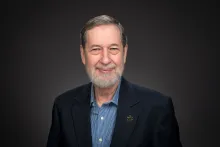
Tim Martens is the pastor of the Northwest Arkansas and Springfield Missouri congregations. Prior to becoming a pastor, he has had successful careers in business and education as well as being a newspaper columnist.
