

Don Ward
This transcript was generated by AI and may contain errors. It is provided to assist those who may not be able to listen to the message.
Title of the sermon today, Loyalty to God and Man. What character trait did you admire most in others? In other words, what quality of character would you rather your friends have than any other quality? Would it be honesty, dependability, sincerity, courage, perseverance?
Just what quality do you want most for your friends to have? To me, it's loyalty. And if they don't have this trait toward me, then I don't consider them to be my friends. Nothing hurts more than being stabbed in the back. And we've all been stabbed in the back in the past, and we know how it hurts. Jesus Christ himself was stabbed in the back, and many have been stabbed in the back, in and out of the Church of God, through the centuries, and for that matter, all over the world. It seems to be one of the great weaknesses of humankind. So let's take a closer look at the word loyalty.
Loyalty is the act of being faithful to those persons, ideals, beliefs that one stands under conviction to defend or support, that one stands under conviction to defend or support. At first, it may seem that this character trait is a duplication of honesty and personal integrity. There is a distinct difference, however. The principal difference lies in the word conviction. Loyalty is an extension of honesty.
It goes above and beyond. Honesty can almost exist in a in a void. Commitment, conviction, devotion, and loyalty will come only at the expense of great effort and no small personal sacrifice. It requires giving up self. Christianity requires our lives. Any man wants to follow me, let him forsake all, take up his cross, and follow me loosely paraphrasing what Jesus said. Loyalty is second only to love in a character trait.
In fact, you cannot truly love another person without being loyal to that person. Love is greater in that it is general and all-inclusive. Love summarizes the law. Love summarizes God's character. Loyalty is a dimension of love and an extension of love. Loyalty is a dimension of love and an extension of love. It's similar to honesty, but it transcends honesty and personal integrity.
It is academically possible to be an honest traitor. Judas's carrot openly betrayed Christ. Let's go to Psalm 55 and verse 12, which seems to be a prophecy about Judas's betrayal of Jesus Christ. And, of course, as I said, virtually every person alive has been betrayed at one time or another, stabbed in the back, thinking that the person who poses their friend was really a friend, but when all was said and done, they were not.
In Psalm 55 and verse 12, for it was not an enemy that reproached me that I could have borne it. Neither was it he that hated me that did magnify himself against me, then I would have hid myself from him. But it was you, a man, mine equal, mine guide, mine acquaintance. We took sweet counsel together and walked in the house of God in company. Let death seize upon them and let them go down quick into the grave, for wickedness is in their dwellings and among them.
As for me, I will call upon God, and the Lord shall save me. Evening and morning and at noon will I pray and cry aloud. And he shall hear my voice. He has delivered my soul, my life, essence, my being in peace from the battle that was against me, for there were many with me. God shall hear and afflict them, even he that abides of old, Selah, because they have no changes.
Therefore, they fear not God. If you really feared God, you would not lift up your hand to do evil against any member of the body of Christ. The Apostle Paul makes it very clear in 1 Corinthians 12 that we should have the same love, care, and concern, one for another. He says that when one member suffers, we all suffer, and that when one member is honored, we're all honored. He also says in Romans 12 that we are members, one of another, and we're all joined together by that Holy Spirit, that very divine essence of God, the divine nature, the very essence of God and Jesus Christ, the Holy Spirit.
That makes us members, one of another. Would any person take up his hand against his own body? Like Paul talks about, no man ever yet hated his own body. So therefore, if you take up your hand against any member of the body of Christ, you're hating the body of Christ. Anyone who would divide the body of Christ. I think oftentimes we look at things too cursory, that is, too shallow. Don't really examine the very depth.
They fear not God, therefore they have no changes. He has put forth his hand against such as be at peace with him. He has broken his covenant. The words of his mouth were smoother than butter, but war was in his heart. His words were softer than oil, yet were they drawn swords. The words were just a pretense. You know, I could say that I'm going on a dangerous mission tonight. Will you go along with me? There's a 50-50 chance that you will not come back alive. And you could say, no, have you lost your mind? I might be killed. Do you think I'm going to risk my neck for you? You would be honest, but not necessarily loyal. So you see, there is a difference, a distinction, between honesty and loyalty, but you cannot be loyal without being honest. But you can be honest and not necessarily loyal. A wife can say, I don't want the responsibility of being a wife mother anymore. A husband might say, you know, I'm tired of this. I'm working my fingers to the bone. Where does it get me? Another day older, another day deeper in debt. The 16-ton song of Tennessee Hearn is ford. So I'm out of here. It could be honest, but not necessarily loyal to that marriage covenant. In fact, it is almost impossible for a person without firm convictions and commitments to be anything other than an individual of transparent integrity. See-through integrity. That's why God said of Israel, all that there were such a heart in them that they would fear me and keep my commandments always. So now, in the new covenant, that's why God is writing His law and stamping His character on our inward parts. The law was weak in that it did not change the mind and purge the conscience. Look at Hebrews chapter 9. Some people get the wrong idea in looking at this, what I'm talking about now, with regard to purge the mind and purge the conscience. The conscience is a knowing within yourself, and through God writing His law on your inward parts, you can know within yourself what is right and what is wrong. But you still, I still, have to make the decision that I'm going to do it. God will not make you do it. The devil does not make you sin, but he is a powerful tempter and seducer and a great deceiver. In Hebrews chapter 9 verse 13, For if the blood of bulls and goats and the ashes of an heifer sprinkling the unclean sanctified, sets apart to the purifying of the flesh, it made them ceremonially clean. It was a school master to bring them to Christ, but it could not purge the conscience. It could not truly forgive their sins, but it did serve as an example a type of what was to come, the true Passover, Jesus Christ. How much more shall the blood of Christ, who through the eternal Spirit, notice that term, eternal Spirit. See, if we have God's Spirit, the very essence of God, we are partakers of that eternal Spirit. That Spirit is not a created Spirit. It's eternal. And that's one of the things that separates the sons of men in the angelic realm, or the sons of God in the angelic realm, I should say, or the sons of God in the spiritual realm, of those who have been begotten and eventually born in the family of God. In other words, we are partakers of the eternal Spirit, not a created Spirit.
How much more shall the blood of Christ, who through the eternal Spirit, offered himself without spot to God, purge your conscience? I mean, your sins can be removed as far as the east is from the west. Purge your conscience from dead works to serve the living God.
If you are not a person of conviction, commitment, courage, and loyalty, you will only be a person of transparent integrity. A person who stands for nothing will fall for anything, as they say, because he's not convicted of what he's doing, and we are admonished to count the cost. And I've already referred to this, but let's turn to it. And Luke 14. Luke 14. Counting the cost. You know, it's easy to get caught up in some kind of movement, and it's easy to get caught up on the internet, various exchanges, Facebook or Twitter or whatever it is. But oftentimes, we hit the sin key before we really can count the cost, or we say it before we count the cost, or we take action. And it's oftentimes down the line that we look back and say, Oh, I wish I had never done that. Luke 14 verse 26.
If any man come to me and hate not his father, love not less by comparison, father, mother, and wife, and children, and brethren, and sisters, yes, and his own life, he cannot be my disciple. And whosoever does not bear his cross and come after me cannot be my disciple.
And then he gives the example of building a building and counting the cost, and the example of going to war, the king going to war. Don't start a war unless you have counted the cost, and you have sufficient to win the war. A lot of wars have been started by people who did not count the cost. They do not have sufficient to win the war. So we are warned to count the cost. We're instructed to prove all things. Hold fast to that which is good. It's 1 Thessalonians 5, 21. You prove your convictions by acting on them as a Berean. Let's go there. Acts 17. Acts 17. You know, the Apostle Paul was driven out of a lot of places.
A lot of times, basically, it was by the Jews. He was driven out of town, even though he was in Gentile territory. He would go to the synagogue first, and it was usually the Jews who would drive him out of town. In Acts 17, these were more noble than those in Thessalonica, in that they received the word with all readiness of mind and searched the scriptures daily whether these things be true. Therefore, many of them believed also of honorable women, which were Greeks and of men, not of few. But when the Jews of Thessalonica had knowledge that the word of God was preached of Paul at Berea, they came there and stirred up the people. Then immediately the brethren sent away Paul to go, as it were, to the sea, but Silas and Timothy abode there still.
Prove your convictions. Go to the word of God. See if it is true. Receive it with all readiness of mind and then put it to test. God says that you prove or test him by acting in faith. You heard something about that in the first sermon. A million dollar line in the budget, the faith line. We're counting on a million dollars that we don't really see how we can get. And as Mr. Dean noted, 750,000 plus of that has already come in. And you can say it's coincidence. You can say any number of things, but the fact is it's there. Please go to Malachi now, chapter 3. Malachi chapter 3. And once again, remember what we're saying here. You prove God or test him by acting in faith. We call it stepping out in faith.
The faith is the substance that things hope for and the evidence things not seen.
The substance of things hope for, the evidence of things not seen. The evidence of things not seen, of course, would be God working mightily to bring it to pass. Here in Malachi, note what God says.
Verse 8, Malachi 3.8, Will a man rob God, yet you have robbed me, but you say, wherein have we robbed you in tithes and offerings? To your curse with a curse, for you have robbed me, even this whole nation. Bring you all the tithes in the storehouse, that there may be meat, food, and mine house, and prove me now herewith, says the Lord of Hosts. If I will not open your windows of heaven and pour you out a blessing, that there shall not be room enough to receive it. So God says you prove him by stepping out on faith, you obey him, and see what he does. And a lot of people turn this around, they say, okay, God, if you will bless me, then I will do such and such. Then I will step out in faith. Then I will obey. The person that's saying that is really deceiving himself and will receive only the blessings of time and chance. I guess these scattered thunderstorms we've been seeing around here for the past several days, you know, it says it rains on the just and the unjust. So you have time and chance. Ecclesiastes says that time and chance happens to them all.
And once you have proved, you know and know that you know. You proved it from the Word of God.
You have put God to the test. You have stepped out in faith. And once you do that, of course, there is no turning back. Look at Luke 9 verse 62. Luke 9 and verse 62. Luke 9 verse 62 will start with verse 59. And he said unto another, follow me. It's Luke 9, 59. But he said, Lord, permit me first to go and bury my father. Jesus said unto him, Let the dead bury their dead, but go you and preach the kingdom of God. And another said, Lord, I will follow you, but let me first go bid them farewell, which are at home at my house. And Jesus said unto them, No man, having put his hand to the plow, and looks back, is fit for the kingdom of God. Now don't misinterpret that and say, well, my dad's funeral is today, but also we have Sabbath services and your dad's not in the church. And you say, well, I got to go to church. I can't go to dad's funeral. That's not what this talking about. This is talking about that once you have made that commitment, you don't look back. And in fact, once you have made the commitment, there, you don't have any other choice but to follow it because, yeah, you do have the choice of life or death. And do not to choose is to choose. And if you don't choose, you're choosing death, probably. So notice 2 Peter 2 and verse 18. 2 Peter 2 and verse 18. Count the cost. Count the cost. And once you have made that commitment, once you approve things, don't look back. Don't say, well, I need to go do such and such before I can do this. Seek you first the kingdom of God and all these other things will be added to you. In 2 Peter 2 18, for when they speak great swelling words of vanity, they allure through the lust of the flesh through much wantedness those that were clean escaped from them that live in error. While they promise them liberty, they themselves are the servants of corruption for of whom a man is overcome of the same as he brought in bondage. For if after they've escaped the pollutions of the world through the knowledge of the Lord and saved Jesus Christ, they're again entangled therein and overcome. The latter end is worse with them than the beginning. It had been better for them not to have known the way of righteousness. Then after they have known it, to turn from the Holy Commandment delivered unto them. Brethren, how many people have we seen that we have loved dearly over the course of the several past decades? Turn from the Holy Commandment. It is really sobering. It is also dumbfounding. I don't understand. Frankly, I do not understand.
Why would you choose death over life after you have been enlightened and you have made the various sacrifices? You approved it. You know it. And to turn away from it. But it has happened unto them according to the true proverb, the dog has turned to his own vomit again and the sow that was washed were wallowing in the mire. So count the cost. Now, honesty, as we've already mentioned, is just as important as it ever was because it is a foundation of loyalty. You must be honest to ever even hope to approach to loyalty. Now, the brief analysis above was necessary to show to have loyalty you have to be committed to principle. You must be devoted to duty and you must stand the courage of your convictions. And let's say it again. Committed to principle. Devoted to duty. Stand the courage of your convictions. You must act from the Word of God. It's not sufficient just to be honest without action and word and deed. For example, look at James 2.19. Back a few pages from 2 Peter. James 2.19. The apostle James here is talking about faith without works is dead. Uses even the example of the devil who can't be just in word to say, okay, I know that God exists.
Because Satan says that in James 2.19, if you believe that there is one God, you do well.
The devils also believe and tremble. Well, they have step one. They know that God exists. But will you know, O vain man, that faith without works is dead?
So you have to go above and beyond just knowing the truth. Now to 1 John chapter 3. 1 John chapter 3 and verse 14. 1 John 3 verse 14. 1 John 3 verse 14. We know that we pass from death unto life because we love the brethren.
He that loves not his brother abides in death. It's plain and simple as that.
Do you love the brethren when you take certain actions that will cause the brethren to be divided and scattered? Is that really loving the brethren?
He that loves not his brother abides in death. Whosoever hates his brother is a murderer, and you know that no murderer hath eternal life abiding in him.
Hereby perceive we the love of God because he laid down his life for us. 2 John 3 verse 14. We ought to lay down our lives for the brethren.
But whosoever has this world's goods and sees his brother have need and shuts up his vows of compassion from him, how dwells the love of God in him.
Key verse, My little children, let us not love in word, neither in tongue, but indeed and in truth. So you can't just go so far and say, well, I believe God exists as the devil does, or any other affirmation that you want to make apart from the action that goes with it.
You know, this is not a world best characterized of possessing firm conviction, strong commitments, untiring devotion to principle, and representative of principle. In fact, it's a world that's just the opposite of those things.
The writers of the New Testament knew that a time would come when the very fabric of our character would be tested, and it is being tested now. Some people apparently are like missing the test and sort of go along gleefully, not realizing the seriousness of the situation. We're in a period of time in which the members of the body of Christ are smiting one another and have been for quite a long time. Notice Matthew 24. The Olivet Prophecy, Matthew 24.
You know the backdrop of the Olivet Prophecy. The disciples came to Jesus. The events of the Olivet Prophecy took place in the days after that Passover in which Jesus Christ instituted the symbols of a new covenant Passover. He spent the rest of the time there in Jerusalem from the 10th of Nissan to the time he was crucified on the 14th.
During that time, those four or five days, he went in and out of Jerusalem and went to the temple and taught. In one of those days, the disciples asked him what would be the sign of his coming in the end of the age.
He responded with Matthew 24 and Matthew 25.
We're breaking in here.
In Matthew 24, verse 9, Then shall they deliver you up to be afflicted, shall kill you.
You shall be hated of all nations for my name's sake, and then shall many be offended, shall betray one another. Loyalty will be a rare commodity.
Shall betray one another, and shall hate one another, and many false prophets shall rise and shall deceive many.
See, the devil has done a... I mean, if you were to be keeping score, who's winning in this thing? Who's winning with regard to Christ is not divided, 1 Corinthians theme.
Many shall be offended, shall betray one another, shall hate one another, and many false prophets shall rise and shall deceive many.
And because iniquity shall abound, the love of many shall wax cold. But he that shall endure to the end, the same shall be saved.
Now continuing in verse 45, verse 45, Who then is a faithful and wise servant, whom his Lord has made ruler over his household, to give him meat in due season.
Blessed is that servant whom his Lord, when he comes, shall find so doing. Verily I say unto you that he shall make him ruler over all his goods.
But if that evil servant shall say in his heart, My Lord delays his coming.
And people won't go around and say, My Lord delays his coming.
Verily, they do it by their actions.
And shall begin to smite his fellow servants and eat and drink with the drunken. The Lord of that servant shall come in a day, in a time, when he looks not for him, and in an hour that he is not aware of.
And shall cut him asunder and appoint his portion with the hypocrites, there shall be weeping and gnashing of teeth. Then, when these things are going on, shall the kingdom of heaven be likened unto ten virgins, which took their lamps and went forth to meet the bridegroom.
The New Testament writers, and Jesus Christ himself, spoke of this.
If you want your life to have meaning, direction, and purpose, then develop loyalty. Be ever devoted to truth. Don't just go along with the crowd, as so many have done in recent times.
Let's contrast the loyalty of Jonathan and David to each other, and the loyalty of David to Saul with another one of David's sons.
So you have the loyalty between Jonathan and David, the loyalty of David to Saul, and then you have the story of Absalom.
Let's go to 1 Samuel 17, verse 44. 1 Samuel 17.
If you haven't read 1 Samuel in recent times, I would encourage you to do it. Jonathan was a valiant warrior of his own right. 1 Samuel 14 chronicles many of the acts of Jonathan. You know, there was a time in Jonathan's life in which his daddy, Saul, was going to kill him, but the people intervened and prevented it. That's recorded in 1 Samuel 14, verses 42 and 45.
But in 1 Samuel 17, verse 44, the story of David comes on the scene in a really big way with his slaying of the giant Goliath. 1 Samuel 17, verse 44.
The Philistine said to David, Come to me, and I will give my flesh into the fowls of the air and the beasts of the field. Then said David to the Philistine, You come to me with a sword and with a spear and with a shield, but I come to you in the name of the Lord of Hosts, the God of the armies of Israel, whom you have defied. This day will the Lord deliver you into mine hand. I will smite you and take your head from you, and I will give the carcasses of the hosts of the Philistines this day into the fowls of the air and to the wild beasts of the earth, that all the earth may know that there is a God in Israel. So a young man, probably 17-18 years of age, he steps out in faith and very boldly, as we heard once again in the sermon, and he confronts the giant Goliath.
And as the battle ensued, you know what David did.
He took the stone and with his slingshot hit the giant in the forehead and he fell down, and David cut off his head, as he said he would do.
Chapter 18 verse 1, it came to pass when he had made an end of speaking unto Saul, that the soul of Jonathan was knit with the soul of David, and Jonathan loved him as his own soul, as his own life. And Saul took him that day and would not let him go again to his father's house. So it was like Saul practically adopted David after the slaying of the Philistine, but Saul became very jealous. Then Jonathan and David made a covenant because he loved him as his own life. And Jonathan stripped himself of the robe that was up on him. See, here's the king's son, Jonathan. David was just a poor shepherd boy.
He stripped himself of his robe and gave it to David and his garments, even to his sword and to his bow, to his girdle. And David went out whether so ever, and Saul sent him and behaved himself wisely. And Saul sent him over the men of war, and he was accepted in the sight of all the people and also in the sight of Saul's servants. But it came to pass, verse 6, when David was returned from the slaughter of the Philistines, that the women came out of all the cities of Israel, singing and dancing, to meet King Saul with tabres, with joy, with instruments and music. The women answered one another and prayed and said, Saul has slain his thousands and David his ten thousands, and Saul became very jealous.
Verse 9, and Saul eyed David from that day forward, and it came to pass on the moral that the evil spirit from God came upon Saul, because Saul set himself up for an evil spirit and that's what jealousy will do to you. And we have had so many people in the past several decades in the history of the Church of God that that spirit of jealousy came upon them, oftentimes, perhaps almost imperceptibly, then maybe not even realizing what was taking place. And it has destroyed many a good man, and it destroyed Saul.
On the moral that the evil spirit from God came upon Saul, he prophesied in the midst of the house, and David played with his hand. At other times there was a javelin in Saul's hand, and Saul cast his javelin, for he said, I will smite David, even to the wall with it. And David avoided out of the presence twice, and Saul was afraid of David, because the Lord was with him and was departed from Saul. So much of the rest of the book of Samuel is taken up with the loyalty that David and Jonathan had for each other, and the fact that Saul was pursuing David, trying to kill him, and at the same time, David would not lift up his hand against Saul.
You notice down in verse 26, and when the servants told David these words, it pleased David well to be the king's son-in-law, and the days were not expired. See, Saul promised David that he would give his oldest daughter, Marab, to be his David's wife. But as a dowry, since he was a poor man, the only dowry he would ask would be 100 skins, four skins, and the Philistines. He thought that in doing this, David would be killed. But David went and brought back a thousand. Verse 26, and when his service told David these words, it pleased David well to be the king's son-in-law, and the days were not expired. Wherefore, David arose and went he and his men, so you are the Philistines, 200 men, and David brought their four skins. And they gave him in full tail to the king that he might be the king's son-in-law, and Saul gave him, McCall, his daughter to wife. And Saul knew that the Lord was with David and that McCall, Saul's daughter, loved him. And Saul was yet more afraid of David, and Saul became David's enemy continually. Verse 19, and Saul spoke to Jonathan, his son, and to all his servants, that they should kill David. But Jonathan, Saul's son, delighted much in David, and Jonathan told David, saying, Saul, my father, seeks to kill you. Now, therefore, I pray you, take heed to yourself until the morning, and abide in a secret place, and hide himself. And basically, as I said, the rest of 1 Samuel is taken up with this battle of Saul trying to kill David and Jonathan's loyalty to David, and David's loyalty to Jonathan. Now, in 2 Samuel chapter 1, finally Saul and Jonathan were killed in battle, and the word came to David. In 2 Samuel, the word comes to David, and David said that Saul and his son Jonathan have been killed.
Verse 16, and David said unto him, the man who brought the word, Your blood be upon your head, for your mouth has testified against you, saying, I have slain the Lord's anointed. And David lamented with this lamentation over Saul and over Jonathan his son. And also, he obeyed them, teach the children of Judah the use of the bow. Behold, it is written in the book of Jasser. And then there's a beautiful poetic language here that David uses in a lament and memory of Saul and Jonathan. Then we go to 2 Samuel 15. By contrast, in 2 Samuel 15, we find Absalom. If you recall the story of Absalom, Absalom had to flee for his life after he had killed his brother. His brother had raped his sister, and then Absalom killed the brother who had raped his sister, and then he was exiled and eventually Joab persuaded David to let Absalom come back. And Absalom began to use flattery and deceit to win the hearts of the children of Israel against his own father.
In 2 Samuel 15.3, Absalom said unto him, See, your matters are good and right, but there is no man, deputant of the king, to hear you. Absalom said, Moreover, all that I will judge in the land, that every man which hath any suit might come unto me, and I would do him justice. And it was so that when any man came, came unto Absalom, he did him obesience, in other words, he bowed and kissed his hand, and so on. And on this matter did Absalom to all Israel that came to the king for judgment. So Absalom stole the hearts of the men of Israel. And so finally, Absalom, through even deceit, tells his father, I want to go pay a vow. And really what he was going to do was to go rally his troops to take over the throne. Verse 7, It came to pass after forty years, that Absalom said unto the king, I pray you, let me go and pay my vow, which I vowed unto the eternal in Hebron.
For your servant vowed a vow while I abode in gesture in Syria, saying, If the Lord shall bring me again, indeed to Jerusalem, then I will serve the Lord. And the king said unto him, Go in peace. So he arose and went to Hebron. But Absalom sent spies throughout all the tribes of Israel, saying, As soon as you hear the sound of the trumpet, then shall you say, Absalom reigns in Hebron. And with Absalom went two hundred men out of Jerusalem that were called, and they went into in their simplicity, and they knew not anything.
And Absalom, set for a Hithafel, the Gileonite, David's counselor from his city, even from Gilohah, while he offered sacrifice and the conspiracy was strong for the people in Greece, continually with Absalom. Eventually, a messenger came to David and said, All of Israel is going after Absalom. And so David and his household, basically 300 people, flee for their lives. There was among them a Gentile, Itiah the Gittite.
And in contrast to Absalom, notice about this man. Verse 19, Then said the king to Itiah the Gittite, Wherefore go you also with us.
Return to your place and abide with the king, for you are a stranger and also an exile.
Whereas you came but yesterday, should I this day make you go up and down with us, seeing I go where I may not return and take back your brethren, mercy and truth be with you.
And Itiah answered the king and said, As the Lord lives, and as my Lord the king lives, surely in what place my Lord the king shall be, whether in death or life, even there also will your servant be. You see, this is loyalty in action. I'm going on a dangerous mission, Itiah. You may not return. You don't have to go. You only came here a few days ago.
Itiah's response was, you go, I go. For like the Ruth and Naomi story. And so the battle ensued, and eventually Absalom was killed, and the news came back to David. And notice what David did. This is in 2 Samuel 18.
The word finally came that Absalom was dead when this messenger came in 2 Samuel 1829 and 2 Samuel 1832. David says, what about Absalom? Is he all right? And he found out that he was dead.
Verse 33, And the king was much moved, and went up to the chamber over the gate and wept. And as he went, thus he said, O my son Absalom, my son, my son Absalom, I would God I had died for you, O Absalom, my son, my son.
You know, God and Jesus Christ must at times, when they see the actions of some of us and what we do, after we've been enlightened and know the truth and do the things that we do, they must say, O my son, my son, you know, why? Why would you do that?
So, brethren, here we are at a critical crucial time in human history.
The Bible is replete with both sides of the story. Those who forfeited everything, like a third of the angels did, and those who, in rebellion, went their way and were swallowed up.
Swallowed up by envy, jealousy, greed, the things that Satan uses and manipulates people with so easily. But then there are those, like Jonathan, like David, like Iti, and so many others who have stood in the gap, regardless of the consequences.
So, brethren, we need to develop a complete philosophy of life. Know what and why you believe, what you believe. In order for a person to develop the kind of loyalty that I'm talking about, you have to develop some worthy goals, leading to a central purpose in life. What is your aim? What is your goal? Well, we say it's the kingdom of God.
And above all, we have to have the courage of conviction and remain ever devoted to principle. In other words, keep your eye on the goal. Keep your eye on the big picture. The big picture burning brightly in your heart, the kingdom of God.
You must be convicted and committed to a body of beliefs and truth, and have the courage to die for those beliefs. Look at Revelation 12, verse 9. In fact, at the end of this age, the three things that are mentioned here that enable you to overcome is exactly what I've been talking about. The kind of loyalty to God and to man that is contained in the Word of God. Revelation 12, 9 talks about Satan, the great deceiver, deceiving the whole earth.
Revelation 10 talks about Satan being the accuser of the brethren before the throne of God day and night.
Revelation 12, 11. And they overcame him, Satan the devil, by the blood of the Lamb.
If you sin, you go before the throne of God. And we have one who is there, an intercessor.
He's lived in the flesh and who will go there and intercede for us.
And if we repent, he's faithful and just to forgive us of all unrighteousness. So they overcame him by the blood of the Lamb by the word of their testimony. They told the truth regardless of the consequences. And they loved not their lives until the death. These qualities of character is at the very heart and core of life and will eventually separate the men from the boys as they say, the sheep from the goats, fidelity, or as the Marines say, Semper Fi, ever faithful, to principle.
It serves at once as both a drive and control in life. Devotion to principle makes life meaningful and purposeful. You have a reason for being. You believe it and you're going to do it. Faithfulness and loyalty go hand in hand. So, brethren, one last scripture. Here's what we want.
Here's what we want our Lord and Master to say. Just as the Apostle Paul said, 2 Timothy chapter 2. 2 Timothy chapter 2. I'm sorry, 2 Timothy chapter 4. 2 Timothy chapter 4.
And verse 7. 2 Timothy 4 verse 7.
I fought a good fight. Never wavered, never gave up. Devoted to duty, devoted to principle. Standing the courage of my convictions. Fighting the good fight. I have fought a good fight. I've finished my course. I've kept the faith. Henceforth, there is laid up for me a crown of righteousness, which the Lord the righteous judge shall give me at that day, and not to me only, but unto all of them also that love is appearing.
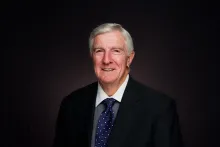
Before his retirement in 2021, Dr. Donald Ward pastored churches in Texas and Louisiana, and taught at Ambassador Bible College in Cincinnati, Ohio. He has also served as chairman of the Council of Elders of the United Church of God. He holds a BS degree; a BA in theology; a MS degree; a doctor’s degree in education from East Texas State University; and has completed 18 hours of graduate theology from SMU.
