
Robin S Webber
This transcript was generated by AI and may contain errors. It is provided to assist those who may not be able to listen to the message.
Today I'd like to bring you a message, and I'd like to give you the title right out front, so that there is no mistaking of what I'm going to be spending time with you on this Sabbath day of sharing from the Scriptures. The title of this message is simply this, Making Room for the Divine Nature. Again, making room for the divine nature. I want to build upon a message that I gave almost two months ago, and it was during Pentecost. And it was during Pentecost that I gave a message that came out of the Scriptures of 2 Corinthians 13 and verse 5, in which the Apostle Paul reminded the people of his day by giving them a question that would rally an answer in them.
Don't you know that Christ dwells in you? Don't you know that Christ dwells in you? Sometimes we go to and fro during our day at home or at school or at work or come back and forth even during service time. And we go away, and even we've read the Scripture, and we've prayed to God, and we've gone through, in a sense, the routine of coming to worship before God. And sometimes we don't gain the full impact of what God is doing, what his promises are, and to really recognize that Jesus Christ himself, not somebody else but himself, does dwell in us.
Not a spiritual screwdriver, not a spiritual wrench, not something that you grab from the outside in the time of need, but to really recognize the fullness of the Scripture. And we explored it, and we looked at it, and we came to understanding through the Scriptures that the Spirit of God and the Spirit of Christ, their divine essence of who they are, not simply what they do, not just simply their attributes, but they literally do reside in us by the Spirit as you and I accept and respond to the call of God Almighty, and accept and understand and believe in the sacrifice of Jesus Christ.
It's made even more real in the sense that you'll join me for a moment. Let's turn to 1 Corinthians 3 as we begin to lay a foundation in 1 Corinthians 3, a statement that Paul makes. And it's an interesting statement where he says, Do you not know that you are the temple of God and that the Spirit of God dwells in you? And if anyone defiles the temple of God, God will destroy him, for the temple notice of God is holy.
There are many things in this world of which I just mentioned during the announcements that are good. We know there's a lot of things that are wrong and evil, but we also realize that there are things that are good. There are things that are very good. But what is described here is that which is holy, and notice what it says, which temple you are. Now let's understand something if you're with me for a second, that the tabernacle in the wilderness and later on the temple in Jerusalem was in a sense, and I say in a sense, where heaven above touched earth.
It was the contact point for God's will to be played out. In fact, it's very interesting when you study how Israel, when it was sojourning, would set up the tabernacle. The tabernacle was literally right in the middle of the camp of Israel. All the tribes had a spot, because they were really in a sense an army on the move. They had a spot, but the tabernacle was right in the middle. It was the central focus of the people.
To remind the people in that sense that God, the presence of God, that shekinah that would come down, that cloud, that presence, would always be in the middle of his people. He would always be in the middle of his people, that he wanted to have that relationship. Think this through, because this is going to be important. As people went to the tabernacle, and hundreds of years later, as they would go to the temple, the tabernacle and the temple were designed for basically three things.
Number one, worship. Number two, praise. And number three, sacrifice. It says here today, what Paul is basically telling us, is that we are God's temple, a portable temple, flesh and blood temple, it's portable because, well, we have two legs, and we're on the move. We don't just simply stay in one spot, but we move through. Society, we move through community, we move through family.
There's three things that I want you to think about as we're talking and thinking about the race that's set before us that Mr. Star Wars brought, and how we contend, because this is going to fit part and parcel with what he started with, is simply this. As we are that portable temple of God, the holiness, the essence, not just the attributes. Oftentimes, we confuse the attributes with the essence of God. God says that his spirit, and his spirit is his essence. It's no less than what he is. It's not a substitute. Oh no, it's not in full at this point, but what he has done is he has invested himself in us.
Thus, we're going to think about this as we move through life, as that portable temple of God, as we make room for that divine nature to flow and grow in us. How much of our life praises God? How much of our life is about worship to God? Not just here in church, but every moment of our life. For we are in that sense, priest in training. And how much of our life is a living sacrifice? Not the old turtledove. Not the goat. Not the bullock. Not even the little lamb.
Because today it's different. We are here to sacrifice ourselves.
The Apostle Paul is not alone in his thought. His fellow laborer, Peter, speaks of that. Join me if you would in 2 Peter. Sometimes we can just get dominated with thoughts of Paul.
God speaks to many of his servants. It's very important to build upon this foundation of where Paul says, don't you know that Christ dwells in you? And then he says, don't you know that you are the temple of God? Well, it's not a thought that is just solely, do we dare say, Pauline in theology. We go to 2 Peter 1. We're going to drop into 2 Peter 1. We're just going to drop in. We're going to go back out. Then we're going to actually move through 2 Peter a little bit later. But it says, Peter, speaking by which you have been given exceeding great and precious promises. And notice what it says. That through these you may be partakers of the divine nature, having escaped the corruption that is in the world through lust. We're not partakers of the angelic nature. Now, they have an incredible function, and not to dismiss that. But the destiny and God's purpose for humanity that was initially made in his image out of dust and now transformed into this new creation of spirit is to have no less than himself this divine nature. And it's very important to understand that. So, with that stated now, let me ask you a question. How much room are we allowing for Christ to grow in us? If it says that the spirit and the essence of Christ is in us, and he's, do I dare say, planted it in us, put it in there, how much space are you giving him to expand and to grow in you?
All of this we look at. I'm mindful of World War II with the the Marines when they go would go on shore, and they would establish a beachhead. And then they would radio back to the guys in the Navy out at sea saying, mission accomplished. Well, the mission was accomplished. The immediate mission was accomplished. And they had to establish a beachhead. But establishing a beachhead was only the beginning of contending, to build on Dennis's word, contending to gain the entire island, to expand out from that beachhead until every valley, every dell, every hill, every mountain, every beach might become one under the command of the Marines. Well, that's what God does with us. He puts and allows his spirit to come into us, the spirit of God, the spirit of Christ, as Romans creates in a synonymous fashion. He puts it into us, but then he has an expectation that it is ultimately going to fill every space, every room of our life, that therefore we might praise him, we might worship him, but it will ultimately demand sacrifice. Join me for a moment over in Galatians 2, in Galatians 2, building on this thing. And we pick up the thought in verse 20, again establishing a very important point. It says, I have been crucified with Christ. It is no longer I who live, but notice this. Now, my question is simply this. Is this metaphorical?
Is this just simply prosaic? Is this just simply analogy? Or does the scripture mean what it means? It is no longer I who live, but Christ lives in me.
Does that mean he just visits like Motel 6?
In and out, we'll leave the lights on. Or does this have real substance? It's he that lives in me, and the life which I now live in the flesh, I live by faith in the Son of God who loved me and gave himself for me. When we read this and we see that Christ is living in us, notice what it says. Christ lives in me. And that's what Paul is telling all believers for all times.
The Christian life is not a matter of behaving like Christ.
How often we said that or spoken to that in our messages? Well, here's how to behave like Christ. But it's more so of allowing Christ himself to live in us and through us. There is a difference, brethren, and that's why I've been kind of staying on this subject.
It's not enough to be Christ-like. What God wants us to do is allow Christ living in us to fill every space, every room, every part of our life. And in the course of this message, we're going to find out how. Join me if you would for a moment in Galatians 4 and 19. Remember the analogy that I used in the beach had. For the moment the mission was accomplished, but the mission was not over. The immediate mission was accomplished. When we are baptized and we receive the Spirit of God, we receive the Spirit of Christ, there is a mission that is accomplished. And the righteousness of God is imputed to us. The righteousness of Christ is dwelling in us. But the total mission is not over. Notice what it says in Galatians 4 and 19. It's breaking in my little children, for whom I labor in birth. Again, notice, until Christ is formed in you.
It's a process. It's an experience. It's an existence. We might say it's a race.
We might say it's a journey. And we're going to be talking about that as we go along. What we come to understand is that, and one of the reasons why I wanted to give this message, the last time I spoke in Pentecost, we talked about the gift of God. And, of course, Pentecost is the day of gifts. Repent, believe, and receive the gift of the Holy Spirit. And we talked about Christ being in us. But beyond that gift and beyond that precious opportunity, we have responsibility to those that are given great privilege. And what greater privilege do we have than to, in a sense, have Christ dwelling in us by the gift of our Father above, that with privilege, with opportunity, comes accountability and comes expectations.
When we discuss this subject, let's understand something that grace established this by God's initiative, by God's invitation, by God's continuing sustained involvement.
But we never want to get the thought that, well, some of us this will date us, and that is, how many of us remember the old Greyhound ad?
Oh, all those people died off. Okay, no hands went up. Okay. Whoa. Sit back.
Leave. Oh, good. There are memories. We're getting there. The wheels are rolling now. Okay, good. Sit back and leave the driving to us.
That is not what the Christian experience is about.
That is not what the Christian existence is to be. Salvation is indeed a gift of God.
But he has expectations for this incredible privilege that has come upon us through God's invitation and initiation and his continuing involvement. He has expectations, and that means that we must respond with the rest of our life, recognizing what is dwelling in us. I'm trying to make it very, very clear and practical. What greater gift can there be? We look at gifts, and we get them in a box, and we get excited. But what God has done is placed his essence in us. I'm not talking about the attributes again, but his essence.
We might say, to use an analogy of his, his DNA is placed in us. Not just his love, not just his wisdom. Those are articles that come off of his essence. But to recognize he has put this treasure, as Paul says, inside of us. And when we fully understand that, then we have a response. We have a responsibility. We can't just sit back. We have to, as Mr. Star Wars said, we have to contend. We have to lean forward. We have to be in, to use an analogy, be in the game. We have to be on the court. God does literally have expectations of us. So let's talk about that. Again, the title of this message is Making Room for the Divine Nature. Paul speaks a lot about it.
But we're going to sit around Peter. Join me if you would in 2 Peter, because this is going to fill in some of the blanks. I don't want to just make this ethereal. I don't want to just simply make this abstract. And that's why I think maybe why God has placed 2 Peter 1 in the Bible. It begins in verse 1, Simon Peter, a bond servant and an apostle of Jesus Christ.
Here is one of the original 12, a man that walked and talked with the Master for three and a half years as they traversed Samaria, Galilee, and into Judea. He was the man that the first time Jesus saw him, he said, follow me. And the last time in John 21, in which we have audible voice of Jesus speaking to Peter, he said at the end, follow me. And that is always what Christ says to every disciple of you amongst us today. That is his invitation in the beginning, and that is his invitation at the end, simply to follow me. And this shows how to do it. Now here's Simon Peter, and notice how he introduces himself as a bond servant and an apostle of Jesus Christ. It's interesting, the first narrative that he uses, he says, I am a bond servant. Oftentimes, I think some of the translations have done a disservice to what is actually being spoken here. Sometimes we talk about a bond servant. Sounds like an indentured servant. You know, I'll sign up for a seven-year, you know, kind of like, if any of you are Irish here, forgive me, but that, like, I back about 1850, where there'd been denturing over to this country, and you'd indenture yourself for seven years, and then you would be free. That's not what it's being spoken about here. The word is better rendered slave. The word truly is better rendered slave. To recognize that as a slave to a master, a slave's entire life is given over to that master. His will, his desire, his direction is the the matter and the work of those that are under him.
A slave of and by himself does not have rights, does not have rights of and by himself, but those rights come from the master. Now, the good part of all of this is that we worship a God, we worship a Christ who's not a Simon Lagree for any of you that have ever read Uncle Tom's cabin. We're not talking about the guy with the whiskers, you know, kind of going like this and just beating down the poor slave. That's not what we're talking about. We are, as Peter was, a slave of righteousness, but he's not his own man. He gave that up when he accepted God's gift of Jesus Christ, and said, as Jesus was talking to him, you know, who do you say that I am?
Some say I'm this, some say I'm that, and Peter said, you're the Son of God.
He got it, and he understood it, and we'll talk about that a little bit more as we go through. Now, notice what it says here, to those who have obtained like precious faith with us by the righteousness of our God and Savior Jesus Christ, to those who obtained like precious faith.
Not a secondary faith. Not a secondary faith.
The faith that we receive today that God has placed within us is not different than the faith that Peter and Paul had. This is the same faith. I want to show you something that's very interesting. Join me for a moment in Ephesians 4 verse 13. If I'm not mistaken, let's see if I'm correct. I might be wrong here. Ephesians 4 just came to mind. No, it's actually in Ephesians 4 and notice verse 5. One Lord. Notice one faith. Not faith 2.0. Not faith 3.0.
Christ the same yesterday, today, and forever. One faith. And the faith that Peter and Paul and James had that is accorded to them as a gift of the Spirit is the same that is given to us today.
Let's go back to 2 Peter 2 now. It says that you have obtained like precious faith with us by the righteousness of our God and Savior Jesus Christ. And so that righteousness is imputed to us and that righteousness is placed in us, as it were, through the essence of God.
And then notice what it says in verse 2. Grace and peace be multiplied to you in the knowledge of God and of Jesus our Lord. Grace and peace.
Two pillars of words that we find throughout all of the epistles. We find it in Paul's writings. We find it in James. We find it in Peter's writings. We find it in John's writings. That's how they would begin an epistle. That's how they would conclude. To always remind the disciple of what God offers and has offered. He's offered a gift. He's offered his favor, his extension into our life.
And he's offered peace. These are the two great sayings of the ancient world. One is Greek and one is Hebrew. One is Charis. That's where we get the word Charismatic. And the other we get Shalom.
And like in Hawaii, it's like Aloha. It's a high and good-bye. It's how you start and it's how you finish. Recognize that we have been favored by God. We have been gifted by God. It's not by our doing. It's not by our works. It's a revelation that he begins to open our minds and open our hearts to receive him and to understand his ways and what he's doing. And it says that we've also received peace. This is not a peace that we would humanly want. Peace is one where all the dust is settled, where life is comfy, easy. Nobody coming over the draw. Nobody coming over the hill. Nobody coming at us. But this is not the peace that's being spoken about. When a Jew says, Shalom, what the Jew is saying is he's offering a blessing. He's saying, as you walk through life with our God, may he provide you the answers. May he give you the aid. May he be that good shepherd. That's what is being spoken about here. It says, grace and peace be multiplied to you in the knowledge of God and of Jesus Christ our Lord. A question that I asked Redlands this morning that I will ask you. And it all goes back to what we're talking about, embracing the understanding that the divine nature and the essence of God is in us for a purpose that we respond to. That by what we do, by what we say, and how we act, reflects to God that he knows, that we know, that his miracle resides in us. Grace and peace be multiplied to you in the knowledge of God. I have a question for you. Very simple. This is not going to be hard.
And only you can answer this. This past week, how much grace and how much peace have you experienced in your life? I'm not even talking about how many good things happen to you.
I'm not talking about winning the lottery.
I'm not talking about going down to 15 or coming in on the 8th to downtown and there's no traffic. You're the only vehicle on the freeway. I'm not talking about that kind of event. I'm talking how much grace and how much peace have you experienced in your life and is it multiplying? When God gives us the gift of salvation and gives us the gift of his Spirit, the blessing is that it is multiplied to where it fills every aspect of our life.
It's like a balloon that you keep on pumping up and pumping up and pumping up and pumping up until it almost burst. That's what God wants us to experience when we understand that we need to make room for the divine nature. Sometimes in our houses or in our apartments we have company over we like to shut off a room. We don't want anybody to look into that room. Most of us all have one room that's like that in our house. It's called the room that if somebody goes in they will never come out again because they've seen the stuff and they've been stiffed. They couldn't believe it and they died in horror. I'm sure they have room like that in their house too. But what God wants us to do is to allow his grace and his peace and to fill every room inside of us, this temple, that he's chosen to dwell in, to be in. Not because we're worthy but because he's worthy.
Very important to consider. So we look at this and says we are to multiply that.
As his divine power has given to us all things that pertain to life and godliness through the knowledge of him who called us by glory and by virtue. These are very interesting words. It says that he's given to us by his power. Sometimes in modern day society, perhaps more than ever in the last 20 years, we see corporations come and they go. We see presidents, we see executives, and anymore they come and they go. They have the power. They no longer have the power.
We see skyscrapers that are built to great companies. And the skyscrapers are still standing, but they come and they go. The tallest building in the world about 1910, are you ready?
Was the Woolworth Building down by Wall Street.
Massive, tall, gothic looking building like they used to build at that time.
The building is still standing, but when's the last time that you dined at a counter at Woolworth's? When's the last time, by the way, that you spent five or ten cents?
The younger generation may not understand that. It's called a nickel and dime stores.
But God says that he has a power that is lasting. God says that I declare the end from the beginning and the beginning from the end. I will do my purpose. I will do my pleasure. It's that same God that in the book of Numbers, when he is blessing Israel, says, Moses tell them this.
And at the end, he stamps it and he says, and I will do it. That's the power that we draw upon when we understand what is residing inside of us, the very essence of God. And beyond that, and his power has given to us all things. This power, this understanding, is not by our human imagination or by our intellect. This is by a revelation. Matthew 16. Join me if you would for a second. Matthew 16. Going back to that cardinal example of Peter.
There were a lot of things that sometimes said, oh boy, what's Peter going to do next? But this one in Matthew 16, he got it spot on. Verse 15, but who do you say that I am? And Simon Peter answered and said, you are the Christ, the Son of the living God. Knows how Jesus answered and said to him, blessed are you, Simon Barjona, for flesh and blood has not revealed this to you, but my Father who is in heaven. Follow the disciples of Jesus Christ. We are not here because we figured it out.
Maybe you think you are, but I'm going to tell you that you're not.
To abide in the revelation of God is not based on math of one plus one equals two. It's not of this world.
It is a revelation. Why are you here and others aren't today?
Why do you believe in what we're talking about today and others have gone?
Left our midst. Forgotten the revelation. Forgotten that it's a gift.
We all love a gift. Who doesn't like a gift in this room? Can I see a show? Is there some Scrooge out here? Oh, that's a Christmas. I'm sorry. Anyway, is there somebody out here that says, oh, you know, you're given a gift and say, oh, take it away.
No, we all love a gift. Since we're kids, there's something there and it's a gift.
And the giver comes with a gift. That's a beautiful thing about God the Father and Jesus Christ. And they have the power. And they have the giving way of giving us this gift to all things that pertain to life and godliness. It's not a mystery religion. It's practical. And it's made more practical because we have the gospels and the example of Jesus Christ, how to abide and to live in this through the knowledge of Him who has called us by glory and virtue, by which we have also been given exceeding great and precious promises that through these you may be partakers. There's that word. Partakers have stock in of the divine nature by God's gift, having escaped the corruption that is in the world through lust. So that's the gift. That is the grace of God.
We can't earn it. We don't deserve it. We can't buy it. But there's something that we can do. That's the rest of the message. We can respond to God's graciousness and His generosity by giving ourselves as a living sacrifice, as Paul says in Romans 12. We can respond in praise by our life's actions. We can respond in worship, which means worth ship by what we say, by what we do, by what we think, by how we deal with one another.
And just like that temple of which we are, this all comes by sacrifice.
I would say for ancient Israel, do I dare say this, it was probably easier for them to sacrifice the little turtle dove or the lamb rather than themselves. It's always easy to sacrifice something else other than yourself. If we are going to hold the high privilege of being the temple of God, there are sacrifices that are offered. The great sacrifice, which makes it all possible through Christ the Lamb. But then we, likewise, are to die to ourselves daily. As Paul said, that creates an existence of sacrifice, of giving ourselves away, of putting ourselves away, and allowing Christ to grow in every cavity of our existence. Let's notice some of the things that are mentioned here. Now, again, I'm giving this message to counterbalance what I gave before. Don't you know that Christ dwells in you? Oh, good. Oh, righteousness has been imputed to me. God's tucked his essence in me. Once saved, always saved. Not at all. Not at all. See, that's the mistake that some people make. Some people make the mistake of working up to God through their works, like a ladder. Others just think, oh, God's done it all, now I can sit back, and I don't have anything to do. I'm sorry, because Peter's about to unload the list to each and every one of us of what we're to do. Notice what it says here, then. But also, for this very reason, giving all diligence. Giving all diligence. And add to your faith virtue to virtue knowledge, to knowledge self-control, to self-control perseverance, to perseverance godliness, to godliness, brotherly kindness, and a brotherly kindness love. Let's look at that for just a second. It says, but also for the very reason, giving all diligence.
We give all diligence when we understand the enormity and the magnaniminity and the graciousness and the miracle of what God has granted us.
That all of us would be startled, as it were, if all of a sudden we had one of the great diamonds of the world set in front of us. We would ooh, we would aww.
We would probably try to touch it before the guards came and said, don't touch.
And yet God has placed, as it says in Paul's words, a treasure inside of us to say thank you, Father, and thank you, Christ, and to respect that, to worship and honor those that have given it to us. And so therefore it says, but also for this very reason, verse 5, giving all diligence. It's a very interesting word that is used here, diligence, and that's important to understand this aspect of diligence. And that diligence is almost a little bit, you know, and I really appreciate it, Mr. Star Wars' analogy on sports and contending. This diligence in the Greek, the root words of the Greek that speak to diligence, means that of leaning forward, of leaning forward, not leaning back, not like Greyhound, not saying, okay, it's all over, I'm saved, or I'm in the process of salvation, and therefore I'll just let God do everything, and I'll just come as I am the rest of my life. No, no, no, no, not at all. It's like, again, the beach hat when the Marines landed. Mission accomplished.
The conquest has started, but it's not over. And this is how we begin to add Christ to our life and allow His grace and peace to multiply us and add, notice then, to your faith.
The one thing that is mentioned here that will allow us to grow and to develop is to embrace the faith of God that He has given us, that same faith that Jesus Christ had. One thing that people make a mistake of sometimes in the Christian existence, are you with me? It's simply this. They believe that they are to have faith in Christ. Are we to have faith in Christ? I do believe that we're supposed to see you were nervous. You thought this was a trick. We are to have faith in Christ, but likewise we are to have the faith of Christ. Both small words have big meanings. It's one thing to believe that Jesus was the Son of God, Messiah sent to this earth. It's another thing to have and embrace and internalize and utilize and exhibit the faith of Christ. The same faith that took Him through the wilderness experience of where He won, the adversary lost. The same faith that allowed Him to march on Jerusalem and walk up Golgotha and say at the very end, Father, despite this day into your hands, I commit my spirit. See, there's a vast difference. I remember about 40 years ago, the first time I heard that in Pasadena, the gentleman that was speaking. I'd never heard that concept, and it changed my life. It changed my life from just simply being a believer from afar to, as Dennis said, being on the field, being in the game, and understanding that God does not just simply want me to believe from afar, but have that spirit in me, the DNA, the essence of God activated, moving, multiplying, and developing, and giving my existence. Not the easy things to do. Have you ever done that? Where you're looking to unstuff the stuff, so you're going to have a garage sale.
There's a lot of things that just go out and get rid of it. I didn't like that person who gave it to me. No, just anyway, just get rid of it. Put that on the sidewalk. But then there's some things that we don't want to get rid of, that we have a safe spot for. We don't like it so much. We know we don't need it. We know that it might even be acting against us, but we've had it around for so long that we might miss it if we put it out on the sidewalk. That's the very area that God's grace and God's peace needs to enter in our life. And that is where we need to make room for Christ to grow in our life. Not in the easy spots. Not in the giveaways. But in those things that we've been holding on to for months and years. That somehow we blame our father or our mother or our grandparents for. That we just hold on to like a security doll. Because if we gave it away, then we'd have to face ourselves. Oh no, couldn't do that. Oh, now that's getting personal.
See, sometimes we use people and we use events and we use others. Because they're much easier to deal with than allowing Christ to magnify himself and to grow in us as we respond to God in the faith, not only in Christ, but of Christ. Let's take another look here. It says, and add to your faith virtue. Virtue is one of the great qualities, and Peter uses this. Both Peter and Paul had been influenced to one degree or another by the Hellenic world around them. Virtue was an esteemed value in antiquity of old. And the different synonyms we might hear is, be excellent, be excellent, be courageous. And it's also very interesting, too, in some extra-biblical literature, Hellenic literature, the word here that is used for virtue, the Greek root is used for that which is deep soil. Deep soil. Some of you come from the Midwest. You know what good soil at least used to look like. More and more of it is being played out and becoming artificial. But remember, all those buffalo roamed the plains for thousands of years. They left something behind. They kept on going up, and it was deep, and deep, and deep. And it became fertile to where the Louisiana Purchase became the great rain basket for the world around us, and continues to serve the world around us. That's exactly the kind of virtue that God wants us to have. He wants us, not because of us, but because of Christ in us, because of the divine nature growing in us. He wants us to be excellent people, not excellent by our works or by what we do, but because what he's doing inside of us, what he's doing inside of us, that all might know that there is a God.
That's important. And that with fertile soil that... Have you ever noticed with fertile soil? I have a question for you. Would you rather... If the fertile soil was this deep to this stage, would you plant something in that fertile soil? Would you give it a second look? Or would you want to plant it on the sands of the ocean side?
By the ocean. Where would you plant it? What would you look at?
See, Christians are to remember the temple was where heaven touched earth.
And as Dennis was bringing out, that people do notice, and they do look, at people that are deep in their values, that are involved in a way of life, that are not hit and miss, but are the real deal.
It's like in the old days where they take a coin, you know, I always wonder if they're going to break their tooth on it, but in the westerns, you know, they take the coin and kind of, you know, see if it was real or not. I would have lost my molar on that one, okay? It would have been singing one, take two. But anyway, people want to know, and God wants to know, whether we're the real deal and we've gotten it. We get it. We know what God has done for us, and we marvel, and we wonder, and we say, thank you, Father. Thank you, Jesus Christ. Allow your Son to grow and to develop in me. Let's take another look at here, and add to your faith virtue and to your virtue knowledge. What is that talking about? Memorizing Wikipedia? No, it's very interesting that when you think about these things, join me if you would in 2 Timothy. In 2 Timothy, see the 2 Timothy, your first Timothy. Let's see if I can pull this. It's 2 Timothy.
The knowledge that is being talked about here is not a jigsaw puzzle of mysteries, of adding things up to where they kind of fit our plan, to where we can take God and we can tuck them in our pocket and say, we got it.
Now, it's a different kind of knowledge that's being spoken about here. The knowledge that was spoken about in the New Testament, if you'll look about it, is not about what you knew, but who you knew. And that's an incredible difference. And do I dare say, that makes all of the difference as to whether or not we will allow room for the divine nature to grow on us. Notice what it says here. For this reason, Paul speaking, I also suffer these things. Nevertheless, I am not ashamed, for I know whom I have believed and have persuaded, that he is able to keep what I have committed to him until that day.
Again, let's go back and read this carefully. I am not ashamed. Notice, for I know what I believe? No, it says, for I know whom I believed.
Faith as registered and mentioned in the New Testament was always about a God, and a God that so loved the world, that he gave his only Son, not to condemn the world, but to save the world.
The knowledge that is spoken about here does not have to be complex, does not have to be laced with Hebrew, Aramaic, or Greek.
It is the knowledge that comes by revelation, and the revelation can come to us, but then we have to accept it. And as we accept it, then we have to build upon it. Let's go back again here to 2 Peter.
It says, but also for this very reason, giving all diligence, add to your faith virtue to virtue knowledge, to knowledge. Notice it says, self-control.
Self-control. When we understand that Christ dwells in us, and that we are partakers of the divine nature, we recognize that we are not alone, that God has given us everything that we need. We just simply need to draw upon it. This self-control comes from a Greek word. You can spell it. It's very simple. S-O-P-H-R-O-N. If you didn't write it down, I'll spell it again. S-O-P-H-R-O-N. It's sofron.
It's very interesting that it comes from another Hellenic derivative, which is Sosa-Fron. That means to save the mind.
In other words, this is talking about as you have diligence, faith, virtue, knowledge, you add this, you allow this to begin to move into the rooms of your life, self-control. That means having mastery of our passions and impulses that we control and do not control us.
All becomes subservient to God and to Jesus Christ, and the example of Jesus Christ as to how he became subservient to his Father's will. Not my will, but your will be done.
When he was in the wilderness, he did not make the mistakes that Adam and Eve made. Adam and Eve made the mistakes of grabbing forward and embracing the pride of life, the lust of the eyes, and also the lust of the flesh. All of those same challenges that Adam and Eve have were visited upon Jesus in the wilderness. Lust of the flesh, lust of the eyes, the pride of life. Those same challenges are listed and given to us today. They never go away.
I wish they did, but there's something about human nature that fascinates us.
And what happens with human nature? You ever thought about human nature? What happens is to the believer? We always know, we always say, well, God will never be late, but what happens is our human nature arrives early.
Ah, you're laughing. There you go. We have to have that mastery, that self-control over our impulses. You know, I know people that are completely dominated by their impulses and by their feelings and by their emotions.
What is interesting when we understand that we can draw upon the power and the gift and the love of God, and then exercise that power. See, the power comes from the essence of God in us. It's not just the power of God in us. The power and the love and the wisdom and the fortitude, they do come from that essence, and then we draw upon it. Basically, what this is saying is that to save the mind. In other words, this thought of self-control means for those that get a grip on their emotions. I have a question for you. Do you on this Sabbath day have a grip on your emotions?
That's me playing.
Or are you tossed to and fro by your impulses and by your emotions, by your whims?
Or do we have the anchor of God's existence in our life? Do we believe it?
My voice is going up, and I understand that, but we've got to believe it.
If we do not believe that, then how can God's grace and God's peace develop and grow and fill every cavity in every room of this portable temple that Paul speaks about? Or are we just playing at religion, putting in time, warming up a chair?
Brother, I get excited when my voice goes up and when I travel all these different congregations that Susan and I go to because you and I are part and parcel of God's miracle.
I believe in what I'm telling you.
I believe it with all of my heart. And I want you to believe that with all of your heart, that God loves us so much, and that the purpose and the power and the passion that he has for us is that he gives himself to us, that then we can multiply and develop that in us.
It says then, notice then, to self-control perseverance, to have patience, to hold on, to lean forward.
When the commentary is put, this perseverance is in a sense synonymous with what mentions in Hebrews 12, where it says that Jesus endured the cross for the joy that was set before him. The perseverance, the abiding, the holding, the steadiness. Being a rock for God in the shifting sands of this society today is not easy.
It's not easy to abide in Christ. Abiding is not a passive word. It's full of vigor. It's full of muscle. It's holding fast, but always leaning forward, always looking out, just like the patriarchs of old who said, they died not having received the promises, but confessed and embraced them and looked to a city whose maker was God. That's the kind of perseverance we have to have. Things that are happening in your life right now, maybe on the job, maybe in your marriage, maybe with your health, maybe with an adult child.
If you think of our adult children, sometimes it was easier to diaper them even when we stuck ourselves with a pen and said, ouch, than to be able to work with them as adult to adult because we always live them. We're always a parent.
And Susie and I continually commit our children to God, asking for his miracle, asking for his intervention, asking for his blessing, just teasing that tomorrow we're going to be with, do I dare call it, the tribe, all how many are of them, and that we ask for God's blessing that as Susie and I interact as a patriarch and a matriarch, as we come to all of those ages and all of those different issues that are happening even out in creation, that God will bless us with his love, that we love our children, that he will bless us with his wisdom as we interact with different personalities. You know, they all come out of the same factory, but if you notice, they all have different personalities and, as we say today, different issues.
And so, for some hours, we have an opportunity, and they're not with us today, but they do know that their mother and their father strive to the best of their ability to believe in what we always taught them. By God's grace, they know that we have tried, we have failed, like Paul, we have not obtained, but we press forward, but just like that coin, they put in your mouth. Even when they see our foibles, they know that we're the real deal. They know that we are deep soil. They know that in us, even with sometimes when our emotions get away from us, we go back and we try to have that fertile, settled soil on the rock of Jesus Christ. That's deep, that they draw upon in their own life when they're having their challenges. Let's just finish up here for a moment to perseverance godliness. Godliness is having a full realization in the balance of love towards God and love towards neighbor.
Godliness is recognizing that as a temple of God, that has the divine nature imparted to us, that has Christ dwelling in us, that our relationship cannot simply be vertical. It's got to be horizontal. After all, Jesus said quoting this Shema, you shall love the Lord your God with all of your heart and all of your mind and all of your soul.
And the second commandment is likened into it. You shall love your neighbor as yourself.
To say that you love God and to treat those that are made in the image of God less.
We all have room to grow in that. We all have room to grow in that.
And to develop that. And it says brotherly kindness added to godliness.
You know, it's kind of interesting that in 1 Peter. It's just over here in 1 Peter 2. Notice something for a moment. In 1 Peter 2, I'm looking for it. Hmm. I thought it was there. It skipped.
Let me check here a second.
Ah, 1 Peter 2, 17. Honor all people. Love. Notice this. Love the brotherhood.
Love the brethren.
In all of this, God has not called us to be hermits.
God has called us to be on the floor of life.
God does call us individually. It says so in 1 Corinthians 12. He calls us individually, but then he places us in a body.
And he calls that body in Ephesians 2, 20. He calls it the household of God.
Can I tell you something? Did you know we're all related?
I'm not talking about Mr. and Mrs. Noah. I'm not talking about Mr. and Mrs. Adam. We all have different mothers, but we have a common father.
Different mother, same father, father above, heavenly father.
And God asked us to love one another.
And just to test us as we make room for this divine nature to grow in us, he's going to put somebody wandering through that door. Or down the aisle from you. Don't look to the right, don't look to the left right now.
But somebody that's unlovable.
Somebody that you might think, what are they doing here? Why are they here? Don't they know I am here?
And I am the only true believer in this room.
God had mercy on them. No? When God says that we are to love the brotherhood, he's going to stretch us. As Dennis was mentioning in the sports example, he's going to stretch us. To understand the love of God that he has for us, he's going to put people in front of us that are not lovable.
Always remembering that, again, some people are loved because they're worthy.
But others are worthy because they're loved. That's you and me. There's nothing of worth about Robin Weber. Period.
What makes me worthy is because I'm loved. And what we learn from different people that come into our midst is what's called the family of God.
We extend ourselves graciously with grace and give the gift of relationship as God has given that to us.
And then we see at the end where it mentions love. I just want you to realize the immensity of the miracle that God has visited upon us on this day.
I don't know how to impress it on you any further, or hopefully it has been imperfect. Sometimes we can oooh and aww when we see Cecil B. DeMille's old Ten Commandments movie, and we see the opening of the Red Sea, and we say, wow, there is a miracle. That is incredible.
The greatest miracle that God has ever accomplished is that He has put Himself in us.
Not just a toolkit that we grabbed for on the outside, but He has allowed Christ to dwell in us. Those are the words of Paul. The words of Peter say that we are partakers of that divine nature. The disciples of old had the privilege of walking with Christ for three and a half years.
You and I today, as we go out to La Mesa and to Alpine, to Temecula, to Menifee, we have the high calling, the incredible privilege, by God's grace, by who He is, and by who we know His Son, that rather than just simply having the opportunity to walk with Christ, you and I have the opportunity to have Christ walk in us as the portable temple of God.
God is to be praised, God is to be honored, and your response this coming week will tell God above as to whether or not you fully understand what has just been spoken to you, and to celebrate it, to live it, to endure it, to experience it, and whatever may come our way, say, thank you, God, you're a good God, and I know what you have brought my way for this moment.
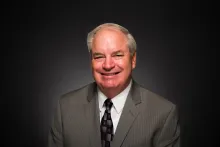
Robin Webber was born in Chicago, Illinois, in 1951, but has lived most of his life in California. He has been a part of the Church of God community since 1963. He attended Ambassador College in Pasadena from 1969-1973. He majored in theology and history.
Mr. Webber's interest remains in the study of history, socio-economics and literature. Over the years, he has offered his services to museums as a docent to share his enthusiasm and passions regarding these areas of expertise.
When time permits, he loves to go mountain biking on nearby ranch land and meet his wife as she hikes toward him.
