

Steve Nutzman
This transcript was generated by AI and may contain errors. It is provided to assist those who may not be able to listen to the message.
Good morning, everyone! Nice to see you again on this Sabbath day. I just thought I'd let you know I'm finished with all my rehab, going back and forth to the therapist. She says I'm doing good. I'm one month out, maybe a month and a few days out, from the operation on my right knee to repair a torn meniscus. And I'm feeling really good this time. And so I'm going to keep on doing my exercises at home, which they've advised me to do, and keep healing. So it's my first maiden voyage, speaking and standing for this time. But I've been going up and down steps and walking around and doing everything, so it's doing great. So thank you for your prayers. I appreciate that. And I'll say hello to any guests who are here, any guests who are listening in on the webcast. I see...nice to see her back again. Welcome. Nice to have you back here. And good to see everybody on this Sabbath day.
I just want to comment about the tragedy that took place out in Colorado. And it just shows us the kind of a world that we live in. Our hearts go out to those who were affected by that. About 12 killed and 50...I think 58 injured. They said it revised it to 70 people totally affected by a gunman who entered the movie theater at midnight on Thursday night.
The Batman movie. And shot up people. Stood on the stage with a SWAT uniform on with a gas mask. Stood there with his guns. He had like three guns on him, maybe four. And then he threw canisters out of whatever was tear gas or irritants or whatever. And people thought first it was just part of the extra of this movie. And then they realized what was going on when he shot into the ceiling with his assault weapon. Then he began shooting people. And they were diving on the floor and diving on each other and all the rest of them have eyewitness accounts. What a horrible, horrible tragedy. The sad part of it all is...and nobody blames those people. Nobody's going to say those in Colorado are worse than those in Pennsylvania or Ohio.
But the sad part is most people will not examine themselves to say, What is going on with our country? There's a book I called The Harbinger, if you've read it. And he quotes Isaiah 9-10. And Isaiah 9-10, you know what the nation said after they had trouble? We'll rebuild. Everything will be better. They didn't think about what God would want them to do. You know, it's nice to reflect, why do we have so many people going goofy in our world? What's going on with our society? What's going on with our world? And God wants to see people say, Anytime trouble comes, why is this happening to me? Now, sometimes it just happens. Time and chance happens to people. But sometimes things happen and God allows them. God does not make everything happen. But God could stop everything from happening, can't he? Why does God allow this? Is it a wake-up call for people? Does it say, You know what? Why don't we get our families together? Why don't we get our families better? Why don't we get our lives better? Why don't we turn to God and beseech Him for His answers? But instead, what is their response? We will rebuild. We're strong. We can do it! Where's God? Do you forget Him? Or do you only call Him? Well, God, you've got to stop this, and you didn't. We only point our fingers at Him. So I think it's really sad. I almost switched sermons and gave one on why does God allow tragedies? And oftentimes He allows them to wake us up. Not because the people upon whom they come are any worse than anyone else, or deserve that, more than anyone else. Luke 13 talks about that. But He does say He commands everybody to repent. And people need to look to change their ways. And unfortunately, our country will not hear that. We want to say, we will rebuild, just like they did after 9-11. There was a little bit of a religious fervor for a little bit, but then after that, it was, now we'll just rebuild. We've got the strength. We'll do it. And God wants us to say, what's wrong with us? Can we change? Can we be a better people? So I just thought I'd bring that out to you. You mentioned that part. And our hearts do go out for those families that lost kids. A six-year-old girl sleeping there because she didn't, at midnight, apparently her parents did not want to pay for a babysitter, so they brought her there. She was sleeping. She got shot to death. She died.
That little tiny baby, like three months there, that a bullet, I guess, grazed its head.
But others, 12, killed. Two of them died in the hospital. Ten of them were there. And people described how it was when they had to scramble out, because he was standing by the exit door, and I think somebody propped open that door myself. I think he had an accomplice, or somebody who's, whatever, listened to him, maybe he said he was just going to come in and have some fun or something. They propped. How do you get in an exit door that's only where you can go out? How do you get in that door? That's where he came in, right by the screen.
He started shooting. And he had extra rounds, I guess, at jam, thankfully. But he had this hundred-round magazine, so you shoot a hundred bullets before you have to reload. Apparently at jam, so they had to try to use a different one. But it's just crazy what's happening to our world, where people just go berserk and kill others. Go berserk if you want to, fine. Check yourself into a mental institution. Don't hurt other people in the process, but they don't think of that. Very sad. Anyway, I just wanted to bring that out.
I didn't want to not address it, because it is sad. Now, some happy news. Mr. Kubik wrote in his e-news that he's gone down to... he was down in Florida, and he visited a number of our pastors down in Florida, and wrote a really nice report about how much, how happy he was for all these people to stand in the gap.
And though they lost most of the ministers, the majority of the brethren stayed with United. They didn't follow those men who had been their pastors. And a number of our elders stepped up into the fray, and were able to help stop the bleeding and take care of God's people.
So he talked about visiting Rick Shaby, he talked about visiting Braden Velary, he talked about visiting with Chuck Smith and Chuck Zimmerman and Gordon Hanaway, and a number of the elders down in that area. And so we are grateful to them for what they did. So he and Roy Holliday just did a swing tour down there and visited with a number of them. And he talked about Bob Jones, who used to be full-time, who's got arthritis, and had to drop out of the ministry.
He retired several years ago, but he's stayed strong with us as well. And then I also should mention to you about ABC. Ambassador, we finished our... we concluded our applications, accepting applications. Now there could be somebody strange to come in at the last minute that we would entertain rushing it through. But as far as fulfilling the time allowance, July 15th was the last date. We had one person apply July 14th.
And they wanted to come for a long time, and so we evaluated that person. In fact, they were down here the next day or so, and we had a chance that Mr. Myers and I had a chance to interview her. And she will be accepted as well. So right now we have, I think it's 36, including three returning ones. So we have 33 plus 3. And it's a pretty good balance of 19 females and 17 males right now. So there could be a couple more coming in that we've heard about, but right now we have 36 for this coming year.
The average size at ABC, through the years, if I averaged all the numbers that we had, 38. So almost to that amount. And the average age is 20.4 this year. Usually it's anywhere between 20 and 22. And that's the average age when we throw out those over 40 and those under 18.
Because, you know, if you have somebody 75, and we have a person, I think 75 or 76 has been accepted this year. Another person 70 and his wife 60, 60-something, 61, they're coming to ABC. And their granddaughter's going to come and stay with them and go to ABC. It'll be a nice year. We have two people accepted from Chile and one from Colombia coming this year. There's a possibility of a person from Africa coming from Zimbabwe, but he has to get a visa to come.
So we'll see if that's available or not. So it'll be a diverse class, but it'll be, again, the average age, 20.4. So we're looking forward to them coming. I think Aaron Creech will be coming from here. We have, I think, the most are coming from Oregon. We have seven coming from Oregon. We have four, five, five now coming from Ohio. So Ohio usually hangs in there pretty well, but we have seven. And I think three from California.
So it looks like a really good group. Nice young ladies and young men, and I think you'll enjoy having them once again. This coming year, classes begin August 21st with a welcoming picnic August 19th and a orientation day August 20th.
So the first day of classes will be August 21st. So I have about one more month of freedom. I don't plan to handle any snakes, and I don't plan to drink any poison. Although the same groups that handle snakes, many of them do drink poison. They mix strychnine into...but it's a very small amount of strychnine. But nonetheless, they pass it around and drink a sip by each one. It's supposed to be a religion of this.
So very good sermonette. I appreciate what Mr. Preston brought. King David is primarily known in the Bible by two major events. David and Goliath and his sin with Bathsheba. One was before he was king. He killed Goliath, his battle with him. And the other was after he was king. David was a young shepherd boy born in 907 BC, and he lived for 70 years.
He was born in Bethlehem, which is called the City of David. He was too young to go into the army, so he was a shepherd boy. Most shepherd boys, the youngest in the family, basically were kept out of public view. They were considered non-existent. He tended the sheep. He was brave. And he was quite musical. He played a harp. He played so well that the king wanted his...
The king and the king's aides wanted him to come to calm manic-depressive Saul down. When Saul was in his depressed moods, David played his harp for him. Music gets his mind lifted, gets him off of his bad mood. He played the harp, and he composed music. Many of the psalms were music intended to be played and sung. We sing some of those psalms. But in 1 Samuel 13 and verse 14, before David was ever selected to be king, 1 Samuel 13 and verse 14, we read something about what God was looking for after he had rejected Saul.
After Saul's unlawful sacrifice, 1 Samuel 13 and verse 14, Samuel said to Saul... Sorry, verse 14. God said, "...for now the Lord..." This is verse 13, last part of it. "...for now the Lord would have established your kingdom over Israel forever, but..." He said, "...now your kingdom shall not continue." Now Saul was selected by God.
God told him, Godon anoint Saul. But Saul, who when he was selected, was humble. Remember what God said about Saul? When you were little in your own sight. When you were little in your own sight. Even though Saul was head and shoulders above everybody else. He would have been the one you would select as far as handsome and strong and mighty and stand out from physical characteristics. You'd have picked Saul. But the people didn't pick him. God did. When he first chose, he said, you could choose me out of Benjamin's, out of the tribe of Benjamin. Why would you choose me?
And God said, when you were little in your own sight, you could do a lot. But he got too big for his own britches. But verse 14, "...now your kingdom shall not continue. The Lord has sought for himself a man after his own heart.
And the Lord has commanded him to be commander over his people, because you have not kept what the Lord commanded you." Acts 13 and verse 22. This awesome description is given of David.
Acts 13 and verse 22. When he had removed him from Saul, he raised up for them David as king, to whom also he gave testimony and said, I have found David, the son of Jesse, a man after my own heart. Notice what else it says. Who will do all my will.
Could you imagine how you would feel if God said that about you?
If I were a man, this is the attitude and approach that I would have to life.
If I were a man.
That's interesting. The book, All the Men of the Bible, I'll read it at the end, makes several comparisons to Jesus Christ from David.
They were both born in the city of David, in Bethlehem. They were both brave. They were both into spiritual, doing things, loving God's law, teaching.
It gives a whole list of them. I'll read those to you at the end.
But I'll read you, quote 3, what it says about David.
Acts 13, 22. By the way, I checked numerous translations. They all say, similarly, David, a man after God's own heart.
It says here, a man after my own heart. This expression comes from the Barnes notes of the Bible from my computer.
It says, Biblesoft program. A man after my own heart. This expression is found in 1 Samuel 13, 14.
The connection shows that it means simply a man who would not be rebellious and disobedient as Saul was, but would do the will of God and keep his commandments.
This refers, doubtless, rather to the public than the private character of David. No, it refers to David as a person.
No, if God were a man, God would not sin. God would be perfect. But if God were a man and he did sin, he would respond as David did.
It's the attitude and heart. You know what this shows us? You don't have to be perfect for God to love you and look after you.
You do have to have a right attitude and a right heart.
And when David was out of sorts and was brought to his attention, he came to himself. God said, if I were a man, that's how I would respond.
That's a pretty awesome statement to be said of any human being.
Especially of David, who had his troubles, as you know, who numbered Israel, caused pain upon them, who did numerous things, who took Bathsheba, had her, had her husband killed.
He did a number of terrible things. But when it was pointed out to him, he repented and changed.
You don't have to be perfect to be a person after God's own heart. You have to desire to be there.
And with God's help, make strides toward being there.
He said it means that he would make the will of God the great rule and law of his reign.
It says, at the same time, it is true that the prevailing character of David as a pious, humble, devoted man was that he was a man after God's own heart was beloved by him, by God, as a holy man.
He was on to say at the end, the characteristic of David would be that he would obey the commands of God.
Then I go to Matthew Henry's commentary. He says this. Why did God chose him at commentary on Acts 13, 22, Matthew Henry's commentary on the whole Bible?
First, he says, this choice was divine. I have found David. He looked for David. God himself pitched upon him.
Finding implies seeking, as if God had ransacked all the families of Israel to find a man fit for his purpose. And this was he, David.
Secondly, that his character was divine. First, he was chosen. Secondly, his character was divine. A man after my own heart, such a one as I would have, one on whom the image of God is stamped, and therefore one in whom God is well pleased, whom he approves.
It goes on to say, thirdly, that his conduct was divine. Under divine direction, quote, he shall fulfill all my will.
And you can't help but love the way David was as you read about him in the Scriptures.
Let's take a look then and see what we may learn from David's life, that we may have some of the same characteristics that made him a man after God's own heart.
I've checked what others say, good qualities of David. Some will say he was merciful, some will say he was forgiving, and certainly that's part of what I would inculcate into some of my points.
I have seven points for you. Seven characteristics that David had that made him, in my opinion, a man after God's own heart, and proven by and supported by the Scriptures, not the Garientian Scriptures, but the Bible.
So I've found seven qualities to share with you. You might find more, and you might categorize them differently, but here are the ones I have for you.
Number one is humility. David, despite his wonderful talents, was humble. David was a warrior, David was a fighter, David was fearless, but David was humble, too.
David was humble. 1 Samuel 16, verses 7 to 13. Notice how when he was picked to be king. 1 Samuel 16, verses 7 to 13. For Samuel 16, breaking into a thought, God had told Samuel to go and select David, select somebody from the household of Jesse.
So he went there, and he looked, and he was looking for them. Jesse called, let's go to verse 7.
But the Lord said to Samuel, Do not look upon his appearance, or at the height of his stature. They looked at height before. They looked at physical circumstances before. Don't pick somebody because they look good. Pick them because of the heart and attitude that they have. Because I have refused him.
For the Lord does not see as man sees. For man looks at the outward appearance, but the Lord looks at the heart.
So Jesse called Abinadab and made him pass by Samuel. And he said, No, this isn't the one. And then Jesse made Shammah, Shammah, Sammy, pass by him. And he said, Neither has the Lord chosen this one. Then Jesse made seven of his sons, all seven of them, pass before Samuel.
And Samuel said to Jesse, The Lord has not chosen any of these. I don't get any vibes from any of them that God is choosing them.
And Samuel said to Jesse, Are all these your young men here? And he said, Yep. Oh, well, there remains the youngest. He's out there taking care of the sheep.
And Samuel said that Jesse will send and bring him. I'm here. I might as well look at the last one. For we will not sit down till he comes here. So he sent and brought him in. Now he was ruddy with bright eyes and good looking. And the Lord said, Arise and anoint him, for this is the one.
But not because he had bright eyes and not because he was good looking. But because he had a humble heart. Now, he's not tending the sheep. He was considered a nobody. He was considered so lowly that he wasn't even counted among the sons who were qualified.
And Samuel took the horn and anointed him in the midst of his brothers. And the Spirit of the Lord came upon David from that day forward. So Samuel rose and went to Shammah. So David had automatic humility to start with. He wasn't even considered.
Notice also, at the end of his life, 2 Samuel 23. 2 Samuel 23, as David begins to recount his mighty men, as he begins to reflect on his life and all the people that worked with him and served with him. Notice what he says in verse 14 of 2 Samuel 23. David was then in the stronghold. So he's telling about what happened. The garrison of the Philistines was then in Bethlehem. And David said with longing, Oh, that someone would give me a drink of water from the well of Bethlehem. When he was out still running away and hiding out, oh, if I could just, I love that water. Do you ever have your favorite water? We lived on a farm in Glazeville, Pennsylvania, and we had a well. And I declare that was the best tasting water. It was just so good. I don't know what the rocks it went over or what it went over, but it just tastes so good. You could just drink it. You felt like drinking water. Just to have a drink of water is having a soda. It was so tasty. It was just good tasting water. David said, I would just love to have all that well over there in Bethlehem. I would love to have that, but of course they had the Philistines there guarding it and blocking the way. So the three mighty men broke through the camp of the Philistines, drew water from the well of Bethlehem that was by the gate, and took it and brought it to David. And nevertheless, he would not drink of it. David felt so humbled. He just made a state, oh, I wish I could have that. And these three guys said, well, we'll go get it for you. And they went. They risked their lives to get across the enemy lines and got the water, brought it back. And David took it, and he wouldn't drink it. He poured it out to the Lord. And he said, verse 17, Far be it from me, O Lord, that I should do this. Is not this the blood of the men who went in jeopardy of their own lives? Therefore, he would not drink of it. These things were done by the three mighty men.
David would not, could not say, well, I deserve this. After all, I am king. I deserve this. No, he said, I can't drink this. These men risk their lives to get it from me. And who am I? He wouldn't drink it. Psalm 131, he also spoke of these feelings of humility. Psalm 131, verse 1. Psalm 131, verse 1. So again, the first aspect is humility. Psalm 131, verse 1. Lord, my heart is not haughty, nor my eyes lofty. Neither do I concern myself with great matters, nor with things too profound for me. I mind my own business. That's what he said. Surely I have calmed and quieted my spirit like a weaned child with his mother. Like a weaned child is my soul within me. O Israel, hope in the Lord from this time forth and forever. But David said, I'm not haughty. I'm not high. I don't think of myself and forget about others, but I think of others too. Psalm 8, verses 3 and 4. You're familiar with this one? Psalm 8, verses 3 and 4. It's quoted often.
Where David said this, when I consider your heavens, the work of your fingers, the moon and the stars which you have ordained, what is man that you are mindful of him and the son of man that you visit him? What is man, anyway? What am I? Who am I? When I look up there, I don't know why you even pay attention to me. David described himself as a flea to Saul. When he revealed himself to Saul, he said, Saul, why are you chasing me? It's like you're hunting for partridge and you're worried about a little flea. Why are you worried about me?
I'm just like a little flea. You're a hunter going on. Shoot the partridge. Forget about the little flea. David didn't say, well, I'm a next king here. You better worry about me. No, David didn't. And you read through the Psalms and you read many Psalms that expressions of David's humility.
David's humility. We can learn to be humble, to be a man after or a woman after God's own heart. The second quality is faithfulness and courage. Faithfulness and courage, they kind of go together. And here we find his battle with Goliath, his battle with Goliath over in 1 Samuel 17, verses 3 and 4. And I'll just pick out some of the scriptures as we go through this section. It's the only scripture I'm going to give you, the only set of scriptures in this section which illustrates his faithfulness as he tells his story. His brothers were at war, verse 3 of 1 Samuel 17. The Philistines stood on the mountain on one side and Israel stood on the other side with a valley in between them. Verse 4. And a champion went out from the camp of the Philistines named Goliath, from Gath, whose height was six cubits and a span somewhere around nine feet six inches. He was no small man. I saw a guy seven feet eight, the biggest guy I've ever seen. Seven feet eight. The waitresses who waited on him, their heads came to his waist when he stood to pay his bill. When he sat in the back of the car, he had to sit with his behind on one side of the back seat and his legs to the other side.
When I saw his shoes, I thought they were doctors' cases. You know how a doctor brings his valise? That's what they looked like to me. His shoes were that big. Seven feet eight, but he wasn't nine six. Goliath was huge. Goliath was storming up and down the valley. I can imagine them even feeling the kind of little quaking of the earth when he walked up and down and taunted Israel. Send somebody out to fight me. If you can beat me, you beat our army.
Why do we want to waste other men? Send somebody out. He kept threatening and denouncing Israel. Verse 11. When Saul and all Israel heard these words of the Philistines, they were dismayed and greatly afraid. These were men of war. Saul was heading shoulders above everybody else. You think he would have said, I'll go out and fight him, but Saul didn't have faith.
Saul did not have courage. Skip to verse 17. Then Jesse said to his son David, Take now for your brothers the nifah of dried grain and ten loaves, and run to your brothers at the camp, and carry these ten cheeses to the captain of their thousand, and see how your brothers are doing and bring back news of them. So just take them some supplies, take them a care package, and come back and tell me how they're doing.
That was all David was going to do. So he goes there. He listens to his dad, and he takes them there. His reason for going? Not to see warfare, as his brothers accused him. Not to see a battle, but to take cheeses and bread to his brothers, a care package. Verse 22. And David left his supplies in the hand of the supply keeper, ran to the army, and came and greeted his brothers, to see how they're doing.
Of course, they all had their heads done. Nobody wanted to raise his or her hand, or his hand, because they didn't have women in the army at that time. Raise his hand, unless they say, oh, you're going to go fight them? Nobody wanted to fight. Verse 26. And David spoke to the man who stood by, saying, What shall be done for the man who kills this Philistine and takes away this reproach from Israel?
For who is this uncircumcised Philistine, that he should defy the armies of the living God? David didn't say, well, he's making a mockery of me. He said, he's making a mockery of God. Verse 27. And the people answered him, saying, This man is so shall it be done for the man who kills him. He would get to have Michael, or Michelle, as his wife. Now, Eliab, his oldest brother, heard when he spoke to these men, and Eliab's anger was aroused against David. And he said to him, Why did you come down here?
And with whom have you left those few sheep? Who's taking care? Why don't you go back and take care of your sheep in the wilderness? I know your pride and insolence of your heart. No, he didn't. He knew his own pride and insolence. And he projected those onto David. David was just obedient to his dad. He took the food. He left his sheep behind, took the food to his brothers. And he hears this happening. And he said, How dare he defy not just the armies of Israel, but the armies of the living God?
Because he knew Israel was God's people. For you have come down here to see the battle. You just came down here to see a good fight, didn't you, David? It wasn't why he came at all. Verse 32, Then David said to Saul, Of course, they brought David to Saul, Let no man's heart fail because of him. Your servant will go and fight the Philistine. This Philistine is a big shot.
I'll take care of him. And Saul said to David, But you're not able to fight against this Philistine. For you are but a youth, and he's a man of war from his youth. You don't have any experience. David said, Well, contrary to that, yes, I do. Verse 34, But David said to Saul, Your servant used to keep his father's sheep, And when a lion or a bear came and took the lamb out of the flock, I went after it, and I struck it.
I chased a lion and a bear down, and I delivered the lamb from its mouth. And when it rose against me, I caught it by the beard, I struck it and killed it. Your servant has killed both lion and bear, and this uncircumcised Philistine, Be like one of them, seeing he's defied the armies of the living God. He sees God in the picture, doesn't he? He doesn't see him doing it all on his own. Moreover, David said, The Lord who delivered me from the paw of the lion, And the paw of the bear, He will deliver me out of the hand of this Philistine.
And Saul said to David, Go, and the Lord be with you. At last we have somebody who's willing to go out. And Saul said, You know what? I'm seven feet tall. This guy's big. I have experience in battle. I'll go out and fight him. But he didn't, because he didn't have the courage or faith. And David had faith. Not blind faith. David knew God took care of him. David knew God was with him. David knew and loved God from the time he was younger. Remember, God's Spirit was with him. It came on him, didn't it? So, continuing, verse 40.
So, he had to have somebody carrying a shield in front of him. And when the Philistine looked about and he saw David, he disdained him. Ha! You know what he did? Send out a boy. What am I, a little dog? He's going to come out here and feed this little dog? For he was but a youth, ruddy and good-looking. So the Philistine said to David, Am I a dog that you came out to me with sticks? And the Philistine cursed David by his gods. And the Philistine said to David, Come to me, and I will give your flesh to the birds of the air and the beasts of the field. While your carcass will lie here, and birds will pick at it, and the praying animals will come and take it away. And then David said to the Philistine, You come to me with the sword and with the spear and with the javelin, but I come to you in the name of the Lord of hosts. I'm not coming to you on my own might. I'm coming to you in the name of God, the God of the armies of Israel whom you have defied. This day the Lord will deliver you into my hand. I will strike you and take your head from you. This day I will give the carcasses of the camp of the Philistines to the birds of the air and the wild beasts of the field, that all the earth may know that there is a God in Israel.
A little boy could take down a big giant that they might fear the Israelites because God is with them. And it was so that when, verse 48, when the Philistines arose and came near to meet David, that David hastened. David didn't say, Well, now let me see, now let me get my aim right. Let me practice a few slings here with these stones and make sure I'm doing okay. He ran toward him. David hastened and ran toward the army to meet the Philistine. Then David put his hand in his bag, took out a stone, and he slung it and struck the Philistine in his forehead so that the stone sank into his forehead and he fell down on his face.
Beautiful shot, God with it. Beautiful shot right in the head. And he went down. And then, after he fell to the earth, verse 50, so David prevailed over the Philistine with a sling and a stone and struck the Philistine and killed him, but there was no sword in the hand of David. So he went and took his sword, the Philistine's heavy sword, and he cut off his head.
Because he trusted in God, and notice how many times he says he believed in God. Faithfulness and courage. A second great quality. And we're going to be people after God's own heart. We have to have faith and courage to live God's way in the midst of a crooked and perverse generation and world.
David was repentant. David was repentant. David could admit that he was wrong. I won't read 2 Samuel 11, verses 1-5, the sin with Bathsheba, but you recall the activity. That David was standing out on his troops right at battle, and David was standing out on the top of his outside on his roof or on his balcony.
And he looked down below, because his king's castle is a little bit higher than the other homes. And up on top of the roof is where they typically bathed, and there was Bathsheba out there bathing. And she didn't think anybody peeping toms or peeping Davids were going to be out there. So she didn't worry about being covered or anything, so she took her bath. And you usually take baths with no clothes on, right? So she took them with no clothes on.
And he looked, and he lusted. And after he looked and lusted, he told his men, Go find out who that is. And they came back and said, Well, that's Bathsheba, the wife of one of your famous military men. And he invited her to his place. And more happened than just tea and coffee or a glass of wine. And as a result, she sent a note back and said, I am with child. Now David is in a predicament, so he's got to cover this.
Because right now, he's not very close to God. And so what does he do? He invites her husband back. Hey, he needs a furlough. Send him back. So he comes back, and he sends Uriah down to spend time with his wife. Okay, tell me how the battle's going. Is it going good? Okay! You probably want to see your wife. You've been away for a long time.
You deserve a rest. Why don't you go back and see your wife and have a nice time there. Spend lots of time there. And the next day, they told him he didn't go back home. He slept here outside the king's door. Outside the door of this area where they were. So they called him back in. Uriah, what happened? How can I go down there?
How can I go down there to my wife when all my buddies are at battle? So David said, you know, that's a very good idea, very good thought. We were very noble. But have some wine. Let's sit down and have wine. He kept giving him wine, giving him wine.
I figured, well, okay, now he's a little bit drunk. And he could find his way home. So point him in the direction and let him go. But David still, Uriah still would not go home. So now David had to go to a greater plan. So first of all, he tries to deceive him, hoping he'll have a relationship with his wife and think that that child is his.
That didn't work. Now he'll get him drunk and maybe he can go do it. That didn't work. So now the only thing he could do to get him out of the way is kill him. But he didn't want to murder him. He just had others do it. So he sent him back with a letter. Here's a letter to Joab the commander and tell him to read this letter. So he gets it back, takes it back as a courier to his faithful king, and gives it to Joab.
It says, put Uriah in the front of the line. Put him on the front line and not just have him out in the front of battle, but have him withdraw. So have him pull back. I mean, have the rest of the army pull back. And he was killed. So David got his way, didn't he? But it wasn't all over yet. Look at 2 Samuel 12 and verse 11. The plot didn't work completely.
David thought it did, but it didn't. 2 Samuel 11, chapter 12, verse 11. 2 Samuel 12, verse 11. You know what Nathan came and he told David the story about a rich man who had many flocks and many herds. But he came and he took from this one man his only little ewe lamb.
It was kind of like a pet and an animal to them. A pet and a milk producer or possible food for them. And he took it from this man. Even though he had lots of flocks, David was so angry. Verse 5, David's anger was kindled against this man. He said, to Nathan, as the Lord's live, the man who did this, he shall surely die. Verse 7, 2 Samuel 12. Nathan said to David, you are the man.
Thus says the Lord God of Israel, I anointed you king over Israel and I delivered you from the hand of Saul. I gave you your master's house and your master's wives. I gave you lots of things, but I did not give you somebody else's wife. Verse 11, he thus says the Lord, behold, I will raise up an adversary against you. I will take your wives before your eyes and give them to others. Verse 13, then David said to Nathan, here David comes back to himself. Here David's attitude clicks in. His character comes through. Then David said to Nathan, I have sinned against the Lord. Nathan said to David, the Lord also has put away your sin.
You shall not die. God was waiting for you to see your sin. God was waiting for you to confess. God was waiting for you to repent. And when you read not only that section, but Psalms 51, Psalms 51, where David says, against you and you only, have I sinned and done this evil in your sight. I am nothing. I was born in iniquity. I am nothing.
Wash me, cleanse me, and I'll be whiter than snow. Please don't take your Holy Spirit from me. Renew a right spirit within me. You can read all Psalms 51. It's a great section. But David's repentance. And he said, my sin is against you, God. His sin hurt Uriah. Killed him. His sin hurt his wife. Uriah's wife, Bathsheba, now pregnant, while her husband's away at war, was somebody else's child. And then that child died after she carried it.
God said it would. So there was a lot of hurt, but the sin was against God who says, you shall not commit adultery. The sin was against God. He repented deeply over that. Notice Psalms 139, verse 23, the last scripture in this section that gives you his attitude. Psalms 139, verse 23. David, when he made a mistake, he could acknowledge it and repent and change. Psalms 139, verse 23. Here's what he says.
Search me, O God, and know my heart. Try me. Know my anxieties. And see if there is any wicked way in me, and lead me in the way everlasting. Search me. I don't want to be wrong. I don't want to be out of sorts with you. I want to be right on with you, God. Search me. Help me. And you read lots of other scriptures where David repented.
I'm just scanning a few. David had a repentant heart and attitude. Number four, David was respectful. David was respectful. He was respectful toward God. He was respectful toward man. To remember the situation with the ark in 2 Samuel 6, he was so excited to bring that ark back after remember, Azza died because he tried to save it when it was shaking as it was being brought back and not supposed to touch the ark. And so it had to stay for a while until they figured out what they were going to do with it when it got back, how they would handle it.
But when it was finally being brought back, David had built a tabernacle or a tent for it to reside in. He was so excited. It was coming. He was with music going. He was dancing and jumping up at the top. And of course, that's when his wife looked out and said, look at him out there shamelessly dancing with all the maidens. And David said, I'm just dancing because the ark's back. He was so excited for the ark to come back. David was also so excited to build the temple for God.
You can read it in 1 Chronicles 29, verses 2 to 5, how much money he gave. And God said, I know you want to build the temple, but you won't get to do it. You have too much blood on your hands. But I will. I will let your son do it. So David left lots of gold, donated lots of gold and silver as king to the building of the temple because he loved God in his way. In many scriptures, I'm going to read Psalms 24. He respected God. Psalms 24, verse 7. He respected the ways of God and he respected God. Psalms 24, verse 7. Lift up your heads, O you gates.
And be lifted up, you everlasting doors, and the king of glory shall come in. Open the doors! The king of glory is coming. Who is this king of glory? The Lord strong and mighty. The Lord mighty in battle. Lift up your heads, O you gates. And lift him up, you everlasting doors, and the king of glory shall come in. Who is this king of glory? The Lord of hosts. He is the king of glory.
There's a song. It's beautiful. Beautiful song. We've sung in chorale and so on. Who is this king of glory? The Lord of hosts. He is the king of glory. He worshipped and honored God. Psalms 141, verse 8. Another expression of his of respect and honor toward God. Psalms 141, verse 8. But my eyes are upon you, O God, the Lord. In you I take refuge. Do not leave my soul, destitute. My eyes are on you. I look to you. Respect. Look again. Look upward. Look at him. And Psalms 86, verses 8 to 10. One more on this respect toward God. Psalms 86, verse 8. Among the gods there is none like you, O Lord.
Other nations have their gods, but there is none like you. Nor are there any works like your works. All nations whom you have made shall come and worship before you, O Lord. Shall glorify your name, for you are great and do wondrous things. You alone are God. I know in my prayer, I many times am anxious to get to the items like somebody who's sick, somebody who's dying, somebody who has bad health. That comfort for those who have experienced death in their families. My prayers are looking toward that, but I seldom, many times, pass over opportunities to say, Thank you, God.
I love you. You are so awesome with all your angels, with all that's going on up there, with the watchers and the seven eyes that run throughout the earth and all the carobim and seraphim and all the heavenly, the twenty-four elders all around you casting their crowns every time somebody praises you. And you still take time to listen to me. I love you. I thank you. I thank Jesus Christ for all he did for me. I love you. You're so awesome and wonderful. Look what you've made. Look what you've done. The food I have, the air I breathe, the water I drink. Thank you.
I think sometimes we don't take as much time, we get into the gimmes a little more, at least I do, and I need to take more time to honor and respect and express that expression toward God. Now, David also respected man. Remember a couple times when he had Saul cornered and he could have killed him? One time Saul was uncovering his feet, which meant he was sitting on the toilet. And David came up, cut apart his garment, and then it smote him that he did that. I don't dare, even though he knew he was supposed to be king, but he wanted God to take him out of it. He didn't want to take him out of there. You find that in 1 Samuel 26, verses 7-10. Then you find also in 2 Samuel 1-17, after Saul's death and Jonathan's death, David mourned. He wept. He cried. Read it. 2 Samuel. Let's look at it. 2 Samuel 1 and verse 17. When he found out about it, then David lamented with the lamentation over Saul. Saul and Adam, who was trying to kill him, put him on the run for many months and years. And over Jonathan his son, and he told them to teach the children of Judah the song of the bow. Indeed, it is written. But David lamented with lamentation over Saul and over Jonathan. David respected them. David also respected Abigail. Remember?
When he was hiding out, sort of on the run, and his men were watching over that flock and herd and keeping any thieves and any poachers away from the land. And he said, we're getting hungry now. Winter time is saying we need some food. Why don't you go and ask this person, this Nabiel, or whatever his name is that means fool. Go ask this man if he could just give us some supplies. We've been out here camping outside his property, but watching over it and taking care of it for him while he didn't know what was going on. And so they asked him, and he said, I'm not going to give any food to people to some renegade. I'm not going to give any food to some runaway, some escapee.
And so the men came back and told David, so David put on his sword, mounted up on his horse, and they were going to go take care of this man for his insolence and his attitude. And Abigail found out what happened, the wife of Nabiel. So she had them put, she didn't ask her husband. She just did what she knew was right, and she loaded up the asses with food and various items.
And she went out to meet him, and she bowed before him, and David had respect for her, and did not kill her husband, because she came out, pleaded with him, gave him some supplies, and begged him not to do it. And she admitted, this guy's a lout of a man. I'm sorry. He is. I married him. He's a lout. He's no good. But don't kill him.
And the guy ended up dying anyway, and then she became David's wife later on. But he had respect for her. You can find that in 1 Samuel 25.
Point number five. David was a leader. David was a great leader. 2 Samuel 5, 10. 2 Samuel 5 and verse 10.
So David went on and became great, and the Lord God of hosts was with him. How great was David?
This comes from character study, King David, by Charlene Finn. It's from www.helium.com. It's a Bible study, page four.
David gave Israel a capital, a court, a great center of religious worship. When he became king of all Israel, there were 339,600 men under his command.
At the census, 1.3 million men were enumerated as capable, bearing arms. As a standing army consisting of 12 corps, each 24,000 men took turns serving for a month at a time at the garrison of Jerusalem.
David is one of the most important figures in Jewish history. Born in 907 BCE, he reigns as king of Israel for 40 years, dying at the age of 70 in 837 BC.
There is so much that can be said about King David. Some people like to focus on the warrior aspect. He was a chivalrous warrior fighting for God.
But when his persona and accomplishments are considered as a whole, it is his spiritual greatness that shines most of all.
The very name David means beloved. From the time he was a child, David went with a prayer or a song or praise in his heart.
He is credited with writing some of the most precious psalms. Even today, we as Christians often look to the book of Psalms for comfort and praise.
The Good Shepherd will always leave the 99 and find the one which is lost. That's King David.
I have another one here. Here's one from Josephus.
The historian Josephus praised David by saying, This man was an excellent character. This comes from Nelson's illustrated Bible, dictionary, under the subject David.
This man was of excellent character, was endowed with all the virtues that were desirable in a king.
So those are some pretty nice statements made about David as a leader.
2 Samuel 8 and verse 6.
2 Samuel 8 and verse 6.
Then David put garrisons in Syria of Damascus.
The Syrians became David's servants and brought tribute.
The Lord preserved David wherever he went.
God was with him.
Verses 14 and 15.
He also put garrisons in Edom.
And throughout Edom he put garrisons.
And all the Edomites became David's servants.
And the Lord preserved David wheresoever he went.
And in verse 15 of 2 Samuel 8.
So David reigned over all Israel.
David administered judgment and justice to all his people. David was a great leader.
Major reason? God was with him.
To add to his abilities and to keep his abilities from getting out of whack and thinking it was all him.
You could read 1 Chronicles 12.
It says God was with him.
1 Chronicles 12 verses 1 and 17 and 18.
I'll skip over those.
So point number 5. David was a leader.
Leaders don't always have to be first in battle, but leaders have to be ones who instigate, inspire the battle.
Sometimes they do lead. Sometimes they're the best at what they do.
Sometimes they're the smartest at what they do.
Sometimes they're the most proficient.
Sometimes they know how to gather others together who are proficient.
But David was a leader. And the people loved being with him. His men loved serving with him.
Number 6. David loved God and man.
David loved God and man.
I did a search through the concordance and in the NIV going through the Psalms.
144 times New International Version translates the word love throughout all the Psalms. Now David didn't write all the Psalms, but he wrote many.
144 times they translate love. Sometimes they translate love for mercy or love for loving kindness. But 144 times in NIV it translates the word love in the Psalms.
32 times New King James Version.
23 times King James Version.
Love is used because they don't use mercy for love. So they just translate for loving kindness or forgiveness.
But David loved God and he loved man. Let's look at his love for men first. 1 Samuel 18, verses 1-3. You're familiar with his love for Jonathan and Jonathan's love for him. 1 Samuel 18.
Talk about pals and buddies. And yet Jonathan was considerably older than David, but he recognized in David something great.
And he was on his side, though his father was trying to kill him.
He was on David's side. 1 Samuel 18, verse 1. And it was so when he had finished speaking to Saul that the soul of Jonathan was knit to the soul of David, and Jonathan loved him as his own soul. And I believe it was absolutely reciprocal.
Saul took him that day and would not let him go home to his father's house anymore. And Jonathan and David made a covenant because he loved him as his own soul.
They both were in a love covenant. We love each other. We care about each other. We're buddies. And, of course, Jonathan helped save his bacon a couple of times, actually, his beef bacon. Just to be sure we understand where I am. 2 Samuel 18, verse 33. David also loved his wayward son.
2 Samuel 18, verse 33. Remember when Absalom rebelled against him? And Absalom came to his death because those who were loyal to David could see what this young man was doing, the son of David. In verse 33. Then the king was deeply moved and went up to the chamber over the gate and wept.
And as he went, he said thus, O my son Absalom, my son, my son Absalom, if only I had died in your place. O Absalom, my son, my son. And Joab had to come to him and said, You love your enemies more than your friends. We killed him because he was trying to take over the throne. And you mourned for him.
So Joab had to bring David back, but David had compassion. David loved. David looked after and loved. And one really touching story is the story of Mephibosheth.
Do you know who Mephibosheth was? He was the lame son of Jonathan.
And after Jonathan died and Saul died, David said, Do they have any relatives left? They said, Well, they're just that Mephibosheth and he's lame in his feet. Notice what he did. Again, the love and kindness that David had. 2 Samuel chapter 9. 2 Samuel chapter 9. I think it's such a touching story. David said, Is there still anyone left of the house of Saul that I may show him kindness for Jonathan's sake? And there was a servant of the house of Saul whose name was Zebah. So when they had called David, the king said to him, Are you Zebah? And he said, At your service, the king said, Is there still anyone from the house of Saul that I may show kindness? And he said, Well, there's still a son of Jonathan who's lame in his feet. And the king said to him, Where is he? And Zebah told him where he was. Verse 7. So David said to him, Do not fear, they brought Phibosheth. He said, Do not fear, for I will surely show you kindness for Jonathan your father's sake. And I will restore to you all the land of Saul your grandfather, and you shall eat bread at my table continually. Verse 8. And he bowed himself, and he said, What is your servant, that you should look upon such a dead dog as I? And the king said to Zebah, Saul's servant, said to him, I have given to your master's son all that belonged to Saul in his house. Now you go, and you look after it for him, and you bring him the produce, and you bring him the funds or the money that you make from it. But as for Mephibosheth, he gets to eat at my house and stay at my house for the rest of his life. Pretty nice. Verse 13. So Mephibosheth dwelled in Jerusalem, for he ate continually at the king's table, and he was lame in both of his feet. David loved God and man. Psalm 18, verse 1. Many psalms. There are many psalms by David, where he expresses his love toward God. But I just want to pick out a few to show you that God, David, loved God. One of the reasons he was a man after God's own heart. Because God is love, and David had love.
Psalm 18, verse 1. I will love you, O Lord, my strength. The Lord is my rock and my fortress and my deliverer, my God, my strength in whom I will trust, my shield, the horn of my salvation and my stronghold. I will call upon the Lord, who is worthy to be praised. So shall I be saved from my enemies. I love, I will love you, O Lord, my strength. Do you tell God enough you love him? Well, he knows I love him.
Do you tell him? My mother, when my dad was in the hospital, he was already in hospice, his eyes were closed, he was no longer functioning. My mother would go there, my wife stayed with her in those last moments, and my daughter, Susie, I had to go back home here to teach classes. So I left him already, said my goodbyes, it was a Sunday, and we expected him to die before we ever got home. We didn't die until Wednesday. Because every day my mom would go in, she'd say, Leo, don't leave me, Leo, don't leave me, Leo.
And so my wife said to him, Mom, why don't you just tell Dad you love him and that you're going to be okay? She said, he knows I love him. I know, but why don't you tell him anyway? So Wednesday she said, Leo, I love you. And don't worry about me, I'm going to be okay. That afternoon he died.
He was waiting for her to say, I love you. I'm going to be okay. Do you tell God, I love you? Do you tell him enough? David did. I'd also want to note Psalm 31, verse 23. Psalm 31, verse 23. I had several, but I'm just going to skip over some of them. Psalm 21, verse 23, we read this. O, love the Lord, all you his saints, for the Lord preserves the faithful and fully repays the proud person. Be of good courage. He shall strengthen your heart, all you who hope in the Lord. Love the Lord your God, he said.
In Psalms 145, verse 1. All these are purported to be Psalms of David. Psalms 145, verse 1. I will extol you, my God and King. I will bless your name forever and ever. Every day I will bless you. I will praise your name forever and ever. Great is the Lord and greatly to be praised. His greatness is unsearchable. David loved God and he loved man. Oh, by the way, weren't those the two great commandments?
I think so. The last one, number seven, is David was obedient. David was obedient. Remember the last part of what he says, you are a man after my own heart who will do all my will. Some translations put it, you'll do everything I say. You'll fully do what I ask. You'll do all that I say. David was obedient.
I'm going to read to you, and he was like Christ in so many ways. I'll read to you this brief one out of all the men of the Bible, page 90. It says, Obedience is the last one we want to look at. Look at Psalm 19, verse 7. Psalm 19, verse 7, where David talks about God's law. He says, Again, he praises God. Verse 10, David was obedient to God, who did his will. Philippians 2, verse 12, God expects us too to be obedient.
Philippians 2 is one of the hallmarks of the church. Philippians 2 and verses 12 and 13. God expects us also to have that attitude and heart. Philippians 2, 12, Therefore, my beloved, as you have always obeyed, it's a hallmark of the church. Not as in my presence only, but now much more in my presence, work out your own salvation with fear and trembling.
For it is God, give him the credit and honor and the glory, who works in you both to will and to do of his good pleasure. So, obedience has been the hallmark. Remember what Acts 13, 22 says. David, a man after my own heart, who will fulfill all my will. Let's put those same qualities into our lives. And by God's Spirit and by God's strength, just maybe, one day, God might say of you, There is a woman after my own heart who will fulfill all my will.
There is a man after my own heart who will fulfill all my will.
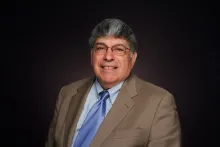
Gary Antion is a long-time minister, having served as a pastor in both the United States and Canada. He is also a certified counselor. Before his retirement in 2015, he was an instructor at Ambassador Bible College, where he had most recently also served as Coordinator.
