

Roy Holladay
This transcript was generated by AI and may contain errors. It is provided to assist those who may not be able to listen to the message.
Revelation 12, verse 9, is a scripture we're all extremely familiar with. Part of it tells us that Satan the Devil has deceived the whole world. So we know that the Devil has deceived mankind. He's deceived mankind through false teaching, through the society we live in, false education. We could go on and on. But we've all been deceived by him in the past. The word deceived means to cause, to accept, as truth, or valid what is false and misleading. Webster says it means to make a person believe what is not true, to delude, to mislead. It implies deliberate misrepresentation of facts by words' actions, generally to further one's cause. In the Greek language, the word deceived means to cause, to stray, to go astray, to lead astray, lead aside from the right way, to lead away from the truth, to lead into error, to deceive, or to be led into error. So when it says that Satan has deceived the whole world, it means that he has misled mankind. He has led man in a way, deluded them, and given information that's supposed to be the truth, and it's not the truth. So we've been deceived by Satan, by society around us, by false religions. Let's notice in Titus chapter 3, in the book of Titus, in verse 3. We read, concerning our conduct in the past, says, We receive God's Spirit. But notice at one time we once were deceived. And that coincides with what we read back in Revelation chapter 12, verse 9. Now, Jeremiah 17.9 is another scripture that might strike a bell with us, Jeremiah chapter 17.9, where we read that the heart is deceitful above all things and desperately wicked, who can know it. So we find that our hearts are deceitful. When God called us, opened our minds, and we began to understand the truth. We use that terminology quite a bit in talking with one another. Sometimes when a new person comes along, we ask, Well, how did you hear the truth? When did you learn the truth? And we're talking about the understanding of the Scriptures. So, when God calls us, one of the things that He begins to reveal to us is how deceitful our heart truly has been. Because we begin to realize that we've worshipped on the wrong days, kept wrong customs, eaten wrong things, that our whole approach to religion has been wrong.
And so, we have been deceived. In the Hebrew, the word here for deceived means crooked, deceitful, sly, insidious, slippery. And so, it's talking about somebody who's on a slippery path and goes in the wrong ways, trying to go a certain way, and he's slipping and going in the wrong direction. Do you truly realize how deceitful your mind is?
Do we understand how deceitful we are in our hearts, and in many cases, still are, even though God has called us? Many times we recognize the deceptions of Satan on the world, society around us at large, but do we see our hearts in the way that we should?
Sometimes we can pride ourselves on being enlightened, undeceived. However, we many times deceive ourselves. How can a Christian deceive himself? How would we deceive ourselves? You see, during the Days of Unleavened Bread, rather than one of the things that we should be doing is taking stock of ourselves, examining our hearts, see where we stand before God. We put sin out, but the main thing we want to do is put righteousness in. And the Days of Unleavened Bread picture that. We examine ourselves, we put the leavening out before, and then during the Days of Unleavened Bread, we concentrate on doing what's right, and learning what we should be doing. But today, let's take a look at how we deceive ourselves, how we need to investigate ourselves, and come to recognize when self-deceit is present. It's amazing how much is written in the Bible on this topic. In James chapter 1, I think is a good launching point, James 1 verse 23, says, if anyone is a hearer of the Word, and not a doer, he's like a man observing his natural face in a mirror, and he observes himself, and he goes away and immediately forgets what kind of a man he was. But he who looks into the perfect law of liberty continues in it, not being a forgetful hearer but a doer, this one will be blessed in what he does. One of the ways that we deceive ourselves is we tend, if we're not careful, to forget what kind of a person we really are. Many times as we study the Scriptures, they reveal to us shortcomings, faults, sins, mistakes, weaknesses, and we look at it and we agree, yeah, I'm that way, and we may even go pray about it. And then guess what? We go to work, we get called up, emergency happens, we get sidetracked, and that may be the last we think about it. And we forget what is going on. If God's Spirit is working in our minds, in our hearts, and reveals to us where we need to change, we should take action and not forget. We do not just listen to the Word, we have to be actively doing the Word.
Now notice in verse 21, it says, Therefore lay aside all filthiness and overflow of wickedness, and receive with meekness the implanted Word which is able to save your souls. But be doers of the Word and not hearers, only deceiving yourselves.
So you see, one way we deceive ourselves is by being only hearers and not doers. So when we become just hearers, I agree with it, I agree that's what I should do, I agree I should be praying, I agree I should study, I agree I should be more hospitable, I agree I should fellowship more, I agree I should come to church all the time. And we might agree, but do we do? Let me read this out of the NIV translation.
God, through the Holy Spirit, implants His Word into our mind. We become convicted of sin. People can read this book, the Bible, read right over Scriptures and don't think that it applies to them. You and I can read those Scriptures. And as the Bible tells us, that the Scriptures are like a two-edged sword, that they cut to the very marrow of the bone. They get down into the very inner being of a human being. And they're a discerner of the heart and what we do. The word implant here in the Greek means inborn, implanted by nature, implanted by other instruction.
So as you study the Word of God and you have the Spirit of God working in your mind, it will give you understanding and you'll come to see where you need to change. And then you hear a sermon and you hear something expounded that you didn't know or hadn't thought of. That, likewise, is something that can be implanted.
The word deceived here is very interesting in this section because it's only used twice in the New Testament here and in Colossians 2 and verse 4. And it means to cheat or deceive by false reasoning. To cheat or deceive by false reasoning. The deception comes from thinking that we have done all that is necessary when we actually are listening to the Word. That's only the beginning. It's an illustration of sit and soak and sour. We don't sit, soak, and act. We sit, soak, and sour. And we don't change. But I want you to notice the definition here. To cheat or deceive by false reasoning. One way we deceive ourselves, and this is something that we do constantly, is by justifying our actions.
How often is something pointed out to you and we say, yeah, but. And we always have an excuse. We always have a reason. But you don't understand. I didn't mean it. And so we justify ourselves. And we're all very good in justifying our actions. Instead of looking at it honestly and saying, you're right, I did that, I'm sorry, forgive me. And moving on. When you and your wife aren't speaking, somebody's generally justifying himself in a situation like that. So it's a tendency for us to do that. Now what God's Spirit does as it works on our minds, it softens our minds. It helps us to be more pliable, more receptive to the direction.
Hold your place here, but notice in 1 Timothy chapter 1 and verse 5. 1 Timothy 1 verse 5 Now coming back to James 1 again, we find in verse 26.
He deceives his own heart. This one's religion is useless. So we deceive ourselves. If we don't control our tongue, our religion is vain, meaning devoid of force, truth, success, has no purpose. It's just vain. So we have to control what we say, our tongue. With our tongue, we can build up or we can destroy. We can cut and slice and dice, or we can build up, edify, encourage, comfort. And we need to decide how we use our tongue. We deceive ourselves. So right here in this one chapter, we find two ways we deceive ourselves. By not controlling the tongue, that's one, and the other by hearing and not doing. Those are two very clear ways that the Bible says that we deceive ourselves.
So when God calls us and opens our mind, what He does, He removes the blindness. He removes the barriers. We can see, we understand. And so we've been deceived to the truth. He reveals the truth.
But the human heart, human mind, the way we reason, doesn't go away. We still have to work against that. As verse 27 says, pure and undefiled religion before God and the Father is this, to visit the orphans and widows in their trouble to keep oneself unspotted from the world.
So God wants us to have that. We're striving for pure and undefiled religion. Now in Galatians 6 and verse 7, the book of Galatians, chapter 6 and verse 7, we find some more information on this topic.
We're told, do not be deceived. Okay, how could we be deceived? God is not mocked for whatever a man sows, that he will also reap. What we sow, we reap.
If you sow beans, you won't get carrots.
If you sow potatoes, you're not going to get cauliflower. What you sow is what you reap.
Now notice in verse 8, because it's interesting that the word reap is used all the way through this.
Verse 8, for he who sows to the flesh, so we have a contrast here. Two ways of sowing. He who sows to the flesh will of the flesh reap corruption.
But he who sows to the spirit will of the spirit reap everlasting life. So you're either going to reap corruption or everlasting life.
You and I want to sow to the spirit because by sow doing, we will have eternal life. That's the harvest. That's what will be the result of this crop. There will be a spiritual crop.
So there's a contrast here. Sowing to the flesh. If you do that, you reap corruption and death.
And in verse 9, we're told, let us not grow weary while doing good, for in due time we shall reap if we do not lose heart. So it doesn't say you will reap eternal life immediately, but we will reap if we don't lose heart.
Now, what does it mean to sow to the flesh and to sow to the spirit?
Because it uses that terminology here. How do we sow to the spirit?
Well, in Romans 7 and 24, Paul clarifies this somewhat in Romans 7 and 8. We'll begin here in Romans 7 and 24.
You might remember Paul's summary here, where he talks about the struggle we have, trying to do good and failing, falling short.
So in verse 24 and 25, we have a summary. He says, O wretched man that I am, who will deliver me from this body of death.
Well, I thank God through Jesus Christ our Lord. So then with the mind, I myself serve the law of God, but with the flesh, the law of sin.
So you and I in our minds, in our hearts, with our motivation, want to obey God. We strive to serve. But we find that we have to fight against the lust of the flesh, the lust of the eyes, the pride of life, Satan, society around us. All of this is like a magnet there is trying to pull us in the wrong direction. And it's pulling us in different directions to go the wrong way.
But let's go on in chapter 8. There is therefore now no condemnation to those who are in Christ Jesus, who do not walk according to the flesh, but according to the Spirit. So it's talking about the same thing here. That you and I are to walk according to the Spirit, for the law of the Spirit of life in Christ Jesus has made me free from the law of sin and death.
Now, in verse 4, that the righteous requirements of the law might be fulfilled in us, who do not walk according to the flesh, but according to the Spirit.
Now, in verse 6, to be carnally minded, that means fleshly minded.
Fleshly minded is referring to the fact that we follow the natural inclinations. This is a mind that is not being led by God's Spirit, that doesn't have God's Spirit to direct it. It's just fleshly motivated. It doesn't have God's Spirit motivating, inspiring, guiding.
So to be fleshly minded is death, but to be spiritually minded is life and peace.
Why? Well, verse 7. The carnal mind, the fleshly mind, is enmity against God.
Do we understand and fully recognize that the natural man cut off from God is at enmity with God?
Doesn't go along with God in his way. For it is not subject to the law of God, nor indeed can be.
It cannot be subject to the law of God. Why? Because man is sitting under the tree of the knowledge of good and evil. It's only when you come over and sit under the tree of life that you can be subject to the law of God.
So then those who are in the flesh cannot please God.
So you and I have to set our minds on spiritual things.
We have to fill our mind with spiritual things. We have to have the Spirit of God in our minds, guiding and leading us.
We cannot continue in our old ways. The Days of Unleavened Bread, as we know, teach us to come out of this world.
If we live by the Spirit, meaning we use God's Spirit, the power of God's Spirit, see, what does God's Spirit do for us? Well, it gives us power.
It energizes us. It motivates us. It stirs us up. It gives us the ability to know right from wrong, but basically gives us the power to overcome.
And so if we're going to obey God, we have to be motivated by that Spirit.
So verse 8 again, So then those who are in the flesh cannot please God. But you're not in the flesh, but in the Spirit, if indeed the Spirit of God dwells in you. So here we understand what it means to be in the Spirit. It's if the Spirit of God dwells in us.
Now anyone, if anyone does not have the Spirit of Christ, he is not his. He is not a Christian. Couldn't be a planer. You have to have the Spirit of God. That's what unites us with God. That's what ties us in with God. If Christ is in you, the body is dead because of sin. But the Spirit is life because of righteousness.
So, brethren, we must be led by that Spirit, guided by that Spirit, directed by that Spirit. Therefore, verse 12 says, brethren, we are not debtors, or we are debtors, not to the flesh to live according to the flesh. See, according to the flesh would be following the lust of the flesh, lust of the eyes, pride of life, vanity, pride, ego, just the natural inclinations of man. We're not to do that. If you live according to the flesh, you will die. But if by the Spirit, if we live by God's Spirit, you put to death the deeds of the body, you will live.
For as many as are led by the Spirit of God, these are the sons of God. So, you and I are to put to death the deeds of the body. Now, what are the deeds of the body that it's talking about? We need to put to death. Let's go back to Galatians 5, 16, because here in Galatians, Paul clearly tells us the difference here, what we are to be doing. Verse 16, Galatians, the fifth chapter. I say then, walk in the Spirit, and you shall not fulfill the lust of the flesh. So, if we walk in the Spirit, what is walk in the Spirit?
What means to live in God's Spirit? To let God's Spirit direct your walk. As we find back, what is it? 1 John 2, 6, we are to walk as He walked. We are to live as Christ lived. So, we are to walk in the Spirit, and we won't fulfill all of the lusts and the machinations of the flesh. For the flesh lusts against the Spirit, and the Spirit against the flesh. These are contrary one to another, so that you do not do the things that you wish. So, again, he's alluding to the fact there's a struggle that goes on. Even when we want to do what's right, we find it's difficult. But if you're led by the Spirit, you're not under the law.
Under the law means under the penalty of the law. That penalty has been removed. You're not under the death penalty. Now, the works of the flesh are evident, which are. So, what are the works of the flesh? These are the things that if a person is fleshly motivated, he will do. Adultery, fornication, uncleanness, lewdness, idolatry, sorcery, hatred, contentions, jealousies, outbursts of wrath, selfish ambitions, dissensions, heresies, envy, murder, drunkenness, and revelries, like, and the like, of which I tell you before, and just as I've told you in time past, that those who practice such things will not inherit the kingdom of God.
So, those who practice, who live in this way, won't be in God's family. So, then it talks about, verse 22, the fruit of the Spirit is. So, those who are led by God's Spirit are going to be demonstrating love, joy, peace, long suffering, kindness, goodness, faithfulness, gentleness, self-control. In verse 24, those who are Christ have crucified the flesh with its passions and desires. If we live in the Spirit, let us also walk in the Spirit. So, you and I are to have God's Spirit living in us, actively. And how is that possible? By daily prayer and Bible study.
It's active in us. It can lie there dormant. It can be like a seed planted in the ground. No rain, no sunshine. It can be dormant. You put bubs in the ground. They lie dormant throughout the whole winter. Get a little rain, sunshine, and boop! Our daffodils came up, I think, in January.
They pop up and they start growing. Well, that's the way God's Spirit is. It has to be fed, nourished, so that it will grow. And therefore, we can walk, or live, in the Spirit. 1 Corinthians 6 and verse 19 also alludes to this. Let's notice 1 Corinthians chapter 6 and verse 9. Not 19. Chapter 6 verse 9. Do you not know that the unrighteous will not inherit the kingdom? Do not be deceived.
So again, we're told not to be deceived. Neither fornicators, nor idolaters, nor adulterers, nor homosexuals, nor sodomites, nor thieves, nor covetous, nor drunkards, nor revilers, nor extortioners will inherit the kingdom of God. Such were some of you. So all of these different sexual and different sins that he mentions up here, some of them were that way in the past, but they were no longer that way.
But you're washed. See, they've been baptized. You were sanctified. You've been set apart. You were justified. Their past sins were forgiven. They were made right with God in the name of the Lord Jesus and by the Spirit of God.
So you and I can deceive ourselves if we continue to walk in the path and the ways that we lived in the past. We have to come out of that. That's what the days of unleavened bread are all about. Coming out of Egypt, coming out of this world, and walking, living, being led by the Spirit of God.
Now turn over to chapter 15 in 1 Corinthians, verse 33. Chapter 15 in verse 33.
We find another way that we deceive ourselves if we're not careful. 1 Corinthians chapter 15 in verse 33. Do not be deceived, we're told. Evil company corrupts good habits.
Those that you associate with can have a profound influence on your life.
Notice this in the new international version, the NIT. Do not be misled, bad company corrupts good character.
So anyone with good character, if they're constantly being thrown in with bad company, is going to corrupt you. And then the new revised standard version says this. Do not be deceived, bad company ruins good morals. Who our friends are can have a positive or negative effect upon all of us.
I think especially this is a principle that many of our young people need to remember. That who they associate with, who they pal around with, what they allow themselves to do can have a powerful effect. I can remember growing up, if your buddy wanted to smoke a cigarette or chew tobacco, while the crowd was doing it, the influence was to go do that.
This time changed. It changed from that to illicit drugs. And then if people are involved in other things, it just seems like the pressure, peer pressure, can have a profound effect upon young people. Character, attitude, and morals are qualities that we need to consider in our friends and in our marriage. Of course, most of us come into the church married. But if you're not, you need to really consider who you will be marrying. Let's notice in 1 Peter chapter 4 beginning in verse 1, the way the world looks at this, they think we're crazy.
1 Peter chapter 4 in verse 1, Therefore, since Christ suffered for us in the flesh, arm yourselves also with the same mind he had. For he who has suffered in the flesh has ceased from sin, that he no longer should live the rest of his time in the flesh, for the lust of men, and for the will, but for the will of God. So notice this, we should not live the rest of the time in the flesh. See, the way you live in the flesh is fulfilling the lust of men. But we are to do the will of God. Obey God, whatever he says, that's what we should be doing. For we have spent enough of our pastime in doing the will of the Gentiles when we walked, in lewdness, lust, drunkenness, revelries, drinking parties, abominable idolatries. In regard to these, they think it strains that you do not run with them to the same flood of dissipation, speaking evil of you. So you don't go out and get drunk on Saturday night anymore. You don't go out and view naked women. You don't go out and just party and do crazy things. And so they think that you have flipped your lid. So we can't continue to run with the old crowd. We can't hang out in bars. We can't watch explicit sexual material on the Internet. We must be different. We have to be a different people. In fact, in 1 Corinthians chapter 5, beginning in verse 9, the Apostle Paul here talking about the fornicator. Remember the young man who apparently was sleeping with his stepmother? And Paul told them to put him out of the church. In verse 9, I wrote to you in my epistle not to keep company with sexually immoral people. Yet I certainly did not mean the sexual immoral people of this world, or with the covetous, or extortioners, or idolaters, since then you would need to go out of the world. So there's a balance here. He's saying if you're going to get away from these people, you'd have to become a monk or a nun and go off and live in a monastery or nunnery somewhere, and you can just stay completely away. Now, you have to live in society. You rub shoulders with people, but you don't get involved in those practices. But he says, now I've written to you not to keep company with anyone named a brother who is sexually immoral, or covetous, or an idolater, or reviler, or drunkard, or an extortioner, not even to eat with such a person. What have I to do with judging those who are outside? Do you not judge those who are inside? Those who are outside, God judges. Therefore, put away from yourself that evil person. So he's telling them that the brother who was committing sexual sins should be put out, and they should not fellowship with that individual. So we find that we can deceive ourselves by associating with bad company that can corrupt our morals.
So what you have to do in evaluating that is if you're around somebody and they pull you down, they get you to compromise. They're the type of individual who has a wrong influence on you. You just have to see less and less of that person so that they do not drag you down or out of the church. Now in Ephesians 5, beginning in verse 1, we find some other principles dealing with self-deception.
So that's what Christ did. He offered up Himself, and He was a sacrifice.
For this you know that no fornicator, unclean person, nor covetous man, who is an idolater, has any inheritance in the kingdom of Christ and God. Let no one deceive you with empty words, for because of these things the wrath of God comes upon the sons of disobedience. Therefore do not be fortakers with them. So don't be deceived. Don't be deceived by somebody who comes along and says, You don't have to worry. That's not too bad. You can do this. God understands we're all human. You can compromise here or there. No, you don't listen to that type of foolish talking, the Bible says. Now in verse 8, it says, So the fruit of the Spirit is in all goodness, righteousness, and truth, finding out what is acceptable to the Lord, and have no fellowship with the unfruitful work of darkness, but rather expose them. For it is shameful to even speak of those things which are done by them in secret. But all things that are exposed are made manifest by the light, for whatever makes manifest is light. So he says, Awake, you who are asleep. So we're told to wake up! Be alert! Rise from the dead, for Christ will give you light. So you and I are not to associate with the unfruitful works of darkness. The influence of society and of Satan are out there, and they work on us from our youth up.
We begin to be influenced by those influences as a little baby. What do we need? We need a contrast. We need the influence of God daily in our lives. Because Satan doesn't go away, his influence, his broadcast is constantly, we're constantly being bombarded with innuendos and wrong attitudes and wrong influence in our daily lives.
So that means that you and I must fill our minds with something. That is with God. And if we do, it will determine our outlook, our approach, and our attitude. All of that is determined by who we stay close to. We have to be careful in what we watch, what we hear, what we read. We need the influence of other Christians in our lives, and as often as we can get together, fellowship with one another, talk to one another, it helps. We deceive ourselves if we dabble in the world and think that it won't bother us. It won't bother you. Or, brother, none of us are that strong. So we don't want to be deceived about wrong actions. You and I are not to associate with the unfruitful works of darkness, but we are to be close to God. So in order to lessen the world's influence on us, we've got to pray, we've got to study, as often as we can to be around one another, to lift one another so that we can talk about God's Word. Now in 2 Timothy 3 and 12, we find another way that people have deceived themselves. 2 Timothy 3, beginning in verse 12. Suggest all who desire to live godly in Christ Jesus will suffer persecution. So we're all going to be persecuted for what we believe, what we stand for. But evil men and impostors will grow worse and worse, deceiving and being deceived. But you must continue in the things which you have learned and been assured of, knowing from whom you have learned them. So, brethren, we have lived to see the Scripture fulfilled, have we not? Many have been deceived by false teaching and false doctrine. There have been those who have been deceivers, who have come along deceiving, and they themselves have been deceived. And there have been many who have said, I will not be deceived. There were many back in the early 90s when deception was running rampant in the church that refused to go along with it. They have come out. In other words, they didn't go along with it. But instead of continuing along with the body of believers, they've sort of hunkered down at home. There are little groups, two or three here, four or five there, and they set themselves up for teaching. You and I know where we learned the truth. We learned the truth through the Scriptures. We had a teacher years ago, Mr. Herbert Armstrong. We've had the church, and we've been taught God's church. One way people are deceived today is that everybody thinks he's the ultimate authority on doctrine, or on teaching. And so therefore, the Bible says we are to prove all things and hold fast. So everybody has his own ideas doctrinally today. And they all differ a little bit. You find that people get a little off. Some get way off, and they go off into heresy. It could be over the Hebrew calendar, over the Passover, which day to keep it, over when to keep Pentecost, when to keep the Holy Days. Many independents do not believe they have to assemble with God's people. They only listen to taped sermons or cybercasting. They avoid worshipping in a formal setting with the body. And yet the Bible is very clear that we are not to forsake the assembling of ourselves together. So we are to meet. We should be willing to subject our teachings, our doctrines, our belief to review and testing. That's why I think that United is in an extremely strong position.
That we have a review process. No one man, no small group of men, can change doctrine. It will take three quarters of the ministry and the church to approve a change in doctrine. And before that can take place, it has to be studied by all of those men, by all of the members. And to get everybody to agree on a particular topic would be a minor miracle, as far as a change is concerned. So you find the wrong approach has caused many to lead to many splits and divisions within the church, many setting themselves up as final authority on doctrine. And I don't claim that I am the ultimate source of all understanding on doctrine. I'm glad that there are many others that I can go and talk to. Sometimes I'll run something by someone and they'll say, you're not right. Well, where am I wrong? Well, they'll point it out. And so we have to be willing to admit when we're wrong. Now, in Matthew 24, beginning in verse 4, Jesus Christ mentions, especially here at the end time, that this is a problem, or could be a problem, or will be a problem.
The Christ. They'll come talking about Christ, talking about Jesus. And they will deceive many. So we find it's the many who will be deceived. Verse 11, then many false prophets will rise up and deceive many. The picture of the way it's portrayed in society today is, well, a few are deceived. They'll say some of these wild-eyed sects, but the majority of Christendom is not. And yet the Bible says the exact opposite, that the many would be deceived. Then verse 24, false prophets shall rise up and show great signs and wonders to deceive, if possible, even the elect. So even the elect, possibly. So this is a prophecy for the end time. You and I have to be careful who we listen to, what we read. Some people think they can read anything, study anything, listen to anyone. It will not affect them. But you never know when somebody says something that's a little off, and you don't know how to counter it, and you begin to be led astray. People can be misled, and we have lived to see that take place. Notice in 2 John, verse 7. 2 John, verse 7. We read again, many deceivers, John said, have gone out into the world. Now John wrote here, late in the probably 70s or 80s, he's one of the last writers, the last New Testament writer. And he wrote 1, 2, and 3 John, and then he wrote the book of Revelation. And here he says, many deceivers have gone out into the world. So John had lived long enough to see the early New Testament church being undermined by false teachers. And they do not confess that Jesus Christ is coming in the flesh. This is a deceiver and an antichrist. And so you find the false doctrine of believing that Christ did not come in the flesh as the Son of Man. He says, Look to yourself that we do not lose those things we work for, but that we may receive a full reward. For whoever transgresses and does not abide in the doctrine of Christ, does not have God. He who abides in the doctrine of Christ as both the Father and the Son. If anyone comes to you and does not bring this doctrine, don't receive him into your house, nor greet him. Well, today people receive this type of thing into their house over the Internet, books, cybercast, CDs, tapes, and so on. Obviously, they did not have all of those methods back in the first century. It would be somebody knocking on your door and wanting to say, Let me come in and explain our teaching. So many deceivers, corruptors, and posturers were leading people astray. This is one of the shortest books in the Bible. Why is it there? Well, God in His love and concern and mercy showed us that it's possible to be misled, and we don't want to be deceived. So this is something we should always be on the outlook and guard for.
In 1 Corinthians 3, verse 18, we find that we can also be deceived in another way.
So self-deception, again, is something that we have to work against. The heart is deceitful above all things. There's that natural inclination. If anyone among you seems to be wise in this age, let him become a fool that he may become wise. For the wisdom of the world is foolishness with God, for it is written he catches the wise in their own craftiness. And again, the Lord knows the thoughts of the wise that they are futile. You and I can be called up and deceived by the wisdom of this age.
Psychology today tries to explain the human mind, human nature, origins. But they don't understand origin. What is human nature? They don't understand human nature. You have two different schools. There are those who think that man was born evil. Those that think that man was born good, remains good, and human nature is basically good. Most human beings are good, and all you've got to do is appeal to that goodness, and they will respond to you. Others think that all are evil, and so there's no way to get them to respond, destroy them.
So you find these philosophies motivating armies, nations, and fighting. And you find that God created us neutral, not evil, unnecessarily good. When God created Adam and Eve, he looked and said it was good. So man was created that way, but his mind was neutral in the sense it could be influenced both for good and evil. And man, a baby that is born, immediately begins to be influenced. And as a parent, that's one of our responsibilities to train and teach, guide our children, and make sure during those early informative years that they're taught in the right way.
But what about the idea of the origin of man, the origin of the universe that is taught today? That's the wisdom of this world. Evolution is the wisdom of this world. Relationships the Bible brings out are based upon spiritual or eternal principles. But why does the wisdom of this age say? Well, they don't believe in spiritual principles. There are laws that govern marriage, child-rearing, work relations, how government should function.
One definition of deceiving the Greek means to be mistaken in one's judgment. And many times you find that people are mistaken in judgment. Remember, we have always said there are three types of knowledge. One is physical knowledge. Second is spiritual knowledge of how we relate one to another. Thirdly is spiritual knowledge on how we relate to God. The last two is what God reveals to us when He calls us. Most people sitting under the tree of the knowledge of good and evil just have the physical knowledge.
The Bible is the foundation of all knowledge. It's what everything has to be built upon. And if there is a school of philosophy or knowledge that is not based upon this, but some man has come up with it and is contrary to the Scripture, then it is false. It is not right. Now, Colossians 2 and verse 8, we're told this. Beware! So here's something that you and I should beware of. Lest any man cheat you through philosophy and empty deceit, according to the tradition of men, according to the basic principles, the stoichi, the basic philosophies and principles of the world, and not according to Christ.
For in Him, in Christ, dwells the fullness of the Godhead bodily. So Christ had God dwelling in Him fully. So we can be plundered, taken captive by false knowledge. And really, part of our education, Mr. Armstrong used to say, salvation is education. And part of what we're doing is on learning false knowledge and learning true knowledge, on learning the false principles, learning the true principles, and the way to live. Do you get the feeling that what we've covered so far, that there's a struggle out there to influence your mind, control your mind, your thinking? There's a constant battle going on.
Well, Matthew 13, we'll quickly summarize here. Matthew 13, verse 18, brings out another way that we can be deceived. This is the parable of the sower, about the seed falling by the wayside, the seed falling in stony places. And let's notice here, verse 22, Now he who received the seed among the thorns is he who hears the word, and the cares of the world, and the deceitfulness of riches choke the word, and he becomes unfruitful.
People can be deceived by riches. Money becomes their God, becomes their aim. It's not wrong to have money, it's not wrong to have wealth. I wish I had a whole pile of it. But if in pursuing it, it takes you away from the truth, or makes you compromise, and you don't tithe, or you don't do what God tells you to do, then you have set up a false God. Doesn't Matthew 6, 33 say, seek you first, the kingdom of God and His righteousness, and all these things will be added to you? So people are deceived by riches. They make that their goal.
And that becomes all-consuming, the driving force in their life. Now in 1 John chapter 1 and verse 8, notice why John says here, if we say we have no sin, we deceive ourselves and the truth is not in us. So another way of self-deception is saying, well, we have no sin. Well, this is why we need to examine ourselves. This is why we need the Passover and the Days of Unleavened Bread every year.
This is why we need to constantly be looking at ourselves. Because if we go weeks and months without repenting, without seeing where we're wrong, there's something wrong with us. Because on a regular basis, we need to be looking at ourselves and asking God to show us where we need to change. It's very easy to be in the church for years and begin to become complacent. We realize we keep the law and the letter, the physical application of it.
We're not working on the Sabbath. We automatically set aside our tithes. We don't eat unclean foods. So after a while, we can begin to think, well, I'm doing okay. I'm not eating pork. I'm not stealing from my tithes. All of those things are great. But what did Christ say to the Pharisees in Matthew 23, 23 when it came to tithing? He said, these you ought to have done and not to have left the others undone. Mercy, justice, faith, the weightier matters of the law. You and I are in a maturing process as Christians. We are in a perfection process. And as God reveals to us some of the mud on our face, we're to wipe it off and go on, and we are to constantly be changing.
So we should never get into the perspective, well, I don't have anything to overcome. We're constantly working. And then finally, in Hebrews 3, only reason it's final is because we've run out of time. There are many other things we can take a look at.
This makes a very interesting study just to go through the Bible and look up the word deceit, deceitful, deceived, and see what it has to say. But in Hebrews 3, verse 12, says, Sin, wrong habits, can actually begin to harden us against that sin. A person can compromise. That's another way we deceive ourselves. So we can compromise with sin, and we give into it, and give into it, and give into it. And after a while, what we would have never done 20 years ago seems acceptable now, and we go along with it.
So we can be hardened through sin. We need to encourage one another. We need to try to help one another avoid becoming hardened. One of the greatest deceptions we can have is thinking that we can overcome on our own. We can't. We need God's help. So rather than we know that we've been all deceived spiritually in the past, God has removed the spiritual blinders for us today. We can see.
We're no longer deceived, misled, misdirected. We no longer accept false doctrine for the truth. However, I think as we've seen in this sermon, it's possible for us to still be deceived if we let down. That we can deceive ourselves, and that the human mind is deceitful above all things, and desperately wicked. God tells us to examine ourselves, to look at ourselves. We need to ask God to reveal to us where we fall short. So let's make sure that we are responsive to the Spirit of God and how it works in our lives, brethren. Because we realize all of this on the other side. Satan's out there trying to deceive. Society is built around deception. You and I have been called out of that, and yet we still have to fight against this world and our own human self-deception. So let's make sure that we stay close to God, brethren, and ask God to help us, not to be deceived.
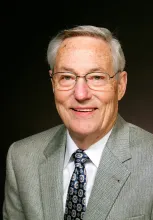
At the time of his retirement in 2016, Roy Holladay was serving the Operation Manager for Ministerial and Member Services of the United Church of God. Mr. and Mrs. Holladay have served in Pittsburgh, Akron, Toledo, Wheeling, Charleston, Uniontown, San Antonio, Austin, Corpus Christi, Uvalde, the Rio Grand Valley, Richmond, Norfolk, Arlington, Hinsdale, Chicago North, St. Petersburg, New Port Richey, Fort Myers, Miami, West Palm Beach, Big Sandy, Texarkana, Chattanooga and Rome congregations.
Roy Holladay was instrumental in the founding of the United Church of God, serving on the transitional board and later on the Council of Elders for nine years (acting as chairman for four-plus years). Mr. Holladay was the United Church of God president for three years (May 2002-July 2005). Over the years he was an instructor at Ambassador Bible College and was a festival coordinator for nine years.
