

Mario Seiglie
This transcript was generated by AI and may contain errors. It is provided to assist those who may not be able to listen to the message.
You talk about an outdoors man. Most of the people in the Bible were outdoors men and women. David certainly was. And of course, taking care of sheep. Once the sheep laid down, they were arresting. He could meditate. And he would look at all of creation. And he was a very inquisitive person, because he was always wondering about all of these marvels. And of course, the Psalms basically are hymns. Composed not only by David, but others. But he composed a majority. And I always marvel that at the end of this mini Bible, Psalms are kind of like a mini Bible, because they contain so many themes and they praise God that Psalm 150, the last one, let's turn there, because it is a hymn of praising God. And David ends with a bang with this Psalm. And as we look around us, we realize the God that created all of this, who made each one of us, wants us to live one day forever in His kingdom and enjoy all the things that He has created. Psalm 150, it says, praise Him with a lute and harp, praise Him with a timbrel and dance, praise Him with stringed instruments and flutes, praise Him with loud cymbals, praise Him with clashing cymbals. Let everything that has breath praise Him. Praise the Lord. So that's a universal hymn to God. And as we look around us, every time as we study nature, the laws of nature, I never cease to marvel and I never cease to learn more about God's creation. And as it was, I've taken another step forward from the last time we were here in the park. What I'm going to give you is something that basically I had not focused on. And thanks to a book that I finished reading to prepare this sermon, it's by one of my favorite science authors. His name is Michael Denton. He is a molecular biologist. Basically, he's a jack of all trades. He's a medical doctor. He's one of the pioneer scientists with molecular science. He wrote a book back in 1986 that one of my regrets in life was only stumbling across this book about 10 years after it was written. I was so upset that I lost 10 years of so much vital knowledge because I never came across that book. It's called Evolution, a Theory in Crisis. Why we never promoted it? Why we didn't say anything back in 1986 when Mr. Armstrong died? It was the most powerful book and critique against evolution at that time. And basically, it set off the intelligent design movement. As scientists read this and found it made perfect sense. He was the one that had the guts and the vision to say it as it is, to not mince his words. And at that time, he mentioned that evolution was not a theory that could explain the myriad of life on the Earth. It just doesn't make the grade. And so, to my surprise, again, I never heard of his new book, which was written two years ago. It was written 30 years after he wrote in 1986. Now, he added a step that he did not know at the time. 30 years later, in 2016, he wrote the book Evolution, a Theory Still in Crisis. And basically, it's kind of the capstone, as far as reading for 30 years on the subject to me, it's the capstone, the top there. What he has discovered and brought about just is the most devastating critique. And also, he offers an alternative, which, as a scientist, he's not a creationist. So, he proposed, from the scientific point of view, kind of a halfway point. And so, I want to share with you what this Michael Denton discovered.
And so, in his book, Evolution, a Theory Still in Crisis, I'm just going to read a few points, and then I'm going to illustrate what this means.
This is from another biologist, Dr. Wells. He says, Biologist Michael Denton has written a devastating critique of Darwinian evolution. Denton is not a creationist, but a structuralist. We're going to bring up what that means. He makes a compelling argument, supported by abundant evidence that the most basic structures of living things, the forms or body plans, are not adaptable and cannot be explained by cumulative selection that is at the core of evolutionary theory. Instead, he argues, those forms are part of the very fabric of nature. Now, what he's saying is that there are forms that are like body plans. They're like blueprints that are not only in living things, but even non-living things have patterns and have these plans that everything is shaped around them. This is what Denton says. And, Enrique, you can pass out the illustrations that I have. So, please, after you go over them, just pass them on to the next person.
Denton says, I argue that the taxa is a fancy word for groups of similar type animals. Taxa is just a category of animals. He says, are analogous or comparable to distinct geometric figures such as triangles or quadrilaterals, which cannot be approached by small successive steps from one class to another geometric figure. I mean, you'd never say, well, we have a triangle, which are three lines that are joined together, and eventually they can evolve into a square, which means there are four lines. Why? Because there are types of triangles. There are types of squares. But squares do not become triangles. Triangles do not become squares. So this is that, just like in geometry, you have distinct families of figures. You have three-sided, four-sided, five-sided, six-sided. You have different types of rectangles, and you have the circle. But each one is a distinct type. So, Denton also says, there are these body forms that are separate. They don't evolve into others. What they can do, you can have a tremendous variety of triangles or rectangles, but they're distinct. And so, he says that in biology, there are these ideal forms, types. And then from these types, they adapt. You have, for instance, the cat type. Cats have an ideal form. They all share certain ideal characteristics. They have these retractable claws. They have a body type. They're different from dogs. They're different from monkeys. You have these, what they call in biology, homologues, which are these novel types that have no evolution involved. You just see the different evolving as you have different types of cats. But you still have this idealistic form that has been pre-programmed into nature. Everything has a system. For instance... How's you?
As you look at all of these different samples, we have here, right, the beautiful sunflower. Now, there's a mathematical formula, which is called the Fibonacci spiral, which is a mathematical formula. And the seeds all are packed according to a formula. And you can read in this handout about the Fibonacci formula, which is that you add the previous number to the next number to get the following one. If you take the Fibonacci number and the previous number, you divide the Fibonacci number by the previous one. You get what they call the golden angle, which is 1.16 here, as I have it here. 1.61. This is the golden ratio, which is found in nature.
All of these have a golden angle here, a golden ratio. And you have a body plan for flowers, which, by the way, as Denton says, there are no previous types of gradual development of flowers. They appear in the fossil record. Suddenly, they have characteristics that are already shaped. There are five different parts in flowers. It's a type of pentagram, or five parts to it, the pistol, the stamen, and all of these leaflets. Besides this, another mathematical structure of this is called radial symmetry.
Anybody know what radial symmetry is? No. It means that every part of, for instance, this flower, you can divide it vertically and horizontally, and they're all the same. The whole roundness part, you can divide it into four parts. So the body of a flower like this has radial symmetry. Thank you. You can pass it around if you'd like. Now, we don't have radial symmetry. We have another type of symmetry in our body.
Anybody know what that's called? It's called bilateral symmetry. It's not four, but it is. We can split ourselves in half, and we have mirror images of ourselves. One part mirrors the other part. You split it down, half of my nose is the mirror image of the other side of my nose. Again, there are these mathematical, these homologues, which appear at the beginning. You don't see half of a person's body and the other one sort of evolving.
No, they're perfectly shaped from the very start. And so what Denton mentioned is that these are real. These are not just some exceptions to the rule. This is a general system that applies to nature. And as I bring out in this section, it says here the forms in the universe, a comparison of geometric and animal forms, just as there are geometric forms, triangles, rectangles, pentagons, etc.
So in nature, there are pre-existing structural forms, from the atom to the galaxy, to life that governs the entire universe. So you have here what are the different triangles, and then you have here the different types of life.
And they're all separated into distinct classes. That is why Carl Linnaeus, way beyond 100 years before Darwin, came up with the classification system that we use today. In 1736, Carl Linnaeus wrote the book, The System of Nature, which gave the classifications that are still used today in modern biology, the seven categories that goes from kingdom, then it goes to phylum, then it goes to class, then it goes to order, then it goes to family, then it goes to genus, and finally to species.
This is like a huge selection of geometric figures that govern what life is all about. You look at worms. Something so humble. The little earthworm. Does it have bilateral symmetry? What do you think? Does it worm? Yes, it does. You can split it down the middle. One side is a mirror image of the other side. So, as I mentioned here, the different body parts are mathematical in their origin. There's a book called Floral Diagrams, a book which contains several hundred floral diagrams and formula for all the major angiosperm groups, which are flowering types. You have these diagrams that are like mathematical, geometrical, that have all of these sets of characteristics common to all types of flowers.
You look at all these flowers. Hand me another one there. What kind of structure is this? Radial. That's right. Radial symmetry. You can split it into four parts, right? Give me another one here. Let's take the lily.
How about the lily? What structure is this? Radial. Who designed this? You think you don't believe in God? You think something like this could have just been made by accident? What world are we living in? Where you're not being taught this in biology classes? What a world we're living in! Just a couple of few brave scientists who have been ostracized for telling the truth. Just like God's truth has been ostracized. People want to hear myths and fables and all kinds of superstitions. So you have this ratio, the golden ratio, that is an irrational number. You divide one Fibonacci by the one that came before it, and it arrives at that number, which starts out at 1.61 and goes on forever. This ratio and others, called fractals, which is another mathematical discovery of sets of numbers that share commonality. Whether you expand it, you still have the same type of figure. There are here several examples. See the triangle, the first one to my right. You even have a chameleon whose tail is based on the Fibonacci curve. You have the different mathematical parts. This is the way flowers are designed. Five petals, five parts. You see a constant repetition of numbers. You see the nautilus shell. Beautiful use of mathematics. The snail, the little humble snail. You look at the curve, it's a mathematical curve. The spiral of the galaxy. So you see, it doesn't matter how big it gets, it's still got the same type of curvature. The ocean wave. Dave Markham, who's a surfer, he'd appreciate that. The curving of the ocean wave, based again on the Fibonacci number. The hurricanes also have the same type of spin. When you see the water being sucked, the spiral, you see this in a conch shell. You see it in trees. The trees above you. The trees here, the branching, are based on mathematical figures. The separation, just like we have mathematical formulas to separate our fingers. The same spacing we have here. Even the twisting of a trunk, all the branches separate. They balance each other out. That is based on, again, a form, a type, that was previously prepared. Here, you have the Aloe plant, which also has triangular and also curves. You have the Fibonacci curve, as the bud of a flower starts twisting around. Even a spider web. My wife doesn't like spiders, so I thought I'd include this just to bring it up. I don't think most women like spiders, but the spider's web is based on a mathematical. Again, you have adaptation, but all of them are based on a mathematical model or formula. The pinecone, also the same curvature, the golden ratio. Broccoli, in different types of broccoli, you see the curvature. Of course, man, which Liodano da Vinci discovered, there is a symmetry in man as he extends his arms outward, which can create a square. Or, if he extends his legs, you can make a circle. So there's a square and a circle. And of course, you see here the bilateral symmetry of the man. So, what does Michael Denton, after about 50 years of studying in some of the most important places, Oxford, Cambridge, Australia, New Zealand, United States, he says, the perception that Darwinism is the only game in town, that's what biologists say, it's the only thing, has been reinforced since the middle of the 20th century by makers of neo-Darwinian modern synthesis. So back in the 30s and 40s, there were scientists that got together and they said, well, we're updating Darwinism and this is now what's called modern synthesis, or the unifying. And with this, we don't need to discuss anything else. Who imposed on biology that conviction that the evolutionary argument was over and that Darwinism had won the day. So don't even question it. In their view, adaptation was everything.
And they went from microevolution, which there is variety within the species, to macroevolution, which is variety outside of the species. That has not been shown in science. He says, even though they have the microphone, they have the power, they have the educational system held hostage. He says, the great divisions in the natural order are still as profound as ever and still uncrust.
Darwin was not right, after all. There is an irresistible accumulation of evidence for rejecting Darwinian selection as a major driving force of evolution. And what makes this evidence so significant is precisely what we should expect to see. If the types, like we say here in nature, are real, evolution is still a theory in a very deep crisis. Only by rejecting it can biology be restored to its rightful place in the lawful and rational realm of natural science.
He says, I do concede that such lawful biology, biology governed by laws, might be seen as a first step back to teleology, which is the study of the purpose and design of things. And the notion that the laws of nature are intelligently fine-tuned to generate the set of life forms on Earth, including mankind. And so toward the end of this book, he says, despite all the praise from, he names many famous scientists on the fitness of nature for life, none of them is prepared to take the next logical step to nomogenesis, which means evolution by law, and the notion of laws of biological form.
This failure is all the more striking when it is also widely conceded by many of these same authors that Darwinian explanations have failed in certain key areas, such as the origin of life. There is no doubt that cosmological fine-tuning for life as it exists on Earth provides a powerful line of evidence drawn ironically from outside biological sciences. For a return to a structuralist biology and the notion that life's origin and evolution, which means within the species, were built into the order of nature from the moment of the Big Bang.
So he says, from the very start, you have things that are orderly, that have forms, that we see around us. Many times, we're not aware of it. But once you look around, you look at any of these trees, and you see there is an ideal form, how the tree can balance all of its branches so it won't topple, and how it separates, just like the fingers of a hand that we have.
There has to be programmed into the system to know exactly how to separate one digit from the other. There's a mathematical formula for that, which biologists know about. They know that this isn't random, that you have two fingers, and then you've got this huge space for the third finger.
No, they're all spaced, and also the toes of your feet. There is no explanation how the animal feather arrives in the fossil record. There is nothing previous that makes it appear gradual. The feather is also a geometric figure. It's a cylinder, a hollow cylinder, which appears, gives it the lightness, but the strength of light steel. A bird can fly because the feather is structured in such a perfect way that it is cylindrical, it is flexible, and yet it is hollow inside.
And then it has the barbs to hook the other feathers together. And so when it can flap its wings, it produces this very powerful wing that can go through the air and can resist tremendous currents of air. And yet, it can be penetrated so easily with any solid object. It was not designed for solid objects. It was designed for the air. And the only other type that, for instance, evolutionists say, that the feather evolved from the reptile scale. But the reptile scale is not tubular. It is not cylindrical.
It is not hollow. As Denton and other scientists say, you actually have what is like a straw, being compared to a napkin, which is layered. How does a napkin turn out to be a straw? Totally different. And you have all of these marvelous analogies, these marvelous varieties in nature.
But just remember, they go back to certain archetypes, certain models that came from a mind that eventually it became matter. And so, we have in the Bible models of what is up in heaven, the mind of God, and how it can be brought. And we also have physical models that God created.
Let's go to a couple of scriptures. In Exodus 25.40, did Moses just come up with a tabernacle on his own? Did he have a building committee that designed it? Exodus 25.40, God is speaking and says, and see to it that you make them according to the pattern which was shown you on the mountain when he was with God. God showed him a model, a form, which he was to take and make a physical object out of it.
In Hebrews 8. And by the way, I don't have time to go into it, but David also said that when he planned the temple, that God gave him the model for it. And that he was able to understand how to do it. So he gave it to his son Solomon, the blueprint, but it came from God, from the model that God had given him.
In Hebrews 8, verse 5, it shows here, talking about Jesus Christ. In verse 4, it says, For if he were on earth, he would not be a priest, since there are priests who offer the gifts according to the law, who serve the copy and shadow of the heavenly things, as Moses was divinely instructed when he was about to make the tabernacle. For he said, talking about God, See that you make all things according to the pattern shown you on the mountain.
God creates patterns, types. And when he created life on earth, even inorganic life, it goes all the way down to the molecules. God made the atom, he made the... anybody who studied chemistry and molecular chemistry knows it's a very elegant system of adding and subtracting electrons here and there. And that electrons do not gradually move from one orbit to the other. They jump according to a mathematical formula. So all the way down to the core of matter, you have mathematics, you have geometry, you have a mind that created things.
Why this way? Why do you think? Anybody have the answer? Why was it created this way? Let's read it. 1 Corinthians 14. 1 Corinthians 14, in verse 33 and 40. Here's the answer. 1 Corinthians 14, verse 33.
It says, Verse 40. It says, That are already programmed. And so that's why the trunk goes up and the roots go down. And the branches, just like the digits and fingers of the hand, they all are mathematically coordinated. It doesn't matter. Big tree, little tree, you look at it. They're all branched out. They're all separated in mathematical ways. They're all in their own formulae. And so God has made copies from His mind. It all set up this way. What we see around us. Look at the grass, the blades of grass. What kind of structure is a blade of grass? What kind of shape? Bilateral.
In Romans chapter 1, verse 18. How blind is the world? How many people know these things? They're so basic. They should be taught in elementary school. Starting teaching the kids to know that arithmetic and geometry and mathematics, is all around you. It's proved that God exists. A super intelligent mind. In 1 Corinthians chapter 1, verse 18, it says, I'm sorry, Romans. Romans 1, 18. It says, For the wrath of God is revealed from heaven against all ungodliness and unrighteousness of men who suppress the truth in unrighteousness. And this is talking about the intelligentsia.
This is talking about the teachers and those that are very understanding and teach others. Because these are the ones that suppress the truth. Because what may be known of God is manifest in them. For God has shown it to them. They study science. They see all of these mathematical formulas. And they still believe that all of this is chance and by mutation and by natural selection, that all of this can happen without any foresight, without any planning.
Just by trial and error, you eventually come up with a Mercedes Benz of a car. Just a couple of wheels and just in a couple of million years, you can have a Mercedes Benz. No, it doesn't work that way. The laws of entropy mean everything deteriorates unless there is an outside force that works on it to keep it going. Everything turns to rust. Everything eventually decomposes. And so you need an outside energy source and organization to keep things going.
What happens if we don't eat? We die. So all of that energy keeps our bodies multiplying blood cells. And by the way, blood cells is another one of those mathematical marvels. A blood cell in a human being and in mammals, except for birds, and birds are a different category. But when we are born and we produce red blood cells, red blood cells have just a typical membrane and they have the nucleus. But after the red blood cell is produced, usually from the bone marrow, it goes through a transformation where it expels its nucleus and it becomes a concave cell to be able to fill itself up with oxygen to carry to all the cells in the body to carry oxygen, which gives it life.
But it expels its nucleus, it's like expelling our brain and still functioning. And it does it all in a matter of minutes and it's still alive after it's gone through that transformation and it can then squeeze through the capillaries that are twice the same. As small, you know, they're half the size of a normal red blood cell with a nucleus. It wouldn't go through a capillary.
But since it's expelled its nucleus, then it can fit and squeeze through and get to all. You know what happens when you have gangrene and you don't have the blood circulating? That member dies. It doesn't have that nutrition. And so here's another conundrum or puzzle for science, which is how did this blood cell learn to expel its nucleus and still function for three or four months, which is the lifespan of a red blood cell.
So these are just marvels that we have. And so the people who study, scientists who study this, why don't they give credit and praise God? God is angry as he sees this increasingly godless world. The educational system doesn't take into account God. Now we don't want it all to be about God either, right?
We want to study science, mathematics, but let's not leave God out of the picture. He deserves some of the credit of what is created. So this is what happens. This is the explanation of what has happened to our world. Paul described it in his world, which was the Greco-Roman world science, which became the foundation of our science today. And it says, verse 20, For since the creation of the world, his invisible attributes are clearly seen, being understood by the things that are made.
So the invisible things, that's talking about the types, things that came from somewhere besides our material world, our physical world. We can see there are patterns, there are types, homologues, unique traits that appear that don't come from anything that nature has created. His invisible attributes clearly seem even his eternal power and Godhead, so they are without excuse. Because although they knew God, they did not glorify Him as God, nor were thankful.
So that's a principle. Be thankful. Give praise to God. But became futile in their thoughts, and their foolish hearts were darkened. Professing to be wise, they became fools. And I tell you, one day when Christ comes back, all these scientists are going to really get it. All people are going to tell, you fool! Look what you taught us! You better repent. Boy, are they ever going to get it. I'll tell you, there's not going to be any haughty scientists in God's kingdom, because at that time, it says, so they are without excuse.
And they changed the glory of the incorruptible God into an image made like corruptible man, and birds and four-footed animals and creeping things. And so, yeah, now you worship nature. What is nature? It's God's creation! It's not some being or some mystical thing. Nature, yeah. Oh, nature did this. Well, no, it's talking about God.
It's another way. So, I don't particularly like the word nature, because it's kind of a spin-off. So you don't say God's creation. They call it mother nature. Like there's a mother out there doing the creating. Verse 24, Therefore God also gave them up to uncleanness, in the lusts of their hearts, to dishonor their bodies among themselves, who exchanged the truth of God for the lie, and worshipped and served the creature rather than the Creator, who is blessed forever.
Amen. And so, we look at the world today, and it's just becoming more godless, less taking God into account. Notice Hebrews chapter 1. We've got like maybe five minutes left, just in case for Jesse to know. I'm going to have to change my classes at Ambassador Byle of College because of what I have learned and given to you today. Basically, it's like an additional proof that this mathematical structure. Denton says, with these types that are in nature, that cannot be explained by the evolutionary Darwinian process, he says, with that is enough to knock it in the head and to completely eliminate it.
You don't need more proofs because you can't come up with these types and archetypes without having someone, an intelligence, bringing it in. Hebrews chapter 1 again talks about the creation. It says, verse 1, God, who at various times and in various ways spoken times pass to the fathers by the prophets, has in these last days spoken to us by his Son, whom he has appointed heir of all things. This is another place where it says that his Son is, everything that's created, he's going to inherit.
And he calls us co-heirs with Christ. Who are we? Talk about taking a poor man and taking him into a palace, giving him a bath, putting all the most beautiful clothes, and saying, you are now my Son. That's just an incredible opportunity God is giving us. He appointed heir of all things through whom also he made the world. He made this whole universe.
Who being the brightness of his glory, not talking about less bright, but the brightness of God's glory, and the express image of his person. So it's kind of like another one of these mirror images.
And the term here, express image, is one of a seal, where you put the seal in the wax, and then you pull it out, and you have the image of the same thing as the stamp. And that's what is talking here, being the express image of his person, and upholding all things by the word of his power. Upholding. So there's something besides the physical that is upholding things, that are keeping all of it going. When he had by himself purged our sins, sat down at the right hand of the majesty on high, having become so much better than the angels, as he by inheritance obtained a more excellent name than they.
So God, who created all these things, who knew all the types, he came down, and he died for us. How's that for paradox? In Hebrews 11, verse 1, it says, Now faith is the substance of things hoped for. In other words, it's the concrete belief in what you hope and expect, the evidence of things not seen. You believe in God. You believe in his power, in his love. You believe that our lives are in his hands.
He knows what is best for us, not necessarily what we think is best for us. We'd like to be spoiled to death, be multi-millionaires, and live on an island, and just sip lemonade, and look out in the ocean, and get fed every day. Most people, they'd be happy with that. But that's not the best for us. God's not in the business of just giving us delights. He's in the business of creating spiritual character.
And so it goes on to say, In comes a human being just to evolve from rocks and from chemicals getting mixed up. We don't believe that. We believe the evidence of a superior being that we can see around us as we see the mathematical formulas. And all we have, it says that we understand that the worlds were framed by the word of God. Frame from the Greek κέταράτηζο, κέταράτηζο. It means to be placed in the proper order. Just like a beautiful picture, you have a frame that fits it, that enhances it, makes it more beautiful.
We have frames in our houses for the pictures. We just don't have pictures that we just stick. And so everything was put fitly together, framed by God, from things that we do not see. And so I wanted to share with you this new understanding of how the forms in the universe can be compared to geometric and the animal forms that are around us. So let's finish with Psalm 14.
Psalm 14 verse 1. I hope everybody is in agreement with this. Verse 1. The fool has said in his heart, there is no God. It's only the fool who denies the existence of God when all around us is this matrix of mathematical formulas and geometric figures that surround us, that are in us, all of us here, with this bilateral symmetry that we have.
Everything is coordinated. Everything is based on the proper shapes, the proper circles of our aortas. Everything has its cylindrical parts to it, where every is the blood cells, as I brought out. Miracle after miracle. The fool has said in his heart, there is no God. They are corrupt. They have done abominable works because they don't think they have God to give account one day for their deeds. There is none who does good, those that are believing in this way. So, brethren, I hope this gives you more evidence to share the faith with others and help us understand the greatness of God's creation.
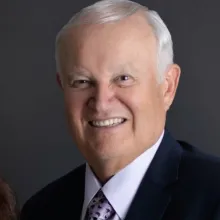
Mr. Seiglie was born in Havana, Cuba, and came to the United States when he was a child. He found out about the Church when he was 17 from a Church member in high school. He went to Ambassador College in Big Sandy, Texas, and in Pasadena, California, graduating with degrees in theology and Spanish. He serves as the pastor of the Garden Grove, CA UCG congregation and serves in the Spanish speaking areas of South America. He also writes for the Beyond Today magazine and currently serves on the UCG Council of Elders. He and his wife, Caty, have four grown daughters, and grandchildren.
