

Robin S Webber
This message explores the God-given wonderment of motherhood, and not only biological mothers, but "mothers of the faith", both young and old, and both of yesteryear and today. Proverbs 14:1 tells us "the wise woman builds her house", but she does so much more as men build structures, but a woman develops a *home knitted by her heart. It is one thing to be a mother, and another to be about "mothering" in a God-like fashion. It's one thing to honor our mothers on a given day, but always--and will be noted by Jesus honoring his mother from the cross during the last moments of His life.
This transcript was generated by AI and may contain errors. It is provided to assist those who may not be able to listen to the message.
And on this Sabbath preceding a very special day in America called Mother's Day, I would address the God-given wonderment, and I call it that. The God-given wonderment of motherhood with a message entitled, May you be like Ruth and like Esther and also Mary. So maybe you know where I'm going a little bit just by mentioning those heroines in that spiritual rush rush more, spiritual Mount Rushmore of women of Scripture. Some of these women were not only earthly mothers, but they are mothers in the faith. And that's where I would like to bring this all together today in sharing some thoughts with you. They were also mothers in the faith whose contributions have stood the test of time and are squarely set before us today in Scripture. And with that, I sincerely say thank God to understand the contributions of women down through the ages to both men and women today. The message, while focused on motherhood, is for everyone in this congregation. And we're going to cover all the bases if you will allow me to. It's for all women, whether biological and or also those that are mothers in the faith. Very important. So please be alert. Stay tuned in as I will be addressing all of this and bringing us all together by this message's conclusion. Therefore, I'm going to get right to my specific purpose statement today. It should be loud and clear. Therefore, we're going to come to understand what it means to be like Ruth and like Esther and Mary, and a few others along the way that we're going to sprinkle in as I'm able to. Let's anchor ourselves as we begin this message by turning to Proverbs. Come with me if you would. Let's explore together. In Proverbs 14 and verse 1. And this will set the stage. This will be the foundation of what I'm going to share with you today. The wise woman builds her house, but the foolish pull it down with their hands. It's very interesting here that it says that the wise woman builds her, notice what it says, house. But what are they building? I'd like to kind of expand upon it to allow you to know where I'm going and what I'm going to be sharing. You all out here are old enough to recognize there's a difference between the sexes, difference between the genders. If you haven't, we'll anoint you after services. Okay? There is a difference. And God made that for a purpose. Because men by themselves, ladies, you know we need you. And women also need us. And the best point is to move into that sweet spot and to understand what each of us bring into it. Let me just put it just very simply when it comes to the wonderment of women. Men tend to build houses. Men tend to build houses. Those are buildings. Those are structures. Women begin and they weave what we call a home. A home. And that's important to understand. And those homes are knitted by the heart. And both are needed. Both are essential. And both need to be understood.
There are people today that live in houses. Maybe even two people. Maybe they're even married. But they don't understand that uniqueness that God planted into the matter of humanity. Where men bring a certain something and women bring a certain something. And do not mistake what I just said because those are some of the opening words. A home is knitted by the heart. And we all know how women perceive life. How they understand life and what they give to life. Could you imagine, do I dare say this, what a sad creation it would be if just men were wandering all around the earth? What a story that would be. But they aren't. And God has his purposes. Notice the rest of the verse here. But the foolish at the end says, pulls it down with her hands.
And that will happen one way or the other as we grow in age, as we grow in marriage, as we grow in being a parent, in growing to be either a father or a mother. Sometimes it is by commission as to what we have done that is pulled down. And sometimes it is by omission, something that we have not done, but has been left undone, defester, and to create a sore on the family. Marriage, the primary and core relationship on earth today, is being pulled apart like taffy today. And roles are being mixed up. Roles are not being adhered to that were given to us by God. It might affect parenting. It might affect where the government has intruded into the role of parents as a father and a mother. And thinking that the government knows best. No, the government does not know best. Is there a role for government? Absolutely. Please understand that. But not at the behest, not at the elimination of parents knowing what their children are learning at school. And I think even a recent date with COVID, there was a surprise on so many people looking at what was actually being shared that was never gotten to the parents. Interesting. Let's go a further step. True femininity, virtuous motherhood, and simply being there for children is being choked by the world that we live in. Ladies as mothers and grandmothers, and for a few of you that are great grandmothers, is to understand something here that we must stand firm on the word and the examples of Scripture. With that all said, about in a sense the wonderment of motherhood, the glory in a sense that comes from God as we act upon His example of love and we incorporate in the life of our man, of our children, of our grandchildren, of our great-grandchildren. But I also want to be very clear of something that I'm going to be speaking about and understand. Motherhood at times is a painful privilege. I want you to think about that.
Motherhood at times is a painful privilege. That's one of the reasons why I'd like to comment on Mary for a moment and bring her up ahead of Ruth and Esther. Just think of young Mary of Nazareth had the unique privilege of being the mother of the very Son of God. Yet the pleasures and pains of her motherhood are understood by mothers everywhere to one degree or another. And there is pain and there is pleasure in the growth process that God puts us through at times to mature us and to become like Him. Think about it for a moment. Mary was the only—stay with me now. This is important. Mary was the only human present at Jesus' birth that also witnessed His death. Joseph is absent in Scripture after so many chapters. Joseph and Mary were there at the manger barn, cave, whatever it might have been. There's been books written on that, but we know who to know. They were not staying at the Hilton that night, okay? That's the big picture. But it was Mary and it was Joseph. Joseph was no longer there. Think about this for a moment about Mary, the mother. She saw Him arrive as her baby son and she watched Him die as her Savior. Wrap your mind and wrap your heart around that for a moment. She saw Him arrive as, yes, her baby son and, like I said, die as His Savior. Think about the steps. You know how we all have photographs in our mind and sometimes in albums of the different growth steps of what occurred? Think about this for a moment. She saw what would have been called Yeshua or Joshua, but she saw Jesus take His very first human steps. She also saw Mary, no excuse me, she also saw Jesus carrying wood behind Joseph as they went to work. She led Him through the hills outside of Nazareth, which is a hilly area to begin with. I wonder where He picked up the thought of the lilies of the field and the lilies on the hillsides. No, mothers will do that to you, right, guys? Wives will too.
She remembered Him in Jerusalem, busy little guy even at age 12. He got busy doing His Father's work and about His Father's business. And He knew, and she knew, that He was about to take off for why God sent His Son to this earth. And then having to let Him go and be about His Father's business. You know, as you were a child, they go through many, many stages, but this was unique. I use this example for a purpose, because she began to see Him walk as an infant. She began to see Him carry wood behind His Father, perhaps up a hill. And think that 33 and a half years later, He would also be walking up a hill, and He would also be carrying wood. But it would be on His shoulders as He was going up the altar of Golgotha. So there is a joy, and at times there are also painful passages that come together in motherhood, in raising a family, in raising children, giving them a purpose, coming to understand their purpose, and being behind them in what they might do. In all of this, and you're familiar with the count in Luke 1 and verse 38, when Gabriel the angel came to her, she said that, Therefore, let it be, for all that you have spoken. Judge us down those three words. Just three words. I'm asking you today, put it on your paper. Let it be. You see, I'm a man, marries a woman, but two thousand years down the line, I am learning from that mother in the faith. I'm learning from her, by her example, not only of devotion, because for some people, life is a matter of devotion. For others, it's a matter of sacrifice. And she got the clear understanding that this little one that was going to grow in her womb was going to be Messiah. And she understood to a degree, and I only say to a degree, because you're never ready for it until you're walking in that territory. But she knew that this child was going to be special. And she said, let it be, according as to what you have said. This is every woman's words, as she brings forth life to one made in God's image, and in return commits that little one to God, and buckles herself up for that road down life, which they will come intertwined together in. One thing I'd like to share with you, ladies, if I might, I'm not a woman, so I'm going to be very careful where I'm treading. Is that all right? No, that I'm trying. But something that has come across the annals of history in times of war, there is a unique, timeless, umbilical, seamless cord that remains intact.
From a mother and their children. It's always there. In war, in war, many a young man lying on a battlefield, as are out of it, as perhaps they're even dying in a foxhole or in a battlefield, or being taken to a surgeon's quarter. Because you kind of go back when you're in the middle of trauma, they're asking for their mother. They go back to a stretch of this umbilical cord that goes back to the one that God allowed to give this childbirth. Ladies, we don't have foxholes, but along with your husband, we are in a sure and ongoing battle for the hearts and the souls of our children. And I just ask you as one friend and one saint to another, don't lose that vision. Never forget for that moment. Satan and society, and at times governments of this earth, are willing to give your child's all for their cause.
You are the parent. You are the life givers. As you came together, the wife conceived. Nine months of joy. Just teasing ladies. It is joy, but we recognize the rest of what comes along with it. And then the birth. God has given you that child. Not a government. Not a teacher's union. Not a person that later on is your kid, you know, all kids, you know how it is in America. They think teenage is a time out from humanity. And you have to kind of catch up with them. Some of you are smiling. You were on that vacation. Okay. I see some smiles out there. And that's when you need to be at your strongest. That's when you need to be at your alert post for your children. Today, this generation with smartphones and wondering what's on TikTok, which I've never been on myself, but I've heard about it because you know how good I am at computers and small buttons. But I hear enough about it. But this goes back 100 years ago when entertainment became a certain way. Consider for a moment when Mary was a young Jewess. She wasn't watching TV. She wasn't reading magazines from the supermarket or surfing the net. Her focus was on national heroes. National heroes. These were the images that were placed before the people of God at that time.
The women that they focused on were overnight wonders. They weren't starlets. They weren't top 40. They weren't famous for being famous or on the cover of People magazine once or twice. Rather, they did life. And these women stood the test of time and were to be modeled. Girls were taught and encouraged to be like them. Mothers of the Faith. Not biological mothers, but mothers in the faith and of the faith. How many of you ever saw the movie Fiddler on the Roof? Anybody see that before? Who hasn't seen it? I haven't met you yet, but tonight you're on. Okay? You watch it. You remember that famous scene where there are the three daughters? We've seen this both in the movies, and we also saw it in a play, and we have three daughters, so kind of relate it. But remember the song Sabbath Prayer? That was on that? Would you like me to sing it for you? I tested it, but I don't think that was a part of the blessing today on the prayer. But from Fiddler on the Roof, the Sabbath Prayer, allow me to share a few words with you. May the Lord protect and defend you. May He always shield you from shame. May you come to be in Israel a shining name. May you be like Ruth and like Esther. May you be deserving of praise, not by man. That's nice. That's secondary. But praise from above. Strengthen them, O Lord, and keep them from the stranger's ways. May God bless you and grant you long lives. May the Lord fulfill our Sabbath Prayer for you. May God make you good mothers and wives, and may He send you husbands who will care for you. And may the Lord protect and defend you.
May the Lord preserve you from pain. Favor them, O Lord, with happiness and peace. O hear our Sabbath Prayer. Amen.
I think that's our prayer for our children, isn't it? Be they male or female. Be they little ones that come into this world. Recognizing that in any book there are many chapters. Some filled with joy. Some filled with happiness. Some filled with needing to be patient. Some filled with disappointment. Some filled with overjoy because they're coming through and they're growing up through the pressures of life.
Abraham Lincoln put it this way, I had no responsibility in determining who my grandfather was like. But I do have a choice in determining what my grandchild will be like. I would just say, ladies, we have every opportunity—and I want to share this with you, just this phrase, and maybe you've heard it by others. Each of us, ladies, let's have some fun. You know me, we're in class. Put up your finger like this, please. Just the right finger. Okay, put up your finger. And then, you see the chair in front of you? Just go like this. And men, you can do that, too, because, you know, we guys, we have a part of this, too, don't we? Let's just do this. Go like this and touch the object in front of you.
Now, let's say, all together, like the Beatles sang, all together. Okay, no. We're going to do this. I have an opportunity, ready, to touch the future. Ready? One, two, three. I have an opportunity to touch the future. And it's not wooden hearts. They're living hearts. Living hearts that need to be taught how to love and how to care. You can let go now. Okay, thank you. You like that one. Okay. And the cushions up front are nice and soft. But that's what we have to touch the future. You know, I even found that out when I was back in Cincinnati, this, yeah, Cincinnati, is kids that I was in my own way as a spiritual dad, as a high school teacher in Imperial schools or in our Y.O.U. that some of those kids are still there. And they're not all mucky mucks in the United Church of God organization, but they're there as good members. They're there as good elders, good deacons, just good members that show up and love God's way of life. You kind of feel a little bit like a pastor sometimes feels like a dad. Some of those kids, Susie and I, would take out year after year into the hinder land and camping. And sometimes it would take three days, and those phrase sometimes we take 35 kids out in the middle of the country, out in the wilderness, out in the National Park. And this is something for you. It takes about three days to get the smog out of their ears to where they begin to read late, where they begin to feel like family. Interesting. To answer the question, what we can do and your impact, you say, well, who am I? What am I going to do with my kid? What am I going to do with my daughter and my son? How can I make a difference? How many of you have ever heard of the lady named Jedada? Anybody ever heard of Jedada? I can see that's a real popular name in your vocabulary. Who was this Jedada? I'd like to share this with you and me. Because it's not necessarily a household name or a well-known biblical name. She was the wife of the king Ammon of Judah, the fifteenth in the line of David's throne. And he's mentioned in Matthew genealogy, Matthew 1 and verse 10. But join with me for a moment with 2 Kings 21. In 2 Kings 21.
In 2 Kings 21. And picking up the thought, if you'll join me, please, in verse 19.
You might have heard of Manasseh. Manasseh was Ammon's father, who had the bad reputation of being the worst of the kings that had come out of the line of David. But he changed his heart and changed his mind towards the end. He waited till the last chapter of his life. But his son Ammon did not pick that story up. He was almost even worse than Manasseh. So, it talks about Manasseh up to verse 16. More of verse 17. Now, the rest of the acts of Manasseh, all that he did and the sin that he committed, are they not written in the book of the Chronicles of the Kings of Judah? So, Manasseh rested with his father and was buried in the garden of his own house in the garden of Uzzah, and then his son Ammon reigned in his place. You would have thought that maybe Ammon, one plus one, equals two, or doesn't equal two because you've gone off of God's way of life. Ammon was 22 years old when he became king and he reigned two years in Jerusalem. And his mother's name was Meshela-Neslamath, the daughter of Hiraaz of Joppa. And he did evil in the sight of the Lord as his father Manasseh had done. So he walked in all the ways that his father had walked, and he served the idols that his father had served and worshipped them. And he forsook the Lord God of his fathers and did not walk in the way of the Lord. And then the servants of Ammon conspired against him and killed the king in his own house. But the people of the land executed all those who had conspired against King Ammon. And then the people of the land made his son Josiah king in his place. Almost sounds a little bit like what's happening over in Iran right now with people being slaughtered left and right. Now notice, now the rest of the acts of Ammon, which he did, are they not written in the book of the Chronicles of the King of Judah? He was buried, and then Josiah his son reigned in his place. Now notice 1 chapter 22 verse 1. So can good fruit come out of bad soil? But so far we've just read a part of the soil. I think all of us to one degree or another, as much as we know about Josiah, I think we will just always know, good guy, you know, there were a few good guys in the midst of the kings of Israel and the kings of Judah. And Josiah would have his own issues later on, but he started out this way. Notice, Josiah was eight years old when he became king and he reigned 31 years in Jerusalem. And now notice, maybe you've never noticed, his mother's name was Jededah, the daughter of Attala, of Bothkath. Now, we've all heard of Sarah. We've all heard of Ruth. We've all heard of and named the Mount Rushmore, spiritual Mount Rushmore of women in the Bible. But I don't think any of us ever heard of Jededah, the daughter of Adiah. And notice what it is, verse 2. This is the marker. Are you ready? Verse 2. And talking about Josiah, And he did what was right in the sight of the Lord, and walked in all the ways of his father David. He did not turn his side to the right hand or to the left. Now it came to pass in the eighteenth year of King Josiah that the king sent Shaphan, the scribe, the son of Azaliah, the son of Mishalam, to the house of the Lord. So what we're finding here, then, is Jededah.
While her husband was off doing all the crazy stuff, here is a boy that was basically left to his mother. The reason why I mention this, you say, well, my name in the stars or in the scriptures will never be like Sarah, will never be like Ruth, will never be like Mary, but never, ladies, young ladies over here, and you're all young, everywhere, okay? Never underestimate your role as a mother, having your child on your lap forward in what they will receive from you. Don't devalue who you are because your name is not up in bright lights, because God is seeing what you're doing. God sees you as a righteous person with faults. We're all human, but your heart is in the right place, and you're there for your child, even in challenging times, even in times when everybody else is doing something different, but you're straight and true with the ways of God. Whenever you wonder about, what am I doing? Is this going anywhere? Because it may not always go right in a day or a week or a month. Don't underestimate what you can do and what God can do through you to set up a blessing for others through that child that you're going to raise in the days to come. Very important. In all that turmoil of Ammon's court, she must have, who, Jeddah provided a refuge of peace that allowed Josiah to absorb her influence like a sponge rather than his father's. Proverbs 16 and verse 3, I'd like to share that with you. It's very short. I'll just read it. Proverbs 16 and 3. One of those cause and effect verses, you know, when you look at Scripture, always note the cause and then see what the effect is. Proverbs 16 and 3 is very important. Ladies and also dads and gentlemen, commit, commit our works to God. Commit our works to God. And what is one of your most physical and biological works that have come your way? Because children are the gift of God. Commit your child to God. And there's a promise might not come overnight, might go through a tough week, might be times. Sometimes it might even, are you with me? It might even be years down the line that the child will remember that the child will return to the way. Commit your works to God and he will establish your thoughts. Before he can establish your thoughts, that's how it works. You've got to commit your works to God. You're one of God's creation. You're his work. And a part of an extension of that work is to share that with others, being your children, being your little girls.
Susan, you see that fourth work? Doesn't that look familiar? All those girls. You know, most of you know we had three daughters and then we had five granddaughters. So we are pro-woman and women. Then all the grandsons started to come. Now we've got two great, little great grandsons and they're changing the family dynamic. Now we've got cavemen. We've got these, they become alpha males at age two. Amazing. But we are committing that work to God and so he'll establish our thoughts as grandparents to do the best that we can. So I've got to practice. Susan's got to practice. She wants to practice what we're preaching here. Allow me to be plain. Very important. There's a difference between being a mother and mothering. There's a difference between being a mother. Any woman can be a mother, but there's a difference between being a mother and giving birth and mothering, which gives life down through the time.
In that mothering, I want to share something with you. Some of us may not have children and some of you that are listening may not have children, but that doesn't stop you from mothering.
No, not at all. I think of being in this way of life for 60 years. I think of many that have been in the sense examples and mothers to me in the Lord. Remember Peter in his cry as Jesus was calling him? And he says, we are going to leave—we're leaving all behind to follow you. Unlike the three guys when Jesus said, follow me, and they all had a reason for not following. One wanted to visit the past. One had something in the present. One was thinking towards the future. None of them followed them. Peter—and we all know Peter sometimes in his disciples days—he said, we're leaving all. And what did Jesus say? He said, no, no, no, no, you don't understand. You are not going to leave all. For as you follow me, you are going to have fathers and you are going to have mothers. They're going to be spiritual fathers. They're going to be spiritual mothers. God is—my father is going to nurture you through their example down through the ages. And that's a role that all of us can fulfill, ladies. All that we can fulfill. And sometimes in that fulfillment, we can put a spot on something that perhaps the biological mother of and by herself doesn't have that gift or that knowledge on that. But you're able to share life. You're being able to share a chapter that they're not used to. Don't ever underestimate that role. I think of having grown up in Pasadena with 4,000 people—do I know where I remember those days—there were all sorts of people. And things that I learned from senior citizens, even as my own mother was still living, that go around and to listen and to learn from them. I think of—and with Duane Hare, I think of Annie Mann, I think of Mabel Lisman. I had just others that—Mrs. Mock, who would sit down with me. Have you ever gone visiting some of our elders here? You go and visit—there's nothing like developing patience in a young man who's 23, 24, and he goes and visits somebody that's 82. And it's summertime, and they've got their heater on in the room. They haven't talked to anybody all week, so you're it. You are it. And they go on and on and on. But I remember, especially with Mrs. Mock, who is a wonderful person, she would go on and she'd talk about the turn of the century when they would have parades in the town that she grew up in, Georgia. And don't take this, but it would be—they'd bring out the old quintessential Confederate—this is Georgia—Confederate General on the white horse going down, and they'd have a parade. And just to expand your mind and expand your imagination and filly with something that you're never apart, don't ever underestimate what you can do with that next generation.
I'm going to send out my notes to you because I just skipped about a page and a half to go to this point right now, and I'll send out my notes to you. Just for sake of time, I want to deal a little bit about Mary again. God knew what he was doing when he sent his servant, Gabriel, to inform Mary that she was going to be the mother of Emmanuel. God with us. I'm not only sharing this because of Mary, but I'm sharing with you the kind of Son that Jesus Christ was. Mother's Day is about honoring your mother. Grandma, great-grandma, all of them, line them up. And I want to share something with you. Jesus never preached what he did not practice. At the end of Christ's life, Mary was there. Even though he had been branded an enemy of the Roman state, an heretic by his own people, the chosen people, she stood at the foot of the cross and watched him die. But I want to share something that works two ways. Are you with me? Join me if you would in John 19, verse 25, one of the famous seven sayings of Jesus from the cross that are recorded for us to learn from. In John 7, verse 25, I say John 19. Don't say it this good. John 19. Pardon me.
He was up all night, beaten all night, marched up to Golgotha with a burden on his shoulder, mocked, belittled. But this is a precious point. It's always struck me. Now there stood by the cross of Jesus his mother, the same mother that said, let it be, as you have said. And his mother's sister, his aunt, Mary, the wife of Clopas, and Mary Magdalene. A sister in the way. And when Jesus therefore saw his mother and the disciple whom he loved standing by, that's a reference to John, he said to his mother, woman, behold your son.
So he talked to Mary. And then he changed the conversation directed to his friend John, probably most likely his cousin. Then he said to the disciple, John, behold your mother. And from that hour, that disciple took her to his own home.
Wouldn't you like to have a son like that? That here he is dying. And what he is doing, the one that was God, the one that is the I Am, the one that shared with Moses the Ten Commandments on Mount Sinai, and number five is what? Honor your father and your mother that you, etc., might live long upon the land that God has given you.
This is incredible. I'm sorry, to me it's incredible. Here is a man dying.
And yet he's concerned about his mother's welfare. And out of one of his last breaths, he is fulfilling the fifth commandment. Maybe we're way far behind that by just having one day and saying, Happy Mother's Day to all of you, because Happy Mother's Day and honoring our mother, honoring our grandparents, is something that we do every day.
Life is a circle. For us that are a little bit older, our parents raised baby boomers at this point, and baby boomers, maybe, no, everybody's a baby boomer here.
Are you baby boomer plus?
You're baby boomer. You have to see the eyes. It's so funny. Anyway, you are. Life is a circle. When we are young and coming out and squirming, and you know what has come forth, our parents are being taken care of us. As our parents get older, we take care of them, don't we? They gave us birth. They gave us all of themselves as parents will, and then when they no longer are able to take care of themselves, we take care of them. Susan and I tried to take care of our parents as best as possible towards their latter years. Of course, Susan was out here, but we'd make it back all the time.
Myself, most of you know my parents Jack and Tommy Weber. We tried to honor them. Could we have always done better somehow, missed a date? Yeah, absolutely. But this tells you that this kid named Yeshua of Nazareth also had some good training, not only by God his father, but also by Mary his mother. I'm going to take this down just a notch so that we conclude here in a few minutes. I did mention, may you be like Ruth and like Esther. I'd like to just share a few thoughts with you, and you'll get the notes in full. What do we find in Ruth? The story of Ruth, which is one of my favorites, I'm not going to cover it because I've covered it before Pentecost. It's during this time, the season of the barley harvest and coming up to Pentecost. I've given that to you probably two or three times over the years, so I'm not going to do that. But I'm going to just share a brief point with you about Ruth. The powerful example, think of this through for a moment, of an older widow that opened up God to a pagan. The example of an older widow, husband dead, two sons dead.
But what an incredible example she gave to this Moabites. Moabites were, go back, they were way back, cousins of the children of Abraham. They went a different course into paganism.
And yet there was something about this woman, Naomi, a mother in the faith that God used her to give birth to a new spiritual daughter. To where Ruth gave up her ways, gave up her religion, gave up her folks, and started a new chapter in life.
Was Naomi perfect? No. Did Naomi have her moments? Don't we all as human beings? You know, she goes back to her hometown in Bethlehem and says, don't call me Naomi anymore, just call me Moara, which means bitter. Look what God has done to me. And yet she had to work that out. We all have to go through that depression.
One day or another of losing a loved one.
But there was something with her, and I'd like to share the story with you. Join me if you would, in Ruth. Join me in Ruth 1. We're just going to take a sample of your impact ladies. Whether you have children by biological birth, or you are a spiritual mother in the Lord to others. In the book of Ruth.
Ruth. And let's pick up the thought. Verse 16. Ruth 1.16.
There's no reporters around. There's nobody around. Back in that day when you're going from Moab to Bethlehem, there wasn't a McDonald's, there wasn't a Jack in the Box, there wasn't a service station. They did camels. Or they just walked everywhere they went. So the stage is set. There's two ladies, one older, one younger. The other, the other, Orpah's not a bad soul. It took... She didn't go home on the first call, and Naomi said, you all go back, you scatter, you're young, you go. And so the other one wasn't too bad. She stuck around through too. But the thing is, there's a difference between taking a stand and stay standing when everybody else is away. And notice this woman, Naomi, she must have painted a picture not by her words for me as a minister and for you as servants of God. The loudest sermon that we will ever preach is our example.
Words are cheap if they're not followed up by example and by practice. And notice in the middle of life, she probably, maybe in her late twenties, maybe early thirties, I don't know, I'm not that old, I wasn't there. And I wasn't the fly and the cactus out in the desert. But notice what she says. You know, this is the PowerPoint. You know, here's Naomi, go back. Go back. Go. Go. Go. Go. Go back. No, no, no, no, no, no, no, no.
This is what she says. Verse 20, verse 16. Entreat me not to leave you. Stop it! Don't entreat me. Or to turn back from you, following after you. For wherever you go, I will go. And wherever you lodge, I will lodge. Young people shall be my people, your people shall be my people. And your God, my God. And where you die, I will die, and there will I be buried.
The Lord do so to me. And more also, if anything but death parts you. You and me. Shakespeare was never even this good. I mean, I like Shakespeare. But there's only one thing that trumps Shakespeare and human civilization. It's the Scripture. And not only Scripture, but recording what actually occurred that is in Scripture. For you as mothers, and as you as mothers in the faith. And we as your men supporting you, being there for you.
Lifting burdens at times, dealing with child-wearing. It's not easy having three little amigos pulling at you. But you've got the point. In all seriousness, how powerful this is. One lady's example, who was doing life, it was not easy, having lost her husband, having lost her son.
So she's in the middle of the chapters of her life, going through grieving. And yet somewhere in that example of just being there, and being kindly, and being receptive, this is what we need to do with our children. In Esther, here's the story of a woman confronted with a challenge as a door of possible no return was set before her.
If you know the story, allow me to set the stage real quickly. We have the story of Esther, we have the story of Haman, we have the story of Mordecai. And guess where this is all happening? Over in what is today Iran in Persia. And we think of what happened in the 1930s and 40s with the great Holocaust of our Jewish friends. How six million died. This was going to be the first major Holocaust against the Jewish people, circa 480 BC. In one night, all the Jews were to be killed. From the west of India to northeast Greece, Thrace, which was all under the Persian king.
And you know the story he had been tricked. And you know the story where it says, you know, a little bit like Gilbrinner, so let it be written, so let it be done. There was no going back. You could not break the law of the king once it was enforced. Now, it just so happened that Ruth was a Jewish, and she was married to the king. But even she could not go into the courtyard of the king through those portals or through that door. Unless he first extended the golden rod to her.
To go in by herself, whether it be man or woman and or wife, was death. But she loved her people. She loved her people. And I'd like you to turn over to the book of Esther, if you'll come with me, please. Book of Esther. Right there by Nehemiah. We're going to finish up on this one. Nehemiah. Okay, here we go. Go with me. And we're going to pick up the thought if we could in verse 13. Ezra 4. Not Ezra. Esther 4 verse 13. She was buckling. It looked like too much. It looked just like too much. Can't do that. Can't go there. No, no, no. But then the message of her kinsmen came to him.
She had explained her position, her condition. She's in front of this door and she panicked. Mordecai's word came to her. And these words, if I can just include you as an audience at this point, it's something that I've kind of come to, probably should have come to a long time ago, but it's something that I encourage others that are going through challenges and trials.
Oh, no, maybe they're not facing the king of Persia. But stay with me for a moment. I probably use this as counseling almost more than any other verse. And Mordecai told them to answer Esther. There were some go-betweens. Do not think in your heart that you will escape in the king's palace any more than all the other Jews. But if you remain completely silent at this time, relief and deliverance will arise for the Jews from another place.
But you and your father's house will perish. Yet who knows whether you have come to the kingdom for such a time as this? There was a door in front of Esther. She would be safe on this side at least for a while. To go through that door uninvited was death. Panic was set before her. It froze her for the moment. She might have wanted to skirt this side. She might have wanted to skirt this side. But recovery from panic is on the other side of going through that door. And she did it. Ladies, and those that are listening, those will be listening.
For such a time, perhaps, has the kingdom come to you? I will not even say perhaps. Remember how Jesus said, I am to be about my father's business. What is the father's business? It's the business of the kingdom. What is your role as a mother? What is our role as fathers? To be about our father's business as we are raising our children. And at times, even with our children, as they grow older. Maybe not even older, but because they take on an illness as a youngster. And how to be there for them. An illness that may even, unfortunately, end in death as a youngster. I think of my own brother, 13. The door that my parents had to go through, the doors that my mother had to go through, her firstborn.
The doors that some of you are going through, or those that are older, your children are going through. That door of the kingdom—and let me just share something with you. When you think of that proverbial door, it was a real door going into that courtyard, and there was the king, the beast, and type, if you remember that.
And what's Ruth going to do? When you have that with your children, whether they're adult children— I see that we have a multi-generational family down here today with the Millers. Nice to see you all. Well. Or whether it's with a teenager. Whether if it's a child that isn't listening to you right now, what am I going to do? They're in that teenage, this time out from humanity. They want to kind of do that bumper sticker from the 60s, do their own thing, and you don't know what to do.
Admit your works to God, and He will establish your thinking. And you know, sometimes children will do things, and it's almost like they're begging for you to get involved. They won't tell you that. They will not tell you that. But they need your involvement more than ever. And you don't know how to walk through that door. Panic! You can't skirt it. You've got to walk through it. Obviously, not only with love, but with wisdom, with timing, with care.
Sometimes not just with devotion, but for yourself to be a living sacrifice for this young lady, this young man, etc. You know, for you kids that are listening, that are old enough to listen, is to recognize there's nothing that your father and your mother wouldn't want to do for you. They may not always like what you do. They might need a little distance from you some time before they come and hug you.
But they will never give up on you. Never, never, never. I can say that as a father three times over. I say that with my wife. That's what these holidays are about, and that's just to come and to go. Jesus on the cross reminded all of us that as we grow older, life changes and we care for our folks. And that's the deal that we make when we take on God's love and His grace and His favor, that we will always be there for family. Because you know what? One of the first things I learned when I came into the Church of God community, God is what?
God is a family. In conclusion, I'm blessing on each of you, ladies. And may you be like Ruth, may you be like Esther, and like Mary, and Jedada, when you don't think anybody knows you or knows what you're doing, that our Father in Heaven and our elder brother in Heaven look down and say, bless it.
Bless it is this woman. She gets it. She's staying in for the long haul. Because remember, there is something, ladies, that with children and with that mother thing, you know, we dads, we have our part into it. Maybe they'll come over on Father's Day. But there's this seamless umbilical cord. It will never be cut. It will always be there. Remember what I said about men on the battlefield and in a foxhole?
Because sometimes they go back. It's just a mental thing. And they ask for the mother. I forget who it was said was that men are mother made. Men are mother made. But I'm going to add one more thing, because we'll have a marriage maybe a marital sermon in the future. Men are mother made, but they are groomed by their wife. And that makes a nice combination. God bless you. God keep you.
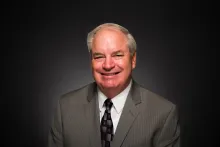
Robin Webber was born in Chicago, Illinois, in 1951, but has lived most of his life in California. He has been a part of the Church of God community since 1963. He attended Ambassador College in Pasadena from 1969-1973. He majored in theology and history.
Mr. Webber's interest remains in the study of history, socio-economics and literature. Over the years, he has offered his services to museums as a docent to share his enthusiasm and passions regarding these areas of expertise.
When time permits, he loves to go mountain biking on nearby ranch land and meet his wife as she hikes toward him.
