

Robin S Webber
This transcript was generated by AI and may contain errors. It is provided to assist those who may not be able to listen to the message.
Thank you to the Hymn Choir. Also want to thank all those that were able to set up the facility today to make it so lovely, and these beautiful flowers over here, and the arrangement, and every little bit makes it very, very special. Well, some of us are here for the Feast of Atonement for the very first time. So this is going to be the first time that you're going to be hearing a full message along with Mr. Star Wars on the powerful meaning, the wonderful and the loving meaning behind the Feast of Atonement. Some of us have heard this message before. Some of us have not heard it for a while. Whoever you are, you are going to hear this message on the Feast of Atonement. But before we do, I have a couple questions to bring you into the message, questions that I'd like you to answer in your mind for a moment. Simple questions, number one, does God play favorites?
Does God play favorites? Is He a respecter of persons? That's a big question. Something we need to consider when we consider how we look at God. Number two, is today the only day of salvation for humanity? That, too, is a very, very big question. If it is, looking around, we might say to ourselves, wow, looking around in this world, the headlines that we're reading, the poverty, the plagues, the trauma that is occurring within humanity, we'd say, you know, it looks like God is at the losing end, the short end of the stick. It does look as if, indeed, Satan is winning at this point. But with those questions, and even with that sober thought in mind, let's set the stage.
Set the stage for today's second message by turning to Isaiah. And come with me if you would. Let's open up our Bibles. Isaiah 55, and let's take a look at verse 5.
Because again, it's startling when you think about what comes out of the Scriptures. Where it says, Surely you shall call a nation you do not know.
And nations who do not know you shall run to you, because of the Lord your God and the Holy One of Israel, for He has glorified you.
It speaks here that there are going to be people that are not right now in that sphere of God's influence or knowledge of God.
But it speaks to a day when there are going to be nations and people that are going to know the same God that you and I do.
Now, we're going to conclude today's message with this same set of verses, but then we're going to go through verse 13. Because it is the Feast of Atonement that gives us the answers and fills in the blanks as to a time in the future.
When there are going to be nations that have never heard of God, never had relationship with the Almighty, that are going to have a relationship with Him.
As mentioned earlier, today we're here because a divine appointment was set for us. We were given a calling card, and we have a godly purpose to receive and to understand the answer to the questions that I've asked you today. And explain how it's going to happen.
Because when you think of the Feast of Atonement, there is simply no way of moving forward to the Feast of Tabernacles and or the Eighth Day Festival without going through the Door of Atonement. Now, on Atonement, yes, indeed, we do fast. And I'll comment on that and build upon Mr. Star Wars comments regarding that aspect of Atonement. And I know none of us really were thinking, oh boy, I just can't really wait to fast today. It's going to be so much fun! Woo-hoo! Wow! Let's do it! No, fasting does not come natural.
But this day is probably in one sense my favorite Feast Day. Because it makes everything else possible that our loving and our good God wants to bring into our life. And thus, he set up an opined appointment. He's telling us what he's doing right now and what he's going to do in the future so that you and I and others, these nations, can share worthwhile eternity with him in the future. And this future is so important, and the Feast of Atonement brings us into this steady confidence and this massive conclusion. I want to share it with you.
I remember when I heard it as a boy, 45 to 47 years ago, and I'm going to share it with you today. Because the Day of Atonement reminds us of this. You and I have been called for personal salvation. Yes, indeed. God is working with us. But here's the second point. We have not been called for personal salvation alone. And that's the point that I want to get across to you today. God has a purpose for us. There's a plan.
And you're a part of that plan. And that's what we're going to be talking about. How will the nations of this earth, with the billions of people separated from their Maker, by sinful self-will, by deception, by ignorance, come to know God? Why don't they know Him now?
Good question. The meaning of Atonement puts all of this into play. Let's understand something as we begin to move into the message. Any biblical commentary will generally guide you to the basic premise that the biblical Holy Days, mentioned in Scripture, not only in the Old Testament, but also in the New Testament, mentioned in Scripture, are framed by two seasons of harvest in ancient Israel.
There was the smaller spring harvest, barley harvest, and then there is that greater fall harvest, the wheat harvest, the little harvest, and the big harvest. Many, many commentaries will bring this into play about the biblical festivals that surrounded this. But here's the point I want to share with you today, and while you're here, important.
Being able to share facts and read facts out of a commentary is not commensurate with understanding. It's not commensurate with understanding what those festivals were really about and are about, and will yet reveal. And facts and understanding also do not, and here's the point I want to bring out to you, is this, are not necessarily accompanied by obedience.
And that comes into major play with the festivals. The festivals are not simply about facts. It's not just simply about understanding, but it's also about obedience. And that's why we are here today as a New Covenant people, Christians. And yet we are obeying the Word of God to assemble on this Holy Convocation to understand that God works with a plan. You think about what that's worth. You know, today in the world, we have people say, Oh my, and I'm just going to say that, I don't usually do that, but they will scream out in utter frustration, Oh my God!
Or they'll say, Where are you? Where is God? And they can't answer that. It's not saying that they don't believe in God and desire to have God's involvement, but they don't understand what He is doing. And at times, because they don't understand, thus they depart, as has Europe over the last 60 years, departed from even acknowledging God. There is no God in that sense in so many of the spots over in Europe. These holy days bring us into alignment, bring us into a confidence that God is not only love, but that God is working with the plan. I want to share something with you, okay? And it's right on schedule. Not your schedule, not my schedule, but it's on God's schedule.
And yes, you do have a part in it. It's a plan that moves beyond simply grain and beyond what God did in the past with a group of people. And again, this is very important when we understand the festival days. These festival days were not just originated for one tribe. They were not just simply originated for a local deity out in the wilderness.
These festivals were created for all of humanity. And another thing, we have many people. Today it was mentioned about the Jewish community. And today to them it is Yom Kippur. And we have a certain fellowship with him in that day. But to recognize that Yom Kippur and all of the festivals do not simply look back. What I want to share with you, friends, and it's really important if you want to jot this down, the festivals to a New Covenant Christian always lean forward.
It does not only tell us what God has done in the past, but it's prescribing what he is going to do in the future. We have very sincere, very dedicated people that look at what they observe of the festivals in a sense as to what God has done in the past, the great saving works out of Egypt, the great saving works that occurred at the Red Sea, and or perhaps how God is involved in their own life.
But they're not looking as to these festivals being what God is yet going to do in the future, to rescue humanity from itself, and to bring others along, not just a tribe, not just a congregation, not just a fellowship of congregations on many continents, but for all of humanity. That's what's so important. Now, sometimes that gets frustrating for you and me because we say, well, we want it all now!
We want it the kingdom now! Absolutely. But then we forget that marvelous parable that Jesus spoke about the kingdom. Matthew 13, he likened it to a mustard seed. That little mustard seed that is so infinitesimal, you can barely hold it much less, see it.
You can just get a little feel with it. And it says that as that kingdom grows, it's going to take over the whole landscape to where it dominates the entire environment. You know, we think we have problems watching the grass grow or the teapot come to boil. The kingdom of God can even be a little bit tad more frustrating humanly because we want it now. More than that grass, more than that tea, but we have to understand what God is doing. The spring holy days, a Passover, days of 11 bread, Pentecost, represent the time of God dealing with individuals down through the ages.
They're often called the church, which is just a Greek word, which means ecclesia, the called out ones, the separated ones. This is different than just a church building and or those that happen to be members of a roster. It's nice to have a building. It's nice to be on a roster, but God is speaking of the body of Christ. In that body, what He is doing is He is preparing them for works of service. Works of service to be a kingdom of priests now. Remember what I said earlier that salvation is not just about us. We have not just been called simply for personal salvation, but we are being molded and tooled and trained right now.
We're preparing to be a kingdom of priests. Now, many of you have heard of that term over the years. You can read it in Exodus 19. God mentioned it to the Old Covenant people. He also says in the book of Revelation that you're going to be a kingdom of priests. But somehow, we sometimes don't get it to what you and I have been called to. That's what the Day of Atonement is about. I'd like to give you two words. You might want to jot it down.
I hope that you will really think about it during this fall festival season. You and I, by the divine grant, have been called to sacred service. Sacred service. That ups the ante. We haven't just called to join the church. We haven't been called to simply have a rolodex of doctrine that we can roll out quicker than Superman can.
We have been called to sacred service. God is going to employ us in the future. We say, well, how much does that pay in this day and age? Well, don't worry about it. It's eternity. It's all right. But He is going to, in that sense, employ us under Jesus Christ, under the high priest in the future, to be a kingdom of priests, to be servants, and to be teachers of a way of life. The Day of Atonement has something to speak about that and to tell us about. We'll get to that in a moment.
Join me, if you would, in Leviticus 23 for just a second. I'm going to build upon the fine foundation that Mr. Star Wars gave us. But again, repetition is the best form of emphasis and education. I again want to go to Leviticus 23 and let's pick it up in verse 1 for a moment to build here.
The Lord spoke to Moses, saying, Speak to the children of Israel, and say to them, The feast of the Lord, which you shall proclaim to be holy, convocations, these are my feasts. Two key factors out of this small verse. Let's look at it. Number one, let's get the overwhelming idea that God claims them. They didn't come from Moses. He didn't borrow them from the Egyptians. He didn't have a sidekick from Babylon that told him about them. These come from God. They are the feast of the Eternal. And God says that they are my feast. Important.
He starts with the Sabbath. He moves to the Holy Days. Now let's go back to again verse 26 and focus on the day of atonement for a moment. And the Lord spoke to Moses, saying, Also, the tenth day of this month shall be the day of atonement, and it shall be a holy convocation. The word convocation literally comes from the Hebrew meaning a calling and or a summons.
You are to appear. Now, I don't know about you, but when I go to summons... I haven't gotten one recently, please understand. I don't want you to know about your pastor. I don't get to summons all the time. But if I did get to summons for something, of course, of which I didn't do, but if I did get to summons and say, Hmm, mirror, mirror on the wall, I wonder if I should respond to the summons at all.
Or, like the old Posey thing, Eh, not today. Maybe next week. No. When you are summoned, you are to respond. The holy days of God are a summons from above. God is here. He's waiting for us to appear. And when God is someplace, we better take a great sense of that that maybe we ought to show up. And it shall be a holy convocation for you shall afflict your soul, humble your souls, as it were, off the Hebrew word anah, and offer an offering made by fire to the Lord, and you shall do no work. Now, notice verse 28. You shall do no work on that same day, for it is the day of atonement, to make atonement for you before the Lord your God. In verse 28 it says, no work.
For the person who is not afflicted in soul on that same day shall be cut off from his people. Verse 30, anyone who does any work. Now, 28 it said, don't do any work. Verse 30 it says, don't do any work on that same day. That person I will destroy from among his people. Verse 31, you shall do no manner of work. 28, 30, and 31. You shall do no manner of work. It shall be a statute forever throughout your generations and all your dwellings. And it shall be to you a Sabbath of solemn rest. You shall afflict, that is to fast, to humble your souls. On the ninth day of the month, at the evening, from evening to evening, you shall celebrate your Sabbath. It is so important to understand some of the background to this feast of atonement. We are not to eat. We are to fast. We are to annaw. Absolutely. And there is a reason for this. And more than any of the other holy days, interesting. It says, you shall not work. Now, what is this all about? Join with me, if you would, in Deuteronomy 8, verse 2.
And you shall remember that the Lord your God led you all the way, forty years, in the wilderness, to humble you and to test you. The same word is fast, annaw, to afflict you and to test you, to know what was in your heart, whether you would keep His commandment or not.
Commandments are not just rules. It's about a relationship. The commandments that God gives us are not just simply about brain power. They are about strength of heart, that we will surrender and humble and afflict ourselves when God asks us to. And whether you will keep the commandment or not. Whether you will just say, yes, sir. That's very hard today in society. People don't like to say, yes, sir. They just don't. They don't want anybody to tell them what to do or invade.
Hey buddy, you're invading my space. What you doing? People don't want their space intruded upon. Even by God! Who do you think He is? Oh, you made me. Okay, thank you. Yes, sir. Up here. So He humbled you and allowed you to be hungry, fed you with manna, which you did not know, your fathers didn't know, and that He might make you know that man shall not live by bread alone, but man lives by every word that proceeds from the mouth of the Lord. Jesus would use this later, talk about Himself being the bread of life.
There's two things that we want to understand here, brother, about this day, and there is a certain amount of ritual in it. You know what? That's okay. And that is number one, we don't eat. We come to recognize and we do not work. And they really go hand in hand because this day, more than any other day, reminds us that it is not by our works that we are saved.
There is nothing down here below of our own human machinations that are going to do the job. If you think so, please just read the headlines right now. All the king's horses and all the king's men cannot put the financial kingdoms back together again. Folks, we are in a historical meltdown. The best, the brightest, they can theorize, they can postulate, they can have news conferences. Every time somebody has a news conference, the economy doesn't go up, it goes down. Have you noticed that recently? Not good.
No more news conferences by anybody. But what I'm saying is we come to a point, not only in the financial world, but in our own life. God says, put your hands in your pockets and keep them there. You're not going to save yourself. I alone am going to be able to come and rule over the nations. So don't get busy with your hands on that day. Don't get busy with eating that day.
I want you to keep totally focused on the saving work that I alone am going to perform. 1 John 3 verse 8. Join me if you would there for a moment. Let's put a focus on what that work is. 1 John 3 verse 8. The Epistle of John in the rear of the New Testament. 1 John 3, defined very well here. He who sins is of the devil, for the devil has sinned from the beginning.
1st Center. For this purpose, the Son of God was manifested that He might destroy the works of the devil. The devil was a sinner from the beginning. The devil is tied to sin. Jesus Christ is coming to destroy the works of the devil. That tells you something about sin. When Jesus Christ comes back on the Feast of Trumpets, He is crushing the kingdoms of this world. David Tomany is going to be dealing with the ruler of this age. The ruler of this age that propagates, produces sinful emotions and motions that cause you and me to bite that lure in sin. He is going to be crushed.
Crushed! That whole system is going out of business. Which leaves us with a question between the Feast of Trumpets and David Tomany. We are about to go to rehearse the wonderful world tomorrow. What part of that world are we still hanging on to, folks? I'm going to keep on coming back to you on that question. What part of this world are you saving in your cubby hole that you somehow think Christ is going to give you the nod to?
That you know He's not going to give you the nod to? But you haven't said, yes, sir, yet, too. Do you get rid of? He's coming to destroy the works of the devil. That's the first part. Hebrews 2 and verse 10 is the second part. This is encouraging. Actually, the first part is very encouraging, too. But this is double encouraging. For it was fitting for Him, for whom are all things, and whom are all things, in bringing many sons to glory to make the captain of their salvation perfect through sufferings. The second part of the work of Jesus Christ that God the Father has allotted Him is to bring many, many sons to glory.
And we have a role now in this that I want to talk about. Why do people suffer? Ultimately, there is a spiritual rogue being who is the source of all evil and suffering, and this day isolates Him more than any other. We know what happened in the Garden of Eden. We know how He came down as the serpent and lured the woman, beguiled her with half-truths, and pointed her to the Tree of Good and Evil, which was ornamented with the lust of the eyes, the lust of the flesh, the pride of life.
Oh my! It looked good. It looked wonderful. It looked like it was going to solve all of the answers. Folks, the Tree of Good and Evil did not look like a cactus out in Anzabirago. Okay? Got me? It didn't have thorns. It was extremely sensual. It was inviting. It was purdy. It was like getting into Disneyland without paying for it.
But ultimately, Adam Neve would pay for it. Not with a coupon, but with the death penalty. So we have to understand these things. What we do need to understand is that same individual, that same enemy, still abounds to this day and this age. 2 Corinthians 4 and verse 4 identify. It gives us a peek of what we're dealing with. And we must know our enemy. Brethren, I have been sounding a trumpet for about a month that we are at war. We are at war. That's what God calls it in the Bible. War. And we have to know our adversary.
We can't get comfortable. We get comfortable spiritually. We're toast. 2 Corinthians 4 and verse 4, whose minds the God of this age is blinded, who do not believe, lest the light of the gospel, the glory of Christ, who is the image of God, should shine on them. The God of this age, the God of this world. The age is probably a better term because it comes off the Greek word cosmos with a K, speaking of a culture, speaking of a certain ornamentation or adorning or way or system of being.
And Satan is defined as the God of this age. He's blinded. He doesn't even say he had to poke out the eyes. He's just blinded the nations that they couldn't receive what God has in store for them. Now come with me to Ephesians 2 for a moment. And this is very important. I thought about this this morning as I was praying and thinking about it, what I might be able to share with you today.
Because we say, oh, well, yeah, you know, I've heard that. Satan is the God of this age. He's the spiritual boogie man. Well, I want you to understand, though, he's boogieing with you. Because Ephesians 2 and 2 is not a warning to the world. It's a warning to the church. That's what's really important about Ephesians. Because Ephesians is specifically written to the body of Christ. And in Ephesians 2 and verse 2, it says, In which you once walked according to the course of this world, according to the prince of the power of the air, the spirit who now works in the sons of disobedience.
But it's out there. And it wants to draw you and me back. And it says, the prince of the power of the air. He had a sense, if you look at it as an analogy, that it's as if he's sending impressions out. He's sending out vibrations. And they're not good vibrations. They're vibrations that cause us to sin. Satan doesn't say, well, you know, Robin, today, I want to cause you to sin. Oh, really? I'm just starting to have a conversation. Really? And what would you like me to do? Well, this is what I would like you to do. First of all, I'd like you to go up and beat up the old lady on the corner of your neighborhood.
Then I want you to kind of come back. And, you know, I know you've had a little tango with your wife here, and a little upset. So what I want you to do is I want you to kneel down, and, you know, she's going to be coming down the stairs. So I want you to put your foot out there, and I want you just to be ready for her. And I want you to nail Susan. Now, that's not how Satan operates. Now, you're laughing and you're giggling, but you've all been there.
Not with the little old lady. What happens is Satan sends out emotions and feelings and attitudes. And he knows that you'll come up with the rest. He doesn't have to tell you what to do. Your human nature will eat you to that. He sends out the vibrations. He's the prince of the power of the air. It's as if you put a cup of coffee.
Doesn't that sound good right now? It's like putting a cup of coffee into a microwave, and those beams go in there and transform it and change it. But, brethren, we're talking about something that's greater than a microwave, and he is the enemy of the church. And he is your own personal enemy, and he is still out there. And we need to be cognizant of that and understand that. He doesn't like the body of Christ. Revelation 12. Join me there for a moment. Revelation 12. And let's take a look at verse 17. The dragon, which is another name for Satan, was enraged with a woman, and he went to make war with the rest of her offspring.
And that offspring is defined. Those who keep the commandments of God and have the testimony of Jesus Christ. I would suggest that members of the body of Christ are those that keep the commandments of God and have the testimony of Jesus Christ, whoever, wherever they are.
And Satan is enraged, and he is at war with them. What does that mean? And what is he throwing at us? I want to share two thoughts with you. They're very quick. Simply this. Number one, he wants us. Number one, he wants us to lose the truth. He wants us to lose the truth. Brethren, this truth that you and I have of assembling here today, knowing about the biblical Sabbath, knowing about the biblical Holy Days, understanding the relationship that Jesus Christ has and desires for the bride of Christ, and on and on and on, is precious.
It's priceless. We can't put anything down on it in this world to give substantiated worth. God has given that to us. But I'll tell you something. He wants you and me to break free from the truth, to lose it, or to sully it, or to tamper it down. Don't do that. Number two, he wants us to lose heart. He wants us to lose heart. I am convinced of that as a pastor of the flock. He wants us to lose heart as we continue our pilgrimage down through this life. Daniel 7, verse 25, you can jot it down. Very interesting verse.
Actually, in the King James English says that Satan wants to wear down the saints. Just wear them down. Poop them out. Just have them go flat, go weak, get tired. It's not really worth the journey anymore, Lord. It's not worth the pilgrimage anymore. I'm just going to kind of get on the shelf. I want to remind you of something, brother. The Day of Atonement brings us into complete confidence and focus. You and I have been called to sacred service.
Sacred service that is about the truths of God and about service to others and to recognize that God will indeed supply our needs. This is what we're facing. We are facing an adversary. But let's remember something. This is not just simply about Satan today. He's the lesser party in all of us. This is not a festival of fear. It is a festival of faith. It's not about what Satan has done, but what God is doing with you and me. And that's what I'd like to focus on for a moment. Join me, if you would, in Leviticus 16, a chapter that is devoted to understanding the Day of Atonement, to understand the role of a priest.
Leviticus 16. Let's pick up the thought, if we could, in verse 1. We're going to find out something. To be a priest takes preparation. That's one of the reasons why we're keeping these festivals and why we remain a holy people every day. There are holy days, but we are to be a holy people every day. Because we worship a holy God that's eternal. Holy people go to holy days. The holy days don't make people holy.
We've already been made holy by God's calling because He's holy. But we obey God, we surrender our lives and our time to God, and therefore we go to the holy days. And we learn more about the holy God, and we surrender our lives to Him. We're to be holy every day. We are priests in preparation and in training. Notice this, verse 16. And they journey from Elam and all the congregation of the children of Israel. And then it says in verse 2, that the whole congregation of the children of Israel complained against Moses. Oh, you know what? I'm in Exodus 16. I thought, oh, wow! I didn't get that one. But we get to 16.
Pardon me. Now, now, the Lord spoke to Moses after the death of the two sons of Aaron, when they offered profane fire before the Lord and died. And the Lord said to Moses, Tell Aaron, your brother, not to come just at any time into the holy place inside the veil before the mercy seat, which is on the ark, which was that covering on the ark of the covenant that enclosed the ten commandments, lest he die, for I will appear in the cloud above the mercy seat.
Thus, Aaron shall come into the holy place with the blood of a young bull as a sin offering and of a ram as a burnt offering, and he shall put the holy linen tunic and the linen trousers on his body, and he shall be girded with a linen sash, and with the linen turban he shall be attired. These are holy garments. Therefore he shall wash his body and water and put them on.
Then join me in verse 11. And Aaron shall bring the bull of the sin offering, which is for himself, and make atonement for himself and for his house, and shall kill the bull as the sin offering, which is for himself. This is even before we get to the rest of the story that we're going to cover in a few moments. A priest of God, and especially this heist priest, it just doesn't happen, folks.
There is a preparation. There are things that God asked us to do. There are things that we put on, and we need to understand that when it comes to the day of atonement. He was to offer a sacrifice first to himself before he sacrificed for the people.
Now, that's in a sense what we did during the spring holy days, when we have Passover and when we have the days of 11 bread, and when we come to the calling of the first fruits and understand that. We continue that into now the Feast of Atonement because we must remain vigilant in our faith towards God, and make sure that we are casting off the works of this world, and that we are in a state of repentance. How do you remain in a state of repentance? There's only one way of remaining in a state of repentance, and that is to recognize what sin is, and what the flesh does, and what the pride of life does, to understand that, and to understand the magnitude of what sin is, and then the magnitude of what God had to do to cover that sin. Your sin and my sin allows us, then, to be vigilant to come out of this world, which is, by the way, prophetically, it says it's going to be destroyed. And if it's going to be destroyed, you know how oftentimes people in the forest fires in Southern California, they go back and they kind of gather and look through the rubble to collect things that are precious. But what God is going to be doing, the Feast of Trumpets demonstrates, is He's going to be putting to ashes everything. Now, He's asking you and me right now not to collect after that. He's telling you and me now with this world, don't collect before. There's nothing to save. It's all going to go away, gone with the wind. Thus, we prepare ourselves. We recognize our own part of what we are. It's very interesting that oftentimes when the high priest would go in, you can read Jewish literature, the high priest would ask for forgiveness for what he did. Are you ready with this? For what he did? And also for what he did not do. He asked forgiveness for the sin of commission as well as omission.
Fascinating. Think about that for a moment. Not only what he had done wrongfully, but that which was right that he did not do at all. Jeremiah 48 verse 10 says, Curse it as he who draws the sword deceitfully, and curse it as he who does not draw the sword at all. Folks, when you are in the spirit of the law, not just the letter of the law, but the spirit of the law, you can see the training never stops. We've got to be vigilant. We've got to know what's going on here. Very important. We think about things, of training things that we want to put off. Let me just ask you a question here to save a little time on this. To make sure that, you know, as priests in training, we're not wearing the white robes in that sense of the Aaronic priesthood. God defines us as New Covenant Christians that we are to wear white linens. We're to wear adornments from God, not just rags, not just what the world passes off to us. Let me just ask you a question. I'm going to kind of put a toothpick in there for a moment, just like you test something in the oven. To make sure that, are you with me? That we're on the right wavelength. And that is simply this. To see how much this world has affected us, and how perhaps much more we need to go into training during these fall festivals. I have a question for you. Are you adversarial? Are you an adversarial person? We live in an adversarial age. Watch television, people talking over one another, I'm right, you're wrong. They can't even hear who's right or wrong, because they're both talking at the same time. But everything is kind of coming at you. You know what I'm saying? Are you an adversarial person? I want to share something with you. Satan is an adversarial being. Satan is an adversarial being. He's adverse to the kingdom of God. That's something that we need to look at ourselves before we go into training helping the wonderful world tomorrow, when we're a kingdom of priests.
We've got to repent of allowing the ways of this world to creep in to a way that are being trained to sacred service. We don't want to be like Satan. We want to be like our master brethren.
But this culture and this world does affect us. Here's another question I have for you. Are you accusatory? Are you accusatory as a person? Are you always pointing, pointing, pointing, pointing, pointing, pointing, and accusing, accusing, accusing, accusing? That's right. You get it. Oh, I thought you were pointing at her. I was joking with you for a moment. Are you an accusatory person? That's just rampant in this age. She did it. He done it. I'm right. You're wrong. Put down.
Brethren, that's not going to float in the millennium. Dead on arrival. And if that's in our heart, God can't use us as a part of that sacred service of being a kingdom, a priest. Satan is adversarial. We know that he's adverse to God. We also know that he accuses the brethren night and day. I have another question for you. Let's go deep. Are you filled with bitterness? Do you have anger rumbling around down inside of you? Satan is full of wrath. He says that in the book of Revelation. He describes him as one who is full of wrath and angry. I know that we have people in our congregation. I know that I have people in congregations, plural. I know that we have people in the body of Christ. They're angry. And it's not just simply being angry at Robin Weber. I'm sure we have plenty of people at Robin Weber. It's not just about Robin Weber. It's not just about a pastor. It's not just about an organization that they might belong to. They're just angry with God. They thought that this pilgrimage was going to be kind of like a hayride in November. God, if you told me it was going to be this tough and this long, I would have never signed on. I mean, I can deal with you, but all these people... Have you ever noticed it's really much easier to deal with God than people, or am I the only one? And I'm a people person! Now, brethren, we've had a few laughs about it and a few smiles. But please understand, I'm dead serious. Because if you have sin in you, that's a death wish. And being adverse to God, having an accusatory spirit, and allowing anger to remain inside of you... This is not what we're preparing for as a priest in training for God. Let's understand something very interesting. I'm not going to get to all my notes today because I want to cut this little short. But I do want to show you something kind of interesting here, if my eyes can float on it for a moment here. I'll look at it for a moment. Yeah. Let's go to verse 7. And he shall take the two goats and present them before the Lord at the door of the tabernacle of meeting. And then Aaron shall cast lots for two goats. One lot for the Lord and the other for what is called the scapegoat, which has all sorts of connotations in it. It was very, very important for you and I to understand that as priests in training, to help those nations that are going to come to God in the world close is just simply not good enough. Choosing between these two goats was a decision that was made by God. Because man of and by himself did not have the answer as to who was the goat that would bear the sins of the congregation versus the one that would go. Have you ever noticed down through the ages how many wrong choices humanity has made? Think about this for a moment. Are you with me? We're in Jerusalem, 31 A.D., and on this stage, outside of the Roman ruler's house, are two men.
It's very interesting. One is called the Son of God. The other is called the Son of the Father. Hmm, that sounds complicated. So what's up? One is the Son of God, Jesus of Nazareth. The other is the Son of the Father. That's what Barabbas means. Got it? And the people were given a choice as to who would be their hero that day. Got it? They made the wrong choice. Sounds alike, looks alike. We're not playing charades, brethren. We are into dynamic spiritual sweepstakes. We need to continue, not by lots today, but by the Holy Spirit, to go back again and again and again and ask God, God, give me a heart, give me eyes, give me your will to see the things of God. I find that so very, very important today, brethren. We need more of God's discernment, just as this priest of old did, to understand what God has done for us and given to us. Ultimately, that goat was slain for the sins of the congregation. We know that the other goat, in that sense, was let out into the wilderness. And that's very, very important. Because it says here, notice in verse 20, This was enacted for many, many years out in the wilderness to portray something that God is going to do in the future in Revelation 20. Join me there for a moment. Revelation 20. Revelation 20. Verse 1, I saw an angel coming down from heaven, having the key to the bottomless and the great chain in his pit, chain his hand. And he laid hold of the dragon, that spirit of old, who is the devil and Satan, and bound him for a thousand years. Can you imagine what that's going to be like? To recognize what it's going to be like for Satan to be bound? See, when that priest went in to offer the blood of the chosen goat to represent for the people, he made that sacrifice. And that's what Jesus Christ has been doing for the last two thousand years as both our Savior and as our high priest. But when the high priest came out of the tabernacle, there's a typology there of now, in the future, Christ coming from the heavenly court, from the heavenly temple, coming back to this earth, and as we say, doing business. And the archangel is going to go down and chain Satan. Now, if I can make an impact on you for a moment, we're going to go about five minutes here. If I can make an impact on you for a moment, it's for some of you that, for one reason or another, have been bedside at a time with a loved one, where all of the machines change. You know, when you're in a hospital room, and I've had that, being a pastor for many years, where you'll be in a room and you have the different heart detectors, machines, and... to go up and down, up, and those acts in training, up and down, and up and down. You know, it fills the screen that's very active. Well, that's what's happening right now, because Satan is the God of this age, and this screen around us is very active.
But when that archangel comes down and binds and chains Satan and grabs him, and he can no longer do any mischief, any shenanigans, hurt people...
It's just going to go flat. There's going to be no more signals.
You've seen that in movies? Have you ever been in a hospital room?
Make those sounds again.
All of a sudden...
Just flat.
Brethren, we are in training to assist Jesus Christ when those signals go flat in the future. And there is no more sound coming from the activity of Satan for a thousand years.
And you and I have the privilege of having front row seats there as the first fruits of God.
Do you know what that's going to be like?
Does that not just make you... I think you've forgotten your tummy for the moment, haven't you?
You've forgotten your tummy.
Because what God fills up on this day, that's why I call it the Feast of Atonement, is so much greater. And did you realize... I'm just going to kind of paraphrase here.
Did you realize that it is on the Day of Atonement that the Jubilee was proclaimed?
The Jubilee was proclaimed.
When people were forgiven of their indebtedness, when people...
You think about today, all of our neighbors that have lost their homes have their property restored.
That generational bondage is broken.
Now, for you and for me to understand that is to understand something beautiful, the Jubilee.
And it's interesting... Let's think about our own life as the first fruits and that spring harvest.
That it's 49 days plus one, isn't it?
From the middle of the days of Unleavened Bread until Pentecost, 50, for the spring harvest.
To where we are proclaimed the first fruits.
It's interesting that when you look at the Jubilee on the Day of Atonement, when Satan is put out of business, surrounds the Jubilee, which is 49 years plus one, 50 years.
Do you know what that's going to be like?
How many of you have ever heard of the Liberty Bell?
Oh, you're the one that cracked it. Okay, no, just teasing. Just teasing.
We confuse the Liberty Bell at times with the Revolutionary War.
The Liberty Bell was not made or created for the Revolutionary War, even though it has a lot of overtones being in the Philadelphia Square there.
The Liberty Bell, what we now call the Liberty Bell, was crafted about 40 to 50 years before.
It was designed and created for the Jubilee of William Penn.
When he opened up the Commonwealth that was granted him by the King of England, for all people, of all backgrounds, the dispossessed of Europe.
See, up to that time, basically the colonies were basically singularly, denominationally religious.
William Penn said, whoever you are, you have a stake here.
You come, you can have land. Come to Pennswoods. Come to Pennsylvania.
You will have liberty.
That's where it came. Proclaim liberty to all the inhabitants throughout the land.
You and I have already been given that liberty. That was at the Spring Holy Days.
We're now in training. We're now preparing for that which God is going to deal with in the Fall festivals.
That's why I want to now take you back to Isaiah 55.
Let's read the whole Scripture.
Because when Satan is put out of business, when that wavelength is crushed by the work of Jesus Christ, the veil is going to be lifted. The nations are going to be returned.
You have an opportunity to experience jubilee, sins forgiven, a return to the land, a return back to Eden.
Let's read it together.
Surely you shall call a nation you do not know, and nations who do not know you shall run to you because of the Lord your God and the Holy One of Israel, for He has glorified you.
Seek the Lord while He may be found, call upon Him while He is near, lift the wicked, forsake His way, and the unrighteous man His thoughts.
Let Him return to the Lord, and He will have mercy on Him.
And to our God, for He will abundantly pardon.
For my thoughts are not your thoughts, my ways are not your ways, says the eternal force.
The heavens are higher than the earth, so are my ways higher than your ways, and my thoughts than your thoughts. For as the rain comes down, and snow from heaven, and do not return there, but water the earth, and make it bring forth and bud, that it may give seed to the sower and bread to the eater.
So shall my word be that goes forth from my mouth, and it shall not return to me void, but it shall accomplish what I please, and it shall prosper in the thing which I have sent it.
What is God going to be doing as we go to these fall festivals to rehearse?
God is going to be calling the nations. He's not a respecter of persons. He has a plan. He has firstfruits. He has saints right now.
But in that sense, Eden is going to be opened up once again.
For you shall go out with joy, be led out with peace. The mountains and the hills shall break forth into singing before in all the trees of the field shall clap their hands.
Everything is going to be in oneness, in atonement, and in harmony.
Instead of the thorn shall come up the cypress tree, and instead of the briar shall come up the myrtle tree. This is more than just horticulture, folks. This is talking about the curse that was planted on humanity because of humanity's choice at the garden.
Not God's choice, humanity's choice. Adam and Eve rejected God, and a curse was put on them.
And the whole world in that sense, not only Adam, not only Eve through childbirth, not only this or that, but the land suffered. There was a curse.
And instead of the thorn shall come up the cypress tree. The curse is gone!
God is back in the midst of his people, just like Eden.
And instead of the briar shall come up the myrtle tree. And it shall be to the Lord for a name, for an everlasting sign, that shall not be cut off.
It's interesting when you start with a part of Scripture, then you leave the good part for the end.
To recognize that God is working with the plan, that this is not simply the only day of salvation, that God is working with many peoples, and he's right on schedule.
But he wants you and me to remain in training in this sacred cause, this sacred service, this preparation of being a kingdom of priests now. That's what all of the Holy Days are going to be about.
And I'm going to leave you with a real famous question of mine that I've left many an audience over the years, as we go to the Feast of Tabernacles now.
Folks, what are you going for? Are you going for a vacation? And or are you going to experience your vocation?
Almost like those two goats. Almost sounds the same, doesn't it?
If you take a vacation, you'll have a good time.
If you go forth to experience a vocation, you will have spiritual blessings, and good times will be a byproduct. Be assured.
But that is indeed what will honor God to those that are now training to be priests before our God and before His Christ.
We'll see after services.
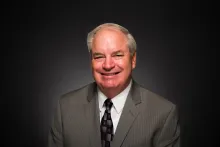
Robin Webber was born in Chicago, Illinois, in 1951, but has lived most of his life in California. He has been a part of the Church of God community since 1963. He attended Ambassador College in Pasadena from 1969-1973. He majored in theology and history.
Mr. Webber's interest remains in the study of history, socio-economics and literature. Over the years, he has offered his services to museums as a docent to share his enthusiasm and passions regarding these areas of expertise.
When time permits, he loves to go mountain biking on nearby ranch land and meet his wife as she hikes toward him.
