

Roy Holladay
This transcript was generated by AI and may contain errors. It is provided to assist those who may not be able to listen to the message.
In 1963, Norm and I got married after sunset. On the day of Pentecost, we got married on a Monday night. The church observed Pentecost on Monday, not on Sunday as we do today. That was changed in 1974, and when it was, it caused quite a surge in the church. The church had for decades observed the other, and then it was changed to Sunday. It's not my purpose today to try to cover all of that in great detail, although I will focus on it somewhat, but just in a general sense. As we'll see as I progress through the sermon, the Jews today keep Pentecost on a day of the month called Sylvan VI, and they observed that particular day. The dates of all of the annual festivals except Pentecost are specified in the Scripture, and yet Pentecost is not. We're told to count, and yet the rest of them have clear dates laid out. Let's turn back to Leviticus chapter 23. While you're doing that, did all of you get a copy of this handout? I've given this out before, but rather than making you one up, I thought I would just reproduce the old one, especially since I already had it printed, and be able to pass it out. We could use it again here today. In Leviticus chapter 23, verses 1 and 2, this is a chapter that lists all of the annual Holy Days. And the Lord spoke to Moses, saying, Speak to the children of Israel, and say to them, The feast of the Lord, which you shall proclaim to be holy convocations, these are my feast. So notice immediately two things. God says, These are the feasts of the Lord, not the feasts of the Jews, not the feasts of Israel, not the feasts of anybody else. They belong to him. He says, They are my feast. The word for feast, as I believe most of us are aware, is the Hebrew word moad. Moad means appointment, fixed time, or season. The same word is used back in the book of Leviticus, chapter 1 and verse 1. I might just jot that down. In the New King James Version, it talks about tabernacle of congregation, that when God met with Moses, that Moses would come up to the tent, or as the New King James Version says, the tabernacle or tent of meeting. Tabernacle is where God met with his people. Before the temple was built, God would, if he wanted to convey something to the people, they would have to come there. Moses met God there. Congregation or meeting, again, is moad, implies a meeting or an appointment. The tabernacle was a place that was appointed to meet with God at that time in history. We know that God's feasts are appointed meetings with God. The Sabbath is an appointed meeting with God. You and I are here today. These are set times that God is set apart. He's the only one who can make days holy, or time holy. So consequently, we are here, we're meeting with God at this time. God is the host of all of the holy days.
Now, we're also, if you'll stop and think about it, individually, the Bible refers to each one of us, that our body is the temple, the Holy Spirit, and that terminology is used. And so God dwells in each one of us individually. But also, the church as a whole is referred to as the temple of God. Collectively, we are all the temple of God. And on the annual holy days, God commands us to come together collectively. And in a collective sense, He meets with His body.
Does it not make sense that if the head of the church, if the Father is there, that the body would be where the head is, where Christ would be? And you find that that's basically what occurs on the holy days. Leviticus 23, I want you to notice that there are specific days of the month given for all of the annual holy days except Pentecost. Verse 3, actually, even, it says, Six days shall work be done, but the seventh day is a Sabbath, a solemn rest.
Now, in this case, we find the Passover occurs on the seventh day of the week every week. So it falls specifically every seven days. Verse 5 talks about the Passover on the 14th day of the first month at twilight is the Lord's Passover. So that day is set. You cannot observe the Passover on the 20th or the 18th or the 30th, any day that you want to dream up. It has to be on the 14th. That's the time God has set aside. Verse 6, on the 15th day of the same month is a feast of unleavened bread.
To the Lord, seven days you must eat unleavened bread. On the first day you shall have a holy convocation or a commanded assembly. So the first day is an annual Sabbath. It's a holy day. You shall do no customary work on it, but you shall offer an offering made by fire to the Lord. For seven days, the seventh day shall be a holy convocation. So the first day of unleavened bread is on the 15th. You count seven days, and that brings you to the 21st. So the last day of the days of unleavened bread always falls on ABib, the 21st, the 7th, and the first and the seventh day are annual Sabbaths.
Now verse 24 tells us, Speak to the children of Israel, saying in the seventh month, on the first day of the month, you shall have a Sabbath rest, a memorial of blowing the trumpets, a holy convocation. So the Feast of Trumpets falls on the first day of the seventh month, which is Tishri. And then in verse 27, on the tenth day of the seventh month shall be the day of Atonement.
It is a holy convocation. So the day of Atonement always falls on the tenth day of the seventh month. And then verse 34, speak to the children of Israel, saying, The fifteenth day of the seventh month shall be the Feast of Tabernacles, for seven days to the Lord. And on the first day there shall be a holy convocation. You shall do no servile work.
Let me back up here. On verse 34, speak to the children of Israel, saying, The fifteenth day of the seventh month shall be the Feast of Tabernacles, for seven days.
On the first day you shall have a holy convocation. You shall do no customary work on it. The King James says, Servile. It says, For seven days you shall offer an offering made by fire to the Lord. And then notice, on the eighth day you shall have a holy convocation.
Totally separate feast. So on the eighth day, you have, first of all, the fifteenth day of the seventh month is the beginning of the Feast of Tabernacles. And that's for seven days. And then, on the 22nd comes the eighth day. So what you discover is that all of these annual holy days fall on a specific day of a month. Now, Pentecost is the only festival that does not have an assigned day of the month. We're told to count. And guess what happens when you count? You count. There is room for error. There's room for confusion. There's room for making mistakes.
If it always occurs on a specific day of the month, why did God say, count? Why didn't God just give an exact day like he did for all the other days? Well, obviously, God didn't want it done that way. Pentecost is the one festival that always occurs, notice, on a specific day of the week. It occurs on a Sunday, as we shall see, but not on a precise day of the month, according to the Hebrew calendar. And there is a distinction. There's something special about this festival. And I think Alan was alluding to that in his sermonette. This is a very special day.
And there's something special about it. And we're told to count. And we'll see exactly what that's all about as we progress through the sermon. This festival is referred to by several names, several titles. There are different ways of figuring and coming up as to when this day should be observed. But each one gives a different aspect concerning this festival. When you put them all together and you look at it, it gives and paints a beautiful picture of what this particular day means.
It gives added depth, added information. It gives added comprehension, as we will see. So with all of that in mind, let's go over to Acts chapter 2, verse 1. Acts chapter 2 and verse 1, the beginning of the New Testament Church.
This is where God poured out His Holy Spirit on the New Testament Church. And in Acts 2, verse 1, says, When the day of Pentecost had fully come, so there was a particular time when it came, it was fully there. They were all with one accord and one place. So there was a unity. They were in one spot. And they were waiting, as Christ said, you wait in Jerusalem for the promise. And that power would come on them. So they were waiting for that promise to be fulfilled. And you know it was going to happen, but they didn't have, I don't think, really any idea of exactly how it was going to happen and how God was going to do it. Now the word Pentecost, years ago we used to say the word Pentecost meant count 50. It does not mean count 50. It means 50th. And by implication here, it means the 50th day. You know that's sort of implied, but it means the 50th or the 50th day. Back up to chapter one in the book of Acts, and you'll notice Luke wrote the Theopolis about what Jesus began to both do and to teach. And until the day in which he was taken up, verse 2, chapter 1, verse 2 now, after he threw the Holy Spirit, he given commandment to the apostles that he had chosen, to whom he also presented himself alive after his suffering by many infallible proofs being seen by them during 40 days. So they saw him during a period of 40 days and speaking of the things pertaining to the kingdom of God. Now what was the first day that the disciples of Christ saw Jesus Christ after he was resurrected? Was it not on Sunday? Now if you'll take the handout I gave you, I have mine here somewhere, you'll notice the chart at the bottom, number three.
They saw him on Sunday, which we would have day number one. For 40 days Christ revealed Himself to them, as it says, by many infallible proofs. What day of the week was the 40th day? It was a Thursday. So Jesus Christ ascended to heaven on a Thursday. You'll notice 10 days later brings you to what? The 50th day, and that was Pentecost. And you find that Christ told them to remain there in Jerusalem and to wait for you, that Spirit, to come. So you count 40 days forward, including the first Sunday in which he was seen, and again you come to a Thursday. 10 days later you come to Pentecost, the 50th day.
Now for years we kept Pentecost on a Monday.
However, the proper day it should be observed on is a Sunday.
This also reveals something that's always been a question out of the Old Testament. It shows which day we should count from.
You see, the reason why the Jews always come up with Silvan VI is they count from the annual Sabbath during the days of Unleavened Bread.
So if the first day is the 15th and they count from the 16th, it's always going to end up on Silvan VI. You know, it's just set. So why didn't God say, do that?
Well, there was a reason.
Because I think this shows that it's from the weekly Sabbath that Jesus Christ appeared. And we will see that actually on that day when he first appeared to his disciples, he fulfilled one of the symbolisms of the day of Pentecost, which would indicate again that that was the day. So you begin to count from the weekly Sabbath during the days of Unleavened Bread forward, not on the annual Sabbath.
The Jews again count today from the first annual Sabbath.
If God wanted this day to always fall on Silvan VI, then why didn't he give the date in Leviticus 23? He did for the rest of them. If you remember what happened in the sequence of events that week, Jesus Christ kept the Passover on Tuesday night with his disciples.
He was crucified on Wednesday.
That Wednesday was also the preparation day before the annual Sabbath, the first day of Unleavened Bread.
Turn back a page of my Bible here. John 19, chapter 19, verse 31. We read, Therefore, because it was a preparation day, that the body should not remain on the cross.
So Jesus is hanging on the stake here at that time.
On the Sabbath, for that Sabbath was a high day.
A high day is an annual holy day of God, the first day of the days of Unleavened Bread.
So that Sabbath then fell on a Thursday.
It began Wednesday night through Thursday night.
So the next day after that annual Sabbath that week would have been a Friday.
So the question is, should you start counting from that Friday, or should you count from the Sunday?
Well, the Jews today count from that Friday. If you count 50 days from a Friday, that would bring them back to a Friday Pentecost that year, talking about the Jews.
And as I will show you, Jesus Christ fulfilled not on a Friday, but after He was resurrected, the symbolism of what that day symbolized.
Let's go back to the book of Leviticus, chapter 23 again.
In Leviticus, chapter 23, we will begin to read about the day of Pentecost.
In verse 9, the Lord spoke to Moses, saying, Speak to the children of Israel, and say to them, When you come into the land which I give you, and reap its harvest, you shall bring a sheave of the first fruits of your harvest to the priest.
Now, we find a couple of very important words associated with this day, the day of Pentecost.
Number one, harvest. Number two, first fruits.
Alan touched on the first fruits in his sermonette today, but they were to take a sheave of the first fruits.
And what were they to do with it?
He shall wave the sheave before the Lord to be accepted on your behalf.
So whatever the sheave symbolizes was done on behalf of the people.
On the day after the Sabbath, the priest shall wave it. Now, on a Friday, Jesus Christ was in the grave back in 31 A.D., but on a Sunday, he was alive. And as we will see, this wave-sheaf offering pictured something, and it pictures Jesus Christ.
Let's go back to 1 Corinthians 15.
We will be back to Leviticus 23.
But in 1 Corinthians 15, beginning in verse 20, we read this about Jesus Christ. Christ is risen from the dead and has become the first fruits of those who have fallen asleep. So Jesus Christ, in one sense, if you want to use the terminology, is the first of the first fruits.
Because you and I also are referred to as first fruits.
But he was the first one to do something. What is that? To be resurrected and become a part of the kingdom of God, the family of God again. In verse 21, I'm talking about in a glorified state, in a spirit state, it says, For since by man came death, by man also came the resurrection of the dead.
For as in Adam all die, even so in Christ shall all be made alive.
But every one in his own order, Christ the first fruits. And afterwards, those who are Christ had his coming.
And then it goes on to talk about the end.
So Jesus Christ is the first fruits of the dead.
And we find that there is an order to the resurrection.
And as we will see toward the end of the sermon, there is a time that the Bible describes when you and I will be resurrected.
Let's notice Colossians 1, verse 15.
Colossians 1, 15 uses a little different wording, but certainly pictures the same thing here.
Talking about Christ, he is the image of the invisible God, the firstborn over all creation.
Jesus Christ was the firstborn, the leader, the head, over all creation. And verse 18, And he is the head of the body, the church, who is the beginning, the firstborn from the dead. And in all things he may have preeminence.
So Jesus Christ was the firstborn from the dead. He is the first one to have lived in the human body and then to be born into the family of God. So Jesus Christ is the first of the first roots.
Jesus Christ, you might remember, after his resurrection—and we know that he was resurrected somewhere on Saturday evening toward sunset—that Jesus Christ appeared to the women after his resurrection. You might remember he told him, don't touch me.
Later on that day, the disciples did touch him. In fact, he told them to handle him, to see that he was there. He was real. He apparently ascended to heaven in the meantime, was accepted of the Father, and returned to the earth to give final instructions to his disciples. In John 20, we read about his appearing to the women, what he said to them. John 20, verse 16.
Jesus said to her, one of the women, Mary, and she turned and said to him, Rabboni, which is to say, teacher. Jesus said to her, Do not cling to me, for I have not yet ascended to my Father. Notice carefully what he says here.
Don't cling to me. I have not yet gone to my Father. But go to my brethren and say to them, I am ascending to my Father, and your Father, and to my God, and your God.
That doesn't make sense if it's 40 days later that that happens. But he said, You go tell them I'm ascending. And so off she went to spread the news. Jesus Christ fulfilled that wave sheaf offering. He was accepted by the Father. His sacrifice was accepted by the Father.
And he came back down to the earth to instruct, guide, and teach for the next 40 days his disciples.
Now let's back up again to Leviticus chapter 23.
I think I've turned to Leviticus 23 so often that it just almost automatically opens in my Bible.
I go back to the Old Testament here. Leviticus 23, let's notice verse 14.
We're told, You shall eat neither bread, nor parched corn, nor fresh grain, until the same day that you brought an offering to your God, it shall be a statute forever throughout your generation and all your dwellings. Okay, so first of all, on the day after the weekly Sabbath, you find they offered up this wave sheaf offering. Verses 12 and 13 talk about a number of other offerings being offered up at that time, and as it says here, that they were not to eat of the fresh grain until all of this, all of these offerings had been offered up, and then the harvest could begin.
The harvest could not begin. The spring harvest, the first harvest, the early harvest, would not begin until that had occurred. So Israel could not eat of the new crops until the wave sheaf had been offered up and the offerings were offered up at that time. Then they could begin to harvest.
The New Testament harvests, or the spiritual harvests today, could not begin until Jesus Christ was sacrificed, died as our Savior, made it possible for our sins to be forgiven, and then was resurrected, rose to be accepted by his Father. And once the wave sheaf offering was offered up, the harvest could begin. The spiritual harvest can begin and did begin, began here on the day of Pentecost because Jesus Christ had fulfilled all of this.
And this wave sheaf offering, being way before God, was a type of Christ's sacrifice. He is being accepted of the Father. Now moving on, let's notice verse 15. Verse 15, And you shall count. Now it doesn't give a day, but here we discover that they were to count.
So you shall count for yourselves from the day after the Sabbath, this would be the weekly Sabbath, from the day that you brought the sheaf of the wave offering, seven Sabbaths shall be complete. So they were to count seven Sabbaths, beginning on the day after the Sabbath. Now again, if you'll take a look at your diagram here, you will notice that if you count the first week, you come to seven. This is not a calendar, it's just counting days here. But you have one week, two weeks, three weeks, four weeks, five weeks, six weeks, seven weeks, seven times seven is forty-nine. It comes to a Sabbath, weekly Sabbath. The next day is Pentecost, the fiftieth day. And so they began to count on that day after the Sabbath.
And they counted seven Sabbaths. Didn't actually even have to count forty-nine days, just count seven Sabbaths from that point forward, and you would come to the day. But I want you to notice why we were confused in the past and why Mr. Armstrong was confused. In verse 15, we read, and he says, you shall count for yourselves from the day after the Sabbath.
When Mr. Armstrong read that, he said, the day after the Sabbath is Sunday. And if I count from Sunday, I begin counting on Monday. So he always began counting on a Monday, and you count seven days, and it brings you back to a Sunday, and then the next day was Monday. And so we kept Pentecost on Monday. But in 1974, there was further understanding, revelation, comprehension about this. The word from in the Hebrew language is me-mohorath.
And again, if you will look on the handout I gave you, point B under number one is me-mohorath. Point A is me, which is shortened form of the Hebrew preposition meh-mohorath, and has various meanings and can be translated in several different ways from, of, by, at, and on. But when it's used in conjunction with the element of time, you're counting time, it is always used inclusively and never exclusively. What does that mean? Inclusively means it includes the day that you're talking about. So it says you shall count from the day after the Sabbath. That's the first day. It's inclusive. You have the element of time being used here. It means you begin to count on the day after the Sabbath, the day after the Sabbath is Sunday. If you start counting beginning on Sunday, 49 days, always bring you to a Saturday.
The next day is the 50th day. Pentecost is on a Sunday, and that's why we are observing Pentecost on Sunday today. Now verse 16 tells us, count 50 days to the day after the 7th Sabbath, and then you shall offer a new grain offering to the Lord.
So Pentecost is the day after the 7th Sabbath, and that's always a Sunday. Now, it's always on the same day of the week, but not the same day of the month, according to the Hebrew calendar. I want you to notice another symbolism here, and this becomes personal. It gets down to you and me, to us today, verse 17.
You shall bring from your dwelling two waves of loaves of two tenths of an ephod. They shall be of fine flower. They shall be baked with leaven. They are the first fruits of the Lord. So these two loaves were waved, and they pictured the first fruits.
Now, why two loaves? Why not one loaf? Why not four loaves? How about six loaves?
Why was it two loaves? Well, there's a reason why there were two loaves. They were also baked with leaven. All of the offerings of God were to be without leavening. All of the grain offerings that were offered up, grain offerings, were it was an offering made out of grain, was not to have leavening or honey used with it. Hold your spot here, but let's go back to Leviticus. We'll come back here again, but Leviticus chapter 2 and verse 11. Leviticus 2, 11, where we read the instructions concerning the grain offering.
No grain offering which you bring to the Lord shall be made with leaven.
You shall burn no leaven nor any honey and any offering to the Lord made by fire.
Levaning, we know, especially connected with the days of unleavened bread, symbolizes sin, honey, and putrefy when it begins to be burned. What did these two wave loaves symbolize?
Here's an exception. Why did God make an exception with these two loaves in waving them and that they had leaven in them? Well, the two loaves pictured Israel, and they picture ancient Israel, physical Israel, and spiritual Israel, the Israel of God. So one pictures the Old Testament congregation of God. The other pictures the New Testament Church of God. Now, how do we know? Well, Jeremiah chapter 2 and verse 3. Jeremiah chapter 2 and verse 3, talking about ancient Israel. You'll notice it says here, Israel was holiness to the Lord, the firstfruits of his increase. They were the first nation that God intended to work through at that time. Now, if they had obeyed God, kept his laws, other nations would have been attracted to them. They would have been like a beacon on the hill, or light, learned of God's way, and God's way would have spread to many of the nations. But they didn't do that. So they were the firstfruits of his increase. Now, the devour him will offend.
Now, in James 1.18, so not only was the nation of Israel firstfruits to God, but James 1.18 states this. Verse 18, of his own will he brought us forth by the word of truth that we might be a kind of firstfruits of his creatures. So you and I today, those who have God's Spirit, who are part of his Church, we are the firstfruits. We are the first ones to trust in God.
What made these two wave loads that were offered to God, what made them acceptable before God? Why did God accept them? Turn back to Leviticus 23 again. Leviticus 23.18.
You will notice that there were a number of offerings offered up at the same time. You shall offer with the bread seven lambs of the first year without blemish.
And their grain offerings, verse 19, they were to offer up one kid of the goats as a sin offering.
And verse 20, the priests shall wave them with the bread of the firstfruits as a wave offering before the Lord. So what made them acceptable? Well, the sacrifices. There was a burnt offering, a sin offering, and a peace offering that was offered up along with them. It pictures the fact that today we as a Church are made acceptable with God. Why? Because of Christ's sacrifice.
We're not sitting here today because of our own righteousness or goodness, but because of God's grace, God's mercy, God's forgiveness, and God's calling. God is the one who calls, adds to his Church. And so, therefore, we sit here and we have been called by God.
We are accepted because of Christ's sacrifice. And we're continually, are we not, having to go and ask for our sins to be forgiven so that we might be in right standing with God?
Verse 21, we discover that you shall proclaim on that same day that it is a holy convocation.
So it is a holy convocation, an annual Sabbath. Then verse 22, something very interesting here, is an interesting injunction into this narrative. It doesn't seem to belong here.
In verse 22, well, verse 22, when you reap the harvest of your land, you shall not wholly reap the corner of your field when you reap, nor shall you gather any gleaming from your harvest. You shall leave them for the poor and for the stranger. I am the Lord your God. When the harvest took place, we find that Israel was to be concerned about the poor and the needy, to be concerned for the strangers. The Bible clearly in the New Testament tells us, as we have opportunity, we should do good to all men, especially to those of the household of God. So I think this shows that while we're doing the work of God, while we're involved with the Church, while we're preaching the gospel, while we're out here working in the harvest, that we should not neglect to help those around us. And that principle is stuck right smack in connection with the day of Pentecost. And again, picture what you and I need to be doing. You might say our good works are charity toward others. Now with all of that in mind, let's go back to the book of Exodus chapter 23.
Exodus 23, beginning in verse 14. This should be easy to remember. Leviticus 23, Exodus 23, so you can sort of correlate the two together. In verse 14, three times, you shall keep a feast of me in the year. You shall keep the feast of unleavened bread. You shall eat unleavened bread seven days as I command you in the time appointed in the month of Abib. For in it you came out of Egypt. None shall appear before me empty. And the feast of harvest. So notice here is called, not Pentecost's 50th, but it's called the feast of harvest because it pictures a harvest taking place. The feast of harvest, the first fruits of your labor which you have sown in the field. So these were the first crops to be harvested. It generally began with the barley crop, ended with the wheat, and the spring harvest season. So it's the feast of harvest, the first fruits of your labor, which you have sown in the field, and the feast of end gathering at the end of the year. So that's the feast of tabernacles at the end of the year. So this festival is called the feast of harvest. It was the first roots of their labor. It was the first harvest, or what we would call the early harvest, and it's much like it is in this country. There is, in the spring, I grew up on a farm. We used to plant wheat, sometimes oats, those types of crops. They would be planted in the fall. They would germinate and sort of grow and not grow very much during the winter. And then when spring came, boy, they would take off. And early summer, this time of the year, they would be ready to harvest. My wife and I visited my parents. First time she ever met them. I remember we got married on June 3rd. We came by my parents' home about seven or eight days later, and on our trip from California to Pittsburgh.
And we pulled up to my parents, looked out, and here was this beautiful wheat field.
I had told her before that her hair was like a wheat field. It looked like wheat waving in the wind. She saw the wheat, the golden grains, and she was a little blonder then.
I was a little blacker then, as far as dark hair. It was just one of those things, but it was in early June that this occurred. And so we find the same thing occurring here, that there were two harvest seasons. The fall harvest, like it is here, is when the larger harvest takes place, the greater harvest. But the spring harvest was a smaller harvest. It was a harvest of the first roots, the first crops. So we discover that there were two harvest seasons. It's interesting to note that you and I are part of the first harvest today. We are referred to as the first roots.
Those who participate in the first resurrection are the first roots. But it's also interesting to note that we have been called to work in the harvest. So we're part of the harvest, and so as part of the harvest, we then begin to become laborers in a harvest. So we've been called to work. We're part of the harvest, we're also part of the labors. So we are here today to learn to be trained so that we might help with the greater harvest in the future. First harvest, this time, this period, is a training ground for the larger harvest in the millennium. Great white throne judgment and for eternity. In Matthew 9, 37, Matthew chapter 9 and verse 37, I want you to notice what Christ said here during his day. He said to his disciples, the harvest truly is plenteous, but the laborers are few.
So the harvest was plenteous at that time. Not many laborers involved in it.
Verse 38, therefore, pray.
What?
Pray the Lord of the harvest to send out laborers into his harvest.
I want you to notice who is in charge of the harvest. Not you and me, it's God. He is the Lord of the harvest. Certainly Christ is, as the one over the church, the head today.
It's their harvest. It's not our harvest. So God is responsible for calling. He expects us to work in it and to get out and serve, but it is his harvest. He is the Lord, the master, the ruler of it. You and I are now learning how to serve in the world tomorrow. We're not spirit beings yet, but yet we're learning the attitude, we're learning the approach, we're learning we should have a servant's attitude, a loving approach, and everything that goes along with that. Now, in Exodus 34, back to the book of Exodus again, in verse 22. Exodus 34 verse 22 says, You shall observe the feast of weeks. Now here it's called not the feast of harvest, but the feast of weeks. Of the firstfruits of wheat harvests and the feast of end-gathering, in the end of the year, three times in a year, shall your men appear before the Lord. So we find that God commanded them to appear. So tomorrow is not an optional day for us. You know, we can't just decide, well, okay, it's a day. I think I'll just sort of stay home. Oh, God says you are to appear before Him, and you're to appear where He sets His name. In Deuteronomy chapter 16 in verse 9, we find why it's called the feast of weeks. Deuteronomy chapter 16, beginning the story here in verse 9, you shall count seven weeks. Again, if you will take your outline that I gave you, hand out, you will notice down here point B under 2, the Hebrew word that is used for week or weeks.
Hebrew word sheba, week, or shabbat, weeks, is never used for the Sabbath. Modern Jews use the word sheba to mean a complete, perfect, biblical week from Sunday through Saturday. But when an imperfect or non-biblical week is used, example, a week from Tuesday, modern Hebrew uses Shabu for Shabuah and not Shabbath. Then it goes on to comment about Leviticus chapter 23, which we won't go to. The reason why I mention that is that it says you shall count seven weeks.
Okay, that's Shabuah. And you, for yourself, and begin to count the seven weeks, same word, when? When do they begin to count? From the time that you began to put the sickle to the grain.
So when could they begin to put the sickle to the grain? The Sunday after the weekly Sabbath. Wave sheep offering is offered. All of these other offerings are offered up. Then they can begin the harvest. So what were they told to do? Count seven weeks. Same thing. You come again to Saturday, 49 days, and the next day is Pentecost. Let's notice it here in verse 10. You shall keep the feast of weeks to the Lord your God with the tribute of a free well offering of your hands, which you shall give as the Lord your God blesses you. Verse 11 is very important.
You shall rejoice before the Lord your God, you, your sons, your daughters, your male servants, your female servants, the Levite who is within your gate, the stranger and the fatherless, the widow who are among you at the place which the Lord your God chooses to place his name there, that his name abides. You shall remember that you were a slave in Egypt, and you shall be careful to observe these statutes. So here we have the feast of weeks, the feast of harvests, the feast of firstfruits, whatever name or description might be used. Verse 11 describes or gives the same instructions that we read about the Feast of Tabernacles, that they were supposed to come with their families and rejoice before God on that day.
So you and I are to come and rejoice before God tomorrow. It is a day of rejoicing. It is a day that pictures the beginning of the New Testament church, the pouring out of the Holy Spirit, the calling of the firstfruits, and the job that God gives to his firstfruits to go to this world.
Now it does also mention that you were slaves in Egypt. Now why would that be connected with this? We know that the days of Unleavened Bread, slavery, that's when they came out of slavery.
How do you become a firstfruit? How do you become a part of God's church? You have to, first of all, be freed from slavery. Before Israel could become God's nation, they had to be delivered out of slavery to the Egyptians. Romans chapter 6 shows what all of us have been held in slavery to in the past. In the beginning of verse 6, knowing this, that your old man was crucified with him, that the body of sin might be done away, and that we should no longer be slaves of sin. So all of us have been slaves of sin in the past.
It's dominated, it's controlled us, it's ruled us. It's been our master, for he who has died has been freed from sin. Sin is no longer to have domination over us. It's no longer to be our master.
And we still sin, don't we? But we're not supposed to be an abject slave to sin. Verse 16, do you not know that to whom you present yourselves slaves to obey, you are that one's slaves whom you obey, whether of sin leading to death or of obedience leading to righteousness. But God be thanked that though you were slaves of sin, yet you obeyed from the heart.
And having been set free from sin, you became the slaves of righteousness.
We also were slaves in the past of Satan the devil, and we've been slaves to our own nature in the past. So God calls us, and what this day pictures, he gives us the power, the strength, our sins are forgiven, the Passover, Christ made that possible.
Days of unleavened bread, we come out of this world. But God has to give us the power, his spirit, to be able to do that. What was the central message of what Peter taught on the day of Pentecost in Acts 2? You go over to verses 38 and 39. Peter said, Repent, be baptized in the name of Jesus Christ for the remission of sins, and you shall receive the gift of the Holy Spirit.
For this promise, he said, is to you and to your children, for those who are afar off.
So it's open to all of those that God will call. So the Feast of Weeks shows that there's a definite period of time that God is working to call the firstfruits. Numbers 28, verse 26.
Numbers 28. We'll begin to read here in verse 26.
We read also on the day of the firstfruits, When you bring a new grain offering to the Lord at your Feast of Weeks, you shall have a holy convocation. You shall do no customary work. It's a Sabbath.
It's called here the day of the firstfruits. It's also called the Feast of Weeks.
So there is a heavy emphasis on this day concerning the firstfruits.
And as we read earlier, Israel, anciently, physically, the nation, was firstfruits to God.
But we today, spiritual Israel, or the Israel of God, are the firstfruits of God.
Now there's an interesting scripture in Hebrews chapter 12 that describes us. Hebrews 12 and verse 22.
Beginning to read here, Hebrews chapter 12 and verse 22.
It says, But you have come to Mount Zion, referring to what is in heaven. And we approach to Mount Zion through our prayers today, to the very throne room of God, to the city of the living God, the heavenly Jerusalem. It's in heaven now. It has not come down to the earth. To an innumerable company of angels, tens of millions of angels assembled around God's throne. To the general assembly and church of the firstborn.
So I want you to notice it's called the Church of the Firstborn, who are registered in heaven. It doesn't say they are in heaven, but our names are registered. We're written in the book of life in heaven. We're not up in heaven. And to God, the judge of all spirits of just men, made perfect.
So it is possible for the spirit in man to be made perfect, that there is a perfection process going on. The Greek word here means finished, completed, accomplished. You and I are striving to come to the place where God can look at us and say, I've developed my character in you.
I'm finished with you. You're ready. And probably at that time you and I will die.
Something will happen. But we're not ready yet. But there comes a time when we will be finished, completed, or accomplished. What it does demonstrate is that there are firstfruits who've gone on, and you and I are part of this church of the firstfruits, who have become perfected.
And they are awaiting the resurrection. Now, when does that take place? We'll turn over just a little bit to Hebrews 11. Excuse me, Revelation 11, not Hebrews. Revelation 11, in verse 15. Verse 15 of chapter 11. As we realize, the book of Revelation is divided up into three series. Here are seven seals, seven trumpets, seven last plagues. The seven last plagues are poured out when the seven trumpet sounds. But also, notice one of the first things that happens.
First Corinthians 15, First Thessalonians 4. You put all that together with this.
That when the last trumpet sounds, the dead in Christ shall rise. And that's described here. When the seventh angel sounded, there were loud voices in heaven saying, the kingdoms of this world have become the kingdom of our Lord and of His Christ, and He shall reign forever and ever. Verse 18, The nations were angry, and your wrath has come. In the time of the dead, that they should be judged, and you should reward your servants, the prophets, and the saints, and those who fear your name, small and great, and should destroy those who destroy the earth.
So Jesus Christ will return to the earth, be the sound of the trumpet, shout of the archangel, the first resurrection takes place. And notice chapter 14.
One last scripture here, chapter 14 verse 1.
You see the resurrected saints standing here on a sea of glass, and I looked, and behold, the Lamb standing on Mount Zion, and with Him 144,000, having the Father's name written on there for it. And in verse 4, it describes who these are. These are the ones who are not defiled with women, for they are virgins, and they are the ones who follow the Lamb wherever He goes.
These were the redeemed from among men, being firstfruits to God and to the Lamb. So here you find we are with Jesus Christ, and those who participate who are part of this resurrection are called the firstfruits to God. So the first resurrection is a resurrection of the firstfruits. And, brethren, that's our destiny. That's why God is called us. We have the opportunity to assist Jesus Christ in offering salvation to all nations in the millennium, and a great white throne judgment. That's why we've been called now to be the first harvest, the Feast of Weeks, the day of the firstfruits. We are being trained, we are being prepared so that we can assist Jesus Christ in the future. It's a special day of training for us to prepare us to assist Jesus Christ as His wife or His bride, to extend the way of God to all nations. We are to become a help-meet to Him. We are going to be put on the same level that He is, to assist Him in the future work that God has to finish the harvest, the fall harvest, the final ingathering.
So, the firstfruits, brethren, you and I have a wonderful opportunity to help in that calling.
We've been called now not because we're better, not because we're more righteous, but to be helpers and servants of those that God is calling in the future.
So, let's remember tomorrow when we get together that this is a day that pictures what God is doing with us, what God has been doing with His Church since His conception, that we have a part in the harvest, that we are the harvest, we have a part in that harvest, and what a blessing it is to truly be a firstfruit.
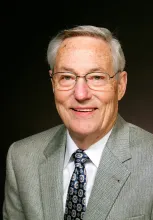
At the time of his retirement in 2016, Roy Holladay was serving the Operation Manager for Ministerial and Member Services of the United Church of God. Mr. and Mrs. Holladay have served in Pittsburgh, Akron, Toledo, Wheeling, Charleston, Uniontown, San Antonio, Austin, Corpus Christi, Uvalde, the Rio Grand Valley, Richmond, Norfolk, Arlington, Hinsdale, Chicago North, St. Petersburg, New Port Richey, Fort Myers, Miami, West Palm Beach, Big Sandy, Texarkana, Chattanooga and Rome congregations.
Roy Holladay was instrumental in the founding of the United Church of God, serving on the transitional board and later on the Council of Elders for nine years (acting as chairman for four-plus years). Mr. Holladay was the United Church of God president for three years (May 2002-July 2005). Over the years he was an instructor at Ambassador Bible College and was a festival coordinator for nine years.
