

Ben Light
This transcript was generated by AI and may contain errors. It is provided to assist those who may not be able to listen to the message.
Well, thank you, Luke, Megan, and Melody, for the beautiful special music. It was easy not to accidentally call Megan Melody on that one, because they were both up there. I don't know why I managed to always do that, but I do. Well, happy spabbits, everyone! It's such a beautiful day today. It was a little bit of a reprieve to have some of the rain, a little bit of mist. It felt weird. I don't know how many of you looked outside and just kind of went and feel... I don't know how many months it's been since we've had some sort of measurable precipitation, but it was interesting to say the last.
All right, so gentlemen I'd like to talk to you about today. There's a couple of them, and both of these or all of these folks were medics in the United States military, and they have a very fascinating story, the first of which was a gentleman by the name of Bernie Friedenberg. And Bernie Friedenberg could hear the gunfire in the artillery shells before the ramp even dropped. So he was on one of the initial invasions of Normandy, and at the point where they're getting closer to the shore, the boat's cocks swaying, the guy driving the boat, shouts out commands to the platoon that he couldn't hear over the droning of the engines. He had no idea what was coming. He saw the guy's lips moving, heard that he yelled something but didn't know quite what it was. There was a sudden abrupt stop, the engines went into reverse, and all of a sudden that front ramp just bam down on the chain and everybody just starts flooding out of this boat. So Bernie, along with everybody else, floods out of the boat too, because he'd seen and heard that some of the ones that were still standing there by the time they were the last few out, the German army had figured out that now that open ramp was a perfect target. And so he'd swing the guns then and take the last few guys out of the boat if they happened to get it turned. So he jumped out.
One of the first guys out of the ramp that day worked his way to the front, jumped from the ramp, and he landed in water that was up over the top of his head.
He was a medic, so he's carrying, you know, 50, 60 pounds worth of medical supplies in addition to everything else, and he sank underneath the weight of those pounds of medical supplies that he was carrying. He clawed his way to the surface, kind of sputtering and struggled to reach the shore as the bullets are snapping past his head, as these artillery shells are pounding into the sand and just shaking the ground as they're coming out.
He finally gets out of the shoreline, he comes up the shore, he's laboring to get out of the surf, I mean, he's soaking wet, right, with 60-some pounds worth of supplies on and everything else, gunfire everywhere, artillery everywhere. He said the sound of the machine gun was just continuous. It just sounded like it never stopped.
It was just constant. You know, shells are thudding into the ground around him. He can hear the screams of the wounded, those first few that are off the boat. And so he scans up and down the beach, and he said the sights and the sounds were absolutely overwhelming to a 23-year-old boy from Philadelphia, 23 years old, on the beaches of Normandy.
He wasn't the youngest. I mean, there were some men on that beach that were as young as 17 that had raced out of those boats to go and to fight for their country. Here, Medic! And he snaps himself out of shock, rushes over to the first wounded man. He quickly worked to try to stabilize him again as his gunfire's going all over the place to treat his injuries.
And he hears another man called, Medic! down the beach. And he kind of turns to look at him, tries to finish working on this guy. Medic! This guy over here, he said there were so many cries for help, he simply couldn't get to the mall. He said he couldn't reach the mall. There were too many that needed help. And so he moved from soldier to soldier, stabilizing as he could, treating him, trying to drag him out of the way. He told one story. He drug one back to one of the Higgins boats and stuck him on the Higgins boat and told the guy to turn around and take him back. The guy said, I'm not authorized to take people back.
He goes, well, you throw them overboard. And then he ran back to go find the next guy. And he said he didn't ever find out what happened to that guy. He stuck on that Higgins boat. But there were more men who needed help than he could provide help to. Some men, he would simply show up and realize they were too mortally wounded and provide him with morphine to make them comfortable and move on to the next person. He said he made some extremely difficult decisions and some that haunted him to his death at age 96.
He said so many men needed help and he simply couldn't get to them all. After the initial invasion of Normandy was over with, he moved inland, fought in the Battle of the Bulge, throughout Europe, throughout North Africa for the next four years. He returned home to Philadelphia with two silver stars for gallantry and combat, a bronze medal, two purple hearts, and honors from the French government. Now, just west of Bernie's position—Bernie was on Omaha Beach—just west of Bernie's position, inland from Utah Beach, two airborne medics, Kenneth Moore and Robert Wright, parachuted behind enemy lines in the early hours of June 6, 1944, near the town of Angleville-Au-Plaine, a small town that just happened to lie along the road from Sherbord to Paris.
And the objective of the 101st Airborne and 82nd Airborne was to secure that road, cutting off transport from Sherbord to Paris. And that little tiny town found itself in the middle of a massive, massive firefight, just because of where it was located. Moore and Wright, as medics, set up an improvised aid station in this little 12th-century church.
There was a little 12th-century church inside of this town, and they set up an aid station inside of that church and started treating anybody and everybody who was brought in to be treated. The fighting was intense at that point in time. By the evening of the first night, they had treated dozens of soldiers and locals. Whenever there was a lull in the treatment and they weren't bringing people to them, they went out and looked for people.
So him and Mr. Wright went out, Moore and Wright went out and searched through the fields to find people, drug them back to the church to treat their wounds there inside of the church. The battles swung back and forth several times over the three days that they were there, with both sides holding the town at one point in time. At one point, the Americans would have it, the Americans would be forced to retreat, and the Germans would retake the town, and then they forced the Germans out, and the Americans would retake the town, and it just swung back and forth like this.
When American forces had to withdraw, they told Moore and Wright they were on their own if they decided to stay. They chose to stay. They chose to continue to render aid to the wounded. German, American, didn't matter. They treated anybody and everybody who walked through the doors or were carried through the doors of that church. The only stipulation that they had was that regardless of your side, you left your weapons outside. That was the one thing they told them. German, American, it didn't matter. You leave your weapons at the door, and you're welcome to come in, and you're welcome to be treated.
As the battle swung back and forth over those three days, the German forces allowed them to continue to work, and because primarily they had a policy of treating any soldier to enter the walls of that church. In a kind of humorous story, the battle was swinging and was so fluid, so many different times. At one point in time, two German soldiers came down from the bell tower, who had climbed up there and gotten stationed in the last swing, and came down and saw the two Americans working.
And immediately they were so surprised they dropped their guns and immediately surrendered, like, oh! Oh, we don't have this town anymore! Oh, okay! And were surprised to kind of see them, that they surrendered on the spot. But in three days' time, Wright and Moore had saved the lives of 80 men, German and American. Only two soldiers and a local girl died as a result of the three days of intense fighting. The church where they worked is still there. It's a small 12th century church in a tiny town in France, which now supports two new stained glass windows to replace the ones that have been shot out.
One shows a paratrooper with the June 6, 1944 date. The other is a tribute to Wright and Moore and the incredible work that they did during that battle. These men, and so many others throughout history, answered the call for aid in the form of medics.
Hearing the screams of somebody on the battlefield and rushing, regardless of their own life, over to be able to help the individual at the time when they needed it the most, at a time when they were the most vulnerable. Men who were all of sometimes 17 or 18 in a far-off place, fighting in a war they didn't ask for, lying on their back in the mud with their life pouring out between their fingers, wondering if this is it. Is this where my life ends?
In this place, so far away, is this where my life ends? Wondering if they'll ever get a chance to see their family again. Calling out for help, for anybody who can come in to help, as the gunshots kept flying and the shells kept exploding around them. Yelling for a medic, wondering if someone's going to make it to them or whether or not it's going to be too late by the time that person gets there. And then, sliding in under enemy fire, there they are. They made it. Red Cross on a white background on their helmet, working to stop the bleeding, telling them everything's going to be okay. Stabilizing them, comforting them, encouraging them. I've never been in this position, literally, from a physical standpoint, with a gunshot wound, dying on a battlefield somewhere, and wondering if I'm going to make it. But I can just about guarantee, and I can only imagine, the level of comfort that it must have provided to see a medic show up at that point in time and begin to work on you while you're laying there, wondering if you're going to make it. But knowing that you're in good hands, knowing that that person has your back, I have been in this place spiritually. Gunned down, discouraged, full of doubt, scared, laying there on my back, wide-eyed in shock. And, you know, I remember being comforted and how comforting it was to have someone come alongside to encourage me, to comfort me, to tell me that everything is going to be okay.
We've all been there. Let's turn over to Ephesians 6. Let's turn over to Ephesians 6. Ephesians 6. In Ephesians 6, we see a description of the kind of protection that God asks us to put on.
You know, Paul was explaining to the church at Ephesus the battle in which they are engaged, the importance of being prepared to fight. The Apostle Paul makes the point to those he's writing to of whom and with what we struggle with and what we fight against. Ephesians 6, and we'll pick it up in verse 10. Ephesians 6 and verse 10 says, Finally, my brethren, be strong in the Lord and in the power of his might. Put on the whole armor of God that you may be able to stand against the wiles of the devil. Verse 12, for we do not wrestle against flesh and blood, but against principalities, against powers, and against the rulers of the darkness of this age, against spiritual hosts of wickedness in the heavenly places. Verse 13 comes to the conclusion of those three statements, Therefore, take up the whole armor of God that you may be able to withstand in the evil day, and having done all to stand. You know, Paul goes through and explains to them here, look, we are fighting a battle that is much bigger than any of us probably realize sometimes.
And I think we don't always realize that we are at war. Brethren, we are at war.
We are being shot at and shelled each and every day, and the bullets that wound us, the bullets that hit us, they're not physical. The bombardment that we experience is spiritual in nature. We're bombarded by doubt, we're bombarded by fear, we're cut down by anger, gossip, habitual sin. If we're not careful, we can be slain by distraction, by lethargy, and by dissipation. You know, I truly believe that Satan has intensified his war against the saints in the past year. If you look back over the events of the past 12 months, Satan has absolutely ratcheted up the intensity of the fight against the saints. We have seen more and more people being sick from terrible, terrible things. People dying, people have experienced terrible fiery trials that have put their faith to the test. More and more people are becoming involved in things they shouldn't be involved in, whether it's a curiosity with horror movies and the occult, witchcraft, substance abuse, internet pornography, or a laundry list of other issues. And, you know, over the last 12 months, he seems to be gaining some momentum and seems to be gaining some ground in the fight. The end result is discouragement, fear, doubt, a struggle in faith, and a hope that can be tough to find.
At the core of all of these things, at the core of discouragement and fear and doubt, and a struggle with faith and a difficulty of finding hope, is a battle between God the Father and Satan the Devil for your very life. This is a battle for your very life, of which it can be really easy, I think, for us sometimes to forget the scope and the intensity and immensity of that battle. I think at times our faith can become something that becomes rote to an extent, and I think it's easy to find ourselves in that place where our faith becomes rote, where we pray, we study, we go to church, we keep the holy days, and if we're not really careful, it can become about what we do, not who we are. That routine can lull us into complacency. It can put us to sleep as to what the stakes in this battle really are. We are at war, brethren. We're at war.
Those who have come before us have gained extremely hard-fought ground. They've gained very hard-fought ground, many of which died to advance the gospel of Jesus Christ further.
We're the next wave. The first ones have already hit that beach and have gone before us and have started the movement up that beach, and we're the next wave. You're being shot at spiritually on a daily basis. You are being shelled on a daily basis, and I think sometimes if we're not careful, we can be asleep. Nobody sleeps in a foxhole. Nobody sleeps in a foxhole. When they're being bombarded, when they're being shot at, if you realize what that is and you see that, brethren, we can't afford to let our guard down. Let's continue on in Ephesians 6. Ephesians 6 talks about the protections that we put into place. Ephesians 6 and verse 14 says, Stand therefore, having girded your waste with truth, having put on the breastplate of righteousness, and having shodged your feet with the preparation of the gospel of peace, above all, taking the shield of faith with which you'll be able to quench all the fiery darts of the wicked one. Take the helmet of salvation and the sword of the Spirit, which is the word of God, praying always with all prayer and supplication in the Spirit, being watchful to this end with all perseverance and supplication for all the saints. It goes on in verse 19, And for me, that utterance may be given to me, that I may open my mouth boldly to make known the mystery of the gospel, for which I am an ambassador in chains, that in it I may speak boldly, as I ought to speak. We have to gird our waste with truth, the truth of God, not outside truths, but the truth of God. We have to put on righteousness. We have to be clothed with righteousness, living our lives accordingly, standing firm in the gospel of peace, taking up the shield of faith so that we can fend off those attacks and those darts that our adversary throws.
Put on the helmet of salvation, take up the sword of the Spirit, train with the sword of the Spirit.
You know, all of these things work together to make up a full set of armor that protects us in a fight. All of these things protect us in a battle. But we also know, sometimes despite us putting on that armor, we have situations that crop up that can maybe cause us to dip that shield of faith a little bit. It weighs a little heavier in our hands than it often does. We dip that shield of faith some, and maybe sometimes we dip it just enough that that dart gets past the shield. And then it turns out if our breastplate isn't on tight, it makes it through. And down we go.
Stunned, we lay there crumpled in a heap, wounded, wondering whether we'll make it. Is this it? Does God still love me? Will I make it into the kingdom?
Medic! Is somebody going to come and help me? Medic! Where are they? Medic! We cry out.
In case you haven't already guessed, the title of the sermon today is Medic!
Medic! With three exclamation points. In case you're curious how many exclamation points are on the end of Medic! It's three.
All of the soldiers today in the United States military receive basic combat medical training. So if you were somebody who was going to—we don't, obviously, serve in the military today—but if you were to go through military service and basic training today, you would receive, you would receive basic combat military training. Now, the U.S. Army has recognized that the first 10 minutes after somebody is made a casualty—so they've either been shot or there's been something that's happened—the first 10 minutes makes all the difference in whether that person is going to survive.
They call it the Platinum 10. And so something has to happen within that 10 minutes. The issue is, in a large firefight like that, medics are spread so thin that getting to somebody in 10 minutes can be difficult in the case of something as large as World War II or Vietnam or, in some cases, large firefights in the Afghanistan and Iraq wars. So what they've decided to do is provide all soldiers with an additional seven and a half to eight hours of combat medical training that allows them to administer IVs, that allows them to go through and do other things that an ordinary combat medic would do. And so the military's new philosophy is, everybody's a medic. Everyone's a medic. The guy next to you on your line gets shot, treat the guy, take care of it, and hopefully you can get him stabilized and then before the combat medic himself gets there. So the idea is that in a current modern warfare situation, your standard infantry soldier is going to be a first responder. They're going to be somebody who's going to reach that guy first and be able to stabilize and to help provide support as necessary. Not just comfort, but encouragement and support. To tell that person everything's going to be okay to do everything that they can to stabilize them.
Brethren, in the midst of this war against state and the devil, we are all medics.
Every last one of us are medics. We all have a responsibility to help our fellow man, to encourage, to support, to help as needed, to have one another's backs. Let's turn over to 1 Thessalonians 5.
1 Thessalonians 5.
In 1 Thessalonians, Paul's exhorting those in Thessalonica who he referenced as being of the day earlier in this passage to be sober and to put on their armor and to prepare themselves for this spiritual fight to be prepared. Now, listen, we don't fight with armor today in the military. I mean, we kind of do. It's not like a suit of armor like we would see in the movies for medieval things, but there is Kevlar body armor, there's vests, there's other things that are put over the places that are the most squishy, you might say, and that are most susceptible to large-scale injury. You know, you protect the head with some sort of a helmet, okay? You protect the front of your body with a Kevlar bulletproof vest. Many guys will put the back, there's Kevlar backplate that they'll put in as well. Some of them don't put that in because it's too heavy, they don't like it. Of course, you turn around and get shot in the back. Well, you know, that's the risk you take if you don't put in the backplate. There's other forms of armor that goes along with that, right? So things are a little bit different today, but in the time of this letter being written to those in Thessalonica, armor was a very real thing that they were very familiar with. 1 Thessalonians 5 and verse 8 says, but let us who were of the day, again, referencing those who were of the day in this first little section here, be sober, putting on the breastplate of faith and love, protecting the squishy parts in the front with faith and a helmet, the hope of salvation. For God did not appoint us to wrath, but to obtain salvation through our Lord Jesus Christ.
Verse 10, who died for us, that whether we wake or sleep, we should live together with him.
Verse 11, therefore, because of these things, therefore comfort each other, edify one another, just as you also are doing. Therefore, comfort, or you might read encourage, depending on the translation that you have, comfort and encourage each other, edify, build up one another, and he tells them, just as you're doing, you're doing that. Keep doing it, he says. Keep doing it, especially as things get difficult. Basically tells him, in those in Thessalonika, look, steady as she goes, keep doing what you're doing. Keep comforting and encouraging and building one another up. Keep on your armor and watch somebody else's back. That word, comfort, in that passage, is G3870. So it's G3870. It's the Greek word parakaleo. And parakaleo means to call near. And it implies to render aid, is what it implies, to call near to render aid. Because some of the other roots of that parakalesis, for example, or parakleto, is kind of to provide aid. So parakaleo means to call near to provide aid, essentially. It has a context, again, of providing aid, comfort, exhortation, encouragement, and is translated about that many ways throughout Scripture. It's one of those words that's translated in a variety of different ways. Let's turn over to Hebrews 10. We'll see an example of it in place. Hebrews 10. And we'll see an example of this word used in context in another location.
Hebrews 10. We'll pick it up in verse 23.
Hebrews 10 and verse 23. It says, Let us hold fast the confession of our hope without wavering, for he who promised is faithful. Okay, making sure that he lets people know, look, hold fast to that hope without wavering, because he who promised is faithful. And let us consider one another in order to stir up love and good works, not forsaking the assembling of ourselves together as is the manner of some, but exhorting. Again, this is that word, G3870, parakaleo. Exhorting or comforting or encouraging one another, and so much the more as you see the day approaching. As passage goes on from there, to describe a certain fearful expectation of judgment upon willful sin, an admonition and an encouragement for us to remain on the path, to encourage each other to stay on the path, to continue the walk that they're walking. The word again for exhorting here is the same word that we saw in 1 Thessalonians 5, it's parakaleo, calling near for aid, receiving support from another, to encourage, to exhort, or to comfort, but to do so while near, as you've drawn near to that person. Hebrews 10 then it makes the statement, consider one another in order to stir up love and good works, not forsaking the assembling of ourselves together as is the manner of some, but one another near, but one another near and so much the more as you see the day approaching.
We can't do this alone. We cannot do this alone.
You know, additionally, it's worth noting, implicit in this passage in Hebrews 10, is the idea that as the time of Christ's return gets closer and as Satan's time runs short, that exhorting, comforting, and encouraging one another will become even more important.
As Satan starts this last desperate attempt to destroy what God has put together, exhorting and comforting and edifying one another is going to be that much more important.
And so when we consider this, and when we look at this, you know, we might think we can do this by ourselves. We might think we can lone wolf this. We might think that, well, all I need is God, I need God's Holy Spirit, it'll be fine. I'll work out my own salvation with fear and trembling. I don't need anybody. And that might be the attitude that we take.
God called you individually. That is true. That is absolutely true. God called you individually, and that calling is your calling. That is not anybody else's calling. That calling is individual, and it is yours. Your response to that calling is individual, and it is yours. But the calling that he has provided, while individual, is part of a greater calling that is collective. When we talk about the first fruit harvest, the first fruit harvest is not a single head of grain. That first of the first fruits has already been harvested. But the first fruit harvest after that is collective. It's not an individual. It's collective. They are individually called, but they are placed within a body as God the Father pleases. It talks about that in 1 Corinthians 12. You can jot that down if you'd like. It's placed in the body as God the Father pleases, and placed according to his purposes, as it states in Romans 8. Called as God pleases, by the Father, placed for his purposes. Let's go over to Romans 12. Let's go over to Romans 12. And we'll see that encouragement is one of the many gifts that the collective body is bestowed. Encouragement is one of those things. And it is a gift. Listen, some people are better at it than others. That is absolutely true. Some people are better at it than others. That, however, is not an excuse to not be encouraging, to not be somebody who provides comfort to others. It may not be your strength, but it's still a necessity. Romans 12, again, we'll see that this is one of those many gifts that the collective body is bestowed upon, and that it's effective working of that body.
All of the parts together are necessary for the function of that body. Everything has to work together. As you well know, if you've ever gotten sick and one part of your body quits working, there's a cascade effect that tends to happen. Because that thing's not working, something else stops working, and then this stops working, and then the doctors are like, okay, get that thing working, and then get this thing working, and then this thing working, and everything will be fine.
And so, as we see this, it's very similar spiritually. Romans 12, we'll pick it up in verse 3.
It says, For I say, through the grace given to me, that every one who is among you, not to think of himself more highly than he ought to think, but to think soberly, as God has dealt to each one a measure of faith. For as we have many members in one body, but all the members do not have the same function. So we, being many, are one body in Christ and individually members of one another.
Having then gifts differing according to the grace that is given to us, let us use them. If prophecy, let us prophesy in proportion to our faith. Or ministry, let us use it, or ministry of service, let us use it in our ministering. He who teaches in teaching, he who exhorts. That word right there is G38775703870. He who exhorts, or he who comforts, or he who encourages, in exhortation, or comforting, or encouraging. He who gives with liberality, he who leads with diligence, he who shows mercy with cheerfulness. So we can see this is one of those gifts that is provided. But more so we can see that we need one another. If everybody was an encourager, that'd be great. But what if nobody was a teacher, or nobody was a minister, or nobody was what if everybody was a teacher, then who's going to encourage everybody? Right? They all have to work together.
All of us have strengths. We all have weaknesses. Often where one is weak, another is strong. You know, Scott was mentioning, or Mr. Buchanan, sorry, was mentioning earlier today, that Mr. Goethals is one of those organizer-type folks. And that is absolutely true. I am not an organizer-type folk. And I recognize that, and I know that. And so I try to surround myself with people who are organizer-type folks to make sure that I'm getting what needs to get done done.
Right? That's why I have Mrs. Hanson doing the calendar. You don't want me doing the calendar.
Trust me, you don't want me doing the calendar. Okay? She has that strength. That's her strength. It's not mine. And so I'm working on it, but in the meantime, as I'm working on it, I need somebody to help. And, you know, you recognize where you're weak, others are strong.
But sometimes, too, I think sometimes we get to the point where we're struggling, and for those moments when it seems like all is lost, when we just simply cannot go on, we need another to assist us. We need a helper. We need a medic. We need somebody to come in and provide us with assistance and support and encouragement and comfort when that happens. Ecclesiastes 4, verse 12, we won't turn there. It says, though one may be overpowered by another, two can withstand him, and a threefold cord is not quickly broken. You know, when it is you and another, that's powerful. But when it's you and another and God, that's unstoppable. It's not quickly broken when you have a threefold cord. There's no stopping you in the fight against your adversary. You know, it's similar to the videos and the chases of the Serengeti. I love nature videos. I'll admit it. I love the things. They're so interesting to me to watch animal behavior and other things. But you'll see in the videos on the chases on the Serengeti, right? The lion kind of creeps up and they got the whole herd of zebras out there, and the herd of zebras are completely unsuspecting. You know, they got their heads down and chewing on grass, whatever else. They don't see the lion coming. Lion shows up. All of a sudden, one of the lions just takes off, starts chasing this thing down as quickly as they can. The whole flock finally realizes, whoa, there's a lion, and everybody takes off, right? The whole flock takes off. But at some point in time, in the wheeling and the turning and all the other things, the lions managed to get one of those zebras by itself. Either it's too slow, it can't keep up, it's injured, whatever. Gets that zebra off by itself, gets it all on its own. At that point, I mean, it's lion chow. And there's no way that thing's gonna... I won't say that. I've seen a video of one that was almost taken out and managed to get away, even though it was just a single one on its own. But, in fact, Dave Ramsey used to say it was impossible to find a video of a cheetah chasing down gazelles and things where the gazelle actually got away. He said it was very difficult to find one, but he finally did, and then he licensed it so he uses it with his program to show them you can get away from credit card companies. But when the flock stays together, and when the flock sticks with one another, there's safety and there's protection. Those that get separated, those that get off by themselves become susceptible, they become vulnerable. If they fall, there's no one available to help them out. We can end up in this place through our own doing. We can end up in this place through discouragement, through difficult trials, through separating ourselves because we disagree, or we're afraid of other people's judgment, or sometimes maybe we feel we just don't belong.
We feel uncomfortable. We don't feel like we belong. We don't feel safe. And so we separate ourselves and we stay away and we do our own thing. And just as a lone ember loses its spark when it's been separated from the coals, so too do we when we separate ourselves.
We have to encourage one another, brethren. And where does this encouragement come from? Is this something that any of us can just all of a sudden muster up and decide, oh well, in my spirit of man, I can go ahead and do this. I'm just a natural encourager. Does this come from us personally? Do we have it in ourselves to comfort and encourage people like this? Let's go to John 14.
John 14. Because encouragement and comfort comes from God. John 14.
You know, we have a limited ability to comfort people. We have a limited ability to do some of these things on our own. But the kind of encouragement that we need when we're in the midst of a battle against Satan or our adversary is the comfort that God can provide. John 14 verse 15 says, if you love me, keep my commandments. I like how that's period, end of sentence. Not if you love me, keep my commandments. Unless it's really hard, or sometimes, or no, if you love me, keep my commandments. Period. End of sentence. Verse 16, I will pray the Father, and He will give you another helper. In that case, that particular word is related to this word, that He may abide with you forever. The Spirit of truth, whom the world cannot receive, because it neither sees Him nor knows Him, but you know Him, for He dwells with you and will be in you. I will not leave you orphans. I will come to you. Now we recognize all these hymns and whatever else are incorrect pronoun usages in this place. It's a neured pronoun that needs to be utilized. It's an it, in this case, because it's referencing God's Spirit. But Christ told His disciples that were gathered on Passover evening that He would pray to God the Father and that He would send a helper once Christ went away. That helper is God's very Spirit, His presence dwelling in us, down payment towards eternal life, His mind, His Spirit that dwells in us and intercedes on our behalf.
It guides us, comforts us, and it encourages us. That word that's mentioned, helper, there is G3875, G3875, paracletos. Paracletos. Same roots, same thing. And it translates, in this case, it's a word that comes from paracoleo, translates as helper, advocate, intercessor. And contextually, it's legal in its origins. It's legal in its origins. Someone who comes alongside you and helps you legally advocates on your behalf, which God's Spirit does on our behalf, making utterings on our behalf, as it talks about in Romans 8, 26, and 27. But God's Spirit convicts us of sin, convicts us of righteousness, helps to guide us forward. It allows God to draw near to us, to provide us with aid as we need it, as He calls near to us. A little while back in John 7, just a couple pages back, John 7, Christ Himself described this Spirit. He described how it would operate in those who believed. So in John 7, we'll go ahead and pick it up in verse 37. John 7, verse 37.
John 7 and verse 37 reads, On the last day, that great day of the feast, Jesus stood and cried out, saying, If anyone thirsts, let him come to me and drink. He who believes in me, as the Scripture has said, out of his heart, will flow rivers of living water. Now, we can speculate and read it. What was he talking about? He explains it in 39. But this He spoke concerning the Spirit, whom those believing in Him would receive, for the Holy Spirit was not yet given, because Jesus was not yet glorified. This statement was likely made during the culmination of the water ceremony that kind of built up throughout the time of Sukkot. And by the seventh day of the feast, it culminated in this big water ceremony, essentially. And at that point, it seems very likely that as that ceremony is going on, Christ makes the statement, Hey, I'm the living water, getting people's attention. The point that He's trying to make is that this water that they're pouring into the altar is physical, that He was living water. You can drink of that water and not thirst again. He who believes in me, as the Scripture has said, out of his heart will flow rivers of living water. You know, if we believe in Jesus Christ, in God the Father, and we have yielded ourselves to Him, we've received His Holy Spirit out of our hearts will flow, not trickle, flow living water, rivers of living water to those who are around us, to the people that we interact with, the people that we see out in the world around us, to our brethren that we interact with in services. Out of our heart will flow comfort and edification and encouragement and love.
I don't know how many of you have ever had an experience of being incredibly thirsty, like incredibly thirsty. One of those things where you've worked all day out in the hot and dry and dusty sun and you are just dying thirsty. That cold water is so refreshing and just so wonderful.
It's like you've never had anything so good, and it's just water, right? There's no flavoring in it. There's no... it's just water, but it is amazing when you have an incredible thirst.
You know, we have a... down at Camp High Sierra is in the middle of the Sierra Nevadas at about 5,000 feet. It's very dry. It's very dusty. It gets very hot. We had a very nice year this year. It wasn't that hot. It was kind of high 80s, low 90s, but we've had some years in the past where it's gone 104, 105 most of the week, and it's been very hot. Two years ago it was very, very warm. But you get to the point where water is an absolute necessity at that camp. You don't have water out at that camp. You've got kids dropping like flies. I mean, just dropping like flies. So you put out water. You put out Gatorade. You put them in these big five-gallon coolers, and you start the day with these big five-gallon coolers of one water and one Gatorade at most of the activities. And as the day goes on, you'll hear radio calls. I mean, sometimes not that far into the day, we refill water station down here at this place. We need to refill. We're out of Gatorade down here. Constant. I mean, you are pouring water and Gatorade through the kids just to keep them vertical, because otherwise they start wilting, and they start dropping left and right, kind of similar to what we've had at Preetin the last few years, was real, real hot weather. But Northwest Camp's not like that at all. Northwest Camp this year was like 55 degrees in fog. You still need water, but not on that degree.
We're still getting used to it, and we'll have time over the next several years as we kind of direct that camp down in High Sierra. But down there, water is a necessity. It's something that is, you have to have it. You absolutely have to have it. And God's Spirit is like that water.
It's refreshing. It's cool. We can come to God and drink deeply from that well. And when others are thirsty and others are in need, if we believe in God and we've yielded ourselves appropriately, it flows from us like rivers of living water to others. God's Spirit dwelling in us enables us to comfort, to encourage others. Again, if we're properly yielded, it pours out from us like rivers of living water. And when we've had our fellow brothers and sisters that have been felled by the adversary's darts, they don't feel like they can go on. We have to pour that spirit forth, comforting each other, encouraging one another as we draw near. Let's go over to 2 Corinthians. 2 Corinthians 1. So again, we'll see where this comes from and the kind of comfort that we can provide. 2 Corinthians 1. And we'll go ahead and pick it up in verse 3. 2 Corinthians 1, verse 3. And we'll go ahead and read through verse 11.
It says, Blessed be the God and Father of our Lord Jesus Christ, the Father of all mercies and God of all comfort, who comforts us in all of our tribulations, that we may be able to comfort those who are in any trouble. So with the comfort that we receive from God in our tribulations, we can turn around and we can comfort others with that comfort that we've been provided. For as the sufferings of Christ abound in us, though our consolation also abounds through Christ. Now if we're afflicted, it is for your consolation and salvation, which is effective for enduring the same sufferings which we also suffer, or if we are comforted, it is for your consolation and salvation. And our hope for you, Paul again writing here to the Corinthians, our hope for you is steadfast, because we know that as you are partakers of the sufferings, so also will you partake of the consolation. Now he goes on in verse 8, and I think sometimes it's easy to stop there because there's a page break, or there's a line break there in that particular account. But he says, We don't want you to be ignorant brethren of our trouble which came to us in Asia, that we were burdened beyond measure, above strength, so that we despaired even of life.
You know, we don't have a lot of details exactly what this was or what this entailed, but just that they experienced something while they were in Asia that was extremely difficult, that burdened them beyond what they felt they could handle, beyond above strength, such that they despaired life. Have you ever been so discouraged you despaired life?
It says, yes, we had the sentence of death in ourselves that we should not trust in ourselves, but in God who raises the dead. And what's amazing about this is that difficulty that they were experiencing turned them to God, pushed them back to God, because they realized they didn't have the power to fix it themselves. Delivered us from so great a death and does deliver us, in whom we trust that He will still deliver us. You also helping together in prayer for us, letting them know, look, your prayers helped. They were absolutely crucial, that thanks may be given by many persons on our behalf, for the gift granted to us through many, that that turning to God was granted them through the prayers of those individuals. You know, Paul wrote to them and thanked them for their prayers. Said they came into something that was so difficult that they just couldn't seem to handle.
Terrible straits, but it pushed them back to God. It drove them to God. They trusted in His deliverance.
You know, we need to remind one another of God's faithfulness. We need to remind everyone of His deliverance, of His love, encouraging one another as the day approaches. But brethren, we can't do that if we're not individually yielded to God's Spirit.
If we're not individually yielded to God's Spirit, we can't hope to provide the kind of support and encouragement and love that our brethren need. We have to be appropriately yielded to God's Spirit. Satan's time is short. Satan's time is short. And what I think we sometimes fail to realize, and I don't know if you've thought about it in this way or not, maybe you have, the surrender in this battle is already negotiated.
Satan has lost the battle. Satan does not win this war, and he knows it. He doesn't win.
He doesn't win. You know, Mr. Armstrong used to say that all the time. I've read the back of the book, and we win. The surrender in this has already been negotiated. He is defeated and does not win this fight. And so, as such, as we look at the intensity that we're starting to experience, that we're beginning to see, we're seeing the beginnings of the death throes of a defeated being. One who is just desperate, yet calculating, to do as much damage as possible in the time that he has left, to do what he can to bring down God's people. We have to be on guard. We have to recognize the things that are coming our way are a last-ditch effort. We don't fight with flesh and blood. We fight with spirit beings. That machine gun fire and artillery that we experience is discouragement, it's despair, it's trials, it's tribulation, it's fear and it's doubt.
That barrage and that bombardment will continue, and it will intensify. I would love to tell you it's going to stop. It will, eventually. But before that, it's going to continue, and it's going to intensify. This is the beginning. Brethren, we are at war.
Will we stand against it? Will our faith hold in the face of what seems like an insurmountable foe?
Will we support our brothers and our sisters? Will we be a paracleto?
Will we be an encourager, a comforter, like a medic? You know, the difficulty is, sometimes, soldiers don't want to ask for help, especially some that are battle-hardened veterans.
Admitting help, for some, is weakness in their eyes. Many soldiers simply suffer in silence, they put on a smile, they put on a mask, and they don't seek help. Some mask pain, mask need, with behaviors and other things, not willing to open themselves up, because if they open themselves up, they're vulnerable. And if you're vulnerable, you can be hurt. If you're not vulnerable, you can't be hurt. Except that you can be hurt, even when you're not opening yourself up to be vulnerable, you just don't realize it. Some don't call for a medic, even though you can tell that they need one.
You know, as a result of some of this, the fact that many of these battle-hardened veterans are exactly that, battle-hardened veterans, and they come home from war and they don't want to ask for help because they're a soldier. Soldiers, soldier, soldier on, that's what they do. The U.S. military is experiencing an incredibly difficult issue right now in service member suicides. Huge, absolutely huge issue in the U.S. military. And so the U.S. Army has developed what they call the ACE protocol. It's called the ACE protocol. And basically what happens in basic training, each soldier obtains a battle buddy within their platoon. They have somebody who is specifically assigned to them to check in on them and they to check in on the other person. As they deploy, as they go into the battle, as they go, they're assigned essentially to watch each other's back, to make sure that that guy comes home from this engagement and that guy's making sure that I come home from that engagement. But what's amazing, and what I love about this, as I was doing some reading on this, it doesn't stop when the war is over. They are encouraged to maintain contact when both of them have returned to regular life. They're encouraged to check in, to continue to do that ACE protocol from a distance. Brethren, I think we could benefit from the principles of this system, as times get difficult. ACE stands for the following. Ask, care, escort. Ask, care, and escort.
Ask, simply regularly check in with people to see how they're doing.
Build the kind of relationships that allow you to break through that wall that people stick up.
The mask of anger or the mask of whatever they put up. Relationships that allow you to get through that. Get to the core of things. Secondly, care. Develop empathy. Truly care about the struggles that people are experiencing. Don't be the person, I've been guilty of this, who in the process of going, and going, how was your day? It was really terrible. Oh, fantastic! Glad to hear it. All right, next. You didn't hear anything that person just said. I've done that before. I'm guilty of that.
Care. If you're going to ask the question, stay and listen to the answer.
Develop empathy. Really, truly care for the struggles of those that we're checking in on. And then be willing to support and encourage them through the trials and the difficulties that they experience. The last of the ACE protocol is S-port. And when the assistance is needed is beyond your capabilities, be willing to help them get help. Be willing to help them get help. Let them know how much you love them, that you don't want to see them fall. Let them know you have their back, and you will be there as they get the help that they need, but that you are not able to provide the help that they need. Someone else can. We have to be willing to be there alongside them as they get the help that they need. As things continue to grow more difficult, as trials and tribulations happen more and more, the need for encouragement, the need for comfort, edification will be an absolute necessity. It'll be like that cold drink of water on a hot day. It'll be a necessity.
Who will be your battle buddy? Who will be your comforter and encourager? When you hear, you see the need for a medic. Will you be there?
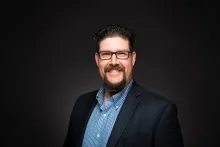
Ben is an elder serving as Pastor for the Salem, Eugene, Roseburg, Oregon congregations of the United Church of God. He is an avid outdoorsman, and loves hunting, fishing and being in God's creation.
